Mediterranean Steak Bowl Recipe with Tzatziki and Feta
Mediterranean steak bowl brings marinated sirloin, fresh vegetables, grains, feta, herbs, and creamy tzatziki together in one colorful meal. The combination works because each part contributes a different texture and flavor, from tender sliced steak and cool cucumber to briny olives and a bright lemon dressing. With a steak bowl with tzatziki, you get a satisfying meal that can be assembled for lunch, dinner, or make-ahead meals without losing the fresh character of the ingredients.
A balanced bowl starts with contrast
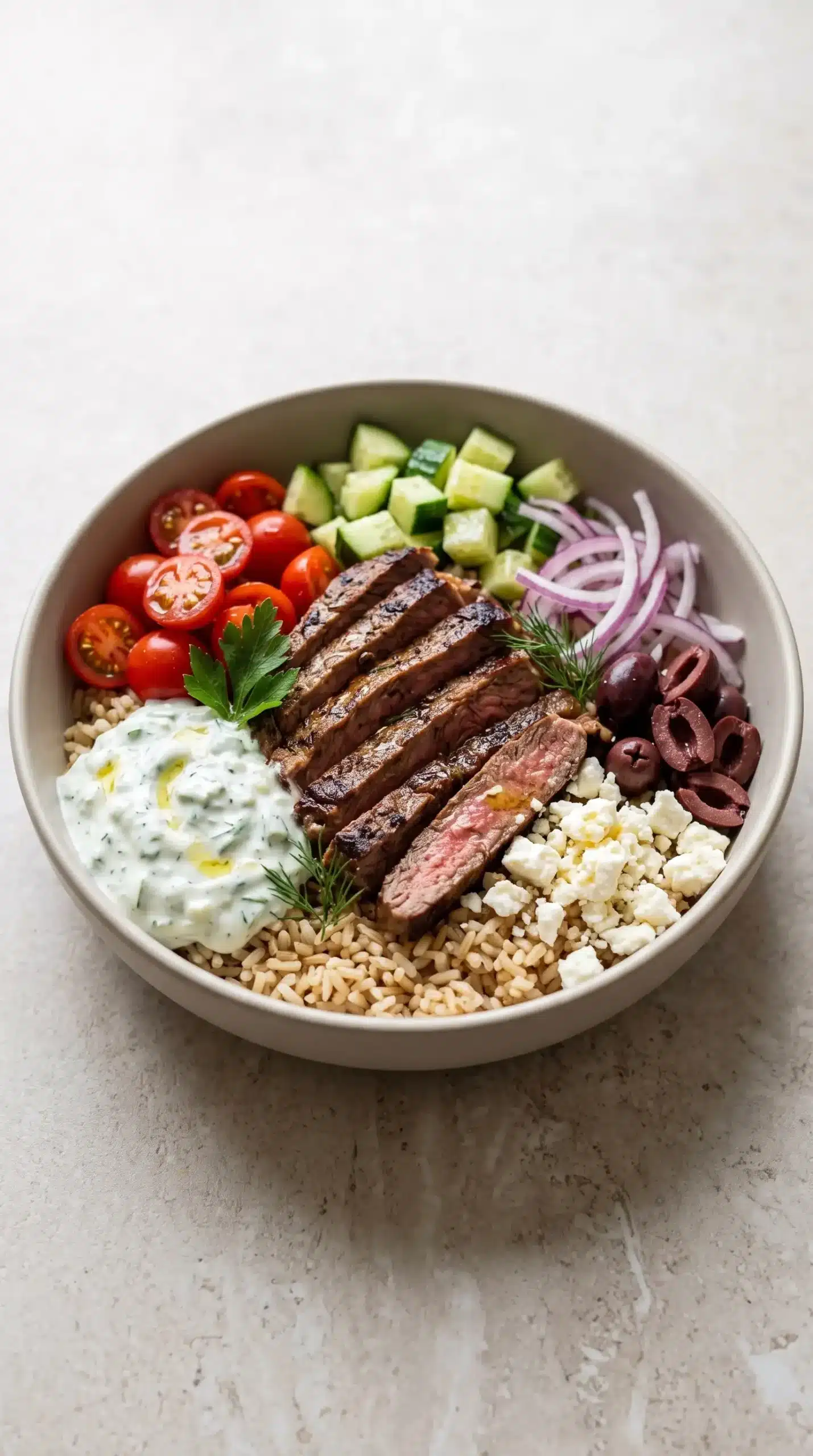
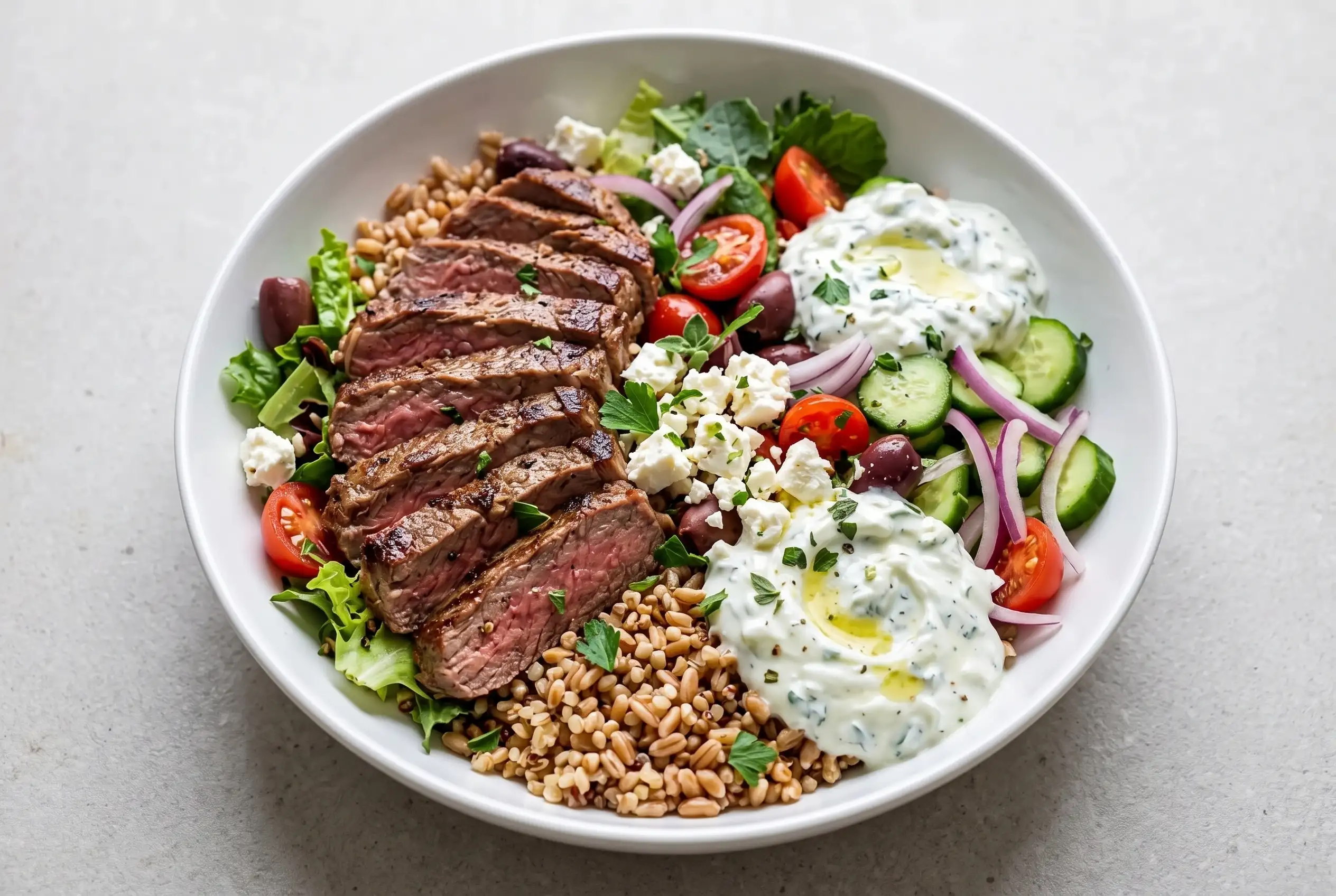
A satisfying Mediterranean steak bowl depends on contrast more than on any single topping. Warm grains create a hearty base, while tomatoes and cucumber bring freshness. Kalamata olives and feta introduce salty, savory notes, and the tzatziki supplies a cool, creamy element that ties the components together.
Sirloin steak gives the bowl its substantial center. The marinade combines olive oil, fresh lemon juice, garlic, oregano, thyme, salt, and black pepper, creating a simple Mediterranean-inspired flavor profile that works with both the grains and vegetables.
Keeping the components recognizable also makes customization easy. A bowl can lean more vegetable-forward, include roasted chickpeas, or use a different grain while retaining the same basic combination of steak, fresh toppings, creamy sauce, and vinaigrette.
Sirloin gets its character from the lemon-herb marinade
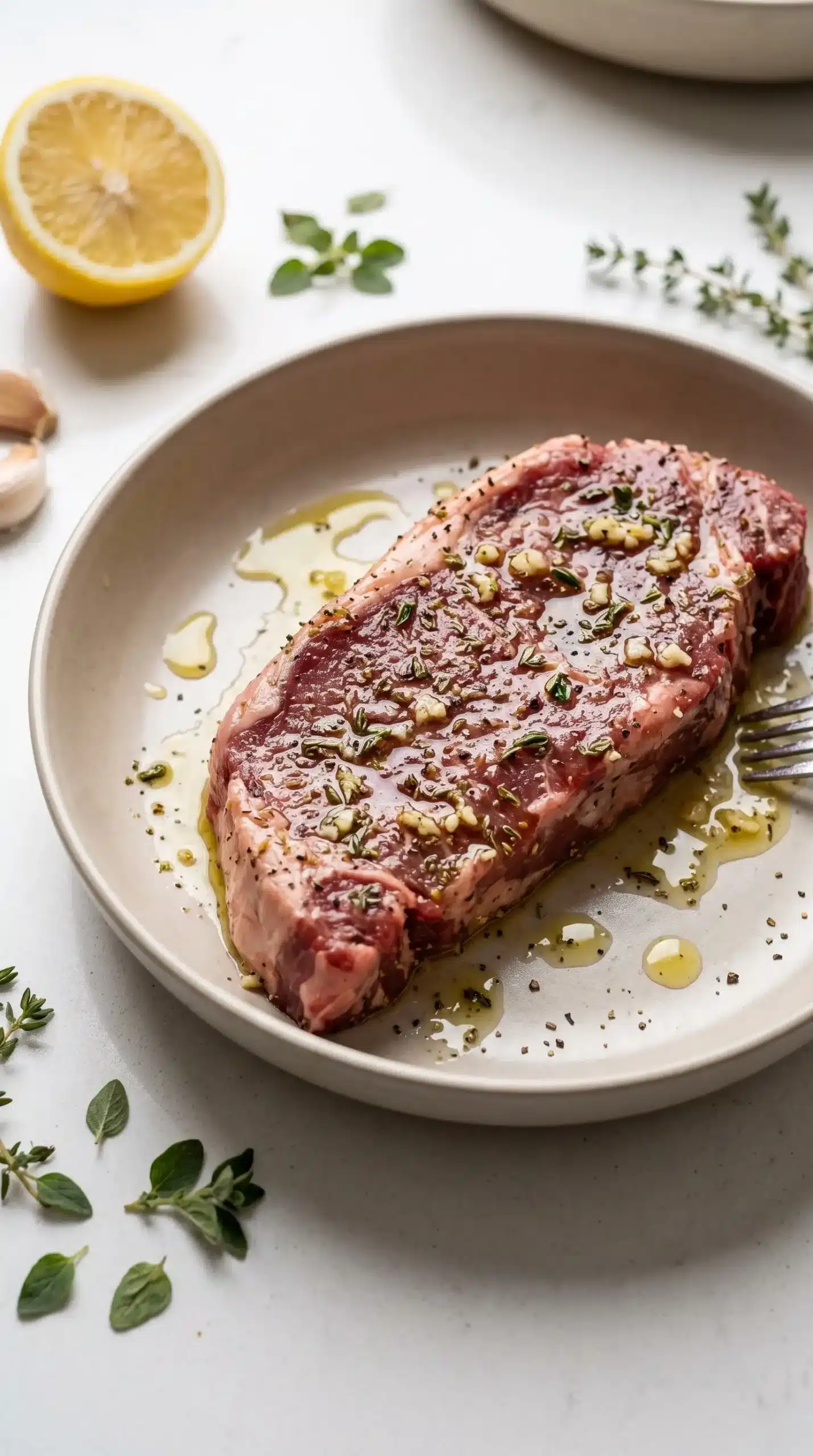
For the most flavorful Mediterranean steak bowl, give the sirloin enough time with the olive oil, garlic, lemon juice, oregano, thyme, salt, and pepper. The supplied marinade window ranges from 30 minutes to 4 hours, while an overnight marinade is suggested when you want to let the flavors develop further.
Choose the grain that fits your bowl
The grain changes the character of the finished bowl, so choose according to the texture and style you want. Brown rice gives a familiar hearty base, quinoa offers another grain option, and cauliflower rice provides a lighter alternative.
| Base | Best use | Recipe-specific consideration |
|---|---|---|
| Brown rice | Hearty everyday bowl | Pairs naturally with the steak and fresh toppings |
| Quinoa | Alternative grain base | Useful when you want a different grain choice |
| Cauliflower rice | Lighter grain-style base | Can also support a gluten-free bowl |
| Couscous or farro | Grain variation | Works as a swap when you want to change the base |
Two cups of cooked grains are used as the bowl foundation, so the base should be prepared before assembly. Having it ready lets the steak and toppings remain the focus instead of requiring last-minute cooking while the other components are being finished.
Fresh tzatziki needs the cucumber handled well
The tzatziki combines plain Greek yogurt, grated cucumber, lemon juice, minced garlic, fresh dill, salt, and pepper. Squeezing the grated cucumber dry matters because excess moisture can thin the sauce. A coconut yogurt alternative can be used for a dairy-free version.
Cut the vegetables for easy bites
Cherry tomatoes are halved, cucumber is diced, and red onion is thinly sliced for the bowl. Those shapes make the fresh toppings easy to combine with thin slices of steak and grains in a single forkful.
Kalamata olives should be pitted before they join the bowl. Their briny flavor sits naturally alongside the creamy tzatziki and salty feta, while fresh parsley or dill brings another layer of freshness.
Feta is optional when a dairy-free bowl is preferred. The vegetable mixture can also stand on its own with the olives, herbs, and dressing, giving you flexibility without changing the basic identity of the dish.
The lemon vinaigrette sharpens the finished bowl
The vinaigrette brings together olive oil, fresh lemon juice, honey, garlic, dried oregano, salt, and pepper. Honey can be omitted for a Whole30 version. Whisk the ingredients together before assembling so the dressing is ready to distribute across the grains and toppings.
Hot-skillet searing controls the steak texture
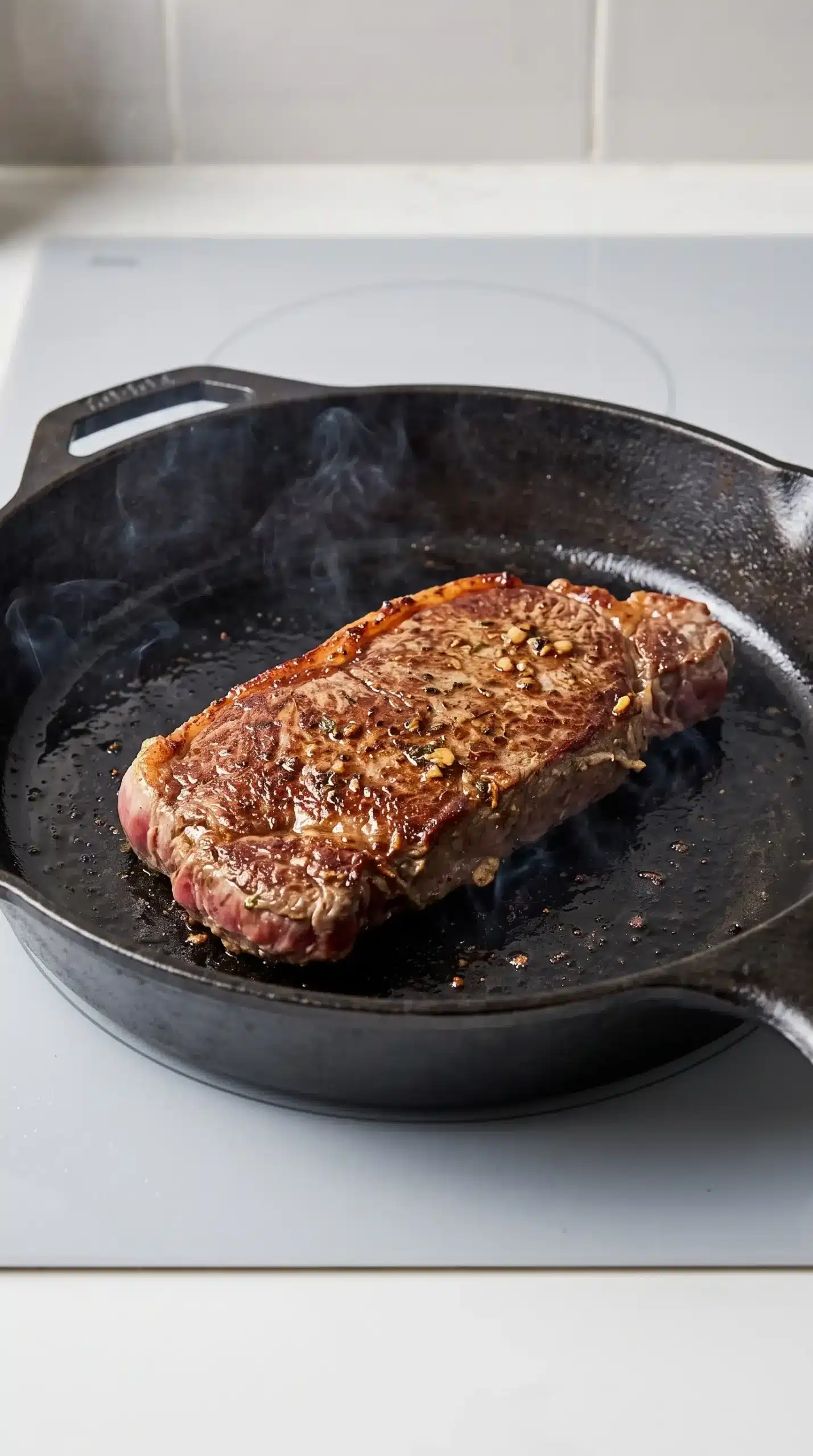
Sirloin is about 1 inch thick, and the supplied cooking method calls for searing it in a hot skillet for 4 to 5 minutes per side. Starting with a properly hot skillet gives the steak the direct heat needed for a flavorful sear without turning the cooking process into a slow, indirect method.
Resting the steak after searing is an important part of the handling process. Once it has rested, slice it thinly so the pieces are easy to distribute through the bowl and combine with the grains, vegetables, and sauces.
A meat thermometer provides the clearest way to judge doneness. The supplied guidance places medium-rare at about 130–135°F and medium at about 140–145°F. Grilling or broiling can also be used instead of skillet searing, with cooking time adjusted to the method and steak.
Common Mediterranean steak bowl mistakes to avoid
One avoidable problem is letting excess moisture from grated cucumber go straight into the tzatziki, which can leave the sauce too loose. Another is slicing the steak before it has rested, since the supplied method specifically calls for resting before thinly slicing. Finally, choosing a grain without considering the desired bowl style can make the finished combination less suited to your preferences; brown rice, quinoa, cauliflower rice, couscous, and farro give you several supported ways to adjust the base.
Separate components make meal prep easier
Preparing the steak, grains, vegetables, and tzatziki ahead of time makes the Mediterranean steak bowl especially practical for planned meals. The supplied guidance recommends keeping leftovers separated in airtight containers in the refrigerator, which also prevents the wet toppings and sauces from being mixed into the grains prematurely.
The marinated steak can be stored for up to 3 days, while the grains and vegetables can last for about a week. Keeping each component separate lets you assemble individual bowls when needed and maintain control over how much tzatziki and vinaigrette goes on each serving.
Advance preparation also works well for the marinade and fresh toppings. The steak can be marinated ahead, while the vegetables and tzatziki can be prepared in advance, leaving assembly as the simple finishing task.
Swap components without losing the bowl’s character
Several substitutions are supported without changing the overall concept. Chicken or tofu can replace the steak, while grilled eggplant or a hearty portobello mushroom can create a vegetarian-friendly version. For a beef-centered meal plan, this bowl can sit alongside beef recipes when you want to keep the protein focus while varying the meal.
Warm and cool elements belong together
Serve the Mediterranean steak bowl with the grains and sliced steak alongside the fresh toppings. Adding tzatziki and vinaigrette at serving time keeps the creamy and bright elements distinct from the warm components.
Pita bread makes a natural side when you want something alongside the bowl, while a light salad can keep the meal focused on fresh flavors. The choice of toppings can be adjusted to suit the balance you prefer without changing the core combination.
For a Mediterranean steak and rice bowl, brown rice provides the straightforward base, while cucumber, tomatoes, red onion, olives, feta, and herbs create the contrasting toppings. A generous spoonful of tzatziki and a drizzle of vinaigrette bring those elements together at the table.
Simple variations keep the bowl flexible
Avocado and roasted red peppers are additional topping options, while changing the protein or grain gives the bowl a different direction. Dairy-free diners can omit feta or choose a dairy-free cheese alternative, and coconut yogurt can replace Greek yogurt in the tzatziki. These changes preserve the adaptable format while keeping the main flavors connected.
Keep the steak tender and the toppings fresh
Thinly sliced rested sirloin, a suitable grain base, crisp vegetables, creamy tzatziki, and bright vinaigrette give the Mediterranean steak bowl its most useful balance. Careful steak handling matters just as much as the toppings: marinating within the suggested window, searing in a hot skillet, checking doneness with a thermometer, and resting before slicing all help the steak work cleanly with the other components.
Questions about doneness, swaps, and storage
Can another cut of steak replace sirloin?
Ribeye or flank steak can be used in place of sirloin. Because different cuts can cook differently, watch the cooking process closely and use a meat thermometer to check the desired doneness.
How can the bowl be made gluten-free?
Choose a gluten-free grain such as quinoa or use cauliflower rice. With that choice, the bowl can be prepared as a gluten-free meal while retaining the steak, vegetables, tzatziki, and vinaigrette combination.
What is the best way to make the bowl dairy-free?
Omit the feta and use coconut yogurt in the tzatziki. A dairy-free cheese alternative can also replace the feta if you want to retain a cheese element.
Can the steak and toppings be prepared ahead?
Yes. The steak can be marinated ahead, and the vegetables and tzatziki can also be prepared in advance. For leftovers, keep the components in separate airtight containers in the refrigerator so they can be assembled when needed.
How can the bowl become vegan?
Use roasted chickpeas, tempeh, or grilled vegetables in place of the steak and choose plant-based yogurt for the tzatziki. Roasted chickpeas are also included as an optional component of the bowl.
Mediterranean Steak Bowl with Tzatziki and Feta
Ingredients
Method
- Combine 3 tbsp olive oil, 2 minced garlic cloves, 1 tbsp lemon juice, 1 tsp dried oregano, 1 tsp dried thyme, ½ tsp salt, and ¼ tsp black pepper. Coat the sirloin steak thoroughly and marinate for 30 minutes to 4 hours.
- Stir together the Greek yogurt, grated and squeezed cucumber, 1 tbsp lemon juice, 1 minced garlic clove, 1 tbsp chopped fresh dill, and salt and pepper to taste. Refrigerate the tzatziki until ready to use.
- Whisk 3 tbsp olive oil with 2 tbsp lemon juice, 1 tsp honey, 1 minced garlic clove, ½ tsp dried oregano, and salt and pepper to taste until combined.
- Heat a skillet and sear the marinated sirloin for 4–5 minutes per side. Transfer the steak from the skillet, let it rest, then slice it thinly.
- Divide the cooked grains between four bowls. Add the sliced steak, roasted chickpeas if using, cherry tomatoes, diced cucumber, sliced red onion, kalamata olives, crumbled feta, and chopped fresh herbs.
- Spoon tzatziki over each bowl and finish with a drizzle of the vinaigrette.