Beef Stroganoff Recipe with Mushrooms and Sour Cream
Old fashioned beef stroganoff brings thinly sliced beef, tender mushrooms, onions, garlic, Dijon mustard, and sour cream together in a creamy skillet sauce. The combination is rich and comforting without requiring a complicated preparation, making an old fashioned beef stroganoff recipe useful for a busy evening as well as a more leisurely meal. Butter and olive oil help build the savory base, while beef broth creates the sauce that ties the ingredients together.
What makes the dish especially satisfying is the contrast between browned beef and the smooth, tangy sauce. Keeping the beef tender and protecting the sour cream from excessive heat are the two most important details. Once those points are handled carefully, the rest of the cooking comes together in one skillet.
Thinly sliced beef sets the texture
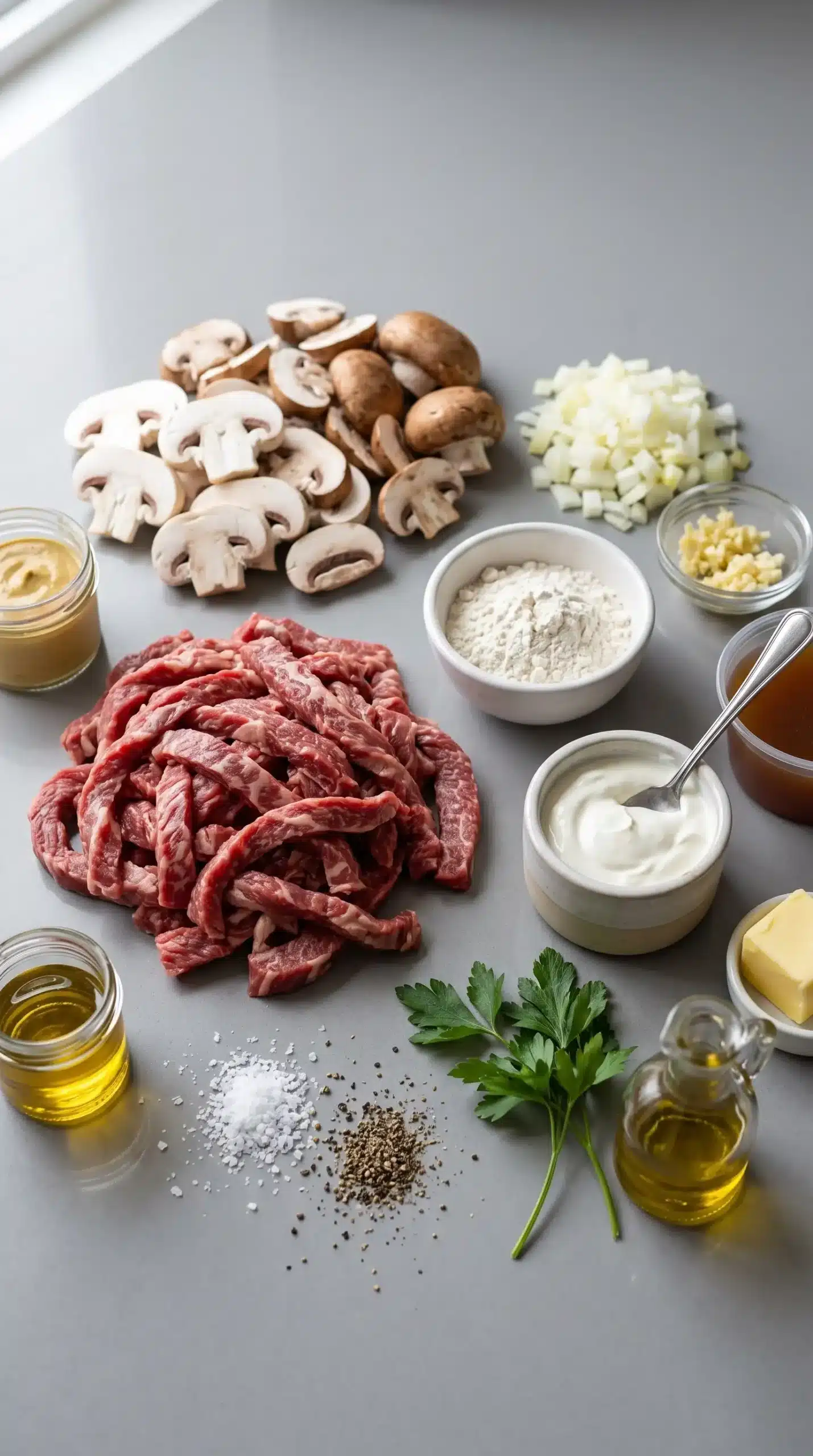
Sirloin or tenderloin works well when cut into thin strips, and cutting against the grain shortens the muscle fibers, helping the cooked beef stay easier to bite. A light coating of flour also serves two purposes: it encourages browning during the quick sear and contributes to the eventual thickness of the sauce.
Fresh button mushrooms should be sliced, while the yellow onion is best sliced consistently so both ingredients soften together. Minced garlic enters later, after the mushrooms, onion, and beef have had a chance to develop their flavors. Fresh parsley is optional, but it can be scattered over the finished dish for color and an extra fresh note.
Flour is especially useful in the traditional preparation because it links the seared beef with the broth as the sauce develops. A gluten-free flour can take its place when needed. The same adjustment should be made to the noodles if they are part of the meal and need to remain gluten-free.
Butter and broth build the savory base
Butter and olive oil are used together at the beginning, giving the skillet a suitable cooking base for the mushrooms, onions, and beef. Beef broth then becomes the liquid foundation of the sauce, while Dijon mustard adds a distinct savory sharpness. Sour cream changes that broth-based mixture into the familiar creamy finish associated with beef stroganoff with sour cream.
| Component | Primary cooking role | Important handling point |
|---|---|---|
| Beef sirloin or tenderloin | Provides the main protein | Slice thinly against the grain and sear quickly |
| Button mushrooms and onion | Build the savory vegetable base | Cook until soft and golden before finishing the sauce |
| Beef broth | Forms the liquid foundation | Let it simmer gently so the sauce can reduce slightly |
| Dijon mustard | Adds savory depth and sharpness | Stir it into the broth before the creamy finish |
| Sour cream | Creates the creamy texture | Stir in off the heat and avoid boiling afterward |
One skillet keeps the cooking focused
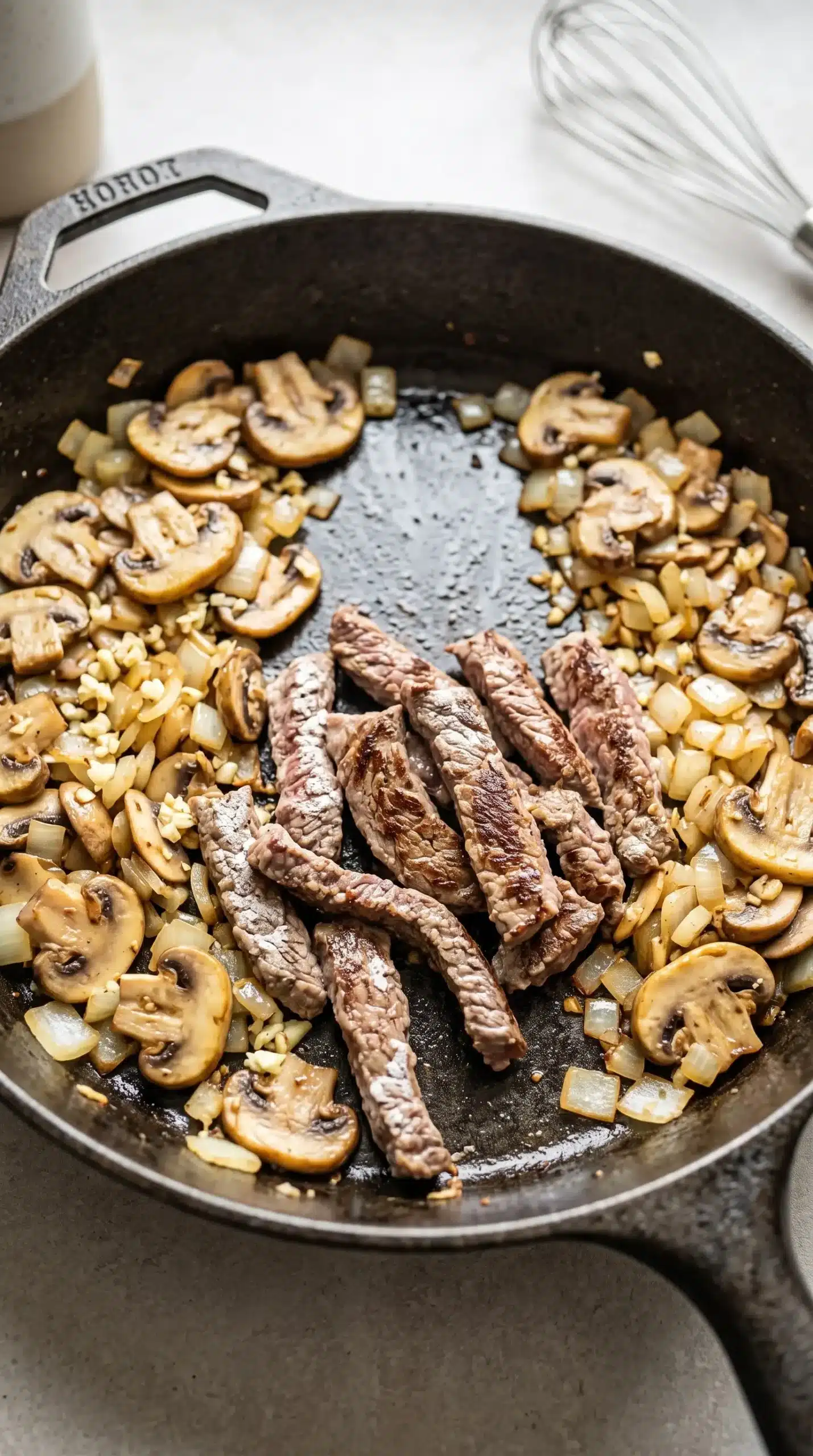
The mushroom and onion mixture establishes the flavor base in the same skillet that cooks the beef. Once those vegetables are soft and golden, moving them toward the sides creates space for the beef strips in the center. That arrangement makes it easier to sear the meat quickly while keeping the cooked vegetables in the pan.
Heat control becomes particularly important at the point when the broth and mustard are added. A gentle simmer gives the liquid time to meld with the browned ingredients and reduce slightly. After the skillet leaves the heat, sour cream can be stirred in until the sauce is smooth.
For an old fashioned beef stroganoff, the short searing stage deserves attention. Beef that is browned but not overcooked is more likely to retain the tenderness expected from thinly sliced sirloin or tenderloin. The flour coating also means the skillet should be managed carefully so the meat has room to brown.
Quick searing protects tender beef
Overcrowding is one of the easiest ways to interfere with the desired beef texture. When too much meat is packed into the cooking area, the strips have less opportunity to brown properly. Keeping the beef in a single workable layer gives the pieces better contact with the hot skillet.
- Cut: Slice against the grain into thin strips so the finished beef is easier to eat.
- Coat: Use a light flour dredge to support browning and sauce thickening.
- Brown: Sear quickly until the strips are browned without cooking them excessively.
- Separate: Give the meat enough room in the skillet instead of overcrowding it.
Gentle heat protects the sour cream finish
Sour cream is the ingredient that requires the most deliberate heat control. Once the broth and Dijon mustard have simmered and reduced slightly, the pan should come off the heat before the sour cream is incorporated. Boiling after the sour cream has been added can cause the sauce to curdle, changing the smooth texture.
A low-temperature approach also makes reheating easier later. When leftovers are warmed, gentle heat helps the creamy sauce loosen without subjecting it to the aggressive bubbling that can affect its texture. A small amount of water or broth can be used if the sauce has become too thick.
Common old fashioned beef stroganoff mistakes to avoid
Several problems can be traced directly to how the ingredients are handled in the skillet. Thickly cut beef can lose the tenderness that thin strips provide, while crowded meat may not brown as intended. Vegetables also need enough cooking time to become soft and golden before the liquid is introduced.
Another important error occurs at the creamy stage. Keeping the pan over heat while adding sour cream creates an unnecessary risk of curdling. Removing the skillet from the heat first gives the sour cream a gentler environment for blending into the broth and mustard mixture.
Seasoning should be checked after the sauce becomes creamy, since that is the finished flavor stage. Salt and freshly ground black pepper can then be adjusted to taste. Additional garlic or mustard is also an option when a stronger flavor is desired, but either should be added according to personal preference.
Buttered noodles make the classic pairing
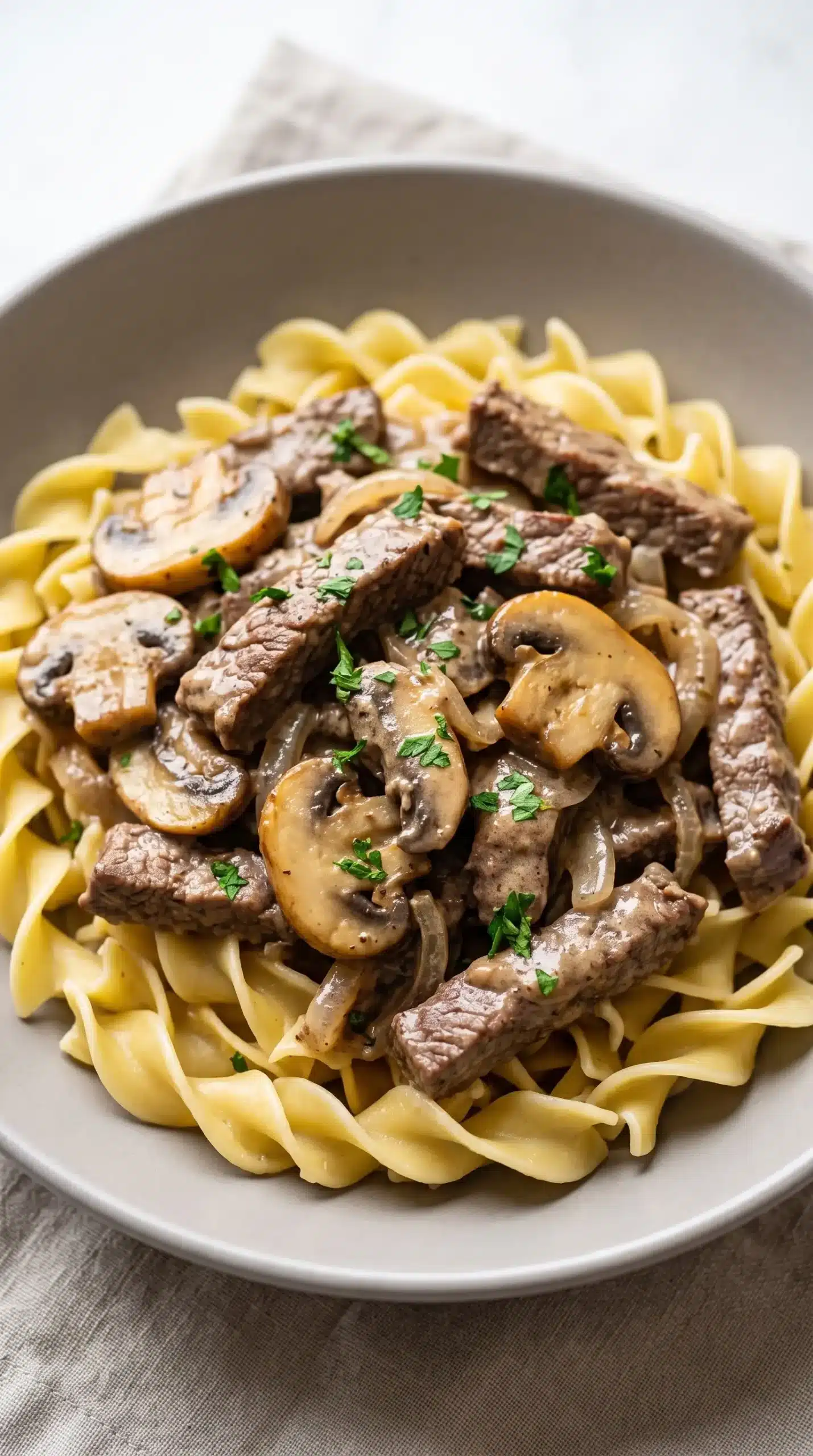
Buttered egg noodles are a natural serving base because they provide a soft foundation for the creamy beef and mushroom sauce. Spoon the stroganoff over the noodles and finish with chopped fresh parsley if desired. The sauce is substantial enough to coat the noodles and turn them into part of the main meal.
Mashed potatoes offer another comforting option. Their soft texture works with the same creamy sauce while changing the character of the plate. For a pasta-based meal with a rich beef sauce, creamy beef and pasta can be served when egg noodles are not part of the meal.
Rice changes the serving balance
Steamed rice keeps the meal straightforward and lets the creamy sauce remain the dominant element. Brown rice can also be used when a whole-grain option is preferred. The supplied preparation specifically identifies brown rice as a way to make the meal a healthier choice while retaining the basic beef stroganoff combination.
| Serving base | Texture with sauce | Best fit for |
|---|---|---|
| Buttered egg noodles | Soft and comforting | A classic, hearty presentation |
| Mashed potatoes | Rich and smooth | A more substantial comfort-food plate |
| Steamed rice | Lightly textured and neutral | A simple rice-based meal |
| Brown rice | Whole-grain and hearty | A more nutritious serving approach |
Leftover stroganoff needs gentle reheating
Refrigerated leftovers can be kept in an airtight container for up to 3 days. When it is time to serve them again, warm the stroganoff in a skillet over low heat. A little water or beef broth can loosen a sauce that has thickened during refrigeration.
The creamy sauce deserves particular care during reheating because it contains sour cream. Slow warming helps preserve its texture. If the sauce appears too thick, adding a small amount of liquid while stirring can restore a smoother consistency.
Freezing works best with a sour cream adjustment
Beef stroganoff can be frozen, but the sour cream may change texture after thawing. For that reason, the creamy component can be added after reheating when freezing is part of the preparation plan. That approach helps avoid relying on frozen sour cream for the finished texture.
Simple substitutions keep the dish flexible
A dairy-free version can use olive oil in place of butter, while a gluten-free preparation can use gluten-free flour. Gluten-free noodles or rice can then be selected for serving when needed. These changes preserve the basic skillet preparation while accommodating different ingredient preferences.
Vegetarian cooks can replace the beef with portobello mushrooms or tofu. Different mushroom varieties can also be used to vary the flavor. Whole wheat flour is another possible substitution when a less refined flour is preferred.
Old fashioned beef stroganoff brings protein and vegetables together
Beef contributes protein, iron, and other essential vitamins, while mushrooms provide nutrients and antioxidants. The combination creates a filling meal with substantial savory components. Fresh ingredients support the overall nutritional character of the dish.
Serving the stroganoff with brown rice offers a whole-grain option that can make the meal healthier. The choice of serving base therefore changes more than presentation; it can also influence the overall nutritional balance of the plate.
The right heat makes old fashioned beef stroganoff creamy and tender
Thin beef strips, adequate skillet space, and a quick sear establish the texture that carries through the finished dish. From there, a gentle broth-and-mustard simmer develops the sauce before the pan is removed from the heat. That sequence protects the tenderness of the beef and gives the creamy mixture a smooth finish.
Old fashioned beef stroganoff is at its best when the last stage is handled carefully. Stirring in sour cream away from direct heat prevents unnecessary curdling, while serving the sauce over noodles, potatoes, or rice gives the finished skillet meal a satisfying foundation.
Old fashioned beef stroganoff questions about texture and storage
Why should beef be sliced against the grain?
Slicing against the grain shortens the muscle fibers, which helps the thin strips feel more tender when eaten. Sirloin or tenderloin should therefore be cut into thin pieces with the direction of the fibers in mind before seasoning and dredging.
How can the sour cream sauce stay smooth?
Take the skillet off the heat before stirring in the sour cream, and do not boil the sauce afterward. The lower heat at this stage reduces the chance of curdling and helps the sour cream blend smoothly with the broth and Dijon mustard.
What can replace the beef for a vegetarian version?
Portobello mushrooms or tofu can replace the beef for a vegetarian adaptation. Different types of mushrooms are also suitable when the intention is to create varied mushroom flavors while keeping the overall creamy skillet preparation.
Can old fashioned beef stroganoff be made gluten-free?
Yes. Replace the all-purpose flour with gluten-free flour, then use gluten-free noodles or rice for serving. The rest of the supplied ingredient combination can remain centered on beef, mushrooms, onion, garlic, broth, Dijon mustard, and sour cream.
How should refrigerated leftovers be reheated?
Warm the leftovers slowly in a skillet over low heat. If the sauce has thickened, add a little water or broth to loosen it while stirring. Gentle reheating is especially useful because the finished sauce contains sour cream.
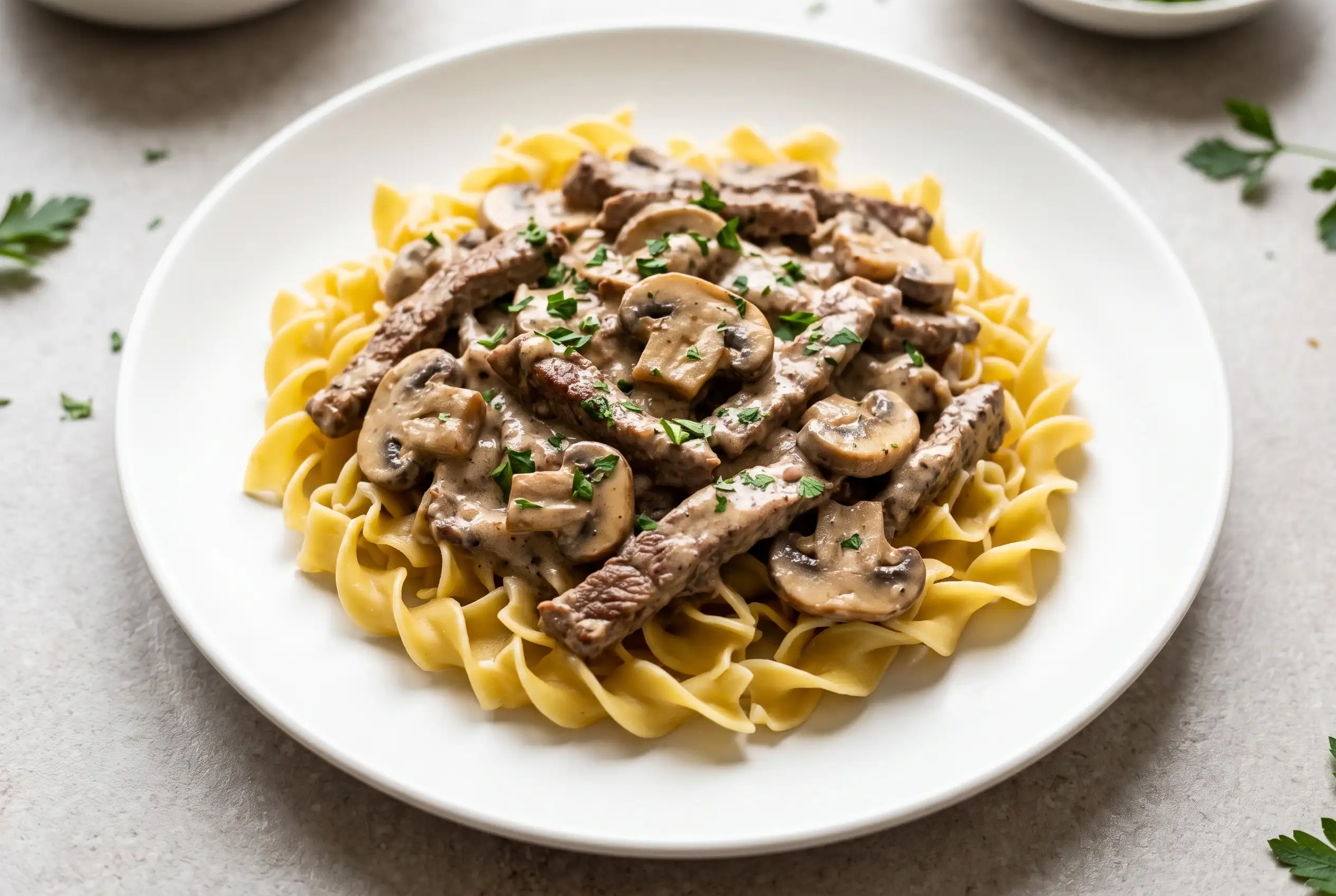
Beef Stroganoff Recipe with Mushrooms and Sour Cream
Ingredients
Method
- Season the sliced beef with salt and black pepper. Coat the beef strips lightly with the flour.
- Warm the butter and olive oil in a large skillet over medium heat. Add the mushrooms and onion, cooking until softened and browned.
- Move the mushrooms and onion toward the edges of the skillet. Place the floured beef in the center and sear briefly until browned, taking care not to overcook it.
- Add the minced garlic and cook briefly until fragrant. Pour in the beef broth and Dijon mustard, then simmer gently until the sauce has reduced slightly.
- Take the skillet off the heat and mix in the sour cream until the sauce becomes smooth and creamy. Do not bring the sauce to a boil after adding the sour cream. Adjust the salt and black pepper to taste.
- Serve the beef stroganoff immediately over buttered egg noodles, mashed potatoes, or steamed rice. Finish with chopped fresh parsley if desired.