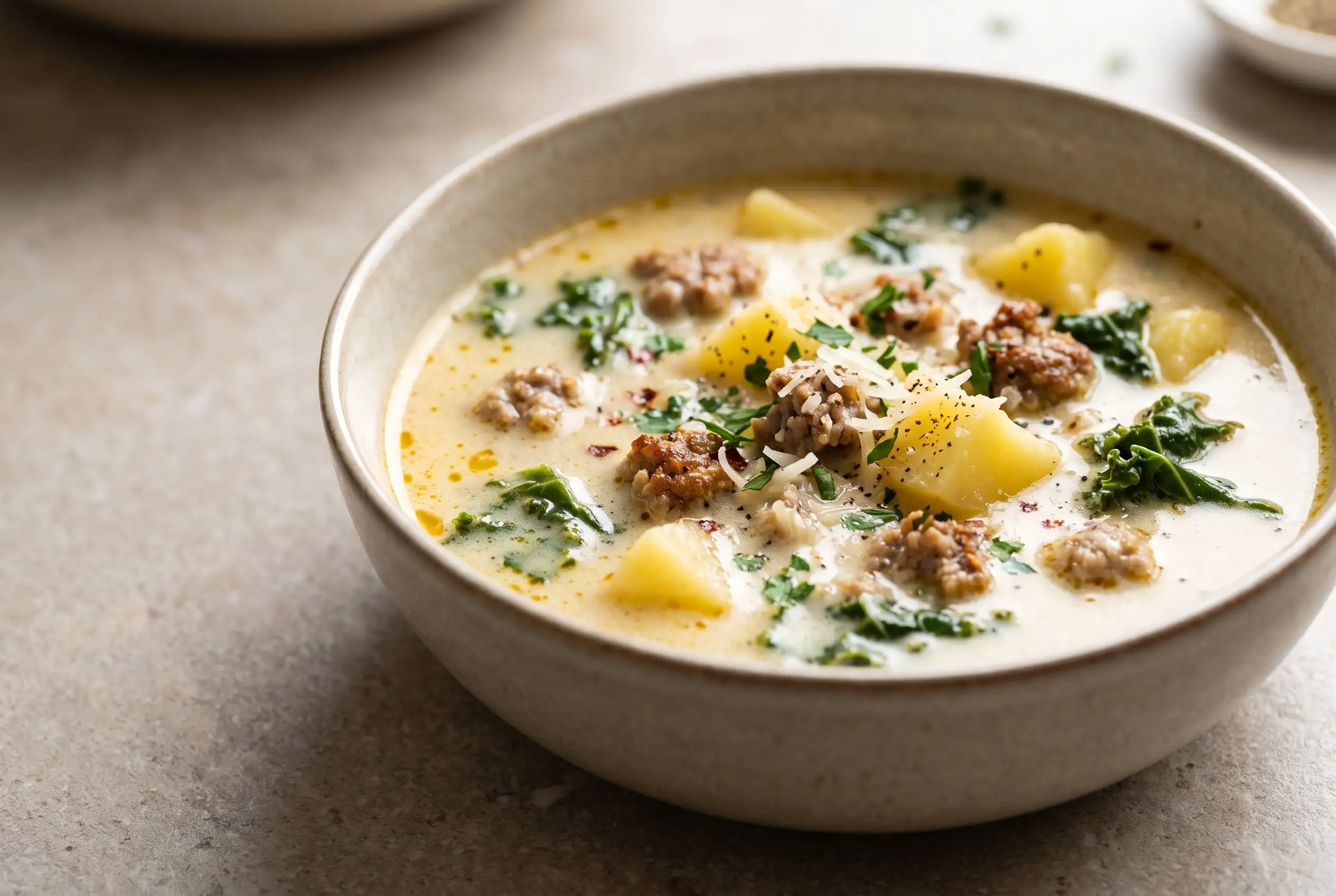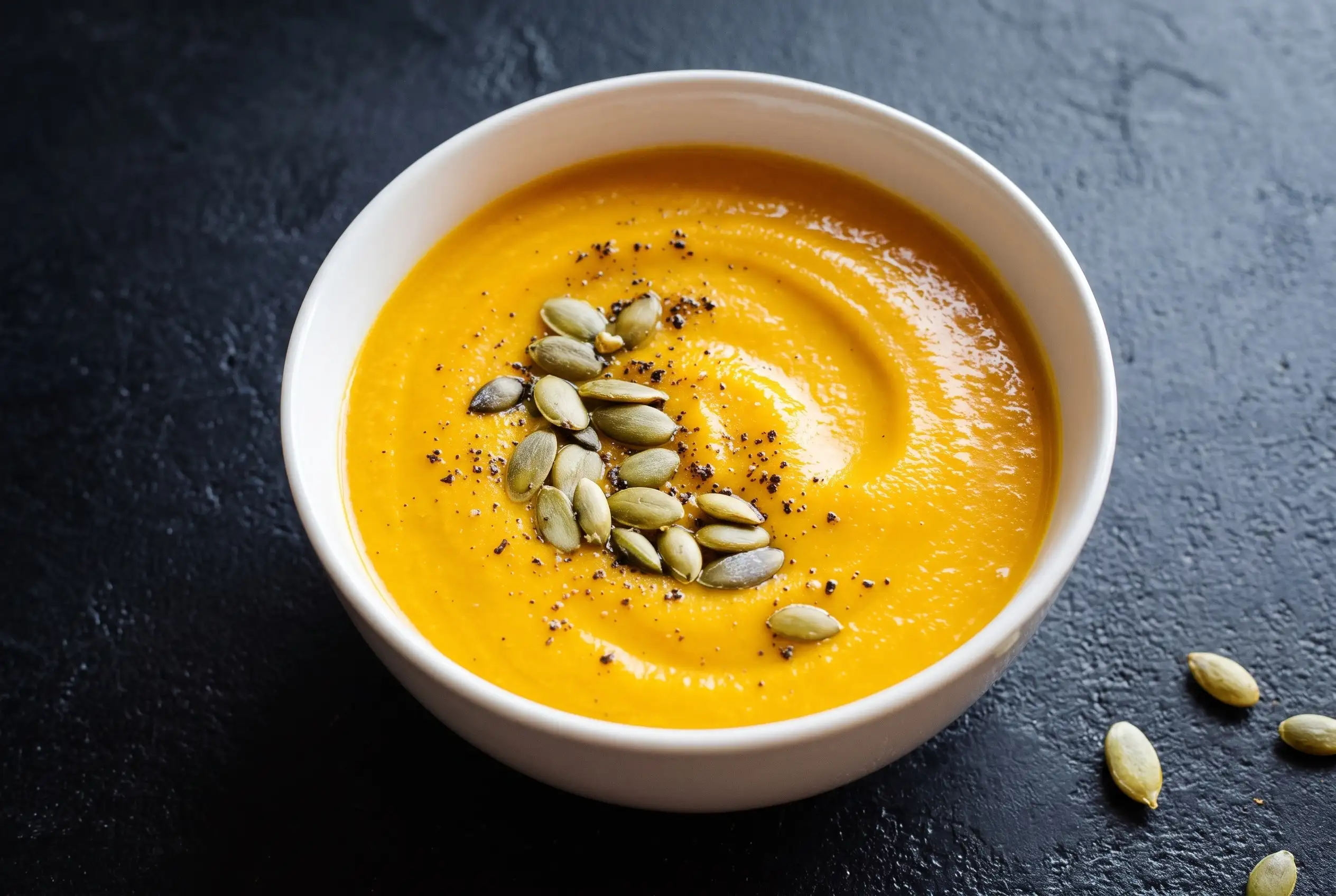
Ratatouille Soup with Mushrooms, Potatoes and Cream
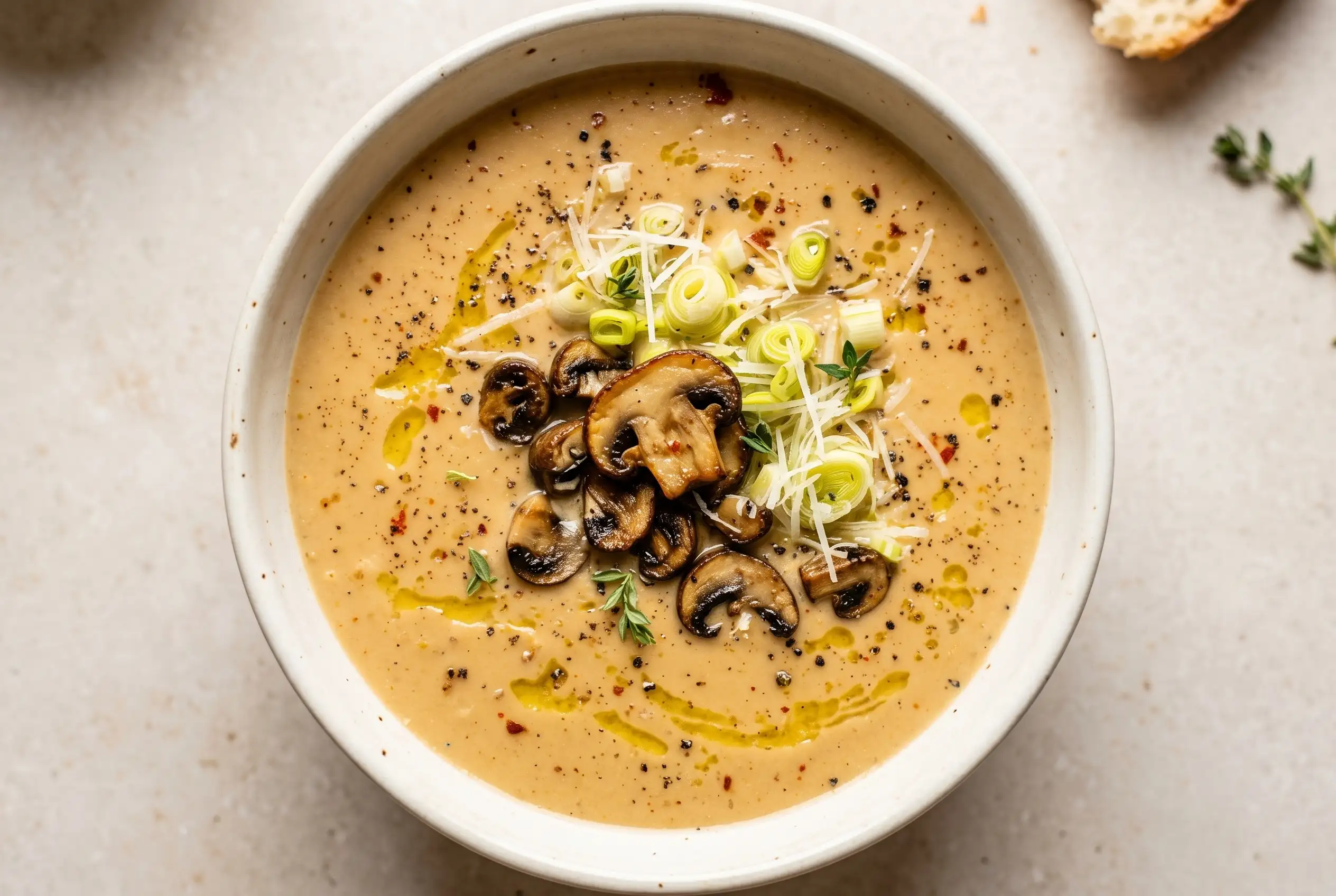
Remy s ratatouille soup brings together earthy mushrooms, tender potatoes, onions, leeks, garlic, fresh herbs, Parmesan, and cream for a smooth, comforting bowl. The vegetables are cooked until tender before the soup is blended, creating a creamy ratatouille soup with plenty of savory character.
Why Remy s Ratatouille Soup Works
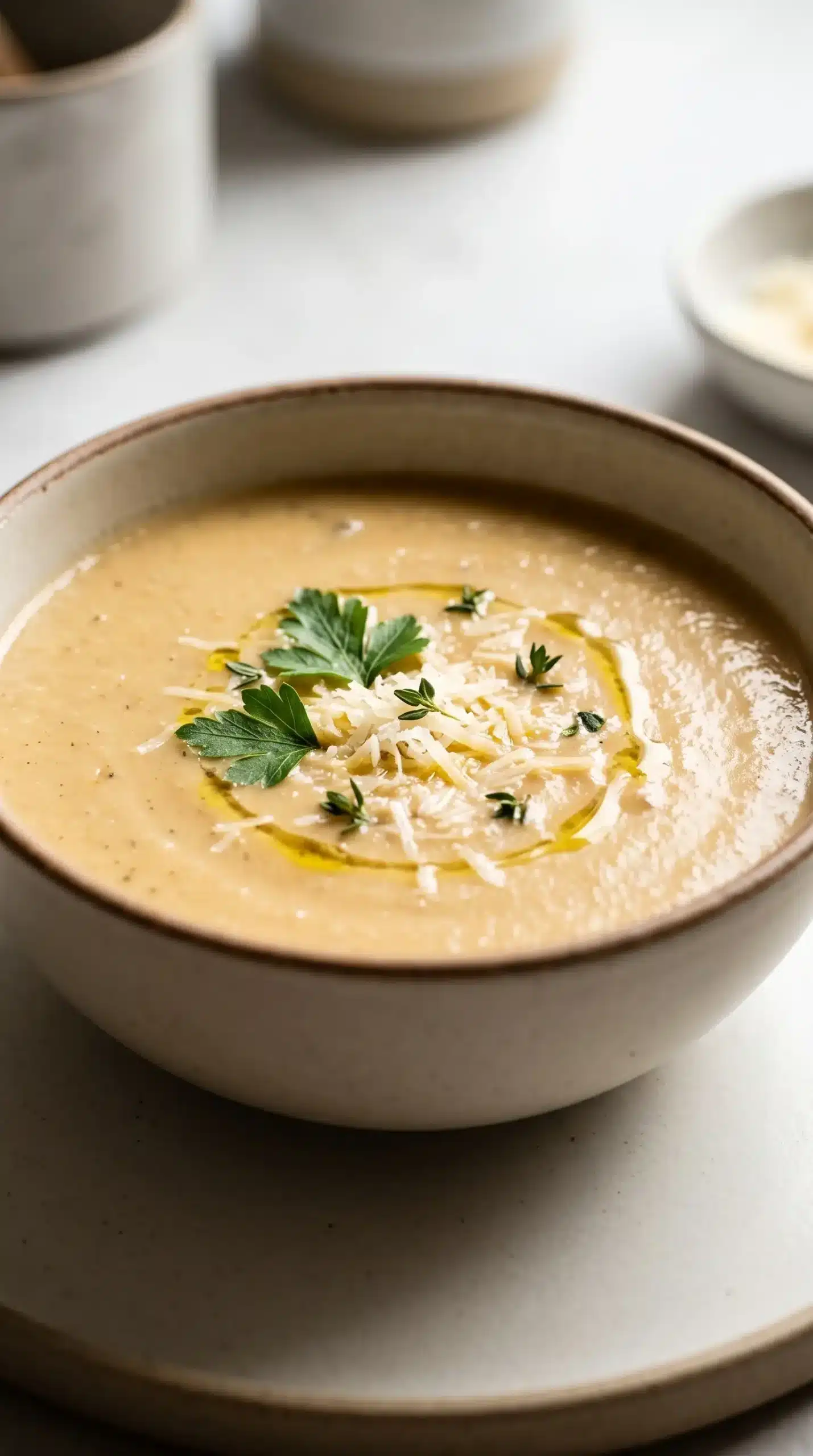
Ratatouille soup has a particularly cozy texture because potatoes help create a substantial base once they are blended. Mushrooms deepen the savory side of the soup, while onions, leeks, and garlic build the flavor underneath.
Fresh thyme, parsley, marjoram, and lemon balm give the broth a layered herbal quality. Keeping the herbs in the pot while the potatoes cook allows their flavor to develop before they are removed for blending.
Parmesan and heavy cream bring richness near the end of cooking. For a plant-based approach, nutritional yeast can replace the Parmesan, and plant-based cooking cream can replace the heavy cream.
The Vegetables That Shape the Soup
The combination of mushrooms and potatoes is especially important to the finished consistency. Mushrooms release moisture as they cook and become golden, while potatoes soften in the broth and help make the blended soup hearty.
| Ingredient group | Recipe role | Useful cooking cue |
|---|---|---|
| Onions and leeks | Savory foundation | Cook until soft before adding mushrooms |
| Mushrooms and garlic | Deep savory flavor | Cook until mushrooms release moisture and turn golden |
| Potatoes | Body and texture | Simmer until completely tender before blending |
| Fresh herbs | Herbal flavor | Remove before blending |
| Parmesan and cream | Rich finishing texture | Stir in after the vegetables are tender |
Building Flavor Before the Broth Goes In
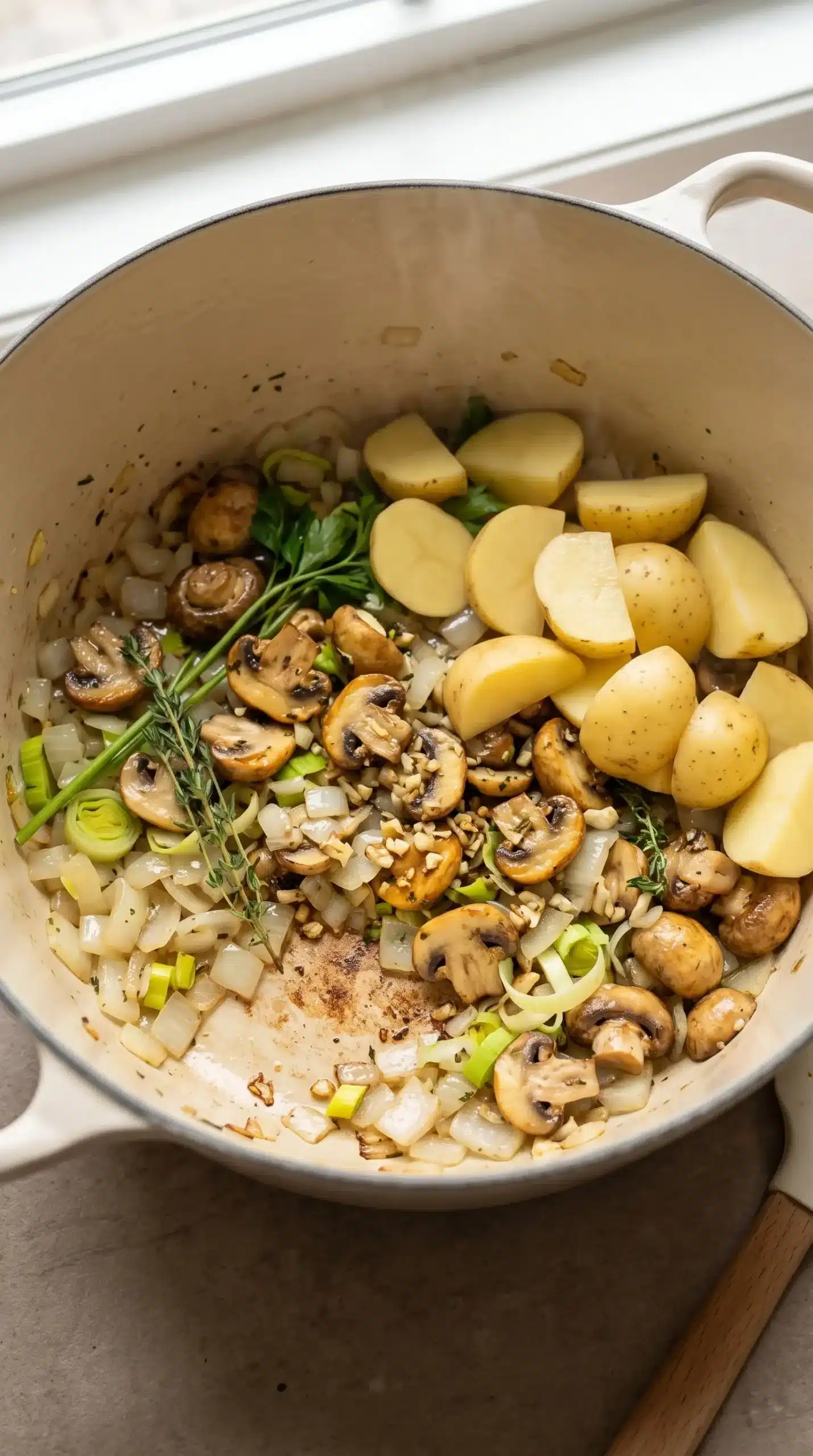
Softening the onions and leeks first gives the soup a mellow base. They need enough time to become tender without being rushed, since the later ingredients depend on that foundation for balance.
Once the mushrooms, garlic, salt, and pepper enter the pot, frequent stirring matters. The mushrooms should release their moisture and develop golden color, a key step when building a mushroom-forward soup such as Hungarian mushroom soup.
Adding the potatoes after the mushrooms have cooked keeps the vegetables from becoming overwhelmed by excess moisture too early. The broth and optional white wine then provide the liquid needed to simmer everything until the potatoes are tender.
Herb Choices for a Balanced Bowl
Thyme, parsley, marjoram, and lemon balm are used together here, giving the soup several layers of fresh herbal flavor. Their presence is noticeable without requiring a large amount of seasoning.
- Thyme: Adds a savory herbal note that suits the mushrooms and potatoes.
- Parsley: Brings a fresh character to the cooked vegetable base.
- Marjoram: Contributes another gentle herbal layer.
- Lemon balm: Provides a distinct fresh note within the herb combination.
Fresh herbs should be removed before the soup is blended. Dried herbs can also be used when fresh herbs are unavailable, with the amount adjusted to taste.
Choosing the Broth and Creamy Finish
The broth is one of the easiest places to adapt the soup to the meal. Vegetable, chicken, or beef broth can all be used, so the liquid can match the preference of the people being served.
Salt deserves special attention because the broth and Parmesan can already contribute seasoning. Taste after the cheese and cream have been incorporated, then add more salt only if the soup needs it.
White wine is optional, so the soup can be made without it. When included, it joins the broth during the simmering stage and contributes another layer to the finished flavor.
Blending for the Right Texture
Once the potatoes are soft, the soup is ready for its texture-defining stage. Removing the herbs first prevents the fibrous stems and leaves from becoming part of the blended mixture.
A stick blender allows the soup to be processed directly in the pot after it has cooled enough to handle safely. A regular blender works too, but hot soup should be handled carefully in small batches.
Texture is flexible. A completely blended bowl gives the smoothest result, while leaving some pieces unblended creates a heartier soup with more noticeable vegetable texture.
Keeping Remy s Ratatouille Soup Safe to Handle
Hot liquid needs careful handling during blending. Letting the soup cool until it is safe to manage reduces the risk associated with transferring or blending hot contents.
Mistakes That Can Throw Off Ratatouille Soup
Skipping the mushroom browning stage can leave the soup without the deeper flavor that develops as mushrooms release moisture before browning. Stirring often helps prevent burning while still allowing that color to develop.
Blending before the potatoes are fully tender can make it difficult to achieve the intended smooth texture. Check the potatoes before processing so the vegetables are soft enough to blend easily.
Leaving the herbs in the pot can change the texture of the finished soup. Removing the herb sprigs before blending keeps the mixture smoother.
Adding extra salt too early is another avoidable problem. Broth and Parmesan may already be salty, so tasting near the end gives a more accurate basis for adjustment.
Serving a Bowl of Remy s Ratatouille Soup
Crusty bread makes a natural side for the creamy soup and helps turn a bowl into a more complete meal. A fresh salad offers another simple pairing for lunch or dinner.
Finishing Touches That Add Contrast
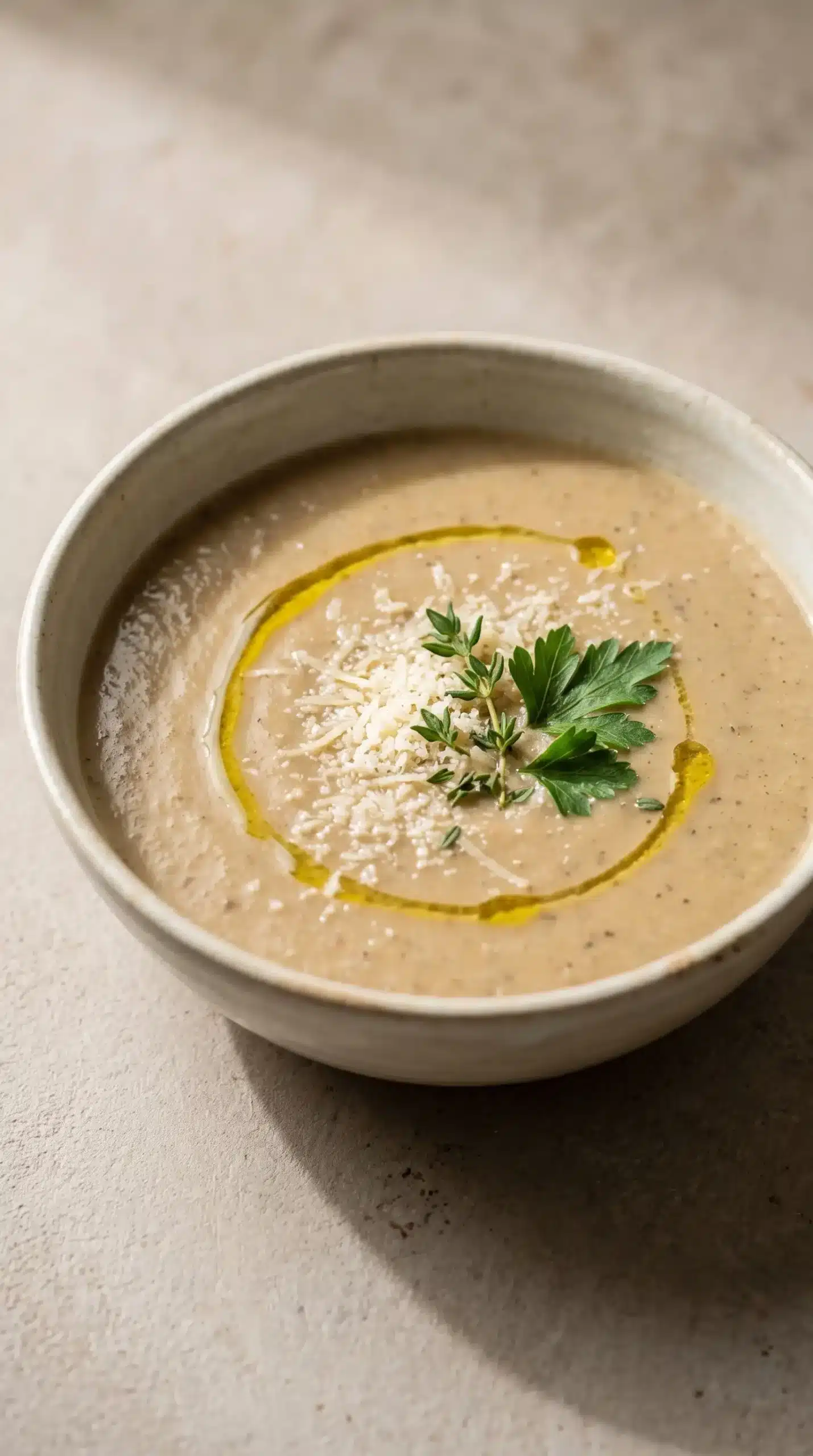
Extra Parmesan provides a salty, savory finish against the smooth soup. A drizzle of olive oil adds another layer of richness, while fresh herbs give the surface a fresh visual and herbal accent.
The toppings are best added just before serving so they remain distinct from the blended base. Keeping some garnish visible also gives the smooth soup a little textural and visual contrast.
Simple Changes for Remy s Ratatouille Soup
Zucchini or bell peppers can be added when a broader vegetable combination is desired. The supplied recipe also leaves room for seasoning changes, including the addition of chili flakes for a spicier character.
Vegetable broth, nutritional yeast, and plant-based cooking cream provide the stated vegan-friendly substitutions. Together, those choices change the finishing ingredients while preserving the vegetable-centered character of the soup.
Storing and Reheating the Blended Soup
Leftover soup should cool before being transferred to an airtight container for refrigeration. It keeps for about 3 to 4 days in the refrigerator.
Freezing is also an option for longer storage, with the soup suitable for freezing for up to 3 months. Use a freezer-safe container and allow the soup to cool before freezing.
Gentle reheating is the best approach when serving stored soup. Reheat only as needed and stir so the warmed soup returns to an even consistency.
The Best Texture Comes From Tender Potatoes
Tender potatoes determine how smoothly Remy s Ratatouille Soup can be blended. Once they are soft, the herbs can be removed, the Parmesan and cream incorporated, and the soup processed to the texture you prefer.
That sequence also makes the cooking judgment straightforward: focus on tenderness before blending, then use tasting and texture to decide the final seasoning and consistency.
Questions About Potatoes, Cream, and Freezing Remy s Ratatouille Soup
Can I make Remy s Ratatouille Soup without white wine?
Yes. The white wine is optional, so it can simply be omitted while the broth remains the main cooking liquid.
What can I use instead of Parmesan?
Nutritional yeast is the stated vegan alternative to Parmesan. It can be stirred into the soup during the same finishing stage.
Can I make the soup completely smooth?
Yes. Blend the cooked soup thoroughly with a stick blender or regular blender after removing the herbs. For a chunkier result, leave some of the vegetables unblended.
How do I make the soup vegan?
Use vegetable broth, nutritional yeast in place of Parmesan, and plant-based cooking cream instead of heavy cream. These substitutions keep the preparation centered on vegetables and herbs.
Can I use dried herbs instead of fresh ones?
Yes. Dried herbs can be used when fresh herbs are unavailable, with the quantity adjusted according to taste.
Can I freeze the soup after adding the cream?
Yes. The supplied storage guidance allows the finished soup to be frozen for up to 3 months. Cool it first and place it in a freezer-safe container.
Ratatouille Soup with Mushrooms, Potatoes and Cream
Ingredients
Method
- Warm the olive oil in a large soup pot over medium heat. Add the onions and leeks and cook for 3 to 5 minutes, stirring occasionally, until softened.
- Stir in the mushrooms, garlic, salt, and black pepper. Cook for about 5 minutes, stirring often, until the mushrooms release their moisture and start to brown.
- Add the potatoes, broth, optional white wine, thyme, parsley, marjoram, and lemon balm. Bring the mixture to a simmer.
- Cover the pot and simmer for 15 to 20 minutes, or until the potatoes are tender.
- Take out the thyme, parsley, marjoram, and lemon balm. Stir in the Parmesan and heavy cream until evenly combined.
- Taste the soup and add more salt as needed, accounting for the saltiness of the broth.
- Let the soup cool enough to handle safely. Blend with a stick blender or in small batches using a regular blender until smooth or partly chunky, according to preference.
- Serve hot. If desired, finish with extra Parmesan, a drizzle of olive oil, and fresh herbs.