Greek Lemon Chicken Soup with Tender Chicken and Rice
Greek Lemon Chicken Soup for Bright, Comforting Flavor
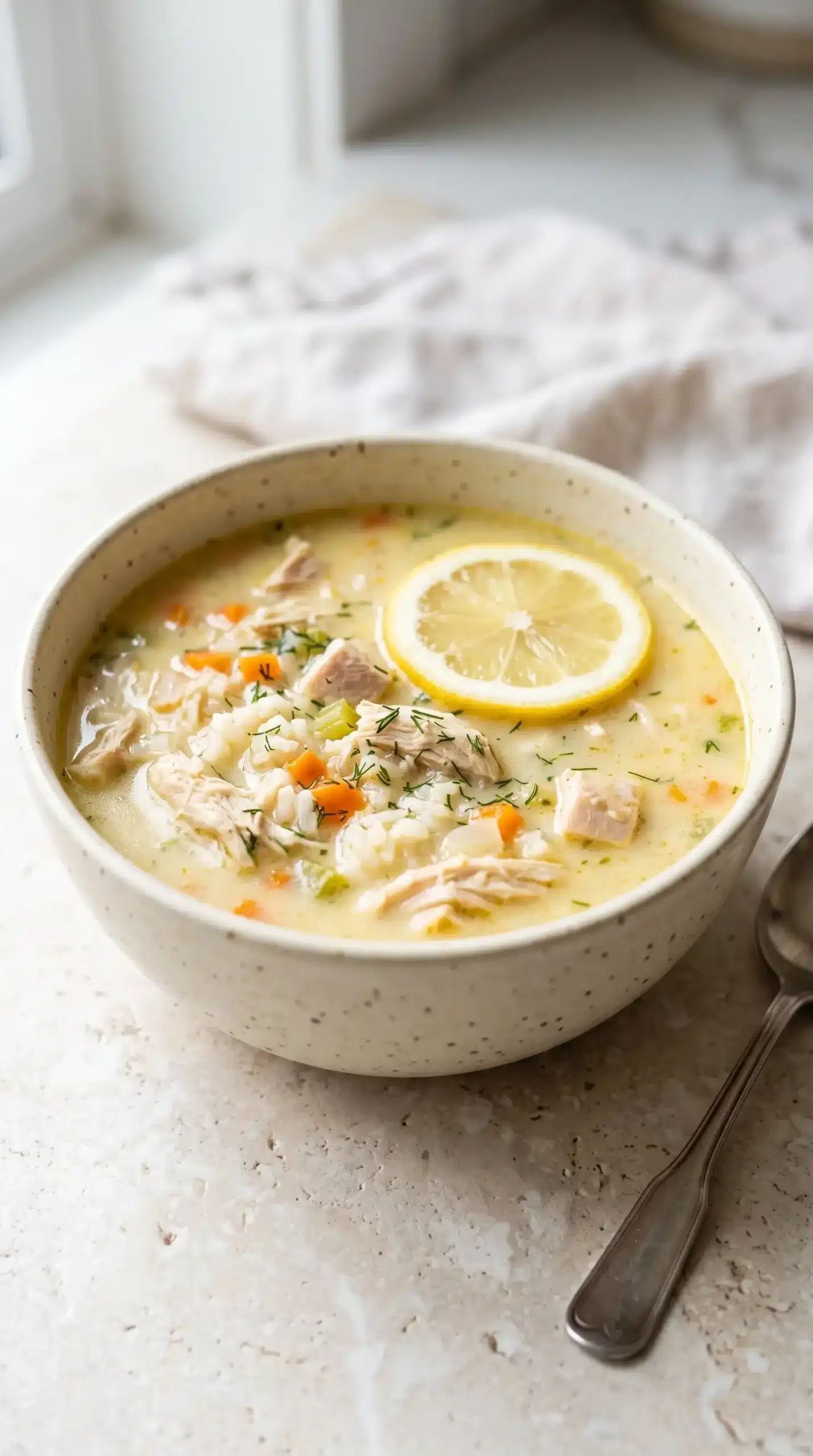
Greek lemon chicken soup brings together tender chicken, cooked white rice, vegetables, chicken broth, and fresh lemon juice in a warm, satisfying bowl. The lemon gives the soup a bright character, while the rice and chicken make it substantial enough to serve as a complete meal.
Fresh lemon juice is especially important because its lively flavor balances the savory broth and hearty ingredients. Carrots, onion, and celery round out the base, creating a comforting combination that works beautifully for a cold day or whenever a warm bowl is welcome.
Easy Greek lemon chicken soup also has a useful make-ahead quality. Leftovers can be refrigerated, and leftover cooked chicken can be used when preparing a batch. A little care during the egg-yolk step keeps the soup smooth and helps preserve its creamy texture.
Fresh Lemon Shapes the Soup’s Flavor
Freshly squeezed lemon juice gives Greek lemon chicken soup its defining brightness. The measured lemon juice goes directly into the broth mixture, so its flavor becomes part of the soup instead of being added only at serving time.
Thin lemon slices have a separate purpose at the table. Adding one to each bowl provides an attractive finish and allows extra lemon flavor to be added as the soup is enjoyed.
Keeping both forms of lemon in place creates a layered citrus character: juice contributes to the soup itself, while a slice provides a fresh finishing touch. That distinction is useful when deciding what can be changed without losing the intended character of the bowl.
Rice and Chicken Give the Broth Substance
Cooked white rice is added near the end, after the broth has been thickened and the egg yolks have been incorporated. Because the rice is already cooked, it only needs enough time in the pot to become heated through.
Diced cooked chicken follows the same finishing approach. Leftover chicken can be used successfully, whether it is shredded or diced, making the soup a practical way to turn cooked chicken into another meal, much like the hearty combination found in chicken-and-rice soup.
Rice can continue absorbing broth when the soup sits, especially when prepared ahead. A small amount of water may therefore be needed during reheating if the soup has become thicker after refrigeration.
Vegetables Build the Savory Base
Carrots, onion, and celery cook together in the chicken broth with the lemon juice, chicken soup base, and white pepper. Their role is especially noticeable in the first simmer, when they soften and become integrated into the broth.
- Carrots: Shredded carrots soften during the initial simmer.
- Onion: Finely chopped onion becomes part of the savory foundation.
- Celery: Finely chopped celery adds another vegetable element to the broth.
Gentle Egg-Yolk Tempering Keeps the Soup Smooth
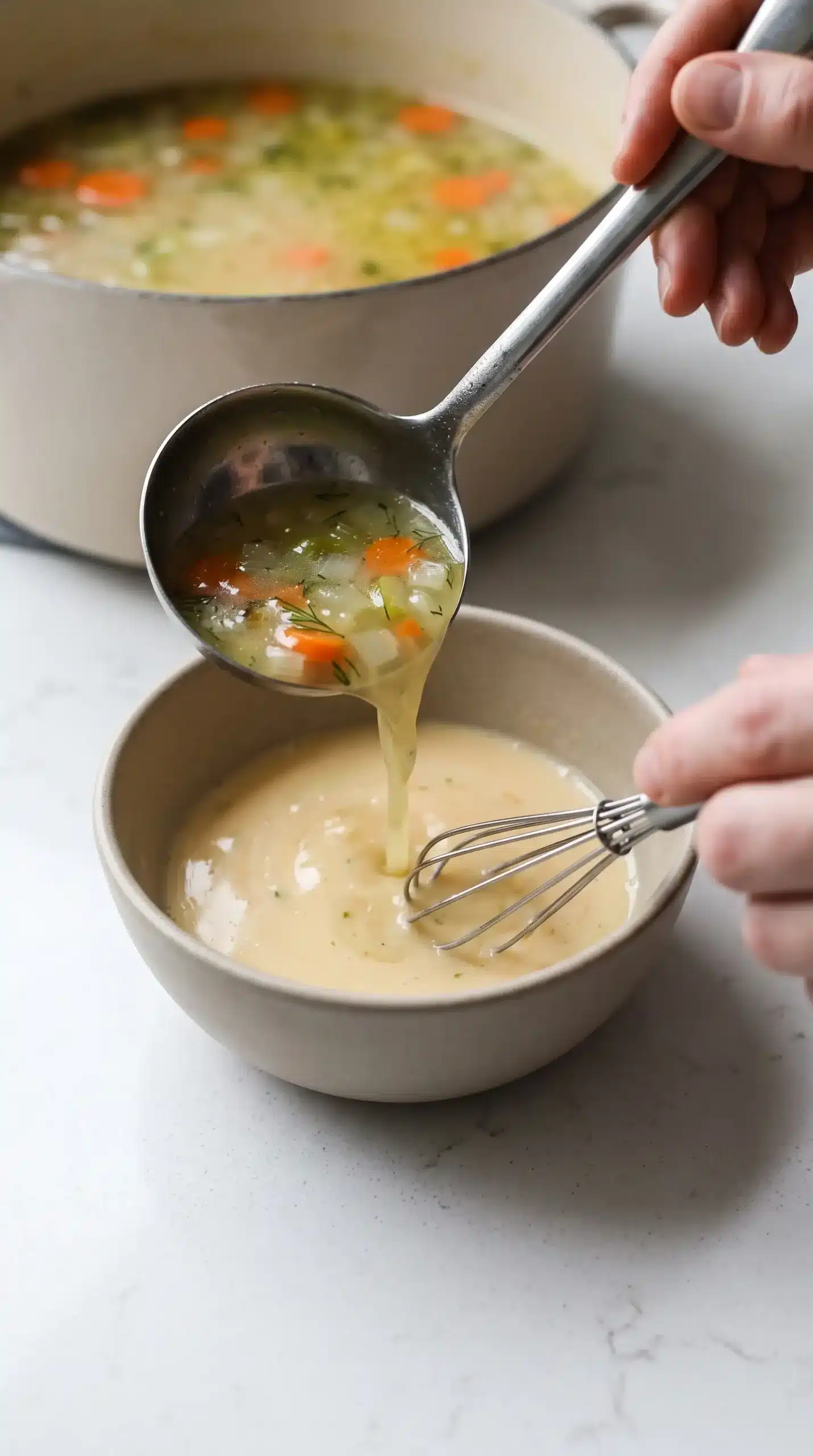
Egg yolks are the part of Greek lemon chicken soup that requires the most attention. They are beaten separately until pale and creamy before any hot liquid is introduced.
Gradually whisking hot soup into the yolks raises the temperature of the egg mixture progressively, helping prevent the yolks from cooking too quickly when they return to the pot.
Once tempered, the egg mixture can be poured back into the soup while stirring continuously. Gentle cooking is important at this point; the soup should become heated through without reaching a boil.
Watching the heat is more useful than relying on a fixed visual cue. Keep the soup at a gentle temperature after the yolks are added, and maintain steady stirring as the mixture comes together.
Small Thickening Choices Change the Texture
Margarine and all-purpose flour form a simple thickening mixture for the soup. Combining them until smooth before introducing the mixture to the pot helps it disperse into the simmering broth.
Frequent stirring during the thickening stage matters because the flour mixture needs to become integrated with the liquid. The soup is cooked for several minutes at this point, allowing it to become slightly thicker before the egg yolks are introduced.
Greek Lemon Chicken Soup Mistakes to Avoid
Boiling after the egg yolks are added is one of the clearest pitfalls. Excessive heat can cause the yolks to cook too quickly, so keep the soup gentle once the tempered mixture returns to the pot.
Another problem comes from adding hot soup to the yolks too quickly. A gradual ladleful-by-ladleful approach with constant whisking gives the yolks time to adjust to the heat.
Skipping the frequent stirring during thickening can also interfere with the intended consistency. Stir the flour-and-margarine mixture into the simmering soup and continue stirring as it cooks.
Overlooking the rice after refrigeration can change the texture of leftovers. Cooked rice absorbs some of the surrounding broth while the soup rests, so check the consistency before reheating and add a little water if needed.
Simple Serving Pairings Complete the Bowl
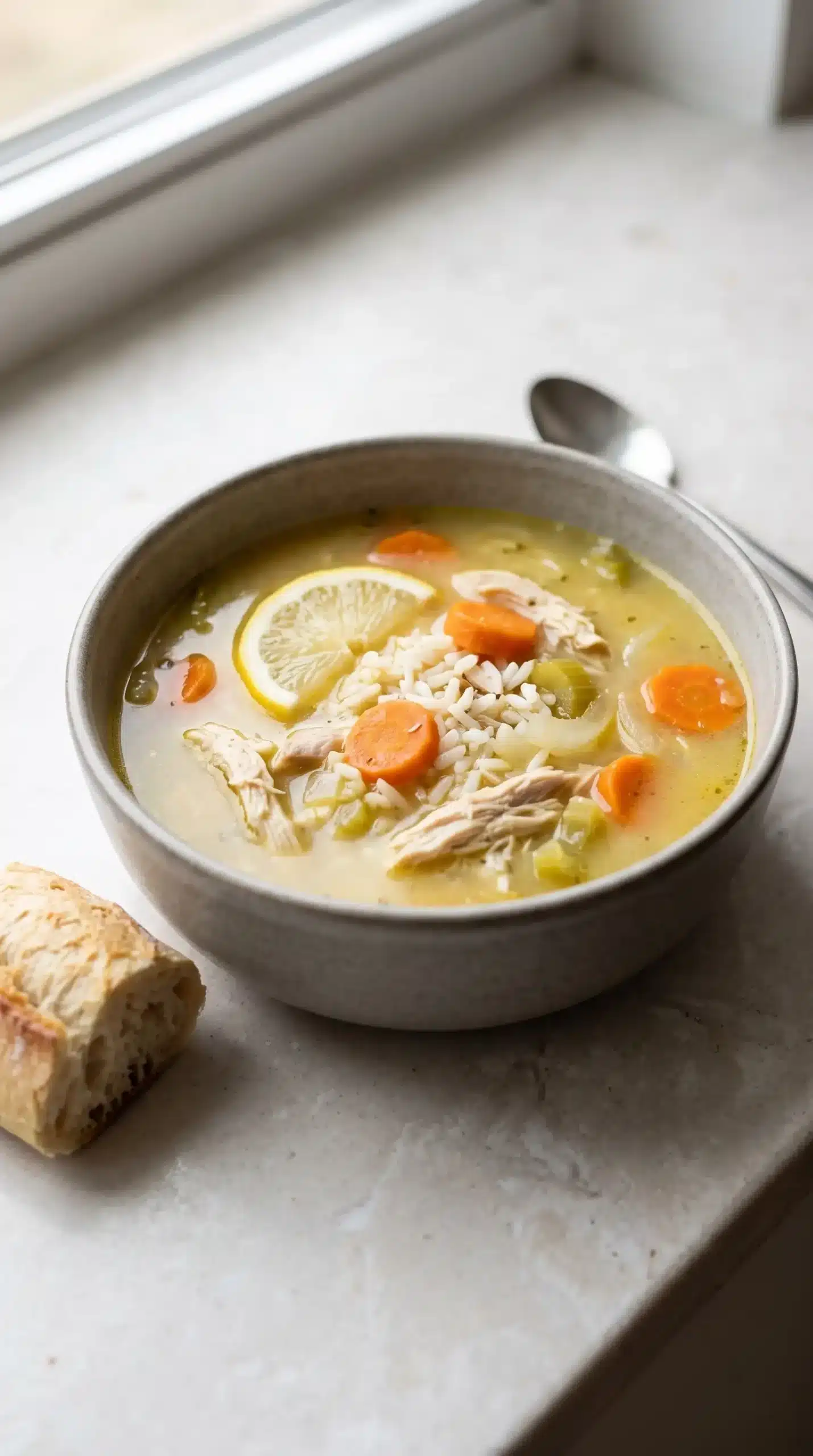
Hot bowls of Greek lemon chicken soup make a comforting meal on their own, with chicken and rice providing hearty elements alongside the vegetables and lemony broth. A lemon slice on top adds both visual appeal and another opportunity for fresh citrus flavor.
Fresh bread works well beside the soup when a more substantial meal is desired. Its simplicity keeps attention on the warm lemon-and-chicken flavors in the bowl.
A side salad provides another straightforward accompaniment. Together, soup and salad create a balanced meal without requiring complicated preparation.
Refrigeration Works Best for Leftovers
Leftover soup should be transferred to an airtight container and refrigerated. It can be kept for up to 3 days, giving the prepared soup a useful short-term storage window.
Reheating gently is particularly appropriate because the soup contains egg yolks. Warm it over low heat on the stove or use the microwave until it is heated through.
Cold storage can also affect the rice-to-broth balance. If the soup has thickened after sitting, a little water can be added while reheating to bring the consistency back to a more fluid soup.
| Situation | Best approach | What to watch for |
|---|---|---|
| Freshly cooked | Serve hot with a lemon slice | Keep the soup gently heated after adding egg yolks |
| Refrigerated leftovers | Store in an airtight container | Rice may absorb some broth while resting |
| Reheating | Warm gently on the stove or in the microwave | Add a little water if the soup has become too thick |
Easy Add-Ins and a Vegetarian Direction
Peas or spinach can be added when extra vegetables are wanted. These additions fit naturally with the existing vegetable base without changing the central lemon, chicken, and rice character.
A vegetarian version can be made by using vegetable broth and leaving out the chicken. Bell peppers or zucchini can provide additional vegetables for a different interpretation of the soup.
Cooking Choices That Keep the Lemony Balance
Using freshly squeezed lemon juice is one of the simplest ways to preserve the bright flavor associated with Greek lemon chicken soup. Since the lemon juice is part of the broth from the beginning, its flavor becomes integrated as the vegetables simmer.
Heat control becomes increasingly important as cooking progresses. The vegetable stage can simmer until the vegetables are tender, while the egg-yolk stage calls for gentler treatment so the soup does not boil.
Serving with lemon slices gives diners a simple way to emphasize the citrus character at the table. That finishing element is especially useful because the soup already contains lemon juice within its base.
Greek Lemon Chicken Soup Brings Brightness to a Hearty Bowl
Greek lemon chicken soup works because its main elements have clearly defined jobs: lemon brightens the broth, vegetables build its savory foundation, and chicken and rice make each bowl hearty. The egg yolks and flour mixture provide additional body when handled with controlled heat and steady stirring.
Gentle treatment after tempering the yolks is the key cooking judgment to carry forward. Keep the soup from boiling at that stage, then add the cooked rice and chicken so they can warm through without disrupting the smooth, lemon-forward character.
Greek Lemon Chicken Soup Questions About Rice and Reheating
Can leftover chicken be used in Greek lemon chicken soup?
Yes. Shredded or diced cooked leftover chicken can be added during the finishing stage, where it only needs to heat through with the cooked rice.
Why should the rice be added near the end?
Cooked white rice is already tender, so adding it near the end prevents it from spending unnecessary time cooking in the broth. It simply needs a few minutes to become hot before serving.
How can the egg yolks be added without curdling?
Beat the yolks separately, then slowly whisk hot soup into them before returning the tempered mixture to the pot. Constant whisking and gentle heat help the yolks incorporate smoothly.
Can Greek lemon chicken soup be made vegetarian?
Yes. Use vegetable broth and omit the chicken. Bell peppers or zucchini can be included with the other vegetables for a different vegetable combination.
What should be done if the soup gets too thick in the refrigerator?
Cooked rice can absorb some of the broth while the soup rests. During reheating, add a little water as needed to loosen the consistency.
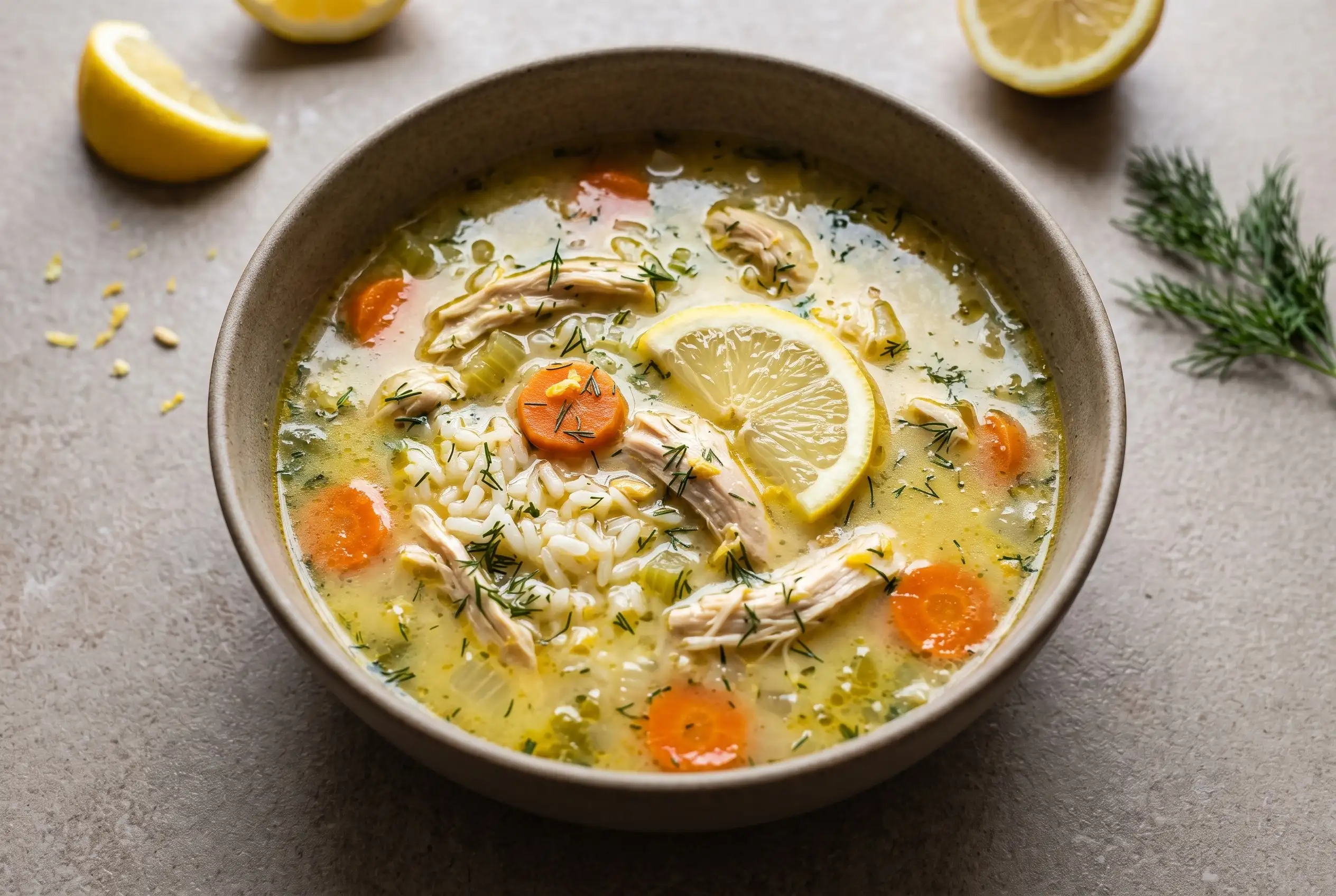
Greek Lemon Chicken Soup with Tender Chicken and Rice
Ingredients
Method
- Add the chicken broth, lemon juice, shredded carrots, chopped onion, chopped celery, chicken soup base, and ground white pepper to a large pot.
- Bring the broth mixture to a boil over high heat, then lower the heat and simmer for 15–20 minutes, until the vegetables are tender.
- In a small bowl, stir the margarine and all-purpose flour together until the mixture is smooth.
- Slowly incorporate the margarine-flour mixture into the simmering soup. Cook for 8–10 minutes, stirring often, until the soup thickens slightly.
- Beat the egg yolks separately until pale and creamy. Slowly whisk one ladleful of hot soup into the yolks to temper them.
- While stirring the soup continuously, gradually add the tempered egg mixture to the pot. Cook gently until heated through, keeping the soup from reaching a boil.
- Stir in the cooked white rice and diced cooked chicken. Continue cooking for a few minutes, until both are heated through.
- Divide the soup among bowls and place lemon slices on each serving for garnish.