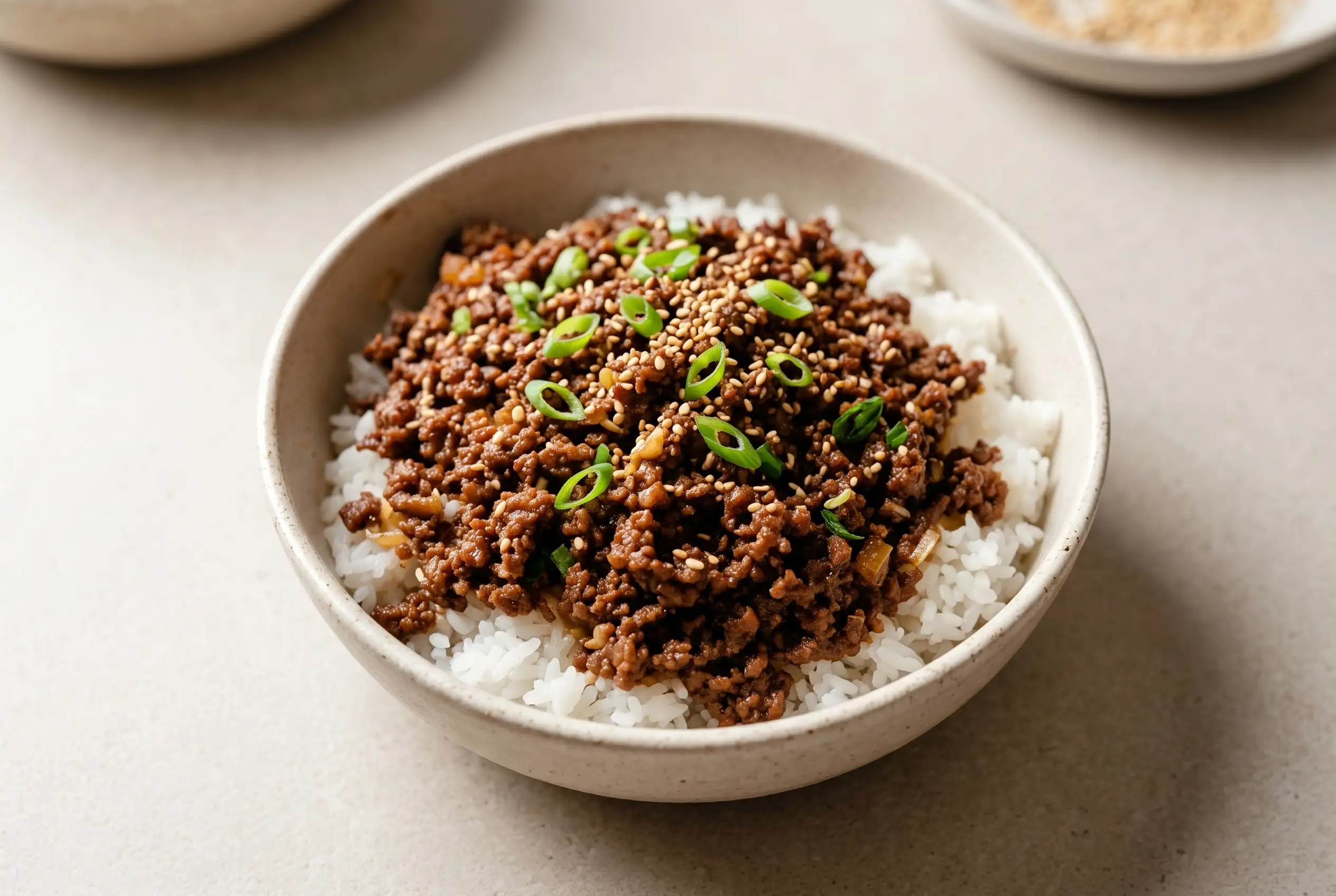
Ground Beef and Broccoli with Savory Soy Sauce
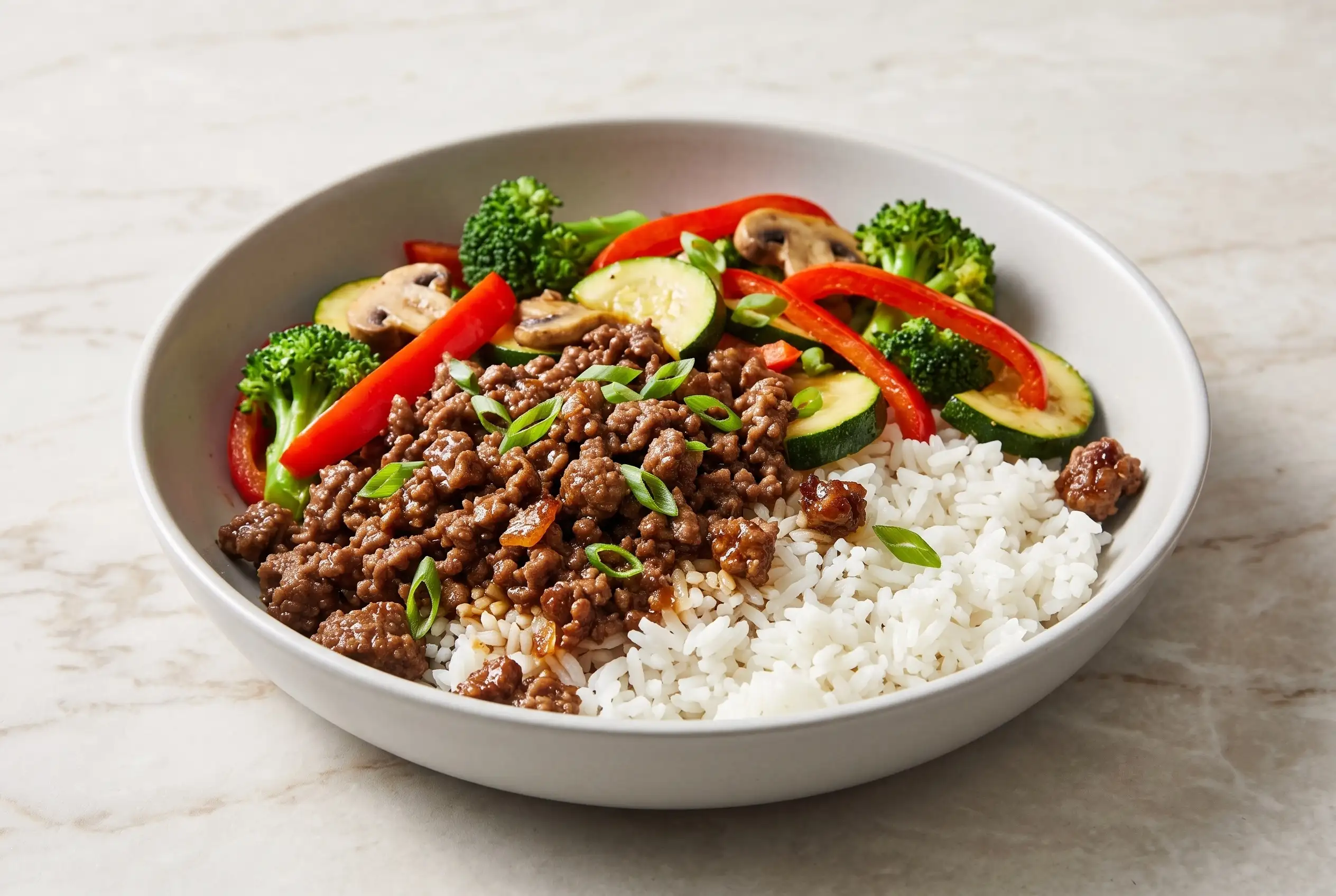
Ground beef and broccoli brings browned beef, tender broccoli, onion, garlic, and a savory sauce together in one skillet. The combination is hearty enough for a satisfying meal while staying straightforward for a busy evening. Served over cooked rice or noodles, ground beef and broccoli has a balanced mix of savory flavor, tender vegetables, and a rich sauce that comes together quickly.
What Makes Ground Beef and Broccoli Work
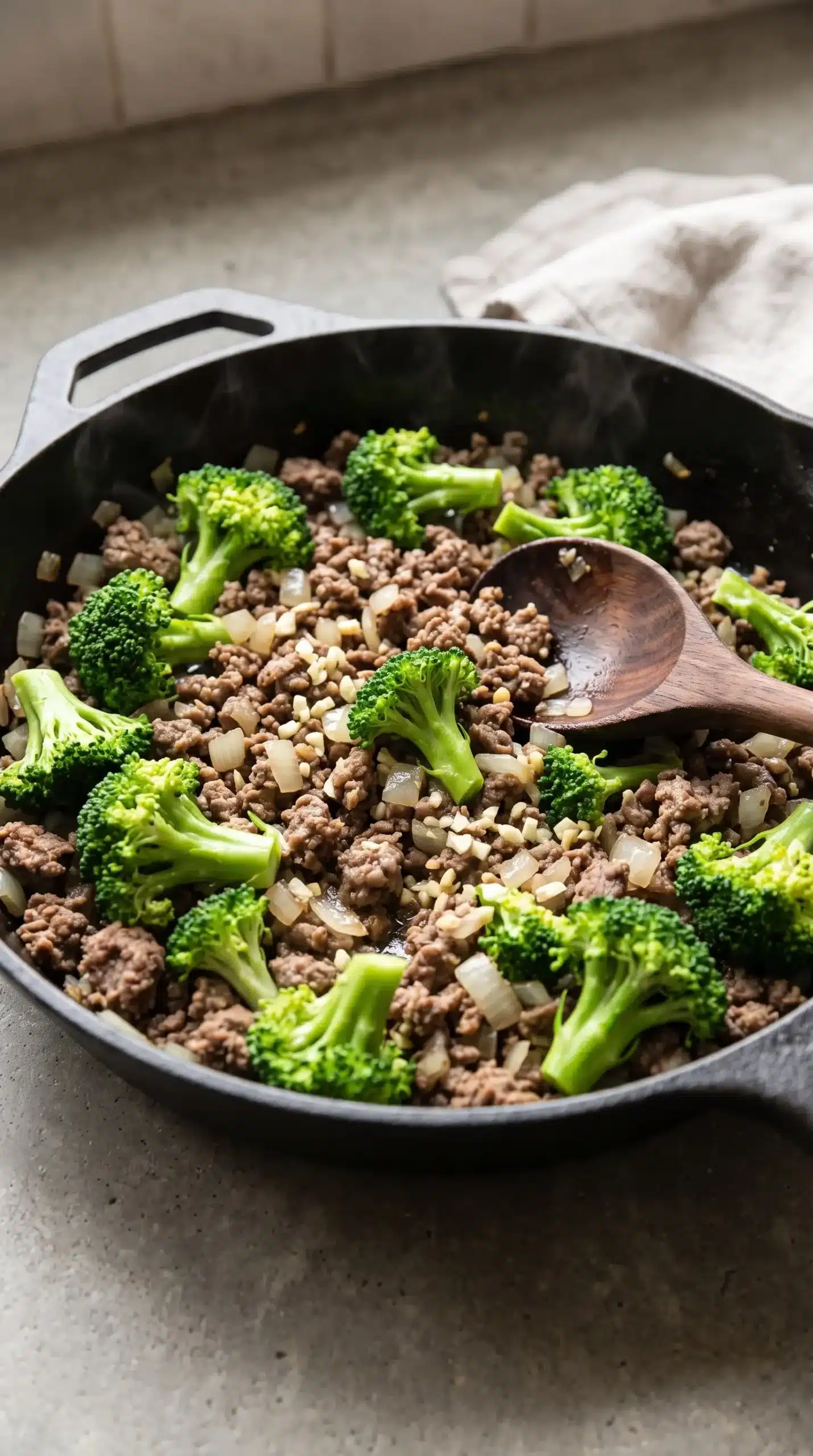
The strength of ground beef and broccoli comes from the way the ingredients meet in the same skillet. Browning gives the beef a savory base, while onion and garlic build flavor before the broccoli joins the pan. The sauce then ties everything together with soy sauce, optional oyster sauce, beef broth, and cornstarch.
Broccoli also gives the dish a useful textural contrast. It should become tender during its short cooking time while still remaining distinct from the ground beef. Fresh florets are especially well suited to the recipe because they cook directly in the skillet and absorb some of the surrounding savory flavor.
Rice or noodles provide a simple serving base for the saucy mixture. Either choice lets the beef, broccoli, and thickened sauce remain the focus of each bite without requiring additional preparation beyond cooking the chosen accompaniment.
The Sauce Balance Depends on Four Simple Ingredients
Soy sauce supplies the main savory seasoning, while oyster sauce can deepen that character when used. Beef broth gives the sauce enough liquid to coat the beef and broccoli, and cornstarch helps it thicken after everything has been combined.
| Sauce ingredient | Amount | Role in the skillet |
|---|---|---|
| Soy sauce | 3 tablespoons | Provides the main savory seasoning |
| Oyster sauce | 2 tablespoons, optional | Adds another layer of savory flavor |
| Cornstarch | 1 tablespoon | Thickens the sauce |
| Beef broth | 1 cup | Creates the liquid base for the sauce |
Mixing these ingredients before adding them to the skillet is important because the cornstarch needs to be dispersed through the liquid. A combined sauce also makes it easier to distribute the seasoning evenly across the beef and broccoli.
Fresh Broccoli Gives the Skillet Better Texture
Fresh broccoli florets are the preferred choice for ground beef and broccoli because they can cook directly in the skillet for about five minutes. The florets should become tender while remaining recognizable pieces alongside the beef.
Browned Beef Sets Up the Whole Dish
Ground beef needs enough skillet contact to brown before the other ingredients are introduced. Cooking it over medium heat allows it to develop its savory base, and draining excess fat keeps the finished mixture from becoming unnecessarily greasy.
Once the beef has browned, onion and garlic can be added to the same skillet. The chopped onion is cooked until translucent, while the minced garlic becomes part of the aromatic foundation surrounding the beef.
That sequence matters because the beef establishes the main savory flavor before the sauce arrives. Keeping the browned beef in the skillet also means the later ingredients become part of one cohesive mixture instead of separate layers.
Broccoli Needs Only Enough Time to Turn Tender
Broccoli enters after the onion and garlic have softened. About five minutes of skillet cooking is enough for the florets to become tender according to the supplied method, so prolonged cooking is unnecessary.
| Stage | What to watch for | Useful decision |
|---|---|---|
| Beef | Browned throughout | Drain excess fat before continuing |
| Onion and garlic | Onion is translucent | Move on before adding broccoli |
| Broccoli | Florets are tender | Proceed to the sauce mixture |
| Sauce | Noticeably thickened | Season and serve while hot |
Frozen Broccoli Changes the Cooking Approach
Frozen broccoli can stand in for fresh florets when needed. It requires a little longer cooking to become fully tender, so the texture should guide the timing instead of treating the fresh-broccoli cooking time as fixed.
Cornstarch Works Best When Mixed Before Pouring

Cornstarch is responsible for thickening the sauce, but it should be mixed with cool liquid before heating to help disperse the starch and prevent lumps. Combine it with the soy sauce, optional oyster sauce, and beef broth before the mixture reaches the hot skillet.
After the sauce is poured over the beef and broccoli, the skillet needs another two to three minutes of cooking. During that period, the sauce should visibly thicken and begin coating the ingredients more closely.
A sauce that has thickened enough to cling to the beef and broccoli is ready for seasoning. Salt and pepper can then be adjusted to taste before the hot mixture is spooned over rice or noodles.
Common Ground Beef and Broccoli Mistakes to Avoid
- Skipping the beef browning: Cook the ground beef over medium heat until browned before moving forward.
- Leaving excess fat behind: Drain the excess after browning so the finished skillet is not overly greasy.
- Adding broccoli too early: Let the onion become translucent before stirring in the florets.
- Adding an unmixed cornstarch: Combine the cornstarch with the sauce ingredients before pouring everything into the skillet.
- Stopping before the sauce thickens: Give the combined mixture another two to three minutes so the sauce can reach the intended consistency.
Ground Beef and Broccoli Can Be Served Two Ways
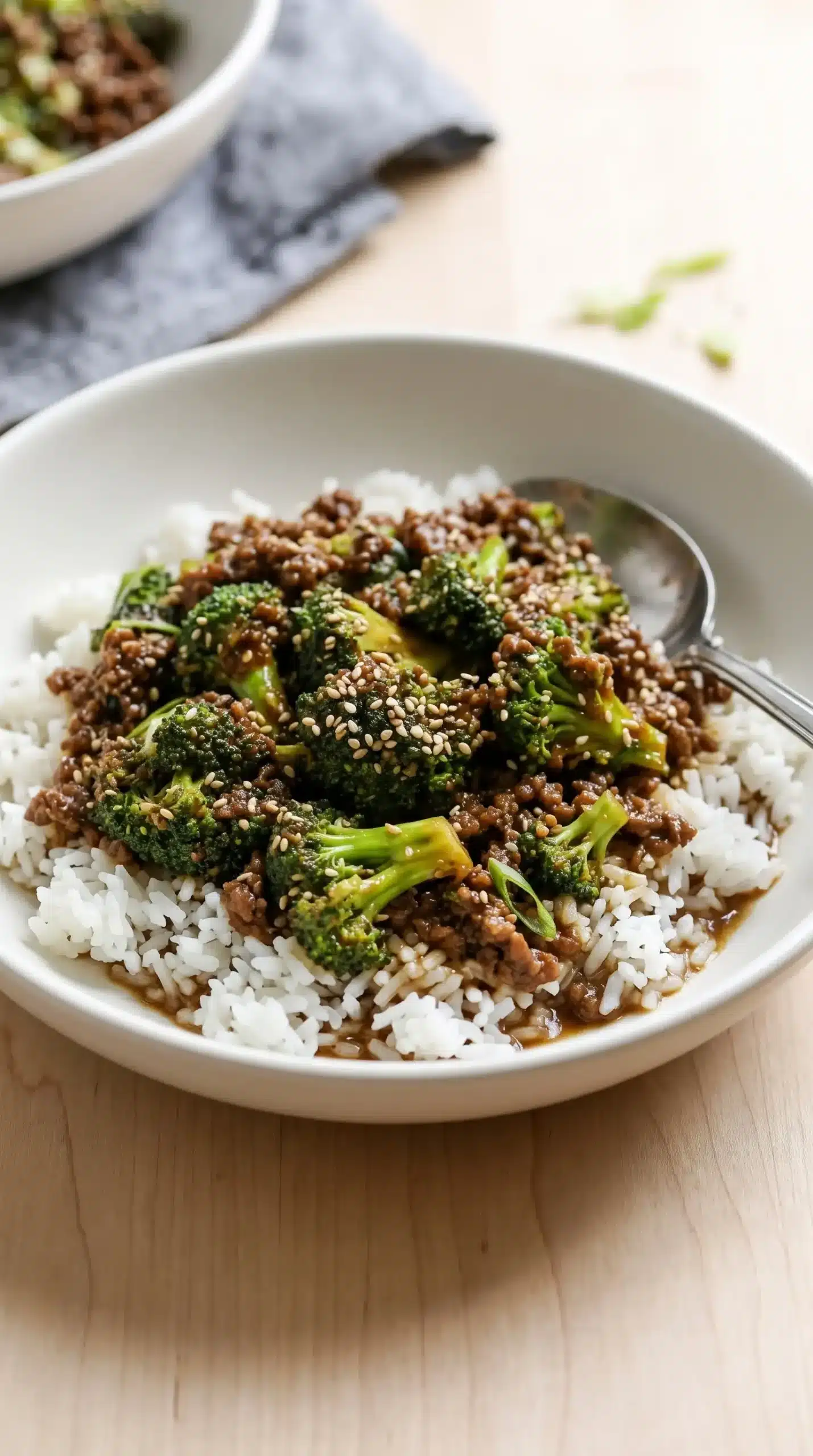
Cooked rice creates a familiar base for the beef and broccoli, allowing the sauce to mingle with the grains. Noodles offer another straightforward option when you want the same skillet mixture presented with a different accompaniment.
Extra soy sauce can be added at serving when a stronger savory flavor is wanted. Chili flakes are another option for adding spice without changing the main ingredients in the skillet.
Simple Vegetable Swaps Keep the Skillet Flexible
Bell peppers, carrots, or snap peas can be added as vegetable variations. Each provides a way to change the vegetable combination while keeping the basic beef, sauce, and skillet concept intact.
Ground turkey or ground chicken can replace the ground beef for a leaner alternative. The substitution changes the meat used in the dish while retaining the broccoli and sauce framework.
Shrimp or tofu can also replace the beef when a different flavor and texture are desired. These options move the dish in a different direction without requiring a completely different serving idea.
Rice, Noodles, and Other Serving Choices
Rice and noodles are the stated serving choices for the warm skillet mixture, but quinoa and cauliflower rice can also be used. Lettuce wraps provide another serving format when a lighter, low-carb option is preferred.
Ground Beef and Broccoli Fits a Short Weeknight Window
The supplied preparation takes about 10 minutes, while cooking takes about 20 minutes, giving the meal a 30-minute total. That short window is one reason an easy ground beef and broccoli dinner works well when there is limited time for cooking.
The workflow is also concentrated in one large skillet. Beef, aromatics, broccoli, and sauce are handled in sequence, so the main dish does not depend on a long list of separate cooking stages.
Leftovers Keep Well for Another Meal
Allow leftovers to cool to room temperature before transferring the beef and broccoli to an airtight container. Refrigerated leftovers can be kept for up to three days.
Reheating can be done in the microwave or on the stove. If preparing the meal ahead, keeping the beef mixture separate when possible helps preserve the texture of the serving components until reheating.
Ground Beef and Broccoli Rewards Careful Sauce Timing
The browned beef and tender broccoli establish the texture, but the sauce timing determines how the finished skillet comes together. Mixing the cornstarch thoroughly into the liquid first, then allowing the combined sauce to thicken for two to three minutes, gives the savory mixture a consistency suited to rice or noodles.
Once the sauce has thickened and the seasoning tastes balanced, ground beef and broccoli is ready to serve hot. The most useful judgment is simple: watch the beef for browning, the broccoli for tenderness, and the sauce for visible thickening instead of relying only on the clock.
Questions About Ground Beef and Broccoli Texture and Storage
Can frozen broccoli be used instead of fresh broccoli?
Yes. Frozen broccoli can replace fresh florets, but it should be cooked a little longer so it becomes fully tender. Use the texture of the broccoli as the practical cue for when it is ready to move on.
How can the sauce become thicker?
Make sure the cornstarch is fully mixed into the soy sauce, oyster sauce if using, and beef broth before the mixture enters the skillet. After pouring it over the beef and broccoli, continue cooking for the stated two to three minutes so the sauce has time to thicken.
Can the beef be replaced with another protein?
Ground turkey or ground chicken can replace the ground beef when a leaner option is wanted. Shrimp or tofu can also be used when a different flavor and texture is preferred.
What should be served with a ground beef broccoli recipe?
Cooked rice or noodles are the primary serving choices. Quinoa, cauliflower rice, and lettuce wraps also work as alternatives when a different base or a low-carb serving style is desired.
How long can the leftovers stay refrigerated?
Properly stored leftovers can remain in the refrigerator for up to three days. Keep the cooked mixture in an airtight container and reheat it in the microwave or on the stove before serving.
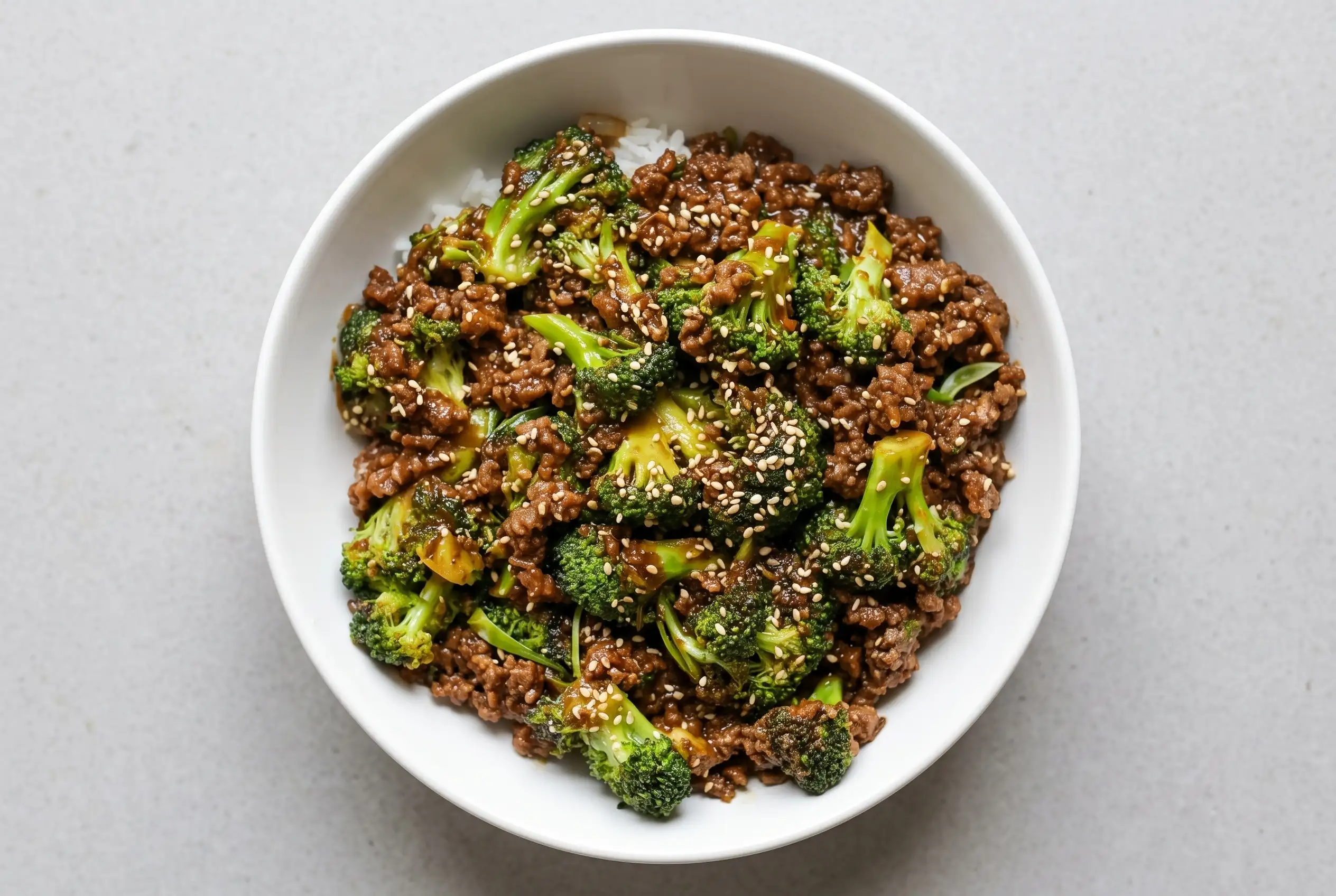
Ground Beef and Broccoli with Savory Soy Sauce
Ingredients
Method
- Brown the ground beef in a large skillet over medium heat. Drain any excess fat from the skillet.
- Add the chopped onion and minced garlic. Sauté until the onion becomes translucent.
- Add the broccoli florets and cook for about 5 minutes, until tender.
- In a bowl, whisk together the soy sauce, oyster sauce if using, cornstarch, and beef broth until the cornstarch is fully incorporated.
- Pour the sauce mixture into the skillet with the beef and broccoli, then stir until evenly combined.
- Continue cooking for 2 to 3 minutes, stirring as needed, until the sauce thickens.
- Season with salt and pepper to taste.
- Serve hot over cooked rice or noodles.