Ground Beef Stew with Potatoes, Carrots, and Tomatoes
Easy Ground Beef Stew brings together browned ground beef, tender potatoes, carrots, tomatoes, and a savory beef broth in one comforting pot. The combination creates a hearty meal with familiar ingredients and a straightforward cooking process, making ground beef stew especially useful when dinner needs to be filling without becoming complicated.
What Makes Ground Beef Stew So Practical
Busy evenings benefit from meals that do not require a long ingredient hunt. Ground beef, onion, carrots, potatoes, garlic, beef broth, diced tomatoes, and dried thyme form the complete flavor base here, with olive oil used for cooking and salt and pepper added to taste.
One pot also keeps the preparation focused. The vegetables cook directly in the seasoned broth after the beef has browned, allowing their textures and flavors to come together during the simmering stage.
Cold weather makes a warm bowl particularly appealing, but the straightforward ingredients keep the dish useful beyond winter. Crusty bread or a simple green salad can round out the meal without adding another complicated preparation.
Potatoes, Broth, and Tomatoes Set the Stew’s Character

The potatoes are diced before they enter the pot, so their size matters for even cooking. Carrots are sliced, while the onion is chopped and the garlic minced. Keeping those preparations consistent helps the vegetables become tender together during the simmer.
Beef broth provides the liquid foundation, while canned diced tomatoes bring a contrasting tomato element to the pot. Dried thyme gives the broth a simple herbal direction that works naturally with the beef and vegetables.
For the strongest control over the finished flavor, season gradually with salt and pepper and taste as appropriate during cooking. Extra herbs such as bay leaves or parsley can also be used when a more pronounced herbal character is desired.
One-Pot Cooking Keeps the Workflow Simple

Begin with olive oil in a large pot over medium heat. Softening the chopped onion and minced garlic before adding the beef establishes the first layer of flavor while keeping the cooking process contained in the same vessel.
Once the ground beef is added, cook it until browned before moving on. That visible change is the useful cue that the meat has reached the stage specified for the stew and is ready to be combined with the vegetables.
- Vegetable stage: Stir the sliced carrots and diced potatoes into the browned beef.
- Liquid stage: Add the beef broth and diced tomatoes, then season with thyme, salt, and pepper.
- Simmer stage: Bring the pot to a boil, reduce the heat, and continue cooking until the vegetables are tender.
How the 30-Minute Simmer Changes the Texture
The simmer is where the ground beef stew shifts from separate ingredients into a cohesive bowl. After the liquid reaches a boil, lowering the heat keeps the cooking gentler while the potatoes and carrots soften.
Vegetable tenderness is the most useful visual and textural checkpoint. The supplied cooking method calls for a 30-minute simmer, with the vegetables determining whether the stew has reached its intended finished texture.
Keeping the pot at a simmer instead of continuing at a full boil helps make the cooking stage easier to control. If the vegetables still need tenderness at the end of the stated simmer, their texture is the deciding observation for serving.
| Cooking stage | What to watch | Useful decision |
|---|---|---|
| Onion and garlic | They become soft | Move on to the ground beef |
| Ground beef | The meat becomes browned | Add the prepared vegetables |
| Simmer | Carrots and potatoes become tender | Serve the stew hot |
Ground Beef Browning Gives the Pot a Stronger Base
Ground beef should be cooked until browned before the broth and tomatoes are added. This creates a clear transition between the initial cooking stage and the liquid simmering stage.
Along with the browned appearance, check that the ground beef reaches a 160°F (71°C) internal temperature for safe consumption before continuing with the stew.
Overcrowding is not a concern that needs a special workaround here because the recipe specifically calls for cooking the beef in a large pot. The important control point is simply to recognize the browned appearance before proceeding.
After browning, the vegetables go directly into the same pot. That keeps the cooking process uncomplicated and allows the later broth-based simmer to carry the beef and vegetables together.
Ground Beef and Potato Stew Needs Even Vegetable Pieces
A ground beef and potato stew depends on the vegetables reaching tenderness during the same general cooking period. Dicing the potatoes and slicing the carrots as directed gives both vegetables defined shapes that can be checked as the stew cooks, while a hearty ground beef and potato dinner can make use of the same practical combination of filling ingredients.
Uneven preparation can make texture harder to judge because smaller pieces become tender sooner than larger ones. Keeping the cuts reasonably consistent is therefore a practical way to make the simmer easier to monitor.
Three Flavor Adjustments Fit the Original Pot
Small changes can alter the character of ground beef stew without changing its basic structure. The supplied ingredients leave room for simple seasoning choices and a few vegetable substitutions when needed.
| Adjustment | How to use it | What it changes |
|---|---|---|
| Bay leaves or parsley | Add as an optional herbal accent | Creates a more pronounced herb-forward flavor |
| Frozen vegetables | Use in place of fresh vegetables when suitable | Makes the vegetable preparation quicker |
| Ground turkey | Use instead of ground beef | Creates a different, leaner variation |
| Peas, green beans, or corn | Add as additional vegetable variety | Changes the vegetable mix |
Serving Ground Beef Stew Without Overcomplicating Dinner

Hot bowls are the natural way to serve ground beef stew because the dish is built around a warm broth, tender vegetables, and browned meat. A simple presentation keeps attention on the hearty combination already in the pot.
Crusty bread works well alongside the stew when a substantial accompaniment is wanted. Its straightforward character fits the savory broth without requiring another elaborate side.
A simple green salad offers a lighter contrast at the table. Either option can accompany the same bowl, so the choice can depend on whether you want an additional hearty element or a fresh side.
Storage Keeps Leftover Stew Ready for Another Meal
Let the stew cool completely before transferring it to an airtight container. Refrigeration is the appropriate short-term storage choice, while freezing provides a longer option when the leftovers will not be eaten soon.
Refrigerated leftovers should be used within about 3 days. For longer storage, ground beef stew can be frozen for up to 3 months, giving the cooked meal a practical make-ahead role.
Frozen portions should be thawed in the refrigerator before reheating. Using an airtight container for either storage method helps keep the leftovers contained and ready for later use.
Mistakes That Can Throw Off Easy Ground Beef Stew
Several problems can be avoided simply by following the observable cues built into the cooking process. The most important ones involve the order of the early cooking stages and the texture of the vegetables near the end.
- Skipping the browning cue: Adding the liquid before the beef is browned changes the intended sequence. Cook the ground beef until browned first.
- Rushing the vegetables: Serving before the carrots and potatoes are tender can leave the stew short of its intended texture. Use tenderness as the finishing check.
- Keeping the heat too high: After the pot reaches a boil, reduce the heat for the simmering stage instead of maintaining the initial boil.
- Overseasoning early: Salt and pepper are listed to taste, so seasoning gradually gives you better control over the finished broth.
Easy Ground Beef Stew Works Best When Tenderness Leads
Ground beef stew comes together most reliably when the cooking cues take priority: soften the onion and garlic, brown the beef, add the vegetables and liquid, then let the pot simmer until the carrots and potatoes are tender. Those observations matter more than rushing through the stages.
The resulting bowl stays grounded in simple ingredients and a manageable one-pot process. Once the vegetables reach the desired tenderness, serving the stew hot with crusty bread or a simple green salad completes a practical, satisfying meal.
Ground Beef Stew Questions About Timing and Storage
Can ground beef stew be made in a slow cooker?
Yes. Brown the beef and onions in a pan first, then transfer the cooked mixture and remaining ingredients to a slow cooker. Cook on low for 6 to 8 hours.
Can fresh thyme replace dried thyme?
Fresh thyme can replace the dried thyme. A useful conversion from the supplied guidance is to use about three times as much fresh herb as dried when making the substitution.
How can the stew be made gluten-free?
The listed ingredients can fit a gluten-free preparation when the beef broth and diced tomatoes are checked to ensure they contain no gluten ingredients. Those packaged ingredients are the specific items that require attention.
Can frozen vegetables replace the fresh carrots and potatoes?
Frozen vegetables can be used for a quicker meal, but the supplied variation guidance does not specify an exact replacement amount or cooking adjustment. Keep the vegetable texture in view as the stew simmers.
What can be served with ground beef stew?
Crusty bread and a simple green salad are both suitable accompaniments. Bread keeps the meal hearty, while a green salad provides a straightforward fresh side.
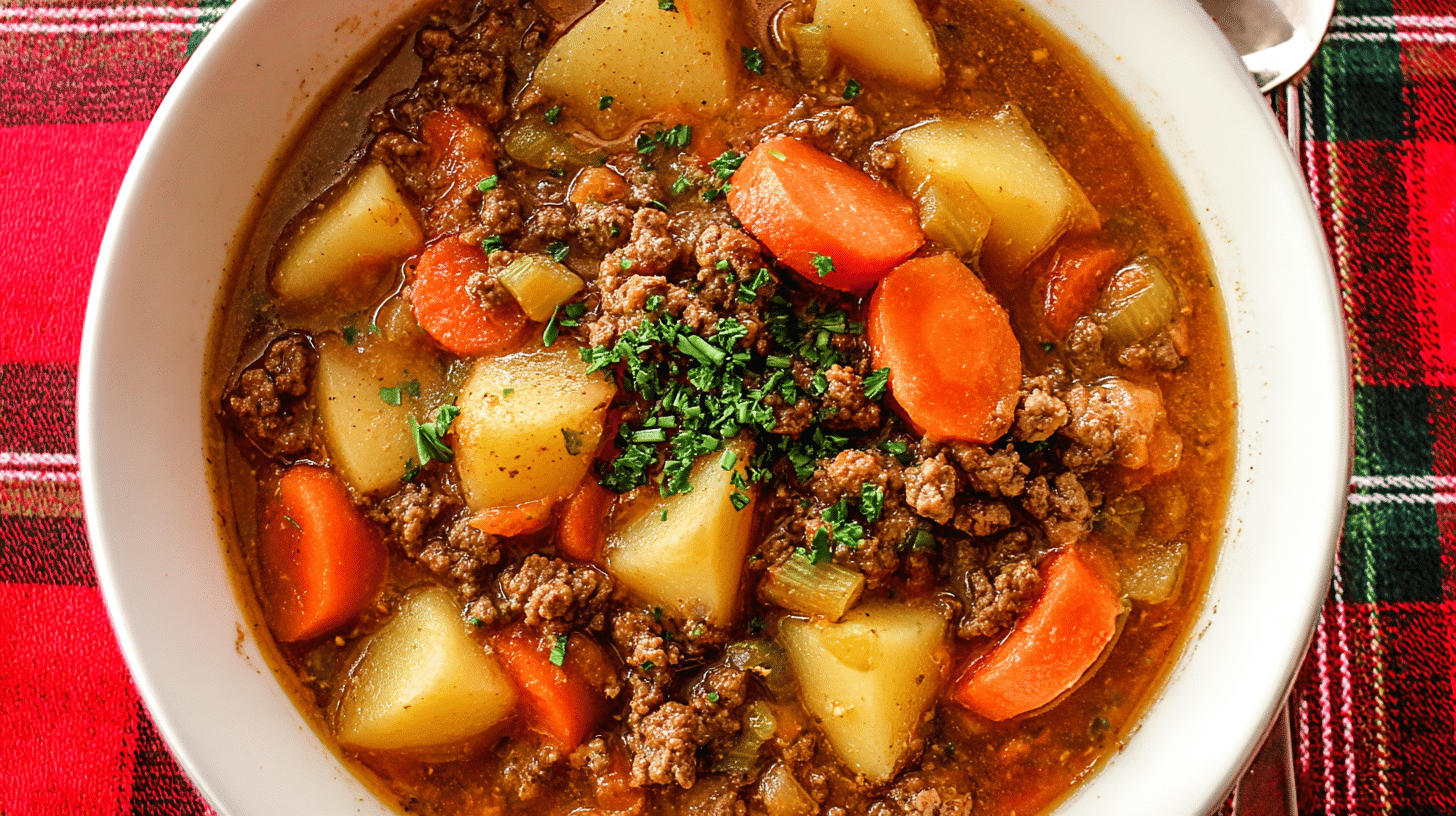
Ground Beef Stew with Potatoes, Carrots, and Tomatoes
Ingredients
Method
- Warm the olive oil in a large pot over medium heat. Add the chopped onion and minced garlic and cook until softened.
- Add the ground beef and cook until browned, breaking it into smaller pieces as it cooks. Confirm that the beef reaches 160°F / 71°C before proceeding.
- Add the sliced carrots and diced potatoes to the browned beef.
- Pour in the beef broth and diced tomatoes, then season with dried thyme, salt, and black pepper.
- Bring the stew to a boil, then lower the heat and simmer for 30 minutes, or until the potatoes and carrots are tender.
- Serve the stew hot with crusty bread or a simple green salad if desired.