Hobo Casserole with Ground Beef, Potatoes and Cheese
Hobo Casserole Brings Beef and Potatoes Together
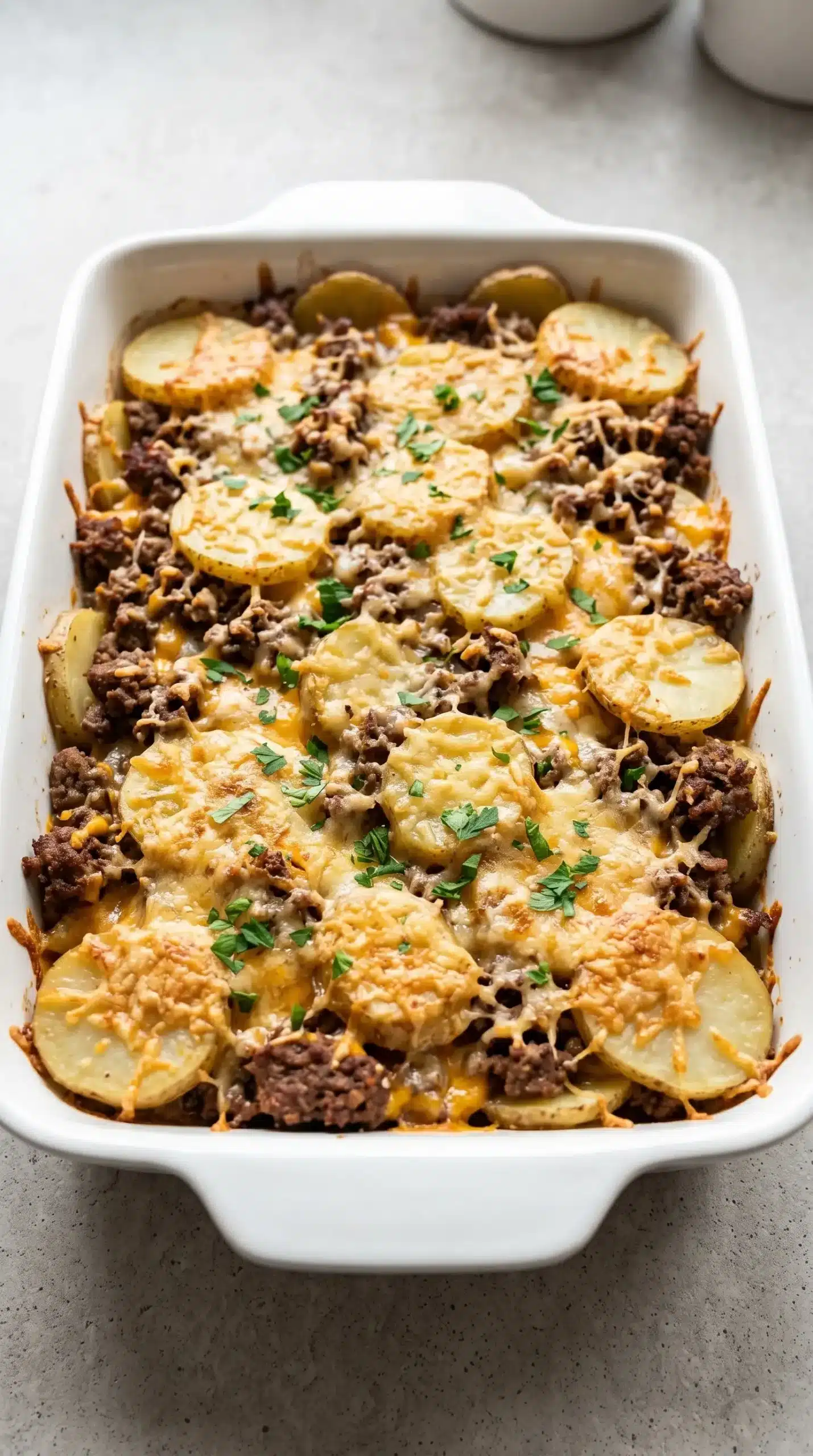
Hobo casserole is a cozy combination of browned ground beef, thinly sliced potatoes, cheddar cheese, Parmesan, onion, garlic, and simple seasonings. The ingredients are layered in a baking dish, moistened with beef broth and optional milk, then baked until the potatoes are tender and the cheese develops a golden finish.
For a busy family meal, the appeal comes from the straightforward preparation and hearty combination. The beef brings substance, while the potatoes create a satisfying base and the two cheeses give the casserole a rich, savory finish. A little fresh parsley at the end adds a fresh-looking contrast.
Because the potatoes are sliced before assembly, their thickness matters. Even slices help the layers cook consistently, while the covered baking stage gives the potatoes time to soften before the casserole is uncovered for its Parmesan topping.
Thin Potato Slices Make the Layers Work
Potatoes are the part of hobo casserole that benefits most from careful preparation. Aim for slices around 1/4 inch thick, keeping them as even as possible. Pieces that vary greatly in thickness can finish at different stages, making some layers softer while thicker pieces need more time.
The sliced potatoes form two layers in the dish. Half goes down first, followed by half of the cooked beef and half of the cheddar. The remaining potatoes and beef are added afterward, with the rest of the cheddar on top.
Beef broth supplies moisture during baking, while the optional milk can make the cooking liquid richer. Since the broth and milk are poured over the assembled casserole, distributing them across the surface helps the liquid reach the layered ingredients.
| Ingredient focus | Preparation | Role in the finished casserole |
|---|---|---|
| Potatoes | Slice evenly to about 1/4 inch | Creates the layered, hearty base |
| Ground beef | Brown with onion and garlic | Provides the savory center of the layers |
| Cheddar | Shred before layering | Melts between and over the layers |
| Parmesan | Grate for the uncovered stage | Creates the finishing cheese layer |
Season the Beef Before Building the Casserole
Ground beef should be browned with the chopped onion and minced garlic before it enters the baking dish. Italian seasoning, paprika, salt, and pepper are added during cooking so the seasoning becomes part of the beef layer instead of sitting only on the surface.
For food safety, cook the ground beef to an internal temperature of 160°F (71.1°C) before adding it to the casserole layers.
Once the beef is cooked and seasoned, layering becomes much easier. The cooked mixture can be spread across the potatoes in an even layer, helping distribute the savory filling throughout the dish.
Cheddar is divided between the two beef-and-potato layers, which means its flavor and melted texture are present throughout the casserole. Parmesan is saved for the uncovered portion of baking, where it can brown on the surface.
Hobo Casserole Needs Moisture Under the Foil
Covering the baking dish with foil is an important part of the cooking control for hobo casserole. Beef broth is poured over the assembled layers, with milk available as an optional addition. The foil helps keep the baking environment moist while the potatoes cook.
After the covered baking period, the foil is removed and Parmesan is added. The uncovered stage gives the surface a chance to become golden while the casserole finishes cooking.
Build Two Balanced Layers Instead of One Thick Center
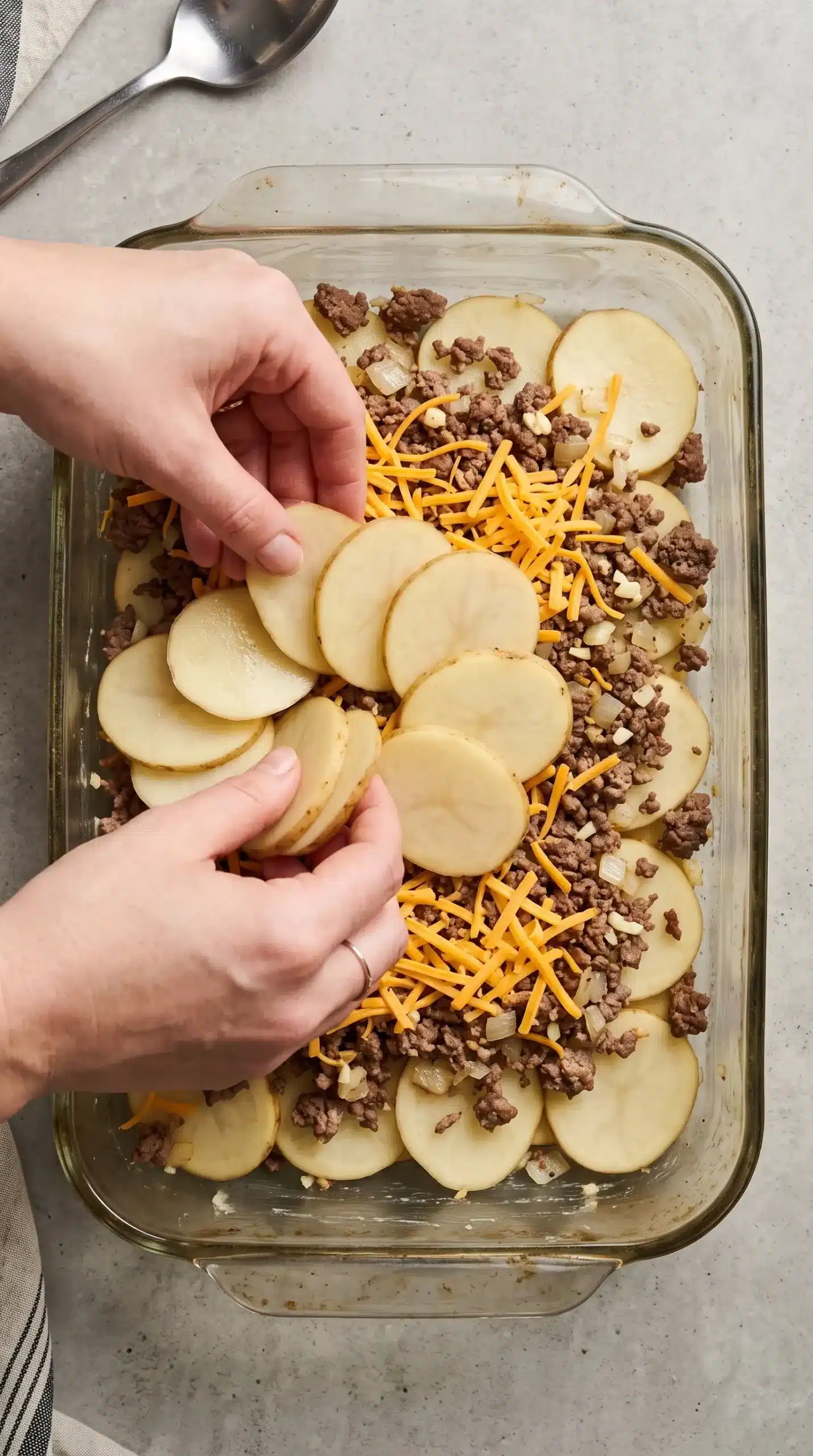
- First potato layer: Spread half of the thinly sliced potatoes across the greased baking dish.
- First filling layer: Add half of the browned beef mixture and half of the shredded cheddar.
- Second potato layer: Arrange the remaining potatoes over the first set of layers.
- Second filling layer: Spread the remaining beef over the potatoes and finish with the remaining cheddar.
- Moisture and finish: Pour over the broth and optional milk, then reserve Parmesan for the uncovered baking stage.
Keep the Cheese Timing Distinct
Cheddar and Parmesan do different jobs in the assembly. The shredded cheddar is divided between the interior layers and the top, allowing melted cheese to accompany the beef and potatoes throughout the casserole.
Parmesan waits until the foil comes off. Adding it at that point keeps it positioned on the exposed surface for the last part of baking, where the cheese can become golden.
Hobo Casserole Avoids Uneven Potato Cooking
Uneven potato slices are one of the clearest avoidable problems with hobo casserole. Very thick pieces can remain firm when thinner slices have already softened. Consistent cutting is therefore more important than making the slices especially thin.
Another issue can come from concentrating the beef in one heavy area. Spreading each portion across its potato layer gives the casserole a more balanced structure and keeps the beef from forming a single dense center.
Skipping the covered stage also changes the cooking environment. The supplied method relies on foil during the first baking period, followed by an uncovered finish, so changing that sequence can affect how the potatoes and surface cheese cook.
Broth and Optional Milk Shape the Baking Environment
Beef broth is poured over the assembled casserole before it goes into the oven. Its purpose here is practical: the layered potatoes need moisture during baking, and the broth also complements the beef-based filling.
Milk is optional, so the casserole can be prepared without it. When used, the 1/4-cup amount joins the broth as part of the liquid poured over the dish rather than becoming a separate sauce.
Hobo Casserole Benefits From a Short Rest
Allowing the baked casserole to rest for five minutes before serving gives the hot layers a brief chance to settle. Parsley can then be scattered over the top as a simple garnish.
Serve the Beef and Potato Layers Hot
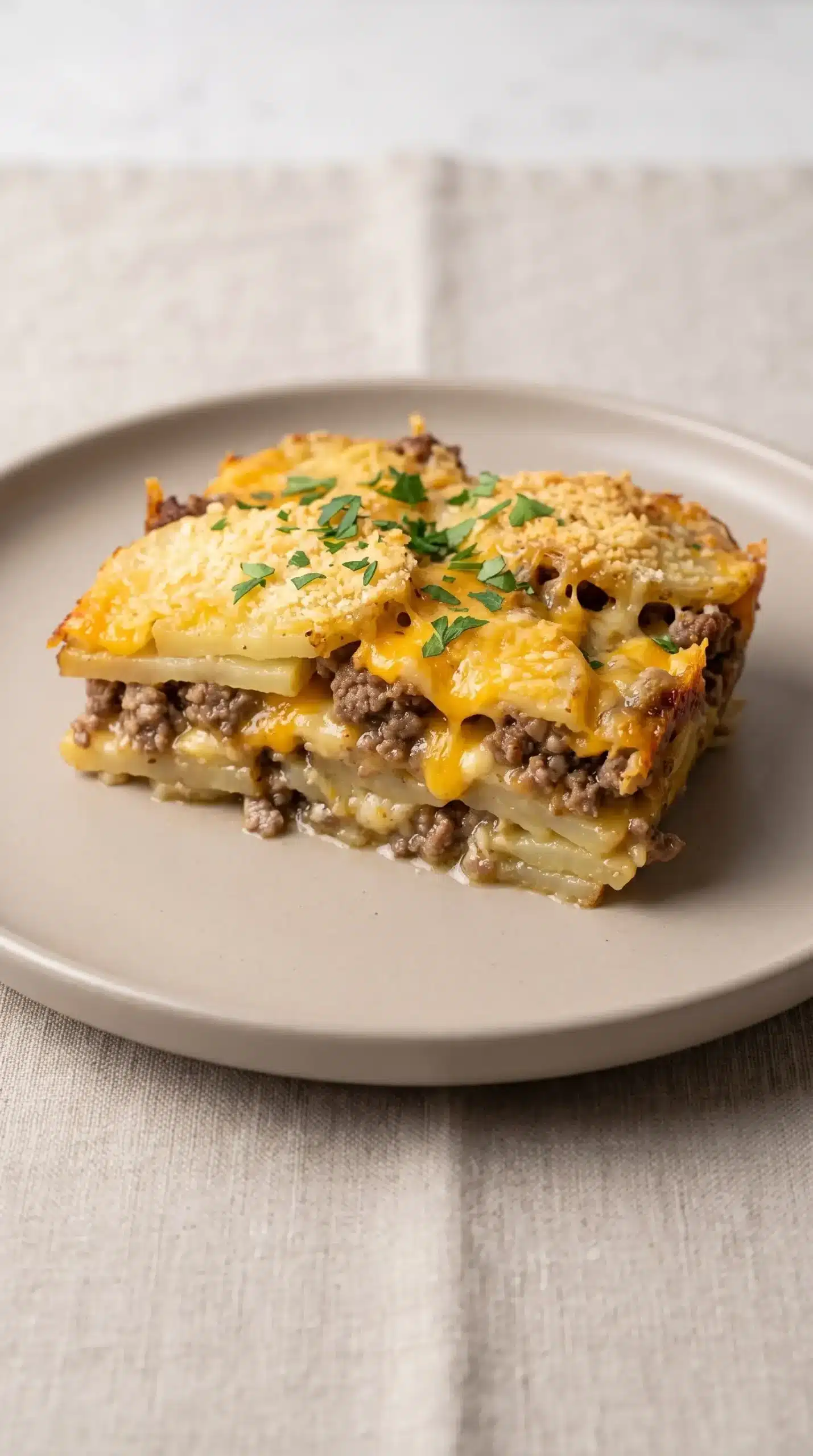
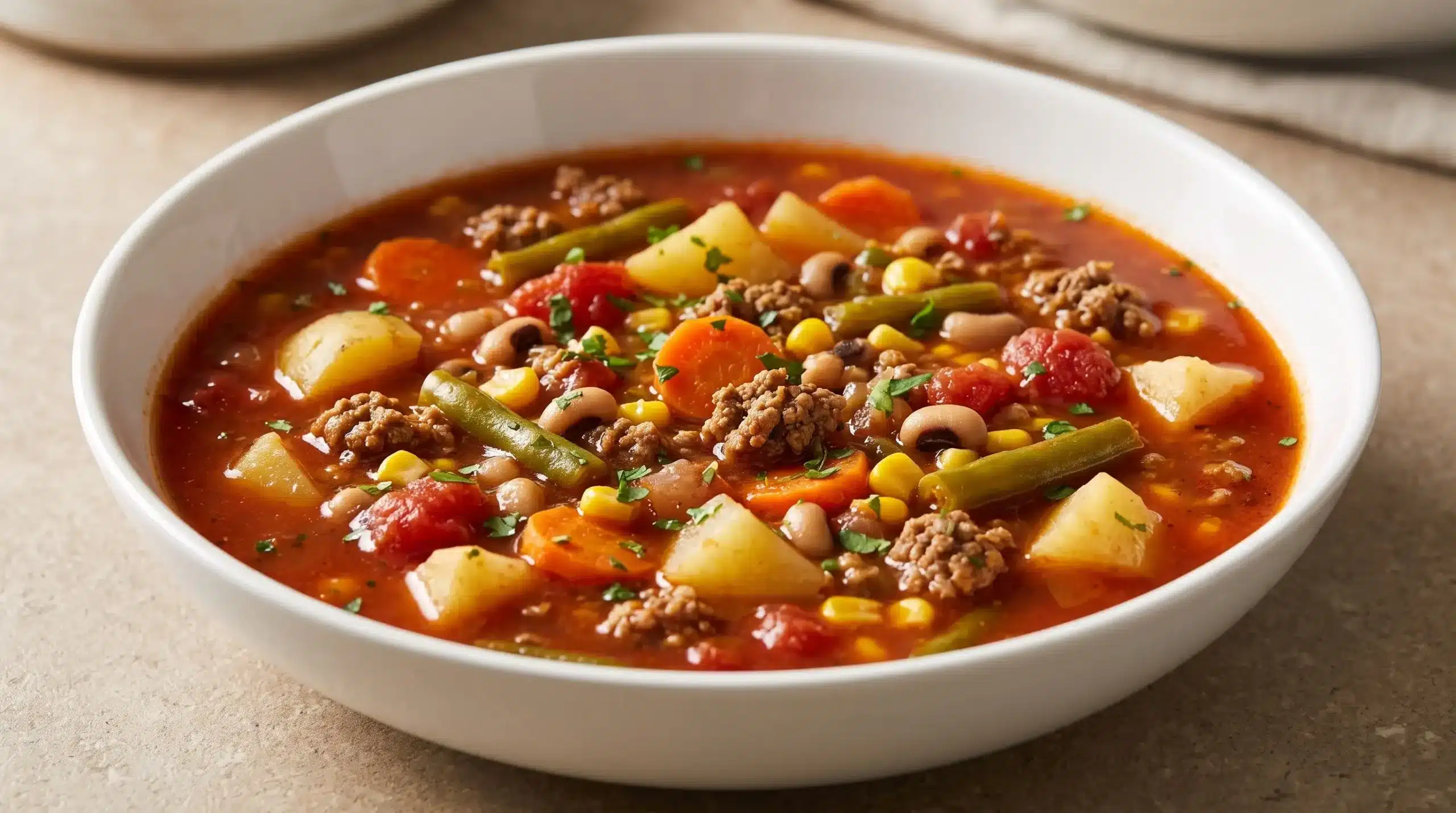
Hot slices of hobo casserole can stand on their own as a filling meal. A side salad or bread can round out the plate, while a hearty beef and potato meal provides a useful alternative when soup fits the menu better.
| Serving choice | Best use | How it fits the casserole |
|---|---|---|
| Side salad | Add a fresh contrast | Pairs with the warm, rich layers |
| Bread | Complete a hearty meal | Works alongside the beef and potatoes |
| Sour cream | Add a cool topping | Can be spooned over individual servings |
| Fresh herbs | Finish the plate | Provides a simple garnish |
Leftover Hobo Casserole Keeps Well Chilled
After serving, let leftover hobo casserole cool before transferring it to an airtight container. Refrigerated leftovers should keep for 3 to 4 days, making the dish useful when a portion needs to be saved for another meal.
Freezing is also an option for longer storage. The casserole can be frozen for up to 3 months, then thawed in the refrigerator overnight before reheating.
Keeping the leftovers sealed limits exposure to the refrigerator environment and makes individual portions easier to handle. Thawing in the refrigerator before reheating also follows the supplied storage guidance.
Simple Swaps Change the Character of the Casserole
Ground turkey or ground chicken can replace the ground beef when a lighter variation is wanted. The same layered concept still centers on potatoes, cheese, seasoning, and the baking liquid.
Sweet potatoes can replace the regular potatoes for a different flavor and additional nutrients. The change keeps the casserole format intact while giving the potato layer a different character.
Vegetables can also be incorporated into the layers. Bell peppers and carrots are suggested additions, while frozen vegetables can be added when extra variety is desired.
Small Adjustments Keep Hobo Casserole Flexible
Different cheeses can be used when a change from cheddar is desired. The original combination includes cheddar inside the layers and Parmesan for the uncovered finish, but the cheese choice can be adapted without changing the basic layered structure.
When beef broth is unavailable, water or chicken broth can be used in its place. The liquid still serves the casserole during its covered baking stage.
Hobo Casserole Works Best When the Potato Layer Is Controlled
The potatoes determine much of the casserole’s success because they must cook inside layered ingredients while the dish is covered. Consistent 1/4-inch slices, adequate baking moisture, and the covered-then-uncovered approach work together to produce a properly cooked potato layer and a browned cheese topping.
Once those points are handled, the browned beef, melted cheddar, and Parmesan finish can work together without complicated preparation. The result is a ground beef and potato casserole built around a few clear cooking decisions.
Hobo Casserole Questions About Potatoes and Storage
Can frozen vegetables be added to hobo casserole?
Yes. Frozen vegetables can be added to the layers when you want additional vegetables in the casserole. Bell peppers and carrots are also suitable additions based on the suggested variations.
Can hobo casserole be prepared the night before?
Yes. The assembled casserole can be prepared the night before and baked when you are ready to eat. This makes the layered format convenient when the cooking needs to happen later.
What can replace beef broth in hobo casserole?
Water or chicken broth can replace the beef broth. Either can be used as the liquid poured over the assembled layers before baking.
Can regular potatoes be replaced with sweet potatoes?
Yes. Sweet potatoes can be substituted for the regular potatoes to give the casserole a different taste and add nutrients while retaining the layered format.
How long can hobo casserole stay in the refrigerator?
Stored leftovers should remain refrigerated in an airtight container for 3 to 4 days. For longer storage, freezing is an option for up to 3 months, followed by thawing in the refrigerator overnight.
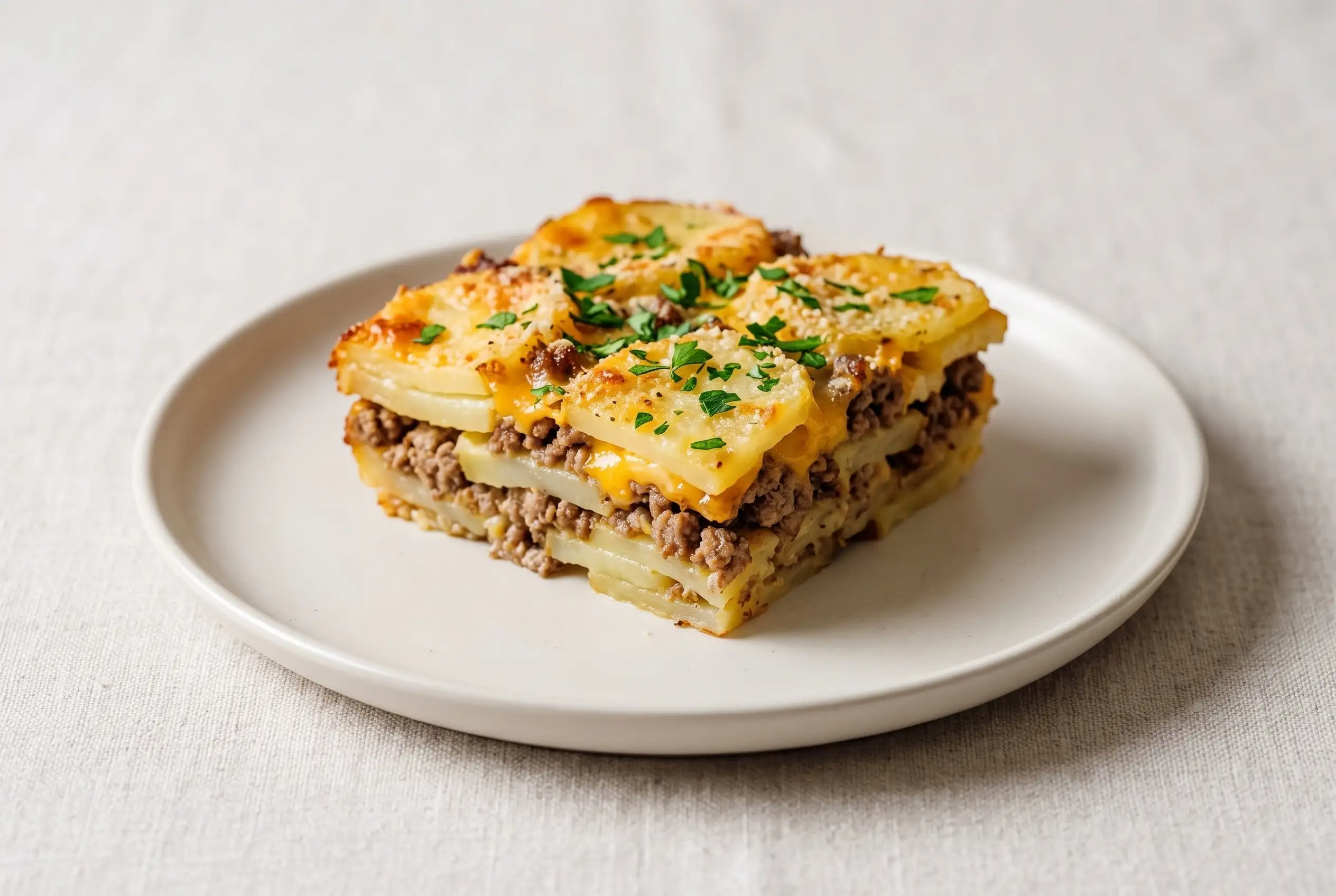
Hobo Casserole with Ground Beef, Potatoes and Cheese
Ingredients
Method
- Preheat the oven to 375°F / 190°C. Slice the potatoes to about 1/4 inch thick, chop the onion, and mince the garlic.
- Warm the olive oil in a large skillet over medium heat. Cook the onion and garlic until fragrant, then add the ground beef and cook until browned. Season with Italian seasoning, paprika, salt, and pepper.
- Grease a baking dish. Arrange half of the sliced potatoes in the dish, followed by half of the cooked seasoned beef and half of the shredded cheddar cheese.
- Build a second layer with the remaining potatoes, ground beef, and shredded cheddar cheese. Pour the beef broth and optional milk evenly over the casserole.
- Cover the baking dish with foil and bake for 35-40 minutes.
- Remove the foil and scatter the grated Parmesan cheese over the top. Continue baking uncovered for 10 minutes, until golden brown.
- Allow the casserole to rest for 5 minutes, then garnish with fresh parsley and serve hot.