Crispy Chicken Caesar Sandwich with Caesar Dressing
Crispy Chicken Caesar Sandwich brings together golden fried chicken, crunchy romaine, creamy Caesar dressing, and a crusty baguette in one satisfying handheld meal. The combination takes the familiar flavors of Caesar salad and pairs them with juicy, breaded chicken for a lunch or dinner that has plenty of texture in every bite.
The homemade Caesar dressing gives the sandwich its rich, tangy character, while Parmesan appears in both the dressing and crunchy coating. With the lettuce dressed separately and the bread kept ready for assembly, each part can retain its best texture until the sandwich is served.
Crispy Chicken Caesar Sandwich Starts With Texture
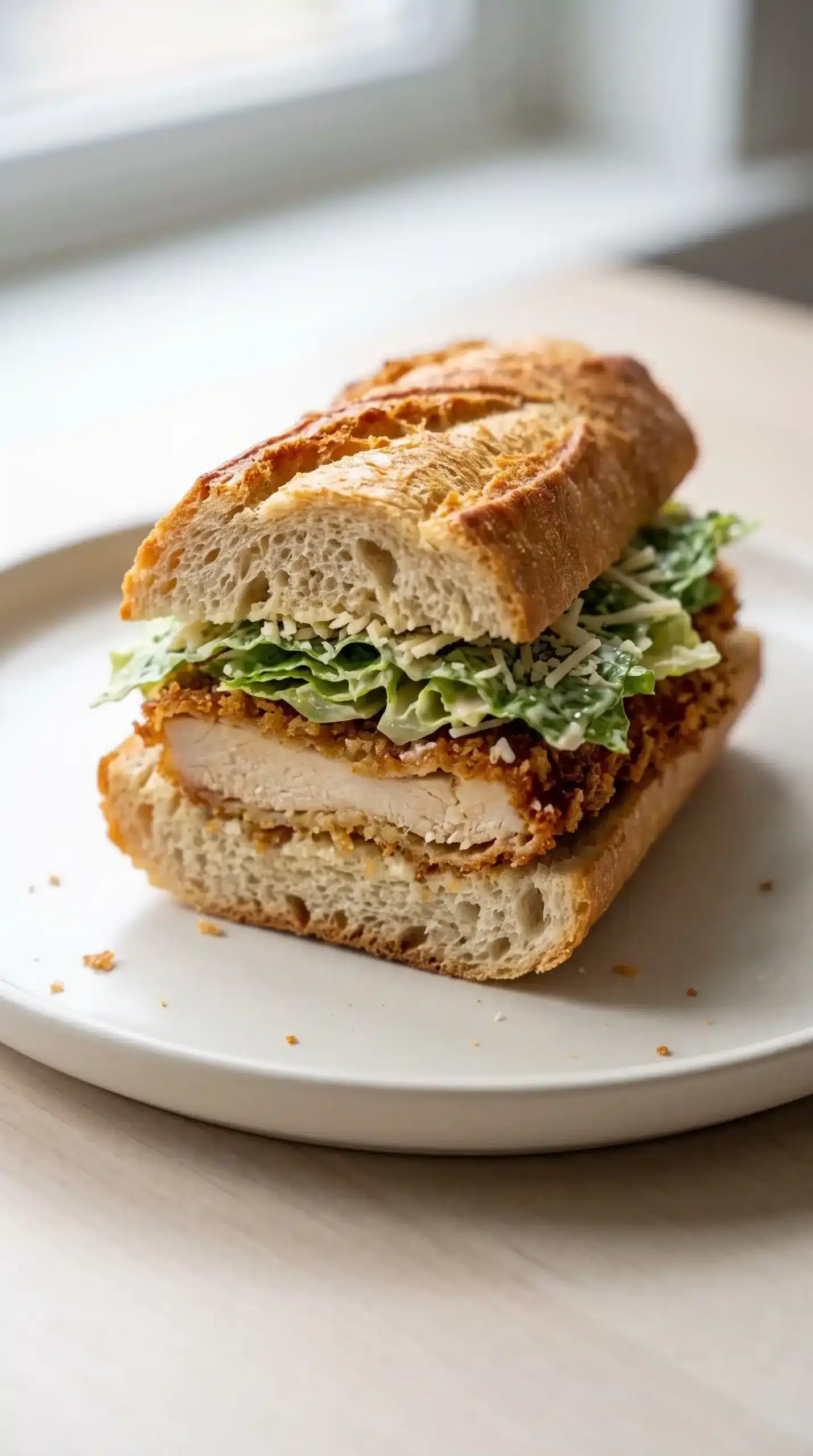
A successful crispy chicken caesar sandwich depends on contrast. The fried cutlet should have a crisp, golden coating surrounding tender chicken, while the chopped romaine needs to remain fresh and crunchy. Creamy dressing ties those textures together, and the baguette provides a sturdy crust around the filling.
Keeping those elements distinct until assembly makes the finished sandwich more appealing. Dressing the romaine ahead of time is useful because the lettuce is evenly coated, while reserving some dressing for the bread creates another layer of flavor without requiring additional ingredients.
Serving the sandwich immediately after assembly is especially important when crispness is part of the experience. The warm fried chicken, dressed lettuce, creamy sauce, and crusty baguette are at their best when brought together just before eating.
The Homemade Caesar Dressing Shapes Every Bite

The homemade Caesar dressing sandwich gets its distinctive flavor from a combination of full-fat mayonnaise, Greek yogurt, Dijon mustard, Worcestershire sauce, lemon juice, Parmesan, garlic, black pepper, and sea salt. The mixture should be stirred until smooth and creamy before it is divided between the lettuce and sandwich bread.
Freshly grated Parmesan is particularly useful here because it appears in the dressing as well as the chicken coating. Lemon juice and Worcestershire sauce bring tangy, savory notes, while Dijon mustard and garlic give the creamy mixture more depth.
- For the lettuce: Toss most of the dressing with the chopped romaine so the leaves are coated without requiring a separate sauce.
- For the bread: Reserve a few tablespoons to spread directly onto the baguette during assembly.
- For advance preparation: Refrigerate the dressing separately when making it ahead, with the option to prepare it up to two days in advance.
Parmesan and Panko Build the Chicken’s Crunch
The breading uses three stages: seasoned flour, beaten eggs, and a mixture of panko crumbs, breadcrumbs, herbs, garlic powder, pepper, salt, and freshly grated Parmesan. That combination gives the chicken coating both texture and seasoning without requiring a complicated preparation.
Panko’s texture comes from panko’s larger, flakier crumbs, which create more crunch than conventional breadcrumbs and help give the chicken a crisp, textured coating.
Panko contributes the prominent crunch, while regular breadcrumbs help round out the coating. Smoked paprika seasons the flour layer, and dried parsley and oregano are incorporated into the crumb mixture alongside garlic and Parmesan seasoning for a savory, well-seasoned crust.
Pressing the chicken firmly into the breadcrumb mixture matters because it helps the coating adhere before frying. Each cutlet should move through the flour, egg, and crumb stages in that order, leaving the surface thoroughly coated before it reaches the skillet.
Even Chicken Cutlets Keep Frying Predictable
Chicken cutlets should be reasonably even in thickness before they are breaded. If necessary, gently pound them to create a more uniform shape, then season both sides with sea salt and black pepper.
Chicken breast can also be used by slicing it horizontally into thin cutlets. The important consideration is consistent thickness, since thicker and thinner portions can cook at different rates.
Briefly marinating the chicken in a spoonful of Caesar dressing is another supported option when extra flavor is desired. The chicken can then move through the regular breading process before frying.
Medium Heat Gives the Coating Time to Brown
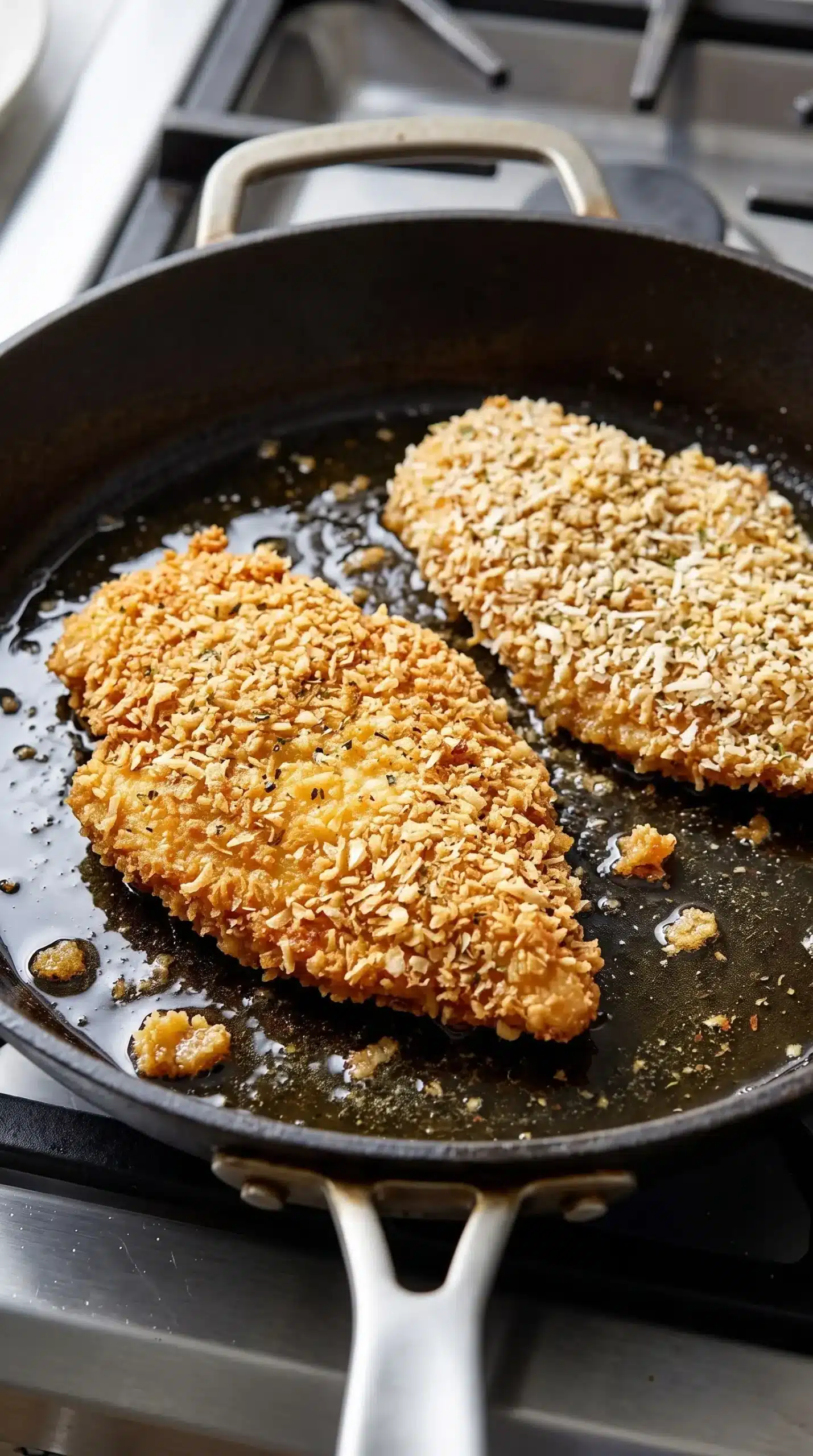
Oil should be heated in a skillet over medium heat before the breaded cutlets are added. Once hot, the chicken can be fried in batches until the coating is golden and the chicken is fully cooked, with the supplied method calling for about four to five minutes per side depending on thickness.
Batch frying is useful because overcrowding can interfere with the cooking conditions needed for a crisp coating. Working in smaller batches also helps maintain the oil temperature as the chicken cooks.
| Stage | What to look for | Useful action |
|---|---|---|
| Before frying | Chicken is evenly shaped and fully breaded | Press the crumb mixture firmly onto each cutlet |
| During frying | Coating becomes golden brown | Cook in batches over medium heat |
| After frying | Chicken is golden and fully cooked | Transfer each cutlet to a wire rack |
These Crispy Chicken Caesar Sandwich Mistakes Are Easy to Prevent
A few preparation choices can work against the texture this sandwich needs. Avoiding them keeps the breading crisp and the filling balanced.
Uneven cutlets: Chicken pieces with noticeably different thicknesses can cook at different rates. Gently pound thicker portions when needed so the cutlets are more even.
Loose breading: Moving too quickly through the coating stages can leave areas without a firm crumb layer. Press the chicken into the panko mixture after dipping it in the egg.
Overcrowded frying: Frying too many pieces at once can make it harder to maintain the conditions needed for crisp chicken. Cook in batches and give the cutlets room in the skillet.
Soggy leftovers: Storing the fried chicken together with dressed lettuce or dressing works against its crisp texture. Keep those components separate and reheat the chicken in an oven or air fryer.
Wire-Rack Draining Preserves the Fried Finish
Once each chicken cutlet has finished frying, transferring it to a wire rack allows excess oil to drain away while keeping the coating exposed. The rack is preferable to immediately enclosing the hot chicken in a container because the sandwich depends on a crisp exterior.
The same principle matters when leftovers are stored. Fried chicken should cool and then be kept in an airtight container in the refrigerator for up to three days, while the Caesar dressing and lettuce remain separate.
Assembly Works Best When the Baguette Stays Structured
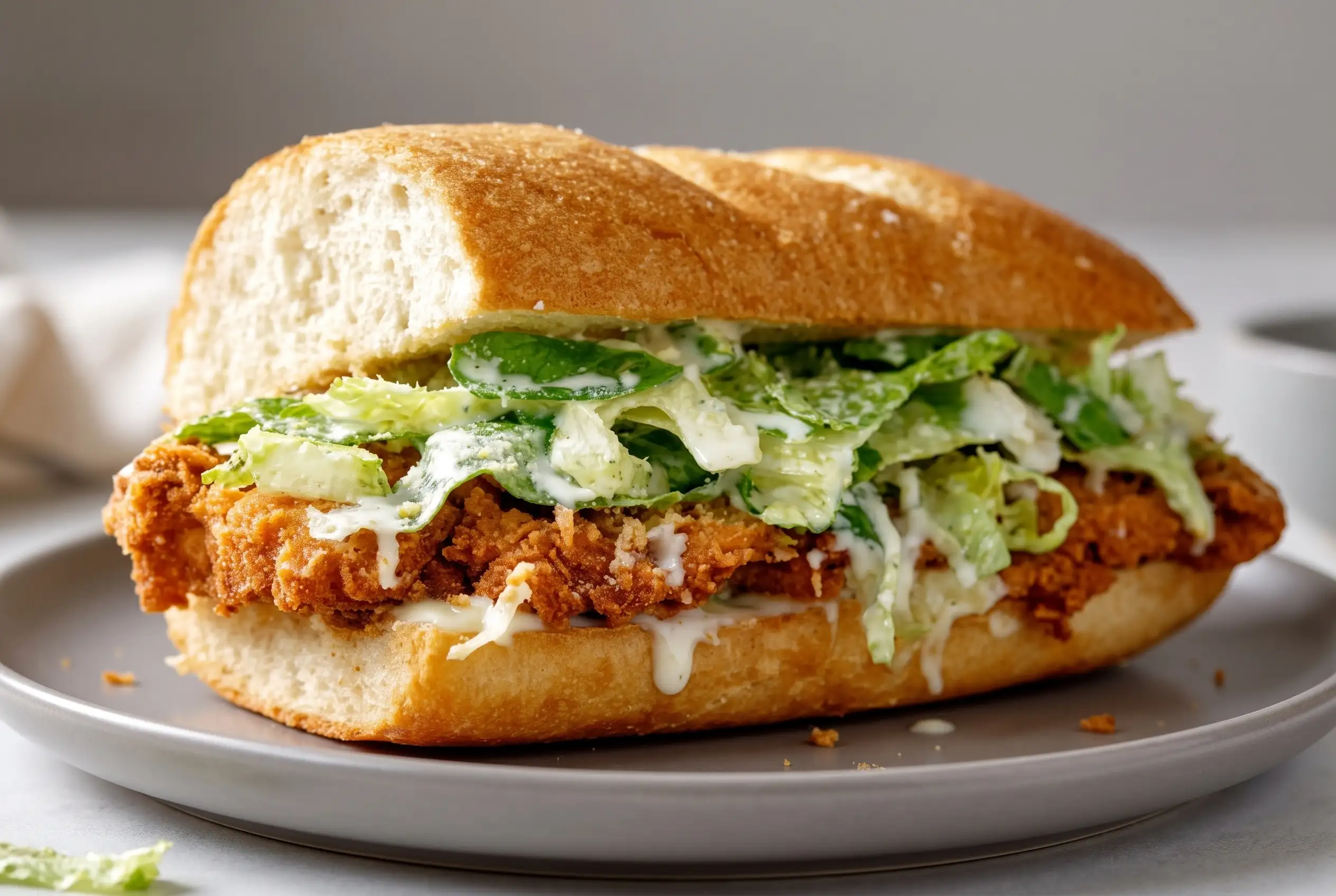
Slice the French baguette into sandwich-sized portions and cut them open shortly before serving. Spread the reserved Caesar dressing over the bread, place a crispy chicken cutlet inside, and add the dressed romaine on top.
Extra grated Parmesan can be scattered over the filling before the sandwich is closed. The baguette provides enough structure for the chicken and lettuce while contributing its own crusty texture to the finished bite.
Crispy Chicken Caesar Sandwich Pairings Keep the Meal Balanced
Classic fries make a natural side for a crispy chicken caesar sandwich, while sweet potato fries offer another substantial option. A light side salad can provide a fresher accompaniment when the sandwich itself is the main focus.
Sliced tomatoes or avocado can also be added for customization. These additions fit alongside the existing chicken, romaine, Parmesan, baguette, and Caesar dressing without changing the core preparation.
Reheating Keeps Leftover Chicken Crisp
Leftover fried chicken is best reheated in the oven or air fryer until crisp. The microwave is not the preferred method because it can make the breading soggy.
For the best texture, keep the chicken, dressing, and lettuce apart during storage. Assemble the chicken caesar sandwich after reheating so the crisp coating does not sit against the dressed romaine for longer than necessary.
A Baked Version Changes the Cooking Approach
The breaded chicken can be baked at 400°F (200°C) for 20–25 minutes, flipping halfway through, until golden and cooked through. This provides an alternative to skillet frying while retaining the same seasoned coating used for the sandwich.
The baked chicken can then be paired with the same homemade Caesar dressing, romaine, baguette, and Parmesan used for the original preparation. The vegetarian variation follows the same sandwich concept with crispy eggplant slices or breaded tofu in place of chicken.
Fresh Assembly Makes the Crispy Chicken Caesar Sandwich Work
Golden chicken, dressed romaine, creamy Caesar dressing, and a crusty baguette need to meet at the right moment. Keeping the dressing and lettuce separate from the fried chicken during storage, draining freshly cooked cutlets on a wire rack, and assembling immediately before serving all protect the contrast that defines the sandwich.
The strongest result comes from treating crispness as something to preserve from the skillet through the last step of assembly. A homemade Caesar dressing sandwich then has room for the tangy creamy dressing, crunchy lettuce, Parmesan-rich coating, and warm chicken to remain distinct while still working together.
Crispy Chicken Caesar Sandwich Questions About Crispness and Prep
Can chicken breast be turned into cutlets for this sandwich?
Yes. Slice chicken breasts horizontally into thin cutlets, then gently pound them if needed so the pieces are more even in thickness before seasoning and breading.
How far ahead can the Caesar dressing be prepared?
The dressing can be made up to two days ahead and stored in the refrigerator. Keeping it separate from the romaine and bread preserves its usefulness for assembly later.
Why is freshly grated Parmesan useful in the coating?
Freshly grated Parmesan is used directly in the breading mixture, where it joins the panko, breadcrumbs, herbs, garlic powder, salt, and pepper to season the chicken coating.
Can the chicken be baked instead of fried?
Yes. Bake the breaded chicken at 400°F (200°C) for 20–25 minutes, flipping halfway through, until it is golden and cooked through.
What is the best way to store assembled sandwiches?
For leftovers, store the fried chicken, Caesar dressing, and lettuce separately in appropriate refrigerated containers. Reassemble the sandwich after reheating the chicken so the breading has the best chance of remaining crisp.
What can replace the chicken for a vegetarian version?
Crispy eggplant slices or breaded tofu can be used with the same Caesar dressing, romaine, baguette, and Parmesan-based sandwich approach.
Crispy Chicken Caesar Sandwich with Caesar Dressing
Ingredients
Method
- Stir together the mayonnaise, Greek yogurt, Dijon mustard, Worcestershire sauce, lemon juice, ¼ cup Parmesan, garlic, ¼ teaspoon black pepper, and a pinch of sea salt until smooth. Set aside a few tablespoons for the sandwiches and refrigerate both portions.
- Combine the chopped romaine with the remaining Caesar dressing. Cover and refrigerate until ready to assemble.
- If necessary, gently pound the chicken cutlets to create an even thickness, then season both sides with sea salt and black pepper.
- Prepare three shallow bowls. Place the flour, ½ teaspoon salt, and smoked paprika in the first. Whisk the eggs with ¼ teaspoon salt in the second. In the third, mix the panko, breadcrumbs, dried parsley, oregano, garlic powder, ½ teaspoon ground black pepper, ½ teaspoon sea salt, and ¼ cup Parmesan.
- Warm oil in a skillet over medium heat. Dredge each chicken cutlet in the seasoned flour, coat it with the egg mixture, then firmly press it into the breadcrumb mixture.
- Cook the breaded chicken in batches for about 4–5 minutes per side, adjusting for thickness, until golden brown and the internal temperature reaches 165°F / 74°C. Move the cooked cutlets to a wire rack to drain.
- Cut the French baguettes into sandwich-sized portions and slice them open.
- Spread the reserved Caesar dressing inside each baguette. Add one crispy chicken cutlet, top with the dressed romaine, and sprinkle with extra grated Parmesan cheese.
- Close the sandwiches and serve immediately while the chicken remains crisp.