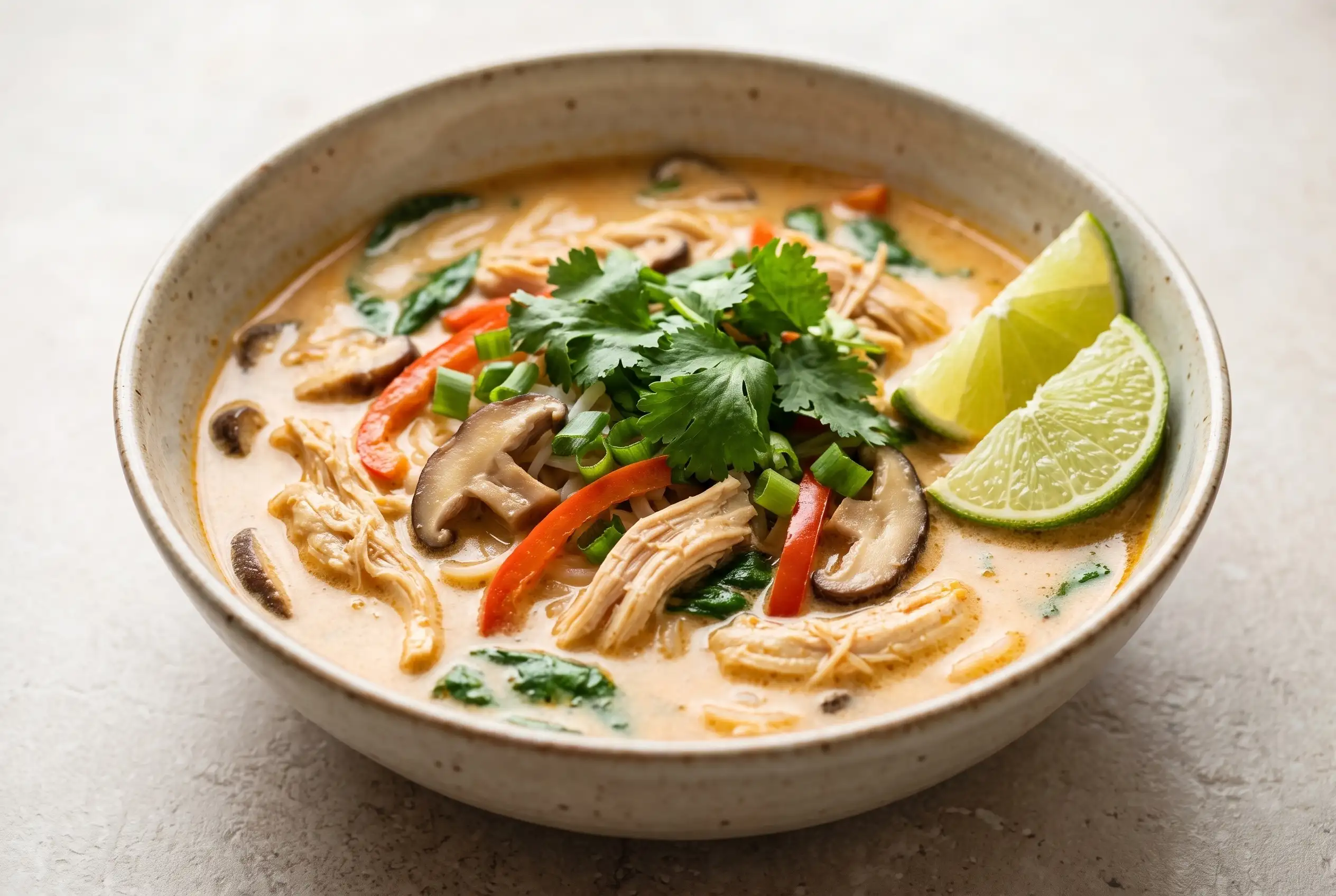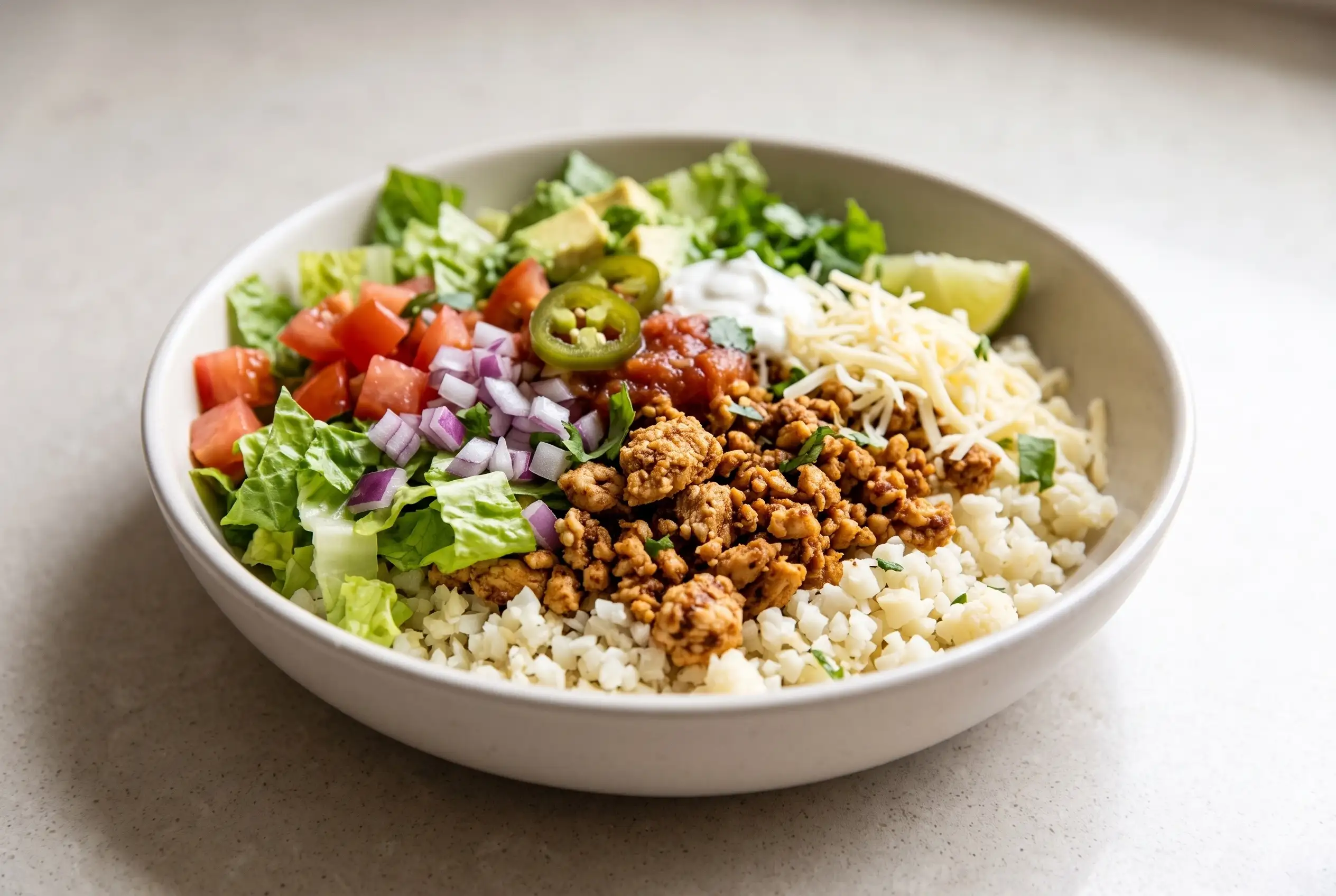
Mediterranean Chicken and Rice with Lemon and Peas
Mediterranean chicken and rice brings together warmly seasoned chicken, tender white rice, aromatic onion and garlic, and a bright finish of lemon and peas in one satisfying pan. The rice cooks alongside the chicken, absorbing broth and savory juices while the spice blend builds a fragrant Mediterranean character.
For busy evenings, one pan Mediterranean chicken and rice offers an especially practical combination of comfort and simplicity. The cooking process uses a single wide pan, and each stage contributes something important to the finished texture, from lightly browning the chicken to letting the covered rice steam undisturbed.
Why Mediterranean Chicken and Rice Works So Well
The appeal of Mediterranean chicken and rice comes from the way a few straightforward cooking decisions build layers of flavor. Oregano, thyme, cumin, garlic powder, paprika, turmeric, black pepper, and salt season the chicken before it reaches the pan, giving the rice a flavorful foundation once broth is added.
Lightly browning the chicken first also matters. The pieces do not need to be fully cooked at that point because they continue cooking with the rice. This allows the chicken to become part of the pan’s overall flavor instead of being treated as a separate topping.
Rice provides the connective element. As it simmers with chicken broth, a bay leaf, cinnamon stick, and the seasoned chicken, it takes on the surrounding flavors while becoming tender. Peas and lemon added near the end keep the finished dish from feeling overly heavy.
Rinsed Soaked Rice Sets Up the Right Texture
The white rice deserves attention before it enters the pan. Rinsing rice removes surface starch, while soaking it for 30 minutes helps the grains cook evenly. Draining the rice thoroughly before adding it to the skillet keeps the intended liquid balance closer to the recipe.
| Rice preparation | What it supports | What to watch |
|---|---|---|
| Rinse | Cleaner cooking liquid | Drain before using |
| Soak | More even cooking | Use the prepared rice after soaking |
| Simmer covered | Tender grains | Let the rice steam undisturbed |
Once the rice is simmering, restraint becomes useful. Frequent stirring can interfere with the steaming process, so leaving the pan covered and largely undisturbed helps the grains reach the desired tenderness.
Seasoned Chicken Needs Only a Light Brown
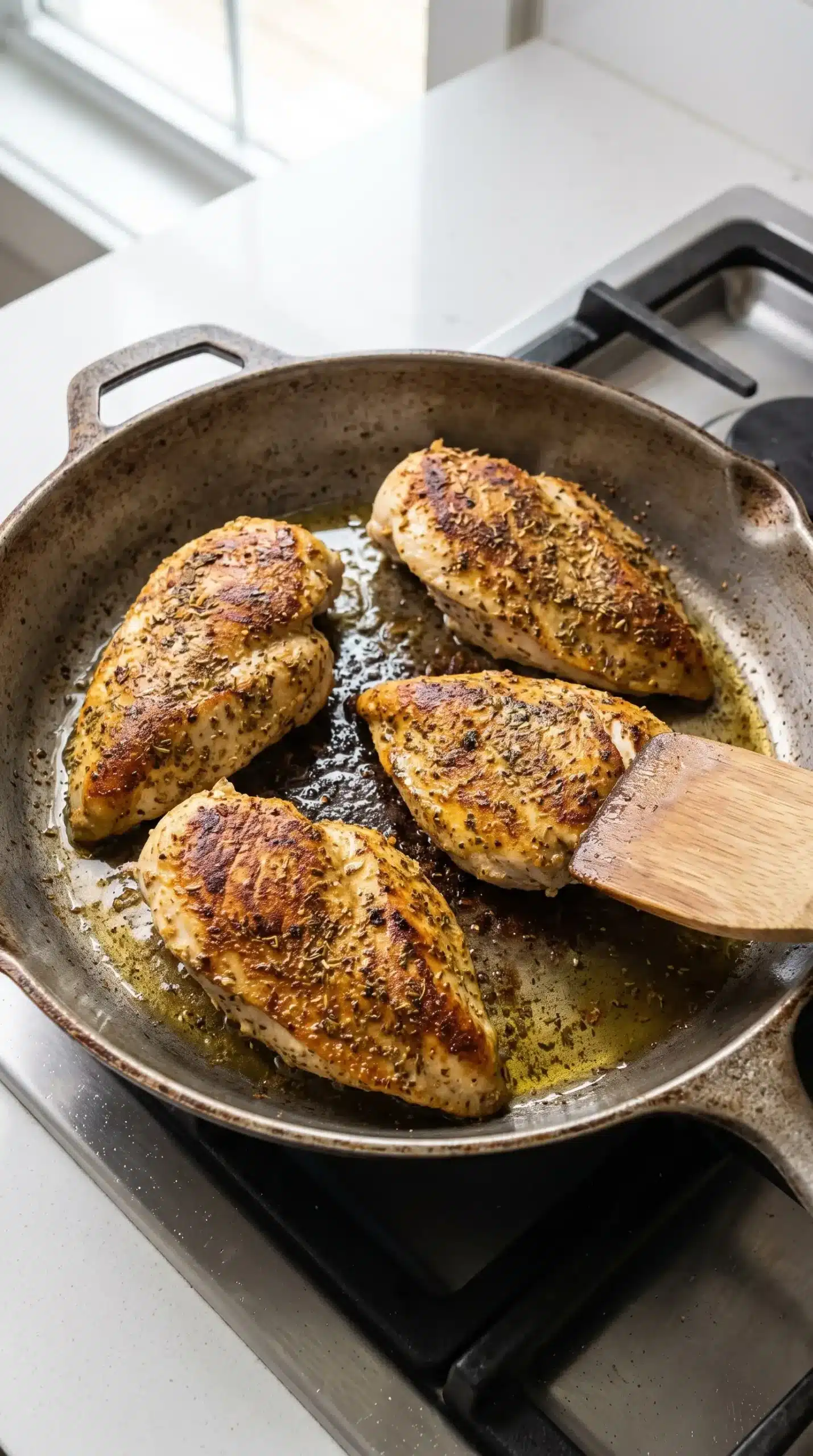
Chicken breasts are sliced in half into four pieces before being coated with lemon juice and four teaspoons of the prepared spice blend. The seasoning should cover the chicken evenly so every piece enters the pan with the same flavor base.
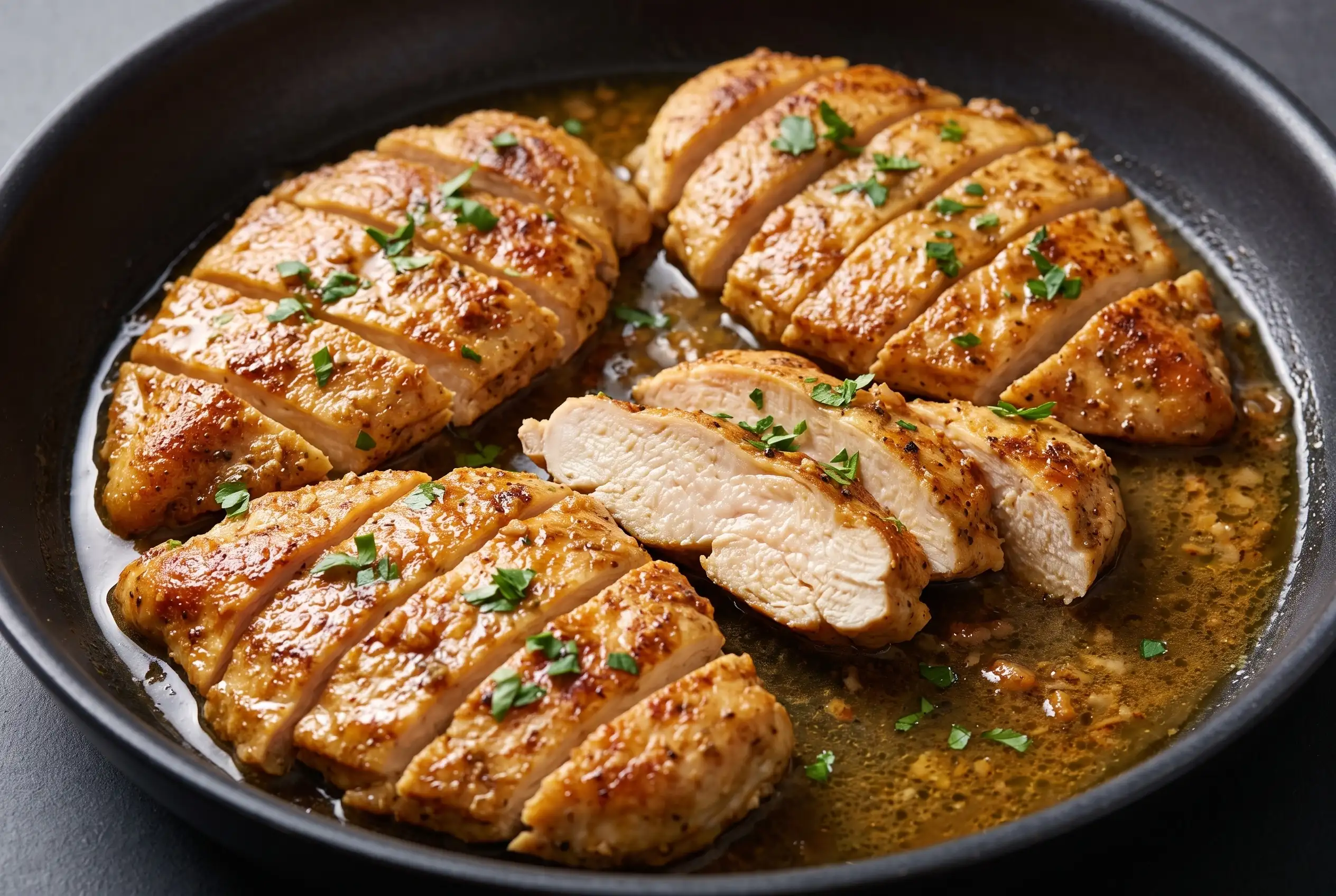
Medium heat is enough to develop light browning in the skillet. The chicken is intentionally not finished during this first stage; it will continue cooking after the rice and broth are introduced. Keeping the initial browning brief prevents the process from becoming unnecessarily complicated.
Onion and Garlic Build the Aromatic Base
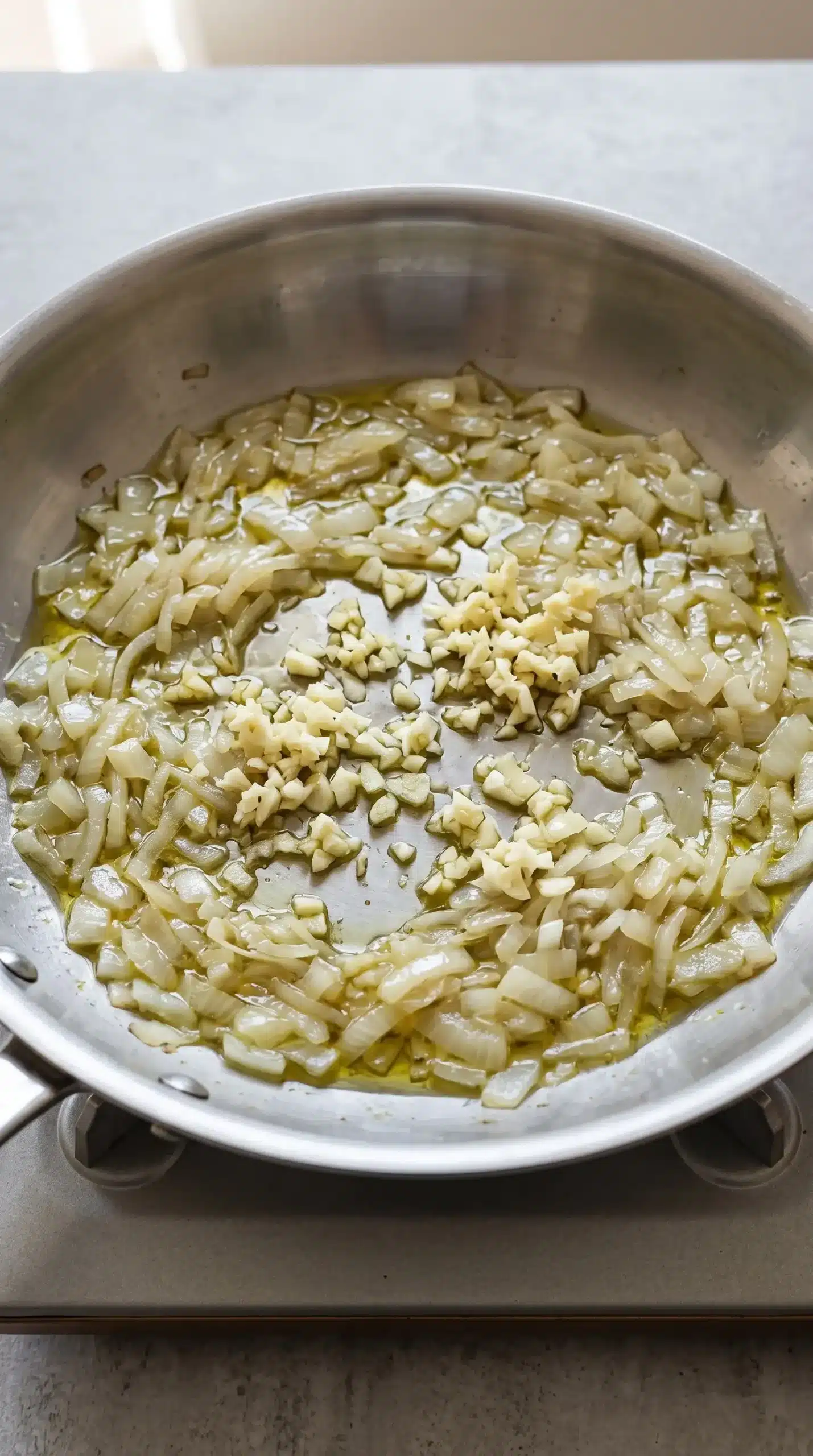
Finely chopped onion goes into the olive oil first and cooks until softened. Garlic follows and needs only enough time to become fragrant. This sequence creates a savory aromatic base before the seasoned chicken is added.
- Softened onion: Cook until tender before moving on to the garlic.
- Fragrant garlic: Keep its cooking brief before the chicken enters the pan.
- Seasoned chicken: Add it once the aromatics have prepared the pan.
Broth and Whole Spices Shape the Rice
Low-sodium chicken broth supplies the liquid needed for the white rice while also carrying the flavors already developed in the skillet. A bay leaf and small cinnamon stick join the broth, giving the cooking liquid additional aromatic depth.
The cinnamon stick is especially useful here because it contributes a warm note without requiring ground cinnamon to be dispersed through the rice. Keeping it whole also makes it straightforward to remove or avoid when serving.
For an easy Mediterranean chicken and rice meal, the liquid should reach a gentle boil before the heat is reduced. The covered simmer then gives the rice time to absorb the broth as the chicken finishes cooking alongside it.
Covered Simmering Is the Key Cooking Control
Once the broth reaches a gentle boil, lowering the heat and covering the pan changes the cooking environment. The rice can absorb the liquid while trapped steam helps it become tender. Opening the pan unnecessarily or stirring repeatedly works against that controlled steaming process.
Watch for the point when the rice is tender and most of the liquid has been absorbed. That observation is more useful than constantly disturbing the grains. If the rice still needs cooking, keeping the pan covered preserves the steam that the cooking stage depends on.
Peas and Lemon Belong Near the Finish
Frozen peas are added after the rice has cooked, so they need only a few minutes under the lid to warm through. This keeps them as a distinct finishing element instead of making them part of the long simmer.
The remaining teaspoon of lemon juice goes over the cooked rice and chicken at the same stage. Its placement at the finish provides a fresh citrus note that complements the cumin, oregano, thyme, paprika, turmeric, and other warm seasonings already in the pan.
Common Mediterranean Chicken and Rice Mistakes to Avoid
Several problems can be traced directly to how the rice, chicken, and pan are handled. Fortunately, each has a simple prevention point.
| Potential mistake | Likely effect | Better approach |
|---|---|---|
| Skipping the rice soak | Less even cooking | Soak the rinsed white rice before draining it |
| Stirring repeatedly during the simmer | Less ideal rice texture | Keep the pan covered and let the rice steam |
| Trying to fully cook the chicken during browning | Unnecessary extra cooking at the first stage | Lightly brown it, then finish it with the rice |
| Adding peas too early | They spend longer in the cooking process | Add them once the rice is cooked |
Another easy mistake is treating the first browning stage as the end of the chicken’s cooking. The chicken is supposed to continue cooking with the rice and broth, so lightly browned pieces are appropriate before the simmer.
Which Ingredients Matter Most in the Mediterranean Flavor
The spice blend is deliberately balanced around dried herbs, earthy spices, and savory seasoning. Oregano and thyme provide the herbal side, while cumin, paprika, turmeric, garlic powder, black pepper, and salt establish the warmer and more savory notes.
| Ingredient group | Specific components | Useful cooking consideration |
|---|---|---|
| Dried herbs | Thyme, oregano | Mix evenly into the seasoning blend |
| Warm spices | Cumin, paprika, turmeric | Coat the chicken before browning |
| Aromatics | Onion, fresh garlic | Soften the onion before briefly cooking the garlic |
| Whole aromatics | Bay leaf, cinnamon stick | Let them infuse the broth while the rice simmers |
| Bright finish | Lemon juice, peas | Add after the rice has cooked |
Low-sodium chicken broth also gives the cook useful control because the spice blend already contains salt. The broth becomes part of the rice itself, so its flavor reaches well beyond the surface of the finished chicken.
Serving Choices Can Shift the Finished Dish
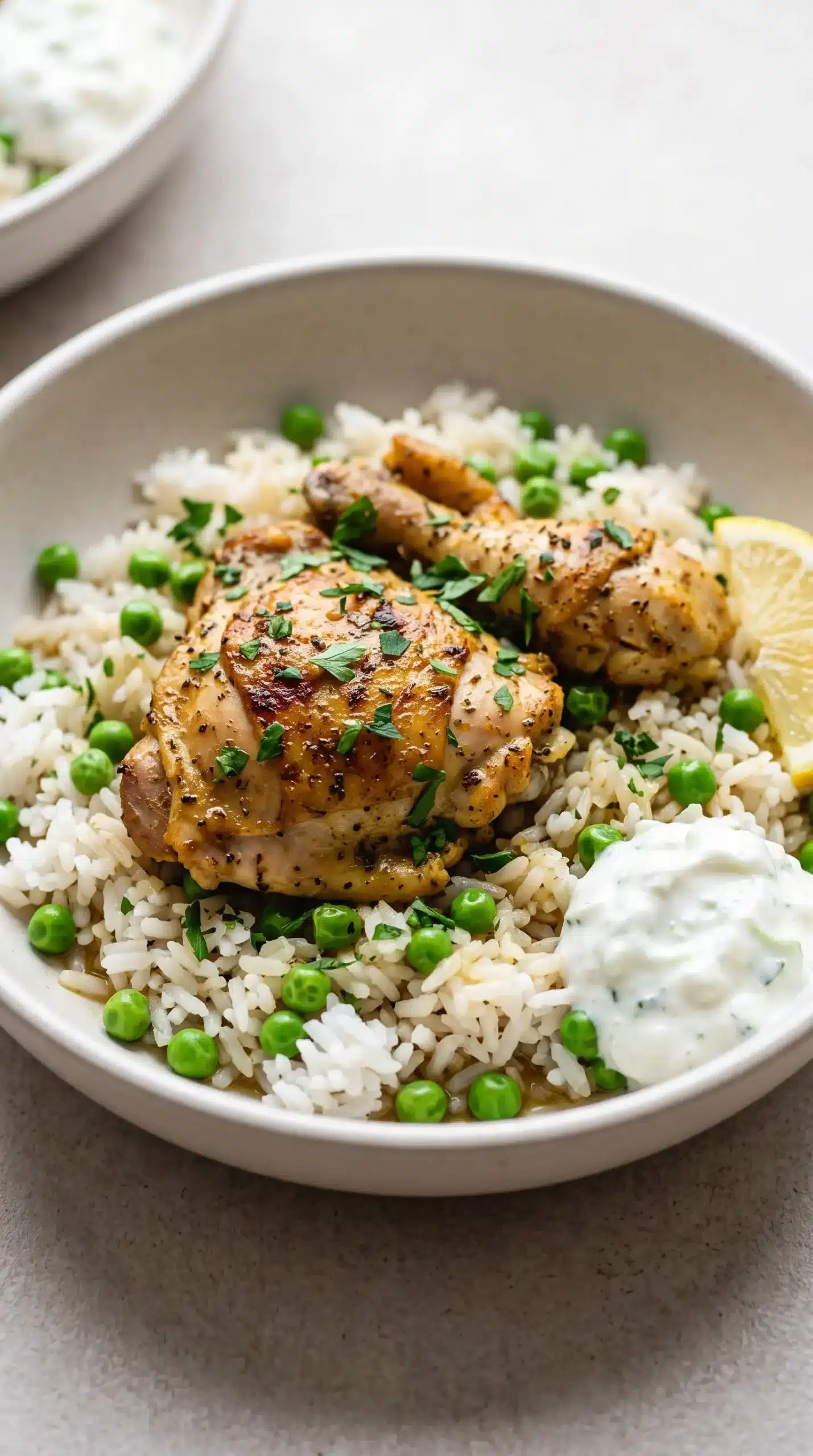
Warm pita bread and a simple side salad make natural companions for Mediterranean chicken and rice. Both provide a straightforward contrast to the warm, seasoned rice and chicken without changing the main dish.
A spoonful of yogurt or tzatziki brings a cool, refreshing element alongside the warm spices. Fresh parsley or cilantro can also be scattered over the top when available, adding a fresh herbal finish.
Simple Variations Keep the One-Pan Format Flexible
Bell peppers, spinach, or zucchini can be incorporated during the last few minutes of cooking. Peas already have a defined place near the finish, while these additional vegetables can broaden the vegetable component without changing the basic one-pan approach.
Chicken thighs are an option when darker meat is preferred. They bring extra richness while following the same general concept of seasoning the chicken, lightly browning it, and finishing it with the rice; a chicken-and-rice preparation can likewise keep the grain-and-protein combination at the center of a complete meal.
A vegetarian adaptation replaces the chicken with chickpeas or lentils and swaps chicken broth for vegetable broth. Brown rice can also replace white rice, although it requires a longer cooking time and additional liquid, so it should not be treated as a direct timing-for-timing substitute.
Leftovers Stay Useful With Gentle Reheating
Cool leftover Mediterranean chicken and rice completely before transferring it to an airtight container. Refrigerated portions can be kept for up to three days, making the dish practical beyond the meal in which it is cooked.
For reheating, gentle heat is preferable. In the microwave or on the stove, a splash of broth can help keep the rice moist as it warms.
Freezing Changes the Best Reheating Approach
Once cooled, the cooked chicken and rice can be frozen for up to three months. Thawing overnight gives the frozen portion time to defrost before reheating.
After thawing, warm the portion gently and use a small splash of broth if the rice needs moisture. This approach follows the same principle used for refrigerated leftovers: restore moisture gradually instead of reheating aggressively.
Heat Adjustments Fit the Existing Spice Blend
The supplied seasoning creates a warmly spiced dish without adding a dedicated hot pepper. If extra heat is wanted, red pepper flakes or a pinch of cayenne can be incorporated into the spice blend before the chicken is coated.
The Rice Should Finish Tender While the Chicken Completes Cooking
Tender rice with most of the liquid absorbed is the clearest signal that the central cooking stage has reached its intended point. The chicken begins with a light brown and continues cooking under the covered simmer, while the rice steadily takes in the seasoned broth.
That balance is what makes Mediterranean chicken and rice work as a unified dish. Keeping the rice undisturbed, preserving the covered steam, and adding peas and lemon near the finish allows the individual components to arrive together without unnecessary handling.
Questions About Rice Texture, Substitutions, and Storage
Can brown rice be used instead of white rice?
Brown rice can be used, but it needs a longer cooking time and additional liquid. Because those requirements differ from white rice, the cooking process cannot be followed with exactly the same expectations for timing or liquid absorption.
When should I add vegetables such as spinach or zucchini?
Spinach, zucchini, and bell peppers can be added during the last few minutes of cooking. That placement gives them a short cooking period while keeping them separate from the longer rice-simmering stage.
What can replace chicken in a vegetarian version?
Chickpeas or lentils can replace the chicken, and vegetable broth can replace the chicken broth. This preserves the one-pan concept while changing the protein and cooking liquid to suit a vegetarian preparation.
How can I add more heat without changing the dish completely?
Red pepper flakes or a pinch of cayenne can be mixed into the spice blend. Adding the heat at that stage distributes it through the chicken seasoning and the flavors that later meet the rice.
What should I do if the rice is not yet tender?
Keep the pan covered so the trapped steam can continue working on the rice. Avoid frequent stirring, since the covered, undisturbed cooking environment is important for the texture.
Can Mediterranean chicken and rice be frozen?
Yes. Cool the cooked dish before freezing it, keep it frozen for up to three months, and thaw it overnight before reheating. A little broth can be added during reheating if the rice needs moisture.
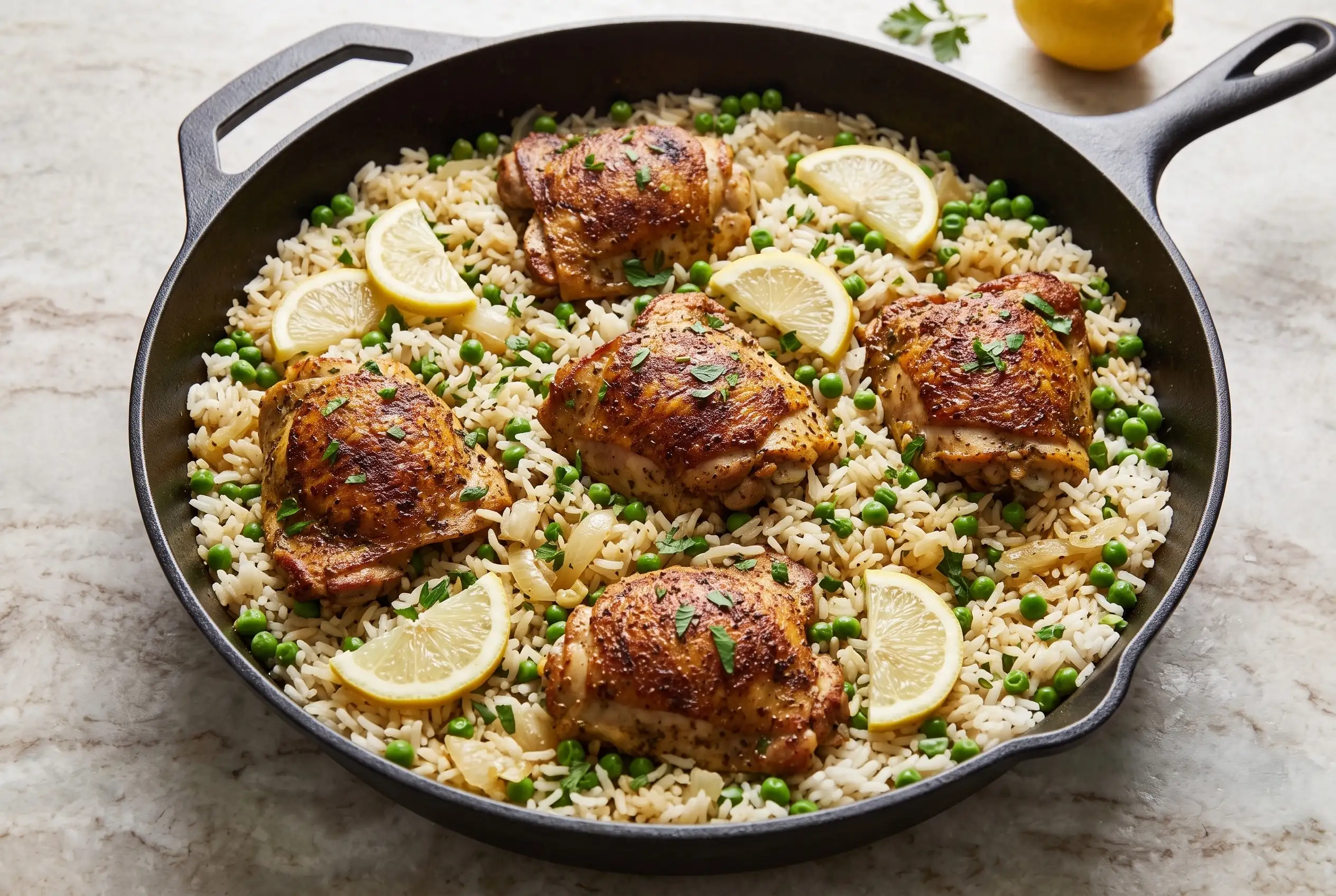
Mediterranean Chicken and Rice with Lemon and Peas
Ingredients
Method
- Combine the dried thyme, oregano, black pepper, cumin, garlic powder, salt, paprika, and turmeric in a small bowl to prepare the spice blend.
- Coat the chicken pieces evenly with 4 teaspoons of the spice blend and 2 teaspoons lemon juice.
- Warm 2 teaspoons olive oil in a large skillet or wide pan over medium heat. Add the chopped onion and cook until softened.
- Add the chopped garlic to the onion and cook briefly, just until fragrant.
- Place the seasoned chicken in the pan and cook for several minutes, turning once to lightly brown both sides. The chicken does not need to be fully cooked at this stage.
- Drain the soaked rice and add it to the pan with the chicken. Pour in the chicken broth and add the bay leaf and cinnamon stick.
- Bring the mixture to a gentle boil. Lower the heat, cover the pan, and simmer until the rice is tender and most of the liquid has been absorbed.
- Spread the frozen peas over the chicken and rice. Drizzle with 1 teaspoon lemon juice, cover, and cook for a few minutes until the peas are heated through.
- Confirm that the chicken reaches 165°F / 74°C. Remove the bay leaf and cinnamon stick, gently fluff the rice with a fork, and serve.