Chicken Breast Recipe with Golden Butter Pan Sauce
My go-to chicken breast recipe turns simple chicken breasts into a golden, juicy dinner with a lightly seasoned crust and a glossy butter pan sauce. Horizontal slicing creates four thinner steaks from two large breasts, so the pieces cook evenly and develop plenty of surface flavor.
Why this chicken breast recipe stays juicy
Juiciness here comes from controlling thickness, heat, and cooking time together. The breasts are sliced horizontally instead of pounded, giving each piece a more manageable shape while keeping the preparation straightforward.
A hot non-stick pan quickly creates the browned exterior. That searing heat matters because the chicken gets color and texture before it has a chance to spend too long cooking.
Once the chicken reaches 67°C / 153°F, it comes out of the pan to rest. Carryover cooking continues while the sauce is prepared, helping the meat finish without unnecessary time over direct heat.
Horizontal slicing gives each chicken steak a fair start
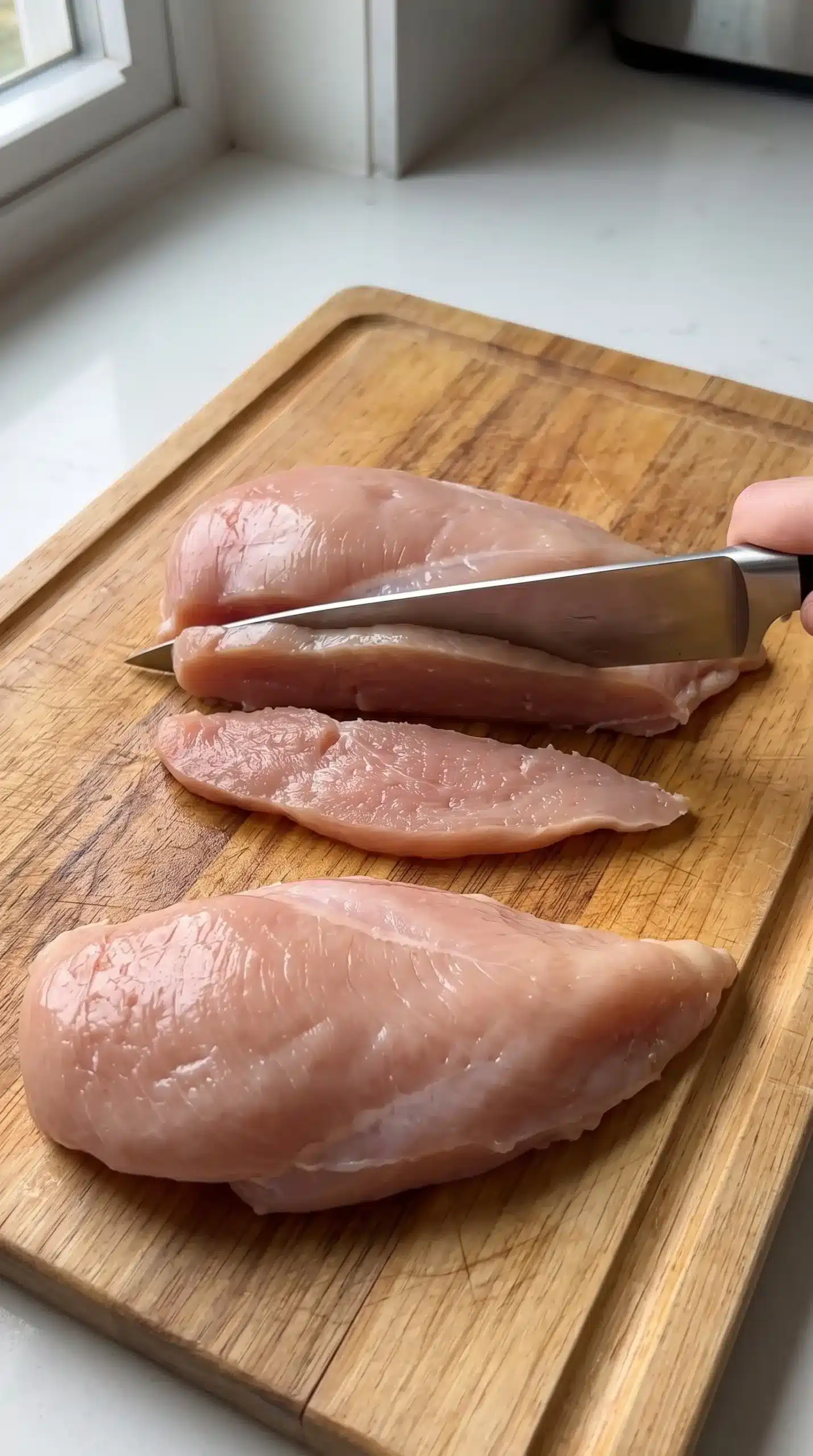
Cutting the two large chicken breasts horizontally into four steaks is one of the most useful details in this easy chicken breast recipe. The pieces become more evenly thick, which makes the cooking process easier to control.
There is no need to pound the meat. A clean horizontal cut does the job while leaving the chicken ready for its light coating and quick sear.
The seasoned flour coating matters more than it looks
The flour mixture is deliberately light, combining paprika, onion powder, garlic powder, cumin, kosher salt, black pepper, and all-purpose flour. A gluten-free flour can also be used.
- Paprika: Sweet or smoky paprika works in the seasoning blend.
- Aromatics: Onion powder and garlic powder build the savory base.
- Warm note: Cumin is included in a small amount, with coriander or thyme as alternatives.
- Light finish: A thin flour coating gives the chicken a crisp exterior without making it feel heavily breaded.
Shake off excess coating before the chicken reaches the pan. Keeping the layer light helps the surface brown cleanly and keeps the seasoned crust in proportion to the tender chicken underneath.
High heat controls the pan seared chicken breast
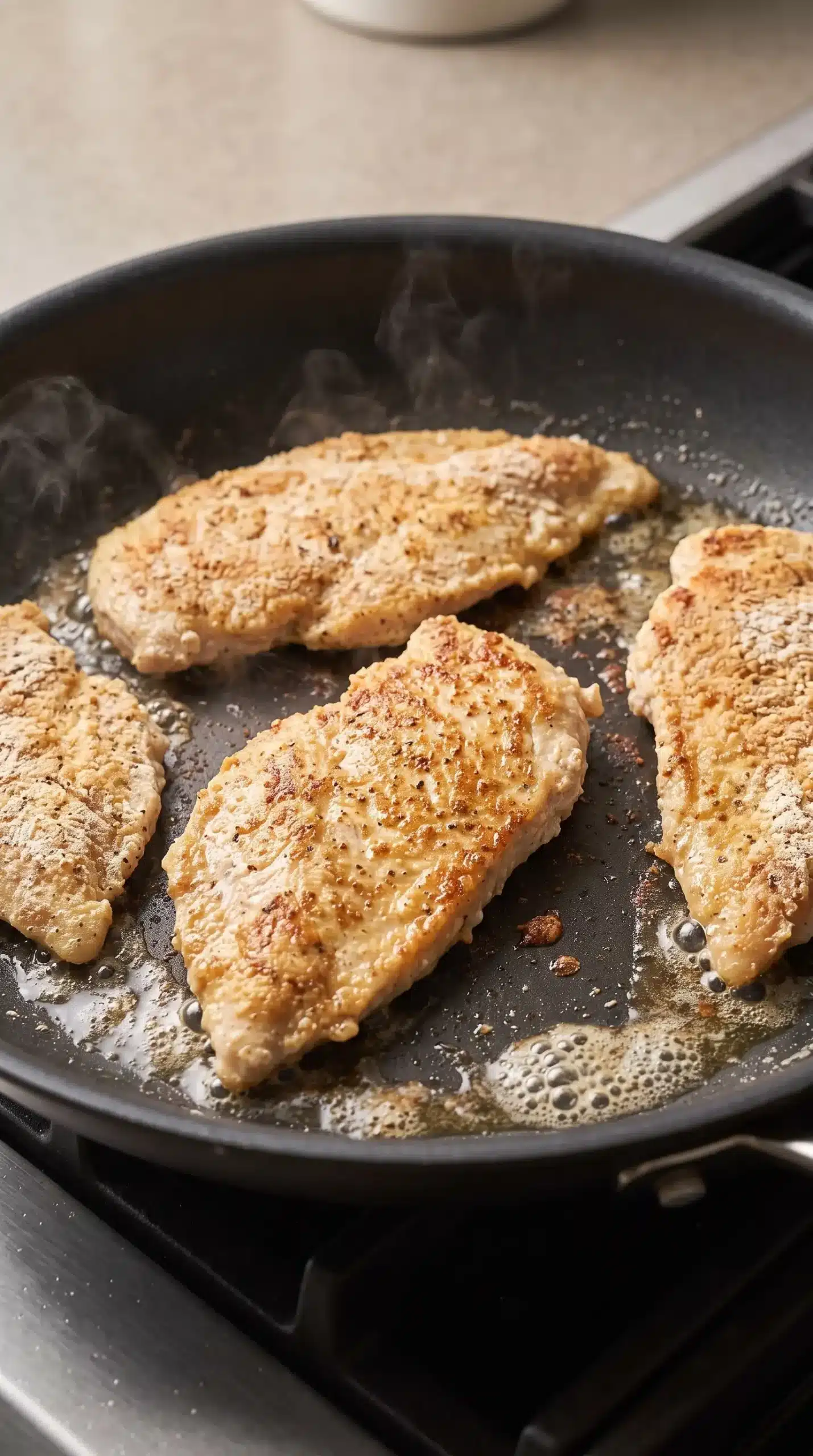
Heat is the key variable during the sear. A large non-stick pan should be hot before the chicken goes in, and the pieces need enough uninterrupted contact with the surface to develop their golden crust.
Butter melts and foams in the hot pan before the chicken is added. Olive oil can replace it for the searing fat if preferred, while butter can still be used later for the sauce.
Each piece cooks for about 2½ minutes per side, with the internal temperature providing the more important signal. Remove the chicken when it reaches 67°C / 153°F and let it rest on a plate.
Butter and white wine turn the pan drippings into sauce
The browned bits left in the pan are valuable because they become part of the sauce. Lower the heat slightly, add dry white wine, and let it bubble for 1–1½ minutes; deglazing with white wine loosens the fond so those browned bits can be incorporated into the sauce.
Chicken stock is a suitable alternative when wine is not being used. Either liquid gives the pan a chance to loosen the browned residue before the butter goes in.
Adding 30g / 2 tbsp unsalted butter at the end transforms the bubbling liquid into a glossy, rich sauce. Chopped parsley can be stirred or sprinkled in afterward for a fresh-looking finish.
Resting the chicken protects the texture
Resting is a small pause with an important purpose. After the chicken reaches 67°C / 153°F, moving it away from the hot pan prevents the meat from continuing to cook directly against the cooking surface while carryover heat finishes the job.
Signs your chicken is ready for the plate
Look for a deep golden crust on the outside and use the internal temperature as the decisive check. The specified 67°C / 153°F point tells you when to remove the chicken before serving.
| What to check | What you want to see | What to do |
|---|---|---|
| Surface | Deep golden crust | Leave the chicken undisturbed during the sear |
| Timing | About 2½ minutes per side | Let each side develop color before flipping |
| Temperature | 67°C / 153°F | Remove the chicken and let it rest |
| Sauce | Glossy and rich | Swirl in the butter after the liquid has bubbled |
What changes when the pan runs too cool
A low cooking temperature works against the character of this juicy chicken breast recipe. The supplied method depends on high heat to build the golden crust quickly, so lowering the heat too much can interfere with that result.
Keeping the pan hot also makes the short cooking window meaningful. The chicken has a chance to brown properly before reaching its specified internal temperature.
Four mistakes that can flatten the chicken breast recipe
- Starting cold: Let the chicken sit out for 15 minutes before cooking so it is not going directly from the refrigerator to the pan.
- Using low heat: High heat is important for creating the intended golden crust.
- Overcoating: Shake off extra flour so the coating stays light instead of becoming heavy.
- Skipping the sauce: The wine or stock loosens the browned pan bits, while butter turns them into a rich finish.
One especially important correction is temperature control. If the chicken is still below 67°C / 153°F, continue cooking until it reaches that point; if it has already reached the target, remove it from the pan instead of letting it sit over the heat unnecessarily.
White wine and stock create two finishes
Dry white wine gives the pan sauce its intended wine-based character, while low-sodium chicken stock provides the practical no-wine option. Both are used after the chicken leaves the pan and the heat is lowered slightly.
Either choice works with the same butter finish. The important distinction is simply which liquid fits the meal and what is available in the kitchen.
Parsley and simple sides complete the plate
Chopped parsley is optional, but it adds a fresh visual finish to the buttery sauce. Mashed potatoes make a comfortable base for the pan sauce, and creamy herb chicken with mashed potatoes pairs the same kind of substantial chicken-and-potato serving with glazed carrots for a fuller plate.
- Mashed potatoes or simple rice can provide a comfortable base for the sauce.
- Steamed green beans add an easy vegetable side without competing with the chicken.
- Orzo, creamy polenta, or buttered pasta with parmesan can make the plate feel more substantial.
- Crusty bread is useful for catching any remaining pan sauce.
Small seasoning changes keep the same foundation
The seasoning can shift without changing the basic cooking approach. For a stronger garlic character, the garlic powder can be doubled. Thyme or rosemary can be added to the sauce for a more herb-forward finish.
A creamy variation can be made by finishing the sauce with a splash of cream. These changes work because the central structure remains the same: lightly seasoned chicken, high-heat browning, and a butter-finished pan sauce.
What makes this chicken breast recipe beginner-friendly
There are only a few major decisions to manage: slice the breasts horizontally, keep the coating light, use high heat, monitor the internal temperature, and build the sauce from the browned pan bits.
Even the sauce is forgiving in its simplicity. The wine or stock bubbles briefly, the pan is scraped clean of its golden residue, and butter is swirled in at the end.
For someone learning to cook chicken breast, the thermometer target provides a concrete stopping point. That makes the process less dependent on guessing when the meat is ready.
One pan keeps the cooking focused
The same pan handles the chicken and the sauce, allowing the browned residue from the sear to become part of the finished dish. That connection is what makes the sauce taste integrated with the chicken instead of added separately.
Golden crust and glossy sauce define the dish
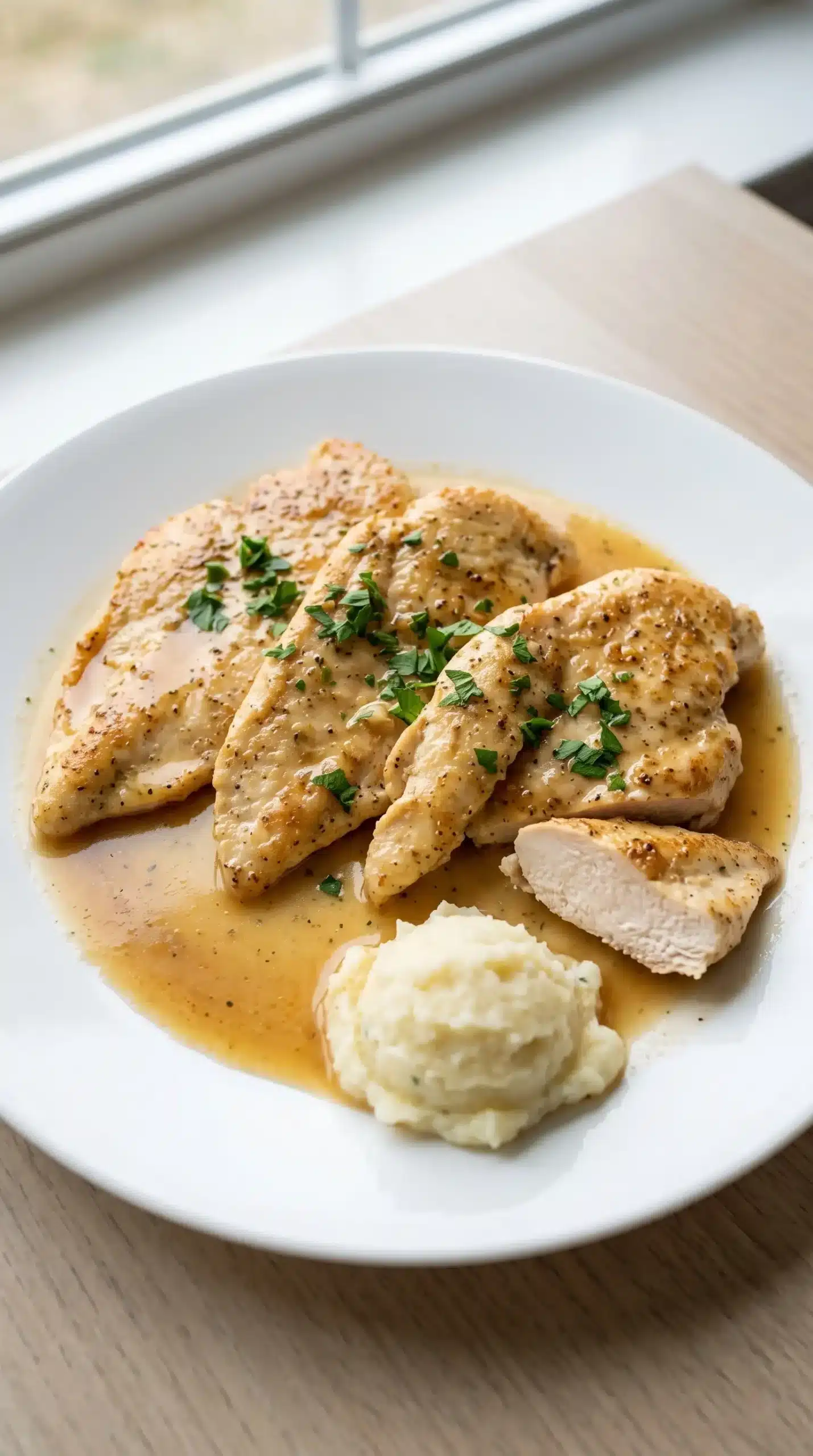
Golden chicken carries the main texture, while the butter sauce gathers the savory browned bits left behind in the pan. The combination keeps the meal satisfying without requiring a long marinade or complicated preparation.
Juicy meat depends on stopping the sear at the specified temperature and allowing the chicken to rest. Once those controls are in place, the sauce can be made quickly from the same pan while the chicken waits to be served.
Questions about temperature and sauce
Can I use olive oil instead of butter for the chicken?
Yes. The supplied method allows 1½ tbsp olive oil in place of the 20g / 1½ tbsp unsalted butter used for searing. The separate 30g / 2 tbsp butter still provides the rich finish for the pan sauce.
What can I use instead of white wine?
Low-sodium chicken stock is the specified alternative to dry white wine. It is added after the chicken has been removed and the heat has been lowered slightly, then bubbled while the browned pan bits are scraped up.
Why slice chicken breasts horizontally?
Horizontal slicing turns two large breasts into four steaks with a more even thickness. That makes the pieces easier to cook consistently and helps the high-heat sear create a golden exterior during the relatively short cooking period.
When should I remove the chicken from the pan?
Use 67°C / 153°F as the stopping point. Once the chicken reaches that internal temperature, transfer it to a plate to rest while you prepare the pan sauce.
Can I make the seasoning gluten-free?
Yes. The flour component can be replaced with gluten-free flour. The rest of the listed seasoning blend remains the same, so the coating can still provide the intended light crust.
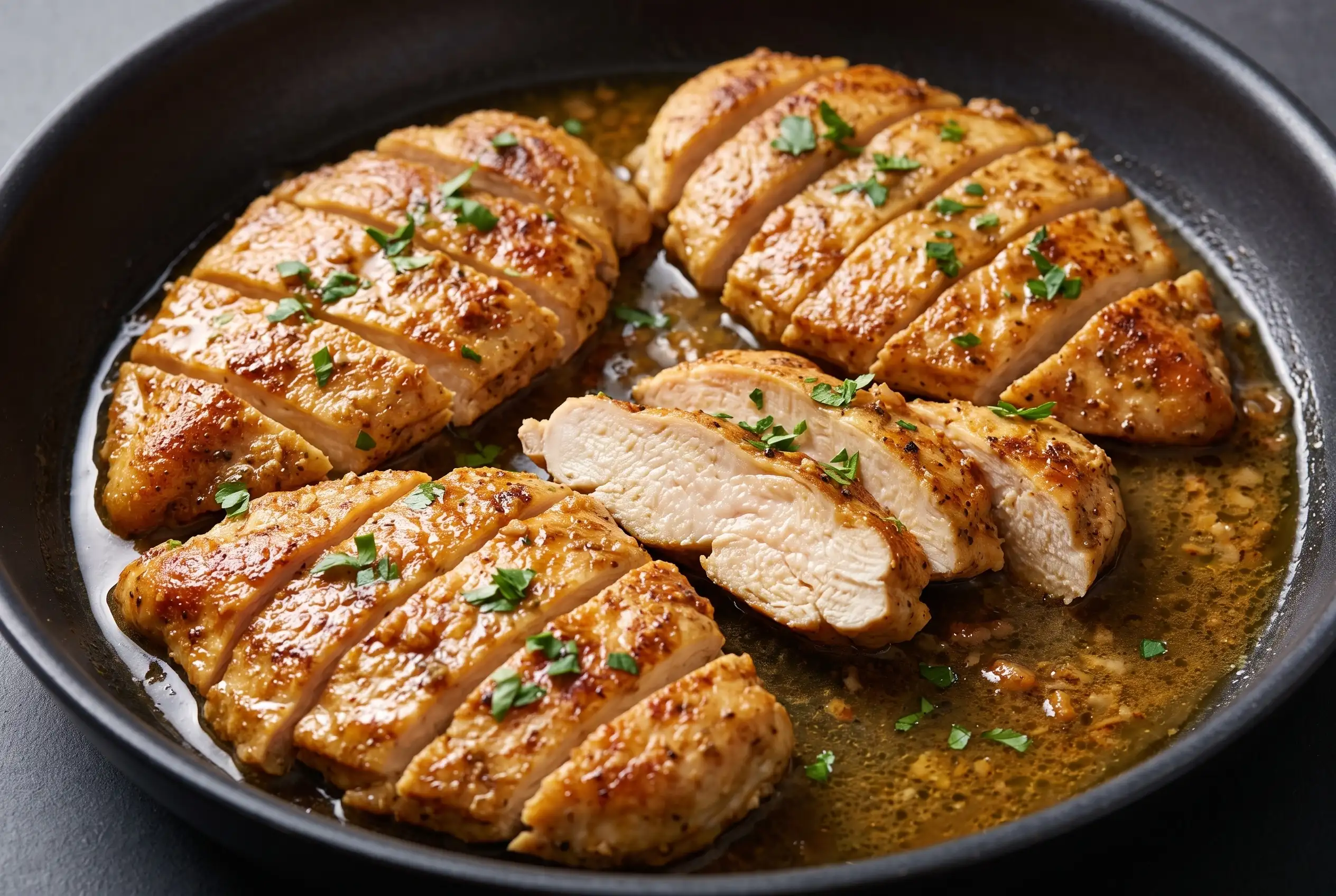
Chicken Breast Recipe with Golden Butter Pan Sauce
Ingredients
Method
- Allow the chicken breasts to stand at room temperature for 15 minutes, then cut each breast horizontally into 2 steaks.
- In a bowl, combine the paprika, onion powder, garlic powder, cumin, kosher salt, black pepper, and all-purpose flour.
- Cover both sides of each chicken steak with the seasoned flour mixture, then remove any excess coating.
- Set a large non-stick pan over high heat and add 20g / 1½ tbsp unsalted butter. Heat until the butter has melted and is foaming.
- Arrange the chicken steaks in the hot pan and cook for 2½ minutes on each side without shifting them. Continue until the thickest section reaches 165°F / 74°C, then move the chicken to a plate to rest.
- Reduce the heat slightly. Add the dry white wine or low-sodium chicken stock to the pan and loosen the browned bits as the liquid bubbles for 1–1½ minutes.
- Add 30g / 2 tbsp unsalted butter and gently swirl the pan until it melts into a smooth, glossy sauce.
- Pour the butter pan sauce over the chicken steaks and finish with 1 tbsp chopped parsley if using. Serve immediately.