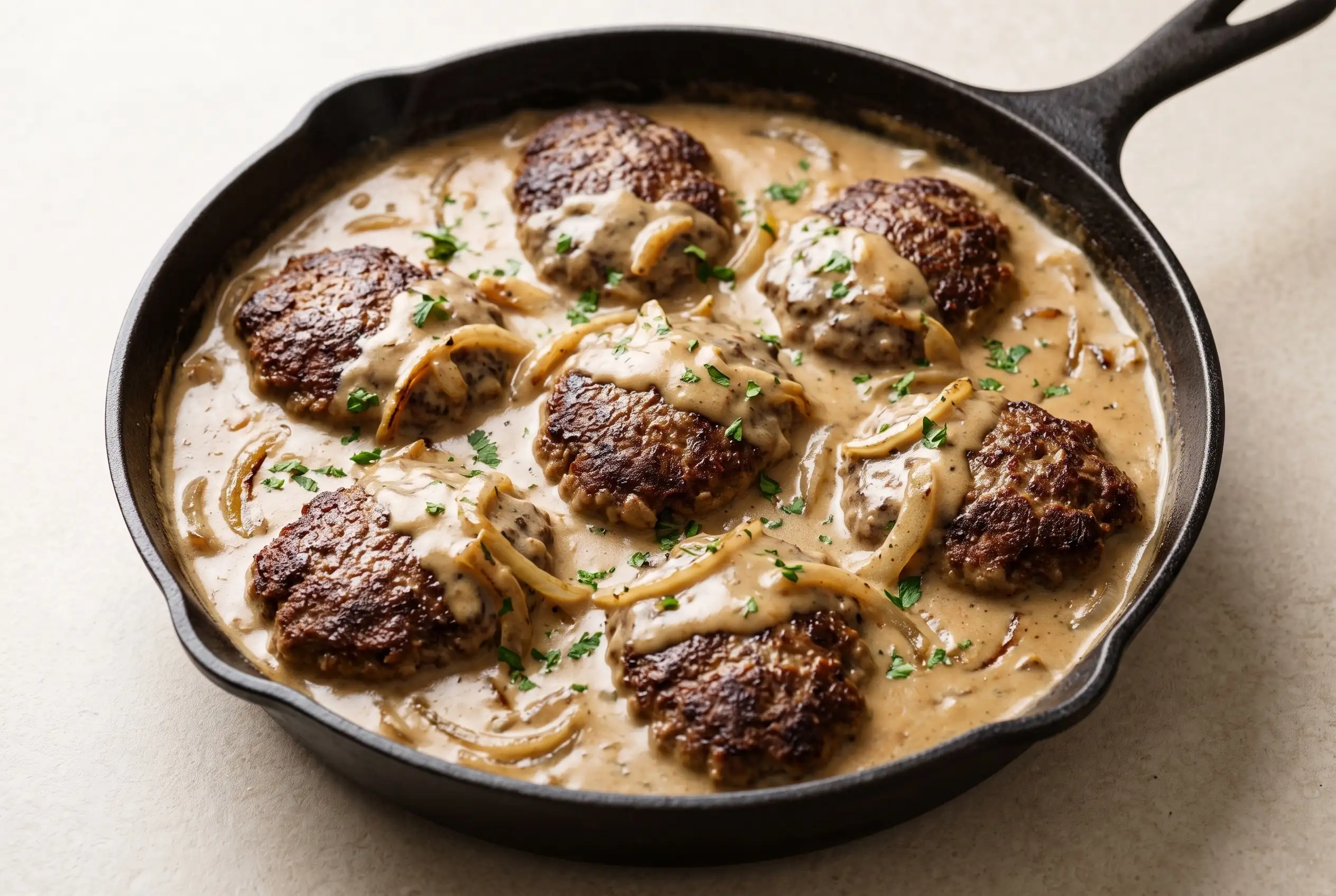
Ground Beef Philly Cheesesteaks with Melted Cheese
Ground beef philly cheesesteak brings the familiar appeal of a Philly-style sandwich to the skillet with savory ground beef, tender vegetables, melted cheese, and soft hoagie rolls. Instead of relying on sliced steak, the filling uses ground beef that cooks alongside onion, green bell pepper, and optional mushrooms, creating a hearty sandwich with plenty of texture and flavor.
What makes a ground beef cheesesteak especially practical is the straightforward preparation. The vegetables can soften in the same skillet used for the beef, while garlic powder and Worcestershire sauce give the filling a savory finish. Once the cheese melts over the mixture, everything is ready to tuck into the rolls.
Why Ground Beef Works So Well Here
Ground beef gives the sandwich a hearty, approachable filling while keeping the preparation simple. It is easy to break apart in the skillet, allowing the seasoned meat to mingle with the sautéed vegetables instead of forming one solid layer. For a preparation centered on this skillet-style filling, ground beef Philly cheesesteak keeps the focus on the beef, vegetables, and melted cheese.
The vegetables also become part of the filling rather than merely sitting on top. Thinly sliced onion and green bell pepper soften quickly, and mushrooms can be added when a more substantial vegetable mixture is desired. Their combination with the beef creates the defining skillet filling for a philly cheesesteak with ground beef.
Using ground beef also makes customization uncomplicated. Different cheeses can be used, vegetables can be adjusted, and the finished filling can be made milder or spicier with the additions already suggested for the dish.
Onion, Pepper, and Mushroom Choices Shape the Filling
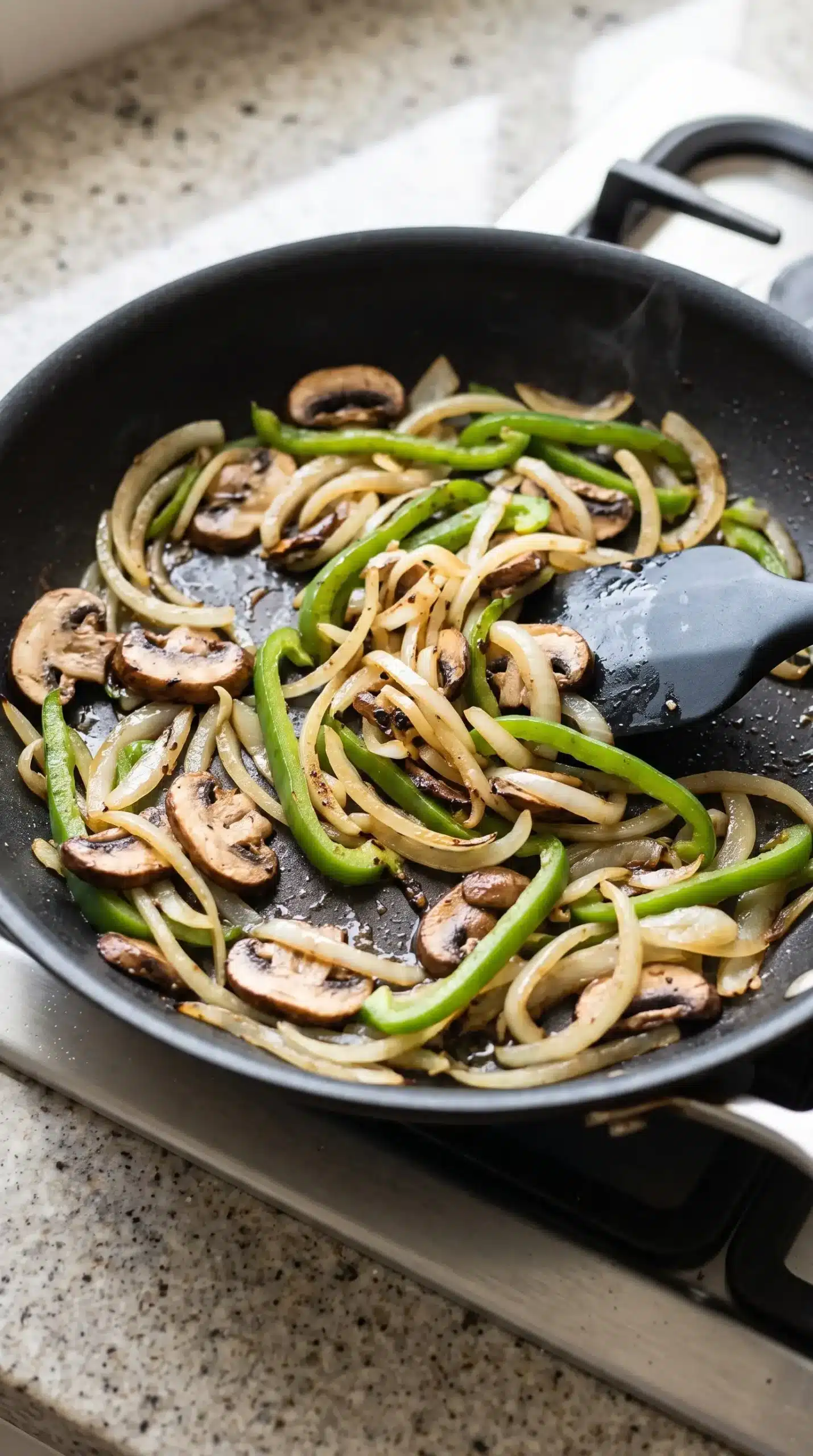
Thinly sliced onion and green bell pepper are the core vegetables in the filling. Keeping them sliced thinly helps them soften during the short sautéing period before the beef is cooked.
Mushrooms are optional, so the sandwich remains complete without them. When included, they receive a few additional minutes in the skillet, giving them time to cook alongside the onion and pepper.
- Onion: Slice it thinly so it can become tender in the skillet.
- Green bell pepper: Cut it thinly for an even sauté with the onion.
- Mushrooms: Add them when you want them included in the vegetable filling.
Provolone Gives the Beef Filling Its Melted Finish
Four slices of provolone are used to cover the cooked beef mixture before the sandwiches are assembled. The cheese melts directly over the filling while the skillet is covered, helping bind the beef and vegetables together.
Cheese choice is flexible. American, cheddar, Swiss, or a cheese blend can be used when a different flavor is preferred, while provolone remains the specified choice for the original preparation.
Whichever cheese you choose, the important cooking cue is that it should be melted over the hot beef and vegetables before the filling goes into the rolls. Lowering the skillet heat and covering it creates the short melting stage needed for assembly.
Seasoning the Skillet Without Overcomplicating It
Garlic powder and Worcestershire sauce provide the main seasoning direction for the beef and vegetables. Salt and black pepper are added according to taste, keeping the final seasoning adjustable.
Worcestershire sauce contributes a savory note that fits naturally with the browned beef, while garlic powder distributes easily through the loose filling. Stirring the seasonings into the cooked mixture for about two minutes allows them to become evenly incorporated.
Keeping the Beef and Vegetables Together
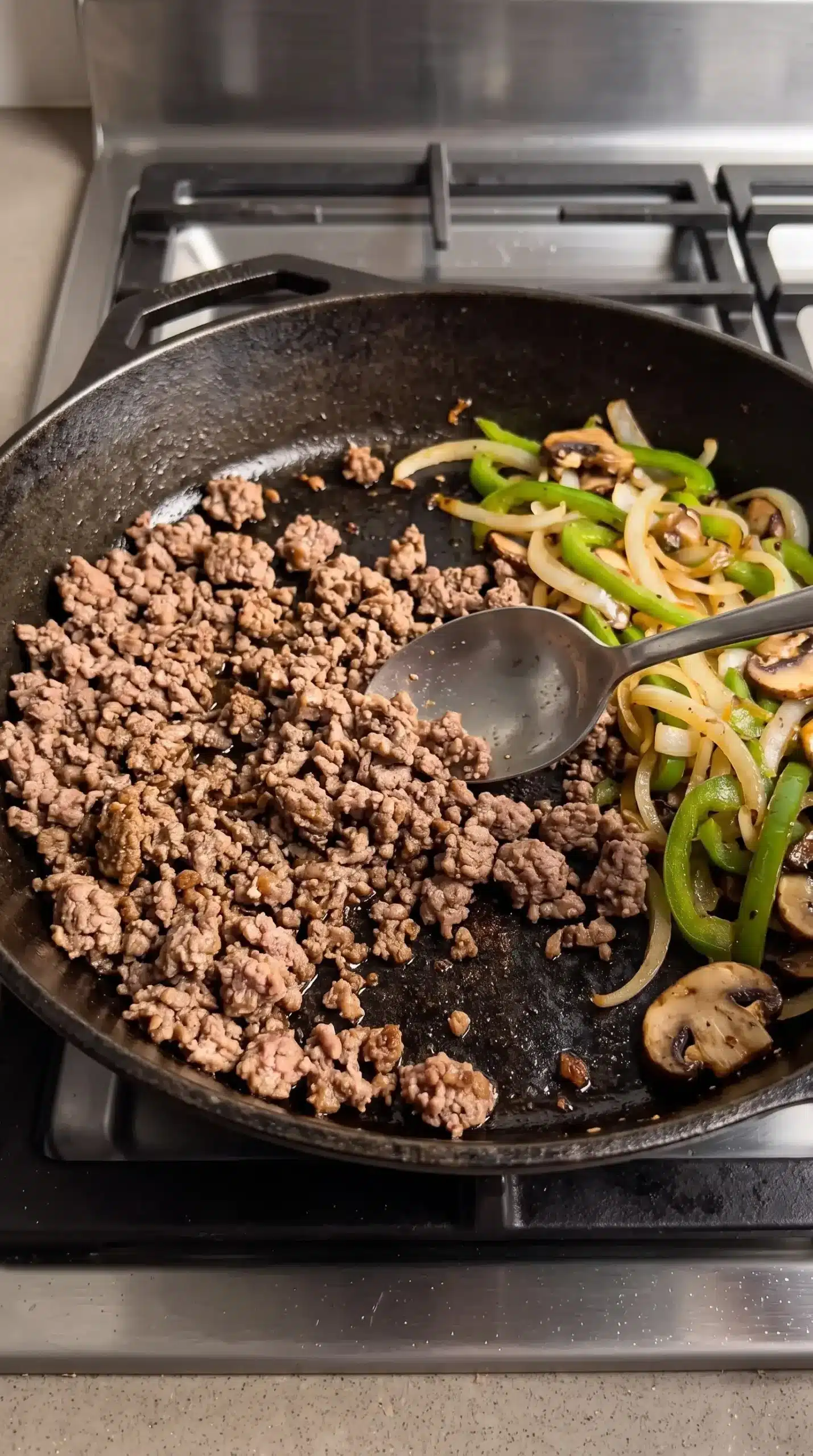
The skillet arrangement matters during cooking. After the vegetables have become tender, pushing them to one side creates room for the ground beef to cook directly against the hot pan.
Giving the ground beef direct contact with the hot skillet also encourages browning through the Maillard reaction, the heat-driven process that creates browned color and develops flavor.
Breaking the beef apart as it cooks is important because the finished sandwich needs a spoonable filling. Once the meat is no longer pink, the vegetables can be mixed back through it with the seasonings.
A covered skillet is useful for the cheese stage. Reducing the heat before adding the cheese helps transition from cooking the filling to melting the cheese without continuing the same high-heat process.
Three Decisions That Change the Finished Sandwich
| Choice | Option supplied for the dish | Effect on the sandwich |
|---|---|---|
| Cheese | Provolone, American, cheddar, Swiss, or a blend | Changes the flavor and melted-cheese character |
| Vegetables | Onion and green bell pepper, with optional mushrooms | Controls how substantial the vegetable filling becomes |
| Heat level | Jalapeños or hot sauce | Adds a spicy element to the beef mixture |
These choices can be made without changing the basic character of the sandwich. The beef, vegetables, melted cheese, and hoagie roll remain the central combination.
Toasting the Hoagie Rolls Adds Another Texture
The hoagie rolls are sliced lengthwise without cutting all the way through, leaving them ready to receive the filling. They can be used as they are, or toasted before serving for additional texture.
Toasting is optional, so the choice depends on the texture you want from the finished sandwich. A toasted roll provides a firmer contrast to the tender beef, vegetables, and melted cheese.
Ground Beef Philly Cheesesteak Mistakes to Avoid
Cooking the vegetables and beef without enough separation can make the process harder to control. Giving the vegetables their own space first allows them to sauté before the beef is added.
Leaving the ground beef in large pieces can also make the finished filling awkward to distribute. Breaking it apart as it cooks produces smaller pieces that can combine naturally with the vegetables and fit more easily into the rolls.
Keeping the heat high during the cheese stage is another avoidable problem. Once the beef mixture has been seasoned, lowering the heat and covering the skillet creates the conditions needed to melt the cheese before assembly.
Serving the Sandwich Beyond the Basic Plate
Hot Ground Beef Philly Cheesesteaks pair naturally with crisp fries or a fresh salad. The contrast gives the meal either a classic comfort-food side or a lighter accompaniment.
Ketchup and hot sauce can be offered at the table for additional flavor. Hot sauce is particularly useful when some diners want extra heat while others prefer the milder seasoned beef mixture.
Storage and Reheating Keep Leftovers Practical
Leftover cheesesteaks can be stored in an airtight container in the refrigerator for up to three days. Keeping the leftovers covered helps make them convenient to reheat when another serving is wanted.
A skillet over low heat can warm the sandwich through without requiring another full cooking process. The microwave is another option, with about 30 seconds suggested as a starting point; the longer guidance allows roughly 30 seconds to one minute depending on the amount being reheated.
Simple Variations for a Different Filling
The beef mixture is flexible enough to accommodate several substitutions. Lean ground turkey or chicken can replace the beef for a lighter variation while preserving the general sandwich format.
A vegetarian version can use a plant-based alternative, or a mixture of hearty vegetables such as lentils and chickpeas. These alternatives change the filling substantially, but they retain the idea of a seasoned mixture served inside a hoagie roll.
Vegetable additions can also shift the flavor. Zucchini, spinach, or jalapeños are suggested options, with jalapeños offering a particularly noticeable change because they introduce heat.
Balancing the Beef Sandwich With Vegetables
The ground beef supplies protein, while onion and bell pepper add vegetables to the filling. Adding more vegetables is one suggested way to make the meal feel more balanced without abandoning the sandwich format.
Whole grain hoagie rolls are another option mentioned for changing the overall balance. The finished meal can also be served with a fresh salad when you want a vegetable-forward side alongside the warm sandwich.
Why the Skillet Filling Is the Key Judgment
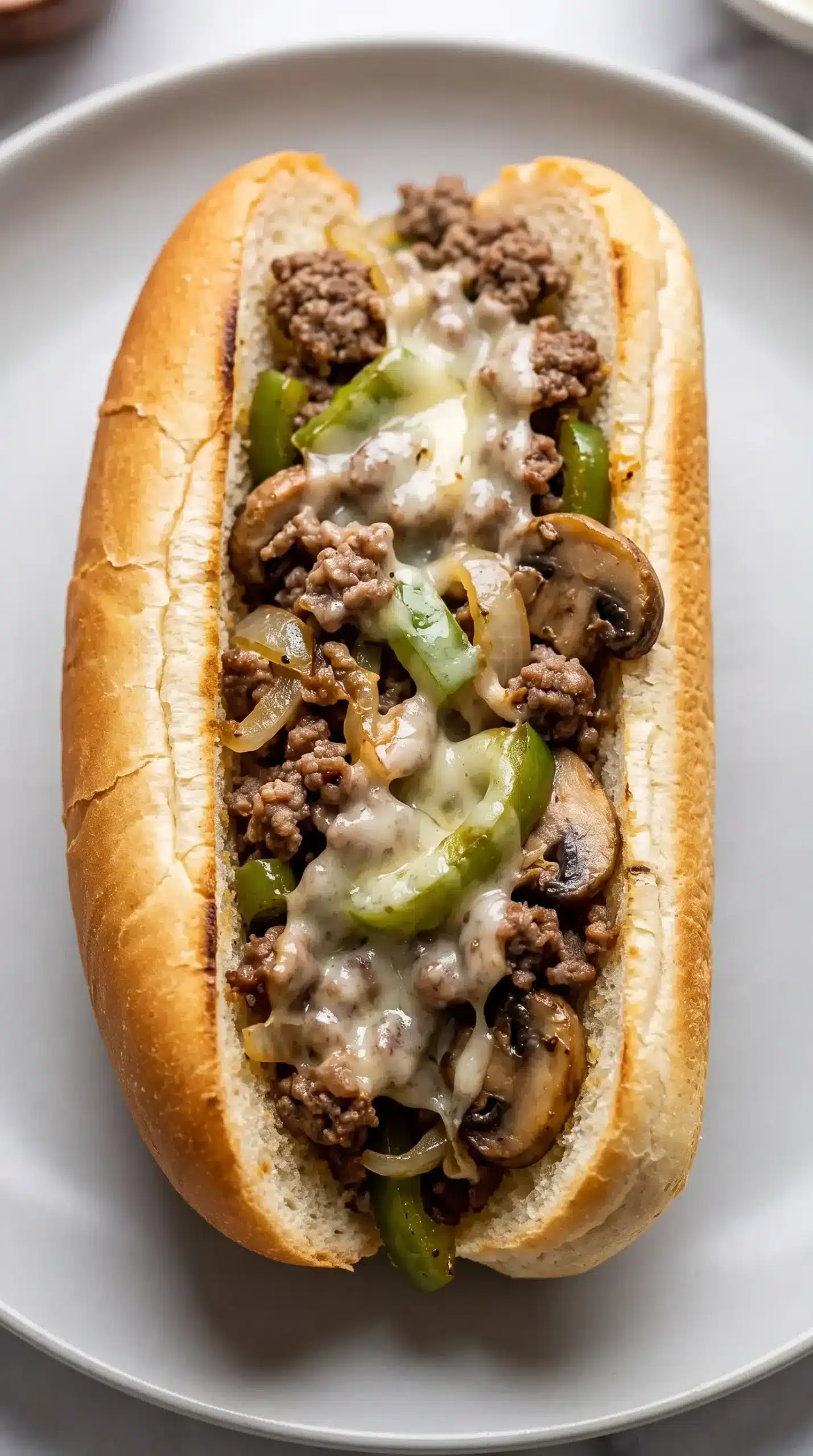
Soft vegetables, browned ground beef, and melted cheese need to remain distinct enough to retain their textures while becoming cohesive enough to fill each roll. The most useful judgment comes from watching the skillet: vegetables should be tender, the beef should be fully cooked, and the cheese should be melted before assembly.
Once those conditions are reached, the sandwich comes together quickly. Spoon the hot filling into the prepared hoagie rolls, toast the rolls if desired, and serve while the cheese and seasoned beef mixture are still warm.
Questions About Reheating Ground Beef Philly Cheesesteaks
Can the beef and vegetable filling be prepared ahead of serving?
Yes. The beef and vegetable mixture can be prepared ahead, then placed into the hoagie rolls just before serving. This keeps assembly separate from the earlier skillet work.
Can I use a different cheese from provolone?
Yes. American, cheddar, Swiss, or a cheese blend can be used when you prefer a different flavor. Provolone is the specified cheese, but the preparation accommodates these alternatives.
How can I make a ground beef cheesesteak spicier?
Diced jalapeños or hot sauce can be added to the beef mixture. Either option introduces more heat while keeping the seasoned ground beef and vegetable filling intact.
Can I make the sandwich without mushrooms?
Absolutely. Mushrooms are optional, so onion and green bell pepper can remain the vegetable base when mushrooms are not wanted.
What can I serve with these cheesesteaks?
Crispy fries, onion rings, or a simple salad all work as accompanying sides. Ketchup or hot sauce can also be served alongside the sandwiches for individual customization.
Can I make a ground beef philly cheesesteak recipe with another meat?
Ground turkey or ground chicken can replace the beef for a lighter variation. A plant-based alternative can also be used when a meat-free filling is preferred.
Are these sandwiches naturally gluten-free?
No. The specified hoagie rolls are not presented as gluten-free, but gluten-free hoagie rolls can be substituted. Another suggested option is serving the beef and vegetable mixture over rice.
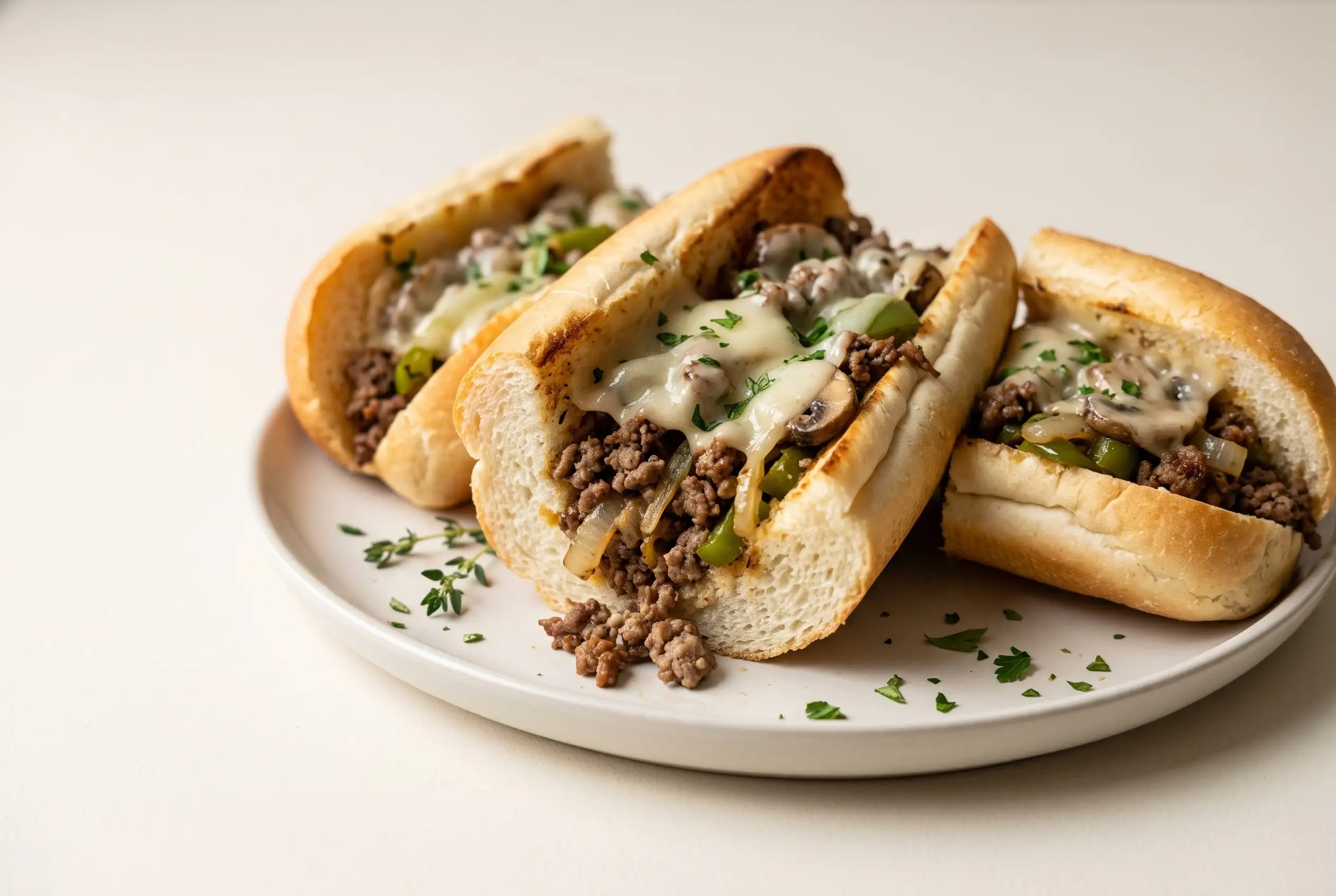
Ground Beef Philly Cheesesteaks with Melted Cheese
Ingredients
Method
- Warm a drizzle of olive oil in a large skillet over medium-high heat.
- Cook the onion and green bell pepper for 3–5 minutes, until tender. If using mushrooms, add them and cook for 3 minutes.
- Move the vegetables to one side of the skillet. Add the ground beef, break it into pieces, and cook for 5–7 minutes, until no longer pink and the beef reaches 165°F / 74°C.
- Add the garlic powder, Worcestershire sauce, salt, and black pepper to the skillet. Stir everything together and cook for about 2 minutes.
- Lower the heat to low. Arrange the provolone slices over the beef and vegetables, cover the skillet, and cook for 2–3 minutes, until the cheese has melted.
- Cut each hoagie roll lengthwise, taking care not to slice completely through.
- Fill the rolls with the melted-cheese beef and vegetable mixture.
- If desired, toast the filled sandwiches or the rolls themselves before serving.