Easy Lasagna Recipe with Ground Beef and Italian Sausage
Easy lasagna recipe fans will appreciate how this version brings together browned ground beef, sweet Italian sausage, tender noodles, a creamy ricotta mixture, and plenty of melted cheese without making the process complicated. The prepared spaghetti sauce keeps the meat layer straightforward, while mozzarella and Parmesan create the rich, cheesy finish associated with a comforting pan of lasagna.
With a simple assembly method and familiar ingredients, an easy homemade lasagna can move from preparation to the oven without requiring an elaborate sauce or complicated technique. The layered structure also makes it useful for a family meal or a gathering when a warm, satisfying dish is needed.
What Makes Easy Lasagna So Practical
The appeal starts with the balance between a hearty filling and a simple preparation. Ground beef and sweet Italian sausage form the savory base, while prepared spaghetti sauce gives that mixture a ready-made tomato foundation. The cheese layer brings ricotta, eggs, mozzarella, Parmesan, and parsley together into a creamy filling that sits between the noodles.
Advance preparation is another useful feature. An assembled pan can be kept covered in the refrigerator and baked when it is time to eat. That makes an easy lasagna recipe especially convenient when dinner needs to be organized ahead of time.
The Beef and Sausage Layer Sets the Flavor
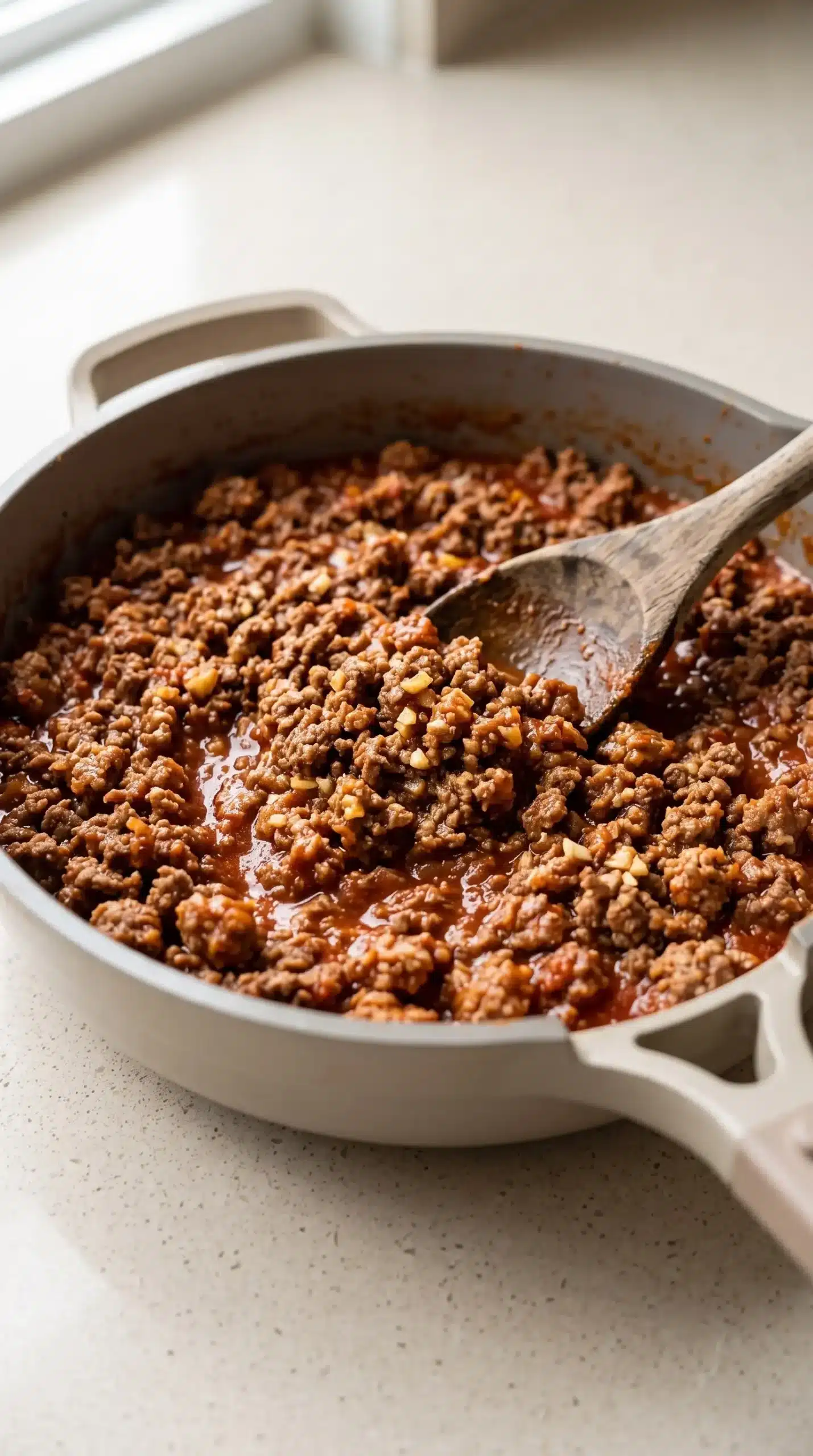
Ground beef provides the main meaty foundation, while sweet Italian sausage gives the filling a different savory character. Cooking both meats with minced garlic creates the base for the sauce, and draining excess fat after browning keeps the mixture from carrying unnecessary grease into the assembled layers. For a simpler ground-beef pasta dinner, ground beef pasta with tomato sauce uses the same core ingredients in a less layered format.
Prepared spaghetti sauce is stirred into the browned meat and warmed before assembly. If the sauce is particularly thick, a small amount of water can be added around the edges of the baking dish before it goes into the oven. That detail is especially relevant because the lasagna uses uncooked noodles.
| Component | Role in the assembled lasagna |
|---|---|
| Ground beef | Provides the main savory meat layer |
| Sweet Italian sausage | Adds a second meat component with a sweet sausage profile |
| Prepared spaghetti sauce | Combines with the browned meat for the sauce layers |
| Minced garlic | Cooked with the meats to build the savory base |
Ricotta Creates the Creamy Middle
The cheese mixture is more than a simple sprinkling of shredded cheese. Ricotta is combined with eggs, mozzarella, Parmesan, parsley, salt, and black pepper before it reaches the baking dish. Eggs help bind the mixture, while the combination of cheeses gives the interior a creamy, substantial texture.
Cottage cheese can replace the ricotta if preferred. The supplied version also allows cream cheese as a ricotta substitute, giving flexibility when ricotta is not the desired choice. Parsley can be dried or fresh, depending on what is available.
Layering Controls Every Slice
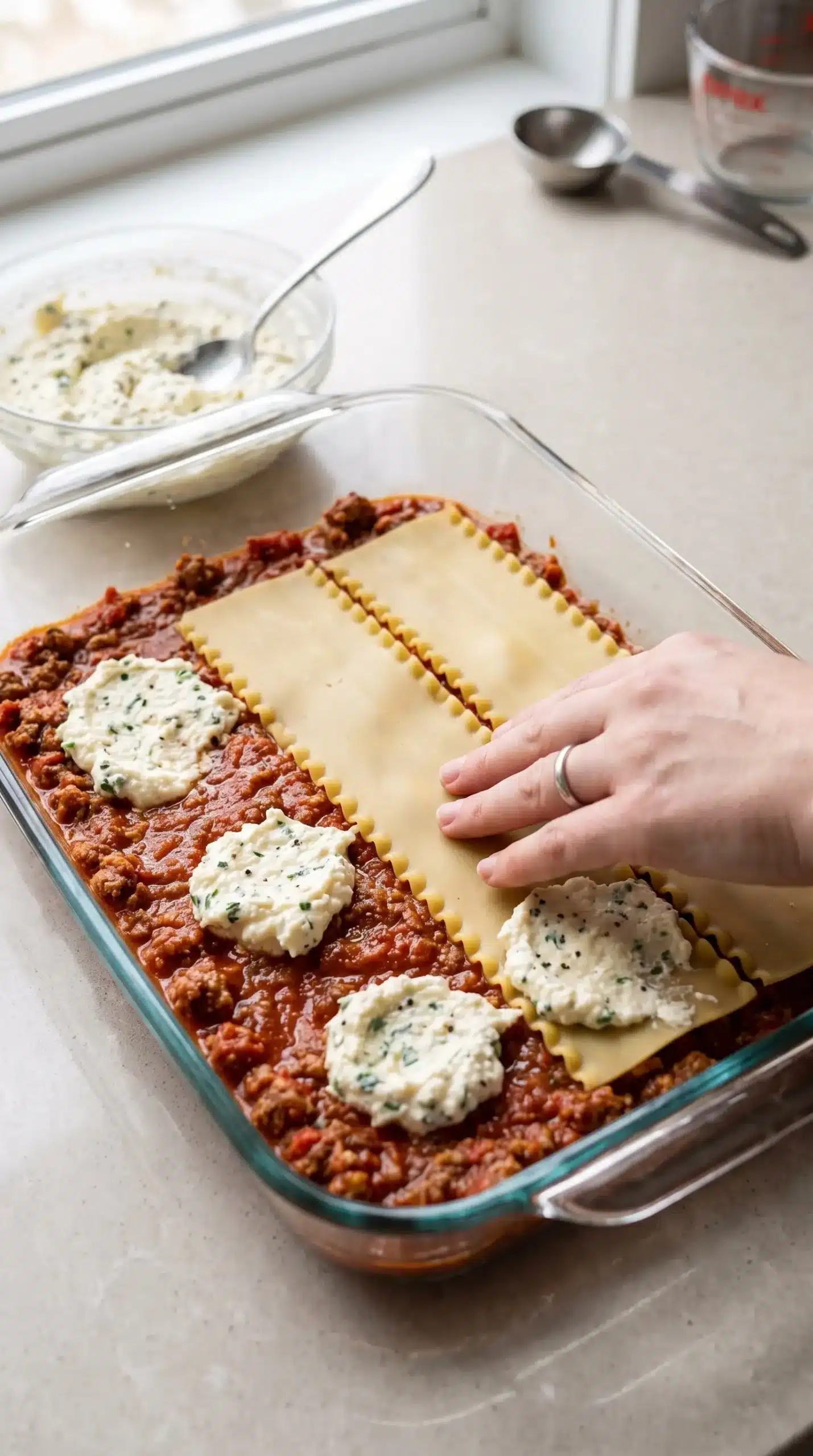
Assembly works best when the layers are distributed deliberately. A thin coating of meat sauce starts the pan, followed by four lasagna noodles. The cheese mixture and meat sauce are then divided across repeated layers, with noodles separating the fillings.
- Start with sauce. Cover the bottom of the 9×13-inch baking dish with a thin layer of meat sauce.
- Build the middle. Arrange the noodles, then distribute the cheese mixture and meat sauce across the repeated layers.
- Finish with coverage. Keep the upper noodles covered with meat sauce before adding the remaining mozzarella and Parmesan.
Keeping sauce in contact with the noodles is particularly important here because the noodles begin uncooked. A well-covered upper layer also gives the cheese something moist and flavorful beneath it as the dish bakes.
Uncooked Noodles Need Enough Moisture
The lasagna uses 12 uncooked lasagna noodles, so moisture management matters during baking. The prepared spaghetti sauce supplies much of that moisture. When the sauce is thick, the specified water can be poured around the edges of the pan before covering it with foil.
That small adjustment is preferable to treating the water as a universal addition. If the sauce already has a suitable consistency, the extra water is unnecessary. The important decision is whether the sauce is thick enough to benefit from the added moisture while the noodles cook.
Cheese Coverage Shapes the Baked Top
Two amounts of mozzarella and Parmesan are used at different points in the assembly. The larger portion of mozzarella and Parmesan belongs in the ricotta mixture, while the reserved cheese is scattered over the top before baking.
Foil changes how the dish cooks. The covered portion of baking protects the surface while the lasagna heats through, then removing the foil exposes the cheese to the oven for the remaining bake. The desired visual cue is a bubbly, golden top.
Temperature and Timing Keep the Layers Together
Lasagna is baked at 375°F (190°C), first under aluminum foil and then uncovered. The two-stage approach gives the layered noodles and fillings time to heat while reserving part of the bake for browning the cheese.
After baking, the pan needs a short standing period before serving. Cutting immediately can make the layers harder to handle, whereas allowing the hot dish to stand gives the contents time to settle.
Easy Lasagna Mistakes Worth Avoiding
A few errors can interfere with the structure or texture of an easy homemade lasagna. Each one connects directly to the ingredients or baking method used here.
- Skipping the sauce underneath: Starting with noodles instead of a thin layer of meat sauce removes the moist base needed by the uncooked noodles.
- Leaving the top noodles exposed: The upper noodles should be covered with the remaining meat sauce before the reserved cheese goes on top.
- Adding water automatically: Water is specifically useful when the spaghetti sauce is thick, so it should not be treated as mandatory when the sauce already has enough moisture.
- Forgetting the foil stage: The lasagna is covered for the first portion of baking and uncovered afterward so the cheese can become bubbly and golden.
- Serving immediately: A 15-minute standing period is part of the process and helps the baked layers settle before portions are served.
Make-Ahead Lasagna Fits Busy Meal Planning
A make ahead lasagna recipe is useful when the cooking needs to happen before the meal itself. The assembled dish can be prepared a day in advance, kept covered in the refrigerator, and baked when ready to serve.
Freezing is another option for an unbaked pan. The lasagna can be frozen for up to three months, then thawed overnight in the refrigerator before baking. Keeping the dish unbaked until the planned cooking time preserves the intended bake-and-serve process.
Serving Ideas That Balance the Rich Layers
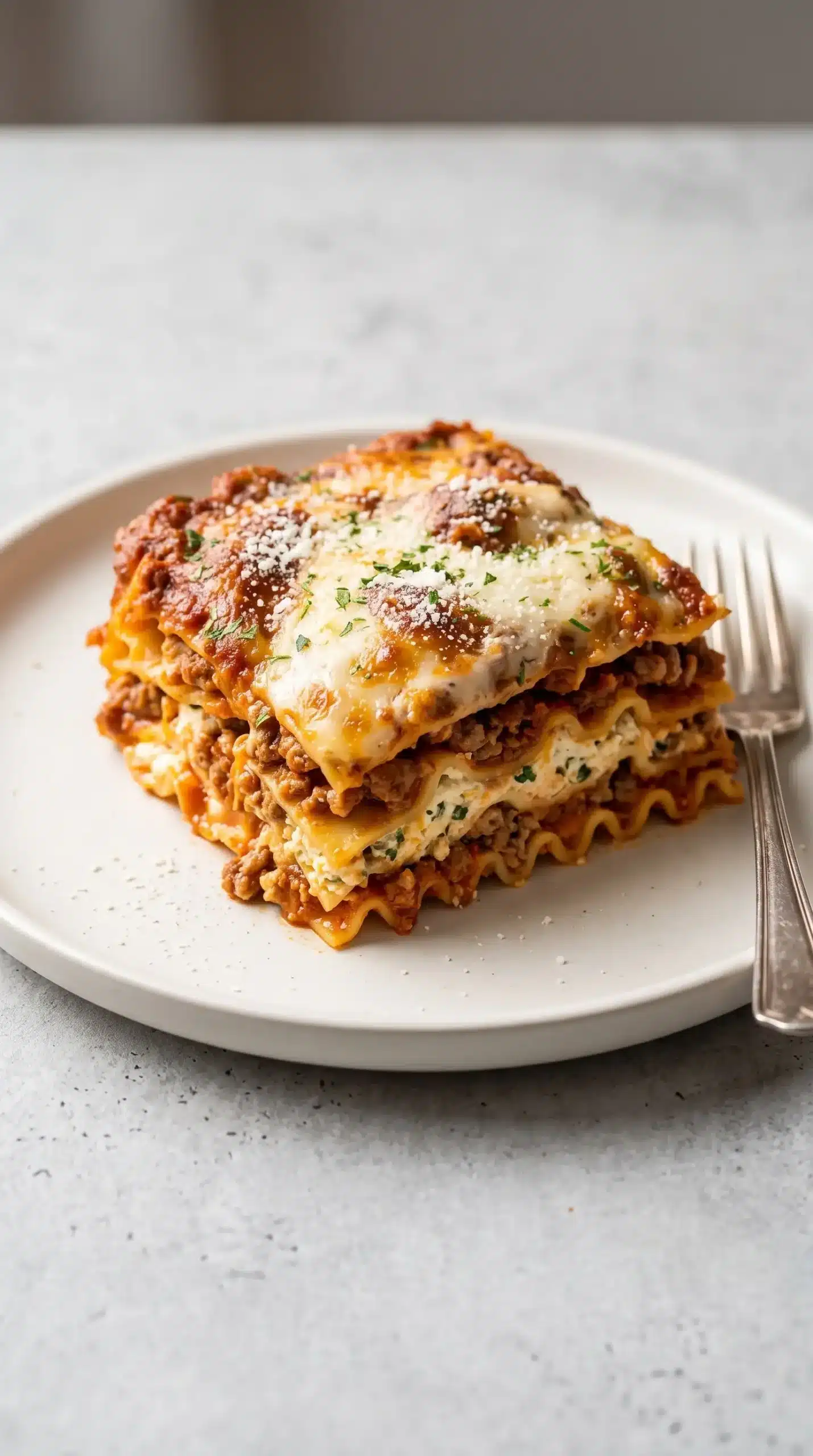
Hot slices can be finished with extra parsley or Parmesan for a simple garnish. The richness of the meat, cheese, and sauce also makes a fresh side salad a useful companion, adding a lighter element beside the baked pasta.
Garlic bread works naturally alongside the lasagna, while steamed vegetables provide another straightforward side. These pairings keep the focus on the main dish without requiring another elaborate preparation.
Simple Changes Without Losing the Structure
The basic layering approach leaves room for several variations. Vegetables can be placed between the layers, with spinach, zucchini, and mushrooms specifically suited to the supplied alternatives. A vegetarian version can omit the meat and use favorite vegetables in its place.
For a less meat-focused filling, lentils or mushrooms can replace the meat components. No-boil lasagna noodles are also an option when saving preparation time is a priority. A gluten-free version can be made with gluten-free lasagna noodles while ensuring the other ingredients used are gluten-free.
Easy Lasagna Recipe Choices at a Glance
| Choice | Use it when | What changes |
|---|---|---|
| Ricotta | You want the listed creamy cheese base | Keeps the original cheese mixture |
| Cottage cheese | Ricotta is not preferred | Provides an alternative cheese for the middle layer |
| Vegetables | You want a vegetarian or more vegetable-focused version | Spinach, zucchini, or mushrooms can be layered in place of meat |
| No-boil noodles | You want to reduce preparation work | Replaces the uncooked traditional lasagna noodles |
The important point is to preserve the dish’s layered relationship between sauce, noodles, filling, and cheese. Substitutions work best when they still support that structure.
Storage Keeps Leftovers Ready for Another Meal
Leftover lasagna can be transferred to an airtight container and refrigerated for up to 3–4 days. Individual portions can be reheated in the microwave, making leftovers convenient when only one serving is needed.
For reheating the whole dish, cover it and place it in a 350°F oven until warmed through, with leftovers reheated to 165°F (74°C) throughout. The covering helps the dish heat without leaving the surface unnecessarily exposed during reheating.
Why the Layered Finish Matters Most
Golden cheese on top is only one part of a successful lasagna. The deeper judgment is moisture: uncooked noodles need adequate sauce coverage, thick sauce may need the specified water around the pan edges, and the covered baking stage gives the layers time to cook before the surface is browned.
Once those choices are handled, the remaining process is straightforward. The combination of meat sauce, creamy cheese filling, noodles, and a properly covered top gives each portion the layered texture that makes an easy lasagna recipe so dependable for a comforting meal.
Easy Lasagna Recipe Questions About Noodles and Baking
Can uncooked lasagna noodles be used in this dish?
Yes. The supplied method uses 12 uncooked lasagna noodles. They are layered with meat sauce and cheese, and the sauce provides the moisture needed during baking. If the spaghetti sauce is thick, the specified water can be poured around the edges of the pan.
Why is the lasagna covered with foil first?
Foil is used during the first baking stage, after which it is removed for the remaining bake. This separates the covered cooking period from the uncovered browning period, allowing the surface cheese to become bubbly and golden without exposing it from the beginning.
Can I assemble the lasagna the day before?
Yes. Assemble the pan, keep it covered in the refrigerator, and bake it when you are ready to serve. This makes the dish suitable for occasions when the preparation needs to happen ahead of mealtime.
How long can unbaked lasagna stay frozen?
An unbaked assembled lasagna can be frozen for up to three months. Before baking, thaw it overnight in the refrigerator so it is ready for the oven.
What can replace ricotta cheese?
Cottage cheese or cream cheese can be used instead of ricotta. Cottage cheese is also specifically identified as an alternative in the cheese mixture, so the creamy middle does not have to depend on ricotta alone.
How can I make the lasagna vegetarian?
Omit the meat and add layers of vegetables instead. Spinach, zucchini, or mushrooms are specifically suggested options, and lentils or mushrooms can also replace the meat for a less meaty variation.
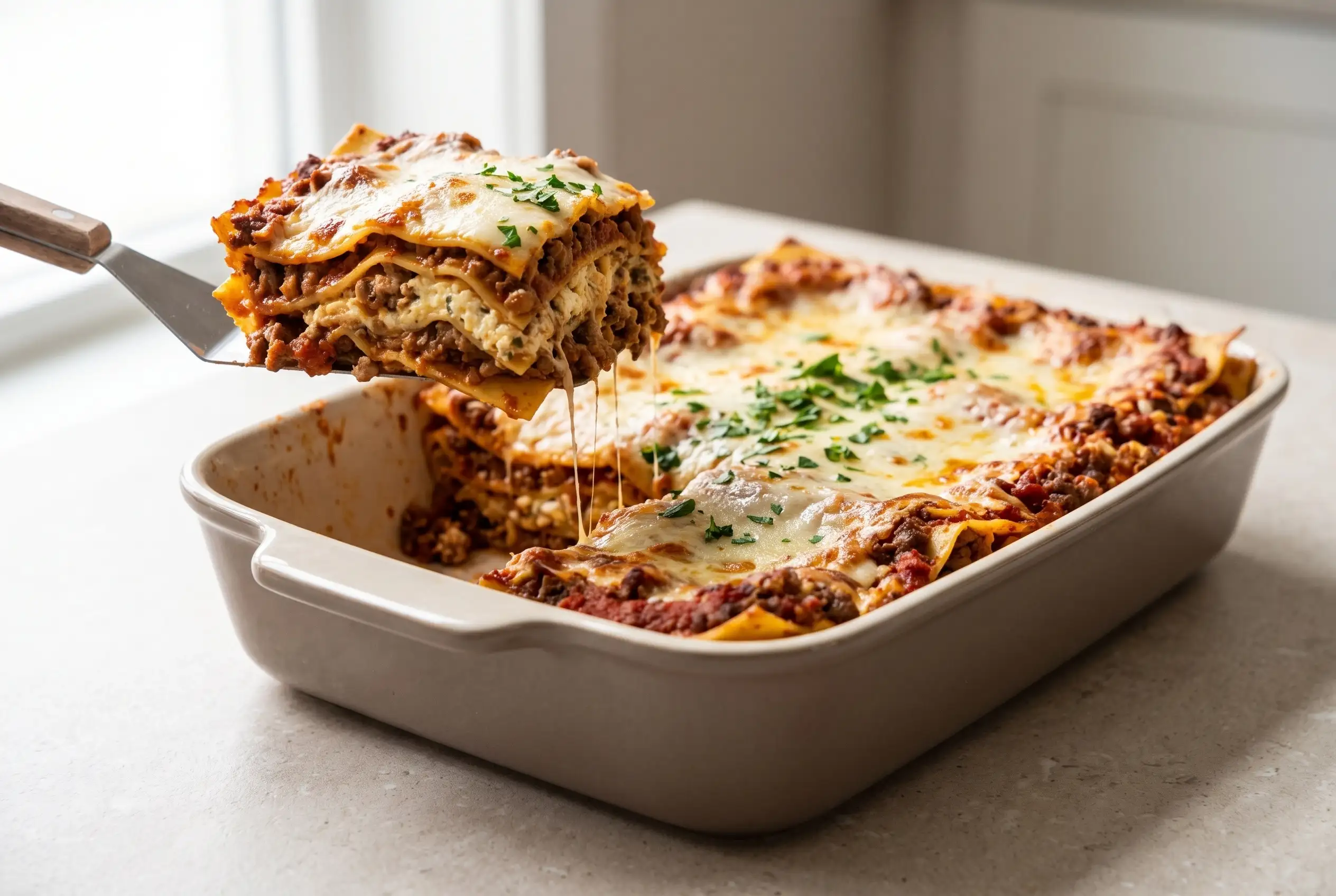
Easy Lasagna Recipe with Ground Beef and Italian Sausage
Ingredients
Method
- Preheat the oven to 375°F / 190°C.
- Place the ground beef, sweet Italian sausage, and minced garlic in a large skillet over medium heat. Cook until the meat is browned, then drain off the excess fat.
- Add the prepared spaghetti sauce to the skillet and stir with the cooked meat. Heat until warmed through, then set the meat sauce aside.
- In a bowl, combine the ricotta cheese, eggs, 2 cups shredded mozzarella cheese, 1/2 cup grated parmesan cheese, parsley, salt, and black pepper.
- Coat the bottom of a 9×13-inch baking dish with a thin layer of meat sauce. Arrange 4 lasagna noodles over the sauce.
- Spread 1/3 of the cheese mixture over the noodles, followed by 1/3 of the meat sauce.
- Build two more layers in the same order, using the remaining 8 noodles, cheese mixture, and meat sauce.
- Spread the remaining meat sauce over the top, then add 1 cup shredded mozzarella cheese and 1/4 cup grated parmesan cheese.
- If the sauce is thick, pour 1/4 cup water around the edges of the baking dish.
- Cover the baking dish tightly with aluminum foil and bake for 25 minutes.
- Remove the foil and continue baking for another 25 minutes, until the cheese is bubbly and golden.
- Allow the lasagna to stand for 15 minutes before serving.