Ground Beef Pasta with Tomato Sauce and Parmesan Cheese
Ground Beef Pasta for Busy-Day Cooking
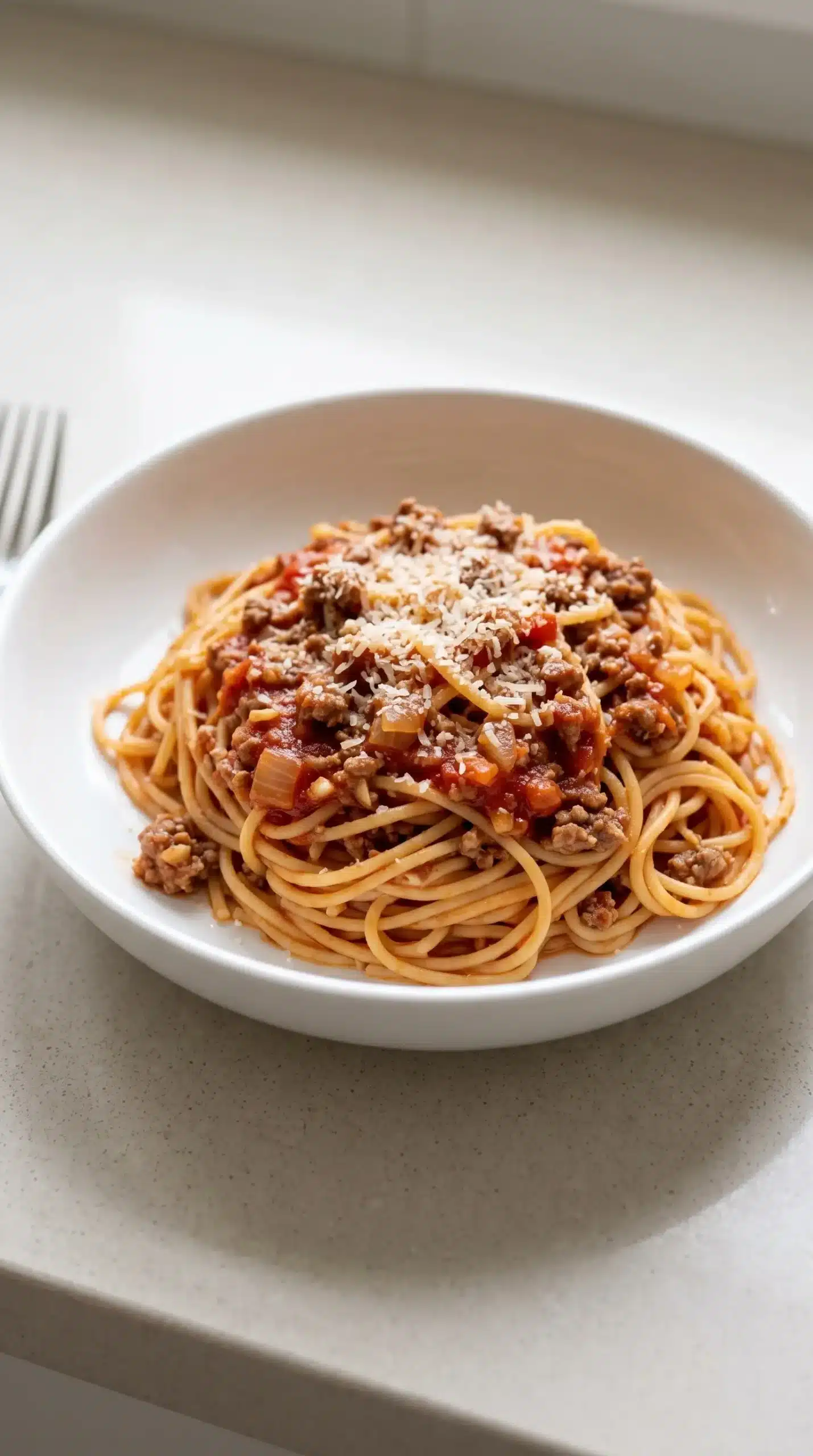
Ground beef pasta with tomato sauce brings browned beef, tender pasta, onion, garlic, tomato sauce, and Parmesan together in a straightforward skillet meal. The combination is hearty without requiring a complicated cooking process, making it a useful choice when a satisfying dinner needs to come together with familiar ingredients.
Easy ground beef pasta works especially well for households that enjoy flexible meals. Spaghetti, penne, or another preferred pasta can be used, while the sauce can stay simple with tomato sauce, seasoning, and the savory foundation created by onion, garlic, and browned beef.
A hot serving has a particularly practical appeal because Parmesan can be stirred through the finished pasta and added on top for more cheesy flavor. Garlic bread or a side salad can round out the meal without changing the core preparation.
Why the Beef and Tomato Combination Works
Browned ground beef gives the pasta mixture its substantial center, while tomato sauce supplies the moist base needed to bring the cooked ingredients together. Onion and garlic build the savory foundation before the beef is added, so the sauce has more character than tomato sauce alone.
Parmesan becomes part of the finished texture when it is stirred into the combined pasta and sauce. Its salty, savory character also makes an extra sprinkling at the table an easy way to adjust the finished bowl for anyone who wants more cheese.
The result is a beef pasta with tomato sauce that stays recognizable and uncomplicated. There are no elaborate components competing for attention, so the beef, tomato sauce, pasta, aromatics, and Parmesan remain the defining flavors.
Tomato Sauce and Parmesan Shape the Finish
Tomato sauce is the central moisture component for ground beef pasta, coating the browned meat and helping the sauce cling to the cooked noodles. A short simmer gives the beef and sauce time to come together before the pasta is introduced.
Grated Parmesan is best treated as part of the finishing stage. Stirring it into the combined pasta and sauce distributes its flavor through the dish, while additional cheese can be added after serving for a more pronounced Parmesan finish.
| Component | Best point of attention | Effect on the finished dish |
|---|---|---|
| Tomato sauce | Simmer with the browned beef | Creates the saucy base |
| Parmesan | Stir in after combining pasta and sauce | Adds savory, cheesy flavor |
| Onion and garlic | Soften before adding beef | Build the savory foundation |
| Pasta | Cook separately according to package instructions | Provides the main structure |
Choosing Pasta Shapes for the Sauce
Spaghetti and penne are both specifically suited to the preparation, so either can be used when making ground beef pasta. The choice is mainly about the eating experience rather than changing the sauce itself.
Long pasta creates a different shape on the fork, while penne gives the tomato-and-beef mixture a compact form that is easy to combine with the sauce. For a compact alternative beyond traditional pasta shapes, ground beef orzo uses orzo as the base while keeping ground beef at the center of the meal.
- Spaghetti: A long pasta option for a classic pasta presentation.
- Penne: A short pasta option that works naturally with the beef and tomato mixture.
- Another preferred shape: A practical choice when you already have a favorite pasta available.
Build Flavor Before the Beef Goes In
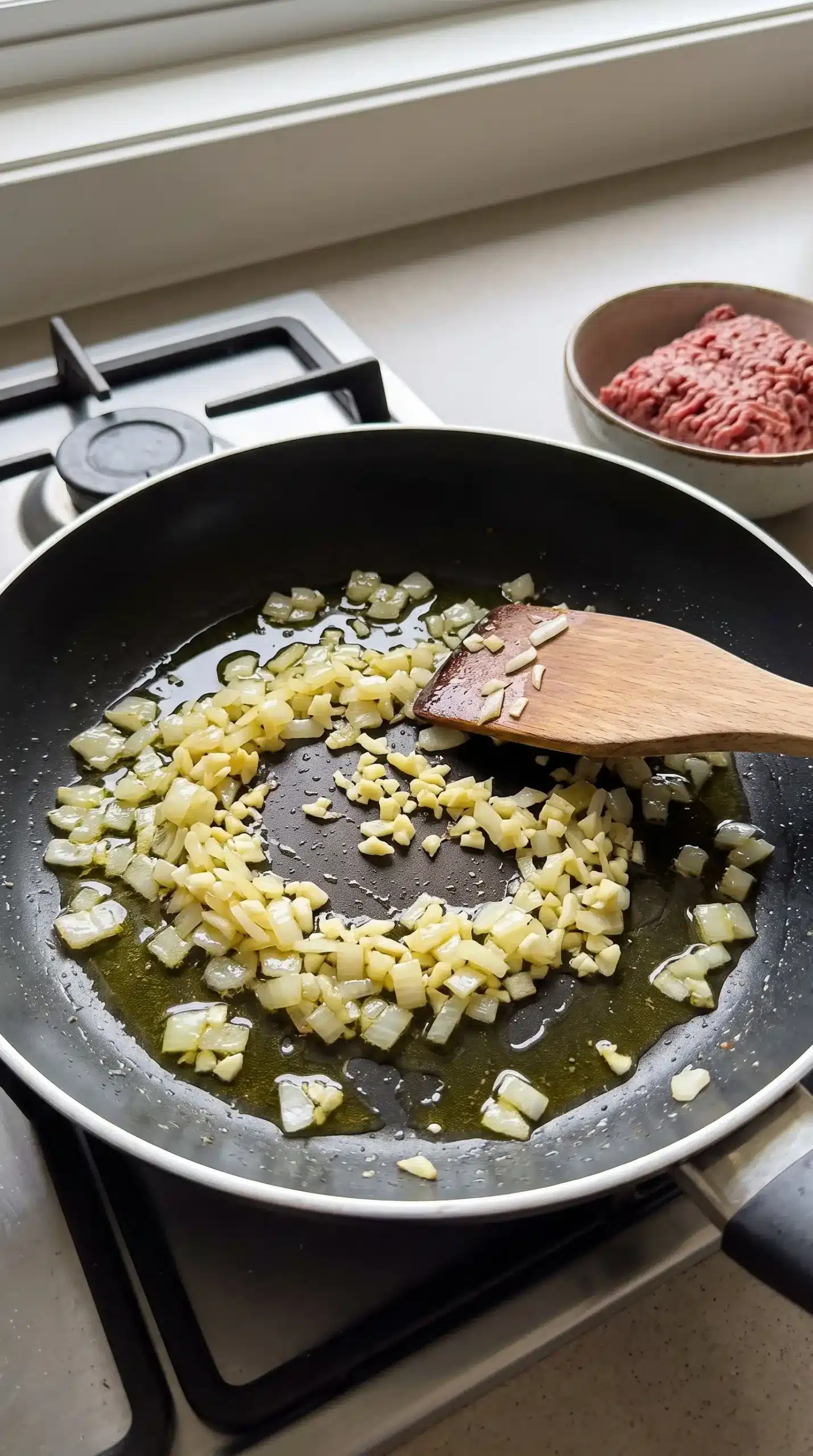
Olive oil provides the cooking medium for the onion and garlic. Heating it over medium heat allows the chopped onion and minced garlic to soften before the ground beef enters the skillet.
That order matters because the aromatics are incorporated into the skillet before the meat browns. Once the beef is added, it can cook in the same pan and pick up the savory base already established by the softened onion and garlic.
Browning the ground beef also develops flavor through the Maillard reaction, a heat-driven reaction between proteins and sugars that contributes to the browned character of cooked meat.
Salt and pepper enter with the tomato sauce, giving the simmering mixture its basic seasoning. If additional flavor is desired, basil or oregano can be added as an optional variation, keeping the seasoning profile compatible with the tomato-based sauce.
Keep the Ground Beef Browned and the Sauce Controlled
Ground beef should be cooked until browned before the tomato sauce is stirred in. After browning, excess fat is drained so the finished sauce is not carrying more rendered fat than necessary.
Once the tomato sauce, salt, and pepper are added, a 5-to-10-minute simmer brings the components together. Keeping this stage focused prevents the sauce from being treated as a separate elaborate preparation; its job is to marry the browned beef with the tomato base.
Where Ground Beef Pasta Can Go Wrong
Several avoidable issues come directly from the order and handling of the supplied preparation. Paying attention to the visual state of each stage makes the cooking process easier to control.
- Skipping the drain: Leaving excess fat in the skillet can make the finished mixture heavier. Drain the excess after the beef has browned.
- Adding sauce too early: The beef needs to brown before the tomato sauce goes in. Keep the stages separate until the meat has reached that browned state.
- Overlooking the pasta timing: Cooked pasta should be drained and set aside before the beef-and-sauce mixture is combined with it.
- Forgetting the Parmesan finish: Stirring grated Parmesan into the combined pasta and sauce helps distribute its flavor through the finished dish.
Coordinate the Pasta and Skillet Without Crowding the Finish
The pasta and sauce have different jobs, so keeping them as separate stages makes the final combination easier to manage. Pasta is cooked according to its package instructions, drained, and held until the beef sauce is ready.
Meanwhile, the skillet handles the onion, garlic, beef, tomato sauce, and seasoning. When the sauce has finished its short simmer, the cooked pasta can be added and stirred through the mixture.
This separation also gives you a clear point at which to check both parts. The pasta should be ready for combining, while the beef mixture should be hot and cohesive. Parmesan then belongs in the combined mixture as a finishing ingredient.
Simple Add-Ins That Stay True to the Dish
Optional herbs can change the flavor without changing the basic identity of ground beef pasta. Basil or oregano are suggested choices because they fit naturally with the tomato sauce and beef combination.
Vegetables offer another route for variation. Spinach, bell peppers, or zucchini can be added when you want to incorporate vegetables into the meal, while still keeping the tomato-and-beef foundation recognizable.
For a different protein choice, lean ground beef or ground turkey can be used. Ground turkey is also listed as an alternative to beef, while lentils or mushrooms can replace the meat for a vegetarian version.
Turn the Skillet Pasta Into a Complete Meal
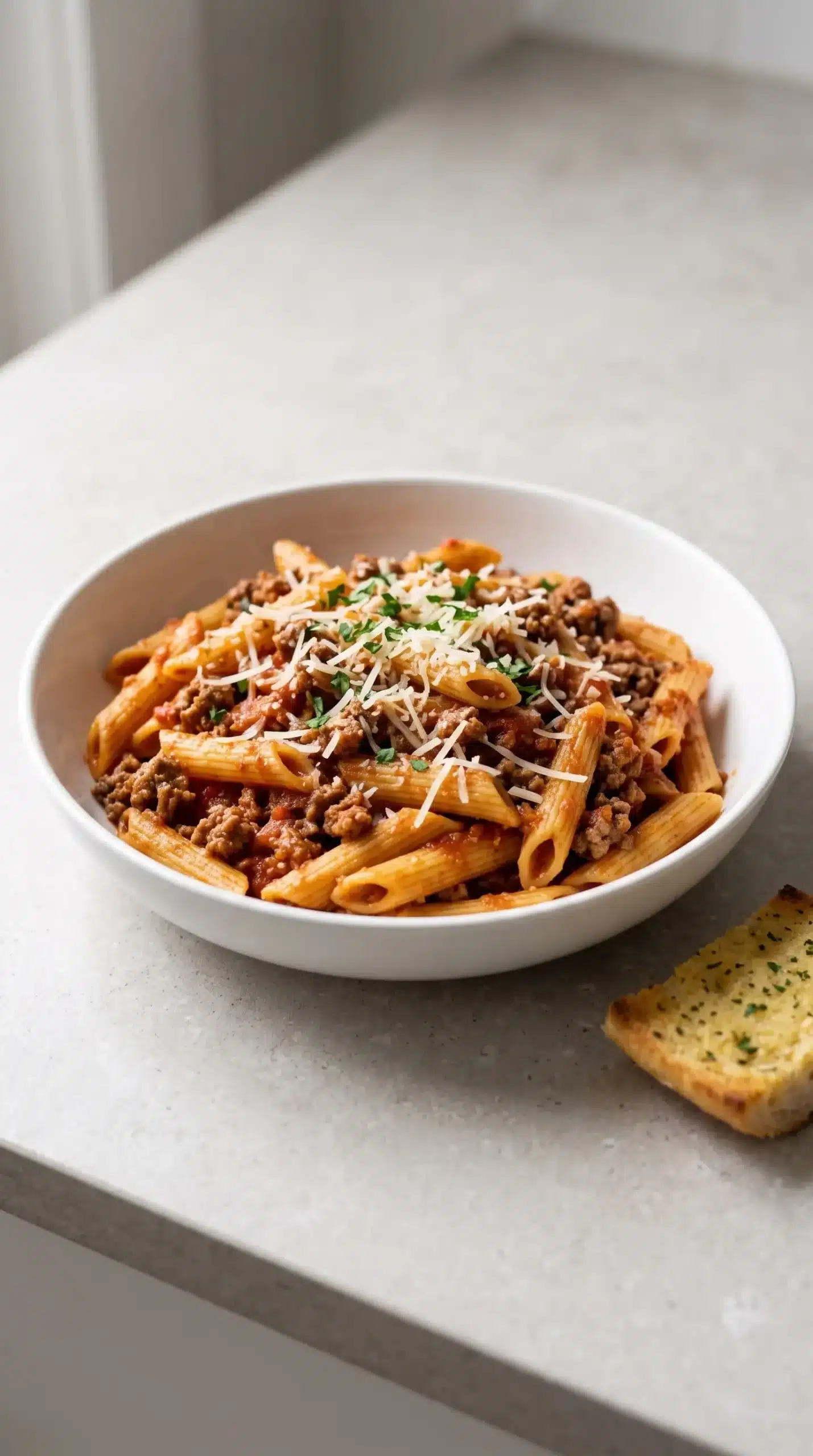
Serve the pasta hot so the sauce, beef, noodles, and Parmesan come together as intended. Extra grated Parmesan can be offered at the table for anyone who prefers a cheesier finish.
A side salad provides a simple fresh accompaniment, while garlic bread gives the meal another familiar partner. Either option can sit alongside the pasta without requiring changes to the main preparation.
Make a Vegetarian Version Without Losing the Tomato Base
Lentils or mushrooms can replace the ground beef when a vegetarian version is desired. The tomato sauce, pasta, onion, garlic, and Parmesan framework can remain part of the dish, allowing the substitution to change the centerpiece without requiring a completely different style of meal.
Vegetables such as spinach, bell peppers, or zucchini can also be incorporated for added variety. Their role is flexible, so they can be chosen according to what is available while the tomato sauce continues to tie the components together.
Store Leftover Ground Beef Pasta Safely
Leftover ground beef pasta can be placed in an airtight container and kept in the refrigerator for up to 3 days. Keeping the leftovers sealed helps make them convenient for another meal while preserving the prepared pasta and sauce together.
For reheating, warm the leftovers in the microwave or on the stove until hot. The same reheating options work whether the pasta is being served as a complete portion or divided for several meals.
What Makes This Ground Beef Pasta Worth Repeating
Browned beef, tomato sauce, pasta, and Parmesan create the central balance that makes this meal useful for a busy day. The cooking process stays focused: soften the aromatics, brown the beef, simmer the sauce, combine it with the pasta, and finish with cheese.
That simplicity also leaves room for sensible adjustments. Pasta shape, herbs, protein choice, vegetables, and the amount of Parmesan at serving can change the experience without losing the basic character of the dish. Ground beef pasta remains at its best when the beef is properly browned, excess fat is drained, and the tomato sauce is given its short simmer before everything is combined.
Ground Beef Pasta Questions About Substitutions and Storage
Can I use ground turkey instead of ground beef?
Yes. Ground turkey is specifically suggested as an alternative, so it can replace the ground beef while keeping the same general pasta and tomato sauce preparation.
Which pasta shapes work best?
Spaghetti and penne are both suitable choices, and the recipe also allows any preferred type of pasta. Use the shape you enjoy while following its package cooking instructions.
Can I prepare the sauce ahead of time?
Yes. The sauce can be prepared in advance and refrigerated for a few days before it is mixed with the cooked pasta. This separates the sauce preparation from the final assembly.
How can I make ground beef pasta vegetarian?
Replace the ground beef with lentils or mushrooms. Spinach, bell peppers, or zucchini can also be added when you want more vegetables in the finished dish.
Can I make this pasta gluten-free?
Regular pasta does not make the dish gluten-free, but gluten-free pasta can be substituted to create a gluten-free version. Follow the package instructions for the selected pasta.
What can I serve with beef pasta with tomato sauce?
A side salad or garlic bread works well alongside the pasta. Extra grated Parmesan can also be served on top when more cheese is wanted.
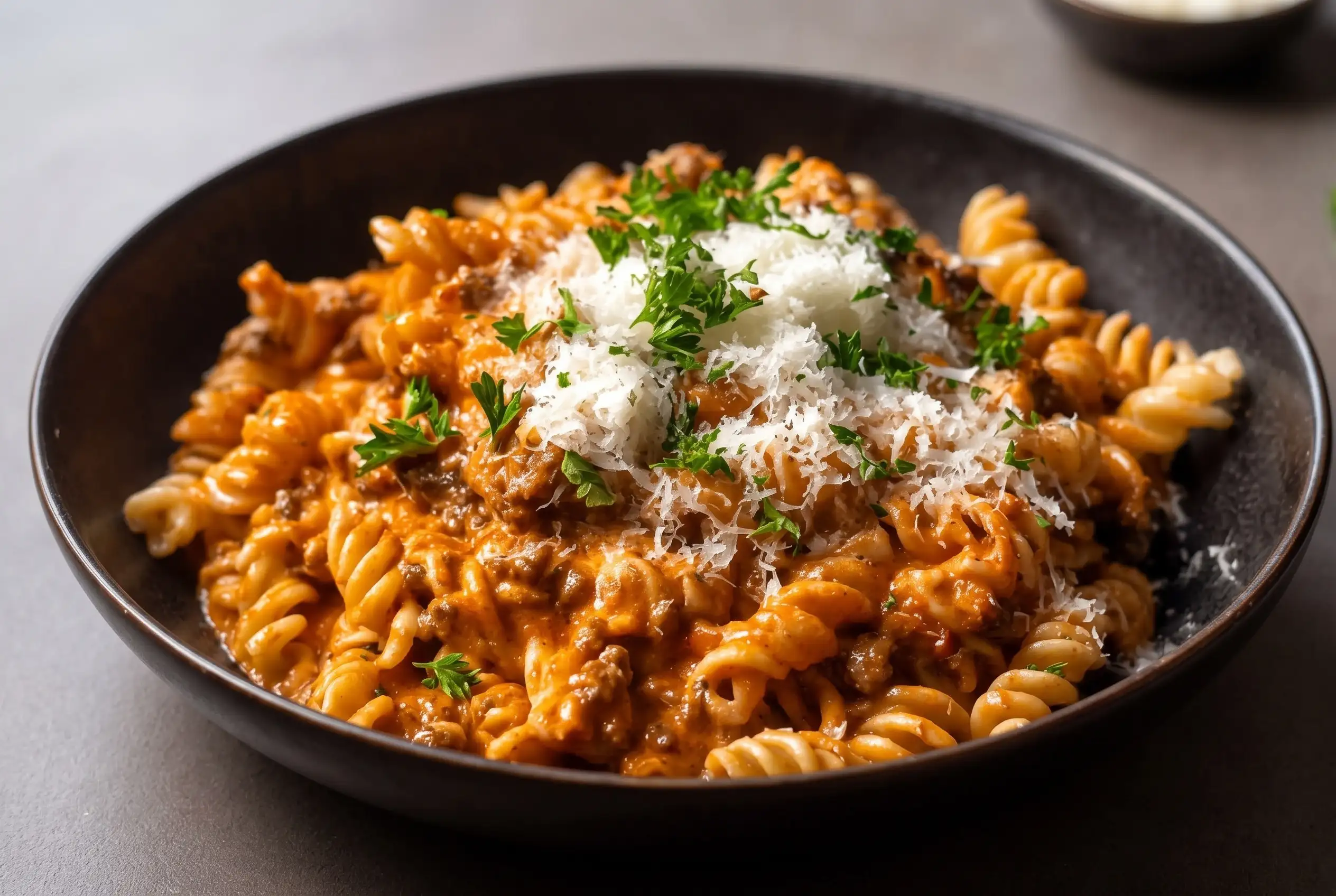
Ground Beef Pasta with Tomato Sauce and Parmesan Cheese
Ingredients
Method
- Cook the pasta according to the package directions. Drain well and set aside.
- Warm olive oil in a skillet over medium heat. Add the chopped onion and minced garlic, then cook until softened.
- Add the ground beef and cook until browned throughout. Drain any excess fat.
- Mix the tomato sauce, salt, and black pepper into the cooked beef. Simmer for 5–10 minutes.
- Add the drained pasta to the skillet and toss with the beef and tomato sauce until evenly combined.
- Fold in the grated Parmesan cheese and serve hot.