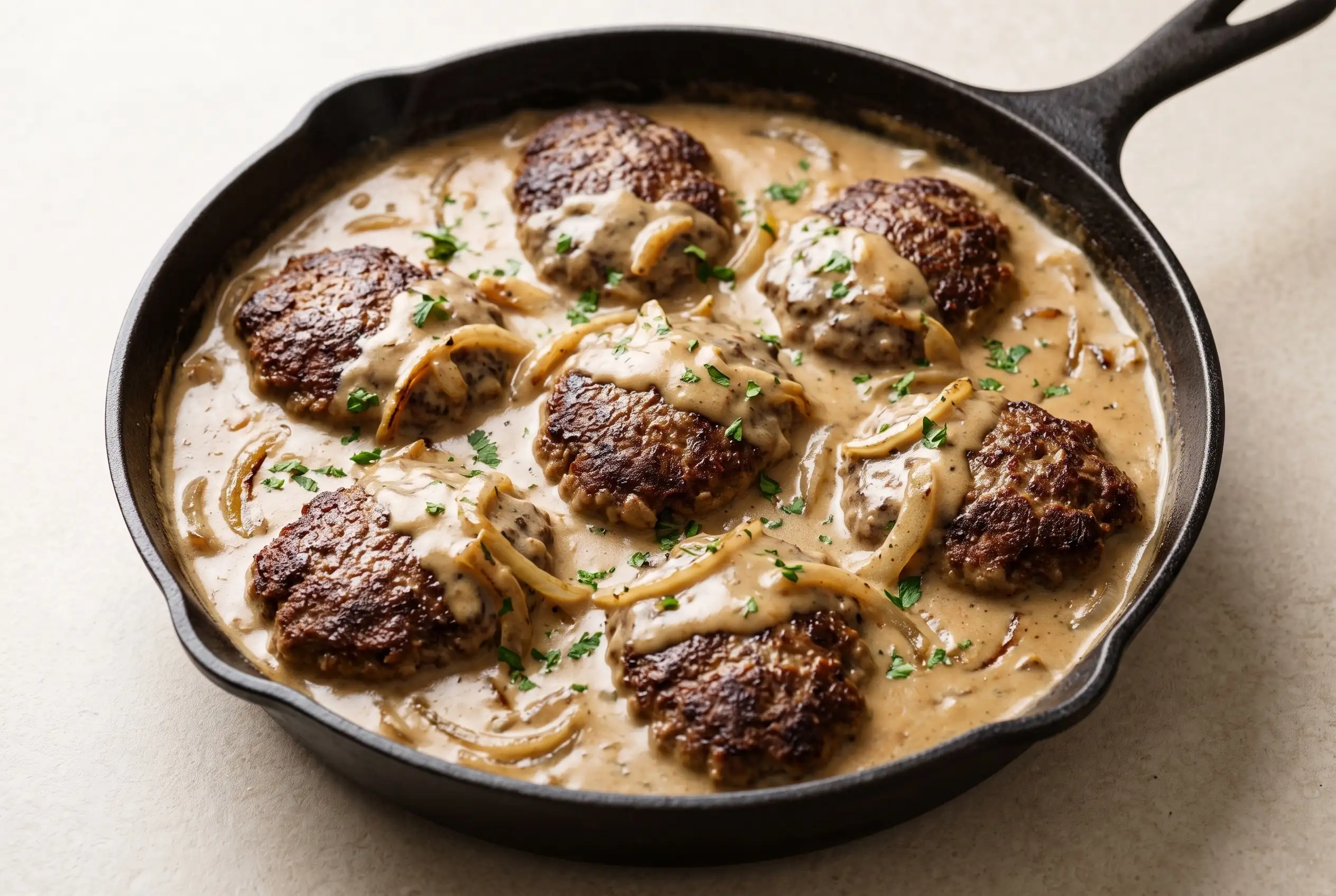
Korean Ground Beef Bowl with Rice and Sesame Seeds
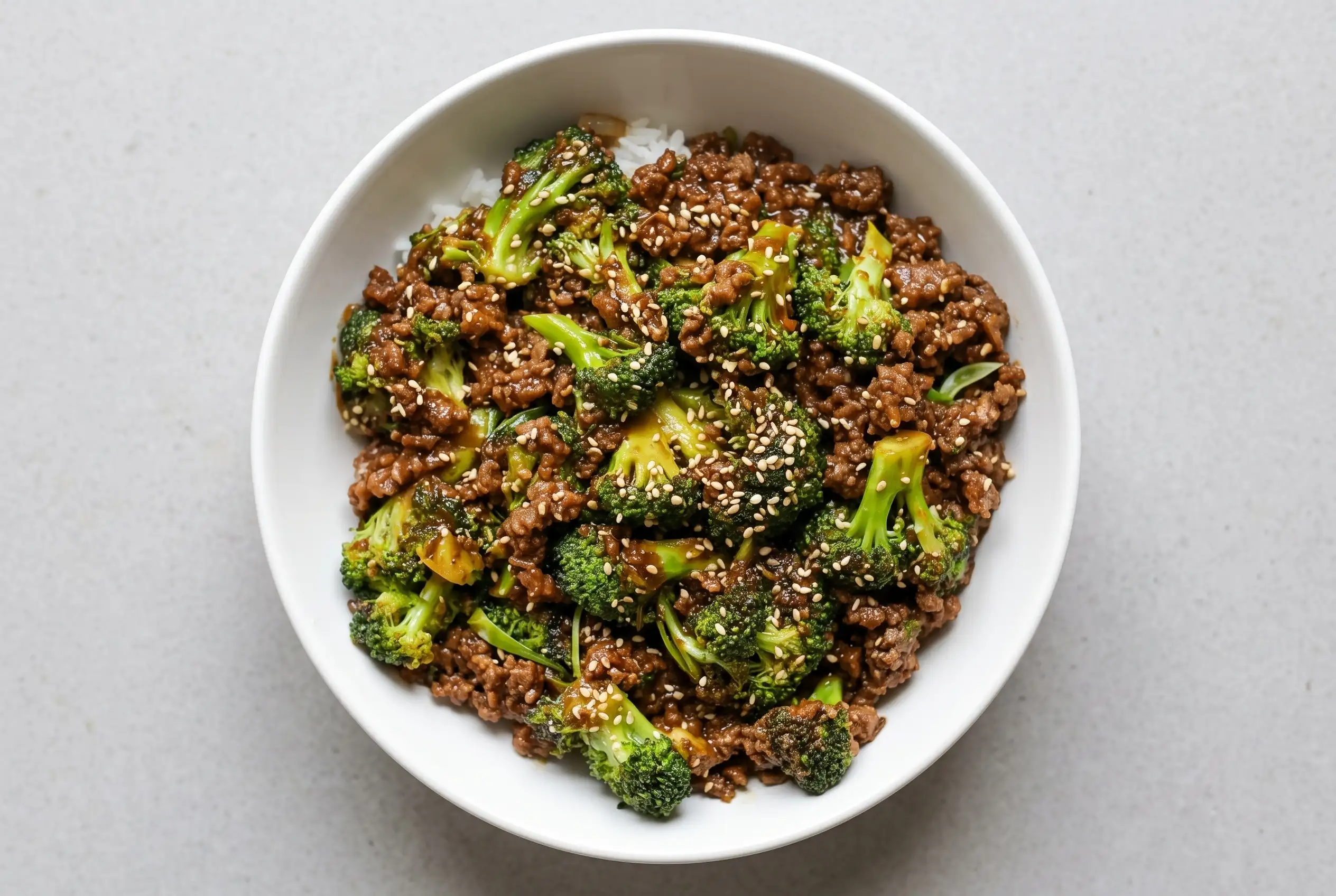
Korean Ground Beef Bowl brings savory ground beef, a sweet-salty soy sauce mixture, sesame oil, garlic, ginger, and rice together in a quick skillet meal. The combination is hearty without requiring a complicated cooking process, and broccoli can be added when you want vegetables in the same pan. Green onions and sesame seeds provide a fresh, crunchy finish that keeps each serving lively.
One reason an easy Korean ground beef bowl works so well for weeknights is the way the beef absorbs the seasoned sauce after browning. The rice gives the saucy mixture a simple base, while the optional vegetables make the bowl feel more complete. The flavors can also be adjusted at serving time, especially when you prefer more or less heat.
Busy evenings benefit from the straightforward format. The beef cooks in a skillet, the sauce comes together from familiar pantry ingredients, and cooked rice can be prepared alongside the main mixture. Leftovers can also be refrigerated or frozen, making the Korean beef bowl recipe useful for planned meals as well as dinner the same day.
Korean Ground Beef Bowl Flavor Profile
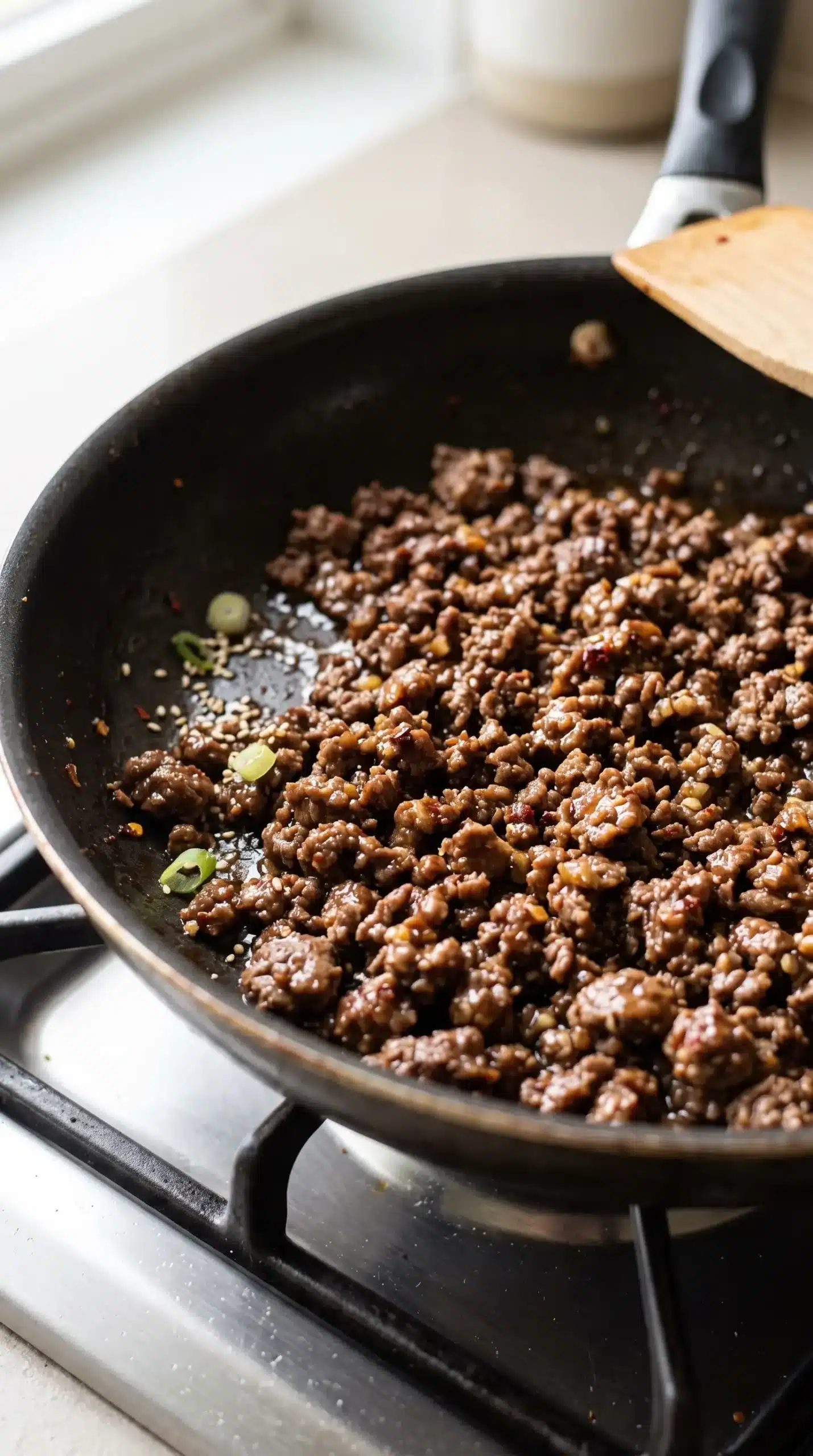
Savory soy sauce forms the backbone of the beef mixture, while brown sugar brings a noticeable sweet edge. Sesame oil adds its characteristic toasted flavor, and garlic with fresh ginger gives the sauce a more aromatic character. Red pepper flakes supply adjustable heat, so the finished bowl can lean mild or spicy without changing the core preparation.
Ground beef makes the filling substantial and gives the sauce something rich to cling to after the meat has browned. Breaking the beef apart as it cooks creates smaller pieces that mix easily with the sauce and distribute across the rice. A hot skillet is especially useful at this stage because the beef can develop a good sear before the liquid ingredients are introduced.
Rice acts as more than a side dish here. Its neutral flavor balances the seasoned beef and gives the sauce somewhere to collect, making each spoonful a combination of grains and saucy meat. White rice keeps the bowl familiar and simple, while brown rice offers a heartier whole-grain option.
Soy Sauce and Sesame Oil Set the Bowl’s Flavor
The sauce works because its main ingredients play different roles in a compact mixture: soy sauce supplies saltiness, brown sugar adds sweetness, sesame oil contributes a distinctive nutty note, garlic and ginger build aromatic depth, and red pepper flakes control the heat. Keeping those proportions intact gives the beef a clear Korean-inspired character without requiring a long ingredient list.
Rice and Broccoli Change the Serving Balance
Cooked rice provides the foundation for four servings, with either white or brown rice fitting the dish. White rice offers a mild backdrop that lets the seasoned beef stand out, whereas brown rice brings more texture and a whole-grain character. Whichever option you choose, the rice should be ready to receive the beef mixture when serving begins.
Broccoli is optional, but it changes the bowl from a simple beef-and-rice combination into a meal with a vegetable component cooked directly in the skillet. Fresh florets need only a few minutes to become tender after the sauce has been added. Frozen broccoli can also be used and added during the last few minutes, which makes it a practical option when fresh vegetables are not available.
Simple toppings can sharpen the contrast without complicating the meal. Sliced green onions bring freshness at the finish, while sesame seeds add a little crunch. Spicy kimchi or a side salad can provide another contrasting element at the table when you want more freshness or heat alongside the warm beef and rice.
Browning Ground Beef Before Saucing
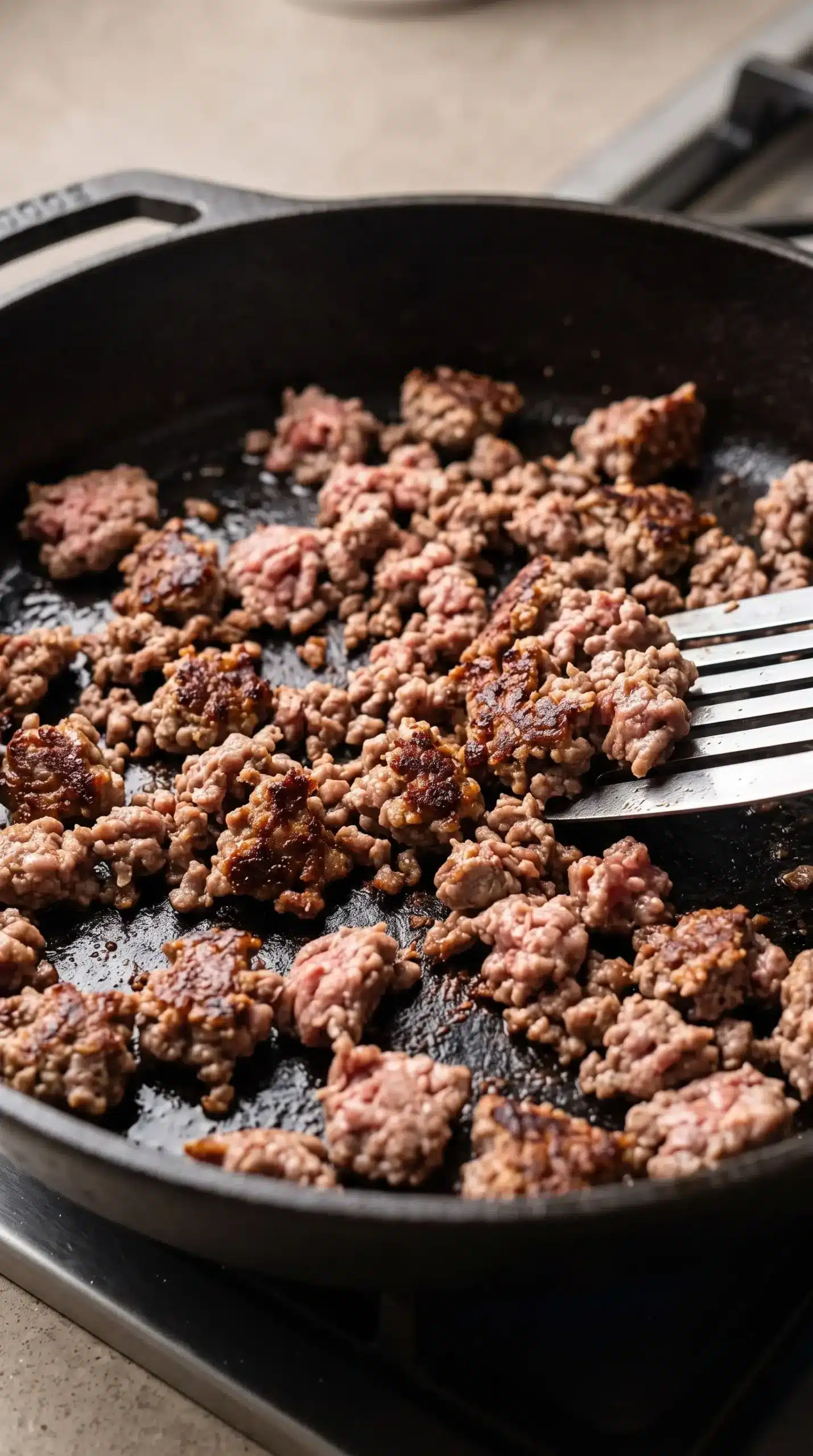
Give the skillet enough heat before adding the ground beef, then break the meat apart as it cooks. Browning first matters because it develops browned flavor through the Maillard reaction before the sauce is added; introducing the soy mixture too early would make it harder to focus on developing the beef’s browned exterior. If the skillet contains more excess fat than desired once the beef is browned, drain it before adding the garlic and ginger.
A Short Simmer Keeps the Beef Coated
Garlic and grated ginger need only a brief sauté after the beef has browned. Their two-minute window is enough to bring their aromas forward before the soy sauce, brown sugar, and sesame oil enter the skillet. Keeping this stage focused prevents the aromatics from becoming an afterthought in the finished mixture.
Once the sauce ingredients are stirred through, a short three- to four-minute simmer allows the mixture to thicken slightly. Watch for the sauce to become more cohesive instead of remaining loose around the beef. That change is important for a ground beef rice bowl because a lightly thickened mixture sits on the rice more effectively and carries its seasoning with every serving.
Korean Ground Beef Bowl Mistakes to Avoid
A few small choices can affect the texture and flavor of the finished bowl. The most useful checks happen while the beef is browning, while the sauce is reducing, and when the vegetables are added.
- Weak skillet heat: Starting with a skillet that is not hot enough can interfere with the desired browning. Heat the skillet before adding the beef so the meat can sear as it cooks.
- Too much loose fat: An especially fatty skillet can make the sauced beef feel heavier. Drain excess fat when necessary before adding the aromatics.
- Overcooked broccoli: Broccoli only needs a few minutes in the skillet. Add it late enough to preserve its useful texture instead of letting it cook throughout the entire beef preparation.
- Loose sauce: The sauce should simmer until it thickens slightly. Serving before that point can leave more liquid in the skillet and less coating the beef.
Vegetable Choices That Fit the Skillet
Broccoli is the supplied vegetable option, but the same skillet format can accommodate bell peppers, carrots, or snap peas according to preference. A focused ground beef and broccoli preparation can guide timing when using broccoli as the main vegetable. Because those vegetables do not necessarily cook at the same rate, add them according to how quickly they become tender. The important consideration is preserving the beef mixture’s texture while giving any added vegetables enough time to cook properly.
Make-Ahead Portions Stay Easy to Serve
The beef mixture can be prepared ahead and refrigerated until you are ready to assemble the bowls. Keeping the cooked beef mixture in an airtight container makes it convenient to portion with rice when mealtime arrives. Reheating the beef before serving restores the warm, saucy character that makes the bowl satisfying.
Refrigerated leftovers can be kept for up to three days. For storage beyond that window, cool the food completely before transferring it to a freezer-safe container. Frozen portions can last for up to three months, giving the dish a practical role in meal planning when you want a cooked beef mixture ready for another day.
Separate portions can also make serving more flexible. Rice can be paired with the amount of beef desired at mealtime, while toppings such as green onions, sesame seeds, or kimchi can be added fresh. That approach keeps the components easy to customize without changing the core beef preparation.
| Serving choice | Best use | What it changes |
|---|---|---|
| White rice | Simple, mild base | Lets the seasoned beef remain the main flavor |
| Brown rice | Heartier bowl | Adds whole-grain character and more texture |
| Rice with broccoli | Vegetable-inclusive serving | Adds a tender vegetable component to the skillet meal |
| Rice with kimchi or side salad | More contrast at the table | Brings freshness or additional spice alongside the warm beef |
Serving Contrasts That Brighten the Bowl
Hot rice and saucy beef create a rich, comforting base, so a contrasting side can make the meal feel more balanced. Spicy kimchi brings extra heat and a sharp fermented character, while a side salad provides freshness without changing the beef mixture itself. Either option can be served alongside the bowl instead of stirred into the skillet.
Green onions are best used at the finish so their fresh quality remains noticeable. Sesame seeds can be scattered over the top for additional crunch. Together, the garnishes add texture and freshness to a dish whose main components are soft rice and tender ground beef.
Ground Beef Rice Bowl Variations
The beef can be replaced with ground turkey or ground chicken when you want a different protein. A vegetarian version can use lentils or tofu in place of the ground beef. For a gluten-free adaptation, tamari can replace the soy sauce, keeping the central savory sauce concept intact.
- Less heat: Reduce the red pepper flakes to suit a milder preference.
- More heat: Increase the red pepper flakes or serve with sriracha.
- More vegetables: Add bell peppers, carrots, or snap peas and adjust their cooking time for tenderness.
- No sesame oil: Olive oil or canola oil can be substituted when needed, although the flavor will differ.
Well-Coated Beef Gives the Bowl Its Best Balance
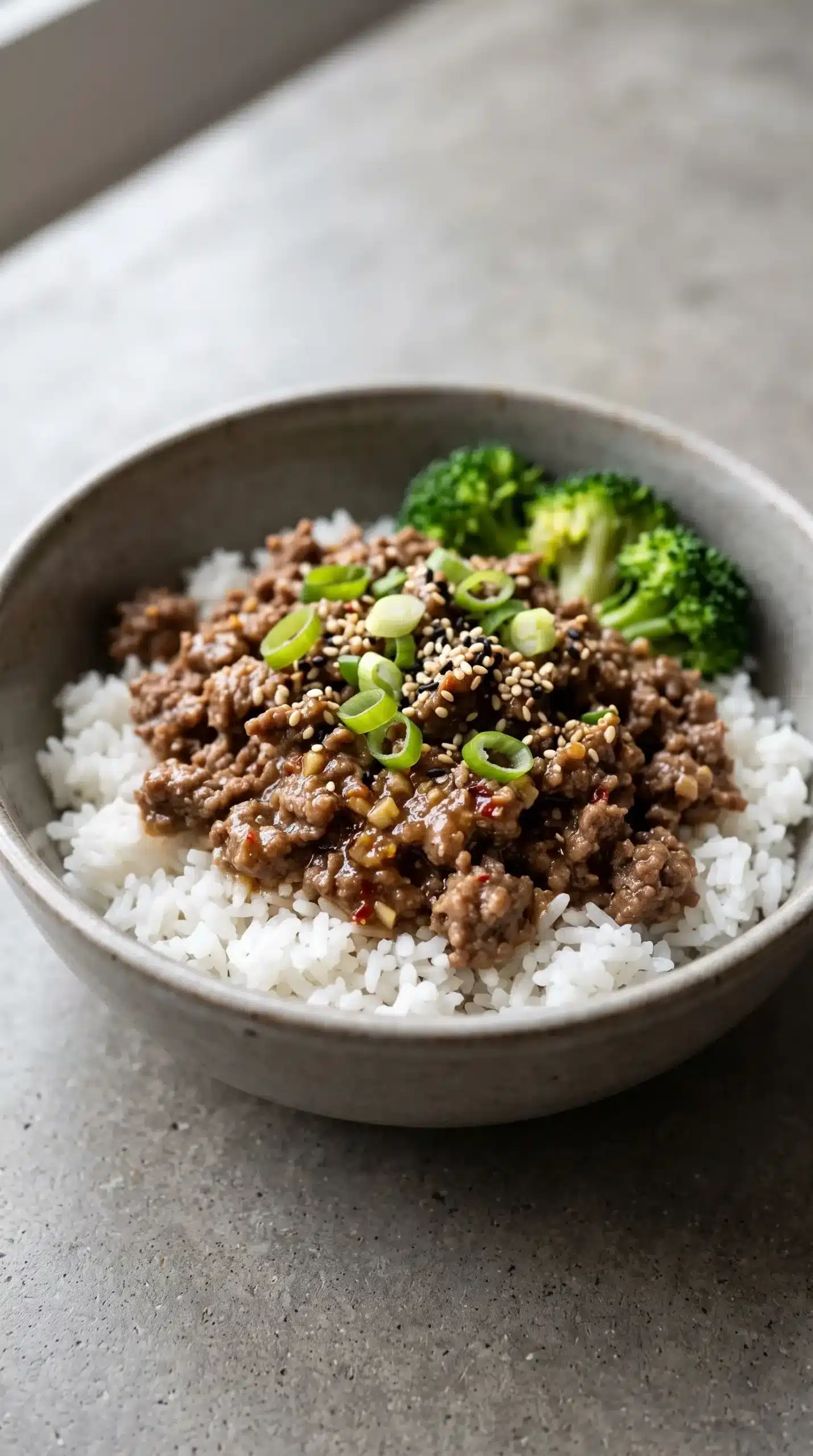
Browned beef, a slightly thickened sauce, and rice work together most effectively when the skillet gives each stage enough attention. The beef needs to brown before the aromatics and sauce are introduced, while the sauce needs a short simmer to cling to the meat. Those two points control much of the finished texture and flavor.
Serve the mixture over prepared rice while it is hot, then finish with green onions and optional sesame seeds. Broccoli can stay in the skillet for a vegetable component, while kimchi or a side salad can provide contrast at the table. The result is a flexible Korean ground beef bowl built around a simple balance of seasoned beef, rice, and optional vegetables.
Korean Ground Beef Bowl Storage Questions and Answers
Can the beef mixture be prepared ahead of serving?
Yes. Cook the beef mixture in advance, refrigerate it in an airtight container, and reheat it when you are ready to assemble the bowls. This approach is especially useful when the rice and toppings will be handled separately at serving time.
How long can Korean Ground Beef Bowl leftovers stay refrigerated?
Refrigerated leftovers can be stored for up to three days in an airtight container. For the best organization, keep portions covered and reheat the amount you plan to eat instead of repeatedly warming the entire batch.
Can Korean Ground Beef Bowl be frozen?
Yes. Allow the cooked food to cool completely before transferring it to a freezer-safe container. It can be kept frozen for up to three months, making it suitable for longer-term meal planning.
What can replace soy sauce for a gluten-free version?
Tamari can be used in place of soy sauce when you need a gluten-free version. The substitution preserves the savory role of the sauce while keeping the rest of the supplied flavor combination intact.
How can the spice level be changed?
Red pepper flakes are the simplest control point. Use less for a milder bowl or increase the amount for more heat. Sriracha can also be served alongside the finished dish when diners want additional spice individually.
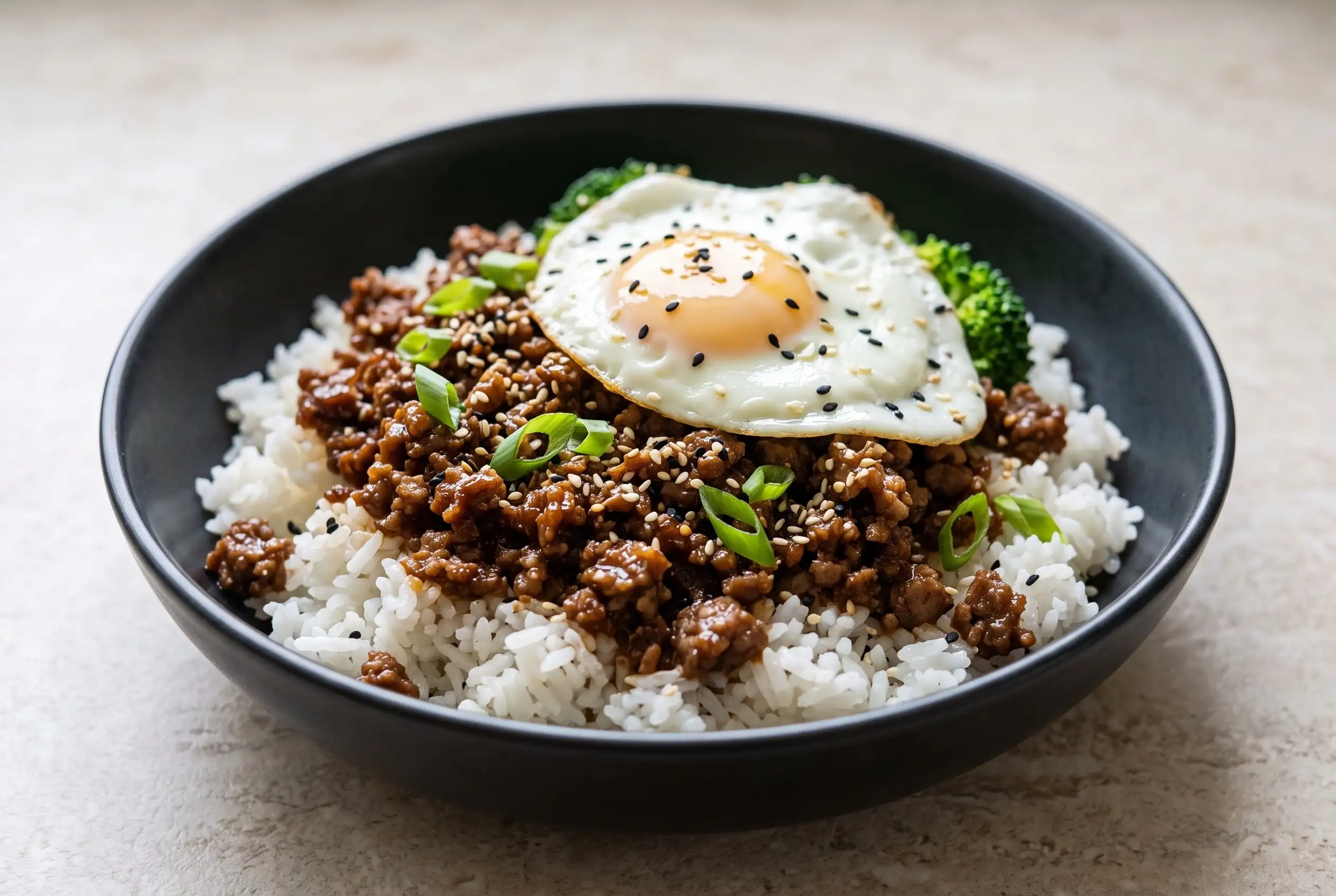
Korean Ground Beef Bowl with Rice and Sesame Seeds
Ingredients
Method
- Warm a large skillet over medium-high heat. Add the ground beef and cook for 5–7 minutes, breaking it into pieces as it browns.
- Pour off excess fat if needed. Stir the minced garlic and grated ginger into the beef and sauté for 2 minutes.
- Pour in the soy sauce, brown sugar, sesame oil, and red pepper flakes. Stir to combine, then simmer for 3–4 minutes, until the sauce has thickened slightly.
- If using broccoli, stir the florets into the skillet and cook for 3–4 minutes, stirring often, until tender.
- Prepare the rice according to package instructions if it is not already cooked.
- Portion the cooked rice into bowls and spoon the ground beef mixture over the top, adding the broccoli if using.
- Finish each bowl with the sliced green onions and optional sesame seeds.