Taco Rice Bowl with Ground Beef, Black Beans and Corn
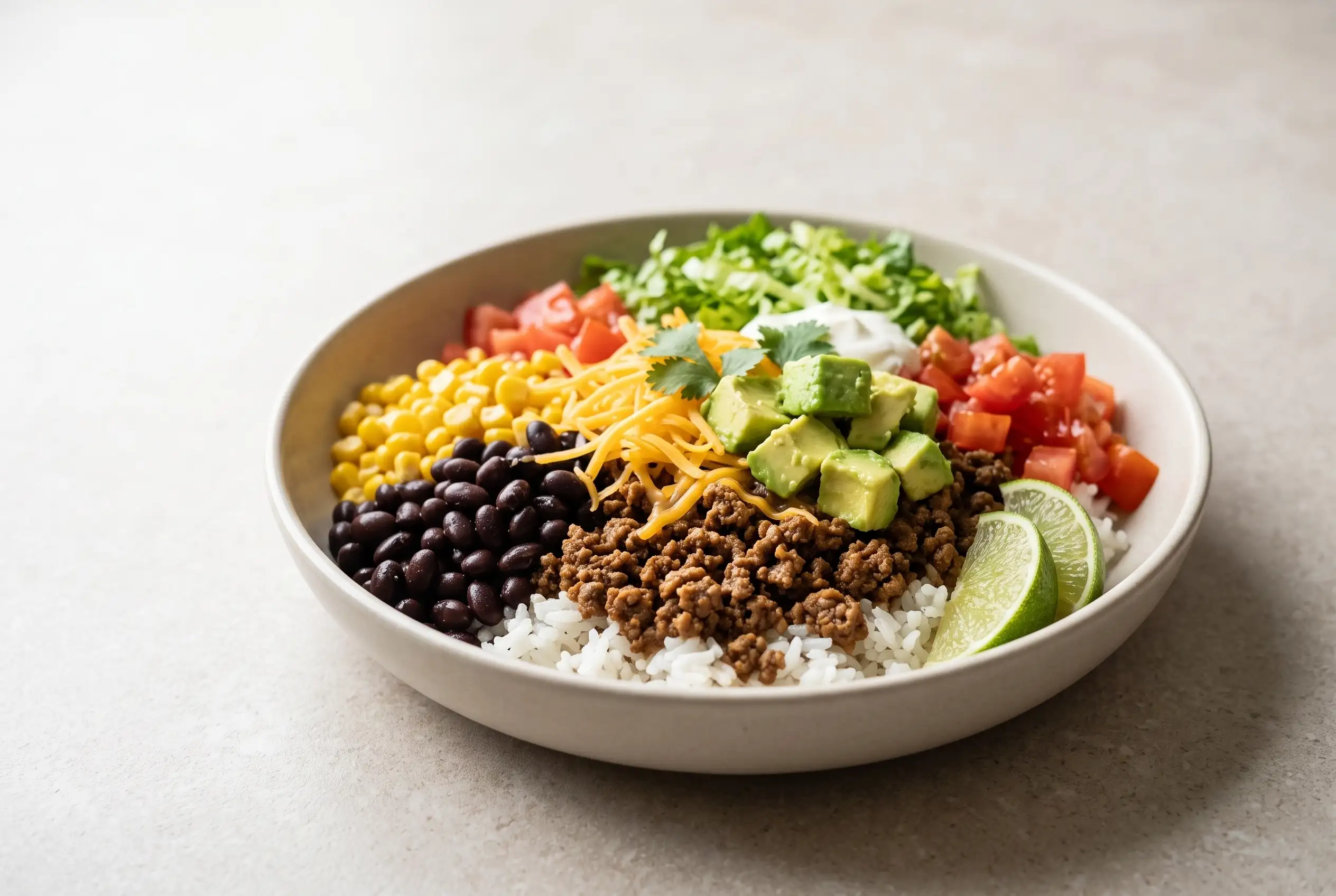
Taco Rice Bowl brings familiar taco flavors together with rice, seasoned meat, black beans, corn, tomatoes, lettuce, cheese, and avocado. The layered format makes an easy taco rice bowl especially useful for weeknight meals because each bowl can be finished with the toppings people enjoy most.
What Makes a Taco Rice Bowl Work
A taco rice bowl succeeds because the base and toppings create several textures in one serving. Warm rice and seasoned ground beef or chicken make the bowl hearty, while black beans and corn add substance alongside fresh tomatoes and shredded lettuce.
Cheese helps tie the warm and cool components together, while diced avocado brings a creamy element. Lime wedges provide a bright finishing touch at the table, and optional sour cream or cilantro can be added according to preference.
The format also makes customization simple. A ground beef taco rice bowl can be prepared with chicken instead, while vegetarian versions can use black beans, lentils, grilled vegetables, or a plant-based protein.
Building Better Texture in Every Bowl
Layering matters because the rice and seasoned protein form the warm foundation, while the vegetables and toppings remain distinct. Keeping the lettuce and avocado fresh until serving preserves the contrast that makes the bowl more interesting to eat.
Cooked rice works as a dependable base, with black beans and corn adding additional hearty elements. Diced tomatoes and shredded lettuce bring freshness without requiring a separate side dish.
Cheddar or pepper jack can be used for the cheese layer. Once the warm ingredients are assembled, avocado, sour cream, cilantro, and lime can be added to finish the bowl without making the fresh toppings part of the cooking process.
Taco Rice Bowl Ingredients That Matter Most
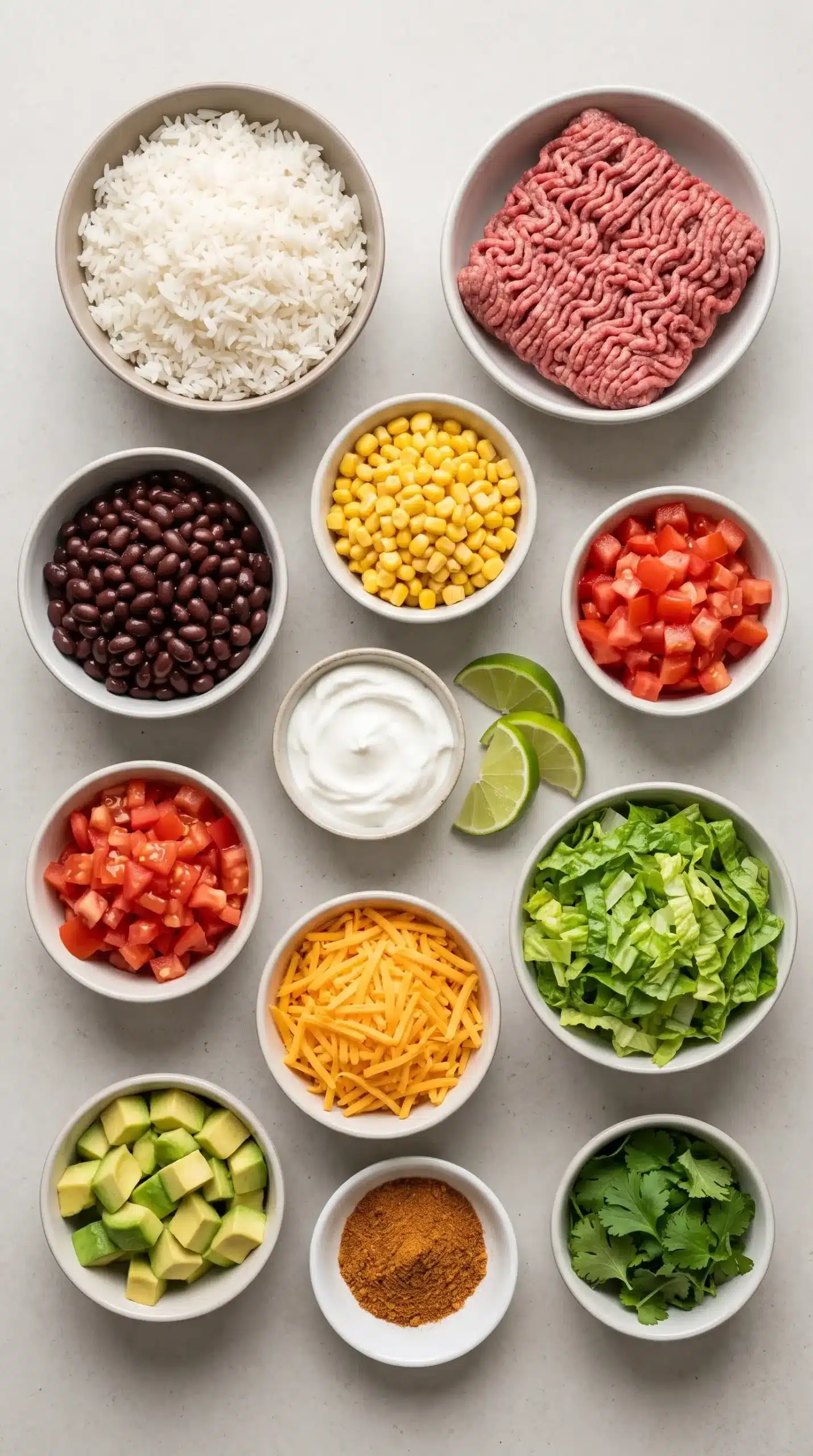
The most useful ingredient choice is the protein because ground beef and chicken give the seasoned center of the bowl a different character while fitting the same preparation. Taco seasoning supplies the main seasoning profile and is combined with a splash of water so it can coat the cooked meat.
Rice provides the foundation, while black beans and corn make the bowl more substantial. Fresh tomatoes and shredded lettuce should stay ready for layering after the cooked components are prepared.
Cheddar and pepper jack are both suitable cheese choices. Avocado is best treated as a finishing ingredient, with sour cream and cilantro remaining optional. Lime wedges belong alongside the finished bowls so each serving can be brightened at the table.
| Component | Primary choice | Alternative | Best handling point |
|---|---|---|---|
| Protein | Ground beef | Chicken | Season after browning |
| Rice | Cooked rice | Brown rice or quinoa | Use as the bowl foundation |
| Beans | Black beans | Pinto or kidney beans | Rinse and drain before layering |
| Cheese | Cheddar | Pepper jack | Scatter over the layered ingredients |
Seasoning the Protein Without Losing the Taco Flavor
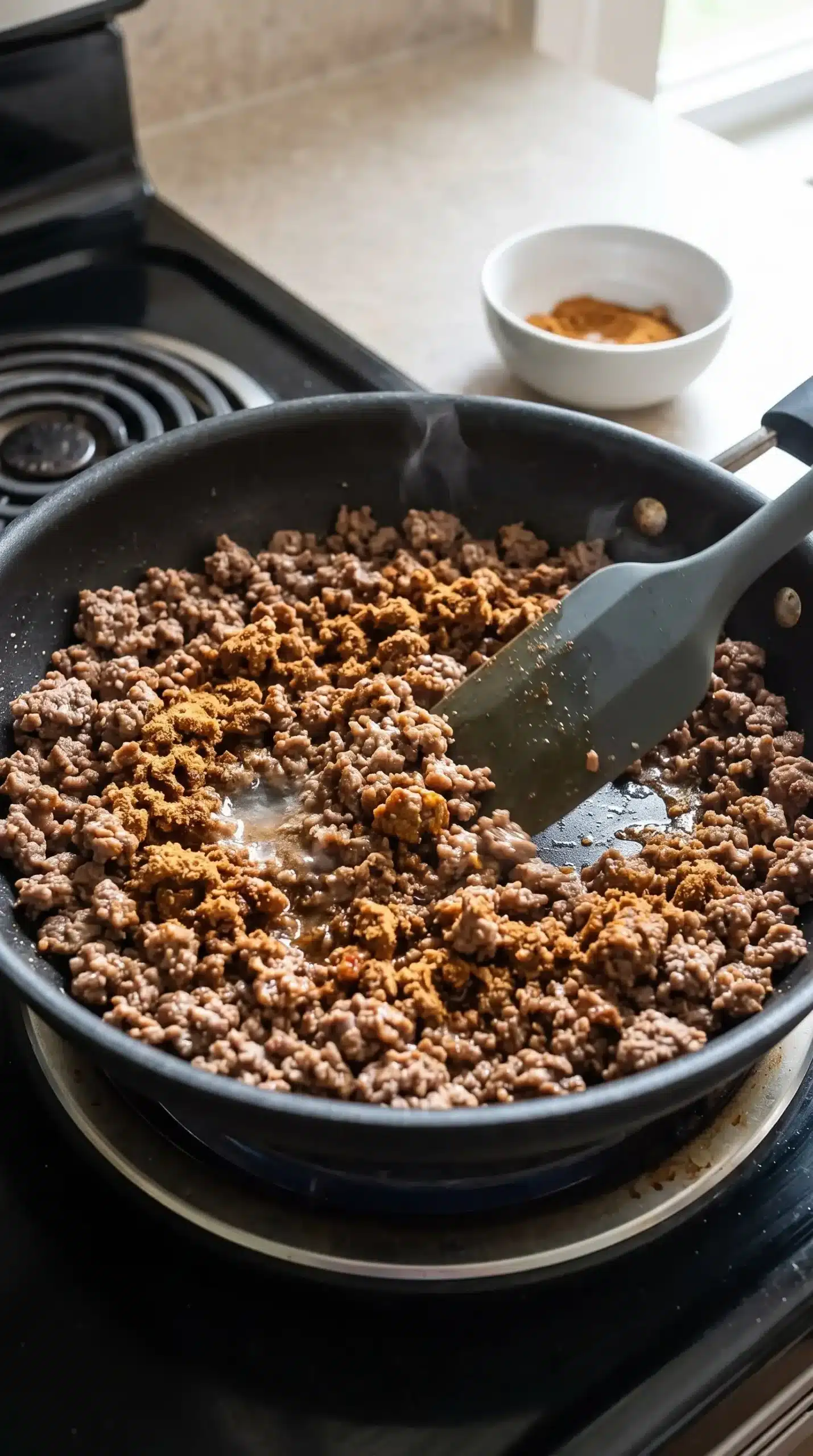
Brown the ground beef or chicken over medium heat and drain excess fat before adding taco seasoning. That sequence keeps the seasoning focused on the cooked protein instead of mixing it into excess rendered fat.
When using ground beef, cook it to an internal temperature of ground beef to 160°F before serving, checking with a food thermometer rather than relying on appearance alone.
A splash of water helps the taco seasoning combine with the meat. Let the mixture cook for another 2–3 minutes after stirring so the seasoning has time to coat the protein before it goes into the bowls.
For extra heat, diced jalapeños or hot sauce can be incorporated into the meat mixture. Chopped onions and bell peppers are another supported way to build additional flavor while the protein cooks.
Layering an Easy Taco Rice Bowl
Start each serving with cooked rice so the warm base supports the other components. Add the seasoned protein next, followed by black beans, corn, tomatoes, lettuce, and cheese.
Once the main layers are assembled, finish with diced avocado. Sour cream and fresh cilantro can be added when desired, and lime wedges should be served alongside the bowl.
Individual toppings can be adjusted without changing the basic structure. A ground beef bowl with plenty of vegetables, such as a spicy ground beef stir-fry bowl, can guide the balance of seasoned meat, rice, and vegetables when building a hearty serving.
Keeping the Fresh Toppings Distinct
Lettuce and avocado are the two components most worth keeping separate during storage. Adding them shortly before eating helps preserve their fresh character while the other prepared components can be stored together in an airtight container.
Mistakes to Avoid With Taco Rice Bowl Layers
One common problem is combining every component too early. Lettuce and avocado are intended as fresh toppings, so storing them with the cooked ingredients can make the bowl less appealing when reheated.
Another issue is skipping the fat-draining step after browning the meat. Excess fat can remain in the protein mixture and compete with the seasoning, so draining it before adding taco seasoning keeps the mixture more controlled.
Seasoning also needs enough moisture to distribute through the meat. Adding the taco seasoning with a splash of water and cooking for the additional 2–3 minutes gives it an opportunity to combine before serving.
Finally, avoid treating every topping as mandatory. Sour cream and cilantro are optional, while jalapeños, salsa, or guacamole can be used when desired. The bowl can remain balanced without including every possible topping.
Vegetarian Taco Rice Bowl Paths
A vegetarian version can replace the meat with black beans, lentils, grilled vegetables, or a plant-based protein. The rice, corn, tomatoes, lettuce, cheese, avocado, and optional toppings can remain part of the bowl.
Black beans are already included in the basic combination, making them a straightforward choice when meat is omitted. Lentils or a plant-based protein offer another way to keep a substantial protein component without using beef or chicken.
Grilled vegetables can also take the place of the meat. The finished bowl still benefits from the same layered approach, with fresh toppings added after the cooked components are assembled.
Rice Choices for a Different Bowl
White rice provides the stated foundation, but brown rice can be used when additional fiber and nutrients are desired. Quinoa is another possible substitute, while cauliflower rice offers a lower-carbohydrate variation.
The substitution changes the base without requiring the other components to change. Keep the beans, corn, vegetables, cheese, and finishing toppings aligned with the original bowl concept.
Adjusting the Taco Rice Bowl Toppings
Different toppings can make individual bowls feel customized without changing the core preparation. Jalapeños and salsa can add more intensity, while guacamole can provide another creamy topping alongside avocado.
- More heat: Add diced jalapeños or hot sauce to the meat mixture.
- More freshness: Finish with tomatoes, lettuce, cilantro, and lime.
- More creaminess: Add avocado, sour cream, or guacamole.
- Different cheese: Choose cheddar or pepper jack.
Serving Taco Rice Bowl for Weeknights or Gatherings
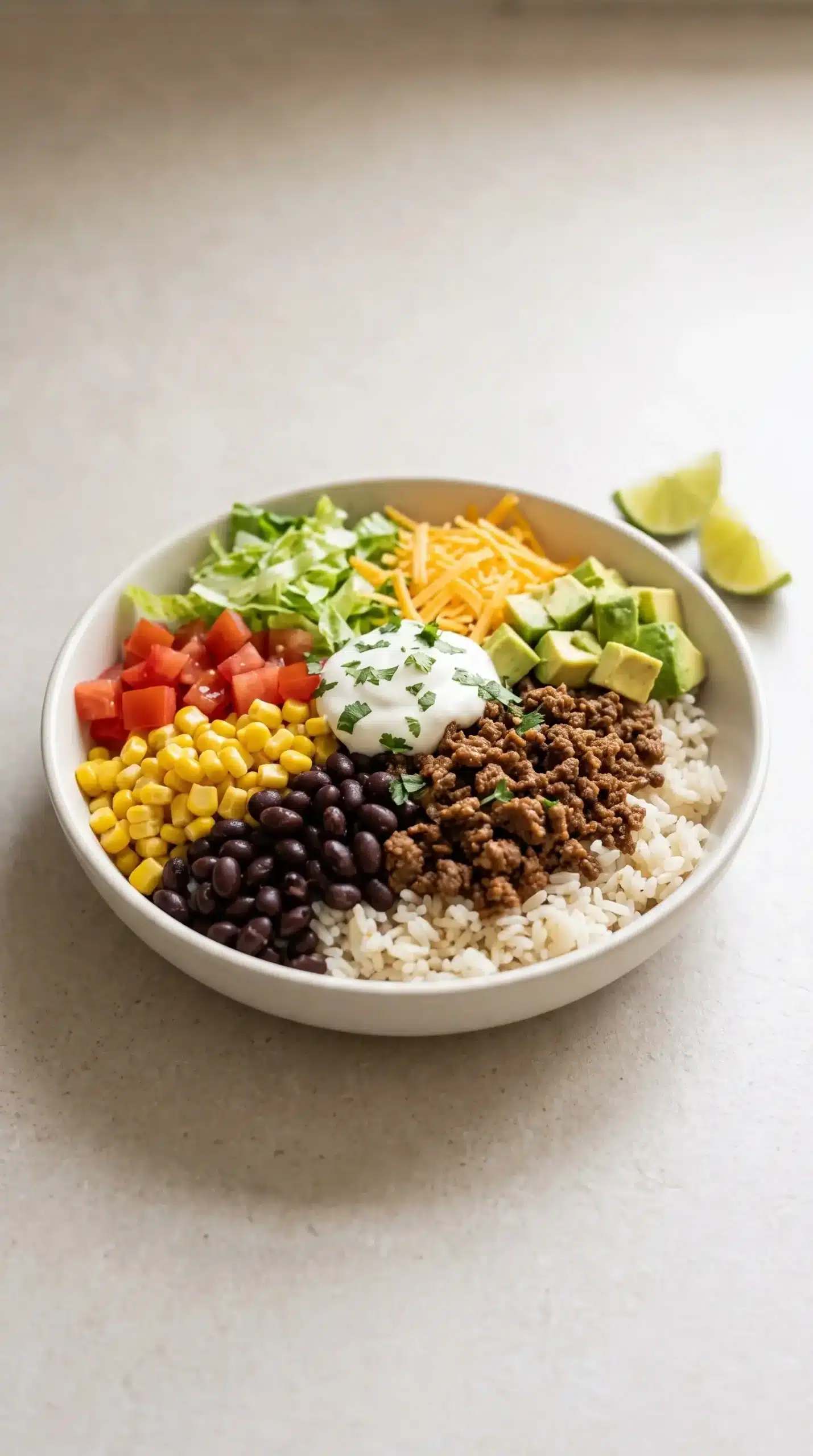
Serve the bowls warm with lime wedges on the side. Keeping the toppings visible makes it easy for everyone to choose how much avocado, sour cream, cilantro, or other additions they want.
For a casual gathering, the bowl format also works as a fun party food. Guests can customize servings with the available toppings instead of needing a single finished combination for everyone.
Meal prep is another natural use for the format. Prepared components can be portioned into airtight containers, while lettuce and avocado are kept separate until the bowls are ready to eat.
Storing Taco Rice Bowl Components
Leftovers should be placed in airtight containers and refrigerated. The prepared bowl components keep well for 3–4 days, while lettuce and avocado are best stored separately and added fresh when serving.
Freezing the Cooked Taco Mixture
The meat mixture can be frozen and reheated for later use. Fresh toppings such as lettuce and avocado should not be treated as freezer components; add them after reheating when assembling the bowl.
Why Taco Rice Bowl Is a Complete Meal Idea
Protein comes from the meat or beans, while black beans and vegetables contribute fiber. Tomatoes and lettuce also bring fresh ingredients into the bowl, creating a combination that can fit into a balanced eating pattern.
Using lean meat and plenty of fresh vegetables can support a lighter approach without removing the central taco flavors. The ability to choose beef, chicken, or plant-based components also makes the bowl adaptable to different preferences.
With rice, protein, beans, vegetables, cheese, and fresh toppings working together, the finished bowl has enough variety to stand on its own as a main dish. Its flexible structure also makes it easy to adjust portions of individual toppings according to personal preference.
Taco Rice Bowl Comes Together Through Smart Layering
Warm rice and seasoned protein establish the hearty center, while beans and corn reinforce the base before the fresh toppings are added. Keeping lettuce and avocado separate until serving preserves the contrast between cooked and fresh ingredients.
A well-built taco rice bowl does not need every topping to be identical from one serving to the next. Beef or chicken can anchor the bowl, vegetarian alternatives can replace the meat, and cheese, avocado, sour cream, cilantro, and lime can be adjusted to suit the people at the table.
Taco Rice Bowl Questions About Storage and Swaps
Can brown rice replace the rice in a taco rice bowl?
Yes. Brown rice can replace white rice and provides an option with additional fiber and nutrients while keeping the rest of the bowl combination intact.
How can a taco rice bowl be made vegetarian?
Replace the meat with black beans, lentils, grilled vegetables, or a plant-based protein. Since black beans are already part of the bowl, they provide a particularly simple meat-free direction.
What should be stored separately for meal prep?
Keep lettuce and avocado separate from the other prepared components. Add both fresh when serving so they do not sit refrigerated with the cooked ingredients.
Can the meat mixture be frozen?
Yes. The cooked meat mixture can be frozen and reheated later. Assemble the reheated mixture with fresh lettuce and avocado when serving.
What can make the bowl spicier?
Diced jalapeños or a splash of hot sauce can be added to the meat mixture when extra heat is wanted. Salsa is another topping option for changing the finished bowl’s intensity.
Can other beans be used?
Yes. Pinto beans or kidney beans can replace the black beans when a different bean choice is preferred, while the remaining bowl components can stay the same.
Taco Rice Bowl with Ground Beef, Black Beans and Corn
Ingredients
Method
- Brown the ground beef in a skillet over medium heat, then drain off any excess fat.
- Stir the taco seasoning and a splash of water into the beef. Continue cooking for 2–3 minutes, stirring until well combined.
- Distribute the cooked rice among serving bowls. Arrange the seasoned beef, black beans, corn, diced tomatoes, shredded lettuce, and shredded cheese over the rice.
- Finish each bowl with diced avocado, adding sour cream and fresh cilantro if desired.
- Serve the taco rice bowls with lime wedges on the side.