Lasagna Soup with Ground Beef, Spinach, and Mozzarella
Mouthwatering One Pot Lasagna Soup brings the familiar flavors of lasagna into a hearty, spoonable meal with ground beef, crushed tomatoes, broken lasagna noodles, spinach, cream, and melted cheese. The one-pot approach keeps the cooking practical while creating a rich tomato-based soup with tender noodles and creamy toppings.
What makes lasagna soup especially useful for a busy dinner is how the major components come together in the same pot. The browned beef develops a savory base, seasoned aromatics build flavor, and the noodles cook directly in the broth. A finishing combination of mozzarella, ricotta, and optional Parmesan gives each bowl a lasagna-inspired finish without requiring separate layers.
What Makes This One Pot Lasagna Soup Work
Lasagna soup succeeds because the noodles cook directly in a seasoned tomato-and-broth mixture instead of being assembled separately. As they soften, they become part of the body of the soup while the ground beef keeps each serving substantial.
Crushed tomatoes and tomato paste create the tomato foundation, while chicken broth and water provide enough liquid for the noodles to cook. Garlic, onion, basil, oregano, garlic powder, onion powder, salt, and black pepper establish the savory seasoning before the spinach and cream are added.
Cheese is handled at serving time, which gives the soup its most recognizable lasagna character. A mozzarella slice melts beneath the hot soup, ricotta sits on top, and Parmesan can be added for another layer of savory flavor. That finishing method also lets each bowl receive the amount of cheese preferred by the person eating it.
The Ingredients That Matter Most in Lasagna Soup
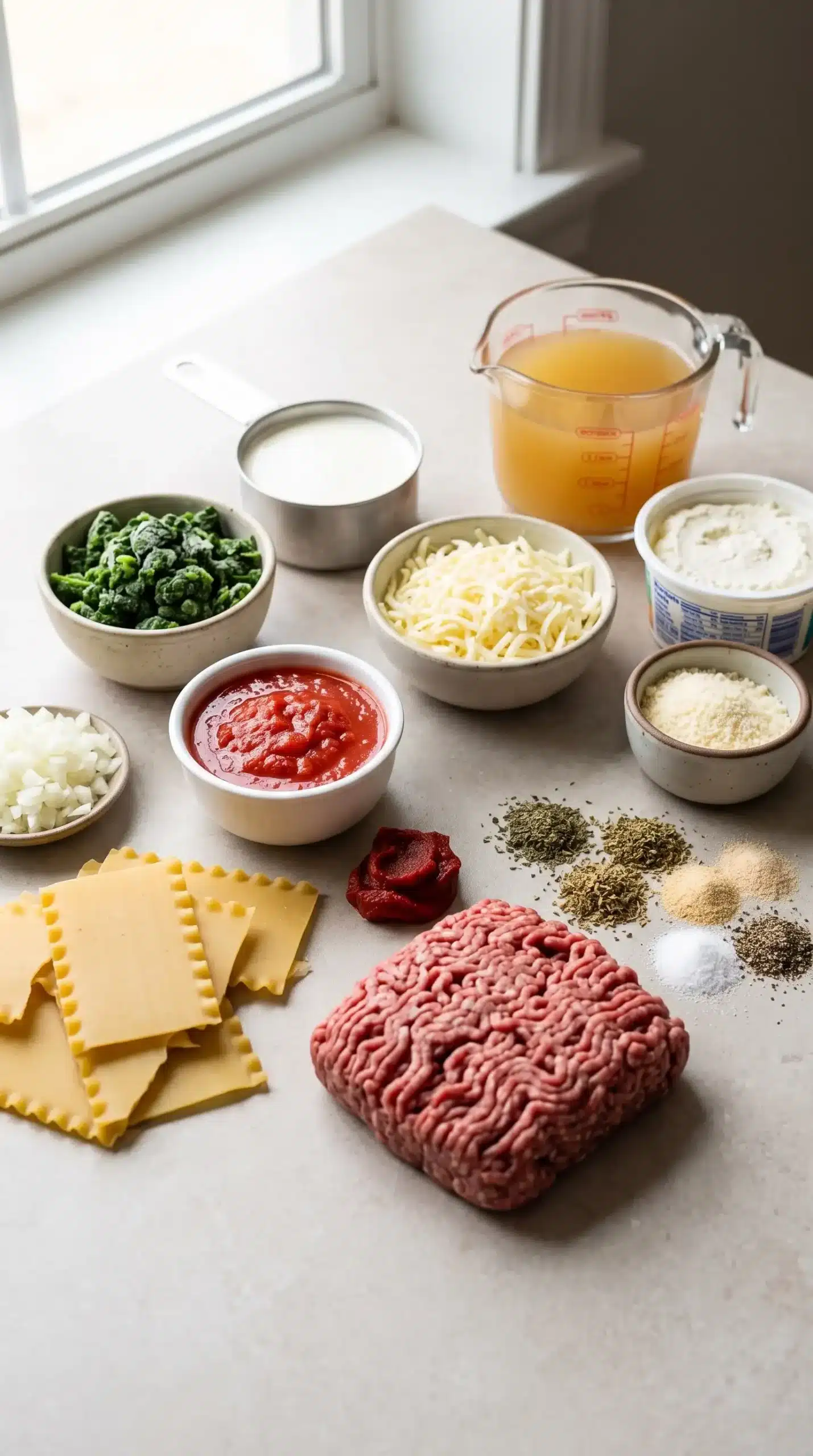
Ground beef forms the meaty foundation, and browning it well matters because the browned pieces become part of the finished soup. The onion and garlic are then cooked with the beef so their flavors blend into the base before the liquid is added.
Broken lasagna noodles are central to the texture. Breaking them into smaller pieces makes them easier to eat with a spoon and allows them to cook directly in the soup. Frozen chopped spinach joins the pot later, while heavy cream is stirred in near the end to give the broth a creamier character.
- Tomato base: Crushed tomatoes and tomato paste provide the concentrated tomato character.
- Cooking liquid: Chicken broth and water give the noodles room to soften while forming the soup.
- Cheese finish: Mozzarella, ricotta, and optional Parmesan create the lasagna-style topping.
Why Broken Lasagna Noodles Change the Soup
Lasagna noodles do more than provide pasta flavor. Once broken into pieces and simmered in the tomato broth, they make the dish feel closer to a bowl of lasagna while keeping the preparation in one pot; broken lasagna noodles are especially useful here because their smaller pieces are easier to eat with a spoon.
Keeping an eye on the noodles during their simmer is important because their texture determines how substantial each spoonful feels. The supplied method uses a covered simmer until the noodles soften, giving them time to absorb the seasoned liquid.
If the soup becomes thicker after refrigeration, a small amount of additional broth or water can loosen it during reheating. That adjustment is particularly useful because the noodles continue to affect the consistency after cooking.
Building Flavor Before the Broth Goes In
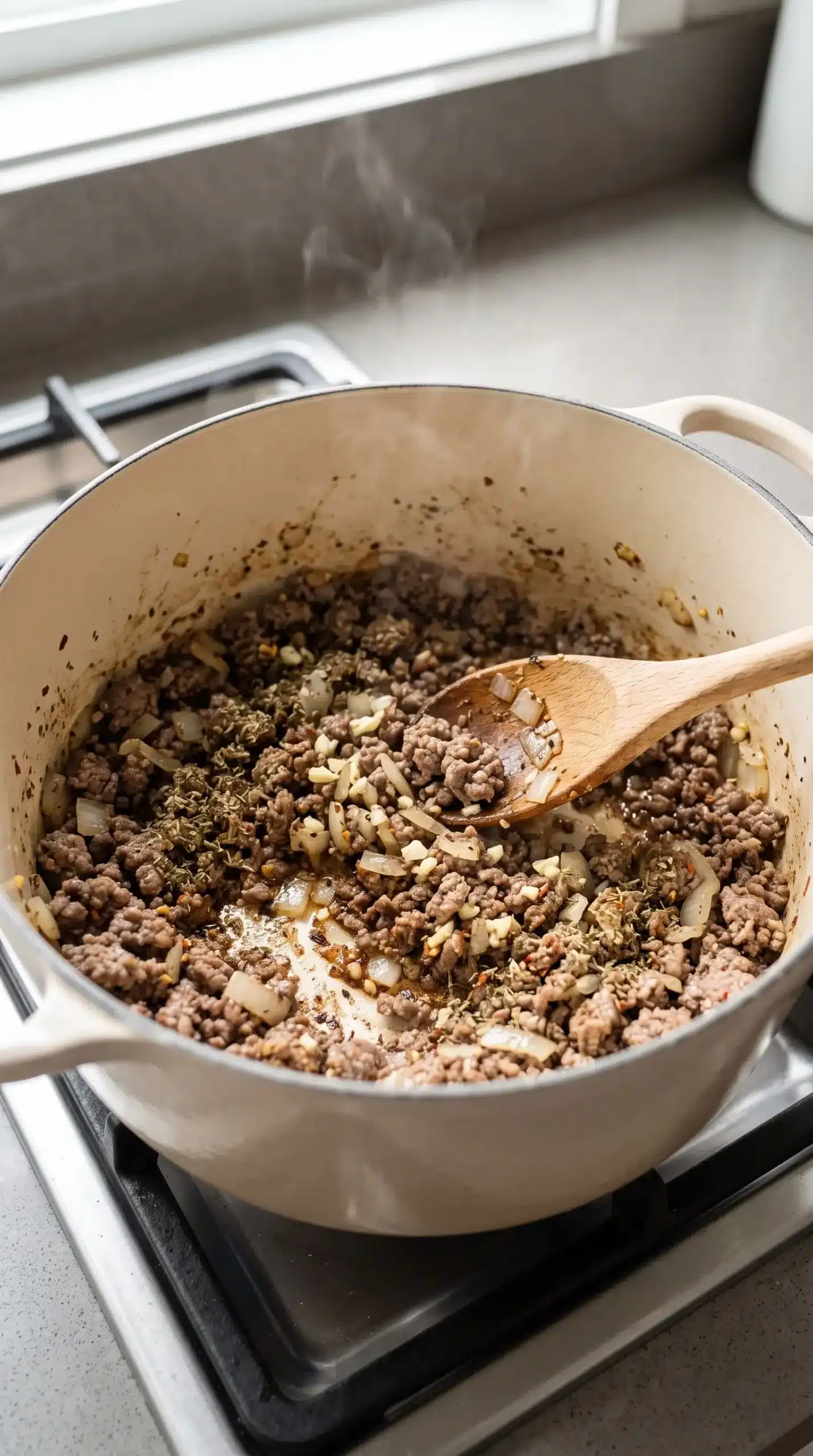
The beef should be well-browned before the excess grease is drained. Allowing some crisp browned bits to develop gives the meat a more developed savory character, while removing excess grease keeps the soup from becoming unnecessarily heavy.
Once the beef is ready, garlic, onion, and the dry seasonings are cooked together over medium-low heat. The onion should become soft, and the garlic needs frequent stirring so it does not burn.
That short seasoning stage gives the aromatics time to mingle with the beef before the crushed tomatoes, broth, water, and tomato paste arrive. For an easy lasagna soup recipe, this small amount of attention at the beginning helps establish the flavor of the entire pot.
Getting the Lasagna Soup Consistency Right
Liquid control is especially important once the noodles are added. The crushed tomatoes, chicken broth, and water create the cooking environment for the pasta, while the noodles gradually absorb some of that liquid as they soften.
| Stage | What to watch | Useful action |
|---|---|---|
| After browning | Excess grease remains | Drain the extra grease before adding the aromatics |
| During the noodle simmer | Noodles are still firm | Keep the soup covered and simmer until softened |
| After refrigeration | Soup becomes thicker | Add a little broth or water while reheating |
The soup should remain loose enough to serve by the spoon. If it thickens in the refrigerator, restoring some liquid during reheating helps bring back a more soup-like consistency without changing the basic flavor.
When to Add Spinach and Cream
Frozen chopped spinach and heavy cream belong near the end of the cooking process. Adding them after the noodles have softened prevents the finishing ingredients from being subjected to the entire simmering period.
The spinach is stirred into the hot soup and cooked on low heat for another five minutes. Heavy cream is incorporated at the same point, giving the broth a richer, creamier finish while the flavors have a chance to combine.
Lasagna Soup Mistakes That Can Affect the Finish
One common problem is letting the garlic burn while the onion is softening. Because minced garlic is small and cooks quickly, frequent stirring during the medium-low stage helps protect its flavor.
Another issue is allowing the soup to become too thick after the noodles cook. The pasta absorbs liquid as it softens, and the consistency can become even thicker once leftovers are chilled. Adding a little broth or water during reheating addresses that change.
Skipping the browning stage also changes the character of the ground beef lasagna soup. Well-browned beef provides a deeper savory foundation, while draining the excess grease afterward keeps that foundation from becoming overly greasy.
For a precise cooking endpoint, the ground beef should reach a 160°F (71°C) internal temperature before it is considered fully cooked.
How the Cheese Finish Completes Lasagna Soup
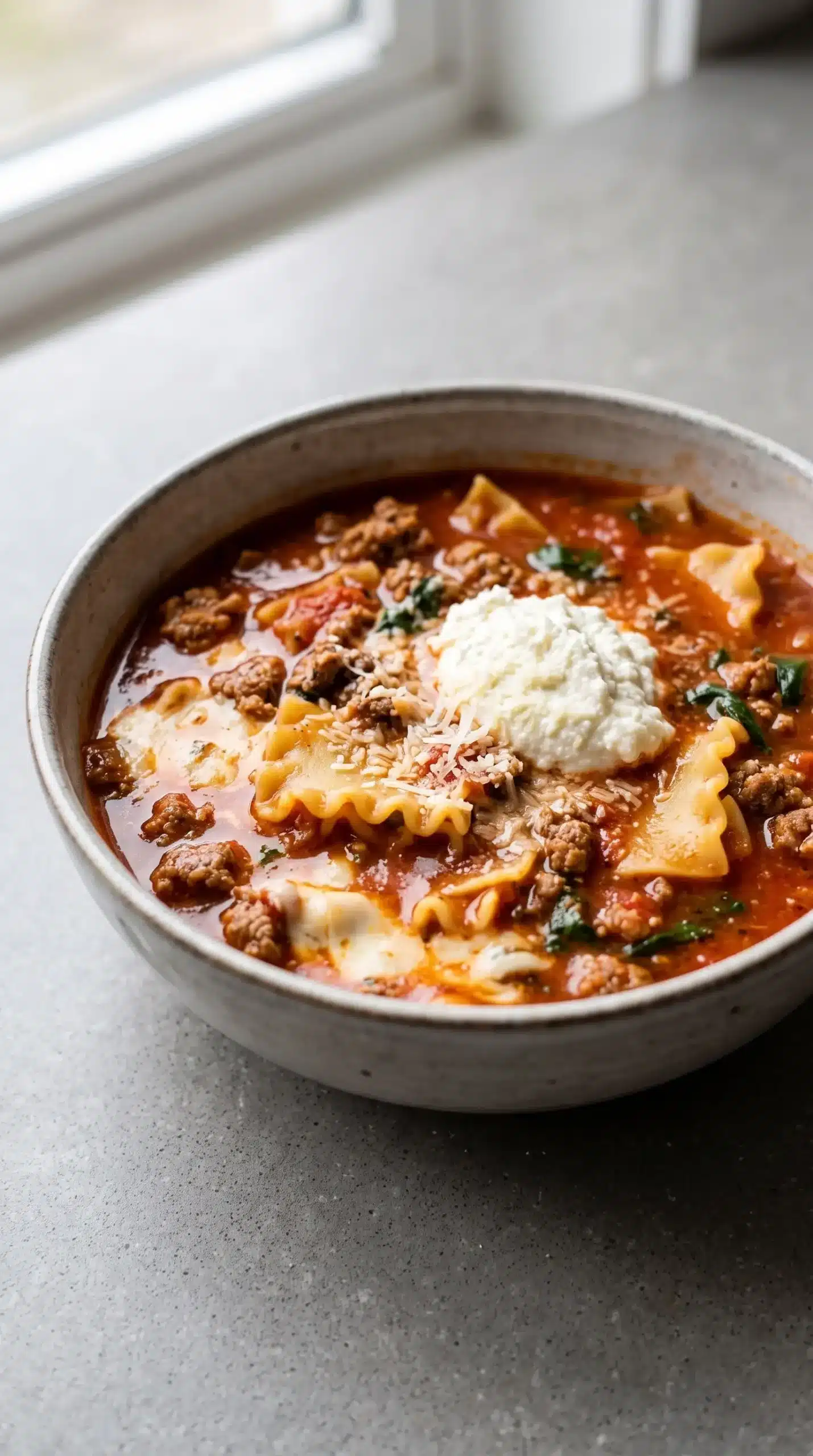
Serving technique makes a noticeable difference in the finished bowl. A slice of mozzarella is placed at the bottom of the serving bowl before the hot soup is ladled over it, allowing the heat of the soup to melt the cheese.
Ricotta is added afterward as a dollop, creating a creamy contrast against the tomato-based soup and tender noodles. Parmesan remains optional, so it can be used according to preference without changing the core preparation.
Serving Ideas for a Complete Bowl of Lasagna Soup
Hot lasagna soup can stand on its own as a filling meal because it combines beef, noodles, spinach, broth, and several cheeses in one serving. The mozzarella-and-ricotta finish makes the bowl feel especially substantial.
Crusty bread works well alongside the soup when an additional accompaniment is wanted. A side salad provides another simple pairing and keeps the meal centered on the warm soup rather than adding another heavy dish.
Simple Ways to Adjust the Lasagna Soup
The seasoning can be adjusted to suit different preferences. Additional herbs can be used, and red pepper flakes can introduce more heat when a spicier bowl is desired. The supplied recipe begins with a mild flavor profile rather than a strongly spicy one.
Ricotta is not essential to keeping the soup together. Cottage cheese can replace it when ricotta is unavailable, providing a practical alternative for the creamy topping.
Whole wheat lasagna noodles can also be used in place of regular lasagna noodles. They should still be broken into smaller pieces before being added to the soup so they can be eaten easily with a spoon.
Protein and Vegetable Variations for Lasagna Soup
Ground beef is the stated protein, but turkey or chicken can be used when a different meat is preferred. The overall concept remains the same: brown the chosen protein, build the seasoned tomato base, and cook the noodles in the resulting soup.
A meat-free variation can omit the beef and include additional vegetables such as zucchini or bell peppers. Those vegetables change the composition of the bowl while keeping the tomato, noodle, spinach, and cheese elements central to the dish.
Storing and Reheating Leftover Lasagna Soup
Leftovers should be transferred to an airtight container and refrigerated for up to three days. Because the noodles continue to absorb liquid while chilled, the consistency may be noticeably thicker when the soup is served again.
Reheating can be done gently on the stove over low heat or in the microwave until the soup is heated through. A little broth or water can be stirred in if the refrigerated soup has become too thick for the desired serving consistency.
Why the Cooking Sequence Matters for One Pot Lasagna Soup
Browned beef, softened aromatics, seasoned tomato broth, tender noodles, spinach, cream, and melted cheese each have a specific place in the process. Keeping those stages distinct prevents the ingredients from being exposed to the wrong cooking conditions.
The most important control points are the browned beef, gently cooked garlic and onion, softened noodles, and late addition of spinach and cream. Once those stages are handled carefully, the hot soup can do the work of melting the mozzarella as it is served.
Lasagna Soup Comes Together Through Texture and Timing
Tender noodles, browned beef, a tomato-rich broth, softened spinach, and creamy finishing ingredients give lasagna soup its distinctive character. The strongest result comes from paying attention to the texture of the noodles and the consistency of the broth, especially because both continue to change after cooking.
Hot soup poured over mozzarella creates the final textural contrast, while ricotta and optional Parmesan complete the lasagna-inspired finish. That combination keeps the dish recognizable as lasagna while preserving the convenience of a one-pot soup.
Lasagna Soup Questions About Noodles, Storage, and Heat
Can lasagna soup be made with whole wheat noodles?
Yes. Whole wheat lasagna noodles can replace regular lasagna noodles. Break them into smaller pieces before adding them so they remain practical to eat in the soup.
Why does lasagna soup become thicker in the refrigerator?
The noodles continue to absorb liquid after cooking, which can make refrigerated leftovers thicker. Stir in a little broth or water while reheating to loosen the soup to the desired consistency.
Can cottage cheese replace ricotta in lasagna soup?
Yes. Cottage cheese can be used when ricotta is unavailable. It serves as the creamy cheese topping while allowing the rest of the soup preparation to remain unchanged.
How can I make lasagna soup spicier?
Red pepper flakes or hot sauce can be added when more heat is wanted. The base soup is not very spicy, so the amount can be adjusted according to individual preference.
Can lasagna soup be frozen?
Yes. The soup can be frozen for about two to three months. Thaw it in the refrigerator overnight before reheating, then adjust the consistency with a little broth or water if needed.
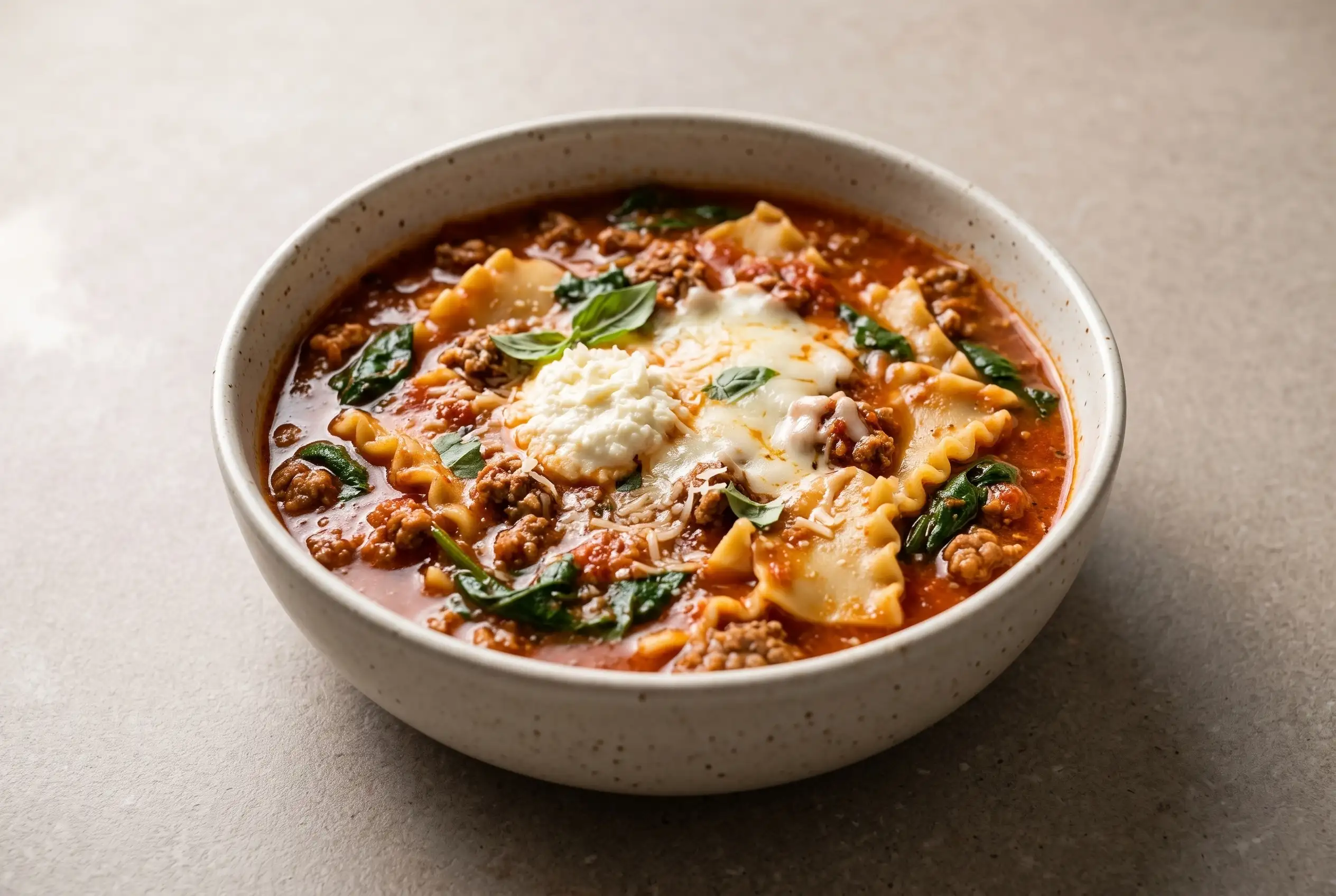
Lasagna Soup with Ground Beef, Spinach, and Mozzarella
Ingredients
Method
- Warm a large pot over medium-high heat. Add the ground beef and cook, breaking it into small pieces with a spoon, until well browned. Drain off excess grease.
- Add the minced garlic, diced onion, garlic powder, onion powder, dried basil, dried oregano, kosher salt, and black pepper. Lower the heat to medium-low and cook for about 5 minutes, stirring frequently, until the onion is softened.
- Pour in the crushed tomatoes, chicken broth, water, and tomato paste. Add the broken lasagna noodles, bring the soup to a boil, then lower the heat. Cover and simmer for 10 minutes, or until the noodles are tender.
- Stir in the frozen spinach and heavy cream. Leave the pot uncovered and cook over low heat for 5 minutes. Taste and adjust the salt and black pepper as needed.
- Place a mozzarella slice in the bottom of each serving bowl. Ladle the hot soup over the cheese, then finish each bowl with ricotta and optional Parmesan.