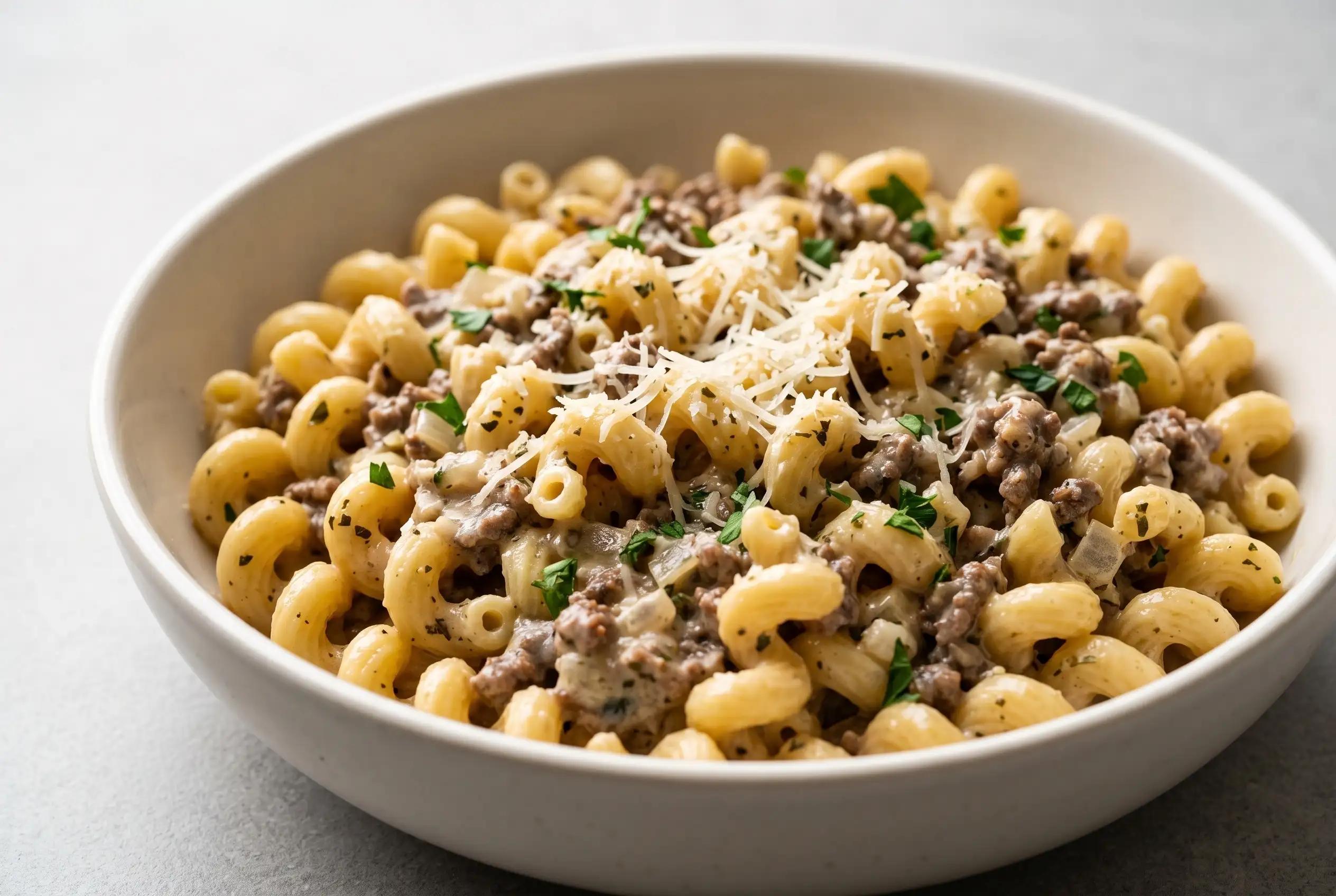
Homemade Hamburger Helper with Ground Beef and Cheddar
Homemade Hamburger Helper brings ground beef, elbow macaroni, cheddar cheese, onion, and garlic together in one comforting skillet. The combination is simple, filling, and practical for a family meal, while the homemade approach makes it easier to choose the ingredients and flavors that suit your table.
An easy homemade hamburger helper can also be adapted without losing its basic character. Lean ground beef works well when you want a lighter option, vegetables can be added for more variety, and different cheeses or seasonings can shift the flavor. The key is keeping the skillet mixture balanced so the pasta cooks properly and the cheese finishes the dish with a smooth, savory finish.
What Makes Homemade Hamburger Helper Work
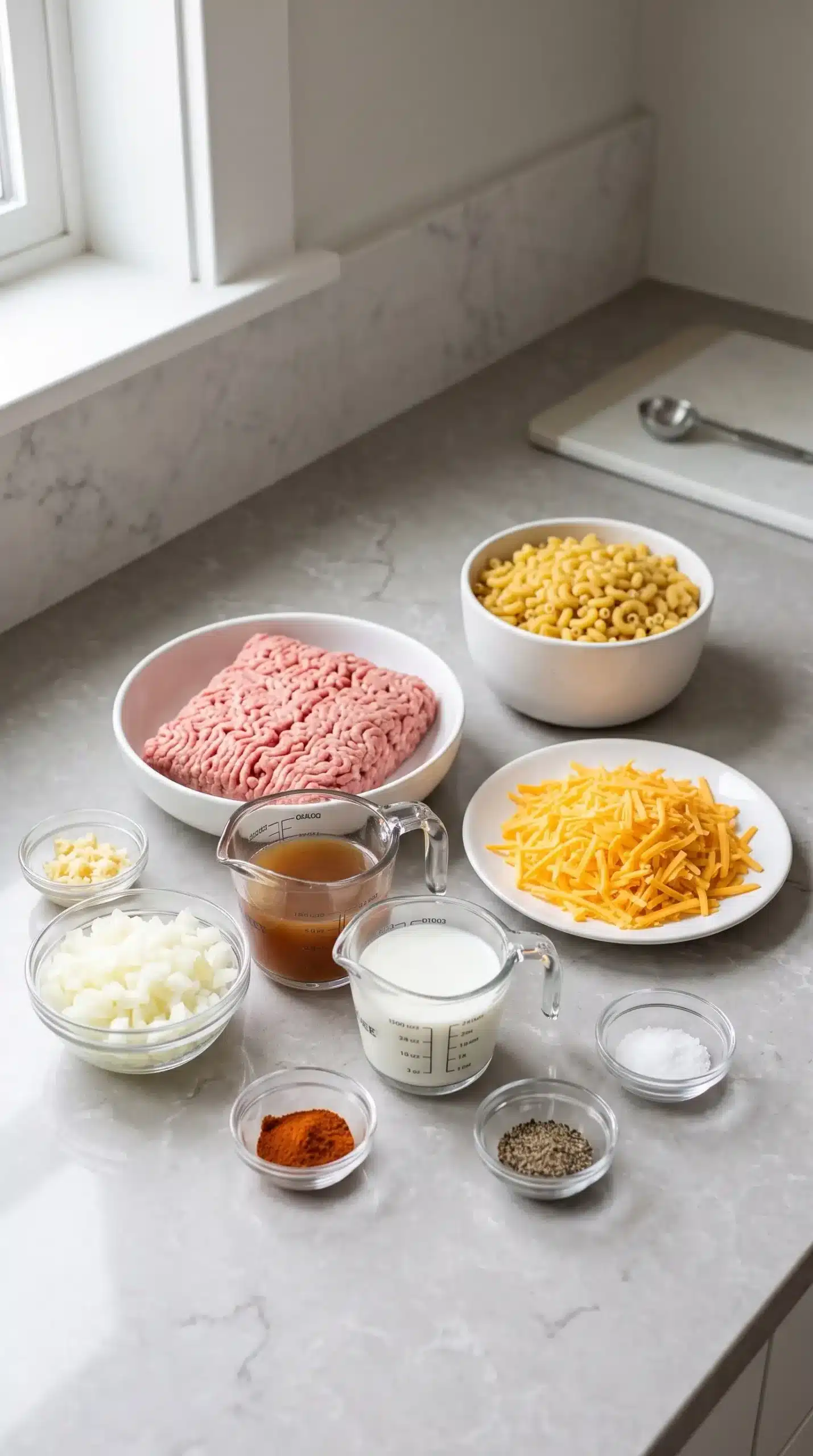
Ground beef supplies the hearty base, while elbow macaroni gives the skillet its familiar pasta texture. Beef broth and milk create the liquid needed for cooking the macaroni, and cheddar cheese brings the ingredients together after the pasta becomes tender.
Onion and garlic build the savory foundation before the liquids and pasta enter the skillet. Paprika adds seasoning alongside salt and pepper, giving the finished dish more character without requiring a long ingredient list.
Cooking everything in one skillet keeps the process straightforward. Once the beef is browned and the aromatics have softened, the pasta cooks directly in the broth-and-milk mixture, reducing the need for separate pots. A large skillet with enough room for the macaroni and liquid is useful for keeping the pasta submerged and easy to stir, as shown in one-pot beef pasta with garlic butter.
Cheddar, Broth, and Milk Shape the Skillet
Cheddar is especially important at the finishing stage because it is stirred into the hot pasta mixture after the skillet comes off the heat. This timing helps avoid prolonged high heat, which can cause cheese to separate and become greasy, while still allowing it to melt smoothly into the dish.
Beef broth provides a savory liquid base that complements the ground beef. Milk contributes richness and helps create the creamy character associated with the finished skillet. Together, they give the macaroni the liquid environment it needs while cooking.
Elbow macaroni is a practical choice because its small shape fits easily into the skillet and cooks directly in the liquid. When using another pasta shape, choose one that can reasonably cook in the same style and pay attention to tenderness instead of relying only on the stated cooking window.
Keep the One-Skillet Texture Under Control
The liquid level matters because the macaroni cooks directly in the beef broth and milk. After bringing the mixture to a boil, lowering the heat and covering the skillet helps the pasta cook while retaining the moisture needed for the dish.
Occasional stirring is useful during the covered cooking period. It helps distribute the pasta through the liquid and lets you check its progress without leaving the skillet unattended for the entire cooking time.
Macaroni should be tender before the cheddar goes in. If the pasta is still firm, it needs more cooking time; adding the cheese too early makes it harder to judge the pasta independently and can interfere with the desired finishing texture.
Once the skillet comes off the heat, stir in the shredded cheddar until melted. Serving promptly keeps the dish at its intended warm, creamy consistency.
How the Pasta Choice Changes the Meal
Elbow macaroni is the supplied pasta for the classic version, but the recipe can accommodate other pasta shapes. Whole grain pasta is another option when you want more fiber and nutrients, although its cooking time may differ.
| Pasta choice | Best reason to choose it | Important adjustment |
|---|---|---|
| Elbow macaroni | Matches the original skillet preparation | Cook until tender in the broth and milk |
| Whole grain pasta | Adds more fiber and nutrients | Adjust cooking time as needed |
| Different pasta shape | Lets you vary the presentation and texture | Watch tenderness during cooking |
Changing the pasta does not require changing the character of the meal. The important consideration is how the selected shape behaves while cooking directly in the liquid, since the skillet does not use a separate pasta-cooking stage.
Ground Beef Browning Sets Up the Flavor
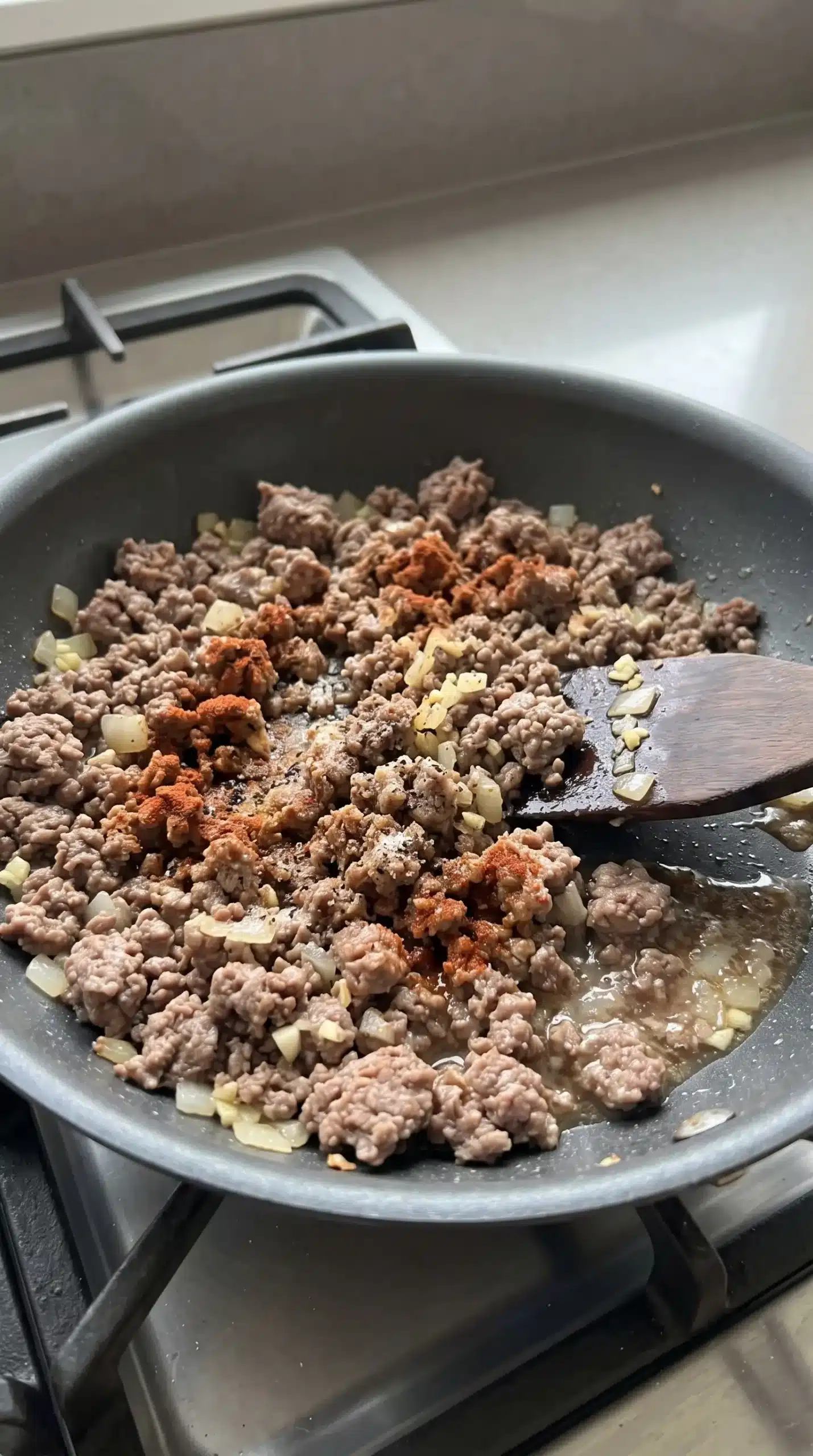
Start with the ground beef in a large skillet over medium heat. Browning gives the meat a cooked, savory foundation before the onion, garlic, paprika, broth, milk, and macaroni become part of the mixture.
Excess fat can be drained after the beef has browned. Using lean ground beef is also an available option for a lighter version, while still keeping the main protein source intact.
After the beef is ready, the diced onion and minced garlic are cooked until softened. Their purpose at this point is practical as well as flavorful: softening them before the liquid is added allows the aromatics to become integrated into the skillet rather than remaining raw in the finished meal.
Seasoning Can Stay Simple or Shift Direction
Paprika, salt, and pepper provide the core seasoning for the supplied version. The quantities are deliberately straightforward, making it easy to adjust the flavor according to preference without changing the cooking method.
- More paprika: Increase the paprika when you want a stronger seasoned character.
- Different cheese: Swap the cheddar for a favorite cheese if you want to change the finished flavor.
- More vegetables: Add vegetables such as peas or bell peppers for additional variety.
Red pepper flakes or diced jalapeños can also be used when a spicier skillet is desired. Add them while the other ingredients are cooking so their flavor becomes part of the overall dish.
Vegetables Fit Naturally Into the Skillet
Onion is already part of the base, but the vegetable options can extend beyond it. Peas, bell peppers, spinach, broccoli, and carrots are all suggested additions, giving cooks a way to make the skillet more colorful and varied.
Vegetables that need cooking should be incorporated alongside the onion and garlic when appropriate. This keeps the added produce connected to the existing skillet process instead of creating an entirely separate preparation.
Because the macaroni depends on the skillet liquid for cooking, additions should not distract from monitoring the pasta. The useful endpoint remains tender macaroni followed by melted cheese stirred in after the heat is removed.
Common Homemade Hamburger Helper Mistakes to Avoid
One common problem is failing to drain excess fat after browning the beef. Removing it before adding the remaining ingredients keeps the skillet from carrying unnecessary grease into the broth, milk, and cheese mixture.
Another issue is cooking the pasta without enough attention during the covered stage. The macaroni should be stirred occasionally and checked for tenderness. Leaving it completely unchecked can make it harder to identify when it has reached the right texture.
Adding cheddar before the pasta is tender is also a poor stopping point. The cheese belongs at the end, after the skillet comes off the heat, so the cook can finish the pasta first and then concentrate on melting the cheese smoothly.
Three Easy Ways to Change the Ground Beef Version
The ground beef base can be changed when you want a different protein. Turkey or chicken can replace the beef, providing a simple variation while retaining the skillet-style format.
For a meat-free direction, black beans or lentils can replace the meat. The resulting dish changes substantially in character, but the substitution keeps the concept centered on a filling combination of a protein-rich ingredient, pasta, liquid, seasoning, and cheese.
| Variation | What changes | What stays useful |
|---|---|---|
| Turkey version | Ground beef is replaced with turkey | Skillet preparation and pasta format |
| Chicken version | Ground beef is replaced with chicken | Same general one-skillet concept |
| Black bean version | Meat is replaced with black beans | Filling pasta-and-cheese combination |
| Lentil version | Meat is replaced with lentils | Meaty-style skillet structure without beef |
These variations are best viewed as flexible interpretations of the same meal idea. The central preparation remains a warm skillet built around pasta and a savory mixture.
Serving Homemade Hamburger Helper Without Overcomplicating It
Serve Homemade Hamburger Helper warm, straight from the skillet. The dish already combines meat, pasta, cheese, and aromatics, so the easiest accompaniments are simple sides that add freshness or another vegetable component.
- Fresh side: Pair the skillet with a side salad.
- Vegetable side: Serve steamed vegetables alongside the pasta.
- Bread option: Add bread or garlic bread for a familiar, hearty accompaniment.
Leftovers Stay Useful Beyond the First Meal
Allow leftovers to cool completely before transferring them to an airtight container. Refrigerated leftovers can be kept for about 3–4 days, making the skillet practical for another meal later in the week.
Freezing is another option, with leftovers suitable for storage for up to 2–3 months. When ready to eat, warm the food in a skillet or microwave until hot.
Because the dish contains cooked pasta and cheese, reheating should be done gently enough to warm the portion thoroughly without unnecessarily overcooking the macaroni. A skillet gives you an easy way to watch the texture as the food warms.
Protein and Carbohydrates Give the Skillet Its Substance
Ground beef and cheddar make Homemade Hamburger Helper a source of protein, while the pasta supplies carbohydrates. The combination helps explain why a relatively simple skillet can feel substantial and filling.
Onion and garlic contribute additional vitamins and minerals, while homemade preparation gives you more control over the ingredients used. Lean ground beef, added vegetables, different pasta, and cheese choices can all be used to tailor the meal to personal preferences.
The nutritional profile can change when substitutions are made, so variations should be understood as ways to adjust the dish rather than as identical nutritional equivalents. The underlying meal remains flexible enough to accommodate different ingredients while keeping its basic skillet identity.
Why Homemade Hamburger Helper Belongs in a Busy Dinner Rotation
A short ingredient list and one-skillet preparation make the dish especially approachable. Ground beef, macaroni, broth, milk, cheddar, onion, garlic, and a few seasonings create a complete-feeling meal without a complicated cooking process.
Flexibility adds another practical advantage. A cook can keep the original elbow macaroni and cheddar combination, choose lean beef, add vegetables, switch the cheese, or use another protein according to what suits the meal.
The result is a dependable format: brown the meat, soften the aromatics, season, cook the macaroni in the broth-and-milk mixture, and finish with melted cheese. Keeping those control points in mind makes the dish easier to execute consistently.
Homemade Hamburger Helper Gets Its Best Texture at the Finish

Tender macaroni and melted cheddar define the most important finishing point of Homemade Hamburger Helper. The pasta needs enough time in the covered broth-and-milk mixture to become tender, while the cheese belongs after the heat is removed so it can melt into the warm skillet.
That small distinction brings the whole preparation together. Once the beef is browned, the aromatics softened, and the macaroni cooked to tenderness, the cheddar can finish the skillet without obscuring the texture that the cooking process worked to achieve.
Questions About Homemade Hamburger Helper and Leftovers
Can whole grain pasta be used in Homemade Hamburger Helper?
Yes. Whole grain pasta can be substituted for the elbow macaroni when you want more fiber and nutrients. Because cooking times can vary, check the pasta as it cooks and adjust the cooking time as needed.
What can make the skillet spicier?
Red pepper flakes or diced jalapeños can add heat. They can be incorporated while the other ingredients are cooking, allowing the added spice to become part of the skillet’s overall flavor.
Can vegetables be added to ground beef hamburger helper?
Yes. Peas, bell peppers, spinach, broccoli, and carrots are suitable additions. Vegetables that need cooking can be worked into the skillet with the onion and garlic.
Can another meat replace ground beef?
Turkey or chicken can be used in place of ground beef. The substitution changes the protein while preserving the basic idea of a warm skillet with pasta and the other supporting ingredients.
How long can leftovers be frozen?
Leftovers can be frozen for up to 2–3 months. Store them appropriately after cooling, then reheat the portion in a skillet or microwave until hot.
What should be done if the macaroni is not tender?
Continue cooking and check it periodically until the pasta reaches tenderness. The cheddar should be added only after the pasta is ready and the skillet has been removed from the heat.
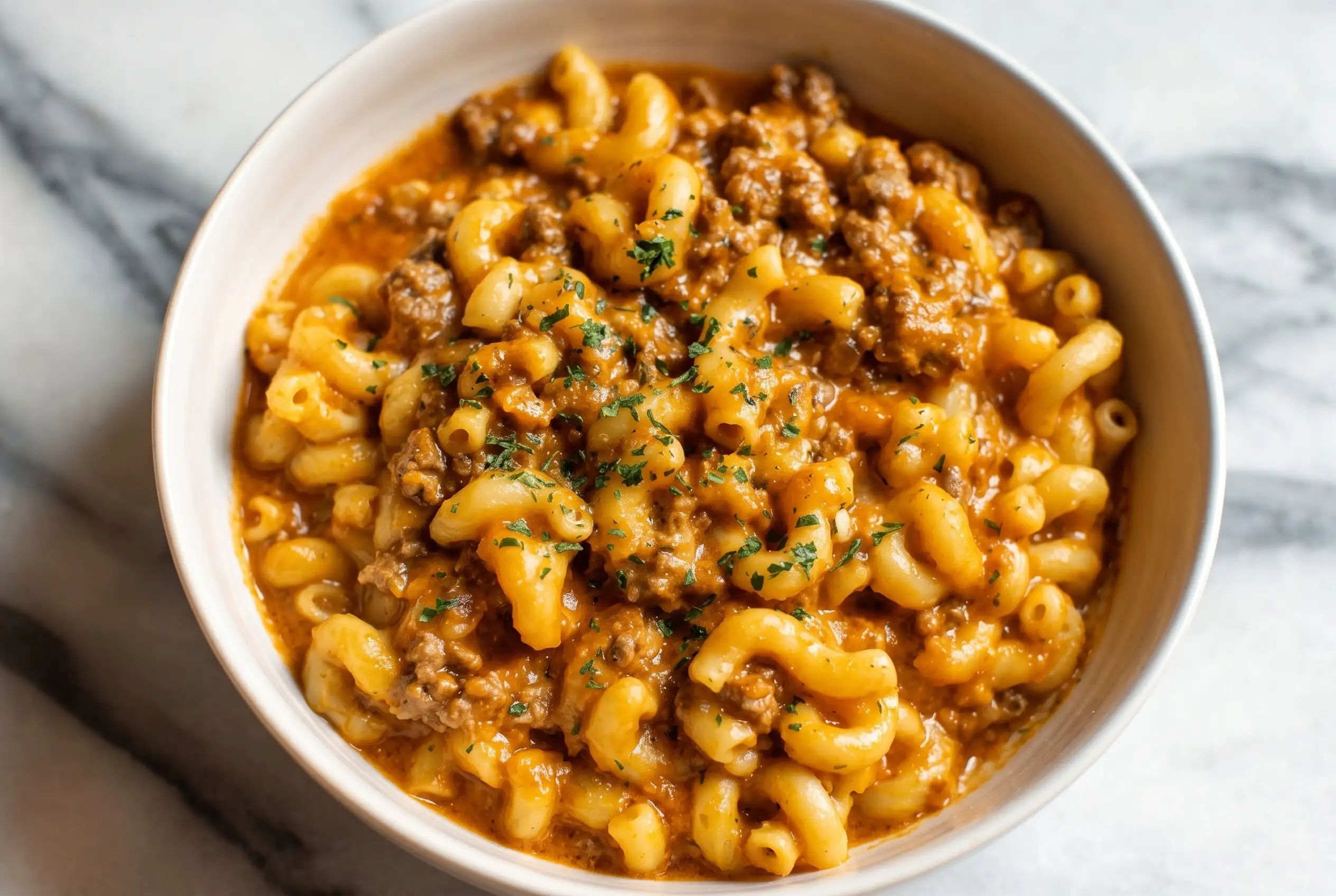
Homemade Hamburger Helper with Ground Beef and Cheddar
Ingredients
Method
- Cook the ground beef in a large skillet over medium heat until browned. Drain any excess fat.
- Add the diced onion and minced garlic to the skillet. Cook until the onion has softened.
- Season the beef mixture with paprika, salt, and black pepper, stirring to distribute the seasonings.
- Add the beef broth and milk, then stir in the elbow macaroni until evenly combined.
- Bring the mixture to a boil, then lower the heat, cover the skillet, and cook for 10–12 minutes. Stir occasionally and continue until the macaroni is tender.
- Take the skillet off the heat and mix in the shredded cheddar cheese until it has melted throughout.
- Serve the hamburger helper warm.