Thai Coconut Red Lentil Soup with Ginger and Garlic
Thai Coconut Red Lentil Soup brings together red lentils, creamy coconut milk, aromatic ginger and garlic, red curry paste, turmeric, and a bright finish of lime juice. The result is a smooth, comforting bowl with gentle spice and a rich texture that can work as either a main dish or a side.
The flavor builds from a simple base of onion, garlic, and ginger before the curry paste and turmeric join the pot. Red lentils then simmer with vegetable broth and coconut milk until tender, creating a naturally hearty soup without requiring a complicated cooking process.
For a cozy meal, Thai Coconut Red Lentil Soup can be served warm with steamed rice or a fresh salad. Fresh cilantro adds a light herbal finish, while lime juice keeps the creamy coconut base from tasting too heavy.
Creamy texture comes from tender red lentils
Red lentils become soft as they simmer in the broth and coconut milk, making them especially useful for a soup that can be blended into a creamy consistency. An immersion blender allows the cooked mixture to become smooth, while leaving it unblended gives the bowl a more textured appearance. Either approach keeps the core combination of lentils, coconut milk, curry paste, aromatics, and spices intact.
Red lentils are especially well suited to this soup because red lentils cook quickly and soften readily during cooking, helping them thicken the soup as they become tender.
Red curry paste, ginger, and turmeric set the flavor

The aromatic foundation starts with diced onion cooked in olive oil until translucent. Garlic and fresh ginger follow, giving the pot a fragrant base before the stronger seasonings are introduced.
Red curry paste supplies the characteristic spicy element, while turmeric contributes its earthy character and warm color. The amount of curry paste can be adjusted when a milder or more pronounced level of heat is preferred.
Because the curry paste is combined with the softened onion, garlic, and ginger before the liquid is added, its flavor becomes part of the soup instead of sitting separately in the finished bowl. That early combination helps create a more integrated flavor throughout the Thai coconut red lentil soup.
Coconut milk and broth create the soup base
Four cups of vegetable broth provide the liquid foundation, while a 14-ounce can of coconut milk brings creaminess and richness. Keeping both liquids in the pot with the lentils allows the legumes to cook while absorbing the surrounding flavors. A curry soup with coconut milk and carrots uses the same creamy coconut ingredient in a different soup setting, while this red lentil coconut soup gets its body from the softened lentils without requiring a separate thickener.
Lentils determine the finished consistency
One cup of uncooked red lentils is enough to give the soup substantial body as they soften. Their condition near the end of simmering is the most useful visual cue for deciding when the soup is ready for the finishing stage.
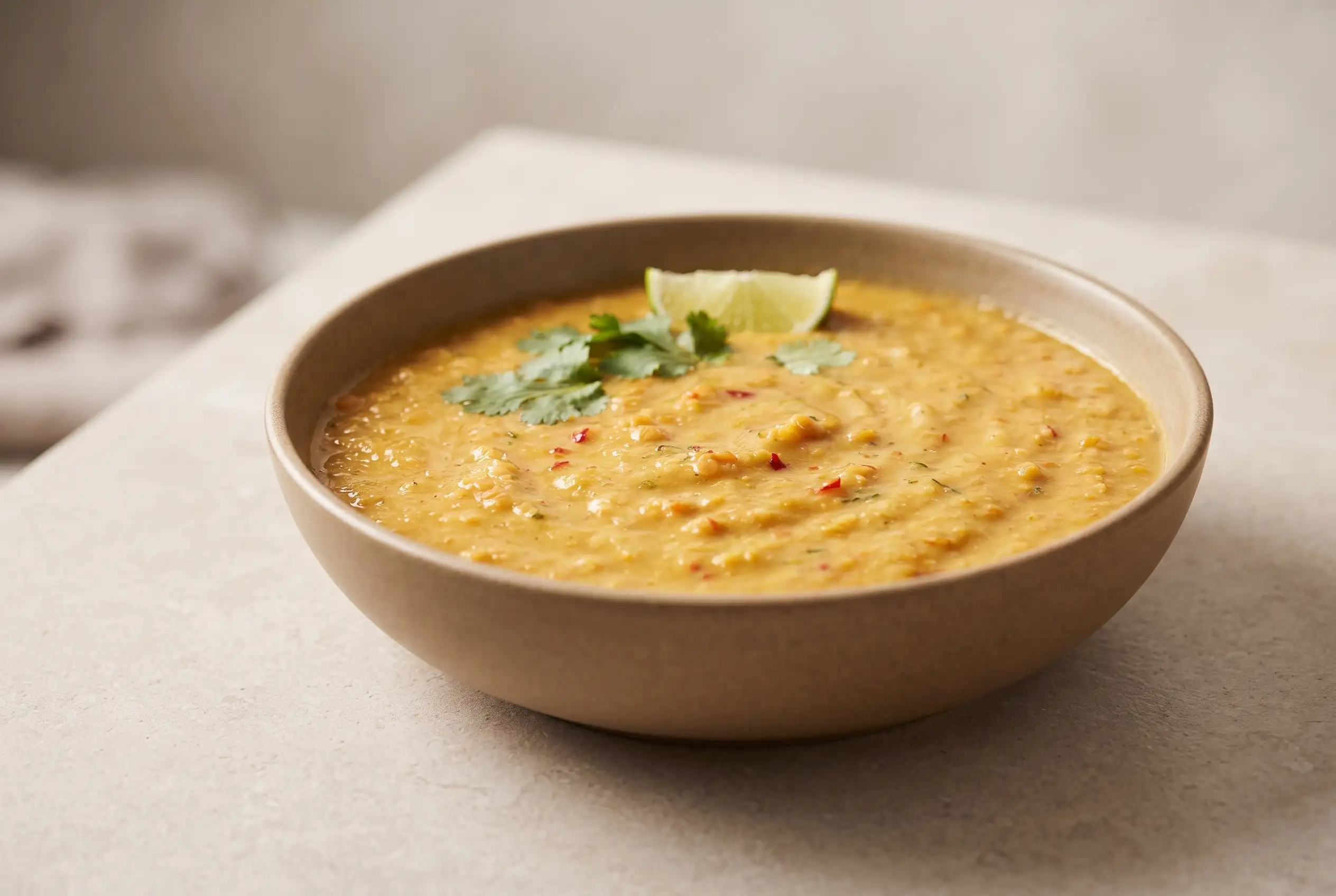
When the lentils are tender, blending becomes an option instead of a requirement. A fully blended bowl emphasizes the creamy quality created by the lentils and coconut milk. Leaving the mixture unblended preserves more visible texture and keeps the soup closer to a rustic, spoonable consistency.
For Thai red lentil soup, texture can also be adjusted through the blending decision without changing the ingredient balance. This makes it easy to serve the same pot in a style that suits the meal, whether a smooth bowl is preferred or some lentil texture is welcome.
Blending choice changes the serving style
An immersion blender is useful after the lentils have finished cooking because it can transform the softened mixture directly in the pot. Blend until the desired smoothness is reached, then add the soy sauce and lime juice. Skipping the blending step produces a less uniform soup while retaining the cooked lentils as part of the visible texture.
Gentle simmer keeps the lentils cooking evenly

Once the vegetable broth and coconut milk are added, the mixture should first reach a boil. Lowering the heat afterward creates the gentler cooking stage needed for the lentils to soften without keeping the soup at a vigorous boil.
A covered pot helps maintain the simmer while the lentils cook. During this stage, the most useful check is tenderness: the soup is ready to move toward its finishing steps when the red lentils are soft.
Cooking control matters particularly because the soup contains both lentils and coconut milk. Keeping the heat lower after the initial boil gives the ingredients time to come together while the lentils reach the texture needed for blending or serving as they are.
Lime and soy sauce finish the bowl
Soy sauce and lime juice are added after cooking, once the pot has been removed from the heat. The soy sauce contributes savory seasoning, while lime juice supplies acidity that brightens the creamy base. Salt can then be adjusted according to taste, and fresh cilantro provides the final garnish.
Avoid these Thai Coconut Red Lentil Soup mistakes
- Overlooking the aromatics: Onion should become translucent before the garlic and ginger are added. Giving those ingredients their brief cooking time helps establish the flavor base before the curry paste and turmeric go in.
- Keeping the heat too high: After the soup reaches a boil, reduce the heat and cover the pot for the simmering stage. A gentle simmer supports even cooking of the red lentils.
- Blending before tenderness: The immersion blender belongs after the lentils are cooked. Check that they are tender first so the finished soup reaches the intended creamy texture.
- Adding the finishing seasonings too early: Soy sauce and lime juice are stirred in after the pot comes off the heat. This keeps the finishing stage separate from the lentil-cooking stage.
Vegetable additions can change the bowl
Spinach or carrots can be added when a vegetable variation is wanted, while diced sweet potatoes can bring a sweeter direction to the soup. The supplied recipe also allows chicken broth in place of vegetable broth for a non-vegan variation, so the choice of broth changes whether the finished soup remains vegan. These additions should complement the existing coconut, curry, and lentil base without overwhelming its texture.
Serving pairings keep the bowl balanced
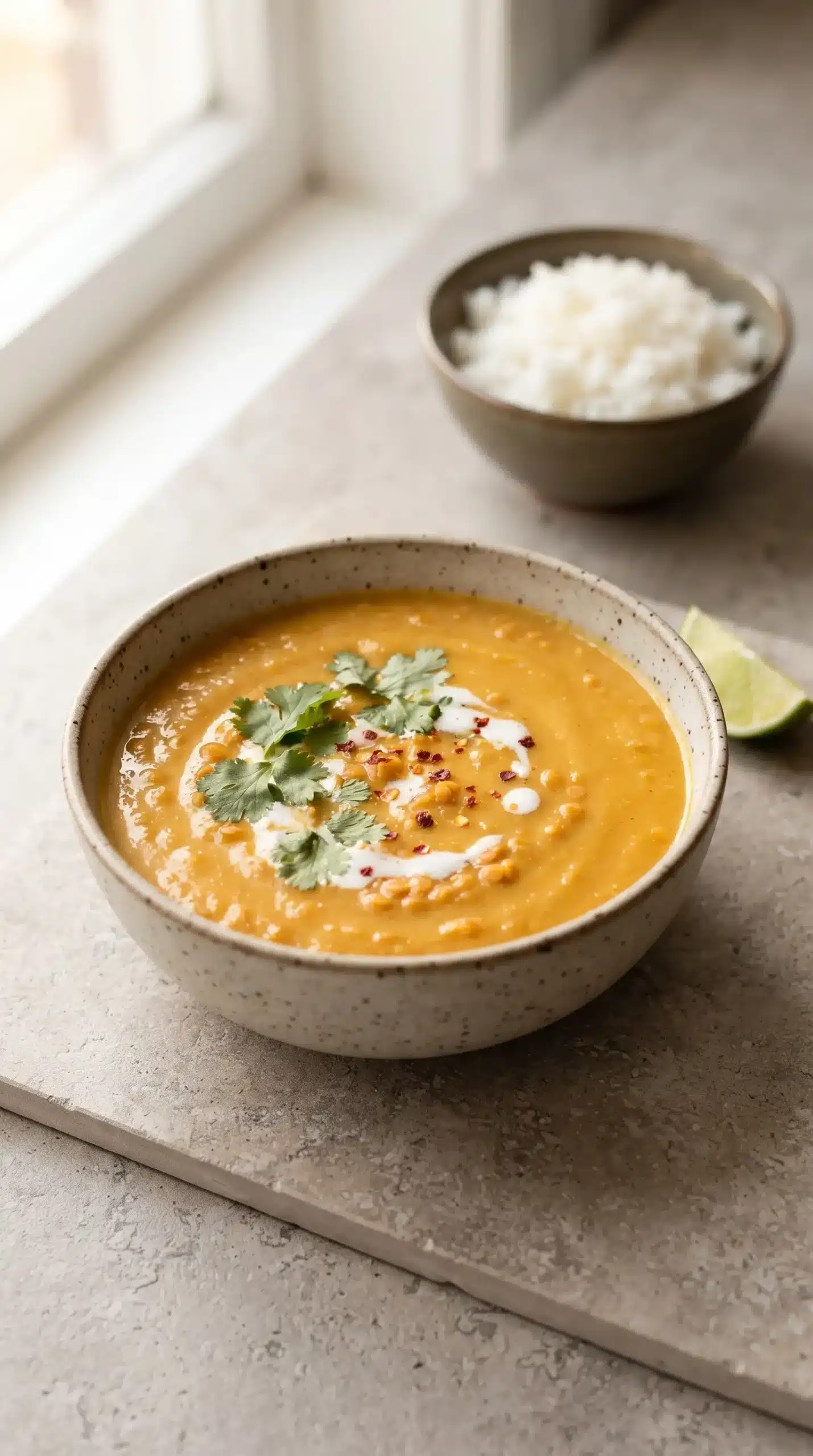
Thai Coconut Red Lentil Soup can stand on its own as a main dish or accompany another meal as a side. Its creamy consistency makes a simple pairing particularly useful when the goal is to turn the soup into a more substantial meal.
Steamed rice provides a straightforward companion and fits naturally with the soup’s Thai-inspired flavor profile. A fresh salad offers a lighter contrast and gives the meal another texture alongside the smooth soup.
At serving time, fresh cilantro adds an herbal note, while an additional squeeze of lime can sharpen the flavors. The combination of creamy coconut milk, tender lentils, mild curry heat, and acidic lime gives a vegan Thai coconut lentil soup a clear contrast between richness and brightness.
Storage and reheating preserve the leftovers
Let leftover soup cool completely before transferring it to an airtight container. Refrigerated portions can be kept for about 3 to 4 days, while freezing extends storage to about 2 to 3 months. Reheat portions on the stove or in the microwave before serving, taking care to warm the soup thoroughly without treating the reheating stage as a new cooking process.
Make-ahead changes the next-day texture
After resting in the refrigerator, the soup may feel different from its freshly served consistency because the lentils continue to define the body of the mixture. The creamy character remains central, but the texture can seem more substantial once chilled.
Reheating on the stove gives you an opportunity to stir the soup thoroughly as it warms. If using a microwave, reheating in an appropriate container and stirring between heating intervals helps distribute the warmth through the thickened mixture.
The flavors can also come together as the soup rests, which makes it practical for preparing ahead of serving. When the soup is ready to eat, fresh cilantro and a little lime can provide a bright finishing touch.
A smooth, balanced bowl depends on the finishing choices
Tender lentils provide the foundation for the creamy body, while coconut milk supplies richness and red curry paste gives the soup its gentle heat. The most important judgment comes near the end: decide whether to blend for a smoother bowl, then use soy sauce, lime juice, and salt to bring the cooked flavors into balance.
That combination keeps Thai Coconut Red Lentil Soup from relying on a complicated technique. The soup’s character comes from controlling the simmer, choosing the preferred texture, and finishing the creamy base with savory seasoning, acidity, and fresh cilantro.
Thai Coconut Red Lentil Soup questions about spice and storage
How spicy is Thai Coconut Red Lentil Soup?
The soup has a mild level of spice from the red curry paste. More red curry paste or chili flakes can be used when a stronger heat level is desired, while reducing the curry paste keeps the flavor gentler.
Can the soup be made without blending?
Yes. Blending is optional, so the cooked soup can be served without using an immersion blender. The main difference is texture: blending produces a smoother consistency, while leaving it intact preserves more of the cooked lentils.
Can vegetables be added to the soup?
Spinach and carrots are suitable additions mentioned for the recipe, while diced sweet potatoes offer another variation with a sweeter flavor. These options allow the soup to include additional vegetables without changing its basic coconut and lentil foundation.
What can be served with the soup?
Steamed rice and a fresh salad are both suitable accompaniments. Rice makes the meal more substantial, while salad provides a fresh contrast to the creamy soup.
How long can leftover Thai Coconut Red Lentil Soup be frozen?
For longer storage, the cooled soup can be placed in an airtight container and frozen for up to 2 to 3 months. Thawing and reheating should be followed by warming the soup on the stove or in the microwave before serving.
Thai Coconut Red Lentil Soup with Ginger and Garlic
Ingredients
Method
- Warm the olive oil in a medium pot over medium heat.
- Add the diced onion and cook for 3–4 minutes, stirring occasionally, until translucent.
- Add the minced garlic and ginger, then cook for 1–2 minutes until fragrant.
- Mix the red curry paste and turmeric powder into the onion mixture until evenly incorporated.
- Add the red lentils, vegetable broth, and coconut milk to the pot and stir well.
- Bring the soup to a boil, then lower the heat, cover the pot, and simmer for about 20 minutes, until the red lentils are tender.
- Take the pot off the heat. If desired, use an immersion blender to process the soup until smooth.
- Stir in the soy sauce and lime juice, then season with salt to taste.
- Serve the soup hot and finish with fresh cilantro.