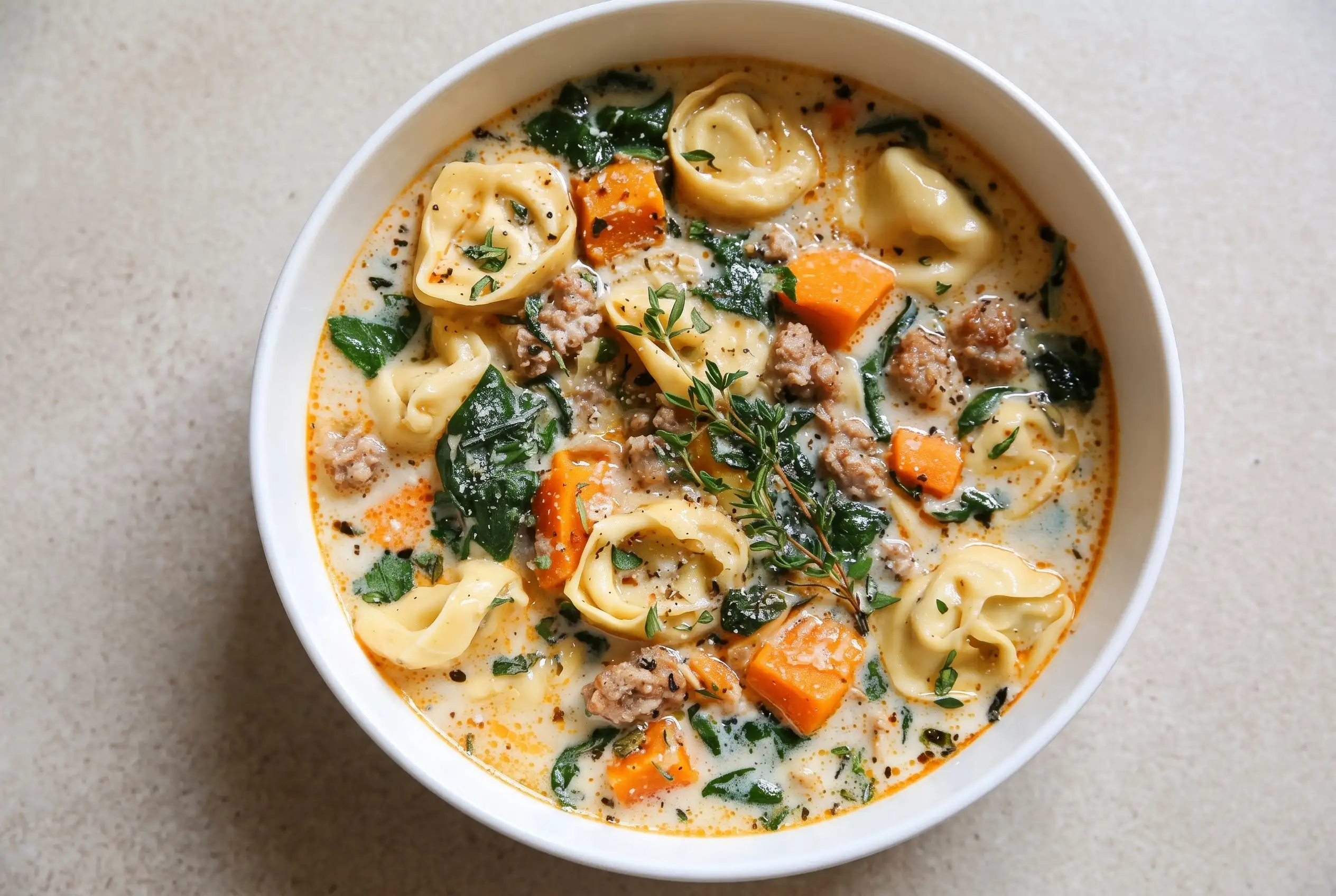
Creamy Tortellini Soup with Spinach and Grated Parmesan
Why Creamy Tortellini Soup Works
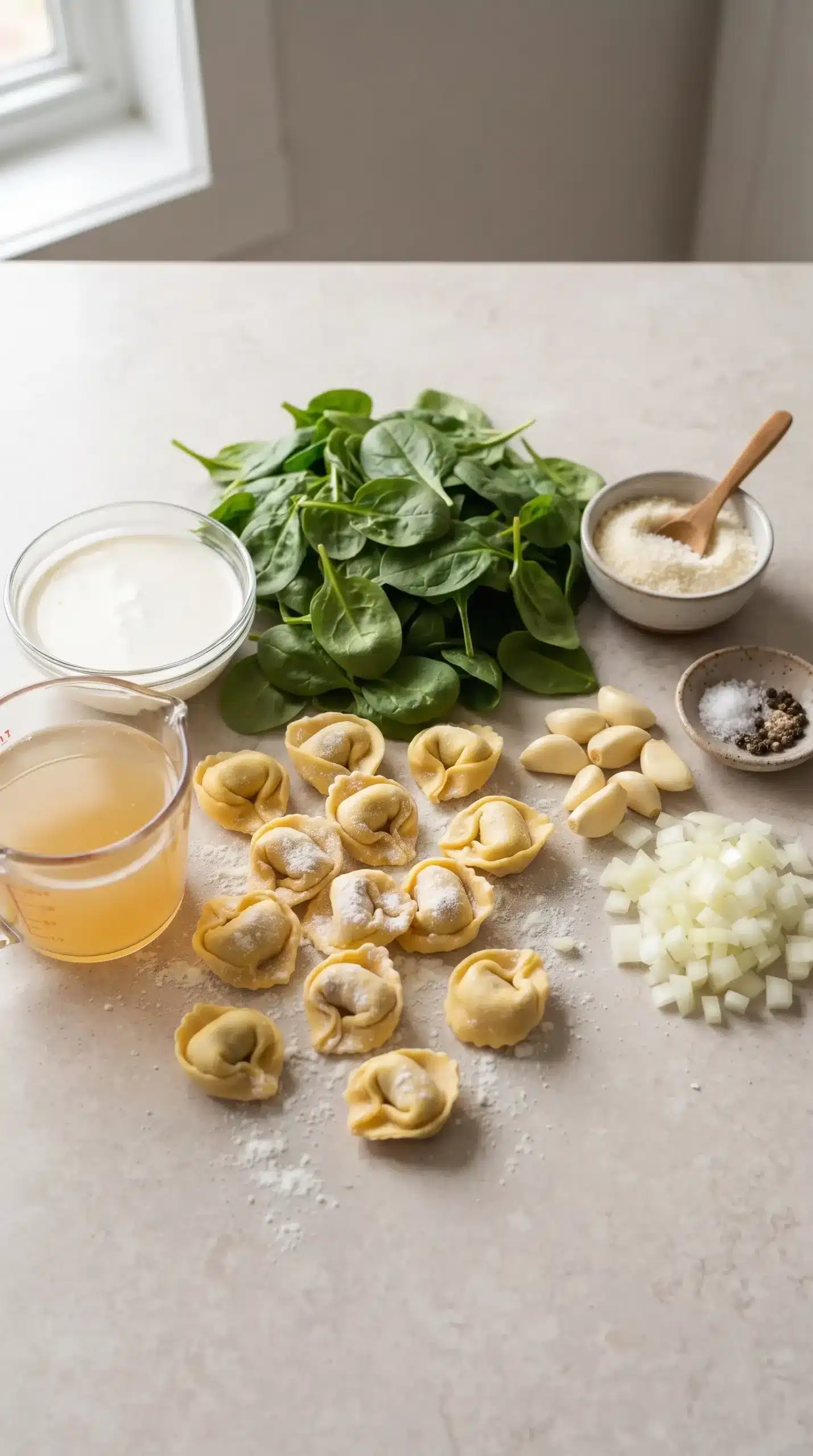
Creamy Tortellini Soup brings together cheese-filled tortellini, tender greens, and a smooth broth in a single comforting bowl. The combination is satisfying without requiring a complicated cooking process, making it especially appealing when a warm dinner is the priority.
Cheese tortellini gives the soup its substantial center, while onion and garlic establish a savory base before the broth and cream are added. Spinach or kale introduces a fresh element that fits naturally into the rich liquid. A little grated Parmesan at serving adds another layer of cheesy flavor.
The Creamy Broth Gives Tortellini Its Cozy Finish
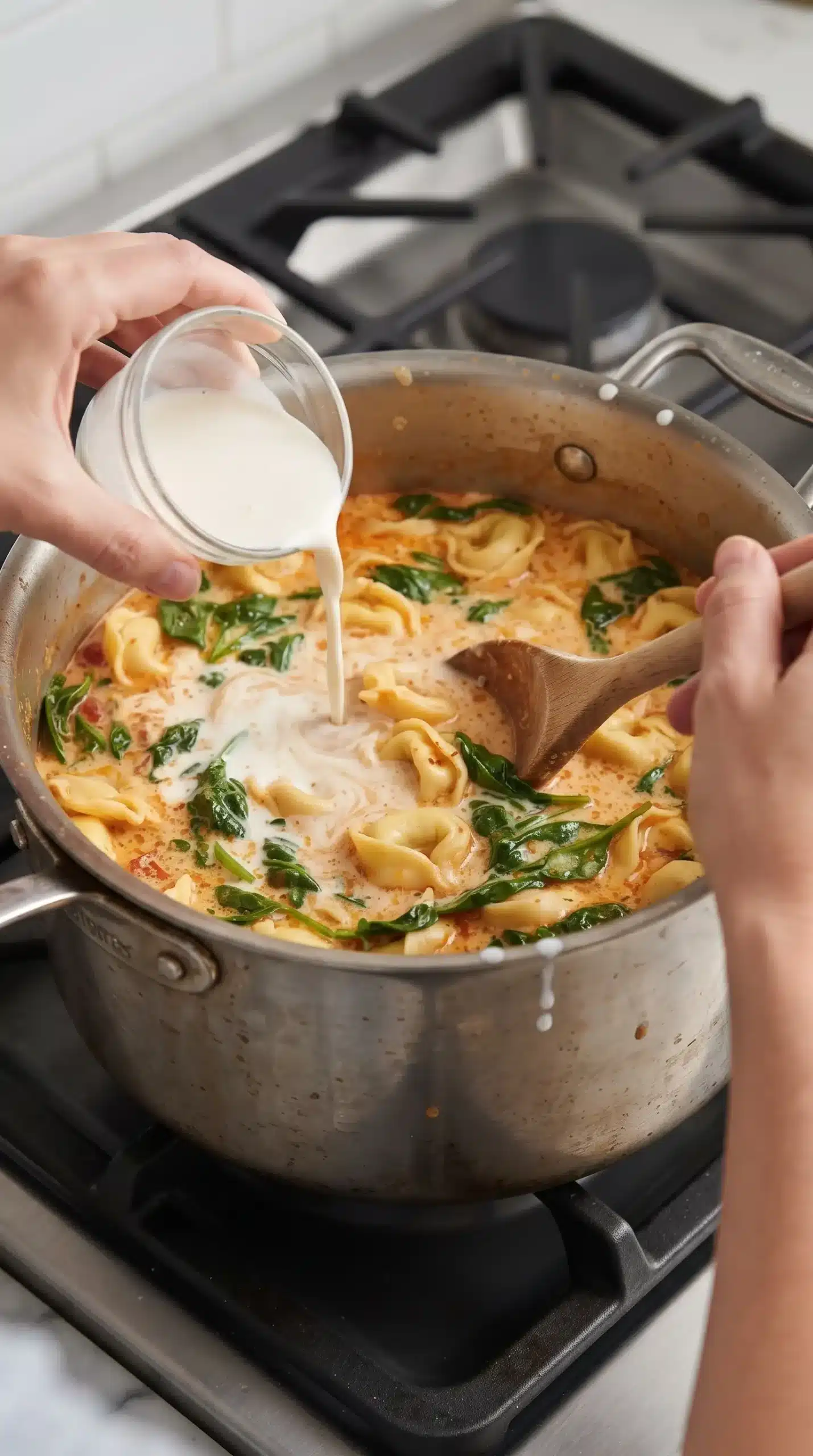
The broth starts with sautéed onion and garlic, then becomes the cooking liquid for the tortellini. Once the pasta is cooked, heavy cream is stirred in over reduced heat. That timing keeps the cream from being subjected to the full simmer used earlier in the cooking process.
Heavy cream also changes the way the soup feels in the bowl. Its richness balances the savory broth and cheese-filled pasta, while the greens keep the finished soup from feeling entirely heavy. For a lighter variation, half-and-half can replace the heavy cream.
Cheese Tortellini and Greens Create the Core Texture
Cheese tortellini is the defining solid ingredient, so its cooking point matters. Fresh or frozen tortellini can be used, with the package instructions providing the appropriate cooking guidance for the pasta being used.
Spinach and kale work differently in the finished bowl. Both can be stirred into the soup after the tortellini has cooked, with the greens needing only enough heat to become wilted. Spinach offers a softer presence, while kale can provide a more substantial leafy texture.
- Cheese tortellini: Provides the filled pasta center of the soup.
- Spinach: Wilts quickly and keeps the vegetable element delicate.
- Kale: Offers a sturdier leafy option within the creamy broth.
Broth Choice Changes the Character of the Soup
Vegetable broth keeps the flavor profile suitable for a vegetarian version, while chicken broth creates a different savory foundation. Beef broth is another stated variation if you want to change the character of the soup.
| Broth | Best Use | What It Changes |
|---|---|---|
| Vegetable broth | Vegetarian preparation | Keeps the soup meat-free while supporting the creamy tortellini and greens. |
| Chicken broth | Classic savory variation | Adds a chicken-based broth character beneath the cream and tortellini. |
| Beef broth | Flavor variation | Creates a different savory direction without changing the basic soup approach. |
Gentle Heat Helps Keep the Tortellini Soup Balanced
Heat control becomes particularly important once the tortellini has finished cooking. The broth needs enough heat to cook the pasta, but the cream is added only after that stage and with the heat reduced.
Keeping the cream addition gentle also makes it easier to control the finished consistency. If the soup becomes too thick during storage or reheating, a small splash of broth or cream can loosen it back to a more spoonable texture.
Seasoning belongs near the end, after the broth, tortellini, cream, and greens have joined the pot. Salt and pepper can then be adjusted according to the finished soup rather than trying to predict its seasoning before all the components are present.
Common Creamy Tortellini Soup Mistakes to Avoid
Several problems can be traced directly to the order and timing of the ingredients. The easiest way to prevent them is to pay attention to what the soup should look and feel like at each stage.
- Adding cream too early: Wait until the tortellini has cooked and reduce the heat before stirring in the cream.
- Overcooking the greens: Add spinach or kale after the pasta is ready and cook only until the leaves are wilted.
- Skipping the seasoning check: Taste after the cream and greens have been incorporated, then adjust with salt and pepper.
- Letting leftovers become too thick: Reheat gently and add a splash of broth or cream if needed.
Vegetable Broth Makes a Meat-Free Bowl
A vegetarian version does not require a separate soup base or a different cooking method. Vegetable broth can be used in place of chicken broth while the cheese tortellini, cream, greens, onion, garlic, and seasonings remain part of the preparation.
That simple broth choice makes the soup adaptable without changing the essential character created by the creamy liquid and filled pasta. It also means the same basic approach can serve different meal preferences.
Extra Vegetables Can Change the Bite
Carrots and bell peppers are suggested additions when you want more vegetables in the pot. Their role is different from the spinach or kale, since they add another vegetable element instead of simply supplying leafy greens at the end.
Because the original cooking process begins by sautéing onion and garlic, additional vegetables can fit naturally into that early stage. The important consideration is keeping the additions compatible with the soup’s existing cooking sequence so the tortellini still receives its intended cooking time.
Half-and-Half Offers a Lighter Creamy Variation
Heavy cream gives Creamy Tortellini Soup its rich finish, but half-and-half can be used when you prefer a lighter result. The substitution changes the richness without requiring a different style of preparation.
Spicy variation is also possible with a pinch of red pepper flakes while the soup cooks. That addition changes the seasoning profile while leaving the tortellini, broth, greens, and creamy foundation intact.
Parmesan and Crusty Bread Complete Each Bowl
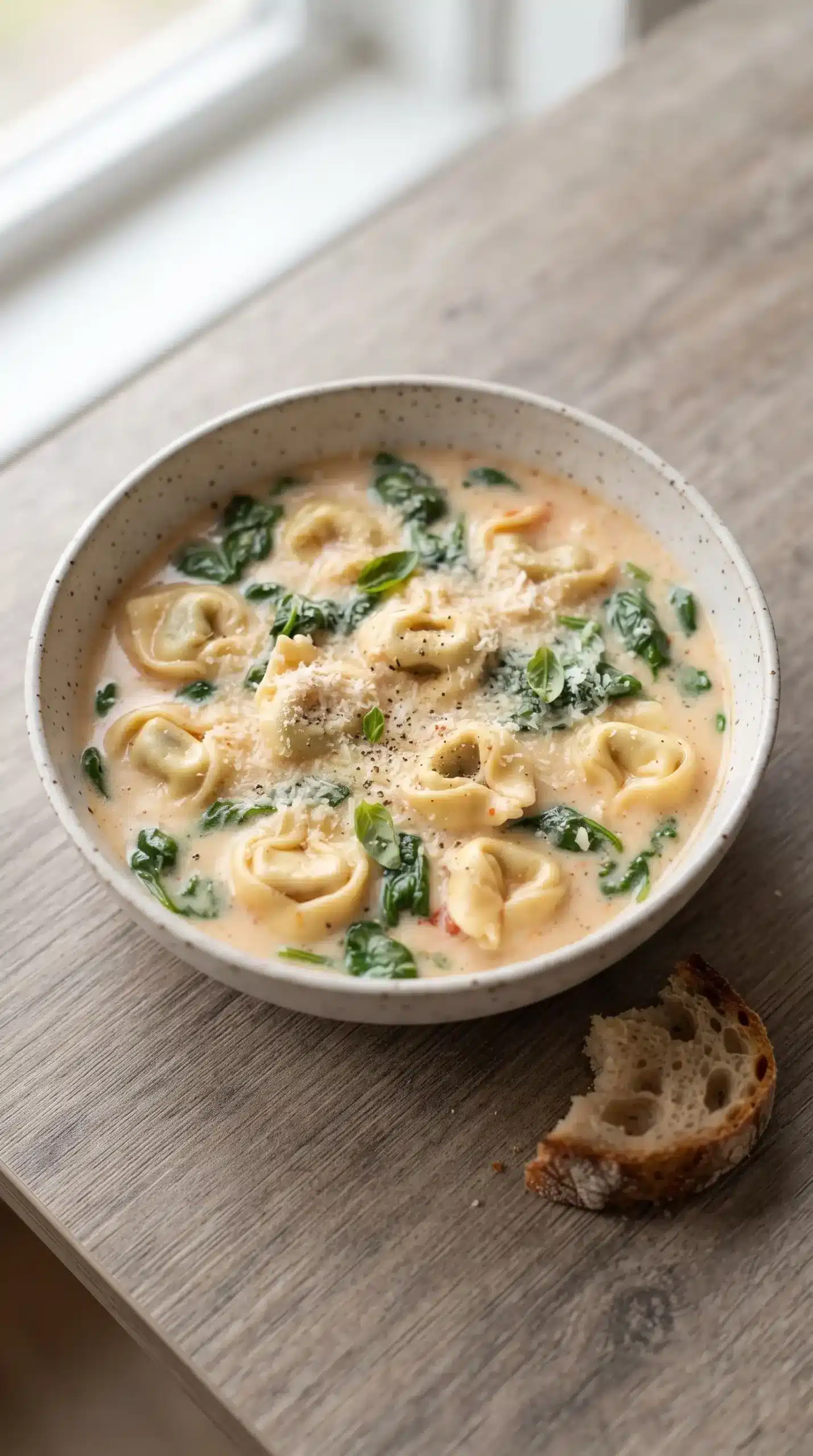
Serve the soup hot, with grated Parmesan scattered over the top. The cheese adds a finishing note that connects naturally with the cheese-filled tortellini already in the bowl.
Several problems can be traced directly to the order and timing of the ingredients. The easiest way to prevent them is to pay attention to what the soup should look and feel like at each stage, especially when working with rich ingredients such as creamy Italian sausage soup with spinach and Parmesan, where cream and greens need careful timing.
Leftover Creamy Tortellini Soup Needs Gentle Reheating
Refrigeration is the practical way to handle leftovers. Keep the soup in an airtight container, then warm it gently on the stove when you are ready to serve it again.
| Leftover Concern | Useful Approach | Reason |
|---|---|---|
| Storage container | Use an airtight container | Provides the stated method for keeping leftover soup in the refrigerator. |
| Reheating | Warm gently on the stove | Helps bring the chilled soup back to serving temperature without aggressive heating. |
| Thickened soup | Add a splash of broth or cream | Loosens the consistency when the refrigerated soup has become thicker. |
Leftovers can keep in the refrigerator for 3 to 4 days. When reheating, check the consistency before serving because the soup may need a little additional liquid to return to the desired texture.
The Best Creamy Tortellini Soup Depends on Timing
Cooked tortellini, wilted greens, and a gently incorporated cream base depend on arriving at the right point in the pot together. The broth needs to reach a simmer for the pasta, while stirring in heavy cream belongs later after the tortellini is cooked and the heat has been reduced.
That sequence is what keeps the soup cohesive: filled pasta remains the centerpiece, the greens retain their role as a fresh element, and the creamy broth surrounds everything without overwhelming the bowl. A careful finish with seasoning and Parmesan completes the balance.
Questions About Tortellini Texture and Storage
Can frozen tortellini be used in Creamy Tortellini Soup?
Yes. Frozen tortellini works well, and it should be cooked according to the package instructions. The important point is to follow the cooking guidance for the specific tortellini instead of assuming fresh and frozen pasta require identical cooking times.
Can spinach and kale be used interchangeably?
Both are suitable, but their textures differ. Spinach wilts into the soup quickly and becomes soft, while kale provides a more substantial leafy texture. Choose according to the texture you want in the finished bowl.
Why is the cream added after the tortellini cooks?
The supplied cooking sequence places the cream after the pasta has finished cooking and calls for reduced heat during the addition. Following that order separates the pasta-cooking stage from the gentler cream-finishing stage.
Can Creamy Tortellini Soup be made vegetarian?
Yes. Use vegetable broth instead of chicken broth, while keeping the remaining listed components unchanged. The resulting soup retains its creamy broth, cheese tortellini, and greens.
How should the soup be adjusted after refrigeration?
Reheat it gently on the stove and check the consistency before serving. If the refrigerated soup has become too thick, add a splash of broth or cream until it loosens to the texture you prefer.
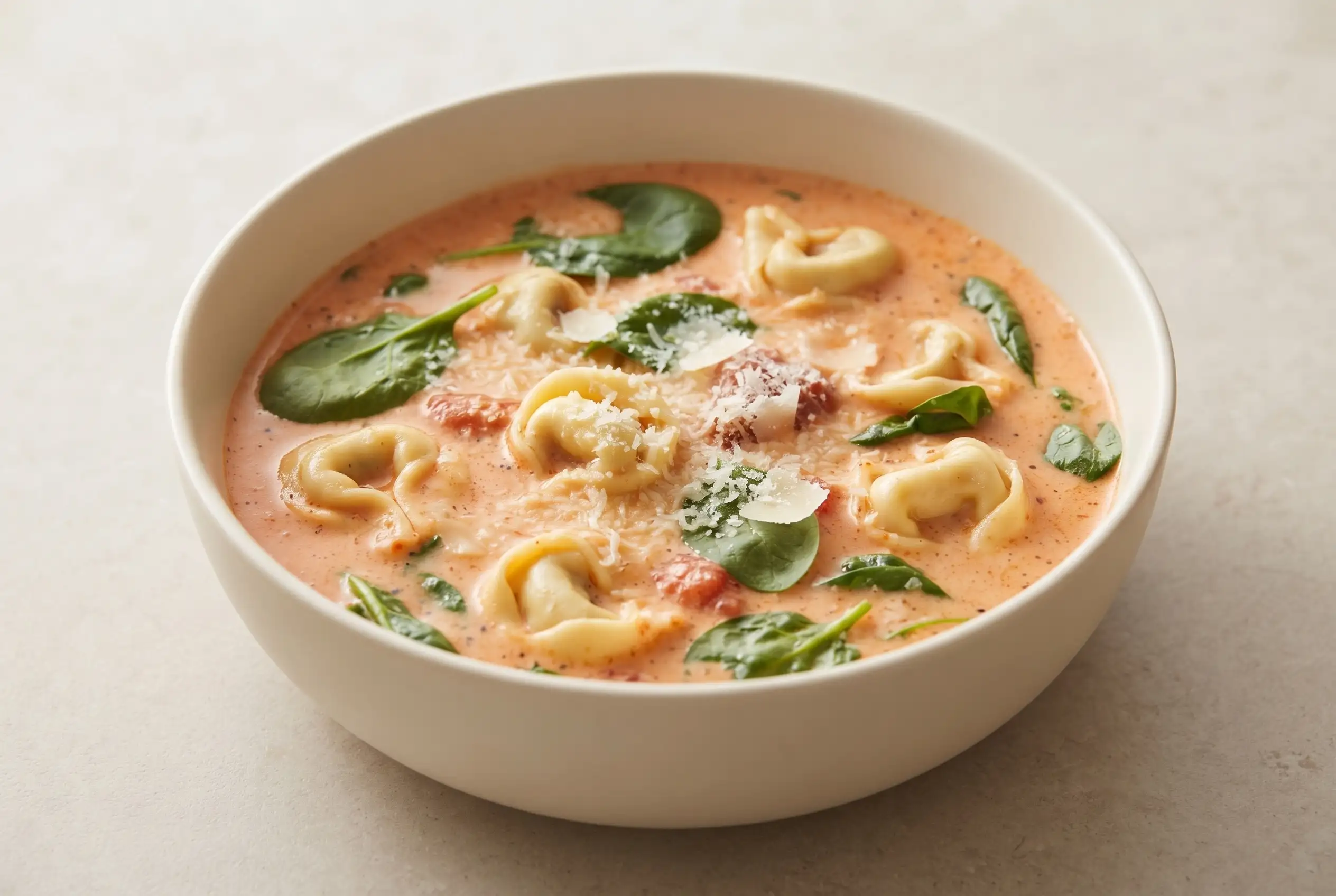
Creamy Tortellini Soup with Spinach and Grated Parmesan
Ingredients
Method
- Cook the diced onion and minced garlic in a large pot until the onion becomes translucent.
- Pour in the vegetable or chicken broth and bring the liquid to a simmer.
- Add the cheese tortellini and cook according to the package instructions.
- Lower the heat and gradually stir in the heavy cream after the tortellini is cooked.
- Add the spinach or kale and cook just until the greens wilt.
- Season with salt and black pepper to taste.
- Ladle the soup into servings and finish each one with grated Parmesan cheese.