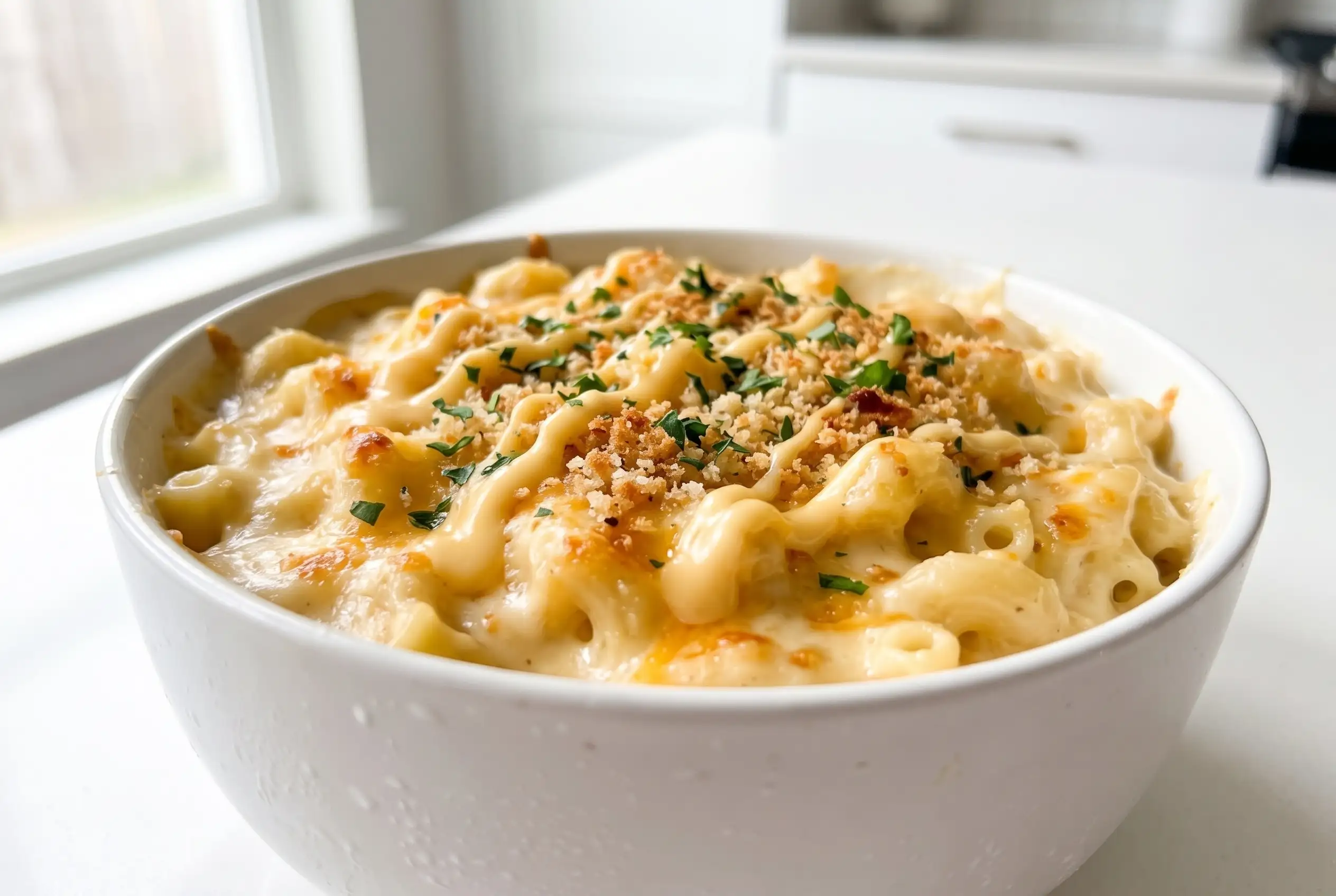
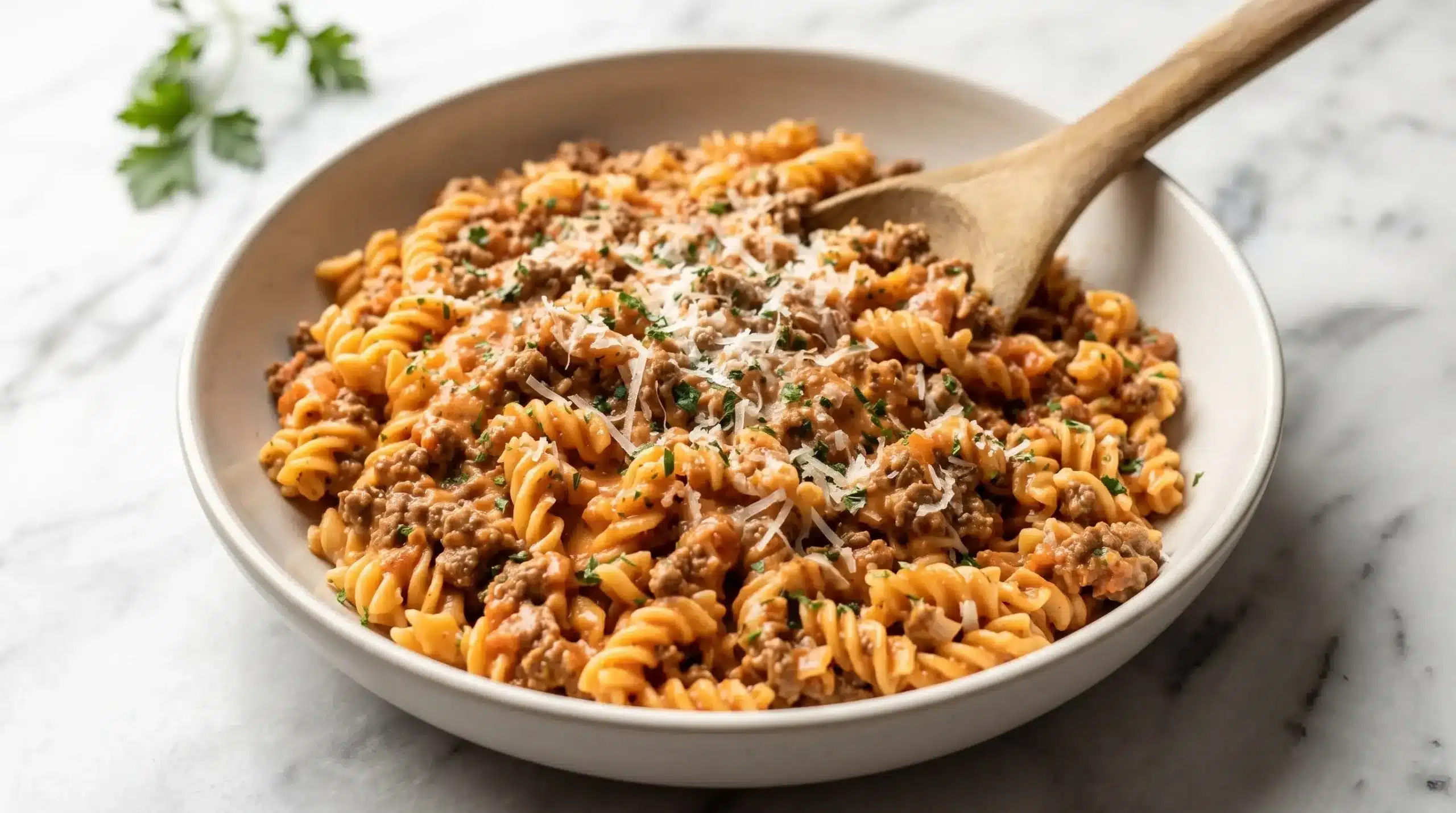
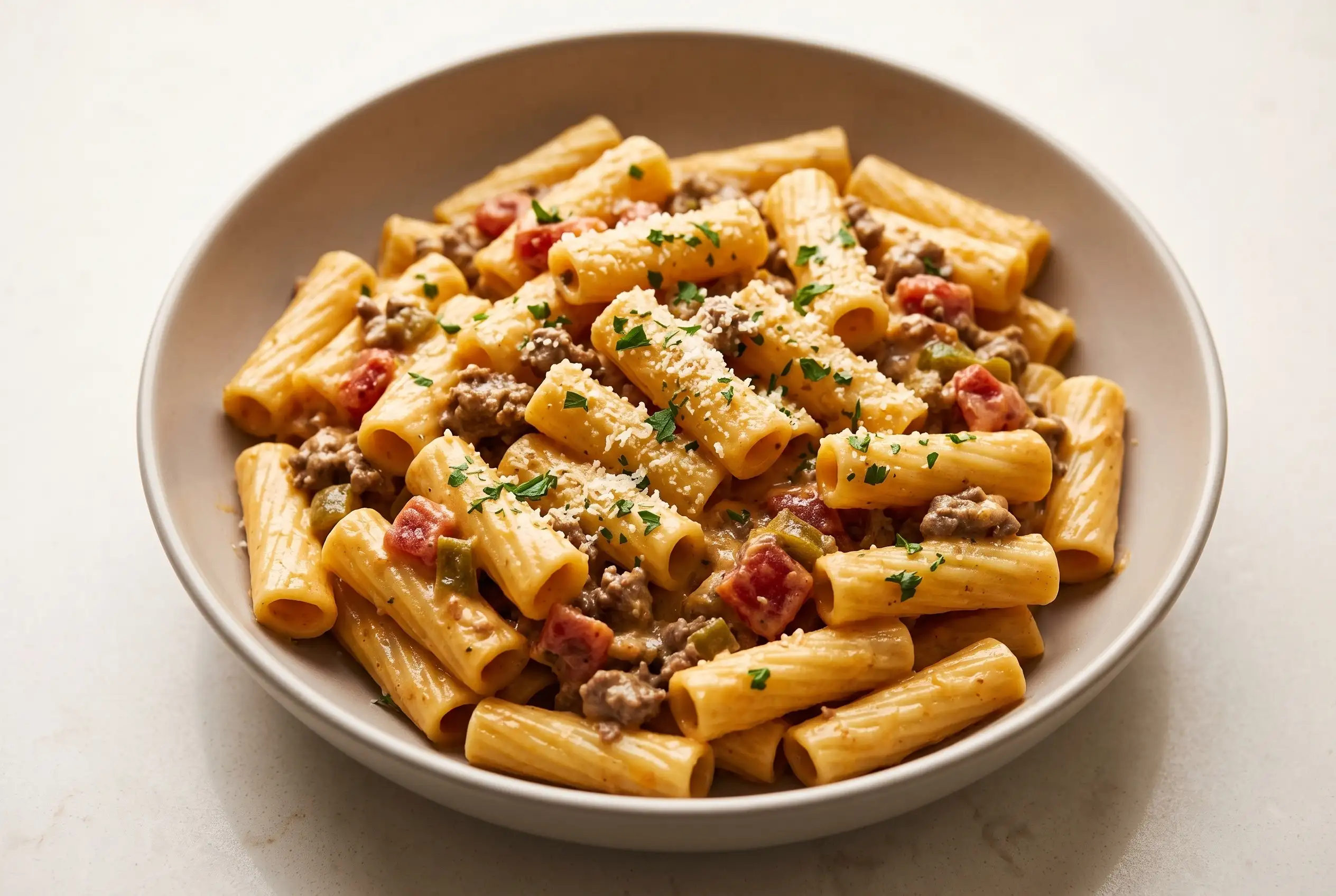
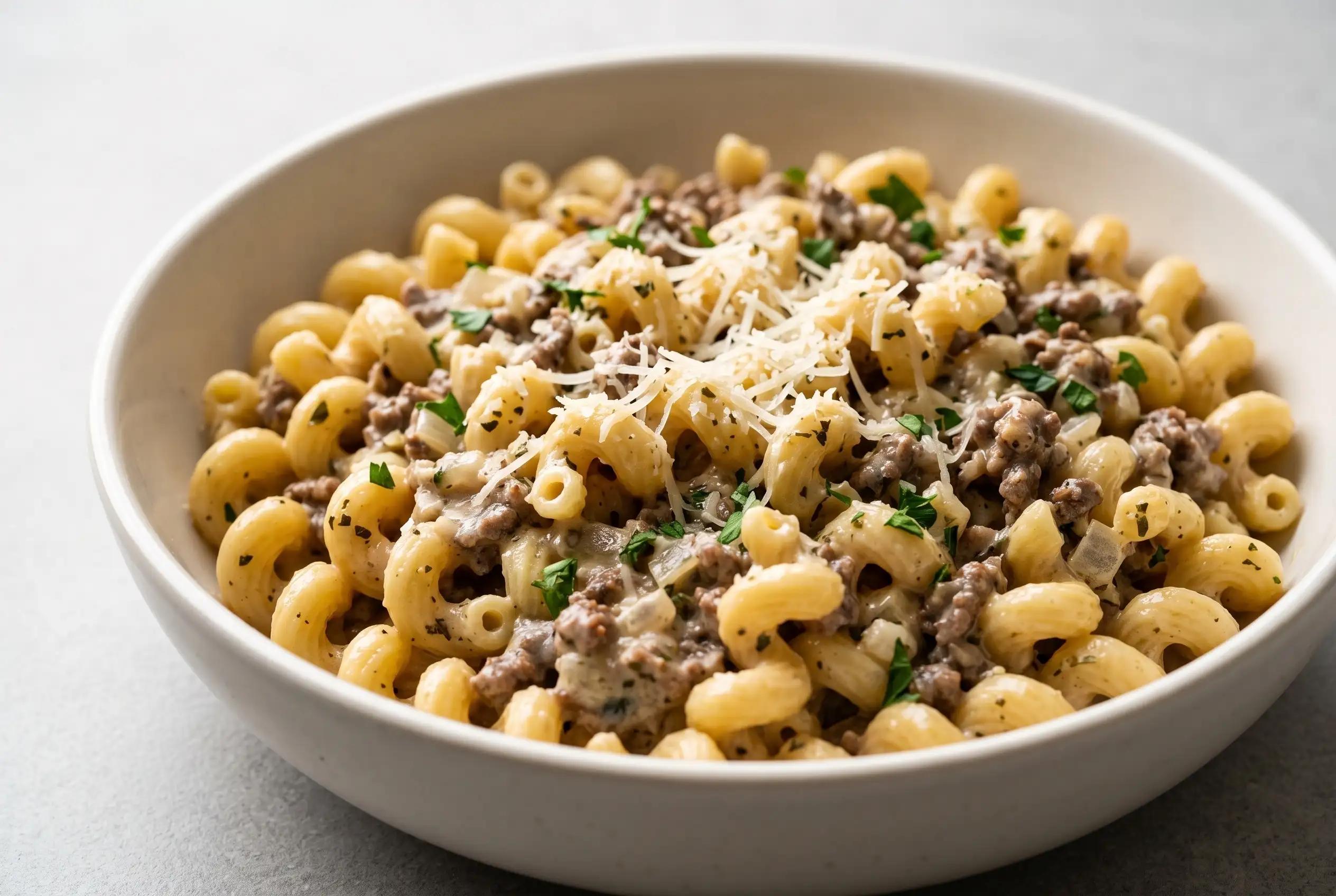
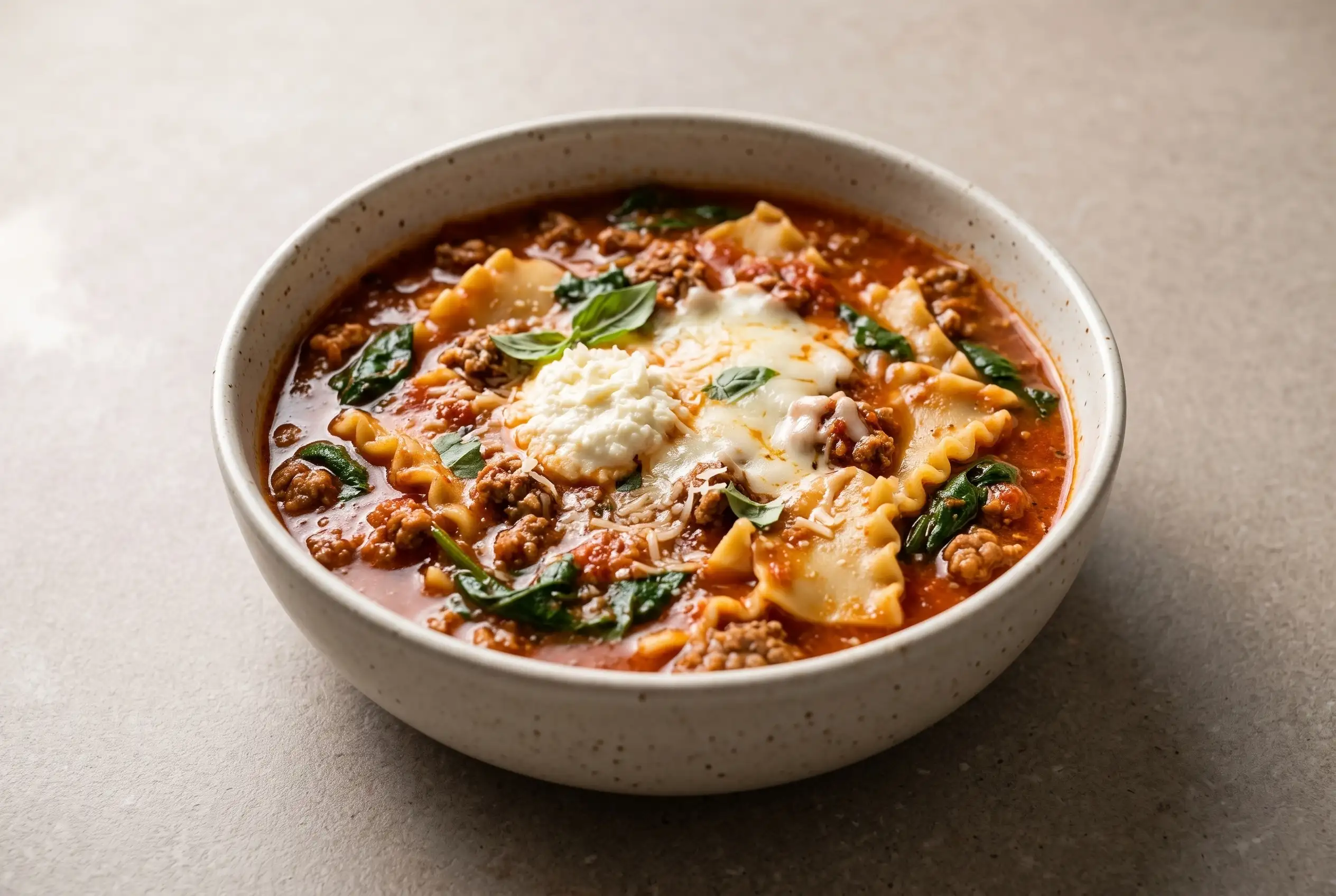
Creamy Garlic Butter Pasta with Ground Beef and Parmesan
Creamy garlic butter pasta starts with a simple combination of pasta, ground beef, garlic butter, heavy cream, and Parmesan. The result is a rich skillet-style meal that comes together with familiar ingredients and a straightforward cooking process. The pasta carries the smooth sauce while browned beef adds substance, making the dish suitable for a busy evening when a hearty dinner is needed without a complicated preparation.
Why Creamy Garlic Butter Pasta Works for Weeknight Cooking
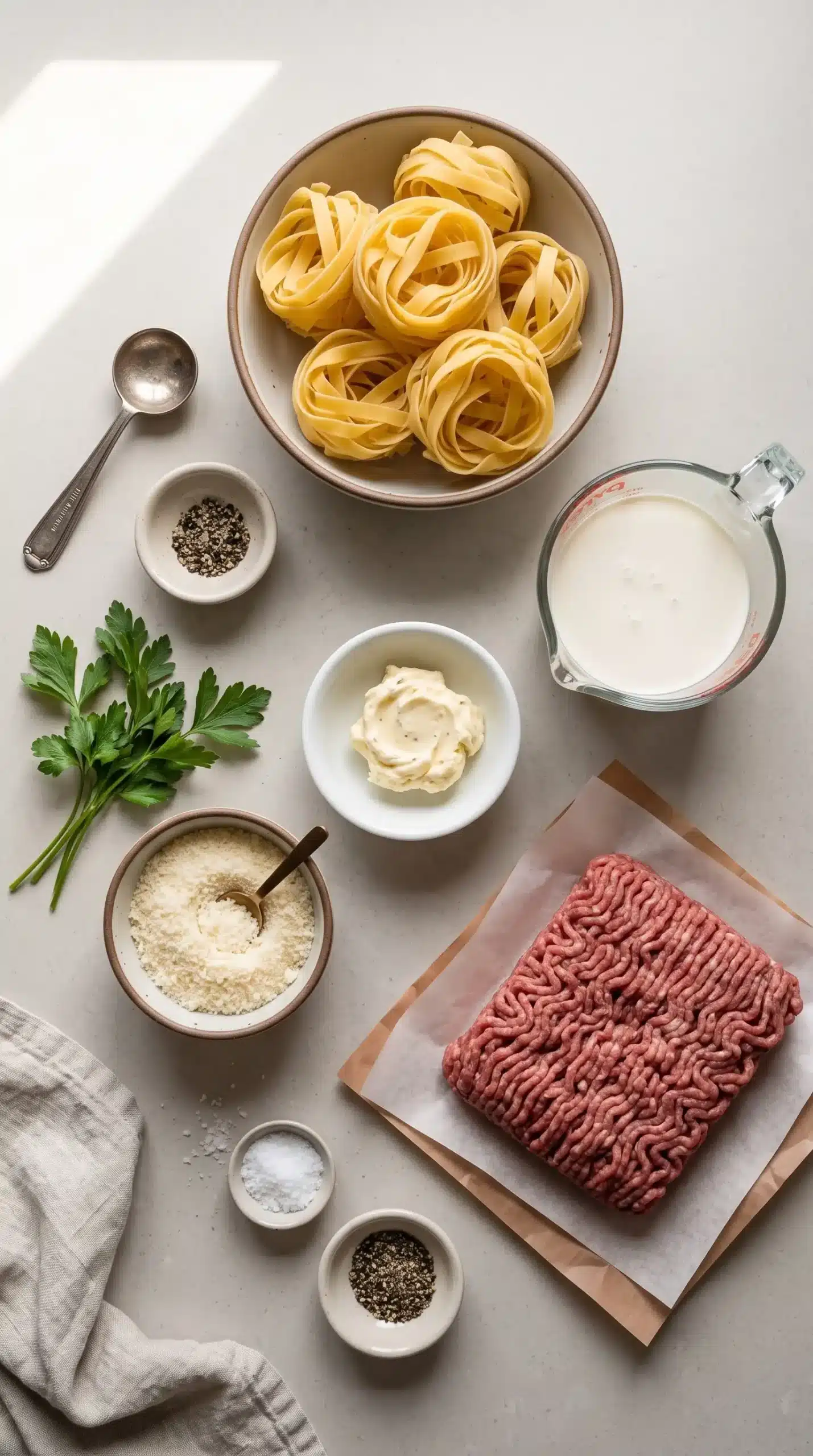
Simple ingredients keep the preparation approachable. Eight ounces of pasta, one pound of ground beef, garlic butter, heavy cream, and Parmesan create the main structure of the meal without requiring a long ingredient list. Salt, pepper, and fresh parsley finish the dish with seasoning and a fresh garnish.
Quick preparation also makes creamy garlic butter pasta practical for a shorter cooking window. The pasta cooks separately while the beef is browned, allowing the sauce to be assembled once the meat is ready. From there, the cream and cheese turn the garlic butter base into a smooth coating for the cooked pasta.
Flexible pasta shapes give the meal some room for preference. Spaghetti, penne, or fusilli can all be used, so the choice can depend on what is already available. Keeping the pasta al dente is especially useful because it gives the finished dish a firmer texture after the noodles are tossed with the warm sauce.
The Garlic Butter and Parmesan Balance
Garlic butter provides the main savory foundation after the beef has been browned. Melting it directly in the same pot allows its flavor to join the cooking juices left from the meat. Heavy cream then softens that base and creates the creamy texture associated with creamy garlic butter pasta.
Parmesan supplies the cheese component that helps the cream become a more substantial sauce. Grated Parmesan is stirred into the simmering cream until smooth, so it is useful to have the cheese ready before adding it. Once the pasta enters the pot, the sauce should be mixed thoroughly so the coating reaches the noodles evenly.
Seasoning is intentionally simple. Salt and pepper are added according to taste after the pasta and sauce have been combined. Fresh parsley is used at the end as a garnish, while additional Parmesan can be sprinkled over individual servings for a stronger cheese flavor.
Choosing Pasta That Holds the Creamy Sauce
Any pasta shape can work with creamy garlic butter pasta, provided it is cooked according to the package instructions and kept al dente. Spaghetti gives the meal long strands, while penne and fusilli offer shorter shapes that can be easier to toss with the ground beef and sauce.
| Pasta choice | Useful characteristic | Best practical consideration |
|---|---|---|
| Spaghetti | Long strands | Toss thoroughly so the creamy sauce coats the strands |
| Penne | Short tubular shape | Combine well with the ground beef and sauce |
| Fusilli | Twisted shape | Mix carefully so sauce reaches the pasta throughout |
Keeping the Ground Beef Ready for the Sauce
Ground beef needs to be browned in a large pot over medium heat before the creamy sauce is built. Once the meat is cooked, excess fat is drained. This leaves the beef ready to receive the garlic butter without carrying unnecessary grease into the cream-based sauce.
How the Cream Sauce Comes Together
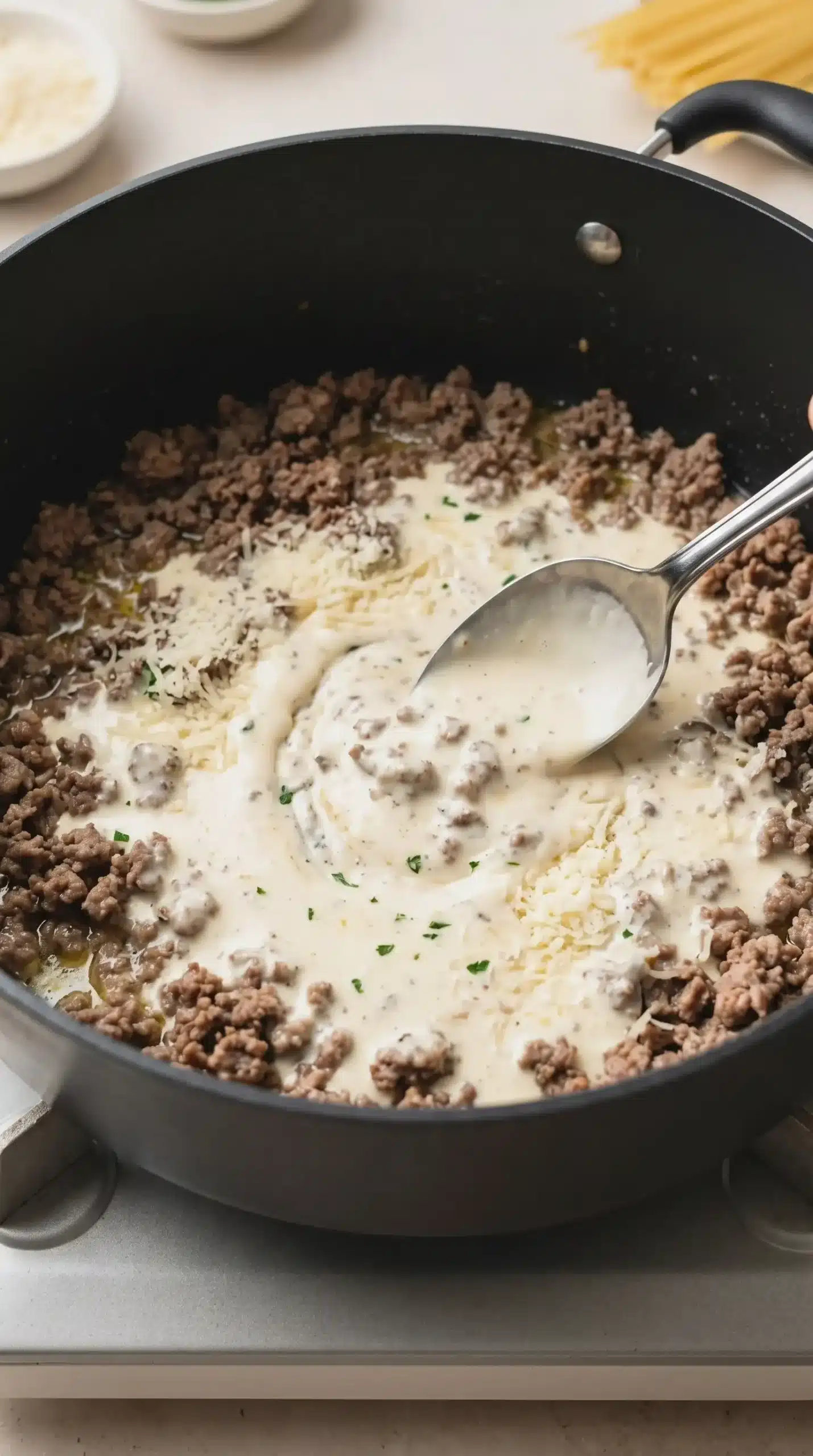
After the excess fat has been removed, garlic butter is stirred into the browned beef until melted. Heavy cream follows and is brought to a simmer, creating the base for a smooth sauce built from garlic butter, ground beef, and cream before the Parmesan is incorporated.
Parmesan is added while the cream is warm, then mixed until the sauce is smooth. At that point, the cooked pasta is tossed into the pot. Stirring at this stage distributes the sauce around the pasta and brings the beef into the same mixture.
Careful heat control matters once the cream enters the pot. A simmer is sufficient for this stage, while the cheese needs to be mixed until smooth before the pasta is added. Finishing with salt and pepper keeps the seasoning adjustable instead of committing to a fixed amount.
What to Avoid When Making Creamy Garlic Butter Pasta
- Overcooked pasta: Cooking beyond the desired al dente texture can leave the noodles softer than intended once they are combined with the sauce.
- Unnecessary excess fat: Drain the excess fat from the browned beef before adding the garlic butter and cream.
- Uneven cheese mixing: Stir the Parmesan into the warm cream until smooth before introducing the pasta.
- Skipping the final seasoning: Taste and adjust with salt and pepper after the pasta has been coated.
Getting the Right Coating on Ground Beef Garlic Butter Pasta
Even coating comes from tossing the cooked pasta directly in the finished sauce. The pasta should enter only after the Parmesan has been incorporated into the cream, because that gives the noodles a prepared sauce to pick up immediately.
Gentle mixing also helps distribute the ground beef throughout the serving instead of leaving most of the meat in one part of the pot. The combination of creamy sauce and browned beef should remain evenly spread across the pasta.
Immediate serving preserves the intended hot, creamy character. Fresh parsley can be added just before serving, and extra Parmesan can be used at the table for additional cheese flavor.
Adding Vegetables Without Changing the Main Formula
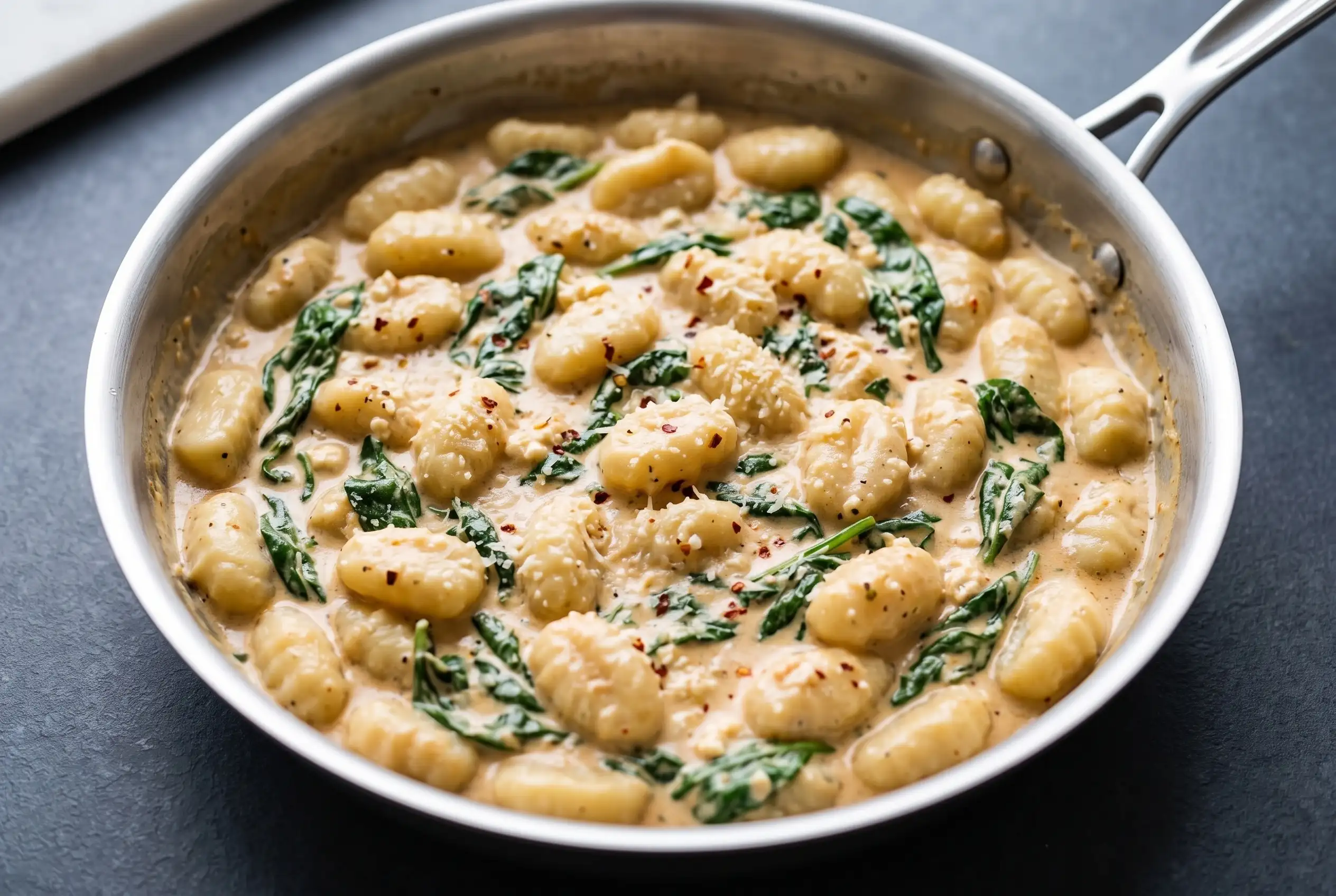
Spinach or broccoli can be mixed into the pasta during the point when the cooked noodles are combined with the sauce. These additions provide a straightforward way to bring vegetables into creamy ground beef pasta without replacing the core beef, cream, garlic butter, and Parmesan combination.
Serving Creamy Garlic Butter Pasta Hot
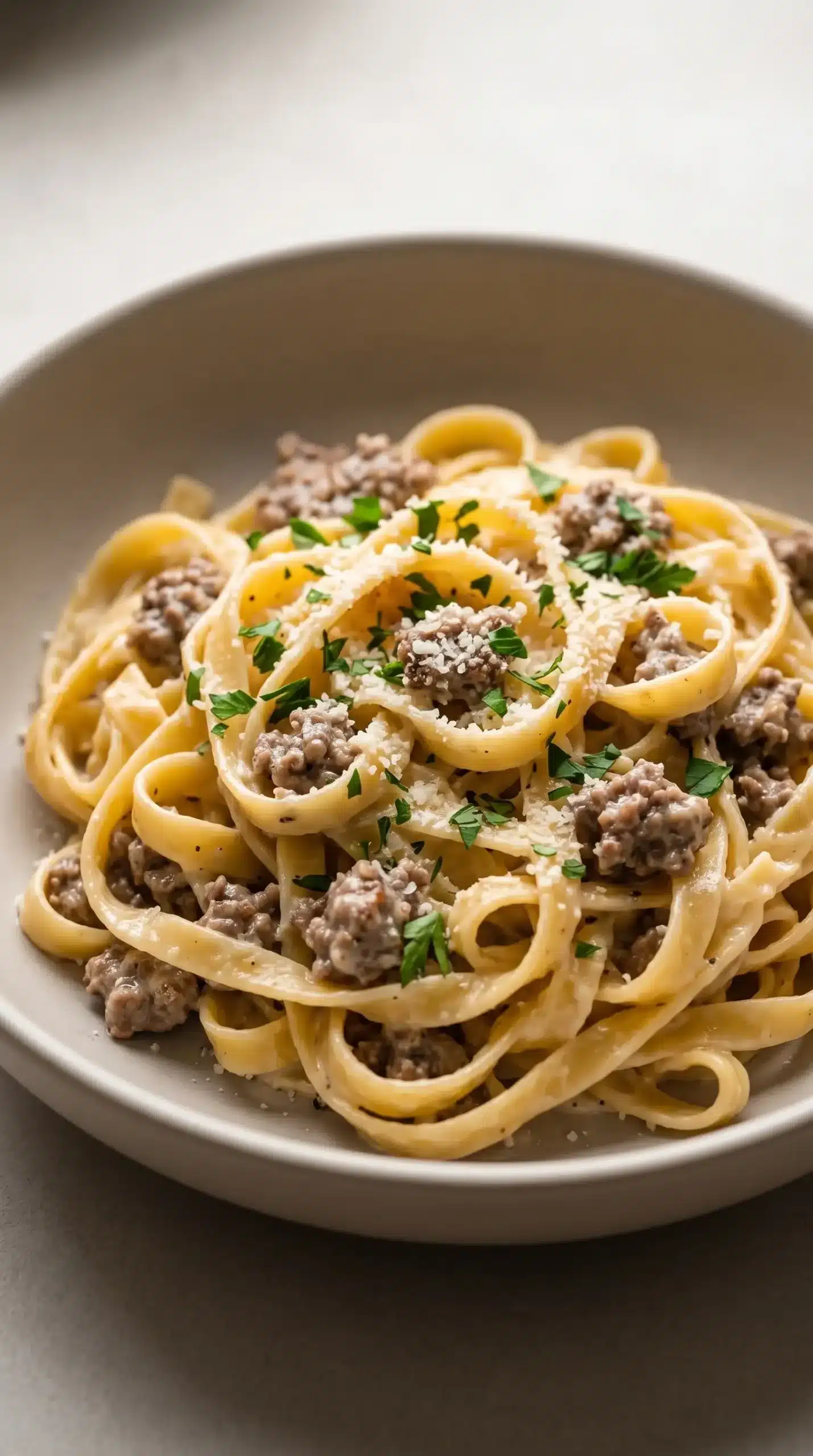
Hot servings make the most sense for creamy garlic butter pasta because the sauce is prepared immediately before the pasta is tossed and served. Fresh parsley provides the listed garnish, while extra Parmesan can be added for a stronger cheese finish.
Side Pairings for a More Complete Meal
Crusty bread is a natural accompaniment for the creamy pasta, adding another texture alongside the tender noodles and beef. A side salad offers a contrasting fresh element and can bring additional vitamins and fiber to the meal.
Simple sides also keep attention on the main pasta without adding another complicated preparation. When serving the meal as written, either crusty bread or a salad can round out the plate without altering the sauce itself.
Extra Parmesan works best as a finishing choice instead of being treated as a separate component of the meal. A light sprinkle over each serving lets diners adjust the cheese flavor to their preference.
Making a Lighter Ingredient Swap
Ground turkey or ground chicken can replace the beef when a different meat is preferred. The substitution changes the main protein while retaining the creamy garlic butter and Parmesan character of the pasta.
Turning the Pasta Vegetarian
Mushrooms or lentils can stand in for the meat when a vegetarian version is desired. Either option changes the protein component while allowing the garlic butter, cream, Parmesan, and pasta to remain central to the dish.
Storing and Reheating Leftover Pasta
Leftovers should be transferred to an airtight container and refrigerated. The pasta can remain fresh for up to three days, making it suitable for another meal when stored promptly after serving.
Reheating can be done on the stove or in the microwave. Warm the leftovers until hot before serving, taking care to heat the portion evenly so the center is not left cool.
What the Creamy Ground Beef Pasta Brings to the Table
Ground beef and Parmesan contribute protein, while heavy cream provides calcium. The combination makes the meal substantial, and a side salad can add vitamins and fiber alongside the rich pasta.
Why Al Dente Texture Matters Here
Al dente pasta has a firm bite that holds up when the noodles are tossed with the warm sauce and ground beef. Following the package cooking instructions while avoiding overcooking helps preserve that texture through the final mixing stage.
Creamy Garlic Butter Pasta Comes Together at the Sauce Stage
Browned beef, melted garlic butter, simmered cream, and smooth Parmesan create the central cooking sequence that determines the finished texture. Once the pasta is tossed through that sauce, seasoning and parsley provide the final adjustments before serving.
The most useful judgment is to protect the pasta texture and keep the sauce smooth. With the beef drained, the cream gently simmered, and the Parmesan fully mixed in, creamy garlic butter pasta has the structure needed for an even coating and a hot, ready-to-serve meal.
Questions About Creamy Garlic Butter Pasta and Leftovers
Can I use a different pasta shape?
Yes. Spaghetti, penne, and fusilli are all suitable choices, and other pasta shapes can be used as well when cooked according to their package instructions.
How should I keep the pasta from becoming too soft?
Cook the pasta to an al dente texture and avoid overcooking it before adding it to the sauce. The noodles will then have enough firmness to hold their texture during tossing.
Can I make creamy garlic butter pasta without ground beef?
Yes. Ground turkey or ground chicken can replace the beef, while mushrooms or lentils can be used when a vegetarian version is wanted.
What can I add for more vegetables?
Spinach or broccoli can be mixed into the dish when the cooked pasta is combined with the sauce, adding vegetables without changing the main creamy garlic butter base.
How long can leftovers stay refrigerated?
Leftovers can be kept in an airtight container in the refrigerator for up to three days. Reheat them on the stove or in the microwave until hot before eating.
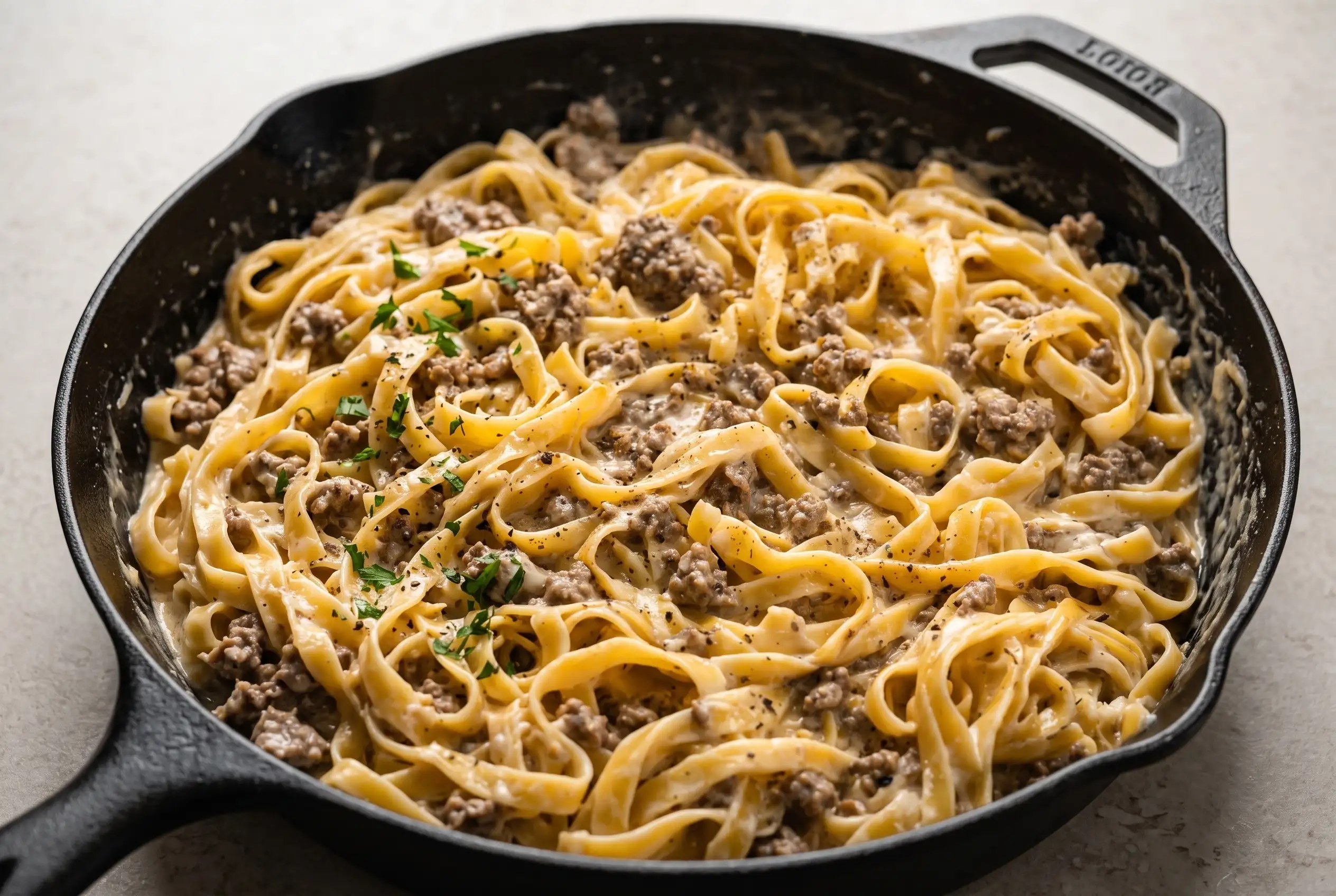
Creamy Garlic Butter Pasta with Ground Beef and Parmesan
Ingredients
Method
- Prepare the pasta following the package directions until al dente. Drain well and set aside.
- Place the ground beef in a large pot over medium heat and cook until browned. Drain away the excess fat.
- Stir the garlic butter into the cooked beef and continue mixing until the butter has completely melted.
- Add the heavy cream and heat the mixture until it reaches a simmer.
- Add the Parmesan to the simmering cream and stir until fully melted and the sauce becomes smooth.
- Transfer the cooked pasta to the pot and toss thoroughly to coat it with the creamy beef sauce.
- Adjust the seasoning with salt and pepper to taste.
- Finish with fresh parsley and serve immediately.