Garlic Butter Pasta with Ground Beef and Heavy Cream
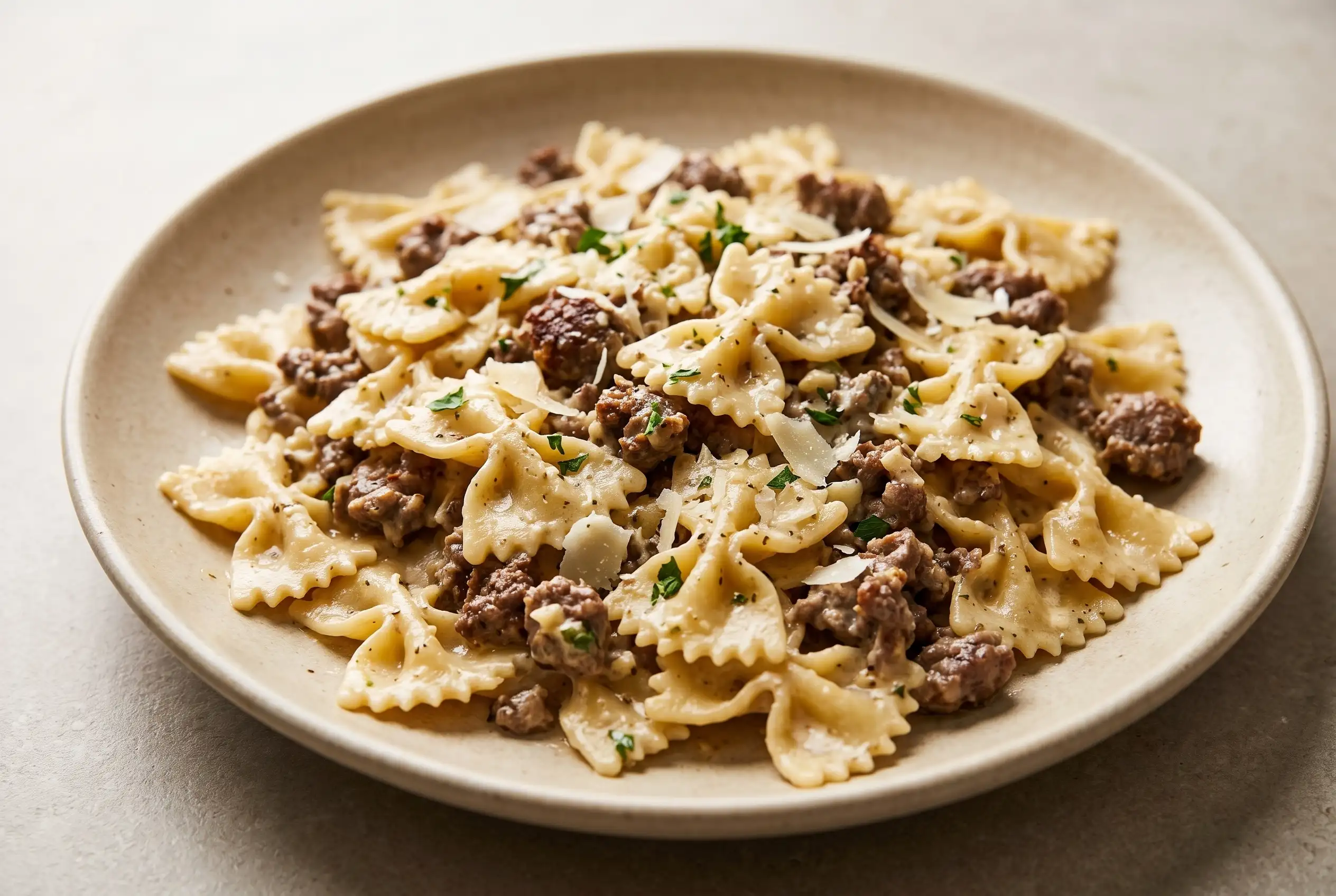
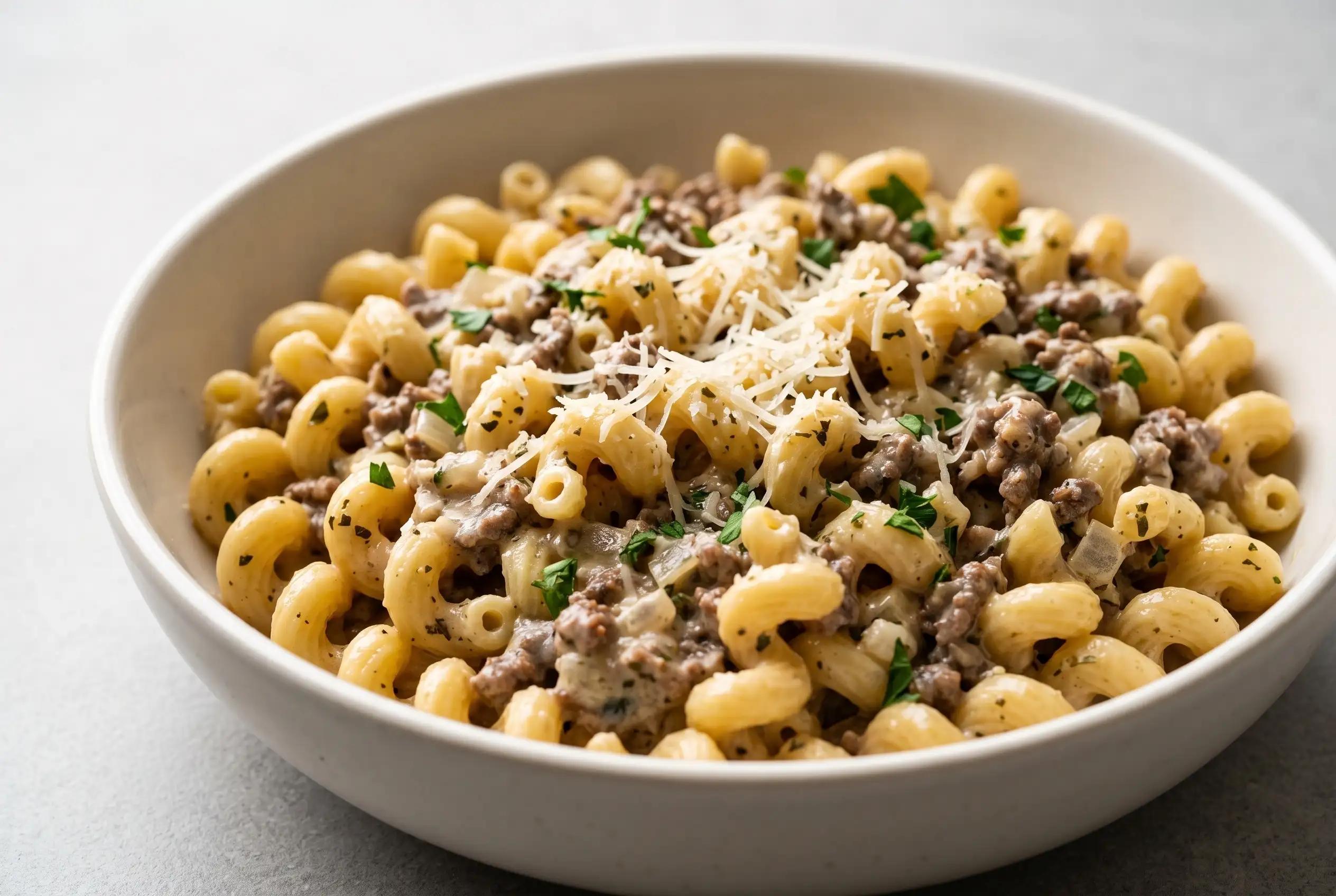
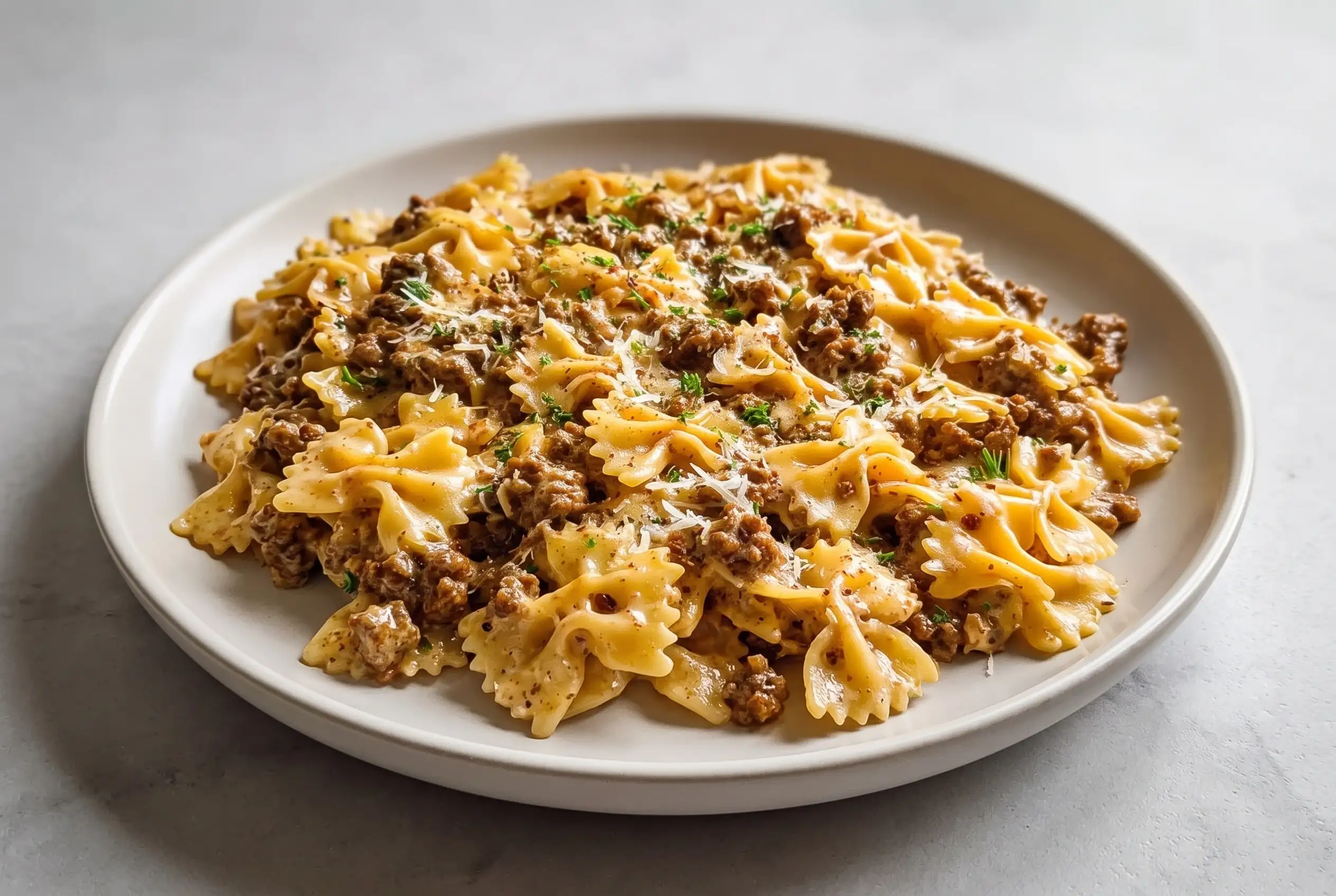
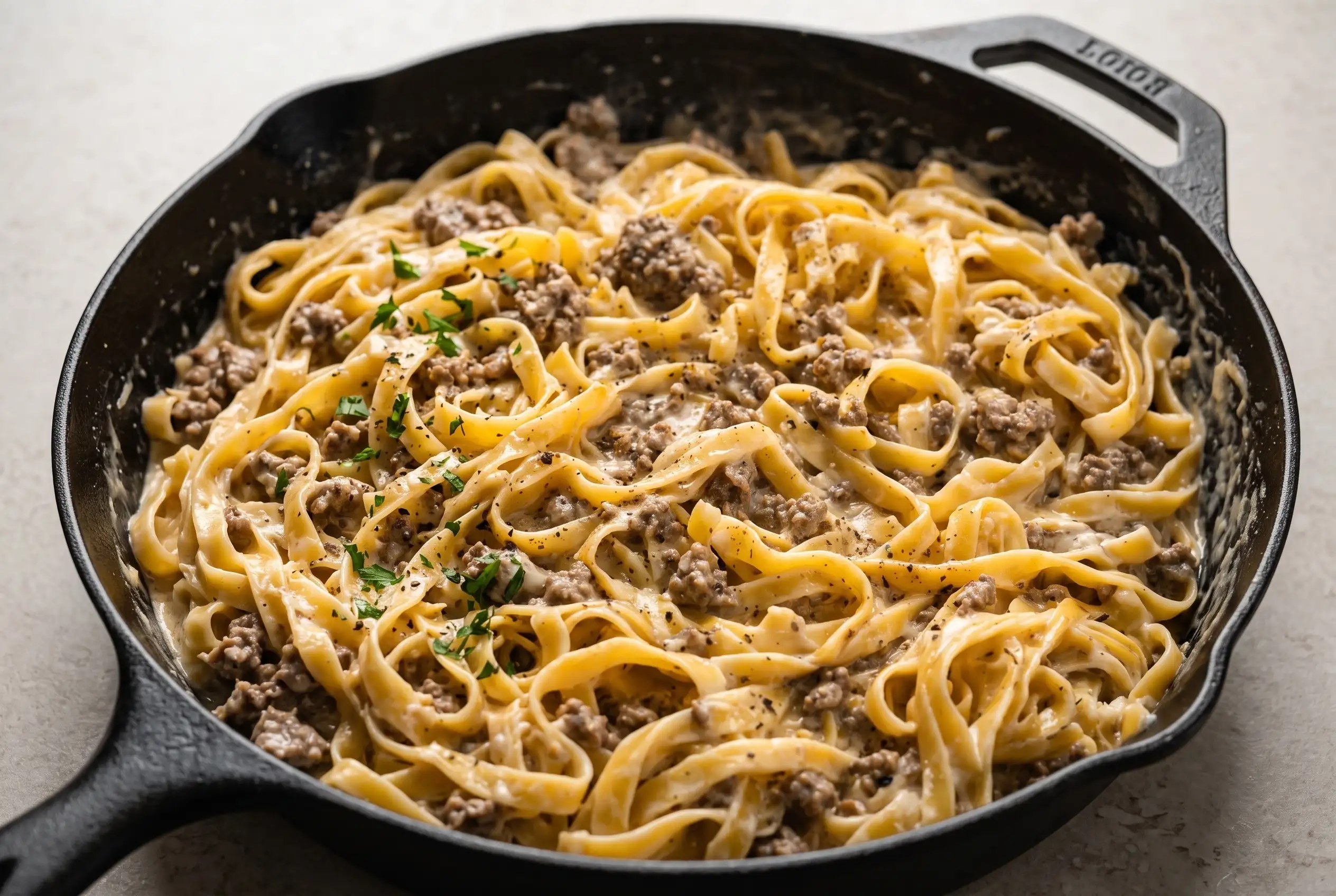
Garlic butter pasta combines tender pasta, browned ground beef, melted garlic butter, heavy cream, and Parmesan in a single creamy dish. The pasta is cooked separately, while the beef is browned in a large pot before the butter, cream, and cheese create the sauce. Everything comes together when the cooked pasta is tossed through the smooth mixture, making the dish useful when you want a substantial dinner without a complicated cooking process.
Garlic Butter Pasta Starts With the Right Texture
Al dente pasta gives garlic butter pasta enough structure to hold up when it is coated with warm cream and Parmesan. Follow the package directions and avoid letting the noodles become overly soft before they reach the sauce.
Because the cooked pasta is added after the cheese has been incorporated, its texture remains an important part of the finished dish. Pasta that still has some firmness provides a clearer contrast with the creamy sauce and browned beef.
Garlic Butter Gives the Beef a Saucy Base
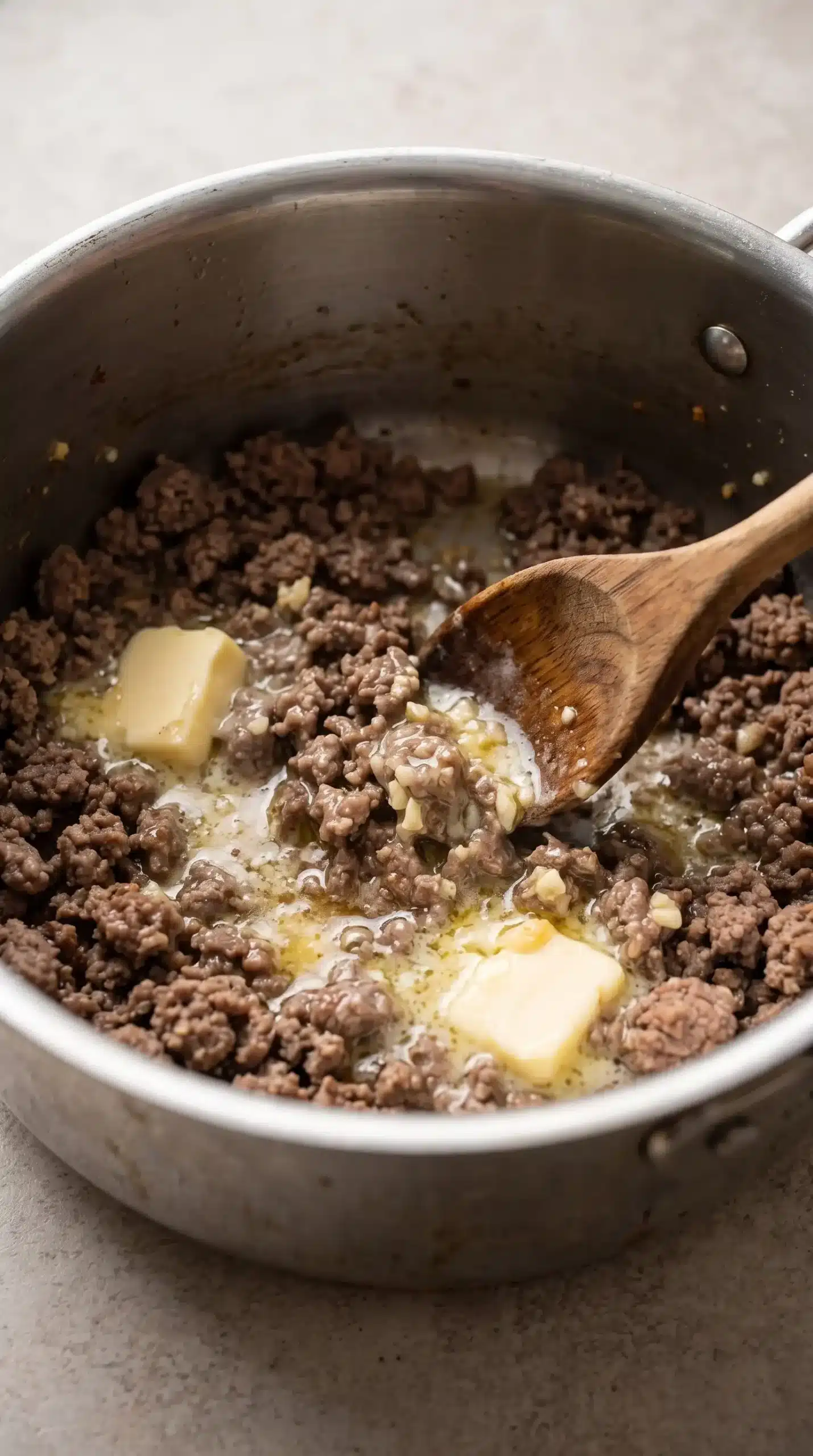
Garlic butter is stirred directly into the browned ground beef after excess fat has been drained. Melting the butter into the meat connects the savory beef with the sauce before the heavy cream is introduced.
That order matters because the butter becomes part of the creamy mixture instead of being added after the pasta is already coated. The result is a more integrated ground beef garlic butter pasta with the beef distributed throughout the dish.
Heavy Cream and Parmesan Need the Right Heat
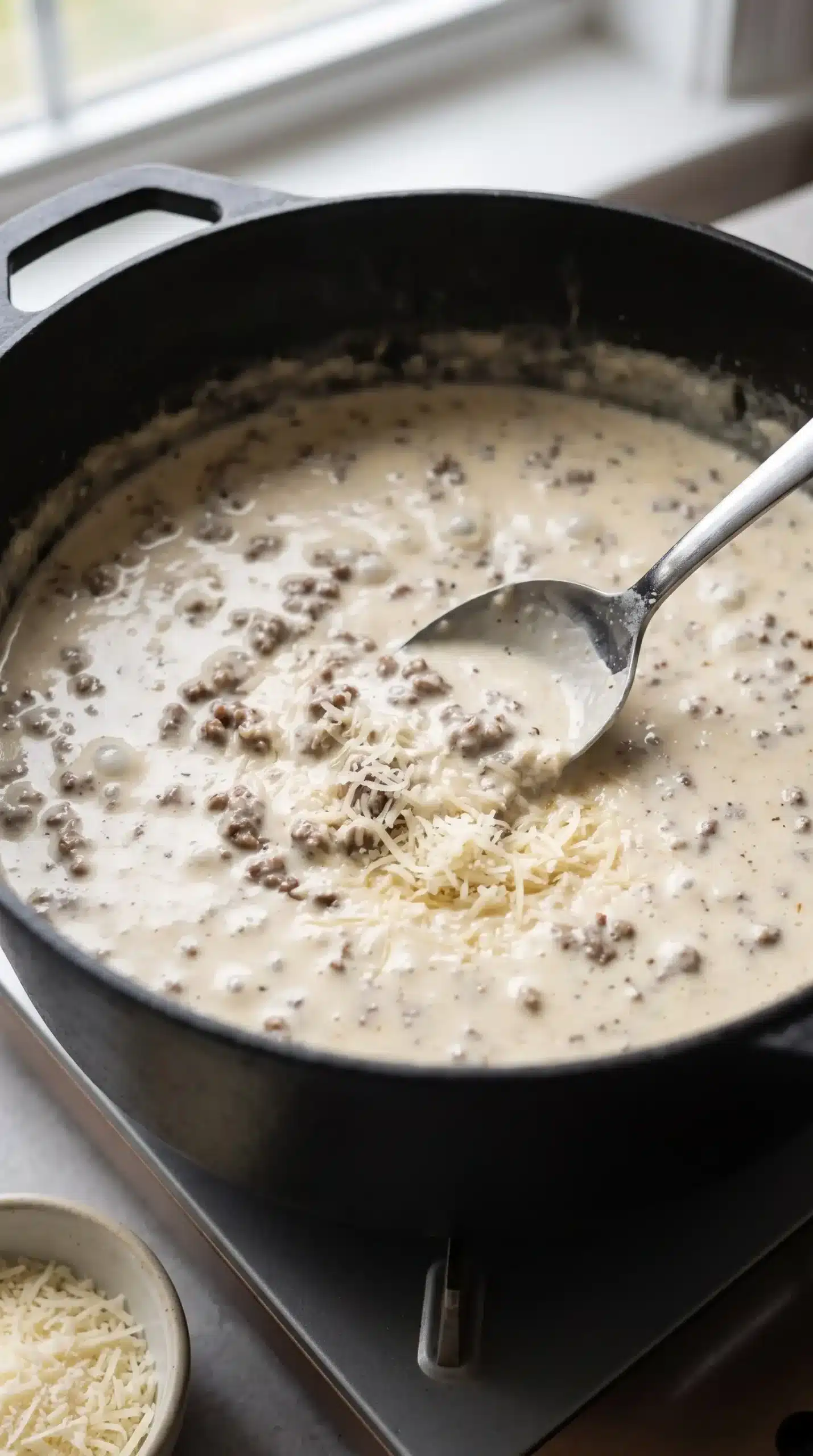
Heavy cream should reach a simmer before the grated Parmesan is added. Once the cheese goes in, stirring until it is fully incorporated creates the smooth stage needed for coating the pasta.
Gentle control at this point keeps attention on the consistency of the sauce. The mixture should be smooth before the cooked pasta enters the pot, since the pasta is intended to be coated by the finished cream-and-cheese mixture.
Brown the Ground Beef Before Building the Sauce
Medium heat provides the cooking stage for browning the ground beef before any garlic butter or cream is added. Once the meat is cooked, excess fat should be drained so the sauce does not carry unnecessary grease into the finished pasta.
After draining, the beef stays in the same pot while the garlic butter melts into it. Keeping the meat in place makes it part of the sauce rather than a separate topping added at the end.
From there, heavy cream can be added and brought to a simmer, followed by Parmesan. The sequence allows the browned beef, buttery base, creamy liquid, and cheese to come together before the pasta is tossed through them.
Choose a Pasta Shape That Holds the Sauce
| Pasta shape | What it contributes | Best reason to choose it |
|---|---|---|
| Spaghetti | Long strands with plenty of coated surface | Useful when you prefer a strand-style bite |
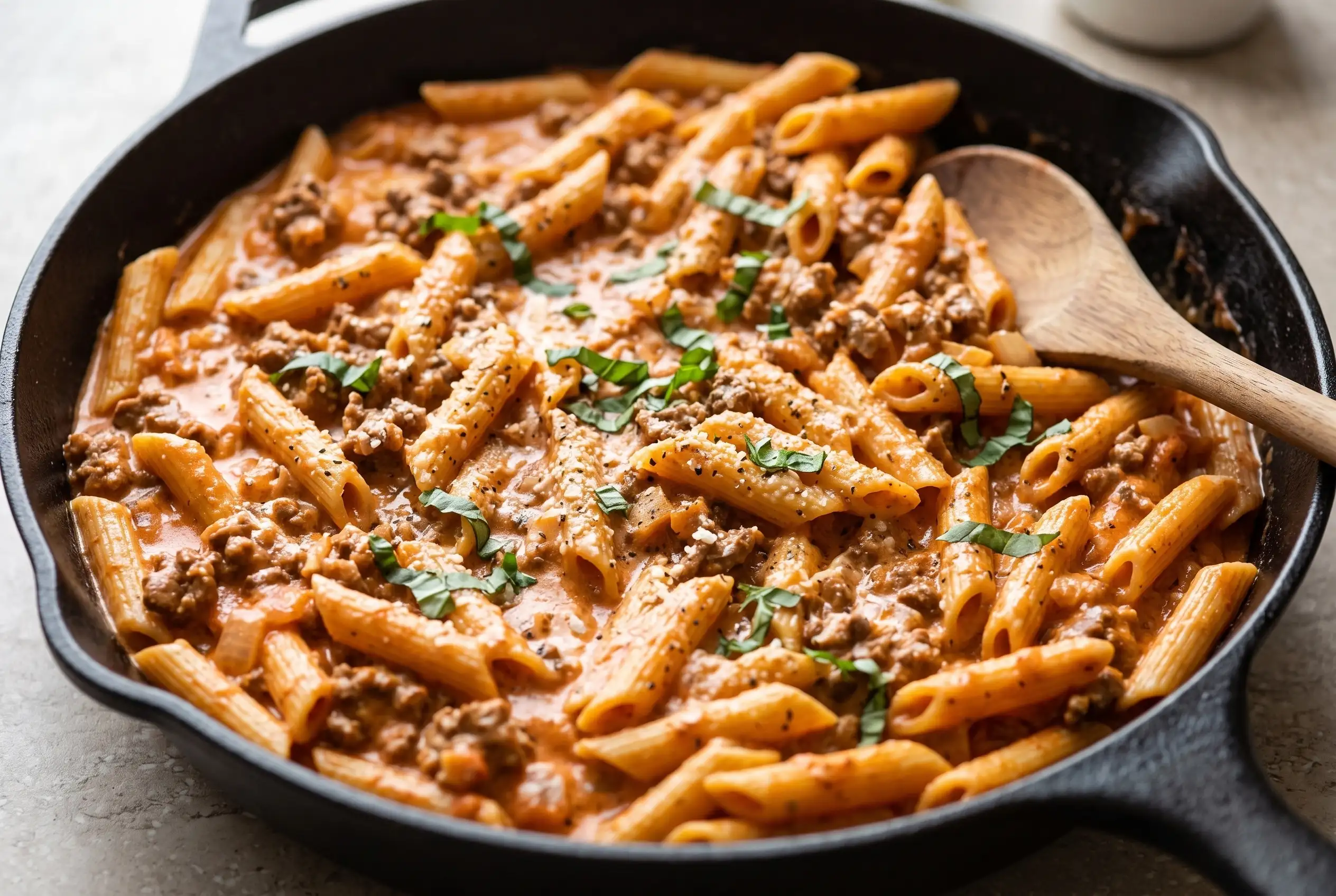
| Penne | Tubular pieces with a hearty shape | Works well alongside the ground beef |
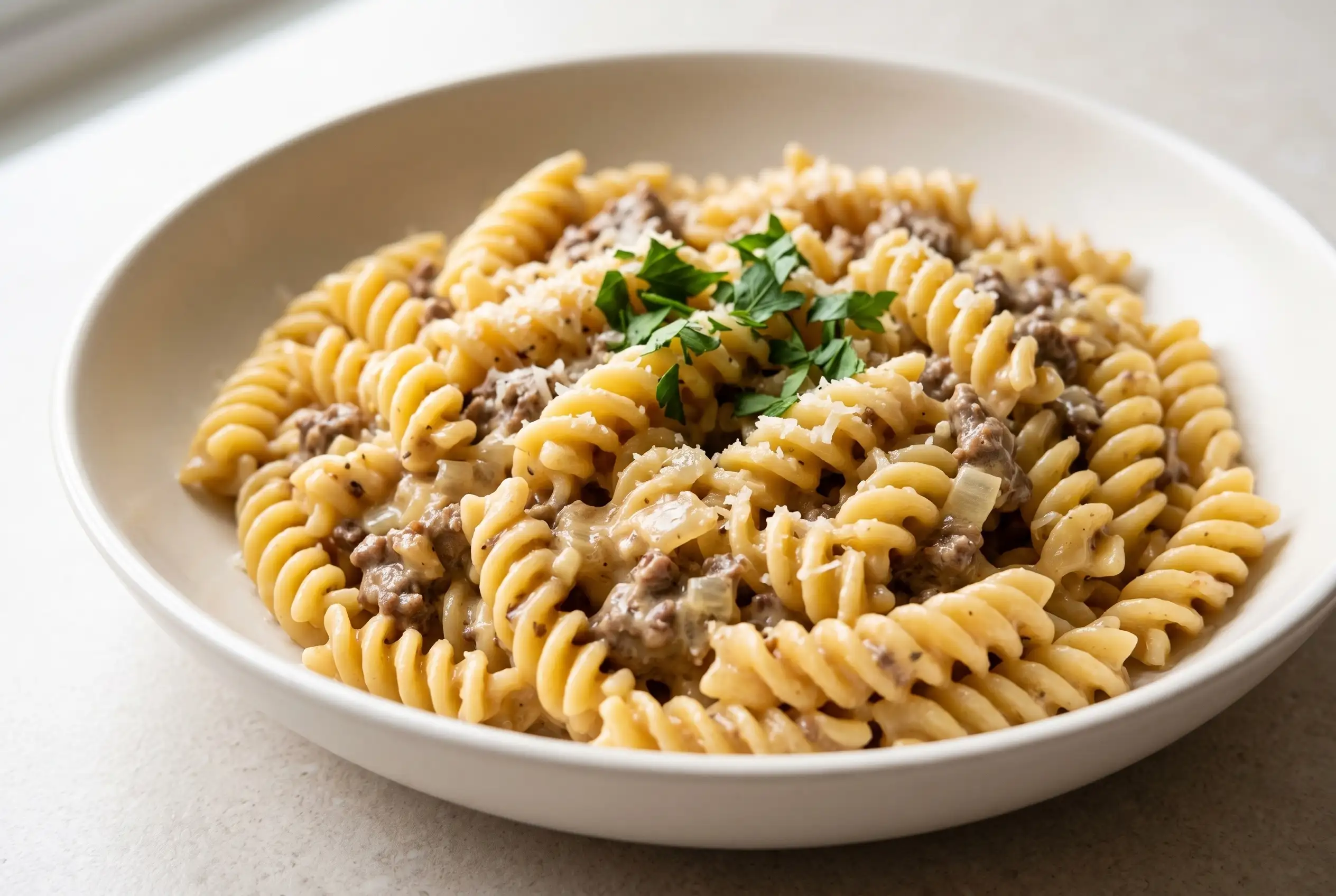
| Fusilli | Twists that catch the creamy sauce | Useful when you want sauce held in the pasta’s curves |
Keep the Sauce Smooth Before Adding Pasta
Once the heavy cream reaches a simmer, add the grated Parmesan and stir until the cheese is fully incorporated. The pasta should wait until the sauce has reached a smooth consistency.
A smooth cheese-and-cream mixture gives the cooked pasta an even coating when it is tossed into the pot. Adding the pasta too early would make it harder to judge whether the Parmesan has completely blended into the sauce.
Garlic Butter Pasta Benefits From a Simple Heat Check
Watch the cream closely as it comes to a simmer, then concentrate on stirring after the Parmesan is added. The useful visual cue is a smooth sauce with the cheese incorporated before the pasta is transferred into the pot.
Drain Excess Beef Fat Before Adding Butter
Ground beef can leave excess fat behind as it browns. Draining that excess before stirring in the garlic butter keeps the finished sauce from becoming unnecessarily greasy while retaining the browned beef.
Four Garlic Butter Pasta Errors to Avoid
- Soft pasta: Overcooking the pasta leaves it with less structure for the creamy sauce. Keep it at the al dente stage.
- Extra beef fat: Leaving excess fat in the pot can make the finished pasta greasy. Drain it after browning.
- Unsimmered cream: Parmesan is added after the heavy cream reaches a simmer, so do not skip that stage.
- Uneven cheese: Pasta should enter only after the Parmesan has been stirred into a smooth sauce.
Spinach or Broccoli Can Join the Finished Pasta
Spinach or broccoli can be mixed into garlic butter pasta when the cooked pasta is added to the sauce. This keeps the additions connected to the existing cooking method without requiring a separate sauce.
Ground Turkey or Chicken Keeps the Same Sauce Structure
Ground turkey or ground chicken can replace the ground beef while retaining the recognizable combination of pasta, garlic butter, heavy cream, Parmesan, seasoning, and parsley. The substitution changes the main protein without requiring a different creamy sauce approach.
Mushrooms or Lentils Create a Meatless Variation
Mushrooms or lentils can replace the ground beef for a meatless version while keeping the garlic butter, cream, and Parmesan at the center of the dish. The substitution changes the texture and character of the meal without requiring the core sauce components to be abandoned.
Cheese can also be adjusted when a different flavor is preferred. Mozzarella or cheddar can be used in place of Parmesan as long as the selected cheese melts well into the sauce.
Serve Garlic Butter Pasta With Fresh Contrast
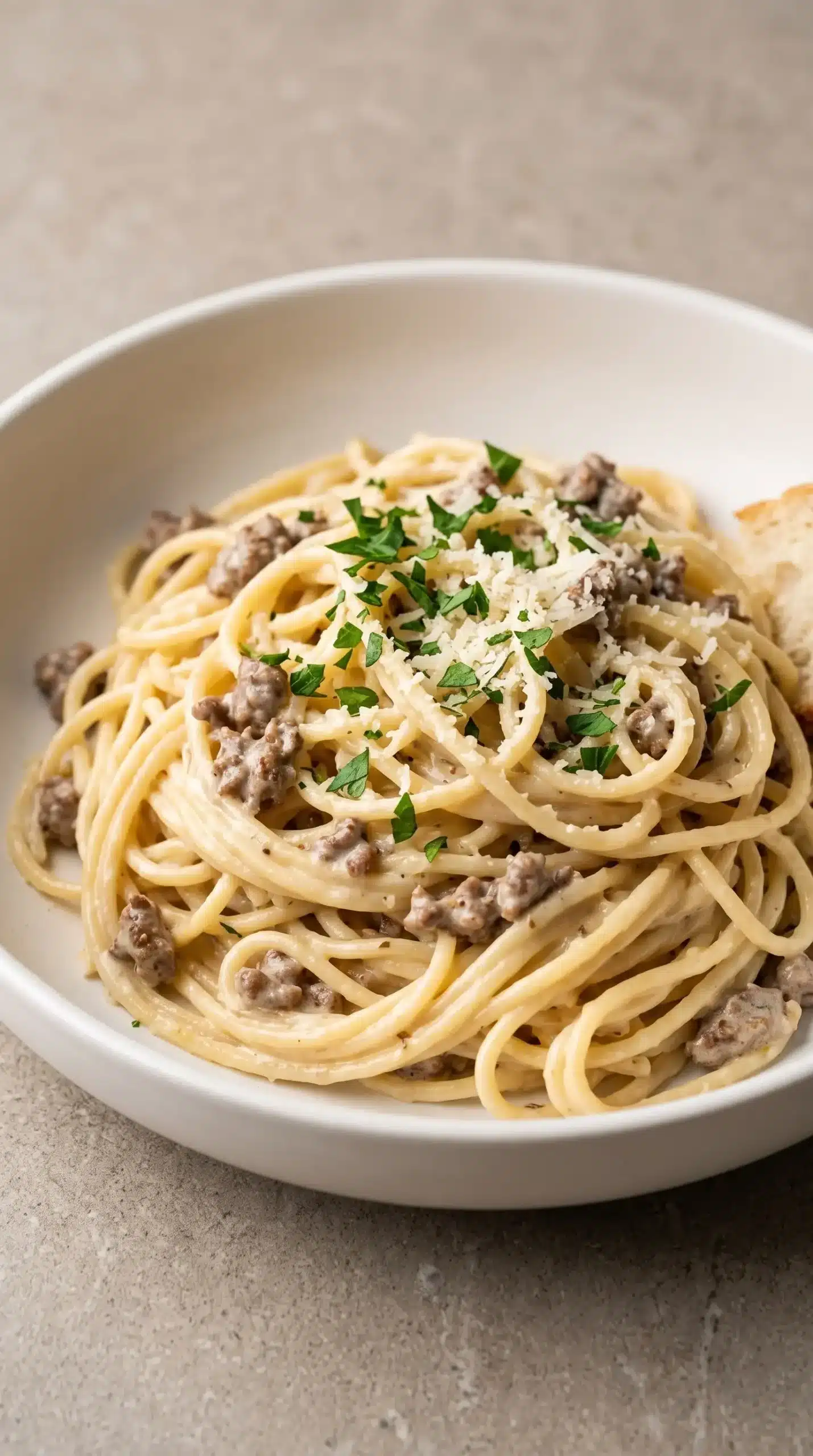
Fresh parsley can be added just before serving to finish the hot pasta. Extra Parmesan provides another way to increase the cheese flavor at the table without changing the sauce during cooking.
A side salad brings a fresh vegetable component beside the creamy pasta, while crusty bread provides a simple accompaniment for a more substantial meal. Both options leave the preparation of the pasta itself unchanged.
Store and Reheat Creamy Garlic Butter Pasta Carefully
Leftovers belong in an airtight container in the refrigerator and can be kept for up to 3 days. Reheat the pasta on the stove or in the microwave until hot.
For longer storage, cooked creamy pasta can be frozen after cooling completely. A freezer-safe container provides the appropriate storage setup, and the pasta should be reheated thoroughly before serving.
Garlic Butter Pasta Comes Together When Texture and Sauce Meet
Cooked pasta with enough structure, browned beef without excess fat, and a smooth Parmesan cream sauce give garlic butter pasta its defining texture. The most useful judgment comes just before combining them: the pasta should be ready to hold its shape, while the sauce should already be smooth enough to coat it evenly.
That point of combination brings the browned beef and garlic butter into the same creamy mixture instead of leaving separate layers in the finished dish. Keeping control of those textures preserves the balance established by the simple cooking method.
Garlic Butter Pasta Questions About Sauce and Leftovers
Can I use any pasta shape for garlic butter pasta?
Yes. Spaghetti, penne, and fusilli all work with the creamy sauce. Choose the shape according to the texture you prefer, then cook it according to the package directions while keeping it at the al dente stage.
Why should the heavy cream simmer before Parmesan is added?
The simmer brings the cream to the stage specified for adding the grated Parmesan. Stirring the cheese into the simmered cream until it is fully incorporated produces the smooth sauce needed before the cooked pasta is tossed in.
What should I do if my ground beef leaves a lot of fat?
Drain away the excess fat after browning the beef and before adding the garlic butter. The cooked beef remains in the pot, while removing the excess prevents unnecessary grease from becoming part of the creamy sauce.
Can I make garlic butter pasta without ground beef?
Mushrooms or lentils can replace the beef for a meatless variation. Ground turkey or ground chicken are alternatives when you still want a meat-based version but prefer a different protein.
How should I handle leftover creamy garlic butter pasta?
For refrigerated leftovers, keep the pasta in an airtight container at 40°F (4°C) or below and use it within 3 to 4 days. If you plan to freeze it, cool the cooked pasta completely and place it in a freezer-safe container before reheating thoroughly.
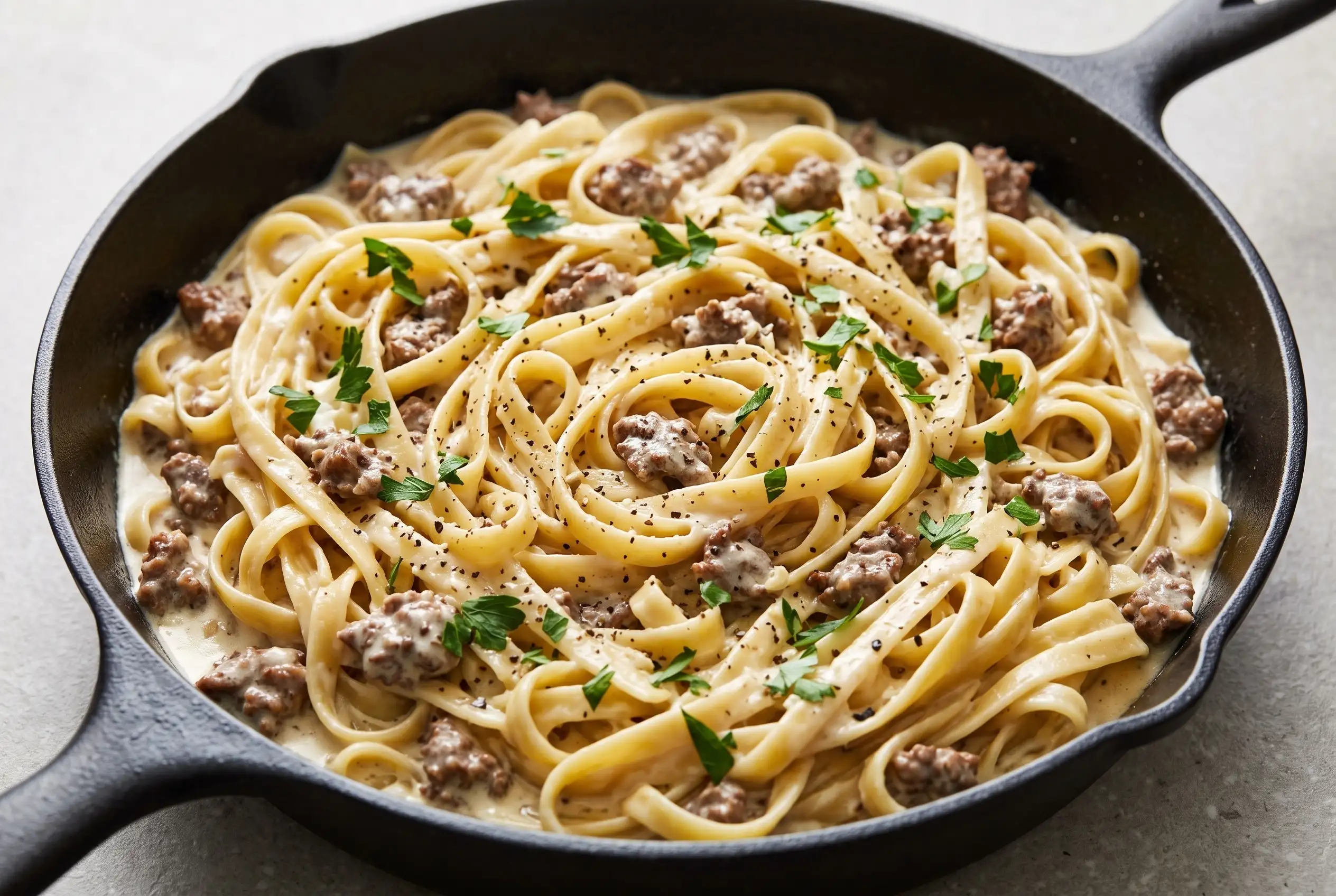
Garlic Butter Pasta with Ground Beef and Heavy Cream
Ingredients
Method
- Prepare the pasta according to the package directions until al dente. Drain well and set aside.
- Place the ground beef in a large pot over medium heat and cook until browned. Drain away the excess fat.
- Stir the garlic butter into the cooked beef and continue mixing until the butter has melted and evenly coats the meat.
- Add the heavy cream to the pot and heat until it reaches a simmer.
- Add the grated Parmesan to the simmering cream. Stir until the cheese has melted and the sauce is smooth.
- Transfer the cooked pasta into the creamy beef sauce. Toss until evenly coated and heated through.
- Serve hot and finish with fresh parsley and additional Parmesan if desired.