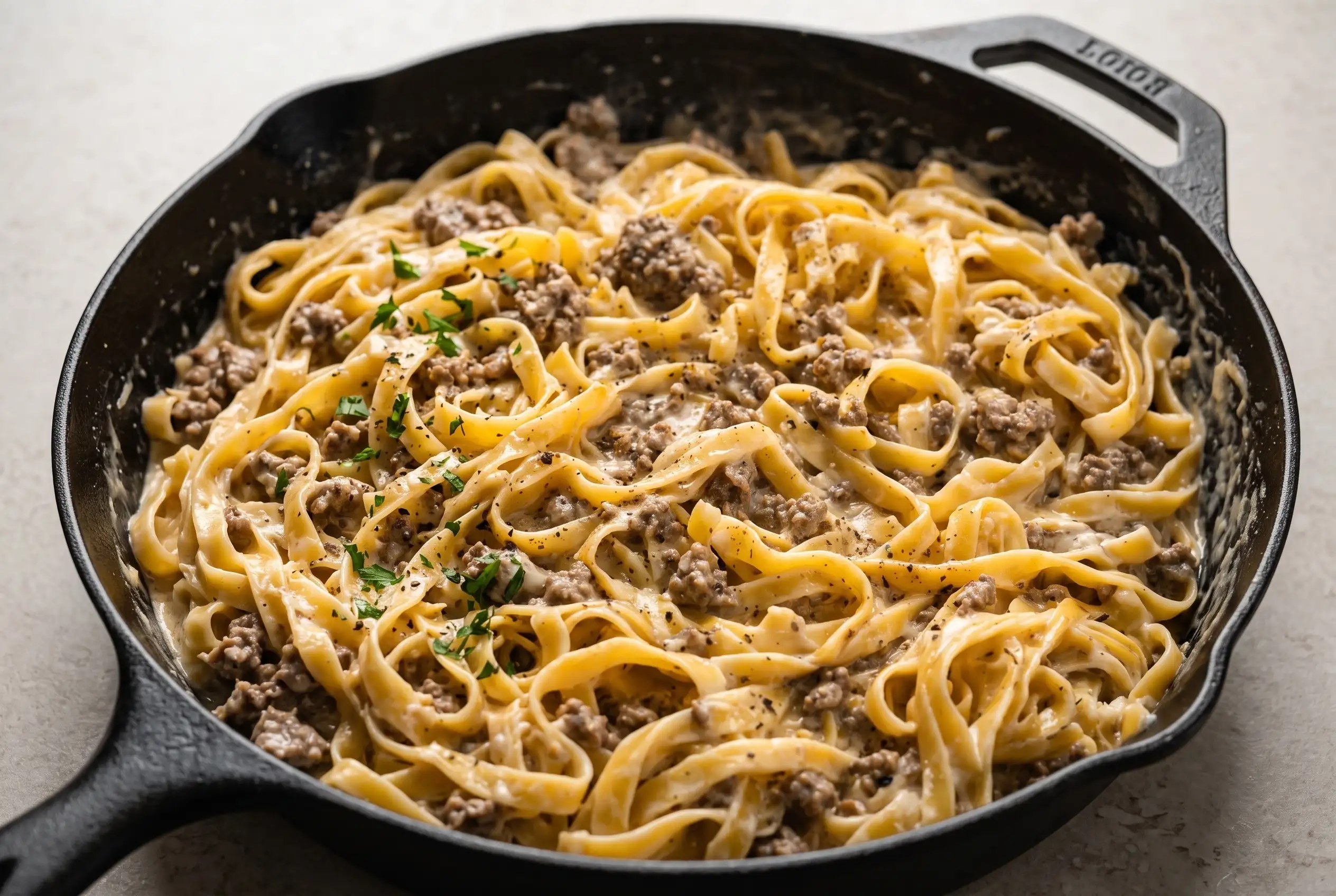
Creamy Ground Beef Pasta with Garlic and Parmesan
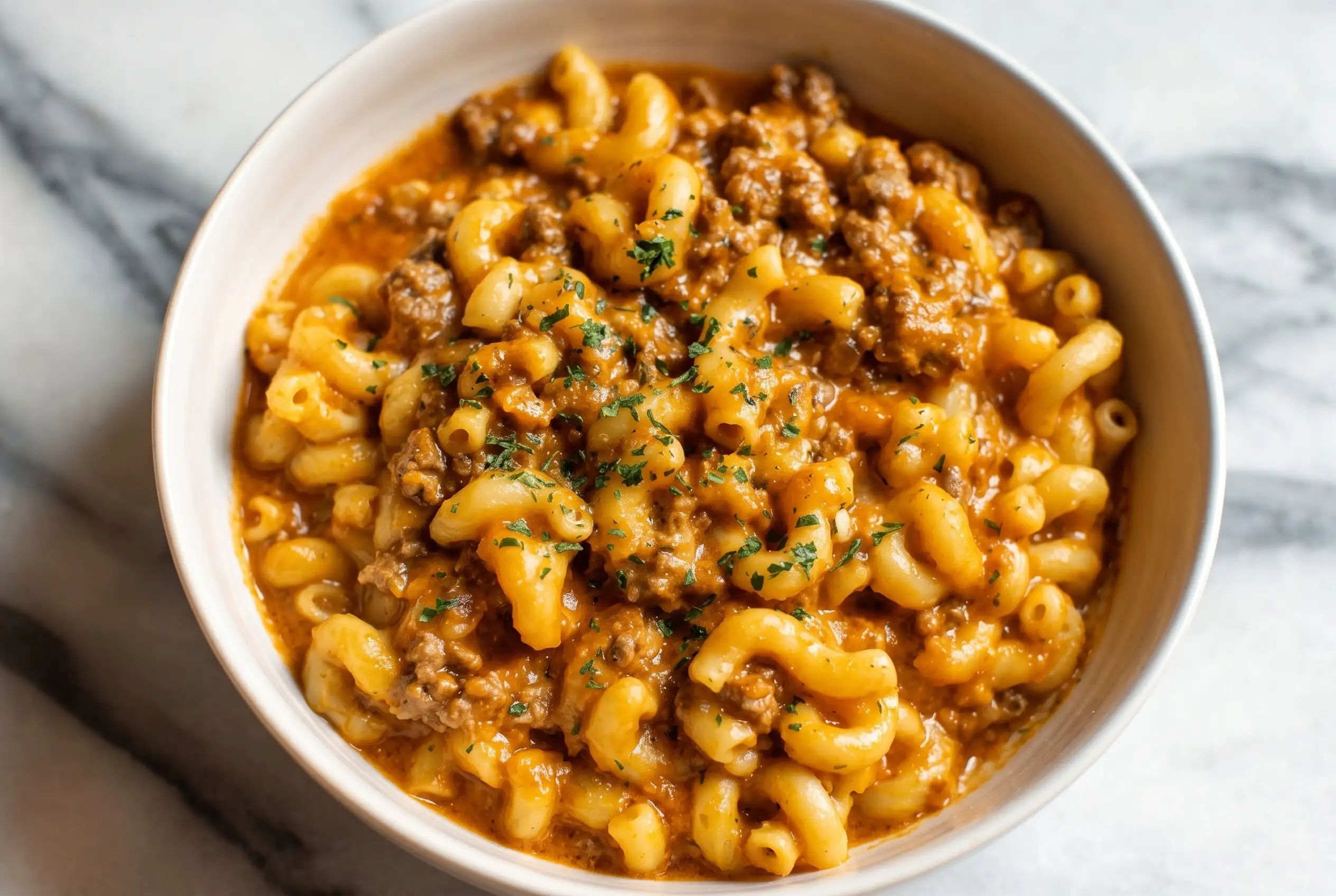
Creamy ground beef pasta brings together tender pasta, browned lean beef, Parmesan, garlic, onion, and a smooth cream-based sauce in one satisfying stovetop meal. The combination feels hearty without requiring a complicated cooking process, making stovetop creamy ground beef pasta a practical choice when you want a warm dinner built from familiar ingredients.
Everything comes together through a skillet sauce that starts with sautéed aromatics and browned beef before vegetable broth, cream, and Parmesan create the creamy finish. Pasta is cooked separately until al dente, then folded into the sauce so each piece is coated before serving.
Why Stovetop Creamy Ground Beef Pasta Works So Well
Stovetop cooking keeps the meal straightforward while giving you direct control over the beef, sauce, and pasta. The skillet becomes the home for the finished sauce, so there is no need to transfer the assembled pasta to the oven.
A 30-minute total cooking window also suits busy evenings. The pasta cooks in a separate pot while the beef and sauce develop in the skillet, allowing the two parts to be prepared alongside one another instead of waiting for one stage to finish before starting the next.
The Creamy Sauce Depends on Broth, Cream, and Parmesan
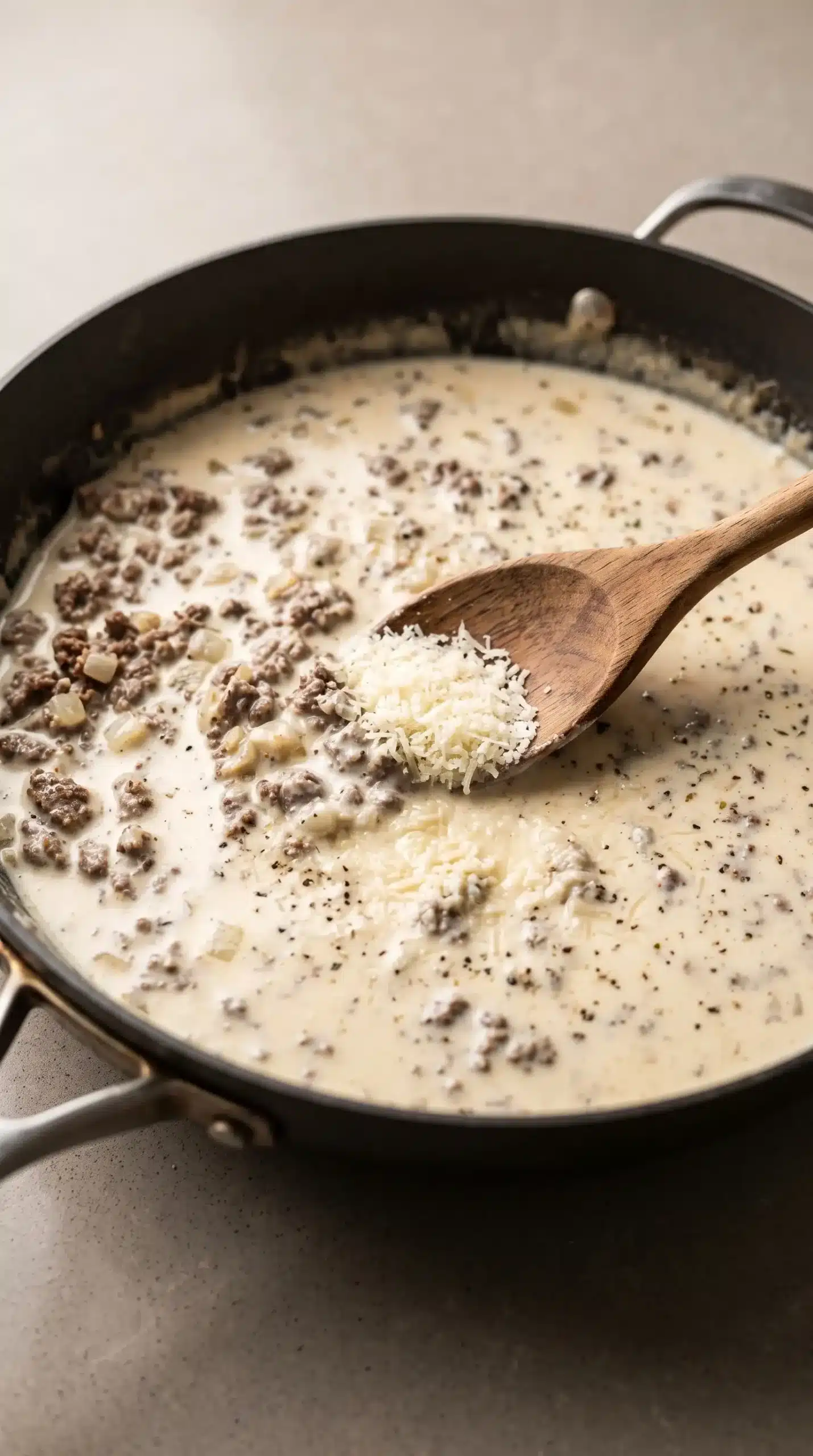
Vegetable broth gives the skillet sauce a savory liquid base, while heavy cream supplies its richness. Half-and-half can be used in place of heavy cream when you prefer a lighter creamy consistency.
Parmesan is stirred in after the broth and cream have simmered briefly. Waiting until the sauce has slightly thickened before adding the cheese helps it melt into the liquid and become part of the finished coating.
Italian seasoning ties the savory elements together without requiring a long list of additional seasonings. Salt and pepper remain adjustable, so the finished sauce can be tasted and corrected after the pasta has been incorporated.
Penne and Fusilli Give the Sauce Two Useful Textures
Penne and fusilli are both suitable for the creamy sauce, but their shapes create slightly different eating experiences. Penne offers short tubes that carry sauce inside and around the pasta, while fusilli has twists that catch sauce along its curves.
| Pasta choice | Shape characteristic | Best practical use here |
|---|---|---|
| Penne | Short tubular pieces | Works well when you want a substantial bite with sauce surrounding each piece |
| Fusilli | Twisted, spiral pieces | Useful for catching the creamy Parmesan sauce across the twists |
| Whole wheat or gluten-free pasta | Alternative pasta varieties | Can replace the standard pasta when those varieties better suit your needs |
Whatever variety you choose, cooking it until al dente gives the finished ground beef pasta with parmesan a firm texture that holds up when it is stirred into the warm sauce.
Browned Beef and Aromatics Set the Flavor Foundation
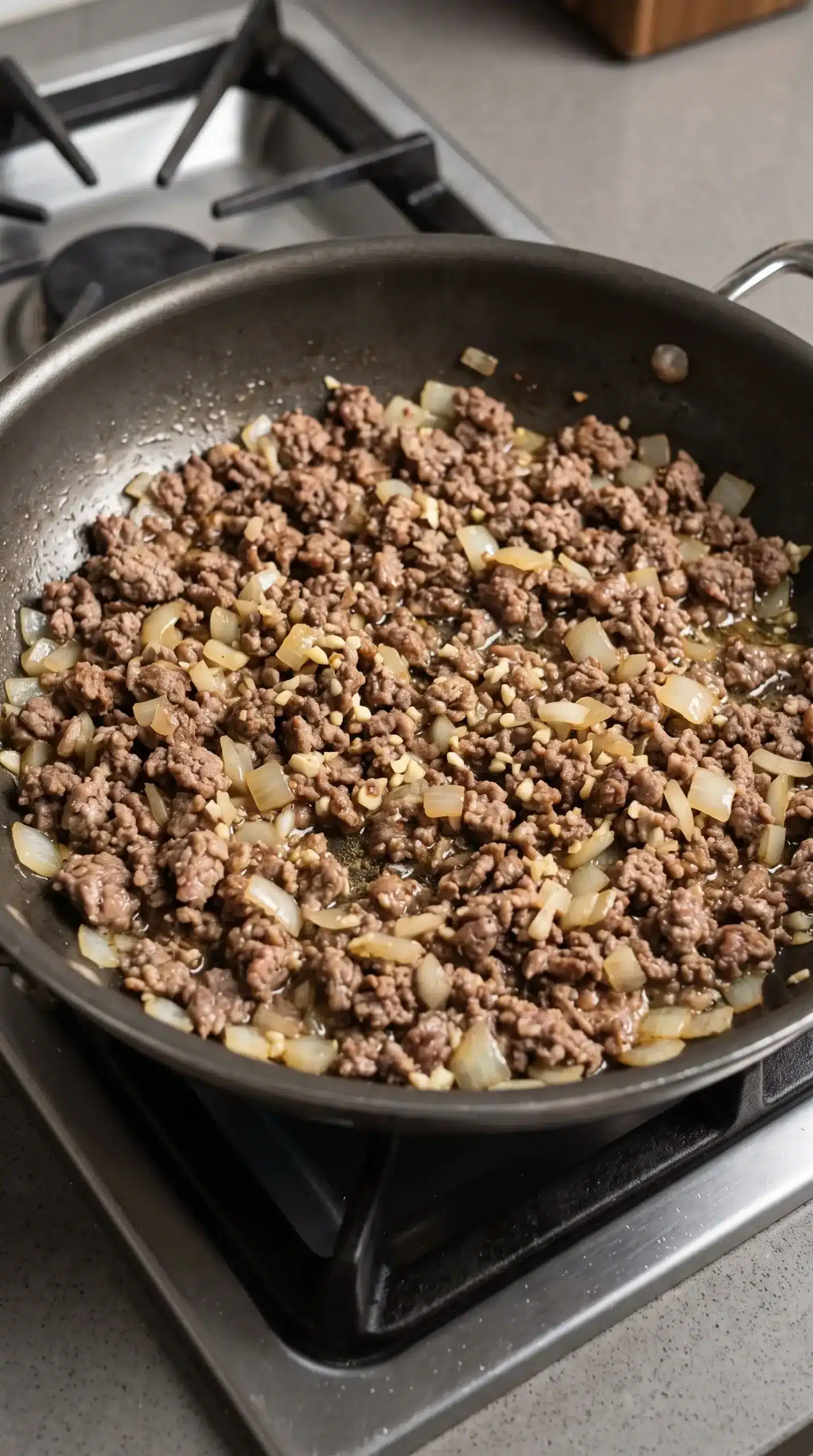
Onion needs enough time in the olive oil to become translucent before the beef enters the skillet. About five minutes over medium heat gives the diced onion time to soften, while the garlic needs only another minute once added.
Lean ground beef then cooks directly with the softened aromatics. Browning it for about six to eight minutes develops the savory base of the sauce, while seasoning with salt and pepper during cooking distributes those flavors through the beef.
Keeping the skillet at medium heat provides a controlled environment for these early stages. The goal is to brown the beef thoroughly while avoiding unnecessary haste with the onion and garlic, since each component enters the skillet at a different pace.
Control the Sauce Before Adding the Pasta
Once the beef is cooked, vegetable broth and cream are added to the skillet and simmered for about three minutes. The useful visual cue is a sauce that has become slightly thicker before the Parmesan goes in.
Cheese should be stirred into that warm liquid until melted. If the sauce is incorporated into the pasta too early, it has less opportunity to develop the slightly thickened consistency described by the cooking process.
A gentle hand matters when the cooked pasta reaches the skillet. Stir just enough to coat the penne or fusilli evenly, then taste and adjust the salt and pepper if needed.
Al Dente Pasta Keeps the Finished Dish Balanced
Cooking pasta in salted water gives it its initial seasoning, while package instructions provide the appropriate cooking guidance for the chosen variety. Draining once the pasta reaches al dente keeps it ready for the creamy sauce without turning the skillet mixture into an overly soft pasta dish.
Immediate coating is especially useful for texture. Pasta that has just been drained can be moved into the sauce and stirred gently, allowing the warm sauce to surround the pieces while they are still ready to absorb and hold onto it.
For an easy creamy beef pasta with a cohesive finish, the important judgment is not to overwork the pasta once it meets the sauce. Even coating is enough; vigorous stirring is unnecessary.
Mistakes That Can Dull Stovetop Creamy Ground Beef Pasta
- Overcooking the garlic: Keep its skillet time to about one minute after the onion becomes translucent so it is incorporated without extending that stage unnecessarily.
- Skipping the beef seasoning: Salt and pepper the beef while it cooks, then check the finished sauce again before serving.
- Adding Parmesan too soon: Let the broth and cream simmer until slightly thickened before stirring in the cheese.
- Letting drained pasta sit: Move the pasta into the sauce after draining so it can be coated while warm.
- Freezing the leftovers: Cream-based sauce may separate after thawing, so refrigeration is the better storage approach for remaining portions.
These issues are closely connected to timing. The onion, garlic, beef, sauce, cheese, and pasta each have a specific point at which they join the dish, and respecting those transitions keeps the finished skillet pasta cohesive.
Small Ingredient Changes Can Shift the Finished Bowl
Lean ground beef is the stated foundation, but several substitutions can change the character of the meal while preserving its basic structure. Ground turkey or chicken can replace the beef, and lentils or a plant-based meat alternative can provide a meat-free direction.
| Change | How it fits the dish | Useful consideration |
|---|---|---|
| Ground turkey | Direct alternative to ground beef | Fits the lighter-option approach described for the dish |
| Ground chicken | Another poultry-based replacement | Can stand in for beef within the same general preparation |
| Lentils | Meat-free replacement | Provides a vegetarian direction without using ground meat |
| Plant-based meat alternative | Meat-free replacement | Useful when you want a vegetarian version with a meat-alternative component |
Vegetables can also be introduced without changing the central sauce concept. Chopped spinach, mushrooms, or bell peppers are suggested variations, while crushed red pepper flakes or chili oil can add heat for those who want a spicier finish.
Parmesan and Fresh Herbs Complete the Serving
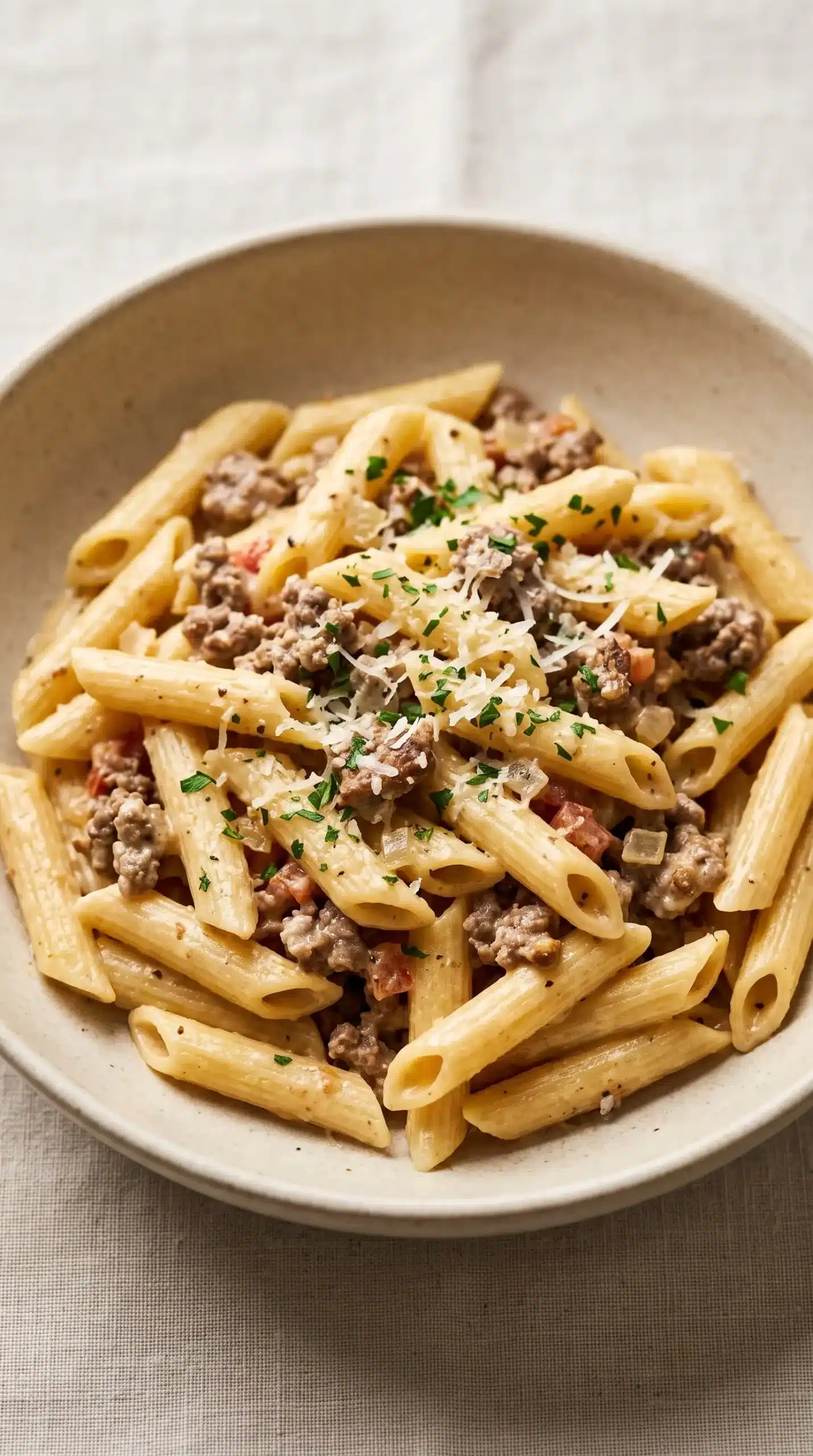
Freshly served bowls benefit from an additional sprinkle of grated Parmesan, reinforcing the savory cheese already melted into the sauce. Parsley or basil can be used as a fresh herb garnish when desired.
On the side, a crisp salad or garlic bread turns the creamy pasta into a more complete meal. Steamed vegetables are another suitable pairing when a vegetable side is preferred.
Refrigeration Keeps Leftovers Ready for Another Meal
Remaining creamy ground beef pasta should be transferred to an airtight container and refrigerated for up to three days. Keeping the pasta chilled in a sealed container helps make the leftovers practical for a later meal.
Reheating works best gently on the stove. A small splash of broth or cream can loosen the sauce as it warms, restoring a smoother consistency instead of heating the pasta dry.
Freezing is not recommended because the cream-based sauce may separate when thawed. Refrigeration avoids that particular issue and fits the short storage window provided for the dish.
Ways to Make Each Batch Your Own
Spinach is one of the simplest vegetable additions mentioned for the dish, while mushrooms and bell peppers offer other ways to change the skillet without abandoning the creamy Parmesan base. These additions are best treated as customization choices instead of requirements.
Heat can move in a different direction. Crushed red pepper flakes can be added for a spicier version, or chili oil can be served with the finished pasta. Either option changes the flavor profile without requiring a different sauce.
For the pasta itself, whole wheat or gluten-free varieties can replace the standard choice. Half-and-half can also replace heavy cream, giving another way to adjust the richness while retaining the creamy character.
Nutritional Balance Comes From Beef, Cheese, and Pasta
Lean ground beef and Parmesan provide substantial protein, while pasta contributes carbohydrates to the meal. Heavy cream adds richness and calcium, and the onions and garlic contribute vitamins and antioxidants.
Choosing lean ground beef can reduce the fat content compared with a higher-fat ground beef choice. Half-and-half or light cream can also be used when a less rich option is preferred, while whole wheat pasta offers an option with added fiber.
The finished meal combines protein, carbohydrates, and a creamy sauce in one bowl. Pairing it with a salad or steamed vegetables provides another way to balance the plate without changing the pasta itself.
The Best Texture Comes From Timing the Sauce and Pasta
Cooked beef, a slightly thickened broth-and-cream sauce, melted Parmesan, and al dente pasta create the key texture combination in creamy ground beef pasta. Each part needs to reach the skillet at the right stage so the finished mixture remains creamy without becoming loose or overly soft.
That balance is easiest to protect by watching the sauce before adding cheese, draining the pasta when it is al dente, and coating it promptly with a gentle stir. The result is a stovetop creamy ground beef pasta that stays focused on its central strengths: savory browned beef, creamy Parmesan sauce, and pasta that still has structure.
Creamy Ground Beef Pasta Questions About Sticking and Reheating
How can I keep the pasta from sticking after draining?
Cook the pasta in salted water according to the package instructions, stir it occasionally while it cooks, and transfer it into the sauce immediately after draining. Prompt coating keeps the pasta from sitting separately for long.
Can half-and-half replace heavy cream?
Yes. Half-and-half is specifically given as an alternative to heavy cream. It provides a less rich option while still keeping the sauce creamy.
What should I do if the sauce needs more seasoning?
Taste the combined pasta and sauce after stirring them together, then adjust with salt and pepper as needed. This allows the seasoning to be judged in the context of the Parmesan and broth already present.
Can I prepare the sauce before serving?
The sauce can be prepared in advance, while the pasta is better cooked just before serving. That approach separates the make-ahead portion from the pasta-cooking stage and helps preserve the intended texture.
Is freezing a good way to store creamy ground beef pasta?
No. Freezing is not recommended because the cream-based sauce may separate after thawing. Refrigerating leftovers in an airtight container for up to three days is the stated storage approach.
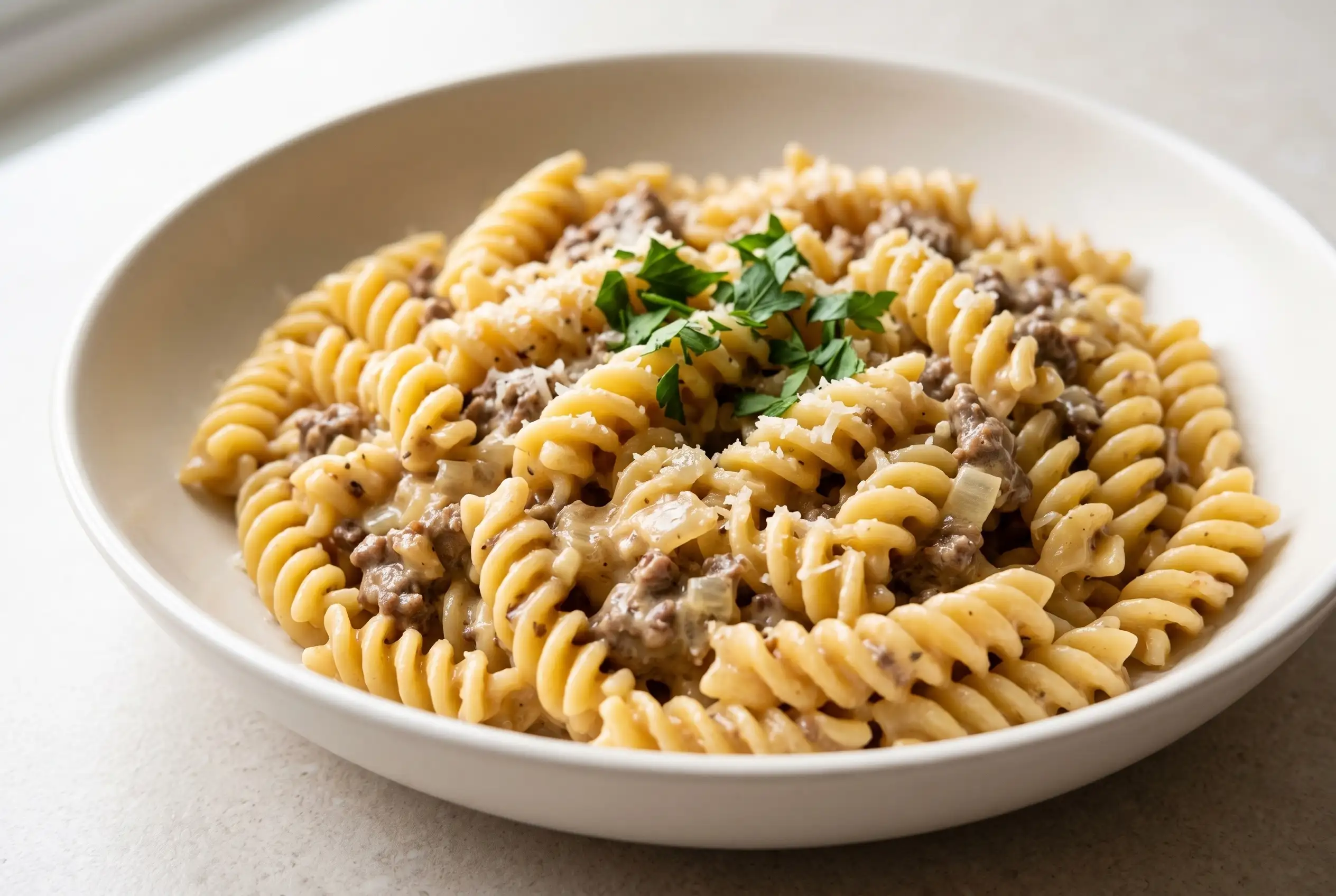
Creamy Ground Beef Pasta with Garlic and Parmesan
Ingredients
Method
- Warm the olive oil in a large skillet over medium heat. Add the diced onion and cook for about 5 minutes, until translucent. Stir in the minced garlic and cook for 1 minute.
- Add the lean ground beef and cook for 6–8 minutes, breaking it apart as it browns. Season with salt and pepper.
- While the beef cooks, bring salted water to a boil in a separate pot. Cook the penne or fusilli according to the package directions until al dente, then drain.
- Add the vegetable broth to the skillet with the cooked beef. Pour in the heavy cream or half-and-half and simmer for about 3 minutes, allowing the sauce to thicken slightly.
- Stir the grated Parmesan and Italian seasoning into the beef mixture until the cheese has melted and the sauce is smooth.
- Transfer the drained pasta to the skillet and gently toss until evenly coated with the creamy beef sauce. Adjust the salt and pepper to taste.
- Serve the creamy ground beef pasta immediately.