Cheesy Ground Beef Roll with Cheddar and Mozzarella
Cheesy ground beef roll brings seasoned beef, melted cheddar and mozzarella, fresh parsley, and flaky crescent dough together in a warm, sliceable comfort food. The filling becomes especially gooey as the cooked beef meets the shredded cheeses, while the crescent exterior bakes into a golden shell with a glossy egg-washed finish.
Each slice gives you a combination of savory ground beef, Italian seasoning, creamy melted cheese, and buttery-style crescent dough. The finished roll works well as a family dinner, a cozy snack, or an appetizer that can be cut into thick rounds for sharing.
What Makes the Cheesy Ground Beef Roll Work
Ground beef provides the hearty center, while cheddar and mozzarella create two useful textures in the filling. Cheddar contributes a pronounced cheesy flavor, and mozzarella helps produce the soft, stretchy quality associated with a gooey cheese filling.
Seasoning the beef before combining it with the cheese matters because the spices are distributed through the meat itself. Garlic powder, onion powder, paprika, Italian seasoning, salt, and black pepper create a seasoned base that carries through every slice.
Crescent roll dough gives the ground beef cheese roll its defining outer layer. Pressing the seams together before adding the filling helps keep the sheet intact during rolling, and placing the completed log seam-side down helps keep the roll closed as it bakes.
Cheese Choices That Shape the Filling
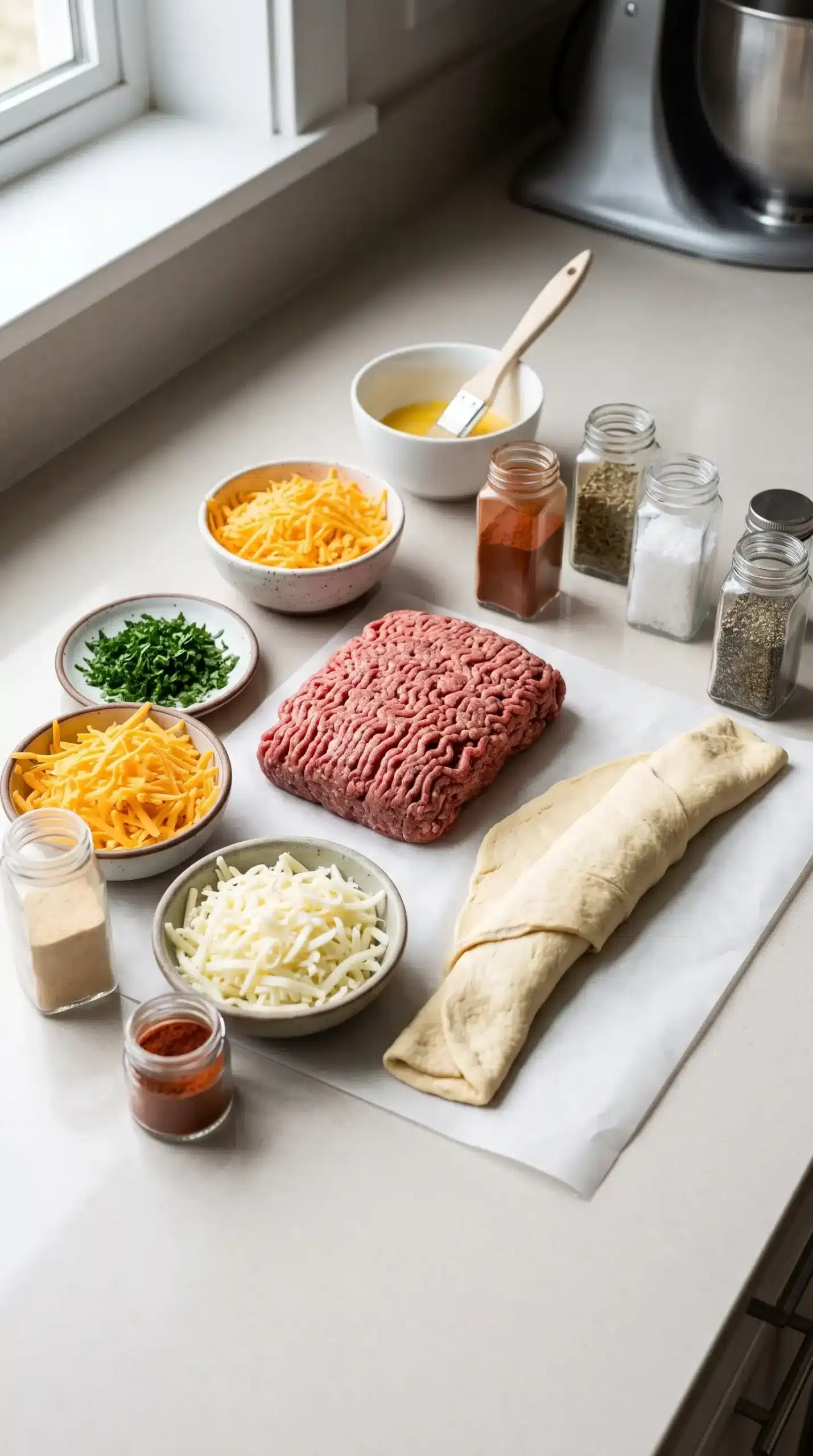
Cheddar and mozzarella are the core cheese combination for the cheesy ground beef roll. Shredding both cheeses allows them to mix evenly with the cooked beef and parsley instead of leaving large pieces concentrated in isolated areas.
Pepper jack can replace part of the cheese when a spicier variation is wanted. Cream cheese can also be incorporated when a creamier filling is preferred, while plant-based cheese is an option for a dairy-free variation.
| Cheese option | What it changes | Best use |
|---|---|---|
| Cheddar | Stronger savory cheese flavor | Keep as a main cheese in the filling |
| Mozzarella | Soft, gooey texture | Pair with cheddar for the stated filling |
| Pepper jack | More spice | Use as a variation when extra heat is desired |
| Cream cheese | Creamier texture | Add for a richer filling variation |
Seasoned Beef Sets the Flavor Base
The cooked beef should be browned before it meets the cheese mixture. Breaking it apart with a wooden spoon creates smaller pieces that are easier to distribute across the crescent dough, while draining excess grease keeps the filling from becoming unnecessarily oily.
Garlic powder, onion powder, paprika, Italian seasoning, salt, and black pepper are added after browning. Giving the seasoned beef a short period of cooking allows those flavors to blend before the skillet is removed from the heat.
Fresh parsley enters after the beef has been transferred to a bowl with the cheeses. Its fresh character contrasts with the rich beef-and-cheese center, and extra chopped parsley can be used over the baked slices as a garnish.
Rolling the Crescent Dough Without Losing the Filling
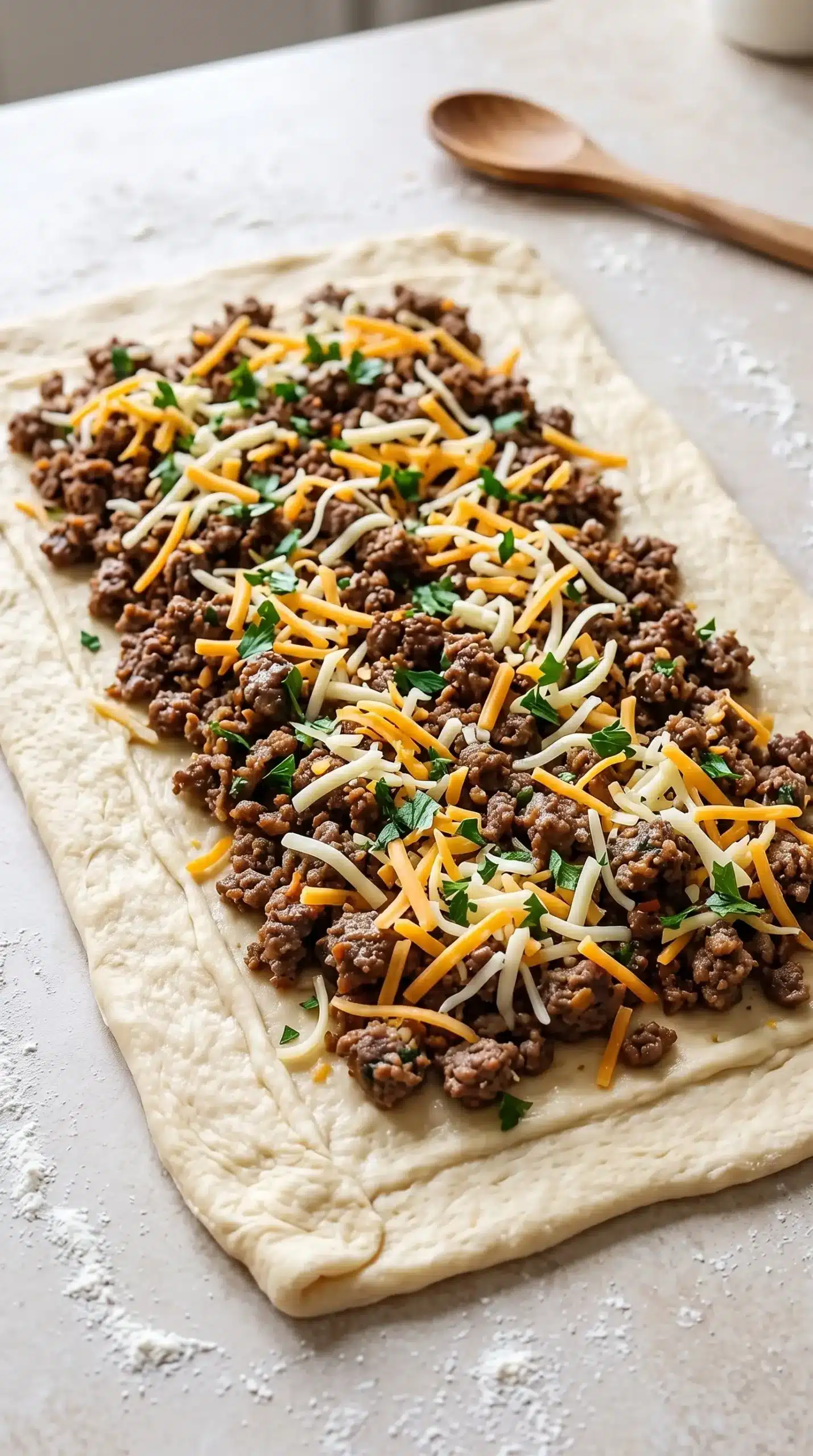
A neat roll begins with a single sheet of crescent dough. Unrolling it onto a lightly floured surface and gently pressing the seams together creates a more continuous surface for the filling.
Spread the beef mixture across the dough while keeping a small border around the edges. That open margin gives the filling some room as the dough is rolled and makes it easier to pinch the seam closed afterward.
- Seal the sheet: Press the crescent seams together before adding the filling.
- Leave a border: Keep a small uncovered edge around the filling.
- Roll firmly: Start at one long side and form a tight log without crushing the dough.
- Secure the ends: Pinch the seam and tuck in the ends before transferring the roll.
Where the Egg Wash Matters Most
Beaten egg is brushed over the top and sides of the assembled roll immediately before baking. Applying a thin, even layer of egg wash helps give the crescent exterior an attractive golden color and glossy finish.
Coverage matters more than applying a heavy layer. The egg wash should reach the exposed dough across the top and sides while the roll remains positioned seam-side down on the parchment-lined baking sheet.
Cheesy Ground Beef Roll Baking Control
The oven should already be at 375°F (190°C) when the assembled roll goes in. A parchment-lined baking sheet provides a prepared surface and also makes cleanup easier after the cheese-filled dough has baked.
Watch the exterior as the roll approaches the stated baking window. A properly baked roll should be golden brown and cooked through, with the crescent dough no longer appearing raw.
After baking, a short cooling period makes slicing more manageable. Cutting immediately can disturb the hot filling, so allowing the roll to cool for 5 minutes gives the cheese and beef center a brief chance to settle before the roll is cut into thick rounds.
Cheesy Ground Beef Roll Mistakes to Avoid
Excess moisture or an insecure dough seam can make an otherwise straightforward ground beef crescent roll harder to handle. The supplied method points to a few specific controls that keep the filling contained and the exterior intact.
Skipping the grease drain: Excess grease left with the browned beef can make the filling heavier and more difficult to manage. Drain the excess before seasoning and combining the beef with the cheeses.
Overlooking the seams: Unsealed crescent dough can separate while being rolled. Press the seams together while the dough is still flat, then pinch the finished seam after rolling.
Overfilling the edges: Pushing the filling all the way to the perimeter makes sealing more difficult. Keeping a small border provides a clean area for joining the dough.
Small Additions That Change the Cheesy Beef Crescent Roll
Vegetables can change the filling without changing the basic concept. Spinach, broccoli, or bell peppers are suggested options, giving the beef-and-cheese center additional ingredients while retaining the crescent exterior.
When using spinach in the roll, cook it until excess moisture is gone before folding it into the beef and cheese filling; a beef-and-mozzarella combination is used in stuffed Italian meatloaf with mozzarella and spinach.
Worcestershire sauce is another flavor variation. A splash can be stirred into the beef mixture for a deeper savory profile before the meat is combined with the cheeses.
Ground turkey can replace the ground beef when desired. The same general assembly creates a lighter alternative while keeping the seasoned meat, cheese, parsley, and crescent dough combination intact.
Serving Slices for Dinner or Sharing
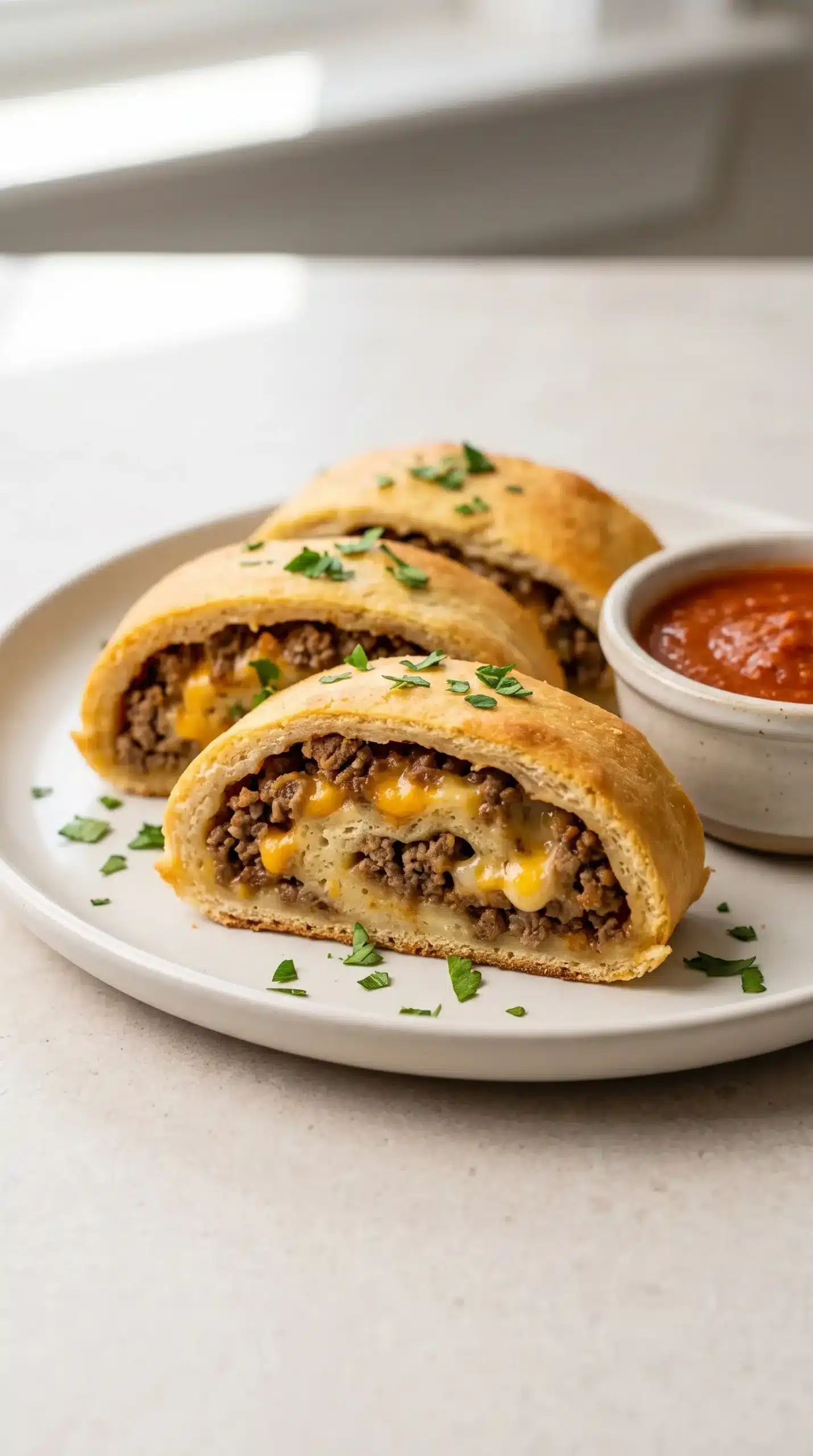
Warm slices make the cheesy ground beef roll easy to serve because the log can be cut into thick rounds after its short cooling period. The shape works for a family meal, a snack, or a party appetizer.
A fresh salad provides a simple accompaniment when the roll is served as part of a meal. For dipping, marinara and ranch both pair with the savory filling, while spicy sriracha can provide a hotter contrast.
Make-Ahead and Freezer Options for the Roll
The filling can be prepared and the dough assembled ahead of baking. An assembled roll can be stored in the refrigerator until the following day, making it possible to handle the preparation before the meal and bake closer to serving time.
For freezing, prepare the roll through the assembly stage, wrap it tightly in plastic wrap, and freeze it before baking. The supplied method allows it to be baked directly from frozen, with a few extra minutes added to the baking time.
Keeping Leftover Cheesy Ground Beef Roll Enjoyable
Leftover slices belong in an airtight container in the refrigerator and can be kept for up to 3 days. Keeping the pieces covered helps protect the baked dough and filling during storage.
Reheating can be done in either the microwave or oven. Warm the slices until heated through, then serve them as individual portions with a dipping sauce or alongside a fresh salad.
A Vegetarian Version Without the Beef
Sautéed mushrooms, bell peppers, and zucchini can replace the ground beef for a vegetarian variation. The vegetables provide the central filling while the crescent dough and cheese keep the familiar rolled format.
Plant-based cheese can be used when a dairy-free version is needed. Because the substitution changes the filling itself, choose a plant-based cheese that suits the desired texture while maintaining the overall structure of the roll.
The Best Texture Comes From Controlled Assembly
The cheesy ground beef roll depends on a simple sequence of texture decisions: browned beef with excess grease removed, cheese mixed into slightly cooled meat, a sealed crescent dough sheet, and a contained filling before baking.
Keeping those elements under control makes the finished roll easier to slice and helps preserve the contrast between the golden crescent exterior and warm, cheesy beef center. The most important visual cue is a browned, cooked-through exterior paired with a filling that remains together when the rounds are cut.
Cheesy Ground Beef Roll Questions About Baking and Storage
Can ground turkey replace the beef?
Yes. Ground turkey can be used in place of ground beef for a lighter variation. Brown the turkey and season it with the same garlic powder, onion powder, paprika, Italian seasoning, salt, and black pepper before combining it with the cheeses and parsley.
How can I keep the crescent dough from sticking?
Lightly flour the work surface before unrolling and shaping the dough. Parchment paper on the baking sheet also helps provide a prepared surface for transferring and baking the assembled roll.
Can the roll be frozen before baking?
Yes. Assemble the roll, wrap it tightly in plastic wrap, and freeze it before baking. It can go into the oven directly from frozen, with a few additional minutes allowed for baking.
What can I use instead of crescent roll dough?
Puff pastry can be used as an alternative outer dough. Homemade dough made with flour, butter, and water is another option, provided it is rolled thinly enough to wrap around the filling.
Which sauces work with the baked slices?
Marinara, ranch, and spicy sriracha are suitable dipping choices. Marinara brings a tomato-based contrast, ranch adds a creamy dip, and sriracha provides additional heat.
Can the assembled roll be made a day ahead?
The filling can be prepared and the roll assembled the day before baking. Keep the assembled roll refrigerated until it is ready to go into the oven.
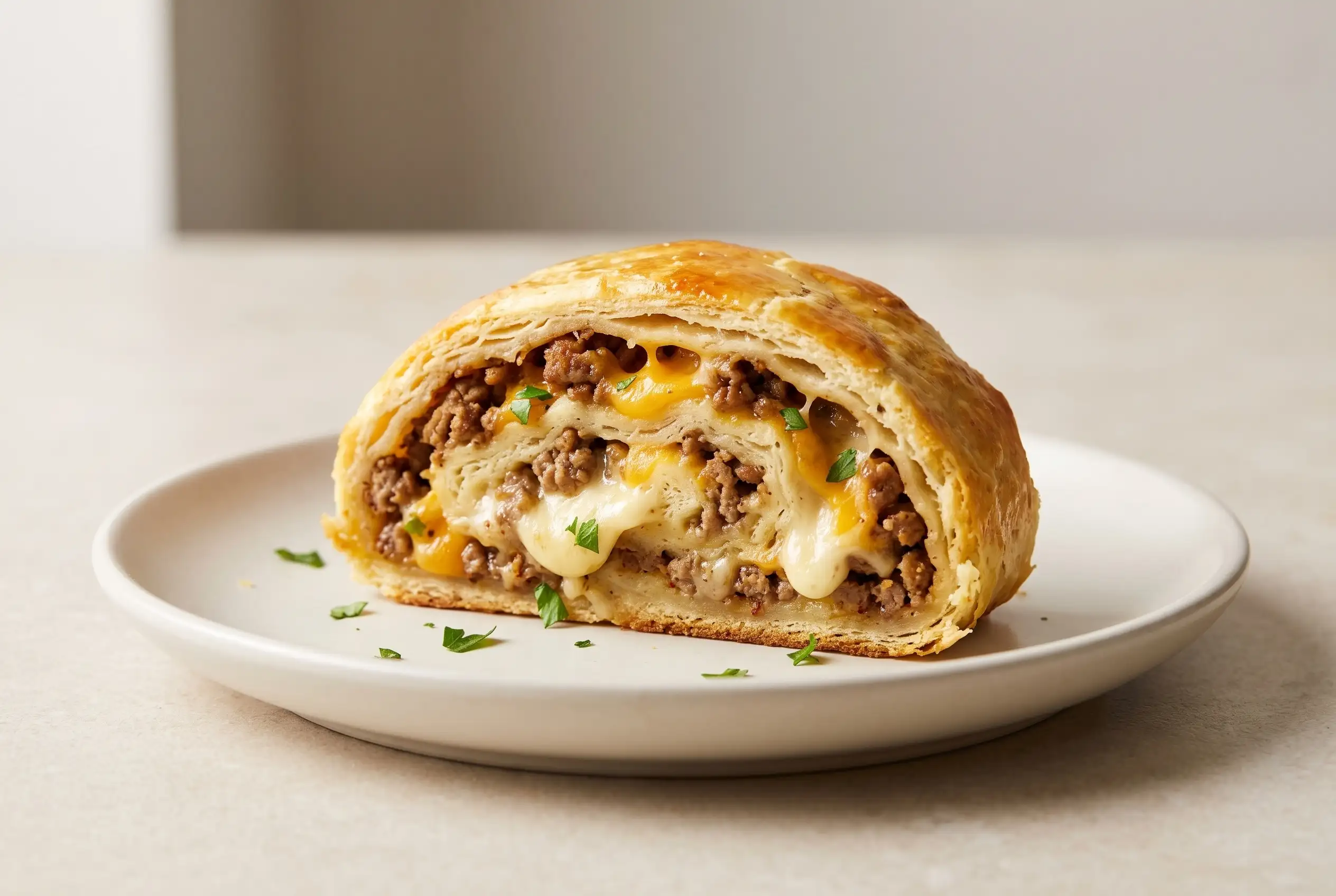
Cheesy Ground Beef Roll with Cheddar and Mozzarella
Ingredients
Method
- Heat the oven to 375°F / 190°C. Line a baking sheet with parchment paper.
- Cook the ground beef in a large skillet over medium heat, breaking it into smaller pieces as it browns. Drain any excess grease.
- Add the garlic powder, onion powder, paprika, Italian seasoning, salt, and black pepper to the beef. Cook for 2-3 minutes, stirring to distribute the seasonings.
- Take the skillet off the heat and allow the beef to cool slightly. Transfer the seasoned beef to a bowl.
- Mix in the cheddar, mozzarella, and chopped parsley while the beef is still warm, stirring until the cheese starts to soften and the filling is evenly combined.
- Unroll the crescent roll dough into one large sheet and press the seams together to form a sealed surface.
- Spread the beef and cheese mixture evenly across the dough, keeping a small border clear around the edges.
- Roll the dough from one long side into a firm log. Pinch the seam closed and tuck the ends inward.
- Set the roll seam-side down on the lined baking sheet. Brush the beaten egg evenly over the top and sides.
- Bake at 375°F / 190°C for 20-25 minutes, until the roll is golden brown and cooked through.
- Allow the baked roll to rest for 5 minutes. Slice into thick rounds and garnish with extra parsley if desired.