Taco Soup with Ground Beef, Beans, Corn and Diced Tomatoes
Taco Soup brings together ground beef, beans, corn, tomatoes, salsa, and taco seasoning in a hearty soup with familiar taco-inspired flavor. The combination makes an easy meal from pantry staples, while the choice of salsa and taco seasoning lets you control the heat. A few simple toppings can turn each bowl into a complete, customizable dinner.
Why Taco Soup Works for a Pantry Dinner
Several shelf-stable ingredients do the heavy lifting here, which makes taco soup useful when you want a substantial meal without relying on a long list of fresh ingredients. Black beans, kidney beans, corn, and diced tomatoes can be kept on hand, while salsa supplies another layer of seasoning without requiring several separate additions.
Ground beef gives the soup its hearty base, and the beans add substance alongside it. Combining the two creates a filling bowl with protein and fiber, much like the substantial combination found in a hearty ground-beef soup. The tomatoes, corn, and salsa also bring different textures and flavors, keeping the mixture from feeling like a simple meat-and-bean stew.
Another advantage is flexibility. Mild or hot salsa can change the character of the finished soup, and the taco seasoning can be chosen in an original, mild, or hot version. That makes it possible to adjust the heat without changing the basic preparation.
The Beans and Salsa Set the Soup’s Character
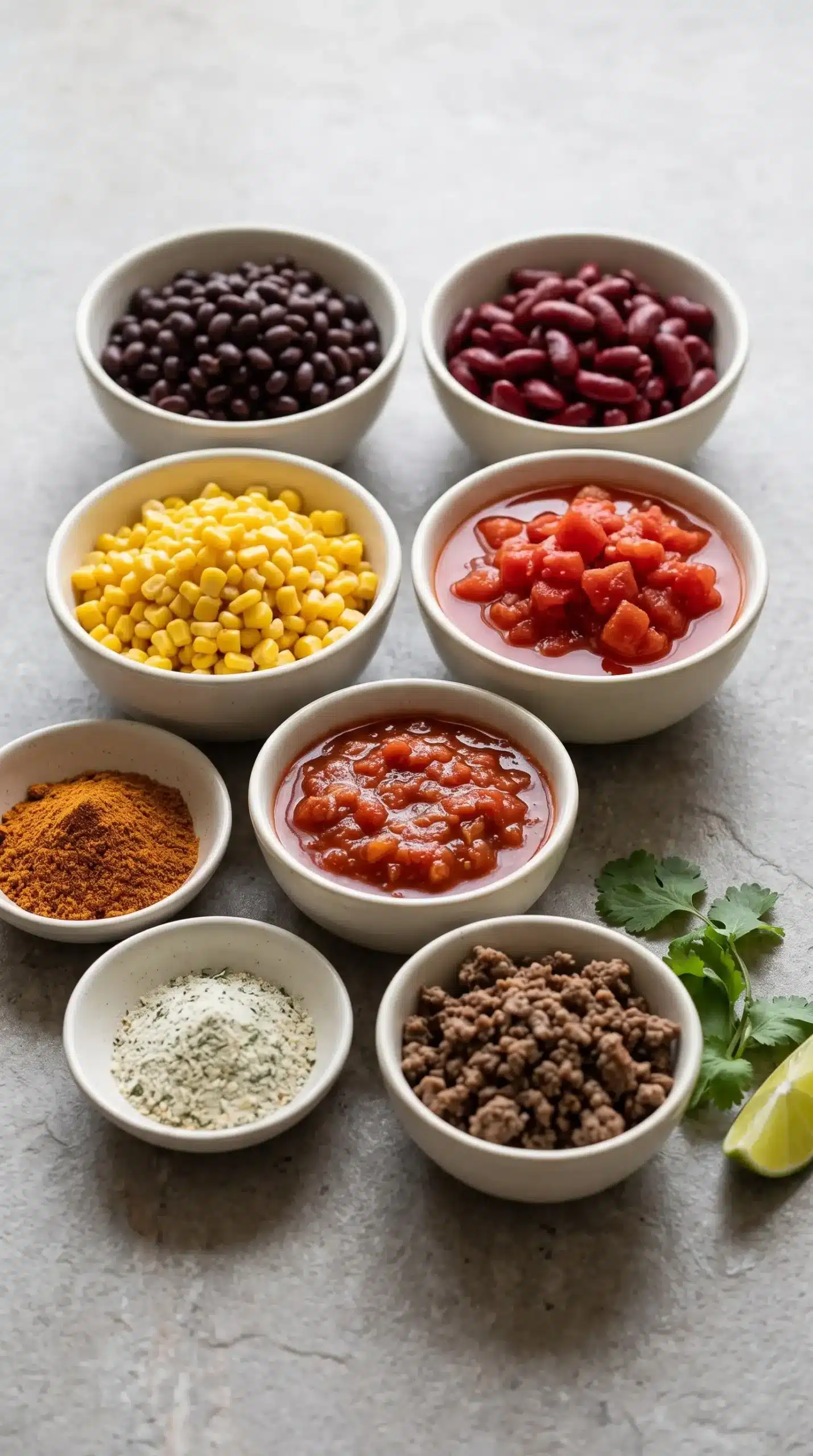
Black beans and kidney beans are used together, giving taco soup two distinct bean varieties in the same pot. Drain and rinse both before adding them so the soup starts with the intended combination of ingredients instead of excess liquid from the cans.
Corn contributes a contrasting bite, while diced tomatoes create the tomato-rich foundation of the broth. Salsa then adds another layer of tomato-based flavor along with the seasoning and heat already present in the salsa itself.
Because salsa and taco seasoning both influence the seasoning level, choosing them together is useful. A mild salsa paired with mild taco seasoning keeps the soup gentler, while hotter choices increase the heat without requiring additional chili ingredients.
Ground Beef Taco Soup Needs a Good First Step
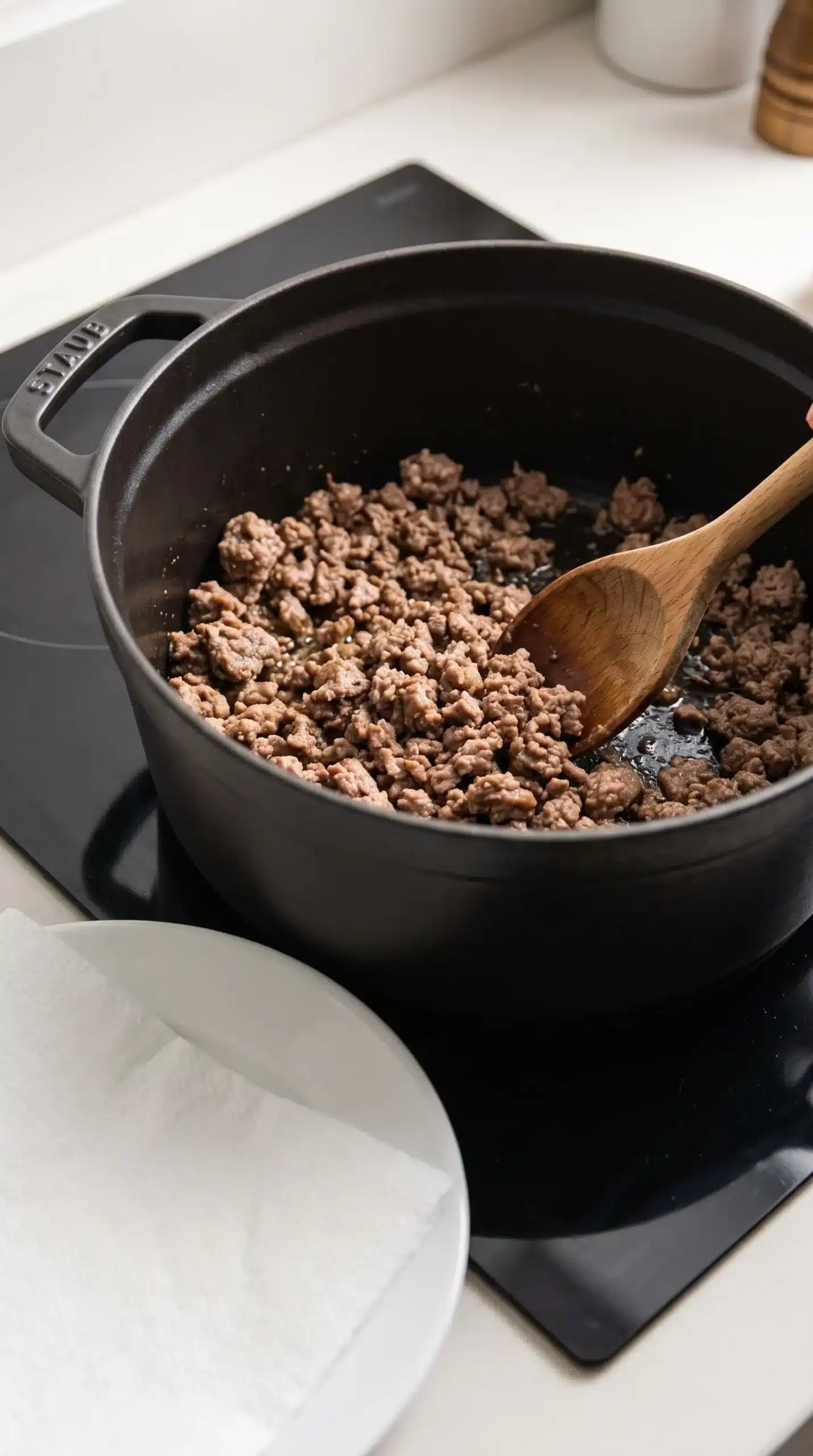
Ground beef should be browned in the large pot over medium-high heat until it is no longer pink. That first stage establishes the cooked meat that will later return to the soup, so avoid moving on while the beef is still visibly undercooked.
Once browned, excess fat can be drained if desired. Placing the cooked beef on a paper towel-lined plate allows additional fat to be absorbed before the meat goes back into the pot. The same pot can then be used for the remaining soup ingredients, keeping the preparation contained in one cooking vessel.
Build the Base Before Returning the Beef
Beans, corn, and diced tomatoes go into the pot before the cooked beef returns. Stirring these ingredients together helps distribute the canned vegetables through the tomato base instead of leaving them in separate layers.
Salsa and water are added next, followed by taco seasoning and dry ranch seasoning. Stir thoroughly so the dry seasonings disperse through the liquid. Once the mixture reaches a boil, lowering the heat allows the soup to continue cooking at a gentler pace.
Returning the beef after the liquid ingredients have been combined keeps the cooked meat integrated with the soup without requiring it to remain in the pot through every stage of preparation. The mixture then simmers on low for 15 to 20 minutes.
Keep the Simmer Gentle and Useful
A brief simmer gives the combined ingredients time to heat together and allows the seasonings to spread throughout the pot. Once the soup has reached a boil, medium-low heat is appropriate for bringing it down to a steady simmer rather than maintaining a vigorous boil.
Watch the consistency as taco soup simmers. The finished dish should remain spoonable and soup-like, with the beans, corn, tomatoes, and beef distributed through the seasoned liquid. Stir occasionally enough to keep the contents combined without turning the vegetables into a mash.
The cooking window is also a useful point for checking the seasoning. Since both taco seasoning and salsa contribute flavor, tasting near the end can help you decide whether the selected mild or hot ingredients have produced the level of heat you wanted.
Three Choices That Change the Heat
- Mild salsa: Choose it when you want the finished soup to have less heat.
- Hot salsa: Use it when a more pronounced spicy character is wanted.
- Taco seasoning: Original, mild, or hot seasoning can be paired with the salsa choice to adjust the overall heat.
Fresh Additions Can Change the Texture
Fresh vegetables can be used when you want to change the texture or add more vegetable variety. Bell peppers, zucchini, and spinach are among the suitable additions mentioned for taco soup, giving you options beyond the canned vegetables already in the pot.
Fresh beans, corn, or tomatoes can also replace their canned counterparts. They need to be cooked properly before or during preparation so they reach the appropriate tenderness for the soup.
Easy Taco Soup Recipe Serving Ideas
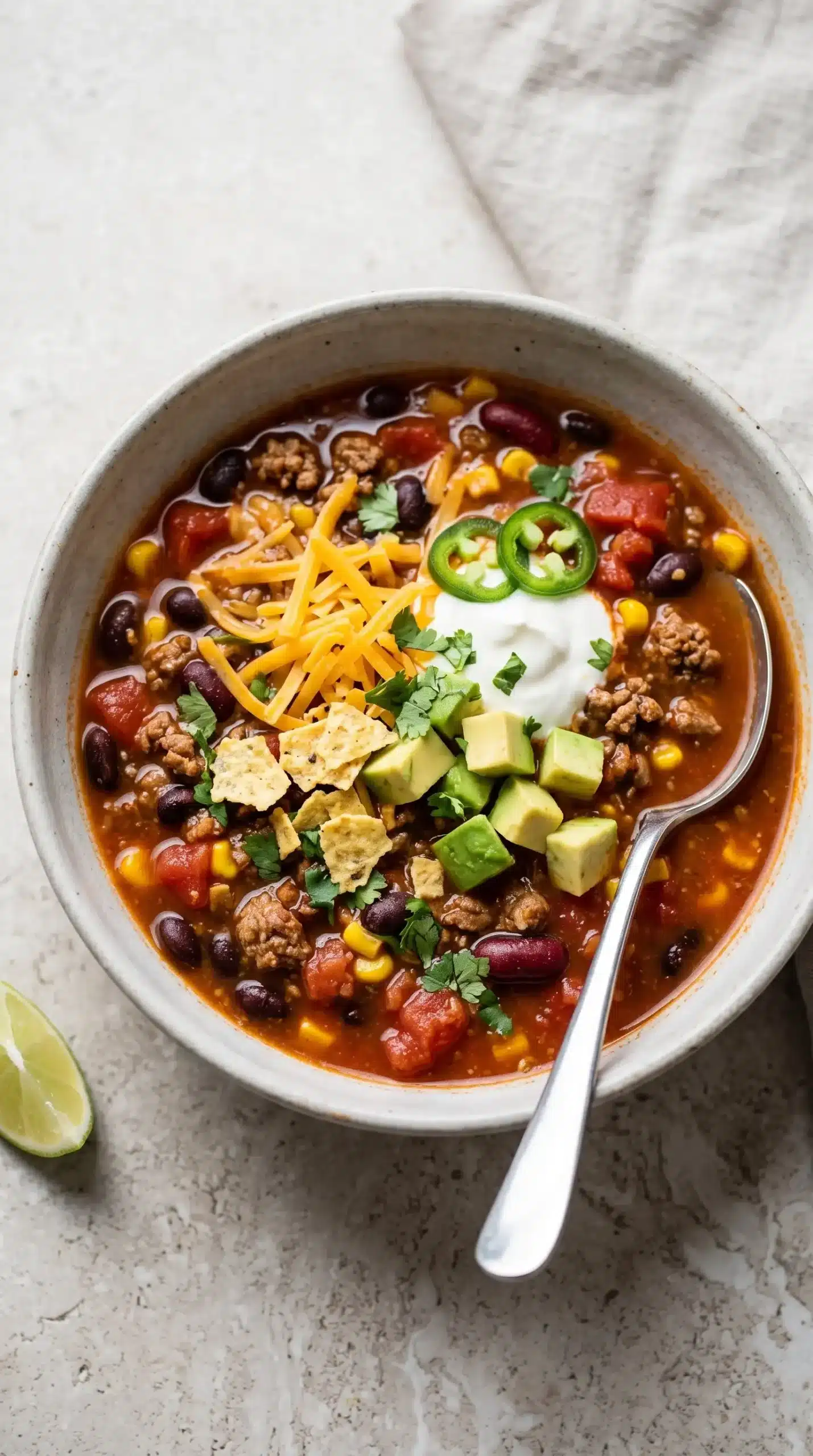
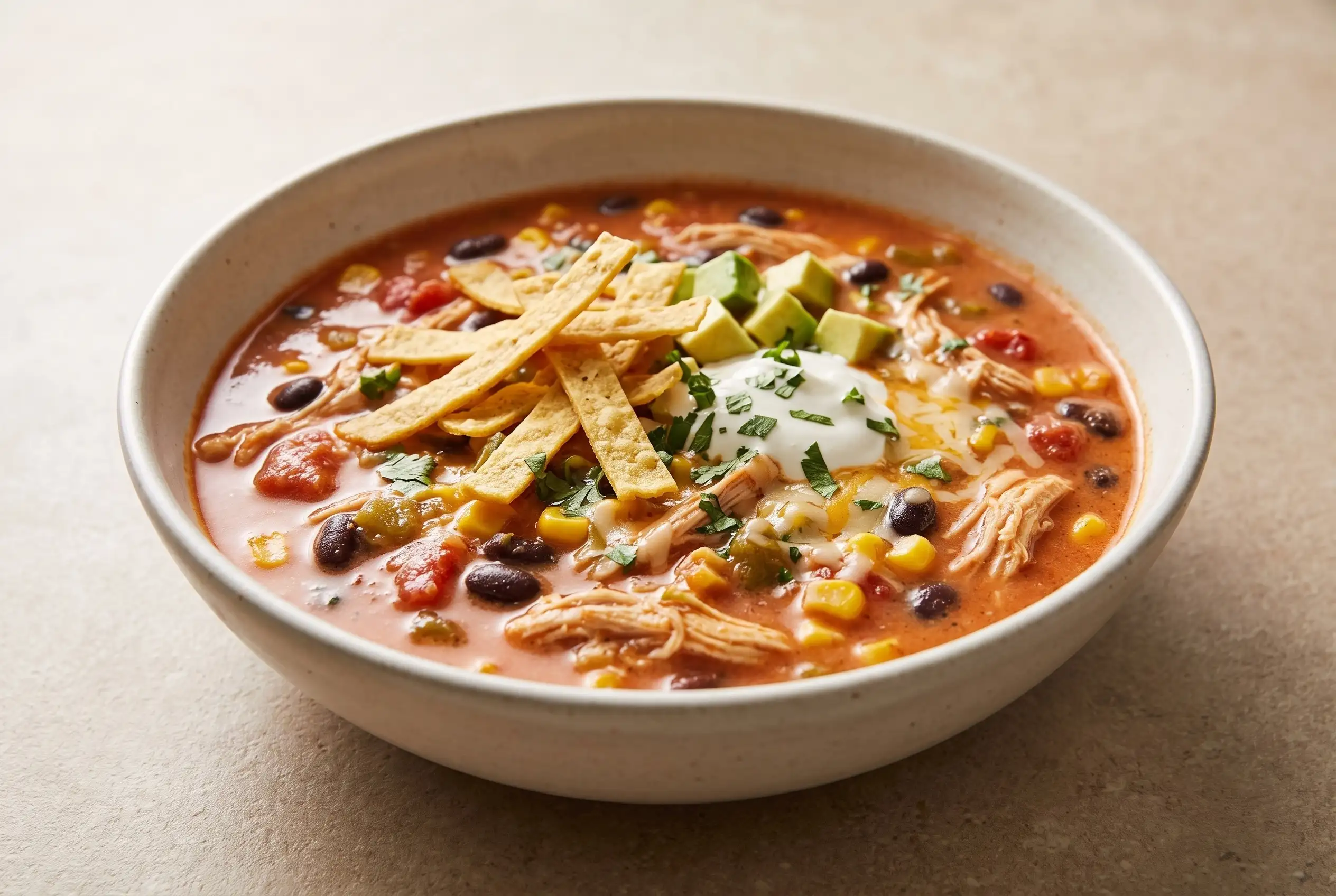
Hot taco soup can be served directly in bowls and finished with toppings that add contrasting textures or fresh flavors. Shredded cheese and sour cream provide creamy elements, while diced avocado and fresh cilantro add different fresh components.
Crushed tortilla chips are especially useful when you want crunch against the soft beans, corn, tomatoes, and ground beef. Sliced jalapeños can be added for extra heat, and fresh lime juice provides a zesty finishing note.
Since the soup already contains meat, beans, vegetables, tomatoes, salsa, and seasonings, toppings can remain simple. Choose one or several based on the flavor and texture you want in each serving.
Simple Topping Pairings for Each Bowl
| Topping | What it changes | When it fits |
|---|---|---|
| Shredded cheese | Adds a creamy, savory finish as it warms over the soup | When you want a richer topping |
| Sour cream | Provides a cool, creamy contrast | When the soup has noticeable heat |
| Fresh cilantro | Adds a fresh herbal note | When you want a lighter garnish |
| Diced avocado | Adds soft, creamy texture | When you want another fresh topping |
| Crushed tortilla chips | Adds crunch | When the bowl needs textural contrast |
| Sliced jalapeños | Increases the spicy character | For bowls intended to be hotter |
Store Taco Soup Without Losing Its Usefulness
Leftover taco soup can be transferred to an airtight container and refrigerated for up to 3 days. Keeping the soup covered helps it remain ready for another meal without needing to prepare the entire dish again.
For longer storage, freeze the soup in freezer-safe containers for about 2 to 3 months. Portioning it into practical serving sizes can make later reheating more convenient.
Reheat the Soup Until Thoroughly Warm
Reheat refrigerated taco soup on the stove over low heat or in the microwave until it is thoroughly warmed. Gentle stovetop reheating makes it easy to stir the soup as it heats.
If the leftover soup has become thicker during storage, a small splash of water or broth can loosen it. Add only enough to bring the consistency back to a spoonable soup without unnecessarily diluting the seasoning.
What to Avoid When Making Taco Soup
- Skipping the draining step: Drain the black beans, kidney beans, and corn as directed before they enter the pot.
- Leaving the beef in the pot unnecessarily: Brown the ground beef first, remove it while the other ingredients are combined, then return the cooked beef before the simmer.
- Boiling throughout: Bring the mixture to a boil, then reduce the heat to medium-low and finish with a low simmer.
- Choosing heat without considering both seasonings: Salsa and taco seasoning both affect the finished spice level, so select mild or hot versions with the combination in mind.
Protein and Bean Swaps Keep the Pot Flexible
Ground beef is the protein used in the supplied preparation, but turkey or chicken can be substituted when preferred. The same basic soup concept can therefore work with a different meat while retaining the beans, corn, tomatoes, salsa, and seasonings.
Vegetarian versions can replace the ground beef with chopped vegetables, lentils, or plant-based meat alternatives. Lentils provide another substantial option when meat is being left out.
Bean choices can also be adjusted according to preference. The original combination uses both black beans and kidney beans, while the broader approach allows other suitable bean choices when you have something different available.
Slow Cooker Taco Soup Has a Longer Cooking Path
For a slow cooker taco soup approach, brown the ground beef first rather than adding raw ground beef directly to the slow cooker. After browning, the beef can join the remaining ingredients in the slow cooker.
The slow cooker version can cook on low for 6 to 8 hours or on high for 3 to 4 hours. This method changes the timing substantially from the stovetop approach, making it useful when you want the soup to cook over a longer period.
Taco Soup’s Best Result Comes From Balanced Heat
The beans, beef, corn, tomatoes, salsa, and seasonings need enough gentle cooking time to become a cohesive soup, but the heat level deserves equal attention. Mild or hot choices for the salsa and taco seasoning can shift the finished bowl considerably.
A steady simmer, properly drained canned ingredients, and a deliberate pairing of salsa and taco seasoning keep the cooking decisions straightforward. Once the soup is hot and combined, toppings such as cheese, sour cream, avocado, cilantro, tortilla chips, or jalapeños let each bowl take on its own finish.
Taco Soup Questions About Heat Storage and Swaps
Can taco soup be made less spicy?
Choose mild salsa and mild taco seasoning when a gentler result is preferred. Since both ingredients contribute to the heat level, adjusting those choices is the most direct way to change the spice level.
Can fresh vegetables replace the canned vegetables?
Yes. Fresh beans, corn, and tomatoes can be used in place of canned versions, provided they are cooked properly. Bell peppers, zucchini, and spinach can also be added for more vegetable variety.
What can replace the ground beef?
Turkey or chicken can replace the ground beef when another meat is preferred. For a vegetarian version, chopped vegetables, lentils, or plant-based meat alternatives can take its place.
How long can taco soup stay refrigerated?
Store leftovers in an airtight container in the refrigerator for up to 3 days. Reheat the soup on the stove over low heat or in the microwave until thoroughly warmed.
Can taco soup be frozen?
Freezer-safe containers can be used to freeze taco soup for about 2 to 3 months. When reheating, add a small splash of water or broth if the soup has thickened during storage.
How can the soup be made in a slow cooker?
Brown the ground beef first, then add it and the other ingredients to a slow cooker. Cook on low for 6 to 8 hours or on high for 3 to 4 hours.
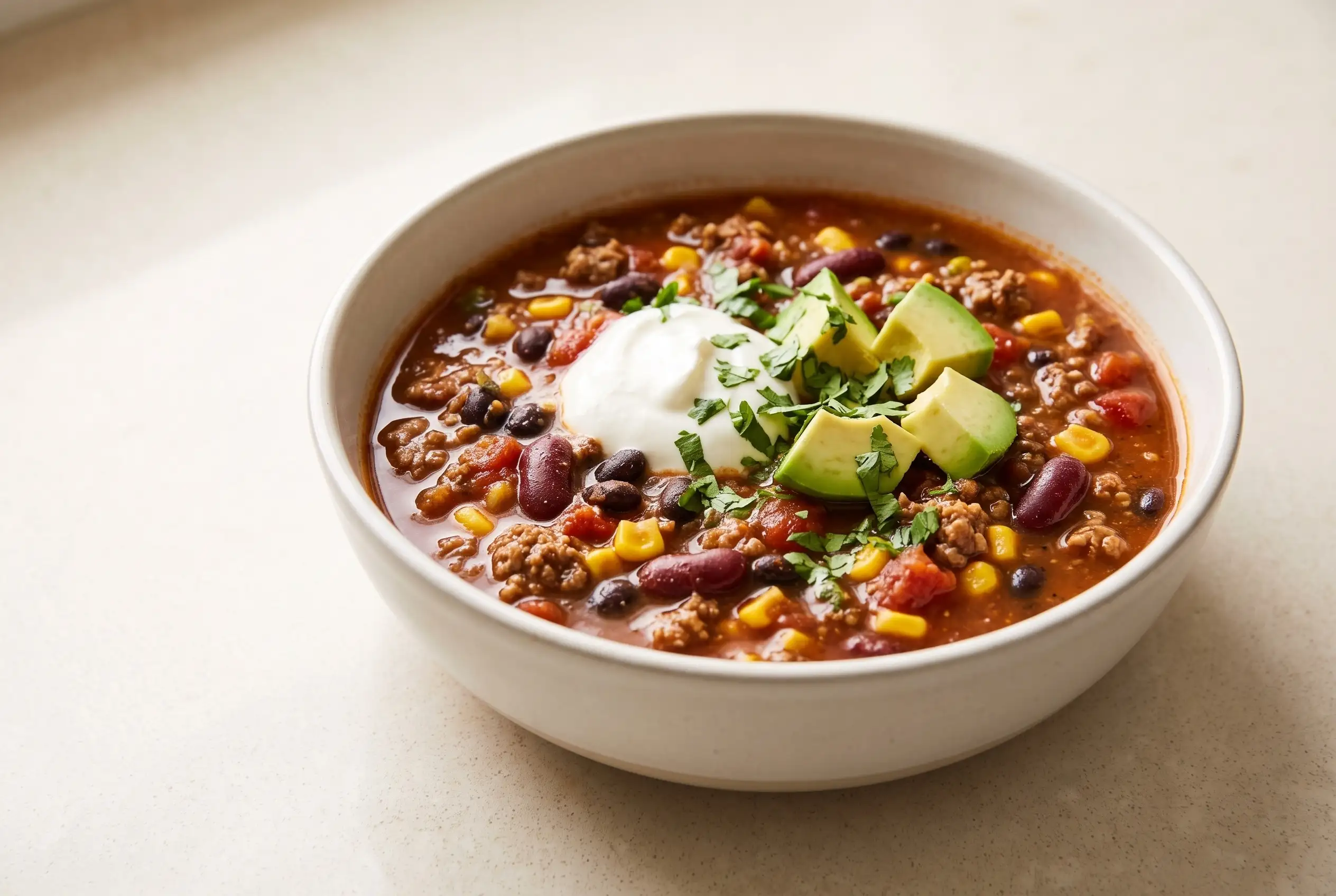
Taco Soup with Ground Beef, Beans, Corn and Diced Tomatoes
Ingredients
Method
- Set a large pot over medium-high heat. Add the ground beef and cook until no longer pink. Drain excess fat if desired, then place the beef on a paper towel-lined plate.
- Place the drained black beans, drained kidney beans, diced tomatoes, and drained corn in the same pot. Stir until evenly combined.
- Pour in the salsa and water, then add the taco seasoning and ranch seasoning. Mix thoroughly.
- Bring the soup to a boil, then lower the heat to medium-low.
- Return the cooked ground beef to the pot and stir it into the soup. Reduce the heat to low and simmer for 15-20 minutes.
- Serve the taco soup hot with desired toppings.