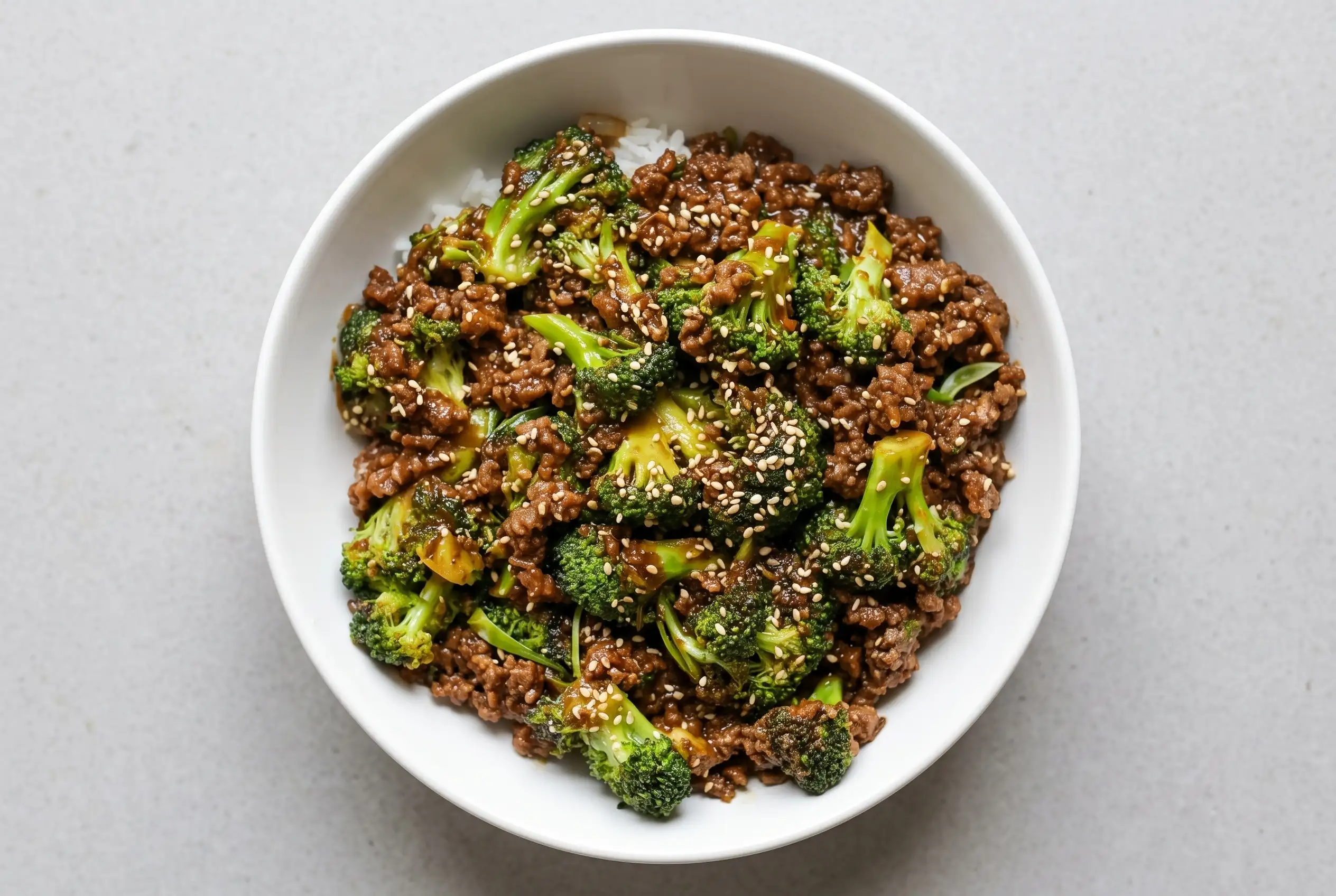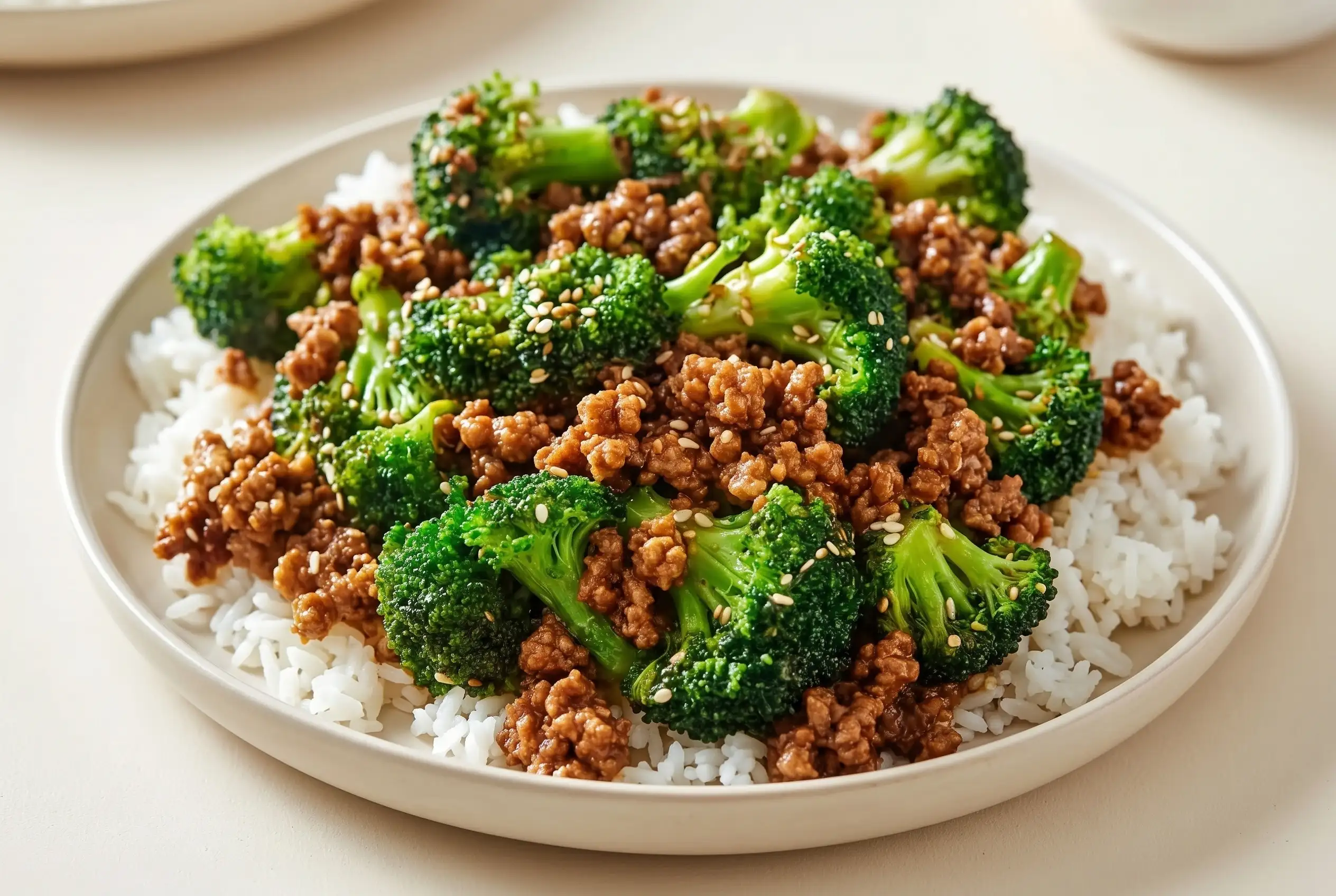
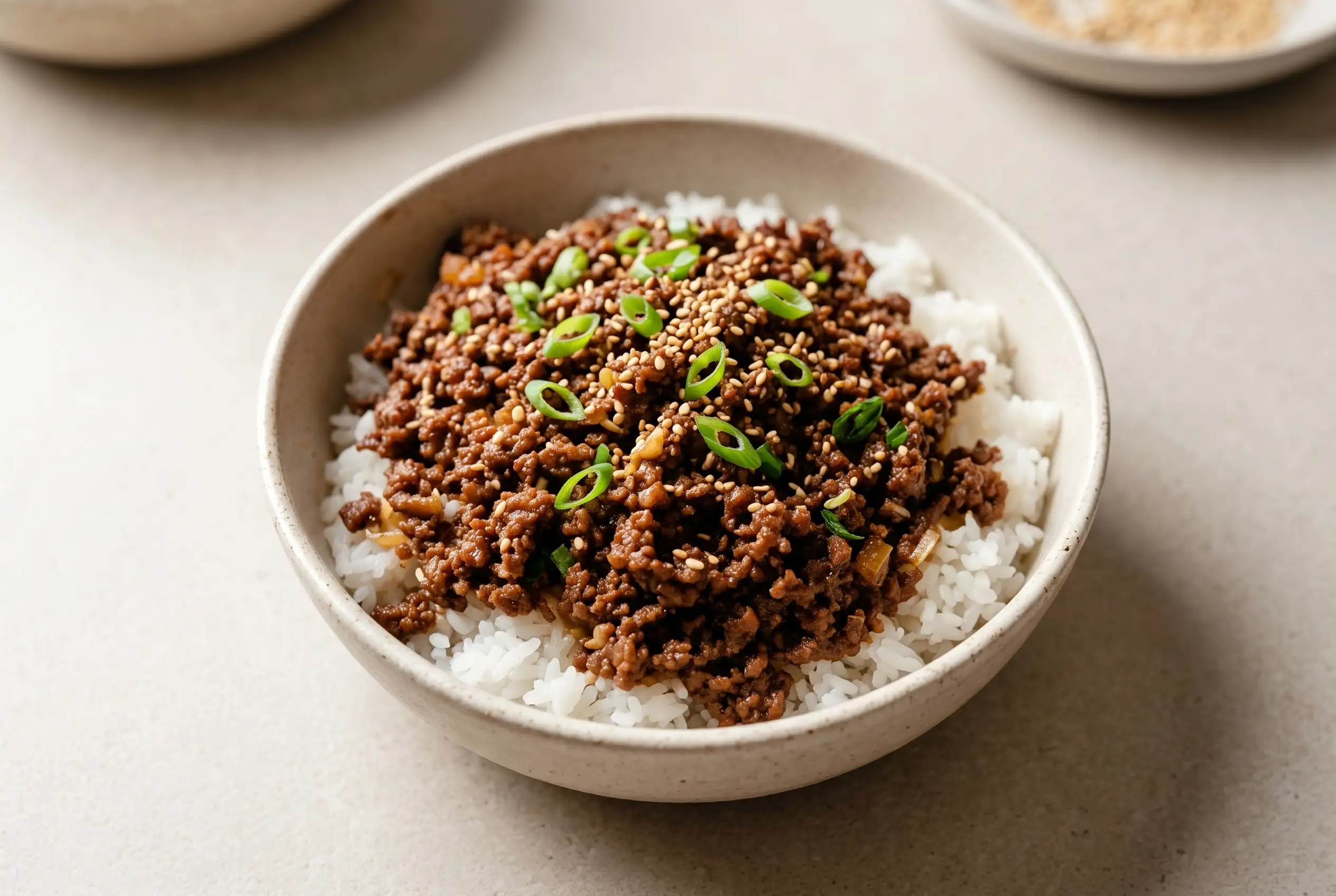
Korean Ground Beef Bowl with Soy Sauce and Cooked Rice
Korean Ground Beef Bowl brings browned ground beef, garlic, ginger, soy sauce, and cooked rice together in a simple meal built for busy evenings. The savory beef mixture comes together in one skillet, then gets spooned over rice and finished with green onions and optional sesame seeds.
Its appeal comes from the contrast between the seasoned beef and the mild, filling rice underneath. A few basic ingredients create a bowl with bold flavor without requiring a complicated cooking process, making it a practical choice when you want a warm ground beef rice bowl with straightforward preparation.
Why Korean Ground Beef Bowl Works
The Korean Ground Beef Bowl keeps its ingredient list focused while still creating several layers of flavor. Garlic and grated ginger become fragrant in the skillet, soy sauce brings savory depth, and rice gives the finished bowl a substantial base. Green onions and sesame seeds add a fresh, crunchy finish at serving time.
Soy Sauce, Garlic, and Ginger Set the Flavor
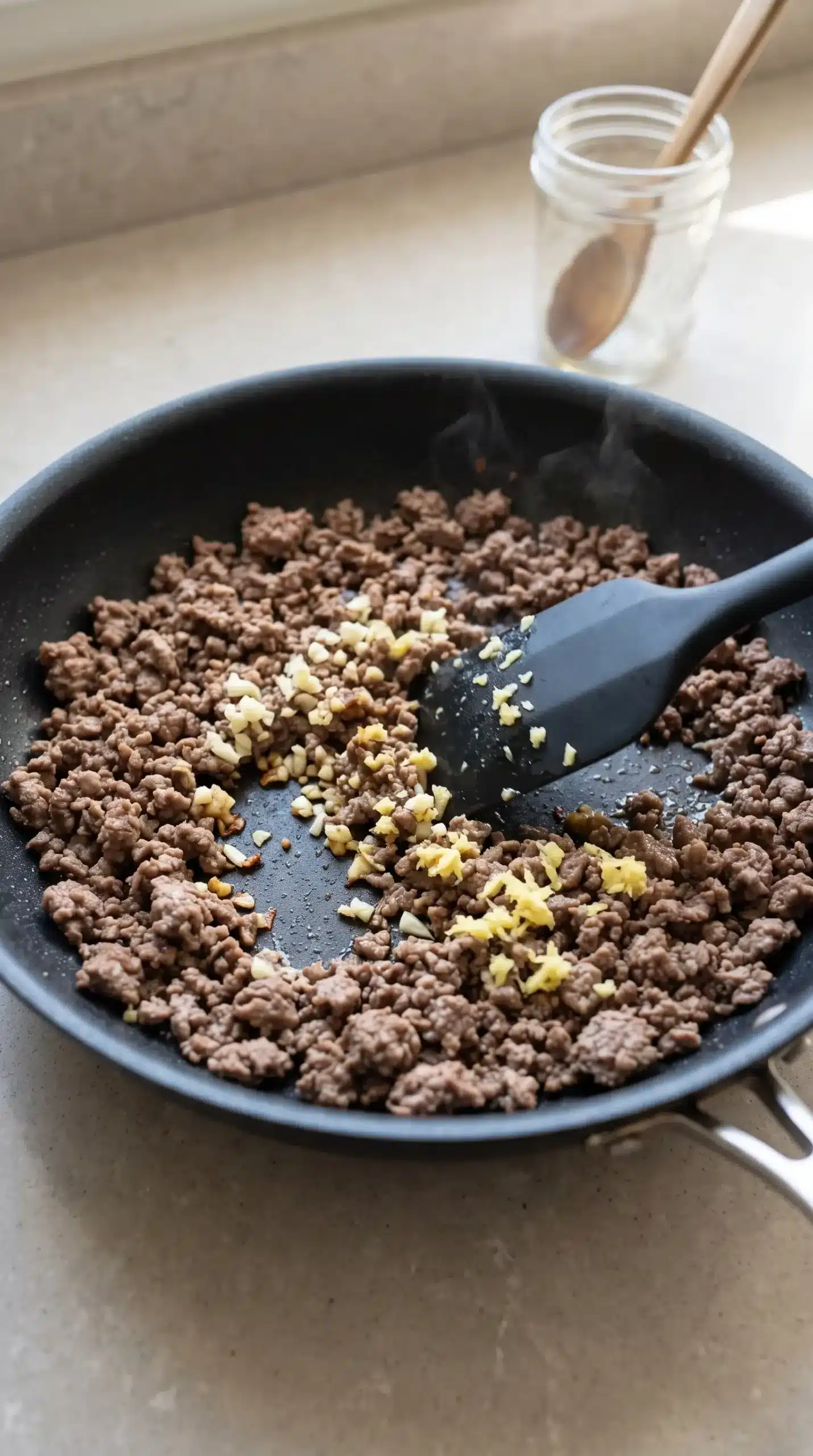
Soy sauce is the main seasoning that ties the browned beef to the rice. Because it is stirred into the skillet after the garlic and ginger have become fragrant, it coats the beef and gives the mixture a savory character that carries through each bite.
Fresh garlic works best here when it is minced so it can distribute through the beef instead of remaining in large pieces. Grated ginger also spreads easily through the skillet, allowing its distinctive flavor to reach the seasoned beef without needing a separate sauce.
Timing matters with these aromatics. Garlic and ginger only need a short period in the hot skillet before the soy sauce is added, so keeping them moving and watching for their fragrance helps prevent unnecessary browning while developing their flavor.
Rice Choice Shapes the Bowl
Cooked rice provides the foundation for the Korean Ground Beef Bowl and gives the seasoned beef somewhere to settle. Jasmine or short-grain rice works especially well, although the dish can be served with any preferred type of rice.
Building a Balanced Bowl from Simple Parts
Start with enough cooked rice to create a comfortable base, then spoon the hot beef mixture over the top. Keeping the rice underneath lets the soy-seasoned beef remain the focus while allowing some of its savory juices and seasoning to meet the rice.
Green onions bring a fresh contrast to the warm beef and rice. Chop them before serving so they are ready to scatter across the bowls while the beef is still hot. Their bright flavor helps offset the richer character of the cooked beef.
Sesame seeds are optional, but they provide a small textural contrast that makes the finished bowl more interesting. A simple topping works well here because the beef mixture already carries the primary seasoning.
| Serving element | Purpose in the bowl | Best timing |
|---|---|---|
| Cooked rice | Provides the base for the beef mixture | Have ready before serving |
| Ground beef mixture | Supplies the main savory flavor | Serve hot after cooking |
| Green onions | Adds a fresh finishing note | Chop and add at serving |
| Sesame seeds | Adds optional crunch | Sprinkle on just before eating |
Skillet Control Keeps the Beef Flavorful
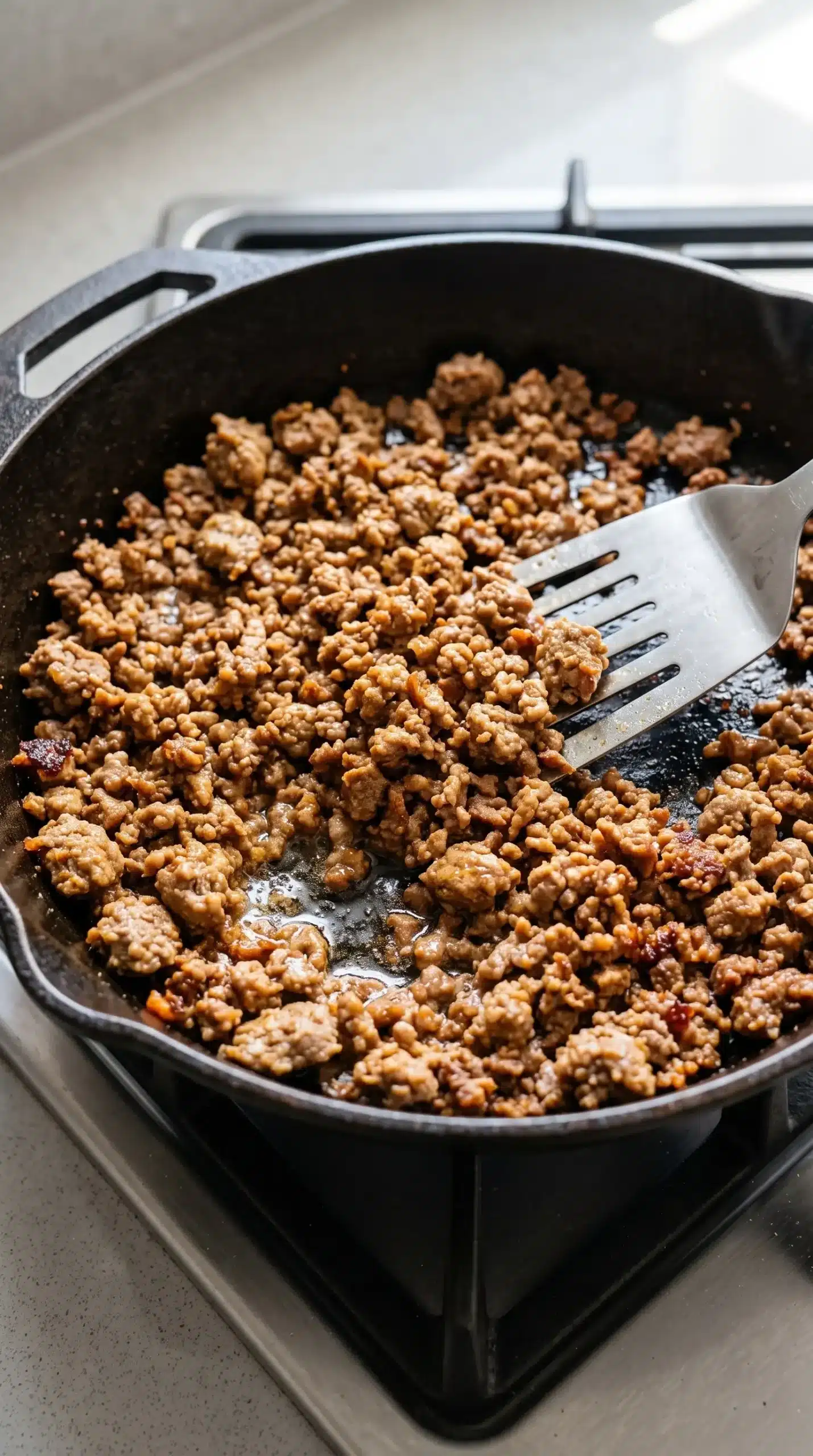
Medium heat gives the ground beef enough time to brown while keeping the skillet manageable once the garlic and ginger are added. Excess fat can be drained after browning so the finished mixture does not become unnecessarily greasy.
Once the soy sauce reaches the skillet, a short cooking period allows it to mingle with the beef and aromatics. Stirring during this stage helps distribute the seasoning evenly instead of leaving strongly seasoned pockets.
What to Watch for While Browning Beef
Browned ground beef should be cooked through before the garlic, ginger, and soy sauce move into the skillet, and it should reach 160°F (71°C) internally when checked with a food thermometer. Draining excess fat at that point keeps the later seasoning focused on the beef instead of diluted by excess rendered fat.
Korean Ground Beef Bowl Mistakes to Avoid
Overcrowding or rushing the browning stage can make it harder to develop the browned texture that gives the beef its savory character. Give the ground beef enough attention in the skillet before moving on to the aromatics.
Adding the garlic and ginger too early can also distract from the intended short aromatic cooking stage. They only need an additional minute or two after the beef has browned, so adding them at the appropriate point keeps their flavor prominent.
Heavy seasoning is another easy mistake because soy sauce already provides substantial savory flavor. Once it has been stirred into the beef, allow the mixture to cook briefly and taste the overall balance through the rice before adding any optional spicy element.
- Watch the beef: Brown it first and drain excess fat before continuing.
- Protect the aromatics: Cook garlic and ginger briefly until fragrant.
- Keep seasoning focused: Let the soy sauce blend into the beef before serving.
Easy Ways to Adjust the Bowl
Heat can be changed without altering the basic preparation. Red pepper flakes or sriracha can be added while cooking the beef when a spicier bowl is preferred, while the standard version remains mild.
Ground Turkey, Chicken, and Vegetarian Swaps
Ground turkey or ground chicken can replace the beef when a different protein is desired. The same general skillet approach keeps the meal familiar while changing the main ingredient.
A vegetarian version can use lentils or mushrooms in place of the ground beef. Soy sauce or tamari can provide the savory seasoning associated with the original bowl, while rice continues to serve as the base.
Garnishes can also change the finished texture. Shredded carrots or edamame are suitable additions when you want more variety alongside the seasoned filling, although green onions and optional sesame seeds remain simple finishing choices.
Make-Ahead and Leftover Handling
The beef mixture can be prepared ahead, then reheated and served with cooked rice when needed. Keeping the beef and rice manageable as separate components makes it easier to assemble bowls close to serving time.
Leftover portions should be placed in an airtight container and refrigerated for up to 3 days. Reheat the beef and rice until heated through before eating.
Serving the Beef and Rice Together
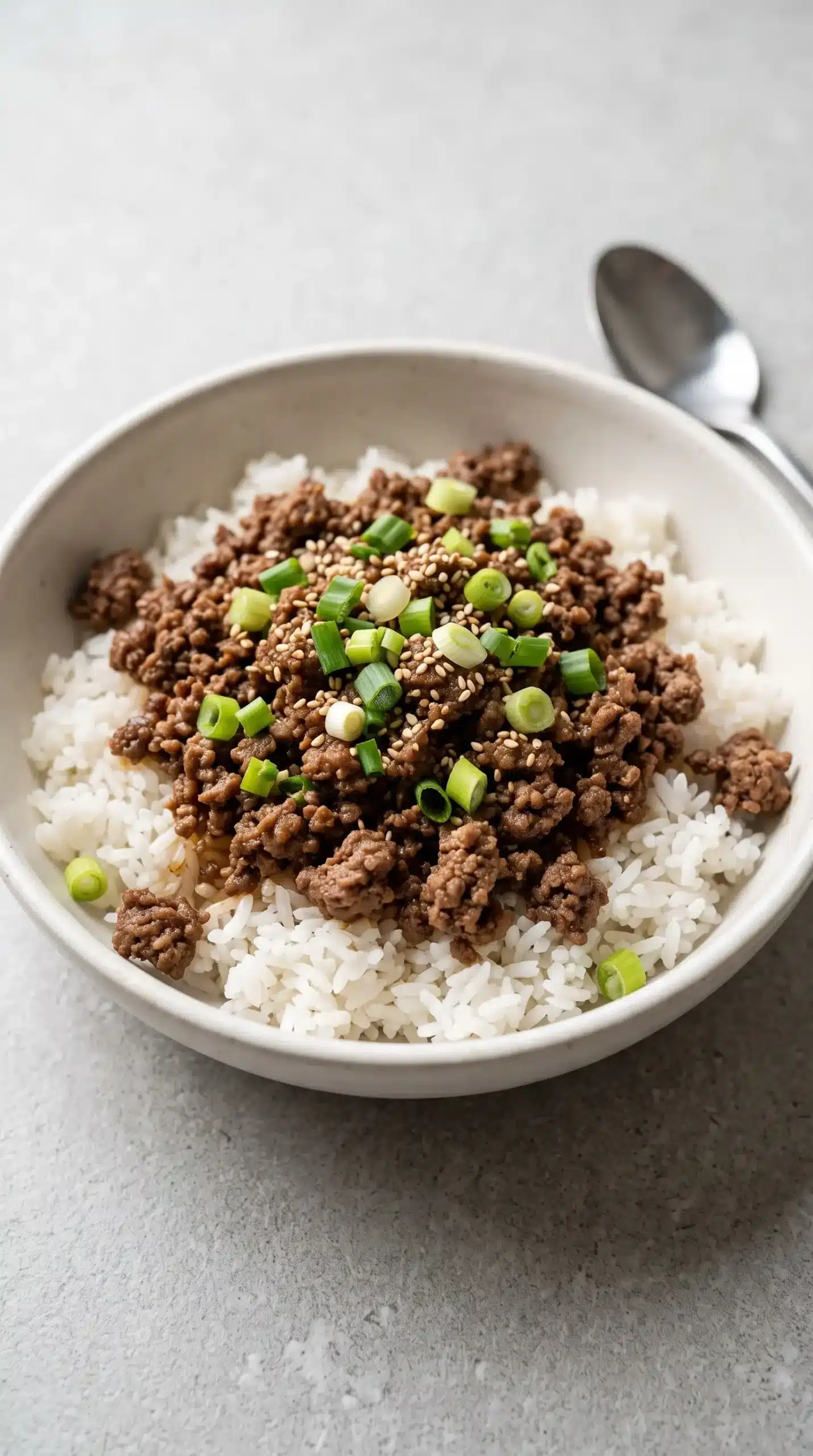
Serve the Korean Ground Beef Bowl hot over cooked rice, then scatter chopped green onions across the top. Sesame seeds can be added for optional crunch, while gochujang and fried egg can be used when a richer, more substantial topping combination is desired.
What Makes This Easy Korean Beef Bowl Convenient
A one-pan cooking approach keeps the main savory component in a single skillet, which reduces cleanup and makes the meal practical for a busy evening. The rice can be prepared separately while the beef cooks, allowing the two main components to be ready for assembly.
Short ingredient preparation also keeps the process approachable. Garlic needs to be minced, ginger grated, and green onions chopped, while the beef simply needs to be browned before the aromatics and soy sauce join the skillet.
For a ground beef rice bowl that can change with the ingredients already available, the basic structure is flexible. Turkey, chicken, lentils, mushrooms, different rice varieties, or additional garnishes can shift the finished bowl while keeping its simple serving format.
Korean Ground Beef Bowl Gets Its Best Balance from the Hot Beef and Rice
Hot seasoned beef over cooked rice creates the central balance that makes the Korean Ground Beef Bowl work. The beef carries the garlic, ginger, and soy sauce, while the rice provides a mild base for those stronger flavors. Fresh green onions and optional sesame seeds finish the contrast at the table.
Keeping the skillet stages controlled is the most useful cooking judgment here: brown the beef, briefly cook the aromatics until fragrant, then give the soy sauce time to blend into the mixture. That approach preserves the simple character of the dish while giving the easy Korean beef bowl enough savory flavor to stand on its own.
Questions About Korean Ground Beef Bowl Heat and Storage
Can the Korean Ground Beef Bowl be made less spicy?
Yes. The basic preparation is not inherently spicy, so simply leave out red pepper flakes and sriracha. Those ingredients are optional additions for increasing the heat.
Which rice works best with the Korean Ground Beef Bowl?
Jasmine rice and short-grain rice are both suitable choices. Other rice varieties can also be used according to personal preference, provided the rice is cooked before assembling the bowls.
Can the beef mixture be frozen?
The cooked beef mixture can be frozen in an airtight container for up to 3 months. Thaw it before reheating, then serve it with cooked rice.
How can the Korean Beef Rice Bowl be made gluten-free?
Use gluten-free soy sauce or tamari in place of standard soy sauce. The substitution specifically addresses the soy sauce used to season the beef mixture.
What can be served alongside the beef bowl?
Steamed vegetables or a simple side salad can accompany the bowl. These options add a separate vegetable component without changing the seasoned beef and rice combination.
Korean Ground Beef Bowl with Soy Sauce and Cooked Rice
Ingredients
Method
- Brown the ground beef in a skillet over medium heat until fully cooked, then drain any excess fat.
- Add the minced garlic and grated ginger to the skillet. Cook for 1 to 2 minutes, stirring, until fragrant.
- Pour the soy sauce into the beef and simmer for 2 to 3 minutes, stirring so the sauce evenly coats the meat.
- Divide the cooked rice between 4 serving bowls and spoon the beef mixture over the top.
- Finish with chopped green onions and optional sesame seeds, then serve hot.