Korean Beef Bibimbap Bowl with Gochujang and Fried Egg
Korean beef bibimbap brings seasoned ground beef, fluffy rice, colorful vegetables, gochujang, and a fried egg together in one satisfying bowl. The combination gives each serving a mix of savory, spicy, fresh, and rich elements, while the ingredients remain straightforward enough for a practical weeknight meal.
A good bibimbap bowl is also highly adaptable. The beef can be replaced with ground turkey or tofu, the vegetables can change with the season, and the amount of gochujang can be adjusted to suit different spice preferences. Once assembled, mixing everything together distributes the sauce and toppings through the rice for a flavorful bite from top to bottom.
What Makes Korean Beef Bibimbap Work
Short-grain white rice provides the warm base for the bowl, while lean ground beef supplies the savory center. Carrots, spinach, zucchini, and bean sprouts bring several textures and colors into the same serving, keeping the bowl from feeling one-dimensional.
Gochujang gives the beef its distinctive spicy character, with low-sodium soy sauce adding savory depth. Sesame oil connects those flavors and also works well with the vegetables. The fried egg adds a rich topping, especially when its runny yolk meets the warm rice and seasoned beef.
For an easy bibimbap recipe, the important idea is balance. The bowl should contain enough sauce to season the rice and beef without overwhelming the vegetables. Because the gochujang amount can be adjusted, the same combination can suit someone who wants gentle heat or a much stronger spicy finish.
Ingredient Choices That Strengthen the Beef Bibimbap Bowl
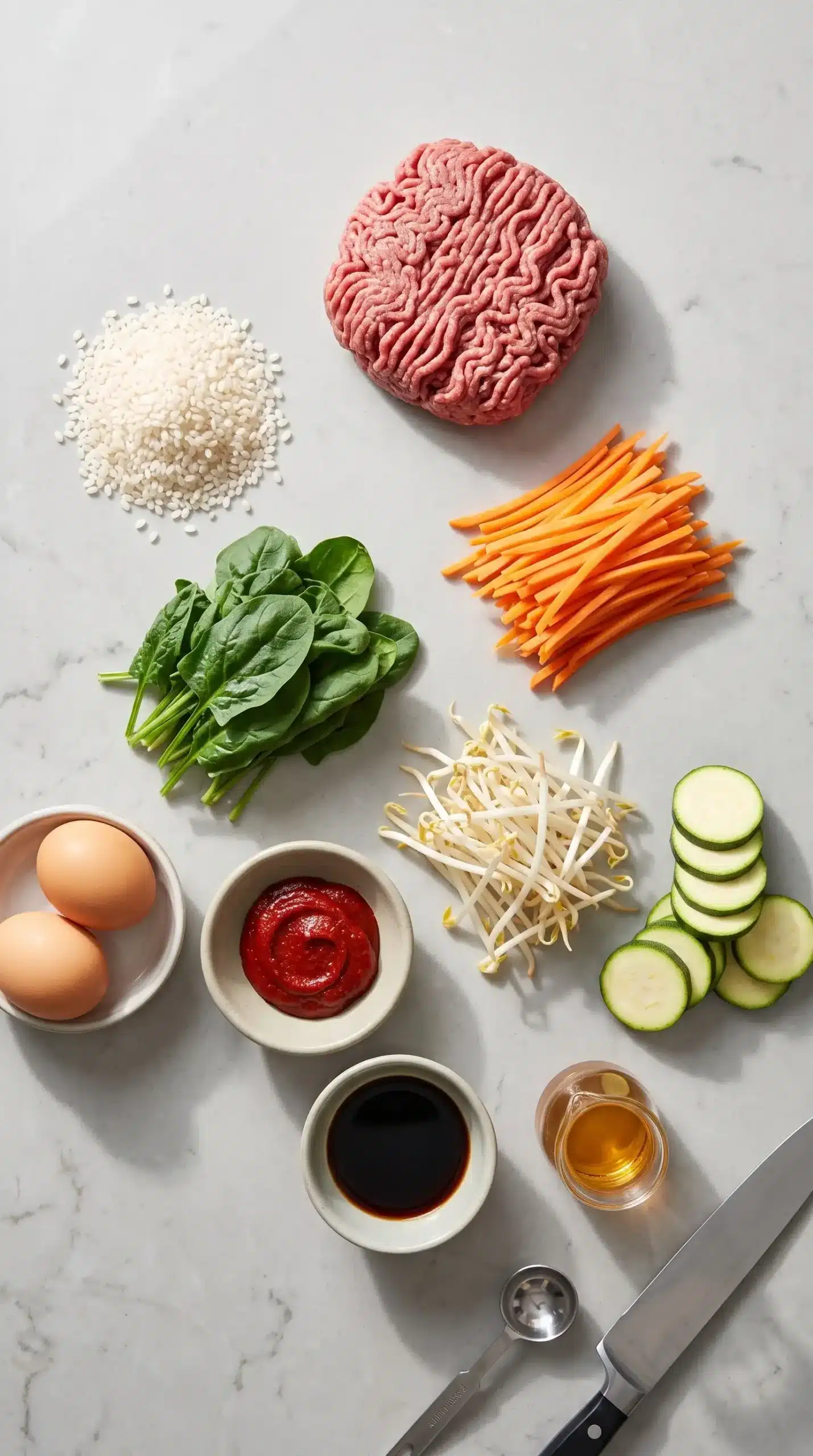
Lean ground beef is particularly practical here because it browns quickly and can be coated evenly with the gochujang, soy sauce, and sesame oil mixture. Short-grain white rice gives the bowl its soft, cohesive base, making it easy to mix with the other components. For a more streamlined version centered on the same protein, a Korean ground beef bowl can emphasize the seasoned beef and rice combination with fewer components.
| Ingredient | Role in the bowl | Useful choice |
|---|---|---|
| Lean ground beef | Savory protein | Ground turkey or tofu can replace it |
| Short-grain white rice | Warm rice base | Brown rice or quinoa can change the texture |
| Gochujang | Spicy sauce | Reduce or increase it according to heat preference |
| Carrots, spinach, zucchini, and bean sprouts | Vegetable variety | Seasonal vegetables can be substituted |
| Eggs | Rich topping | Scrambled or poached eggs are alternatives |
Gochujang deserves particular attention because its quantity controls much of the bowl’s heat. A milder sauce can be used when necessary, while extra gochujang or sliced chilies can make the finished serving considerably spicier.
Keeping the Korean Beef Rice Bowl Flavor in Balance
Savory beef and spicy gochujang form the strongest flavor combination, so the vegetables provide an important counterpoint. Carrots bring a naturally sweet element, while spinach, zucchini, and bean sprouts add variety without requiring complicated seasoning.
Sesame oil appears in the beef mixture and vegetable preparation, helping tie the separate components together. Low-sodium soy sauce contributes savory flavor without making the sauce dependent on a large amount of salt.
Mixing the bowl before eating changes how those flavors are experienced. Rice becomes coated with the beef mixture and sauce, vegetables become distributed throughout, and the egg can contribute its richness to multiple bites instead of remaining only as a topping.
Cooking Control for Tender Vegetables and Seasoned Beef
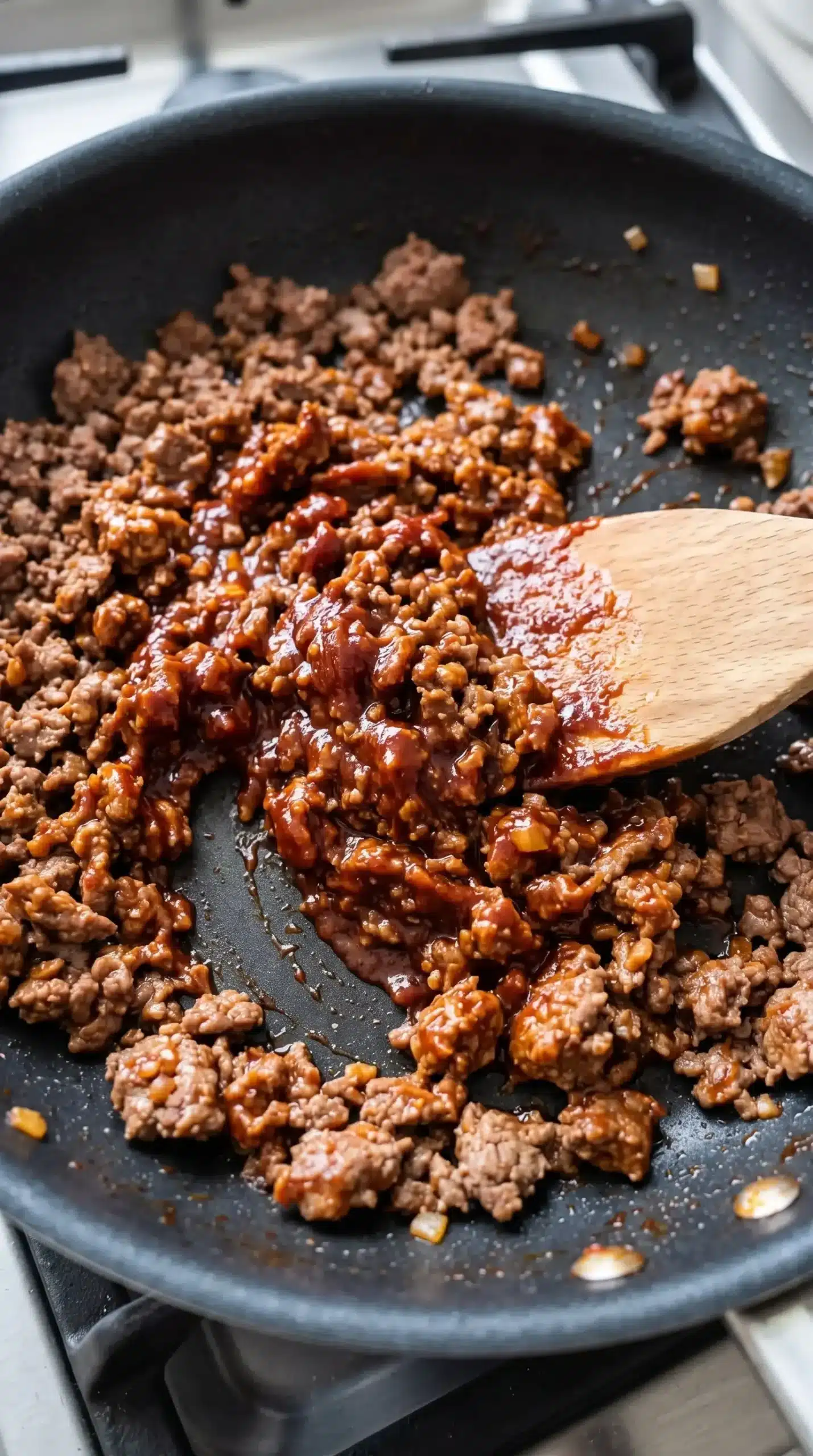
Ground beef needs enough skillet time to brown properly before the sauce is added. Draining excess fat after browning keeps the seasoned mixture from becoming unnecessarily greasy and allows the gochujang, soy sauce, and sesame oil to coat the meat more cleanly.
Once the sauces are incorporated, a gentle simmer gives them time to combine with the beef. Keeping the heat low during that stage helps maintain a cohesive mixture instead of aggressively cooking away the sauce.
Vegetables are best taken to a tender-crisp texture for the bowl. They should be cooked enough to lose their raw firmness while retaining some bite. Cooking them until they are completely soft would reduce the textural contrast that makes the assembled bowl more interesting.
The egg requires a separate visual cue. For the sunny-side-up finish, the whites should be set while the yolk remains runny. That texture makes the egg especially useful when the bowl is mixed just before eating.
Vegetable Texture Shapes Every Bibimbap Bite
Carrots, spinach, zucchini, and bean sprouts do not need to become uniform in texture. Their differences are part of what makes the bowl appealing. The tender-crisp vegetables create contrast with soft rice and the seasoned beef.
- Carrots: Julienned pieces provide a crisp, colorful element.
- Spinach: Fresh leaves soften during sautéing and blend easily with the rice.
- Zucchini: Sliced pieces contribute a tender vegetable component.
- Bean sprouts: Their texture adds another layer of contrast to the softer ingredients.
Seasonal substitutions can keep the vegetable portion flexible. Bell peppers, radishes, and mushrooms are suggested alternatives, while broccoli can also be used when customizing the bowl.
Building the Korean Beef Bibimbap Bowl Without Losing Contrast
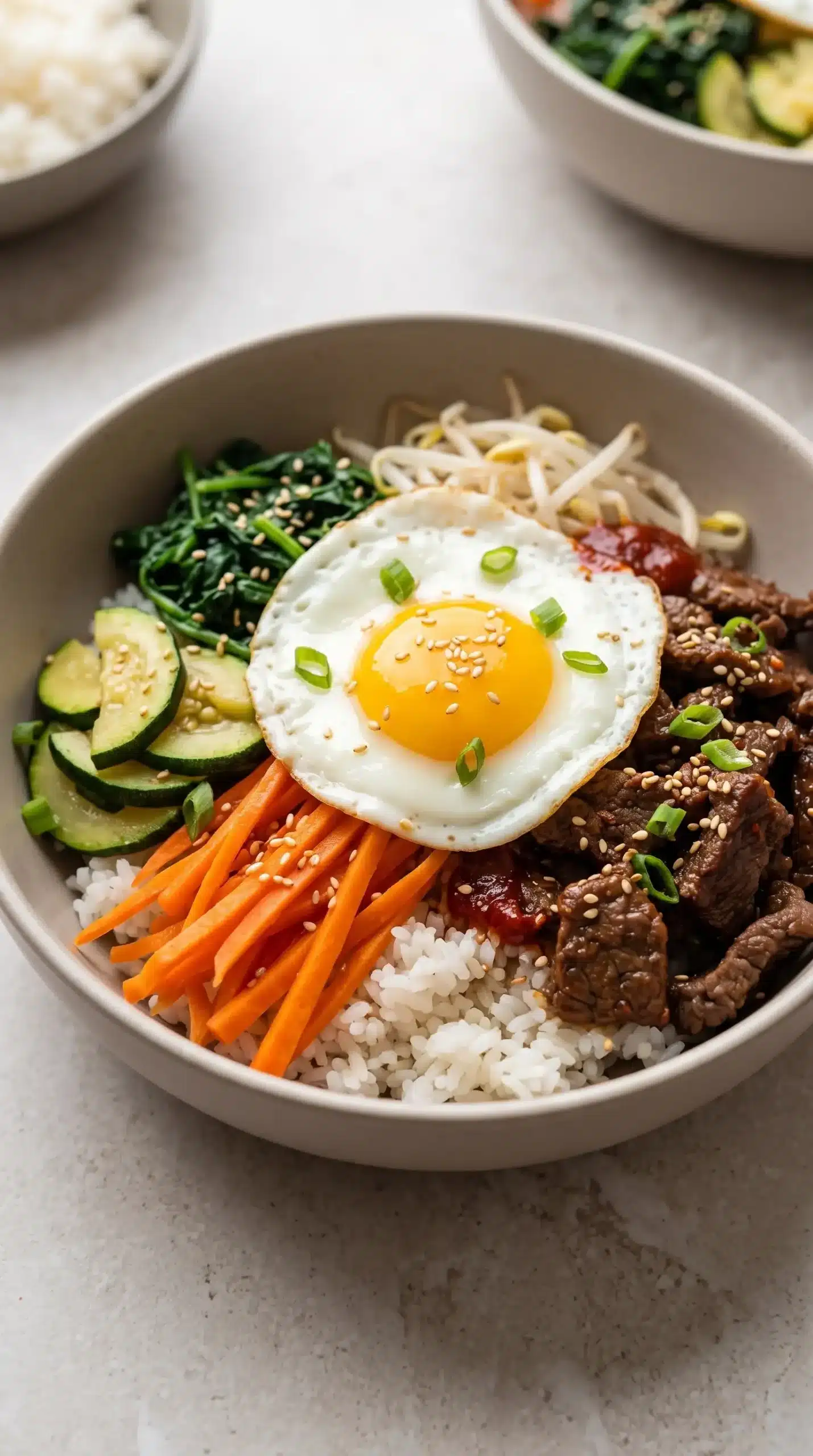
Warm cooked rice forms the foundation, with the seasoned beef and sautéed vegetables arranged over it. Keeping the components distinguishable at first makes the bowl visually appealing and lets each ingredient retain its own character.
A fried egg belongs on top, where its yolk can remain intact until the bowl is ready to be mixed. Additional gochujang can be drizzled over the assembled ingredients when more heat is wanted.
Serving the bowl hot makes the separate components feel like one meal. Sesame seeds or chopped green onions can be used as optional garnishes, adding a finishing touch without changing the basic flavor structure.
Mixing Turns Separate Components Into Bibimbap
The name bibimbap reflects its defining preparation: bibim means “mixed” and bap means “cooked rice”. Once the rice, beef, vegetables, sauce, and egg come together, mixing spreads the flavors throughout the bowl instead of leaving them isolated in separate sections.
Breaking into the egg while mixing allows the runny yolk to mingle with the warm rice and seasoned ingredients. A little additional gochujang can be incorporated at this point if the existing seasoning is not spicy enough.
Individual bowls also make customization easy. One person can keep the original seasoning, another can add more sauce, and a milder serving can use less heat without changing the preparation of the remaining components.
Storing Leftover Korean Beef Bibimbap Safely
Leftover bibimbap can be placed in an airtight container and refrigerated for up to 3 days. Reheating can be done in the microwave or on the stove, with a little water added to help keep the rice and other ingredients moist.
Simple Swaps for a Different Korean Beef Bibimbap
Ground turkey provides an alternative to the lean ground beef when a different protein is preferred. Tofu can also replace the beef, making it possible to create a vegetarian version of the bowl.
Brown rice offers a different grain option, while quinoa can change the texture and overall character of the serving. These swaps work when the goal is to alter the base without abandoning the basic bibimbap format.
Heat is equally flexible. Reducing the gochujang creates a milder bowl, while increasing it or adding sliced chilies produces a spicier finish. A milder sauce can also stand in when gochujang is too hot for the intended serving.
Common Korean Beef Bibimbap Mistakes to Avoid
Overcooking the vegetables is one way to lose the textural contrast that helps the bowl work. Aim for tender-crisp vegetables instead of cooking them until completely soft.
Another problem can occur when the beef is left excessively fatty after browning. Draining excess fat before adding the gochujang, soy sauce, and sesame oil gives the seasoned mixture a cleaner consistency.
Too much gochujang can dominate the other ingredients, particularly when the bowl is mixed. Starting with the intended amount and adjusting the heat at serving makes the spice level easier to control.
Cooking the egg beyond the desired texture also changes the finished bowl. For a sunny-side-up topping, the whites should be set while the yolk remains runny, allowing the yolk to blend into the rice when mixed.
Nutrition Comes From the Full Bowl
Korean beef bibimbap combines protein from lean ground beef with rice and a broad selection of vegetables. Spinach, carrots, zucchini, and bean sprouts bring different nutrients and dietary fiber into the meal, while the egg contributes additional protein and richness.
The vegetables also provide vitamins and antioxidants, with spinach and carrots specifically contributing vitamins A and C. Their presence gives the bowl more nutritional variety than a serving centered only on meat and rice.
Healthy fats are present through sesame oil and the egg, while the overall combination creates a balanced meal built from several food groups. Choosing lean ground beef and low-sodium soy sauce keeps the supplied ingredient combination aligned with a lighter approach.
Preparing Components Ahead for Easier Serving
The beef and vegetables can be prepared ahead and stored separately. Keeping them apart makes it easier to reheat each component before assembling individual bowls.
Separate storage also gives each person more control over the finished serving. Rice, beef, vegetables, egg, and sauce can be combined at the point of serving, preserving the customizable nature of a Korean beef rice bowl.
Balanced Heat Makes Korean Beef Bibimbap Complete
Warm rice, seasoned beef, tender-crisp vegetables, and a runny fried egg give Korean beef bibimbap its most useful balance of textures. Gochujang supplies the defining heat, but its adjustable amount means the sauce can support the other ingredients instead of overpowering them.
The strongest cooking judgment is to protect that balance from the skillet through assembly: brown the beef cleanly, keep the vegetables tender-crisp, preserve the egg yolk, and adjust the sauce to the eater. Those choices allow the finished bowl to come together naturally once everything is mixed.
Korean Beef Bibimbap Questions About Spice and Substitutions
How can the Korean beef bibimbap be made less spicy?
Reduce the amount of gochujang used in the beef mixture and skip the optional extra drizzle or sliced chilies. A milder sauce can also replace gochujang when a gentler flavor is needed.
Can tofu replace the beef in a bibimbap bowl?
Yes. Tofu can replace the ground beef for a vegetarian version, while the rice, vegetables, sauce, and other toppings can remain part of the bowl.
Which rice alternatives work with Korean beef bibimbap?
Brown rice and quinoa are both supplied alternatives. Brown rice changes the grain while adding more fiber, and quinoa provides a different texture and flavor.
Can the egg be prepared differently?
The egg does not have to be sunny-side up. Scrambled or poached eggs can be used when a different egg texture is preferred.
How long can leftover bibimbap stay refrigerated?
Stored in an airtight container, leftover bibimbap can be refrigerated for up to 3 days. Reheat it in the microwave or on the stove, adding a little water to help maintain moisture.
What can replace gochujang?
Sriracha can be used as an alternative, or a mixture of miso and chili powder can provide a different flavor profile. The amount can be adjusted according to the desired heat.
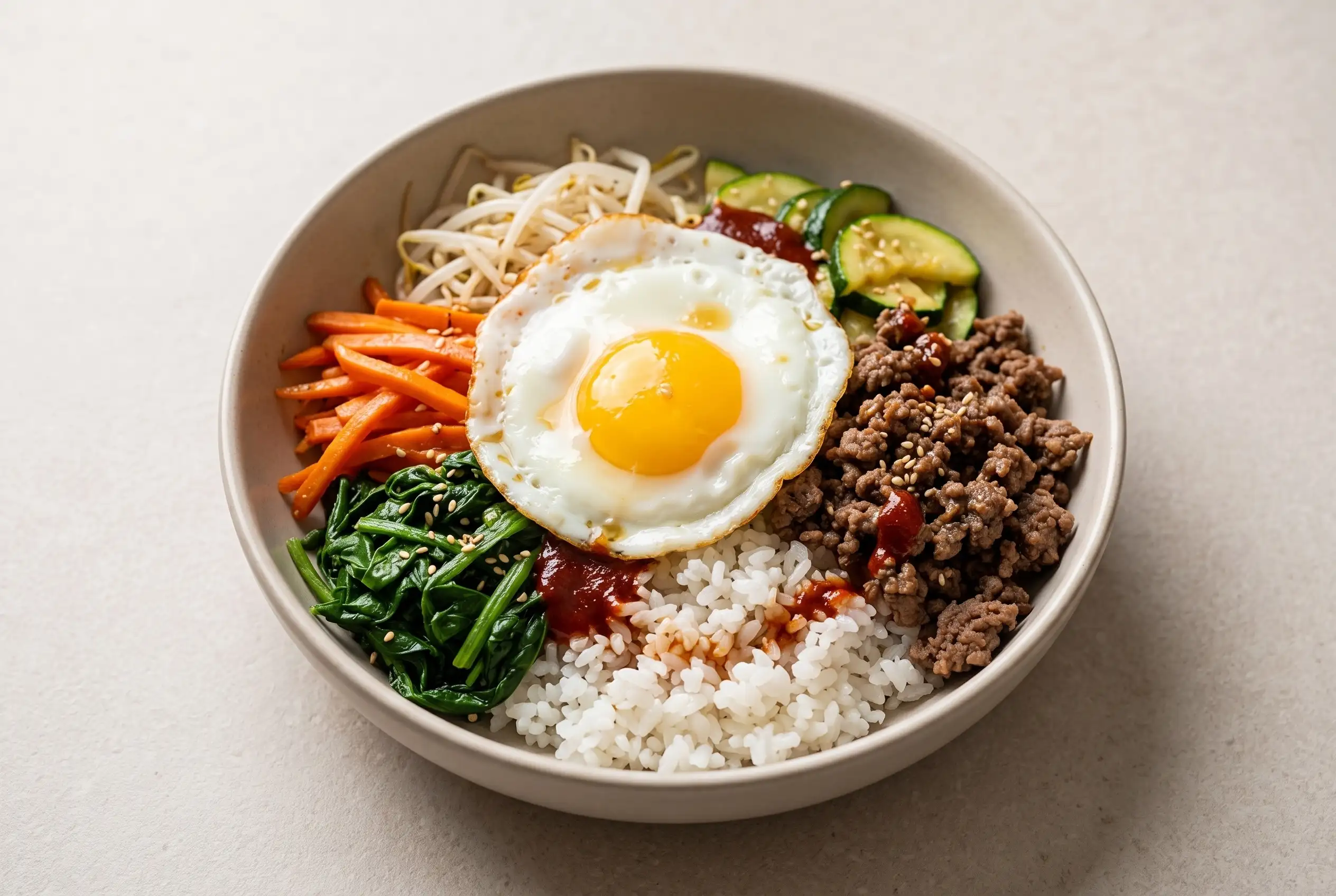
Korean Beef Bibimbap Bowl with Gochujang and Fried Egg
Ingredients
Method
- Have the cooked short-grain white rice ready and keep it warm.
- Warm a large skillet over medium heat. Add the ground beef and cook, breaking it into small pieces, until browned and fully cooked.
- Remove excess fat from the skillet. Lower the heat and mix in the gochujang, low-sodium soy sauce, and 1 teaspoon of the sesame oil.
- Keep the beef over low heat and cook gently until the sauce ingredients are evenly incorporated.
- In another skillet, heat the remaining 1 teaspoon sesame oil over medium heat. Cook the carrot, zucchini, spinach, and bean sprouts separately or in batches until tender-crisp, retaining some bite in each vegetable.
- Heat the neutral cooking oil in a skillet over medium heat. Fry the eggs sunny-side up until the whites are set while the yolks remain runny.
- Divide the warm rice among 4 bowls. Arrange the seasoned beef, carrots, spinach, zucchini, and bean sprouts over the rice.
- Top each bowl with one fried egg, then add optional sesame seeds and chopped green onions.
- Serve hot with additional gochujang if desired. Mix the rice, beef, vegetables, sauce, and egg together before eating.