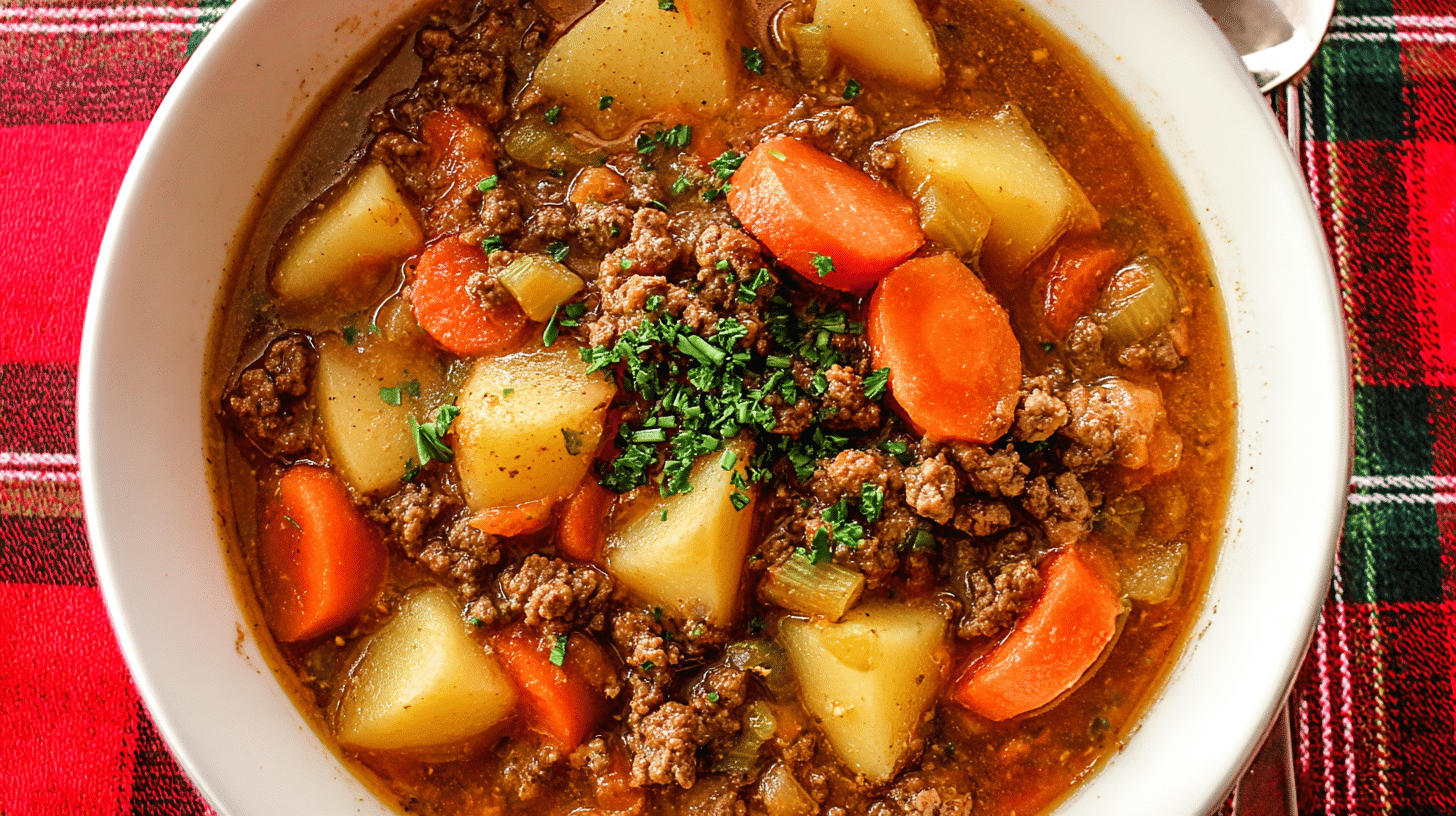
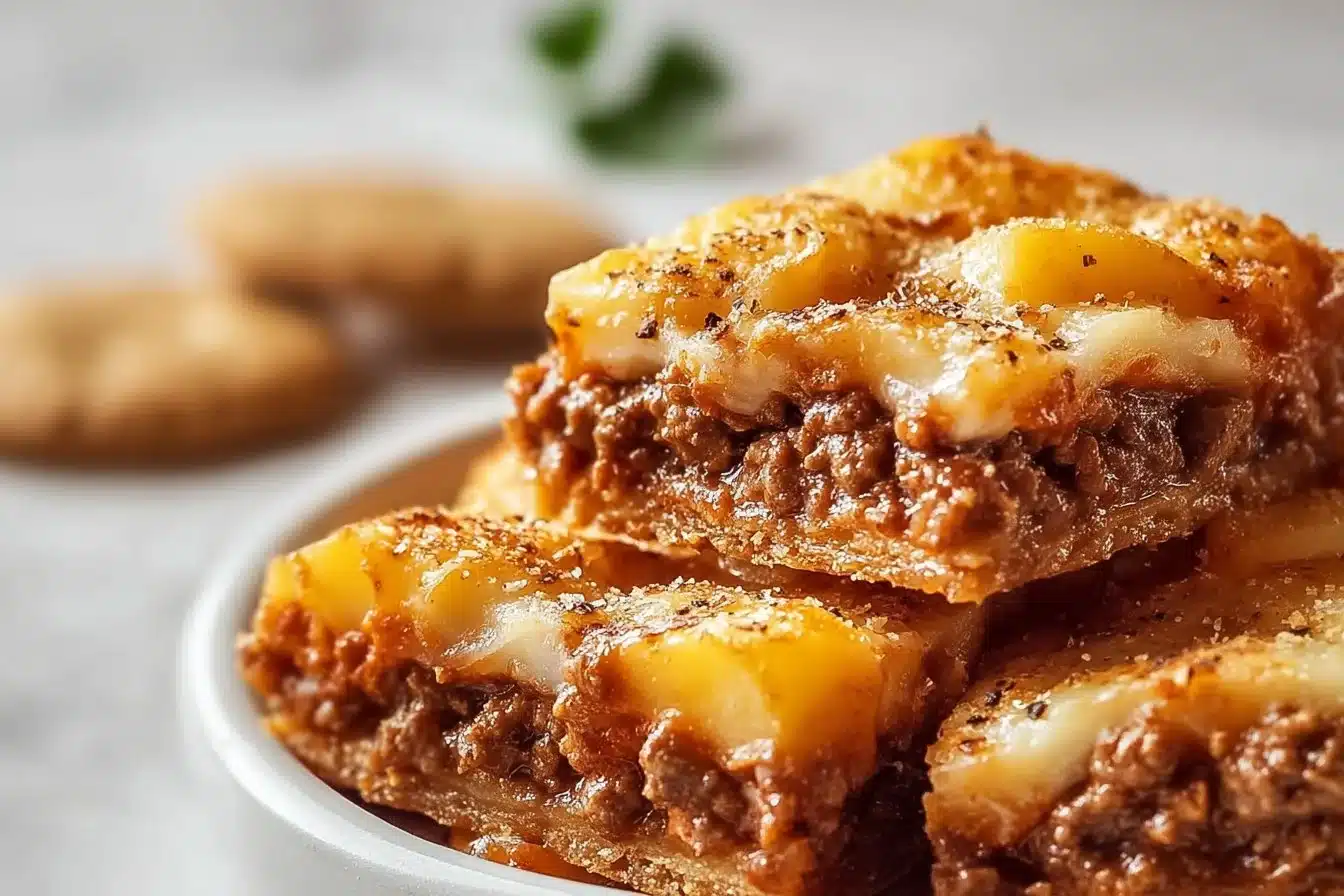
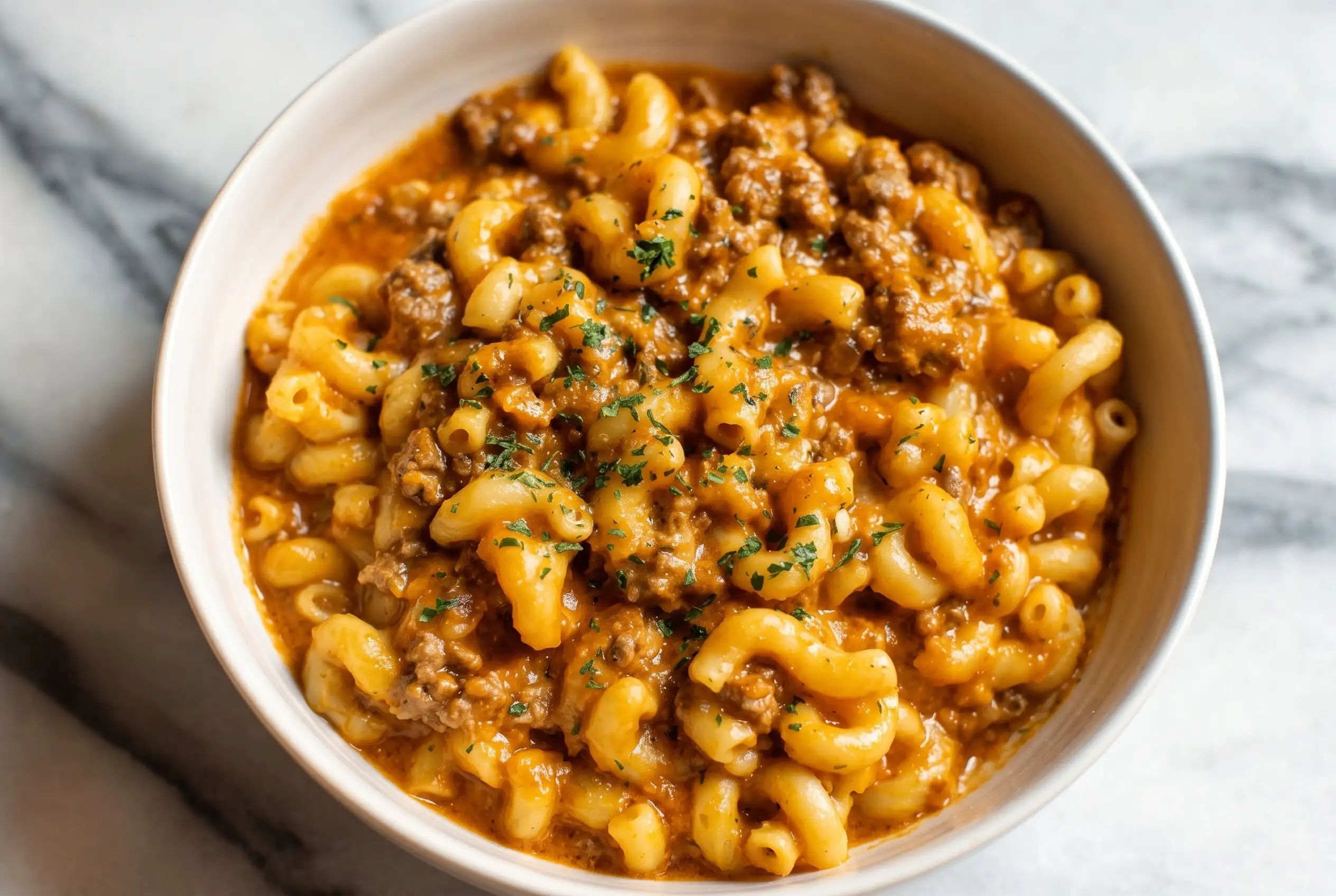
Slow Cooker Cowboy Casserole with Ground Beef and Potatoes
Slow cooker cowboy casserole brings ground beef, potatoes, black beans, tomatoes, corn, onion, garlic, and warm spices together in one hearty meal. Browning the beef first builds a savory base, while the slow cooker gives the diced potatoes time to become tender alongside the beans and vegetables.
The combination is especially useful for a busy evening because most of the cooking happens after the ingredients are combined. A little attention at the beginning helps develop flavor and removes excess fat, leaving the slow cooker free to handle the longer cooking stage.
Why Slow Cooker Cowboy Casserole Works So Well
Ground beef gives the casserole its substantial center, while black beans extend the mixture with another source of protein and a soft, creamy texture. Potatoes make the dish filling, and corn and tomatoes bring contrasting textures that keep each spoonful from feeling too uniform.
The slow cooker is particularly helpful because the potatoes need enough time to soften fully. Cooking everything together also allows the chili powder and cumin to mingle with the beef, vegetables, beans, and tomatoes as the casserole cooks.
A slow cooker cowboy casserole also offers practical flexibility. The ingredients can be prepared ahead of cooking, and the finished casserole can be refrigerated or frozen for later. Optional shredded cheese can be added near the end when a melted topping suits the meal.
Ingredient Choices That Shape the Casserole
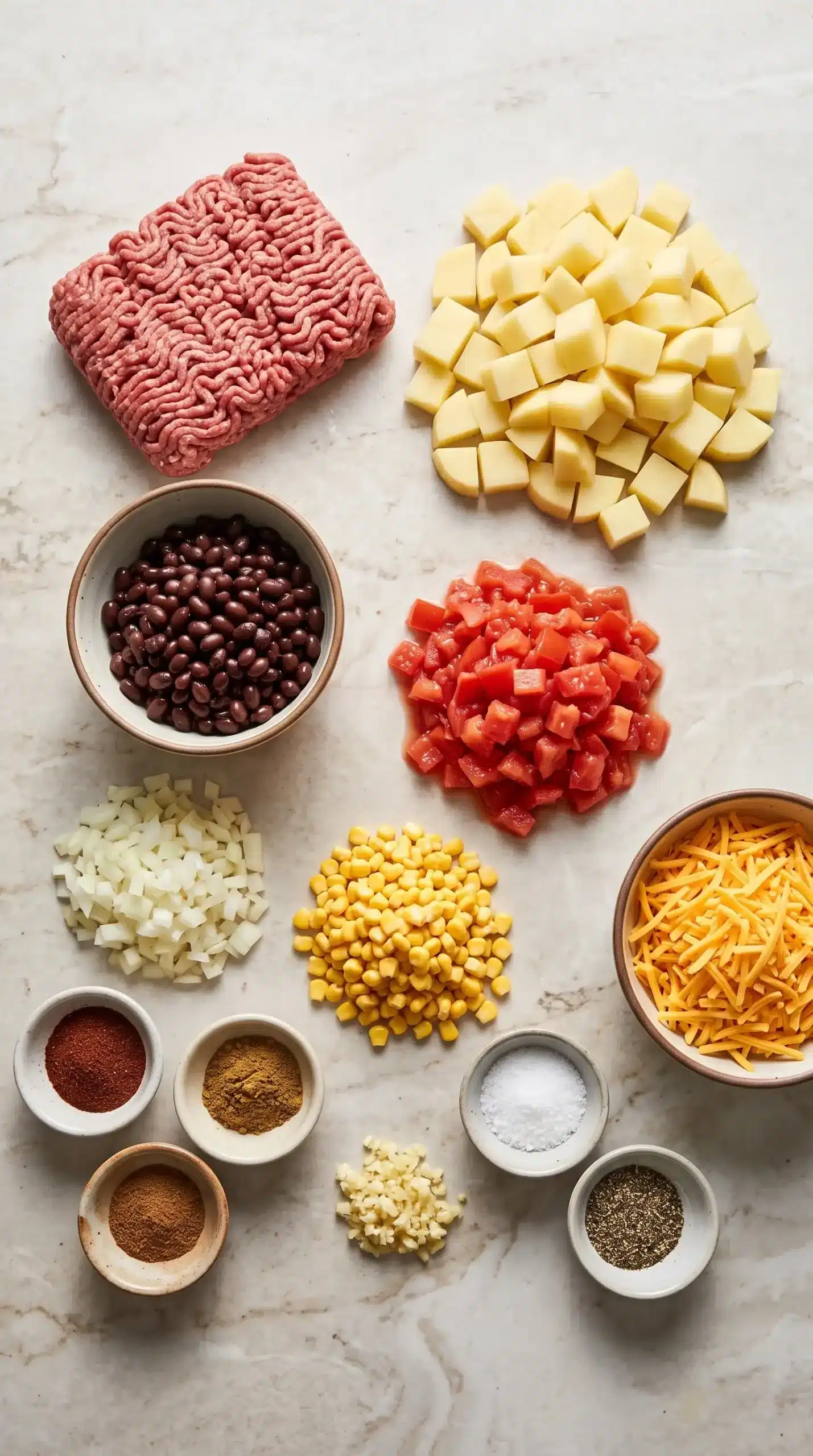
The most important ingredient decision is the size of the diced potatoes. Keeping the pieces reasonably consistent helps them cook at a similar rate. The drained and rinsed black beans can go directly into the slow cooker, while frozen or canned corn works with the same basic preparation.
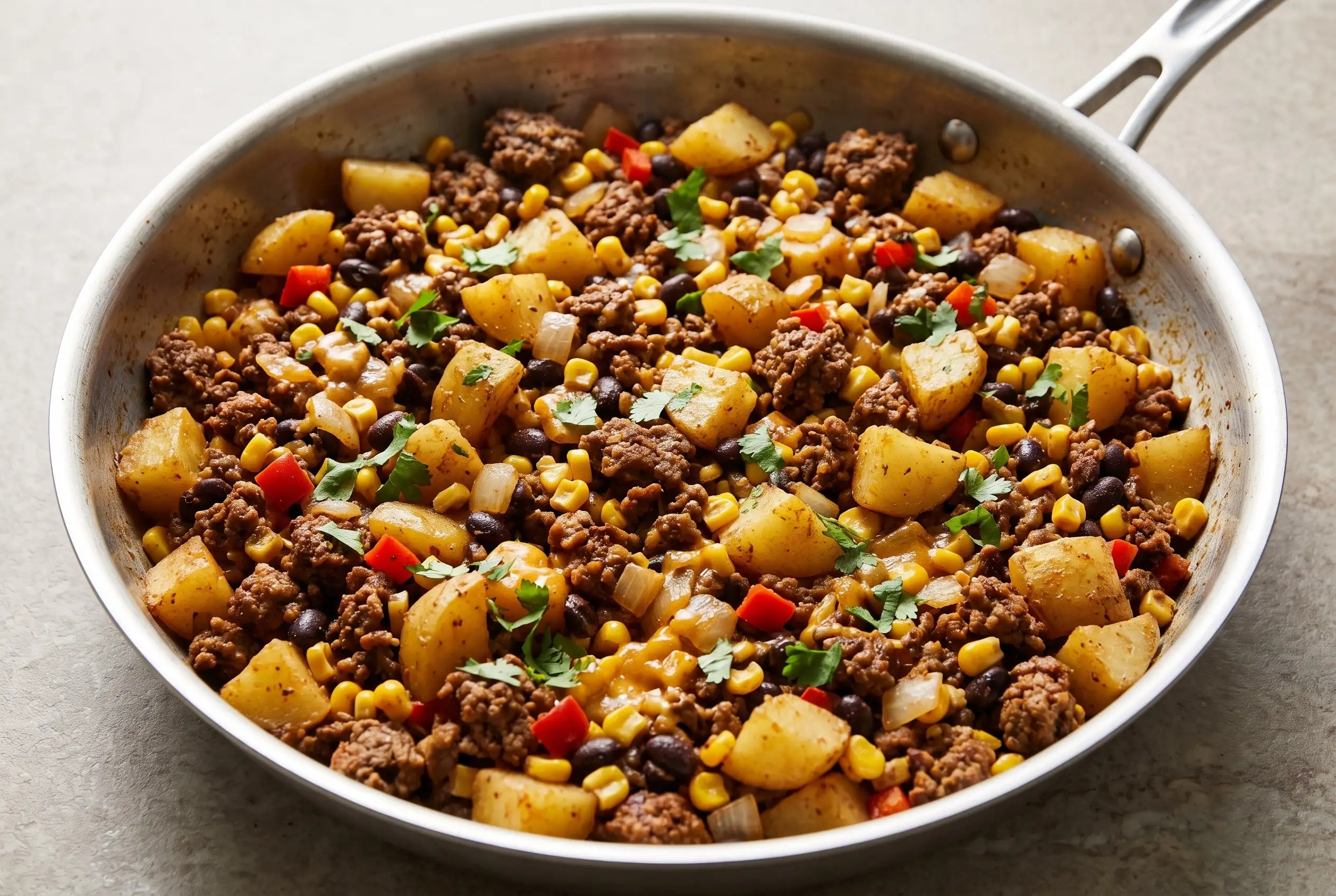
For a stovetop preparation, keep the potato pieces evenly diced so they cook at a steady rate alongside the beef and corn; a ground beef, potato, and corn skillet uses this combination in a quicker cooking format.
| Ingredient | Practical handling | Why it matters here |
|---|---|---|
| Ground beef | Brown with onion and garlic, then drain | Creates the savory base without carrying excess fat into the slow cooker |
| Potatoes | Dice into reasonably similar pieces | They need to become tender during the slow cooking stage |
| Black beans | Drain and rinse before adding | Keeps excess liquid from entering the casserole |
| Diced tomatoes | Add as supplied in the recipe | Contributes moisture and tomato flavor to the slow-cooked mixture |
| Corn | Use frozen or canned | Adds a contrasting texture and mild sweetness |
Browning the Beef Sets Up Better Slow Cooker Flavor
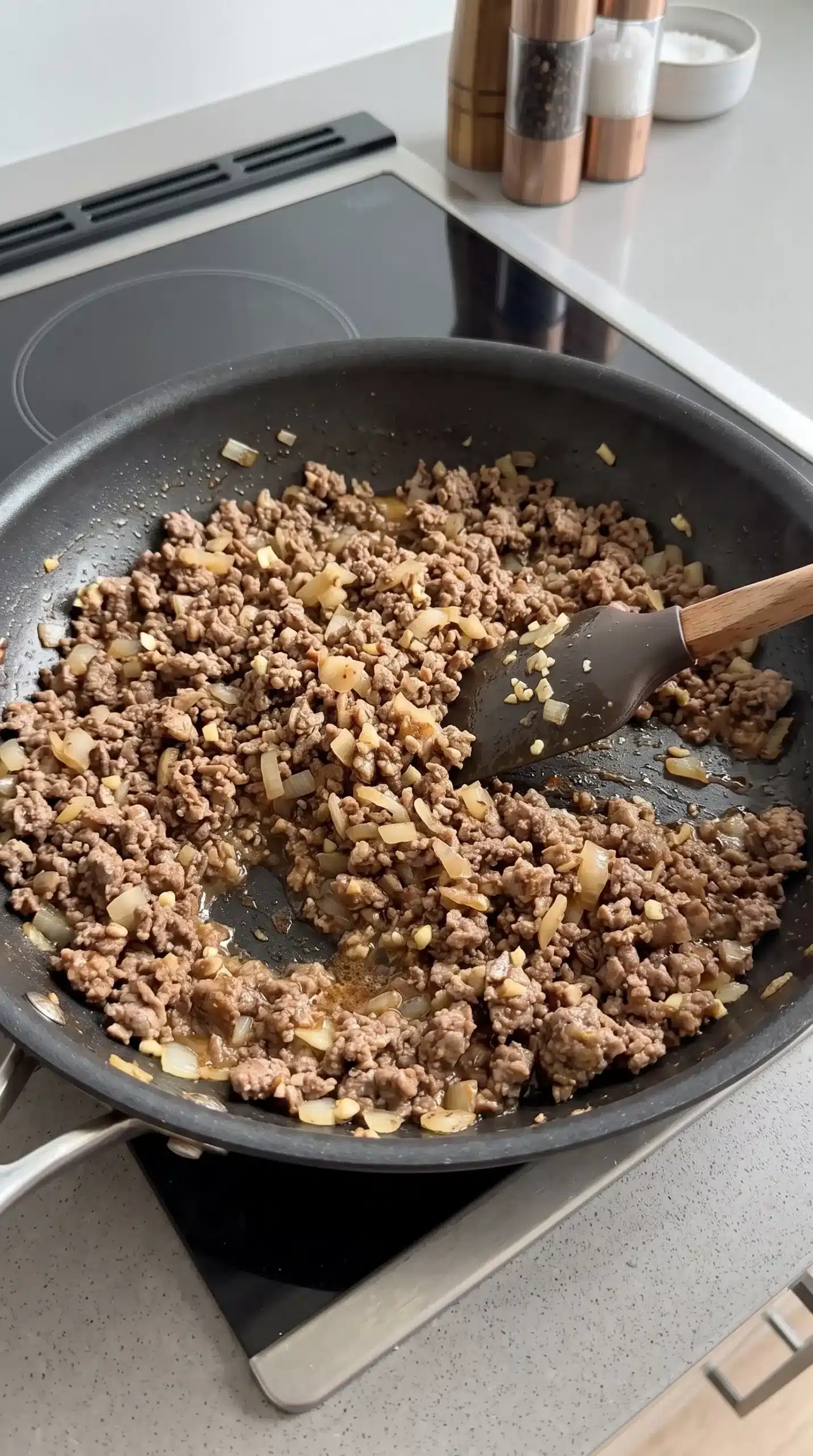
The ground beef should be cooked in a skillet with the diced onion and minced garlic before it enters the slow cooker. Cooking these ingredients together gives the beef a more developed savory character than simply placing raw ground beef into the crock.
Once the beef is fully cooked, draining the excess fat is an important control point. Removing it before combining the beef with the potatoes, beans, tomatoes, and corn keeps unnecessary grease from becoming part of the cooking liquid.
For a ground beef cowboy casserole, the browned mixture should be distributed through the other ingredients rather than left in one concentrated layer. Stirring after the seasonings are added helps the chili powder, cumin, salt, and pepper reach the whole mixture.
How the Slow Cooker Layers Affect Texture
The potatoes, black beans, diced tomatoes, corn, and cooked beef are combined in the slow cooker before cooking. The potatoes need exposure to the moisture already present in the tomatoes and the surrounding ingredients, so they should not be packed into a dry pocket or left sitting separately from the rest of the mixture.
Cooking Control for Tender Potatoes and Even Seasoning
The slow cooker can be set to low for 6 to 8 hours or high for 3 to 4 hours, with tenderness of the potatoes providing the most useful visual and textural cue. A fork should meet softened potato pieces without the firm resistance associated with undercooking.
Low cooking gives the ingredients a longer period to heat and soften together, while the high setting shortens the cooking window. Whichever setting you choose, the practical endpoint remains the same: the potatoes should be tender before the casserole is served.
Seasoning is another point where simple control makes a difference. Chili powder and cumin are sprinkled over the combined ingredients before stirring, allowing the spices to spread through the beef, vegetables, beans, and potatoes. Salt and pepper can be adjusted according to taste as the mixture comes together.
Mistakes to Avoid in Slow Cooker Cowboy Casserole
- Skipping the browning step: Putting the ground beef into the slow cooker without first browning it removes the preparation stage that develops the savory base and combines the beef with the onion and garlic.
- Leaving excess fat in the beef: Drain the cooked beef before adding it to the slow cooker so the finished casserole does not carry unnecessary grease.
- Using uneven potato pieces: Very different sizes can cook at different rates. More consistent dicing makes it easier for the potatoes to reach tenderness together.
- Stopping before the potatoes soften: The cooking time is a guide, but potato tenderness is the important endpoint. Continue until the pieces are tender.
- Adding cheese too early: When using shredded cheese, reserve it for the last 30 minutes so it can melt over the casserole near the end of cooking.
Small Texture Adjustments for a More Flexible Meal
Potatoes are central to the texture of the casserole, but they do not have to be the only option. Sweet potatoes can replace regular potatoes when a sweeter flavor and different texture are preferred. Pre-cooked potatoes or frozen diced potatoes can also help when preparation time is limited.
The vegetable balance can be adjusted without changing the basic character of the dish. Bell peppers or zucchini can be added for additional vegetables and flavor. These options fit naturally with the existing tomatoes, corn, beans, onion, garlic, and spices.
Cheese is completely optional, so the casserole can be served without it or finished with shredded cheddar or Monterey Jack. Adding the cheese during the last 30 minutes creates a melted topping without making it part of the longer cooking period.
Simple Ingredient Swaps That Keep the Dish Intact
Ground beef can be replaced with ground turkey or chicken for a different meat option, while cooked lentils or a meat substitute can be used when a vegetarian version is desired. Sweet potatoes provide another straightforward swap for the regular potatoes. These changes preserve the basic combination of a protein or protein-rich substitute, vegetables, beans, and slow-cooked potatoes.
Serving Slow Cooker Cowboy Casserole at Its Best
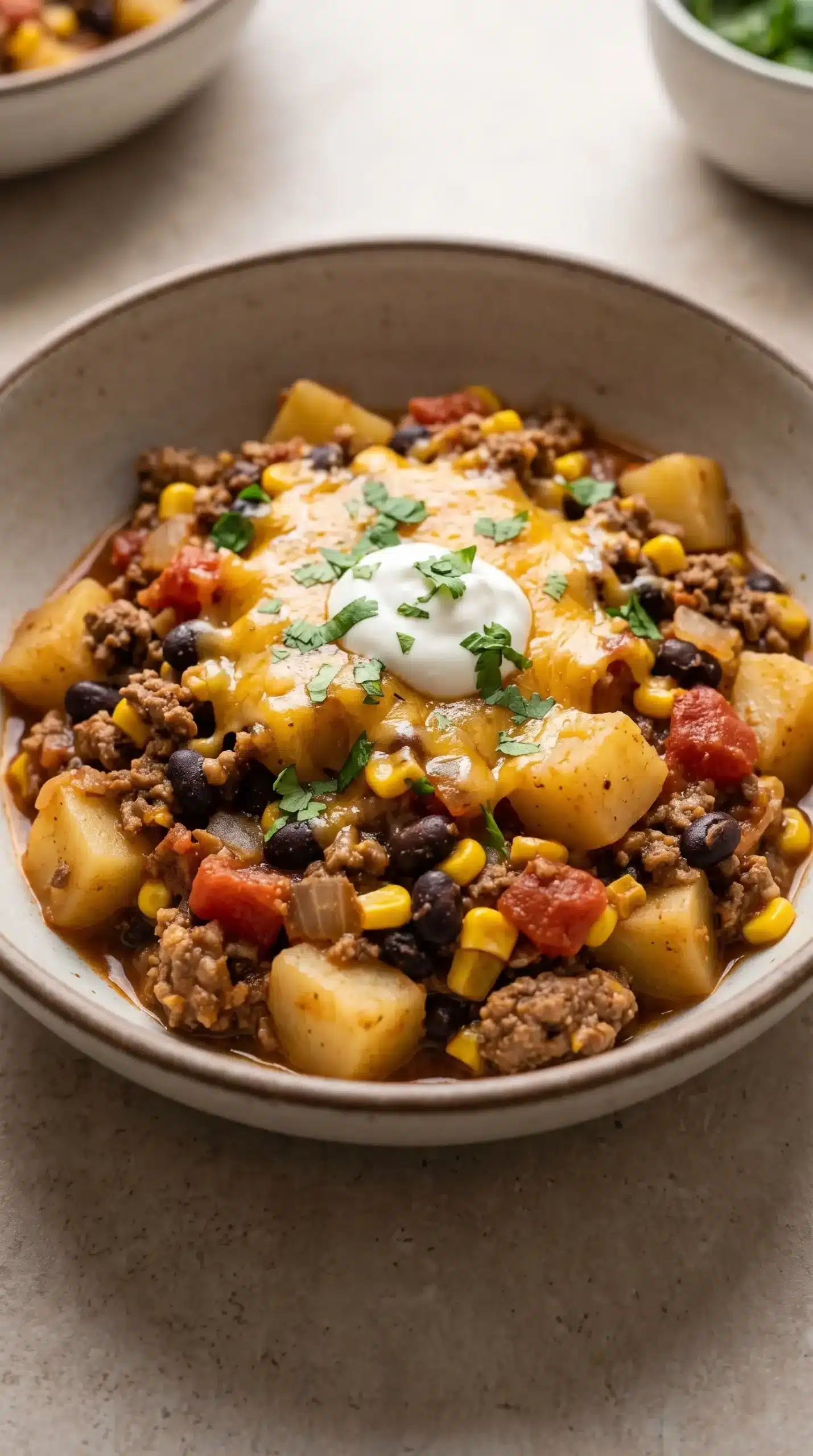
Serve the casserole warm, with fresh herbs or a dollop of sour cream if desired. A side salad or crusty bread can accompany the hearty mixture, while garlic bread or steamed vegetables also fit naturally alongside it. The optional cheese topping can be allowed to remain melted over each serving for extra richness.
Keeping Leftovers Ready for Another Meal
Leftover cowboy casserole should be transferred to an airtight container and refrigerated promptly. For cooked casseroles, 3 to 4 days is the USDA-recommended refrigerator storage window, after which leftovers should be discarded.
For longer storage, the casserole can be frozen for up to 2 months. Freezing makes the dish useful beyond the original meal, particularly when a batch has been prepared with future servings in mind.
When reheating, use either the microwave or stovetop and heat until warmed through. If the casserole has been frozen, allow it to thaw as appropriate before reheating so the center can warm evenly.
Ways to Change the Flavor Without Rebuilding the Dish
Chili powder and cumin establish the main seasoning profile, while paprika or cayenne pepper can be considered when a different level of warmth or spice is wanted. Additional vegetables such as bell peppers or zucchini can also change the character of the casserole without replacing its core ingredients.
Why Tender Potatoes Matter Most in the Finished Casserole
Tender potatoes bring the beef, beans, tomatoes, and corn together into the cohesive texture expected from a slow-cooked casserole. Once the potatoes are soft, the seasoning has been stirred through the mixture, and any optional cheese has melted during its short finishing period, the dish has reached the practical point where its separate ingredients work as one meal.
Slow Cooker Cowboy Casserole Questions and Answers
Can I use sweet potatoes in slow cooker cowboy casserole?
Yes. Sweet potatoes can replace the regular diced potatoes and will give the casserole a sweeter flavor while adding a different texture. Keep the pieces reasonably consistent so they cook evenly.
Can I make cowboy casserole without ground beef?
Ground turkey or ground chicken can replace the beef, while cooked lentils or a meat substitute can provide a vegetarian alternative. The rest of the casserole can remain based on the beans, potatoes, tomatoes, corn, onion, garlic, and seasonings.
When should I add cheese to slow cooker cowboy casserole?
Add shredded cheese during the last 30 minutes of cooking. Cheddar and Monterey Jack are both suitable choices when you want a melted cheese finish.
How can I make the casserole cook more quickly?
Using pre-cooked potatoes or frozen diced potatoes can reduce preparation work. The slow cooker can also be used on high for 3 to 4 hours instead of low for 6 to 8 hours, with potato tenderness determining when it is ready.
Can I prepare the ingredients ahead of time?
Yes. The ingredients can be prepared the night before and kept refrigerated until you are ready to cook. This approach separates the preparation work from the slow-cooking period and can make the meal easier to organize.
What can I serve alongside cowboy casserole?
A fresh salad, crusty bread, garlic bread, or steamed vegetables can accompany the casserole. Sour cream and fresh herbs can also be used as optional garnishes when serving it warm.
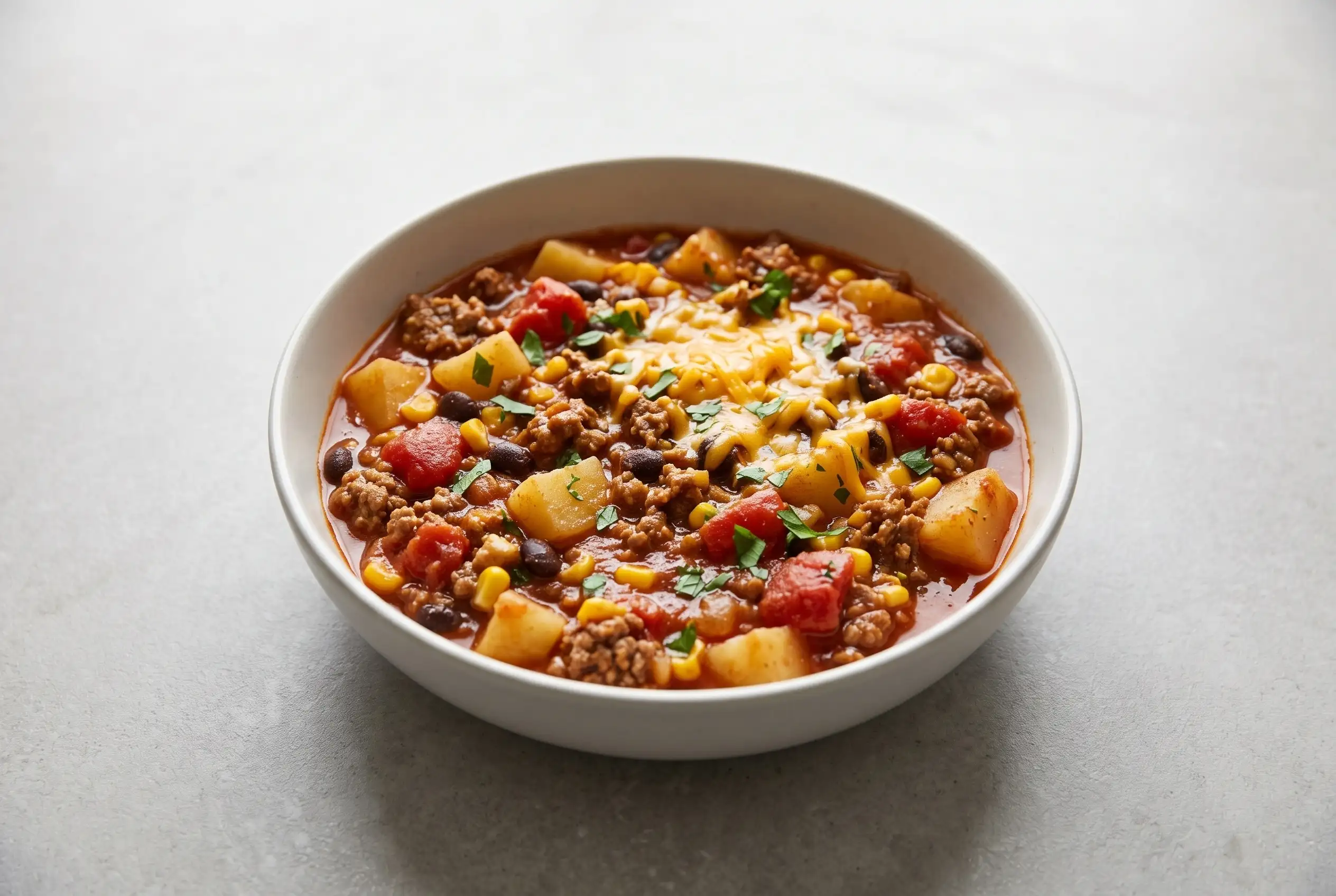
Slow Cooker Cowboy Casserole with Ground Beef and Potatoes
Ingredients
Method
- Cook the ground beef, diced onion, and minced garlic in a skillet until the beef is fully cooked. Drain off the excess fat.
- Transfer the diced potatoes, black beans, diced tomatoes, corn, and cooked beef mixture to the slow cooker.
- Season the mixture with chili powder, ground cumin, salt, and black pepper.
- Stir everything together thoroughly so the vegetables, beef, and seasonings are evenly distributed.
- Cover the slow cooker and cook on low for 6 to 8 hours or on high for 3 to 4 hours, until the potatoes are tender.
- If using the shredded cheese, scatter it over the casserole during the final 30 minutes of cooking. Cover and continue cooking until the cheese has melted.
- Serve the casserole warm.