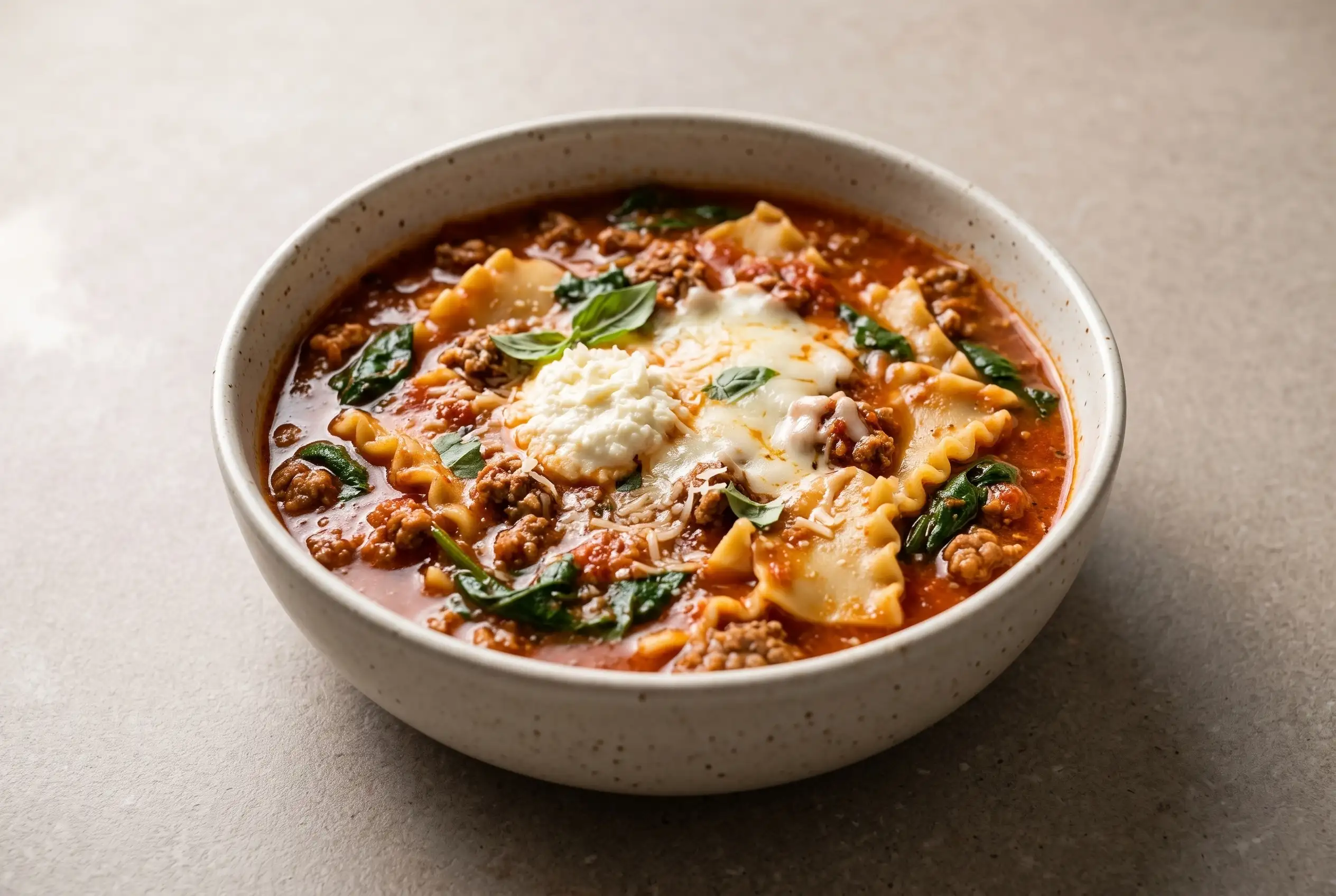
Beef Enchiladas with Cheddar and Enchilada Sauce Recipe
Beef enchiladas bring savory ground beef, tender corn tortillas, rich enchilada sauce, and melted cheese together in one satisfying baked dish. The filling is cooked with onion and garlic before being combined with sauce, rolled into tortillas, covered again, and baked until bubbling.
Homemade beef enchiladas also leave plenty of room for adjustment. A little extra heat can come from jalapeños or spicy enchilada sauce, while beans or vegetables can shift the filling toward a different style. Served with a cool spoonful of sour cream and fresh cilantro, the contrast between the warm, saucy enchiladas and fresh toppings makes the meal especially inviting.
What Makes Beef Enchiladas So Satisfying
Ground beef gives the filling a hearty center, while enchilada sauce keeps the rolled tortillas moist and flavorful. Corn tortillas contribute a distinct texture, and shredded cheddar or Monterey Jack melts across the top for a rich finish.
Family dinners benefit from the straightforward assembly because the filled tortillas can be arranged together in one baking dish. Keeping a hearty ground-beef dinner contained in one dish can simplify serving and cleanup, as with a cheesy ground beef rice casserole.
Different preferences are easy to accommodate at the table. Sour cream can be added after baking, cilantro can provide a fresh finishing note, and toppings such as avocado, diced tomatoes, olives, or extra cheese can personalize individual portions.
Build a Filling That Rolls Cleanly
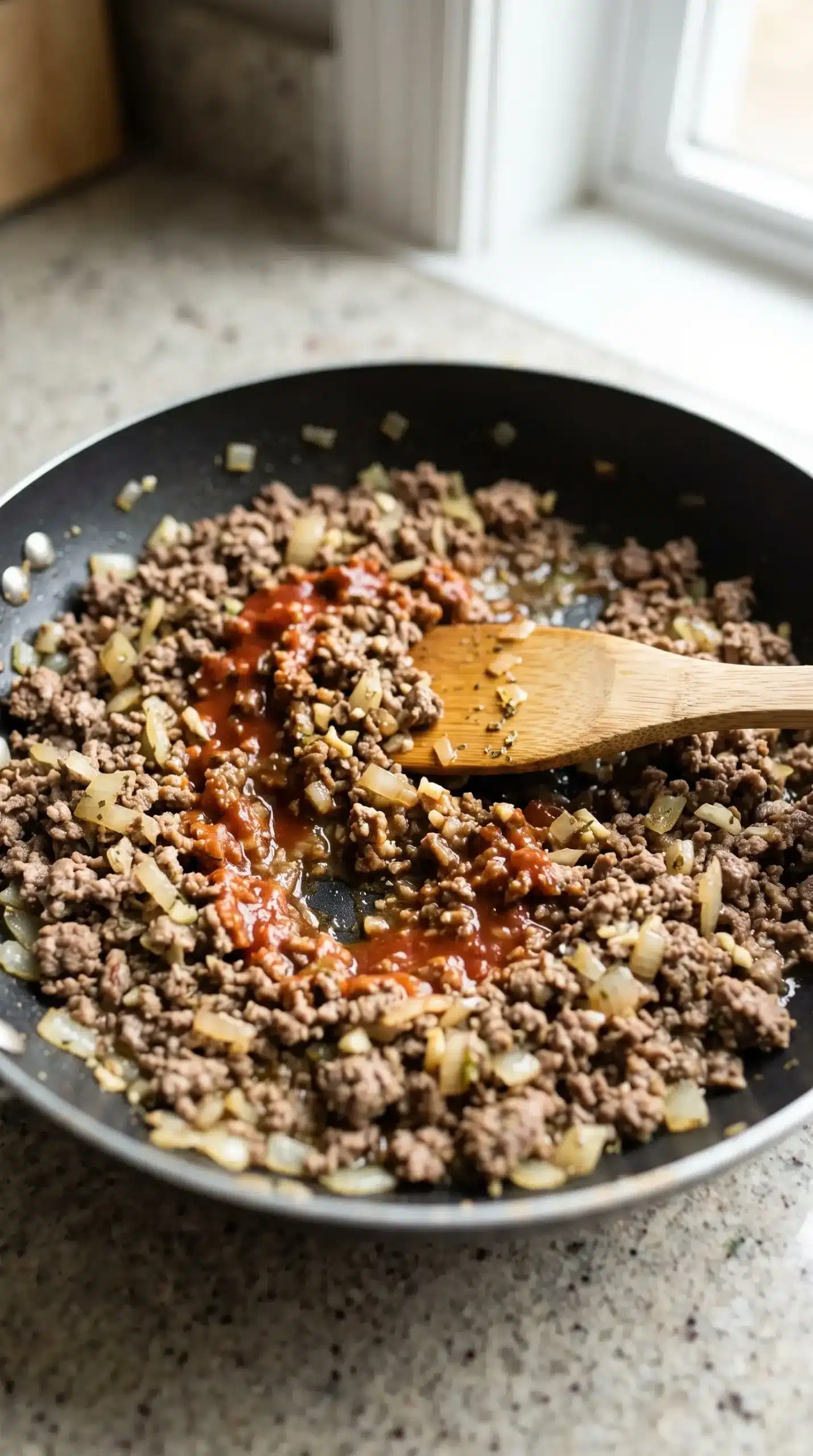
Lean ground beef works particularly well here because it creates a substantial filling without making the tortillas excessively greasy. Chopped onion should be softened first, giving the beef mixture a more cohesive texture once the meat is browned.
Before adding the sauce, cook the ground beef to a minimum internal temperature of 160°F (71.1°C), measured with a food thermometer.
Garlic goes in after the beef has browned and needs only a brief cooking period. Salt and pepper season the mixture, while cumin, chili powder, or paprika can be introduced when a deeper spiced profile is wanted.
| Filling choice | How to use it | Result in the enchiladas |
|---|---|---|
| Lean ground beef | Brown and break apart before adding sauce | Hearty, savory filling |
| Black beans | Use in place of the beef | Vegetarian filling |
| Shredded chicken | Use as an alternative filling | Different meat-based variation |
| Turkey | Substitute for ground beef | Alternative poultry filling |
| Beans and vegetables | Combine as a customized filling | Flexible meat-free variation |
Choose Tortillas and Sauce for the Right Balance
Corn tortillas are the natural foundation for these enchiladas, providing the texture associated with the dish. Flour tortillas can also be used when preferred, although the finished texture will change.
Enchilada sauce serves two jobs during assembly. Some is combined with the cooked beef so the filling stays saucy, while more is spread in the baking dish and poured over the rolled tortillas. That layered approach helps keep the tortillas surrounded by sauce as they bake.
Store-bought or homemade enchilada sauce can work. For a homemade version, tomatoes, chili powder, cumin, garlic powder, and broth can be blended and simmered until thickened. A spicy sauce is an easy way to increase the heat without changing the filling.
Keep the Beef Mixture Moist but Manageable
Once the beef is browned, adding half of the enchilada sauce and simmering briefly gives the filling enough moisture to sit comfortably inside the tortillas. The mixture should remain cohesive so it can be portioned into the tortillas without becoming difficult to roll.
Rolling works best when the tortillas are filled without being overloaded. Place the filling inside, roll each tortilla tightly, and position it seam-side down in the sauced baking dish. That orientation helps keep the rolls together during baking.
| Assembly decision | What to look for | Why it matters |
|---|---|---|
| Sauce underneath | The baking dish has a layer before the tortillas go in | Provides a saucy base |
| Filled tortillas | Each tortilla is rolled tightly around the beef | Keeps the filling contained |
| Seam placement | Rolled tortillas sit seam-side down | Helps hold the rolls in place |
| Sauce on top | Remaining sauce covers the rolled tortillas | Surrounds the tortillas with sauce during baking |
| Cheese finish | Shredded cheese is scattered over the sauced rolls | Creates the melted topping |
Control the Bake for Bubbling Cheese
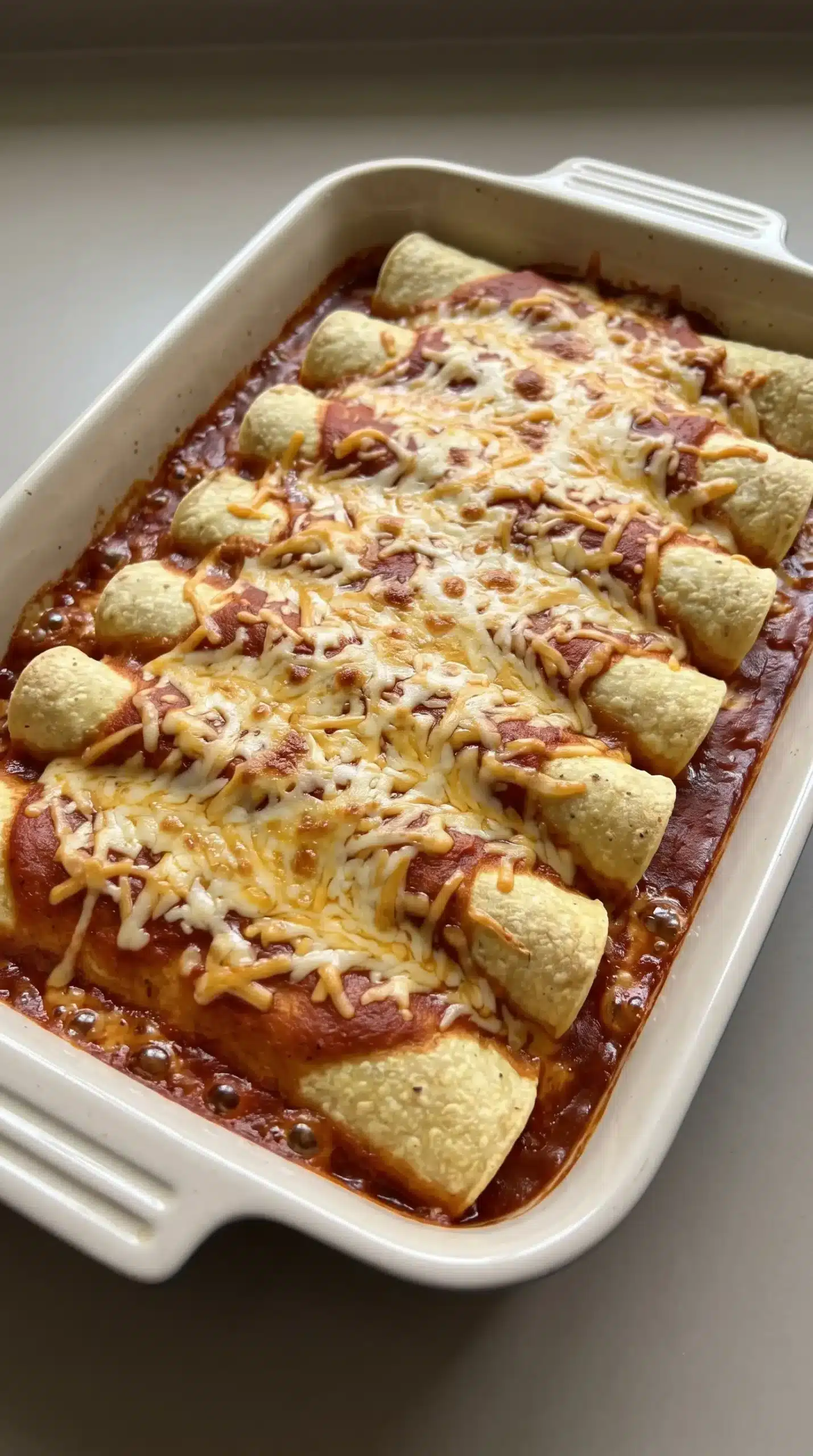
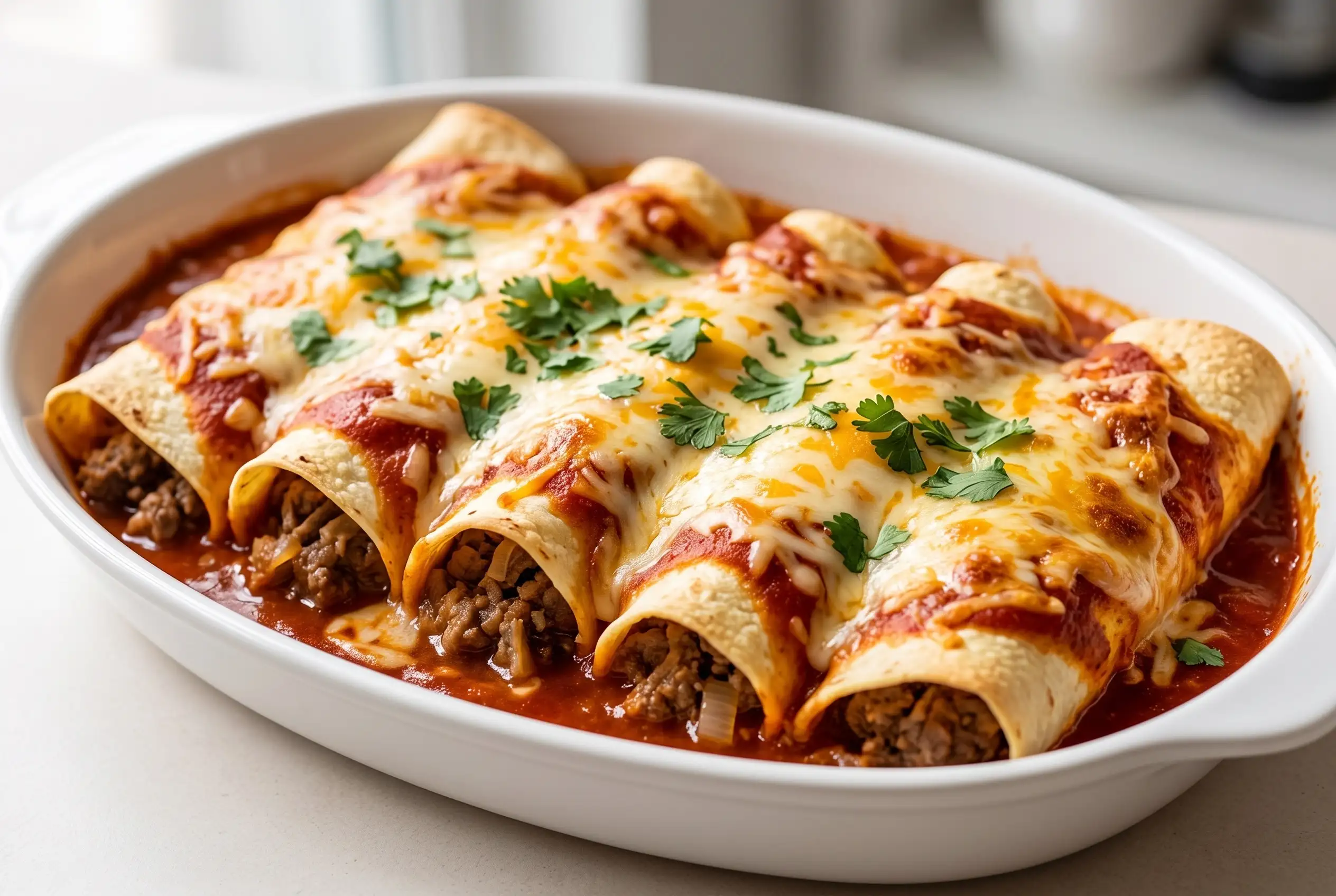
The assembled enchiladas go into a 350°F (175°C) oven, where the sauce heats through and the cheese melts over the top. A bubbling surface is the useful visual cue that the dish has reached its intended baked finish.
Timing should be guided by the condition of the dish as well as the stated baking range. The supplied method calls for 20 to 25 minutes, giving the cheese time to melt while the sauced tortillas heat through.
Oven placement matters less than maintaining the specified temperature and watching the surface. Once the cheese is melted and the sauce is bubbling, the enchiladas are ready to come out for serving.
Finish Each Serving With Cooling Contrast
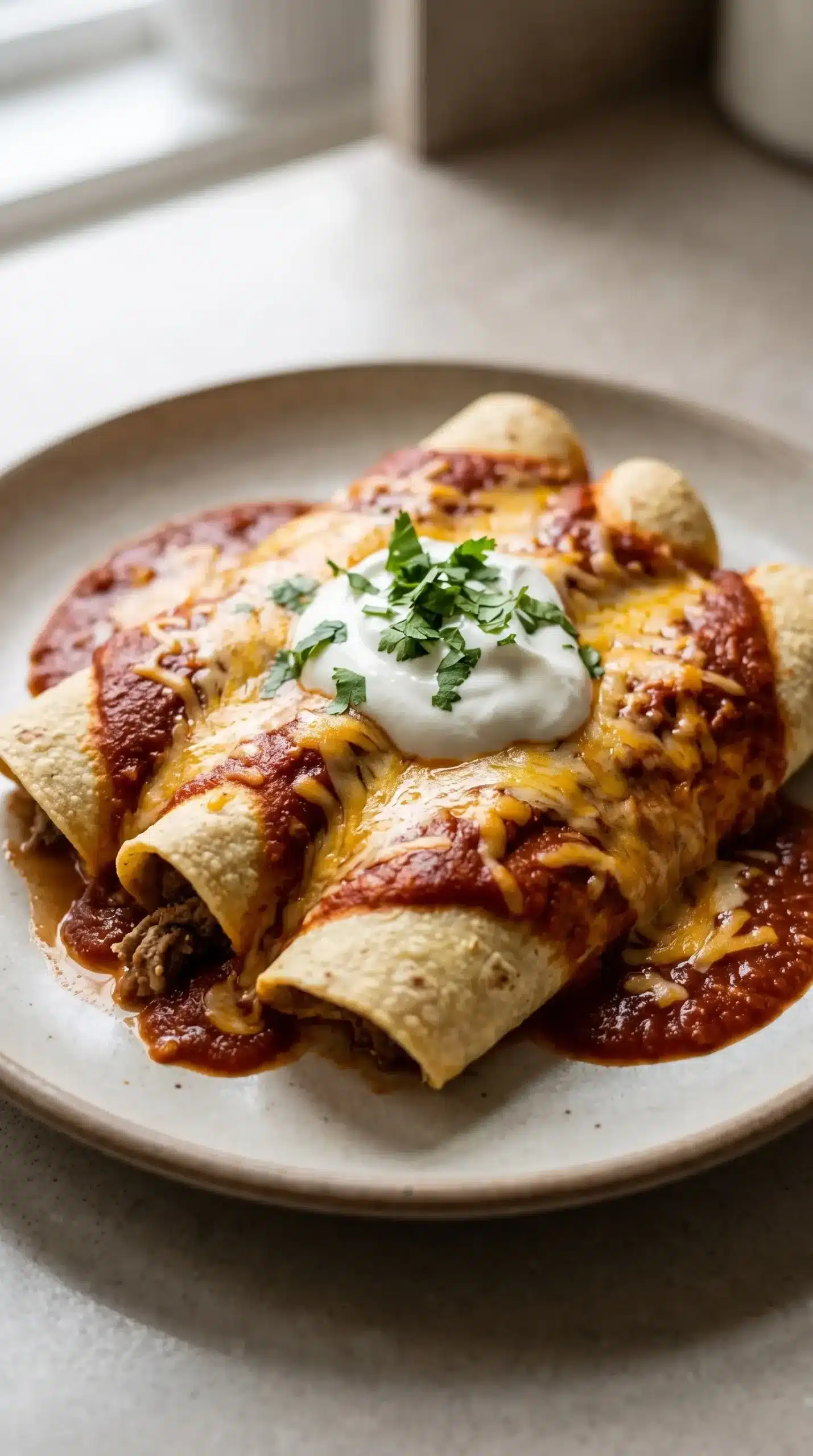
Sour cream adds a cool, creamy element to the hot enchiladas and works naturally as a topping. Fresh cilantro is optional, but it brings a fresh flavor to the finished plate.
- Cool finish: Add a dollop of sour cream after baking.
- Fresh finish: Sprinkle with fresh cilantro if desired.
- Extra toppings: Try avocado, diced tomatoes, olives, or additional cheese.
Pair the Enchiladas With Simple Sides
Mexican rice makes a natural companion for the saucy beef enchiladas, adding a substantial side without competing with the main flavors. Refried beans are another fitting option when a hearty plate is desired.
A simple green salad provides a lighter contrast beside the warm baked tortillas, beef, sauce, and cheese. Keeping the side straightforward lets the enchiladas remain the main focus of the meal.
Prepare Beef Enchiladas Ahead Without Losing Their Appeal
Advance preparation can make these enchiladas especially convenient for a planned dinner. The assembled dish can be prepared a day ahead and kept refrigerated before baking, so the main assembly work is finished before mealtime.
Freezing is another option when the enchiladas need to be saved for later. They can be frozen either before or after baking, provided they are wrapped tightly for storage.
For leftovers, an airtight container is appropriate for refrigerator storage for up to 3 days. Reheating in a 350°F (175°C) oven warms the enchiladas throughout while bringing the melted cheese and sauce back to serving temperature.
Avoid the Most Common Beef Enchilada Problems
Overfilling the tortillas can make tight rolling difficult and may cause the filling to spill out during assembly. Use enough beef mixture to create a satisfying roll while leaving room to close the tortilla securely.
Skipping sauce beneath the tortillas leaves out an important part of the assembly method. Spreading sauce in the baking dish before adding the rolls gives the tortillas a saucy base, while the remaining sauce belongs over the top.
Excessive baking can move the dish beyond the intended bubbling, melted-cheese finish. Watch the surface during the 20-to-25-minute baking window and remove the enchiladas once the cheese is melted and the sauce is bubbling.
Make the Heat Work for Your Table
Jalapeños offer a direct way to add heat to the beef mixture, while spicy enchilada sauce changes the character of the entire sauced dish. Either option can be used when a more pronounced chile flavor is wanted.
Milder servings can stay with the standard sauce and filling, then gain extra flavor from toppings such as sour cream or cilantro. Keeping the heat adjustable makes the dish easier to serve to people with different preferences.
Change the Filling Without Changing the Format
Shredded chicken, turkey, or beans can replace the ground beef when a different filling is preferred. Black beans and lentils are specifically useful for a vegetarian direction, while additional vegetables can make the filling more varied.
Corn or spinach can also be incorporated into the filling, creating another way to customize the enchiladas without changing their basic rolled-and-baked format. Different cheese choices can shift the finish as well, and a low-fat cheese alternative can reduce the richness.
Keep the Plate Balanced With Practical Choices
Lean ground beef and cheese provide protein, while onions and garlic contribute additional nutritious ingredients. The combination makes the enchiladas a substantial meal that can be adjusted according to personal preferences.
Managing the amount of cheese and sour cream can make the finished dish lower in fat while preserving the core combination of beef, tortillas, sauce, and melted cheese. The toppings can then be used selectively according to taste.
Let the Sauce and Cheese Set the Finish
Beef enchiladas come together most successfully when the filling remains moist enough to roll, the tortillas are securely closed, and sauce reaches both beneath and above the rolls. Those choices keep the dish cohesive as it bakes.
Once the cheese is melted and the sauce is bubbling, sour cream and optional cilantro can provide the finishing contrast. The same foundation also supports spicy, vegetarian, or alternative-meat variations without losing the recognizable character of the dish.
Beef Enchilada Questions About Storage and Substitutions
Can flour tortillas replace the corn tortillas?
Yes. Flour tortillas can be substituted when preferred, although they will give the enchiladas a somewhat different texture from corn tortillas.
Can the enchiladas be assembled before baking?
Yes. The assembled enchiladas can be prepared a day ahead and refrigerated before baking, which makes advance dinner preparation practical.
What is the easiest way to make the enchiladas vegetarian?
Replace the beef with black beans, lentils, or additional vegetables. Corn and spinach are also suitable filling additions when customizing the meat-free version.
How can the enchiladas be made spicier?
Diced jalapeños can be added to the beef mixture, or spicy enchilada sauce can be used to increase the heat throughout the dish.
Can cooked or uncooked enchiladas be frozen?
Both options are possible. Wrap the enchiladas tightly before freezing so they are protected during storage, whether they are frozen before baking or after they have been cooked.
What can be served on top of beef enchiladas?
Sour cream and fresh cilantro are natural finishing choices, while avocado, diced tomatoes, olives, and additional cheese offer other topping options.
Beef Enchiladas with Cheddar and Enchilada Sauce
Ingredients
Method
- Warm the olive oil in a large skillet over medium heat. Add the onion and sauté for about 4 minutes, until translucent.
- Add the ground beef and cook for 5–7 minutes, breaking it up with a spatula as it cooks, until browned.
- Mix in the garlic, salt, and black pepper, then cook for 1 minute.
- Stir 1 cup of the enchilada sauce into the beef mixture and simmer for 3–4 minutes.
- Coat the bottom of a baking dish with some of the remaining enchilada sauce.
- Spoon the beef mixture into each corn tortilla, roll the tortillas tightly, and arrange them seam-side down in the baking dish.
- Cover the rolled tortillas with the remaining enchilada sauce, then distribute the shredded cheddar cheese evenly over the top.
- Bake at 350°F / 175°C for 20–25 minutes, until the cheese has melted and the enchiladas are bubbly.
- Serve the enchiladas hot with sour cream and optional fresh cilantro.