Loaded Baked Potato Soup with Cheddar Cheese and Bacon
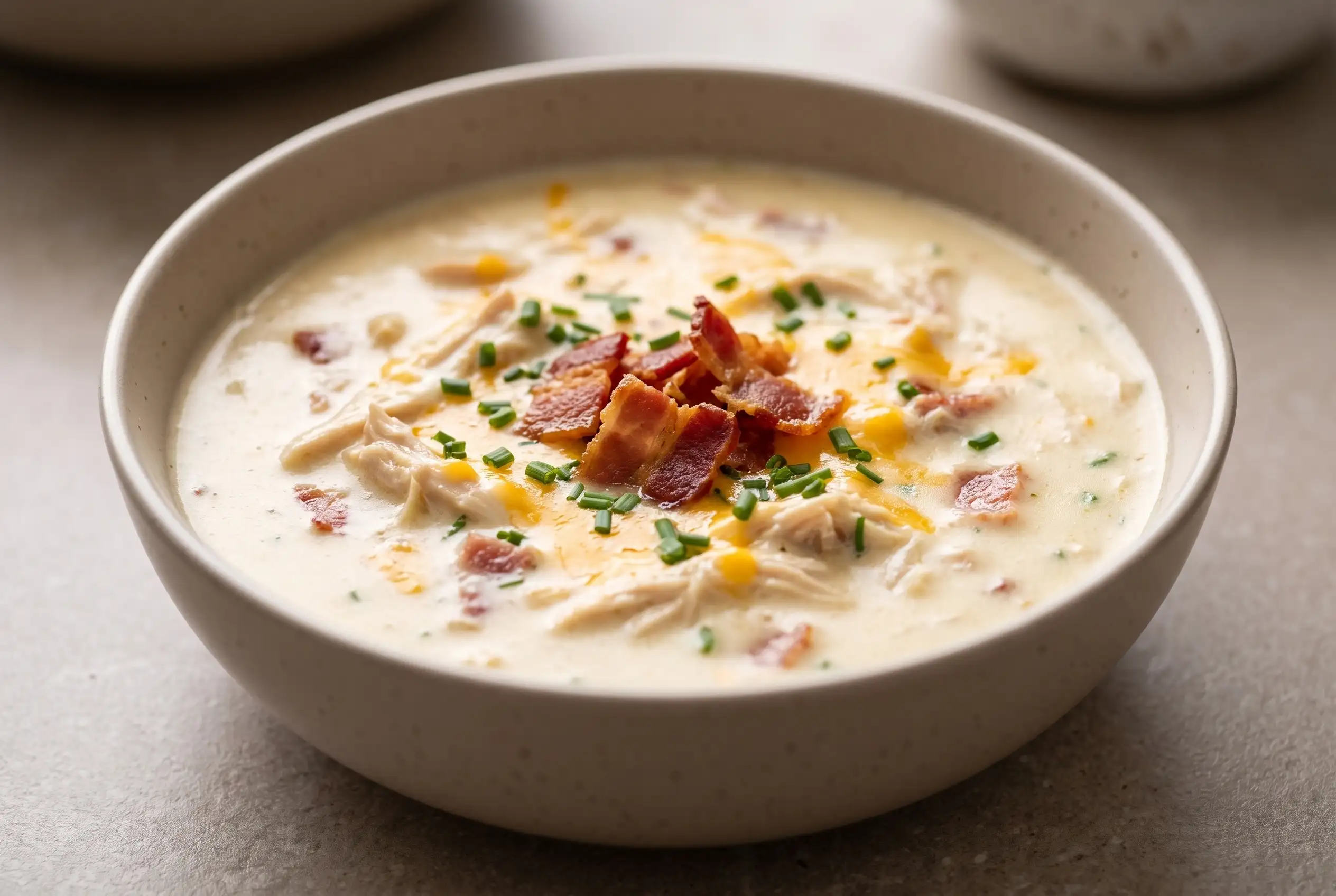
Loaded baked potato soup brings together tender russet potatoes, crisp bacon, cheddar cheese, cream, sour cream, garlic, and chives in one rich, warming bowl. The partly blended potato base gives the soup a creamy consistency while leaving room for the hearty toppings and savory bacon flavor to stand out.
What Makes Loaded Baked Potato Soup So Comforting
Cold-weather meals benefit from a combination of creamy texture, familiar ingredients, and satisfying toppings, and loaded baked potato soup brings all three together. Chicken broth forms the cooking liquid, russet potatoes provide the substantial base, and heavy cream, cheddar, and sour cream create a rich finish. Crisp bacon and fresh chives add contrasting texture and flavor at serving time, making each bowl feel complete without requiring complicated preparation.
Russet Potatoes Give the Soup Its Best Texture
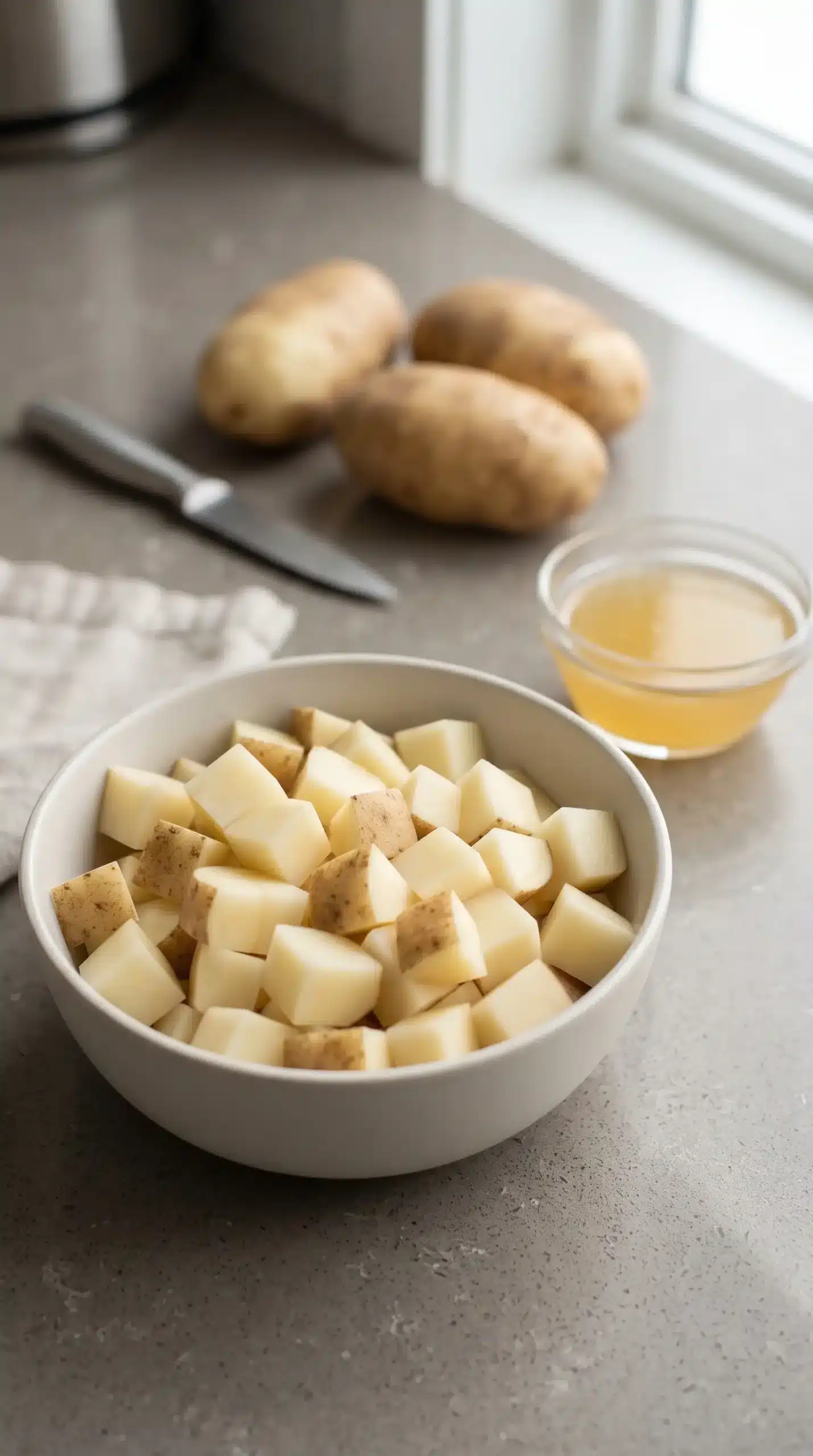
Russet potatoes are especially useful here because they are peeled and cubed before simmering in the chicken broth. Once tender, part of the potato mixture can be blended smooth, creating the creamy body associated with a loaded potato soup recipe.
Cube size matters during cooking because the pieces need to become tender enough to blend easily. Keeping the pieces reasonably consistent helps them cook at a similar rate, so you are less likely to encounter a mixture where some potatoes are tender while others remain firm.
Leaving some of the soup unblended also gives the finished bowl more character. A completely smooth soup would lose the contrast created by tender potato pieces, while blending roughly half produces a middle ground between silky and hearty.
Bacon, Onion, and Garlic Build the Savory Base
Starting with olive oil and chopped bacon creates a flavorful foundation for the onion and garlic. The bacon is cooked until crisp, then removed while its rendered grease remains in the pot; the chopped onion cooks in that flavorful base until soft, followed by a brief cooking period for the minced garlic.
Keep the Creamy Base Under Control
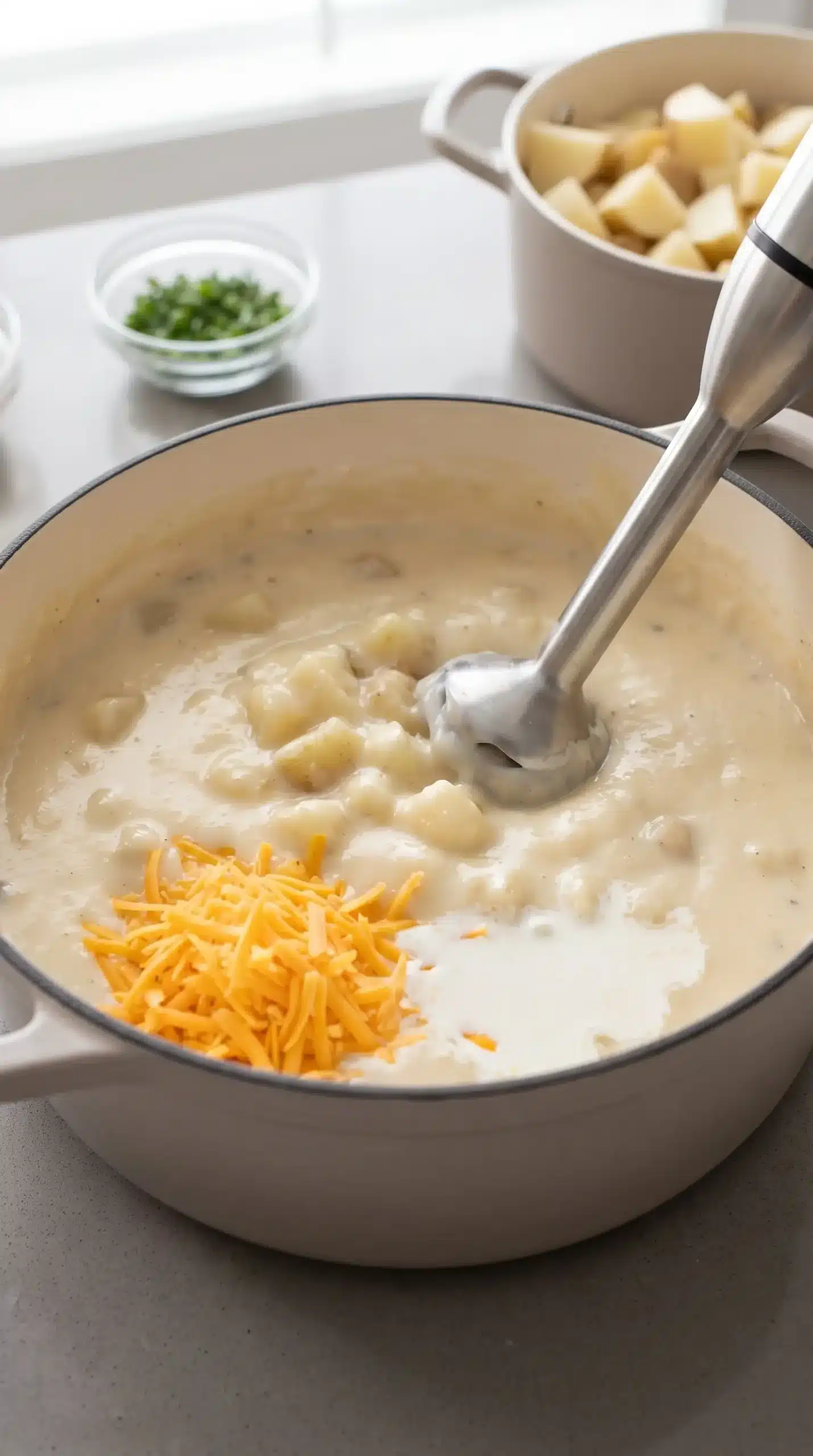
Once the potatoes have simmered until tender, blending only about half of the soup is an important texture decision. An immersion blender can be used directly in the pot, or about half of the soup can be carefully transferred to a blender.
Adding heavy cream and shredded cheddar comes after the potato mixture has been blended. Low heat is important at this stage because the cheese needs time to melt into the soup, while the cream should be incorporated without bringing the mixture to a boil.
Sour cream belongs near the end of the cooking process as well. Stirring it into the hot soup after the cheddar has melted helps distribute the tangy richness throughout the bowl without subjecting it to prolonged high heat.
Cheddar and Sour Cream Shape the Rich Finish
Cheddar cheese, heavy cream, and sour cream work together to give loaded baked potato soup its distinctly rich character. The cheese melts into the warm base, the cream increases its luxurious texture, and sour cream adds a tangy element that balances the richness. For another creamy potato soup preparation, cheddar potato soup with garlic and herbs uses cheddar with a rich base while keeping the focus on potato texture and savory flavor.
Blending Half the Soup Controls Creaminess
Partial blending is one of the most useful techniques in this preparation because it gives you direct control over consistency. Blending around half creates a smooth potato-rich portion that combines with the remaining broth and tender pieces in the pot.
For a thicker bowl, more of the potato mixture can be blended. That adjustment increases the amount of smooth potato in the soup without requiring additional thickening ingredients. If you prefer more texture, staying close to the suggested half-blended approach preserves more visible pieces.
Careful handling matters if a countertop blender is used. The soup is hot, so transferring only about half at a time and working cautiously avoids unnecessary splashing. An immersion blender offers another practical route because the soup can be blended directly in the cooking pot.
Common Loaded Baked Potato Soup Mistakes to Avoid
Boiling after the dairy and cheese have been added is one problem to avoid. The cooking instructions call for low heat and specifically keep the soup from boiling once heavy cream and cheddar are incorporated. Gentle heating gives the cheese time to melt while keeping the creamy mixture under control.
Over-blending can also change the character of the soup. If every potato piece is processed until completely smooth, the finished bowl will not have the same hearty contrast as a partially blended version. Blend about half for the intended balance, or blend a little more when a thicker consistency is specifically desired.
Leaving the bacon in the pot while the soup cooks would remove the crisp texture that makes it useful as a garnish. Cooking it until crisp, lifting it out with a slotted spoon, and reserving it for serving keeps those pieces distinct when the soup reaches the table.
Simple Sides Complete a Bowl of Potato Soup
Hot loaded baked potato soup works well as a lunch or dinner with crusty bread or a simple salad. A fresh vegetable side can also complement the rich soup, especially when the meal benefits from a lighter element alongside the creamy potato base.
Toppings Make Each Bowl Easy to Customize
Garnishes provide an easy way to adjust the balance of richness, freshness, texture, and heat without changing the soup itself.
| Topping | What it changes | Best use |
|---|---|---|
| Reserved bacon | Crisp, savory texture | Add generously over the hot soup |
| Extra cheddar | More cheesy richness | Scatter over each serving |
| Fresh chives | Fresh herbal contrast | Finish each bowl just before eating |
| Sour cream | Cool, tangy richness | Add when you want a stronger tangy note |
| Green onions | Fresh onion flavor | Use as an alternative topping |
| Jalapeños | Spicy heat | Add when a hotter finish is wanted |
Leftover Soup Needs Gentle Reheating
Refrigerated leftovers should be kept in an airtight container and can be stored for about three days. Keeping the container sealed helps protect the soup while it waits for another serving.
Stovetop reheating gives you close control over the temperature, which is useful for a dairy-rich soup. Warm the soup gently until it is hot, taking care not to turn the reheating process into a hard boil, and make sure leftovers are reheated to 165°F before serving.
Microwave reheating is another option when convenience matters. If the soup has thickened while refrigerated, a splash of chicken broth can loosen it back toward a more spoonable consistency as it warms.
Vegetarian and Lighter Adjustments Keep the Base Flexible
A vegetarian version can be made by leaving out the bacon and replacing the chicken broth with vegetable broth. For a lighter variation, less cream or milk can be used in its place. Carrots or celery can also be added when you want additional vegetables in the soup, while toppings can remain customizable.
What the Ingredients Contribute Nutritionally
Potatoes contribute nutrients including vitamins C and B6, while bacon contributes protein and the cheese and cream provide calcium. At the same time, the combination of bacon, cheese, cream, and sour cream makes the soup relatively rich, so portion balance and vegetable sides can help place it within a varied meal.
Loaded Baked Potato Soup Comes Down to Texture and Heat

Partially blending the tender potatoes creates the creamy foundation, while keeping some pieces intact preserves a hearty bite. Low heat becomes especially important once the cream and cheddar enter the pot, because the soup should become hot and cohesive without boiling.
That combination of controlled blending, gentle dairy heating, and crisp bacon added at serving gives loaded baked potato soup its most useful contrast: a smooth, rich base with tender potato pieces and savory toppings in every bowl.
Loaded Baked Potato Soup Questions About Storage and Texture
Can loaded baked potato soup be frozen?
Yes. Cool the soup completely before transferring it to an airtight container for freezing. Because the soup contains cream, cheddar, and sour cream, its texture may change after freezing and reheating, so gentle reheating is the better approach when serving it again.
Can instant potatoes replace the russet potatoes?
Instant potatoes can be used when a quicker option is desired, although the resulting texture may differ from soup made with peeled, cubed russet potatoes. The original preparation relies on simmered russets that become tender before part of the soup is blended.
How can I make loaded baked potato soup thicker?
Blend more of the cooked potato mixture to increase thickness. Since the potatoes supply the body of the soup, increasing the blended portion changes the consistency without introducing another thickening ingredient.
What can I use instead of bacon for a vegetarian version?
For a vegetarian preparation, simply skip the bacon and use vegetable broth instead of chicken broth. Additional vegetables such as carrots or celery can also be included, while toppings such as cheese, sour cream, chives, or other suitable garnishes can be adjusted to preference.
Why should the soup not boil after adding cream and cheese?
Once heavy cream and cheddar have been stirred into the blended potato base, the soup is kept on low heat so the cheese can melt and the mixture can become hot without boiling. Gentle heating is also the approach specified for incorporating the dairy components smoothly.
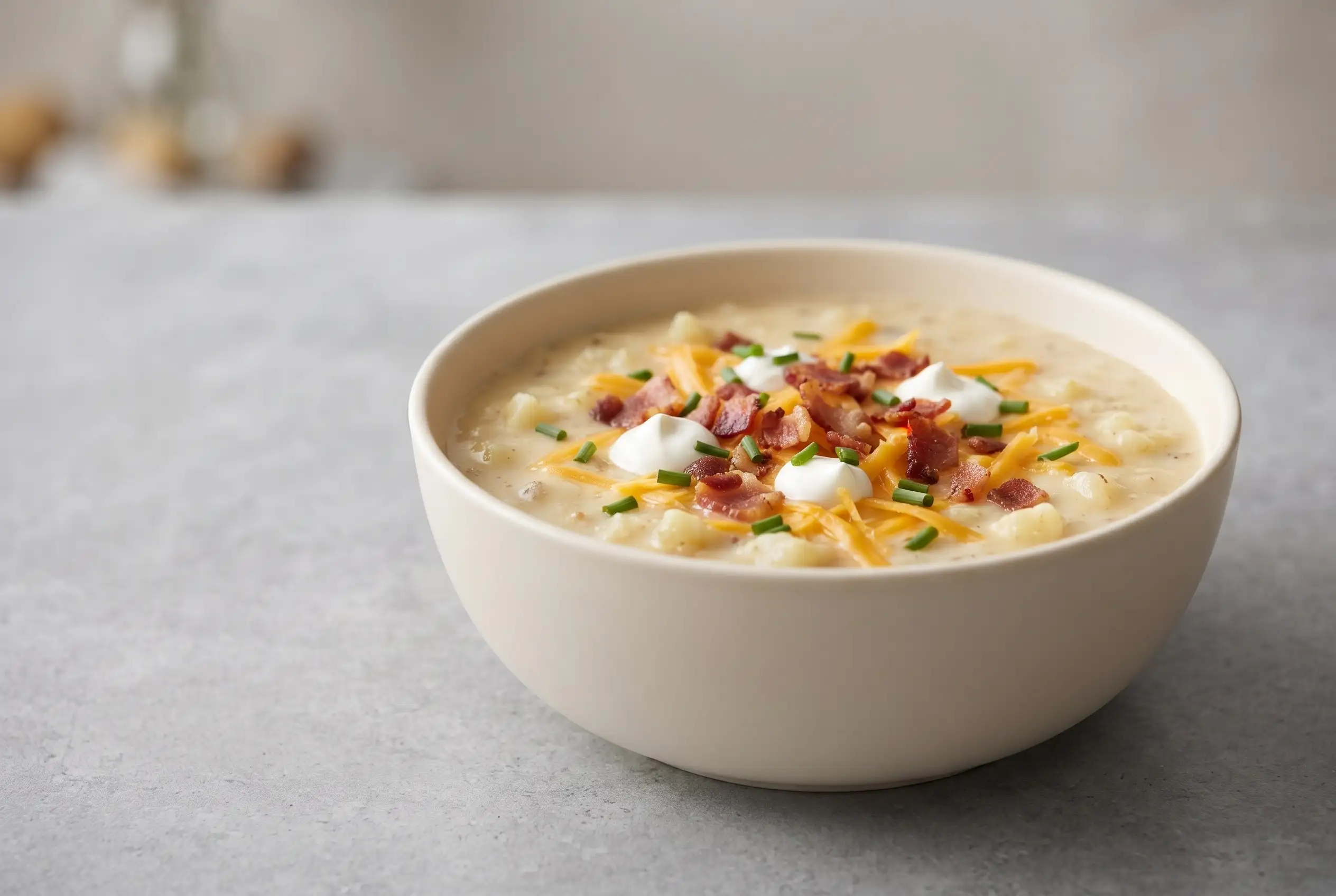
Loaded Baked Potato Soup with Cheddar Cheese and Bacon
Ingredients
Method
- Warm the olive oil in a large pot or Dutch oven over medium heat.
- Add the chopped bacon and cook until crisp. Use a slotted spoon to transfer the bacon to a plate, leaving the rendered grease in the pot.
- Add the onion and cook for about 5 minutes, stirring occasionally, until softened.
- Stir in the minced garlic and cook for 1 minute.
- Pour in the chicken broth and add the potatoes, salt, and black pepper. Bring to a boil, then lower the heat and simmer for 15 to 20 minutes, until the potatoes are tender.
- Blend about half of the soup with an immersion blender, or carefully transfer that portion to a blender and process until smooth. Return the blended soup to the pot.
- Stir in the heavy cream and shredded cheddar over low heat until the cheese has melted and the soup is hot. Keep the soup below a boil.
- Add the sour cream and stir until evenly incorporated.
- Ladle the soup hot and finish each serving with the reserved crispy bacon and chopped fresh chives.