Italian Penicillin Soup with Spinach, Carrots and Celery
Italian Penicillin Soup brings together onion, garlic, carrots, celery, vegetable broth, dried herbs, spinach, and lemon in a warm bowl built for cold days and simple meals. The combination is light enough to feel fresh while still offering the comforting character expected from an Italian vegetable soup.
Italian Penicillin Soup Starts with a Fresh Vegetable Base
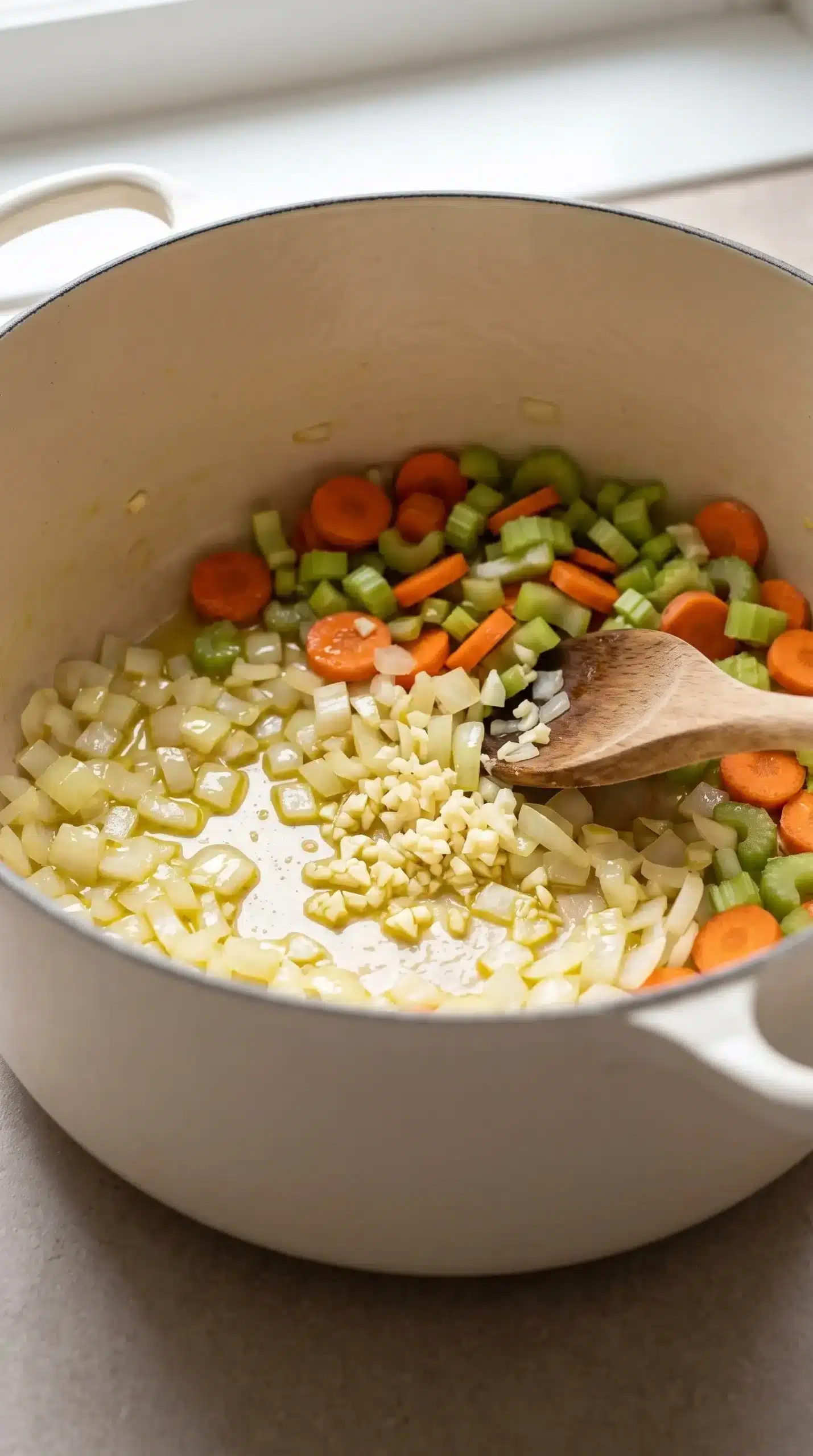
Onion, garlic, carrots, and celery establish the savory foundation before the broth is added. Cooking these vegetables in olive oil first gives them time to soften and develop flavor, creating a more rounded base than simply simmering everything together from the beginning.
Carrots bring a naturally mild sweetness, while celery keeps the vegetable base savory and aromatic. The onion becomes translucent as it cooks, signaling that the foundation is ready for the garlic and remaining vegetables.
For a vegetable penicillin soup with a clean, balanced character, keep the vegetables in the foreground. The broth, herbs, spinach, and lemon should support the vegetables without overwhelming their flavor.
Carrots and Celery Set the Soup’s Texture
The sliced carrots and celery need enough cooking time to become tender without losing all of their presence in the bowl. Their texture is especially important because Italian Penicillin Soup does not depend on a creamy or blended finish for body.
Slice the vegetables into reasonably consistent pieces so they cook at a similar rate. Uneven pieces can leave some vegetables tender while others remain noticeably firmer, making each spoonful less balanced.
Zucchini or bell peppers can be added when you want more vegetable variety. Those additions should complement the existing base while keeping the soup centered on its vegetable-and-broth character.
Vegetable Broth Carries the Herbs Through Every Spoonful
Six cups of vegetable broth create the liquid base, while dried oregano and dried thyme give the Italian Penicillin Soup its herbal direction. Seasoning with salt and pepper allows the broth and vegetables to remain clearly defined instead of becoming dominated by one strong flavor.
Early Sautéing Gives Italian Penicillin Soup More Depth
Olive oil provides the cooking medium for the onion, followed by garlic, carrots, and celery. Starting with the onion and allowing it to become translucent creates a gentle savory base before the other vegetables join the pot.
Garlic should be stirred in with the carrots and celery so it can contribute its aroma while the vegetables continue cooking. Keeping this stage controlled helps the garlic become fragrant without turning it bitter or overpowering the broth.
Five minutes of cooking for the garlic, carrots, and celery gives the vegetables a head start before the broth arrives. That small amount of preparation helps the later simmer focus on tenderizing the vegetables and bringing the flavors together.
A Gentle Simmer Keeps the Vegetable Pieces Intact
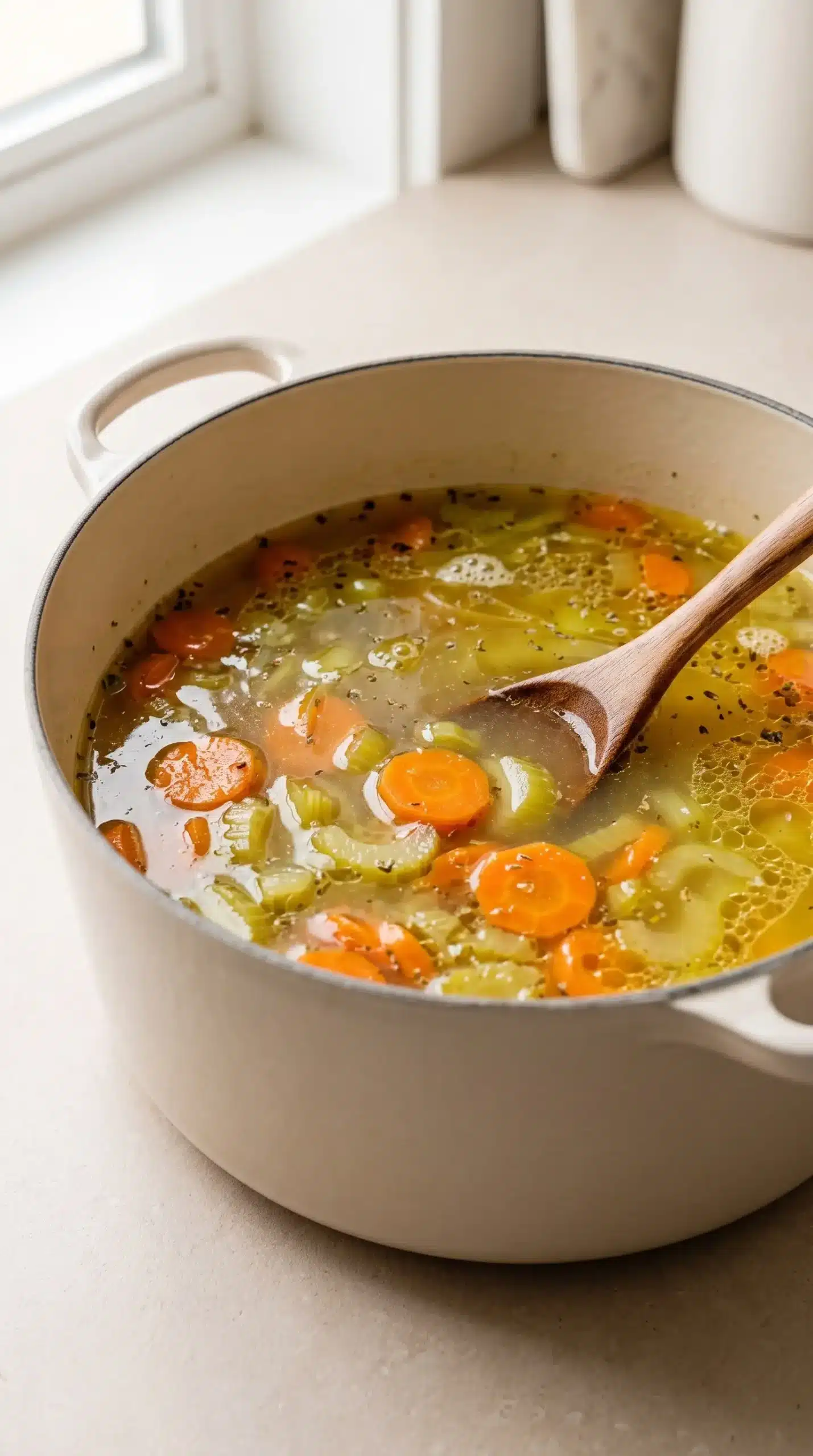
Once the vegetable broth reaches a boil, lowering the heat to a gentle simmer gives the carrots and celery time to become tender without excessive agitation. The 20-minute simmer is the main cooking stage, so keep the pot at a steady heat and check the vegetables toward the end for the desired tenderness.
Spinach and Lemon Belong at the Finish
Spinach is added just before serving, which keeps its presence distinct from the longer-cooked carrots and celery. Because it needs much less cooking time, adding it late prevents it from becoming an indistinct part of the vegetable base.
Lemon juice also goes in at the end. Its bright acidity gives the finished Italian Penicillin Soup a fresh contrast to the savory broth, olive oil, garlic, and dried herbs.
Stir both additions through the hot soup immediately before serving. This finishing stage is where the bowl moves from a straightforward vegetable broth to a brighter, more complete combination of savory, herbal, and fresh flavors.
Warm Bowls Make the Soup Easy to Serve
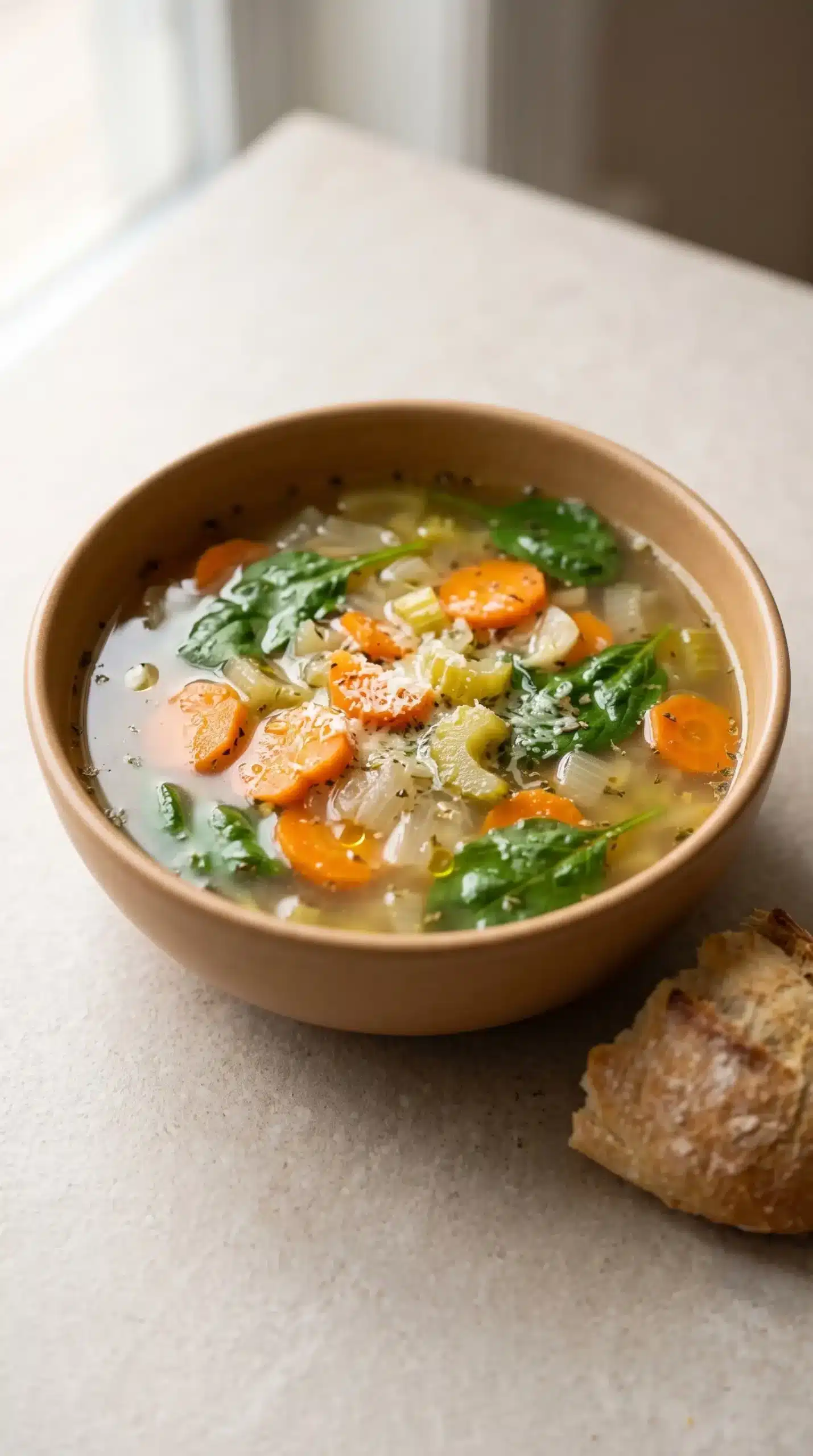
Serve Italian Penicillin Soup warm in bowls with crusty bread or a simple salad alongside it. Grated cheese can be sprinkled over the top when you want an additional savory finish without changing the basic preparation.
Simple Changes Keep the Italian Vegetable Soup Flexible
The basic vegetable combination can be adjusted without losing the character of the soup. Zucchini and bell peppers are suitable additions when you want to increase the variety of vegetables in the pot, while a garlic chickpea soup can guide a heartier direction when cooked chickpeas are added for more substance.
- More vegetables: Add zucchini or bell peppers for a broader vegetable mix.
- More plant protein: Stir in cooked beans or lentils for a heartier bowl.
- Different greens: Replace the spinach with kale or Swiss chard.
- More heat: Add a dash of hot sauce when a spicy finish suits your preference.
Diced tomatoes offer another way to change the flavor while staying within the flexible vegetable-soup style. These variations work best when the broth, herbs, and vegetables remain recognizable as the core of the dish.
Italian Penicillin Soup Mistakes That Can Flatten the Flavor
Skipping the vegetable sauté can leave the base less developed because the onion, garlic, carrots, and celery are designed to cook in olive oil before the broth is introduced. Give that early cooking stage enough attention for the onion to become translucent and the other vegetables to cook together for their initial five minutes.
Adding the spinach too early can also change the intended finish. Spinach is specifically stirred in just before serving, so keeping it out of the long simmer preserves a clearer contrast with the tender carrots and celery.
Another easy mistake is treating the lemon juice like a long-cooking ingredient. It belongs at the finish, where its acidity can brighten the savory broth and herbs. If the soup needs adjustment, taste after the lemon has been incorporated before adding more seasoning.
Leftover Italian Penicillin Soup Needs Careful Storage
Cool leftover Italian Penicillin Soup and transfer it to an airtight container before refrigerating. It keeps in the refrigerator for 3–4 days. For longer storage, freeze it in a freezer-safe container and thaw it in the refrigerator before reheating.
| Storage option | Handling | Useful detail |
|---|---|---|
| Refrigerator | Cool and place in an airtight container | Keep for 3–4 days |
| Freezer | Transfer to a freezer-safe container | Use for longer storage |
| Before reheating | Move frozen soup to the refrigerator | Allow it to thaw before reheating |
Reheating Preserves the Soup’s Fresh Finish
When reheating refrigerated or thawed Italian Penicillin Soup, warm it gently until it is hot throughout. The spinach and lemon were added at the end of cooking, so avoid treating leftovers as though they need another long simmer.
Thawed soup can be stirred as it warms to redistribute the vegetables, broth, and herbs. A gentle approach helps maintain the character of the cooked vegetables instead of unnecessarily extending their cooking time.
Once warmed, taste the soup before serving. The lemon, salt, and pepper define the finished balance, so a quick check lets you decide whether the existing seasoning still suits the bowl after storage.
Vegetables and Spinach Give the Bowl Its Nourishing Character
Italian Penicillin Soup combines plant-based ingredients with vegetables that provide vitamins and minerals. Spinach contributes iron and antioxidants, while the overall vegetable-and-broth combination makes the soup a nutritious option for a range of meals.
Italian Penicillin Soup Works Best When the Finish Stays Bright
The tender vegetable base, seasoned broth, and late addition of spinach create the structure of the bowl, while lemon juice provides the fresh finishing note that keeps those savory flavors lively. Keeping those stages distinct is the key cooking judgment: develop the vegetables early, let the broth and herbs come together during the simmer, then finish with spinach and lemon.
That balance gives Italian Penicillin Soup its most useful quality for a simple meal: substantial vegetable flavor without requiring a complicated preparation. The same foundation also leaves room for beans, lentils, extra vegetables, alternative greens, or a little heat when the occasion calls for a variation.
Italian Penicillin Soup Questions About Broth and Storage
Can chicken broth replace vegetable broth?
Yes. Chicken broth can replace the vegetable broth when a non-vegetarian version is preferred. The substitution changes the base of the soup while leaving the vegetables, herbs, spinach, and lemon preparation intact.
Can Italian Penicillin Soup be frozen?
Yes, it can be frozen in a freezer-safe container for longer storage. Thaw it in the refrigerator before reheating so the frozen soup is properly prepared for warming.
How can the soup become creamier?
A splash of cream can make the soup creamier, or blended cooked potatoes can be stirred in for a thicker texture. Either option changes the texture while retaining the underlying vegetable and herb flavors.
Can spinach be replaced with another green?
Kale or Swiss chard can replace spinach. These greens provide a different texture and flavor while fitting the same late-stage role in the soup.
What can be added for more protein?
Cooked beans or lentils can be added for a plant-based protein boost. They also make the vegetable soup more substantial without requiring a change to the broth-and-herb foundation.
Can Italian Penicillin Soup be made spicier?
A dash of hot sauce can add heat to the finished bowl. Adding it according to taste allows the spice level to remain separate from the oregano, thyme, lemon, and vegetable flavors already established in the soup.
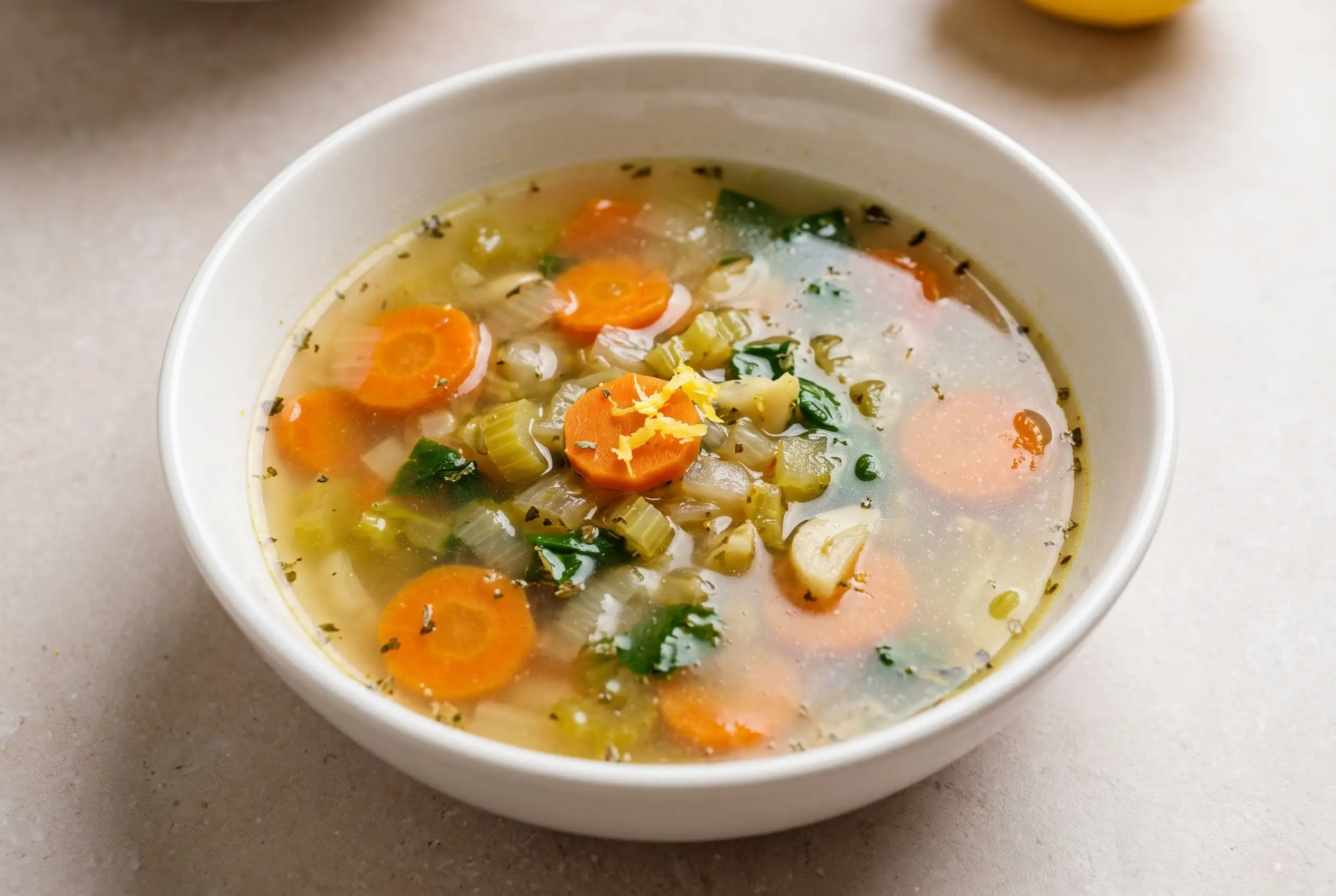
Italian Penicillin Soup with Spinach, Carrots and Celery
Ingredients
Method
- Warm the olive oil in a large pot over medium heat.
- Add the chopped onion and cook until it becomes translucent.
- Add the garlic, carrots, and celery. Cook the vegetables for 5 minutes.
- Add the vegetable broth and bring the mixture to a boil.
- Season with the dried oregano, dried thyme, salt, and pepper.
- Lower the heat and simmer for 20 minutes, or until the vegetables are tender.
- Add the chopped spinach and lemon juice just before serving. Serve the soup warm.