Mexican Pizza with Refried Beans and Seasoned Ground Beef
Mexican Pizza brings the appeal of a fast-food favorite into a homemade format built with crisp tortillas, refried beans, seasoned ground beef, enchilada sauce, melted cheese, and fresh toppings. The layered construction gives each bite a mix of savory filling, creamy beans, crisp tortilla, and bright vegetables.
Making a homemade Mexican pizza also gives you control over the ingredients and toppings. Flour or corn tortillas can form the base, while cheddar, mozzarella, or a Mexican cheese blend can finish the top. Tomatoes, red onion, black olives, sour cream, and green onions add the familiar combination of fresh and creamy contrasts.
For anyone searching for a taco bell mexican pizza copycat, the appeal is the straightforward assembly. Instead of building a traditional pizza with dough, the layers are stacked between tortillas and finished with enchilada sauce and cheese before being cooked until crisp.
Mexican Pizza Builds Flavor Between Crisp Tortillas
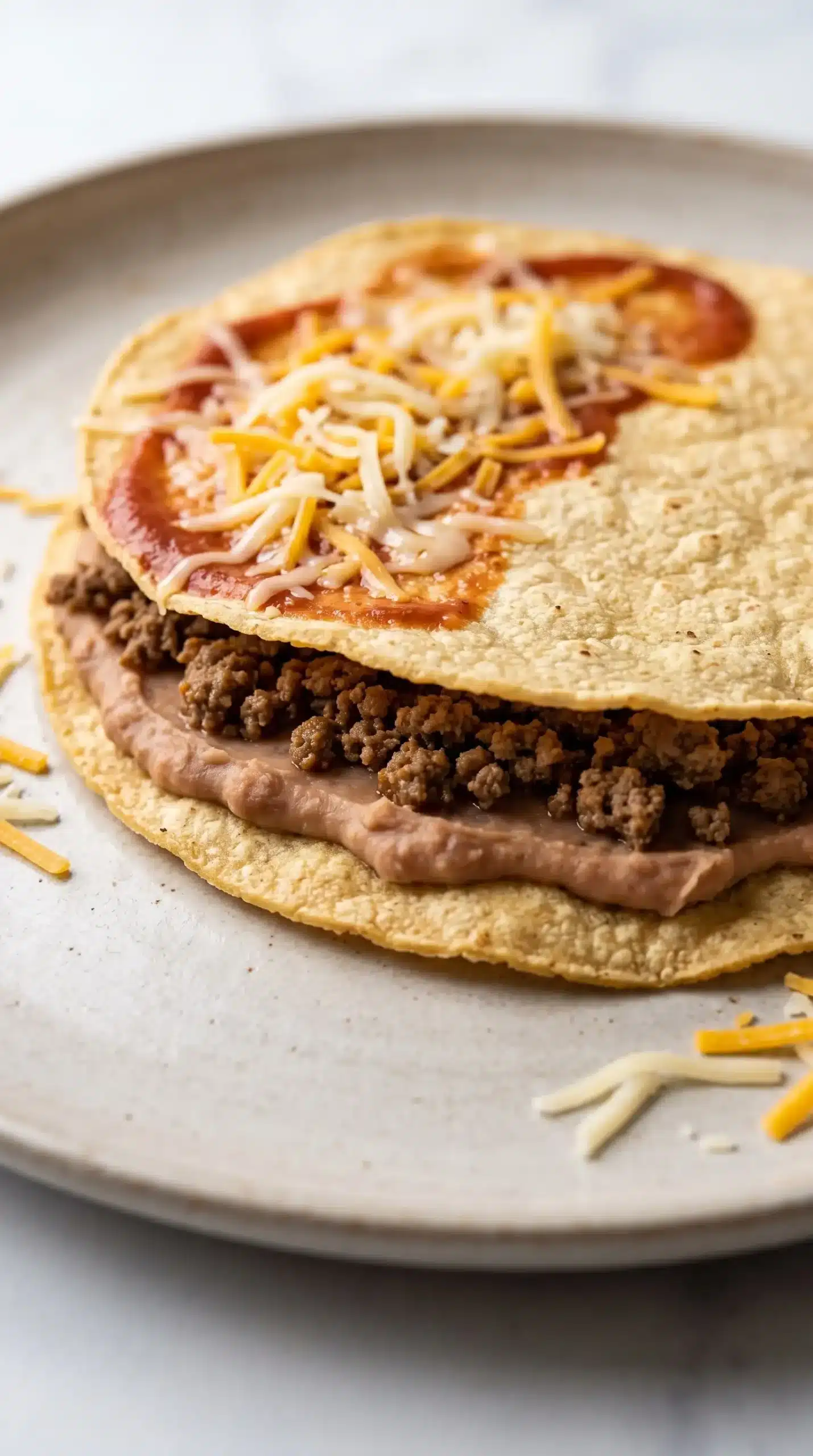
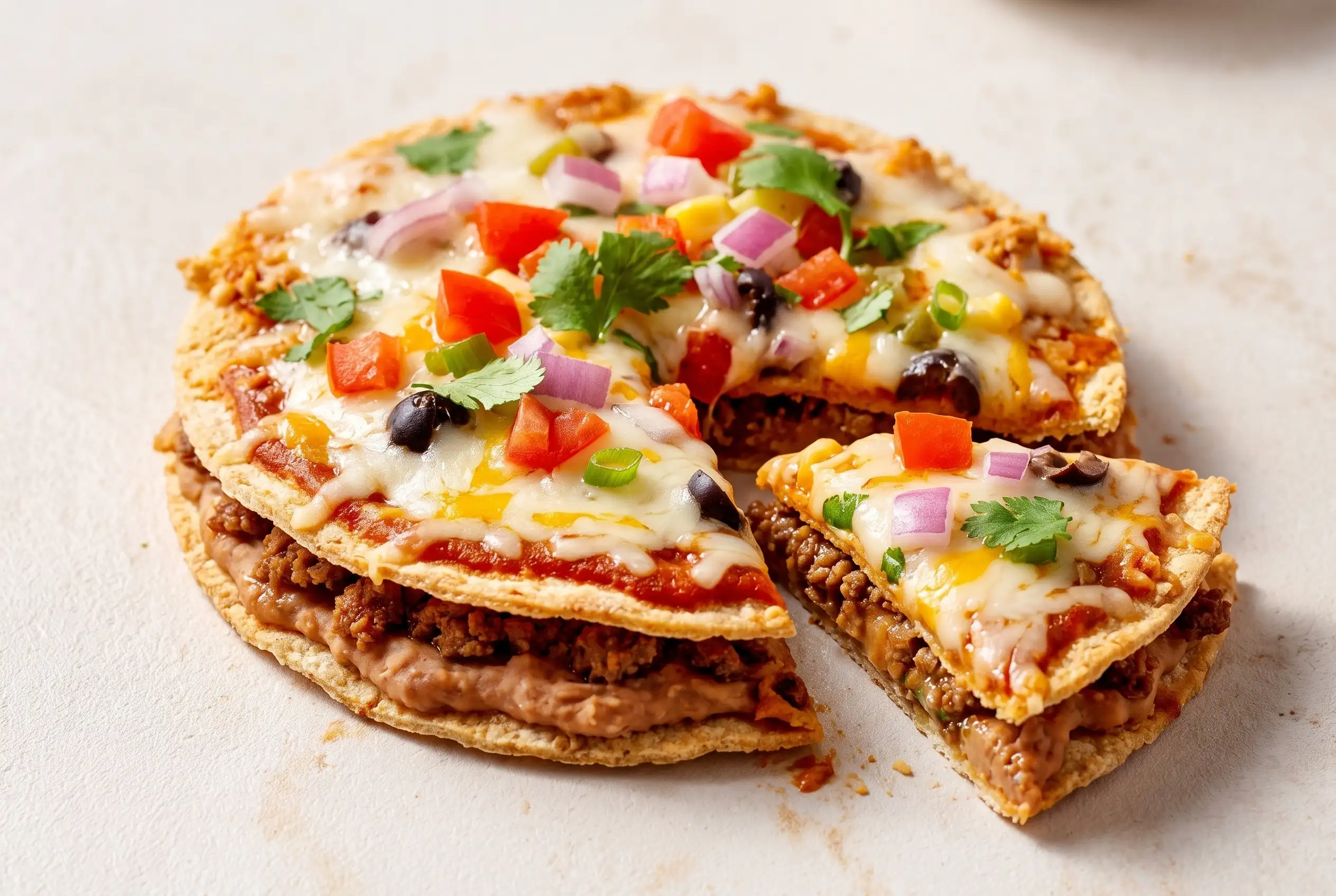
The structure is what makes Mexican Pizza distinctive. A tortilla holds refried beans and seasoned beef, another tortilla creates the upper layer, and enchilada sauce with cheese covers the top. The result is closer to a layered taco-inspired pizza than a conventional pizza crust.
Refried beans create a substantial middle layer that helps hold the seasoned beef in place. The meat is cooked separately with taco seasoning, water, and enchilada sauce, allowing those flavors to come together before assembly.
Fresh toppings are added when serving, giving the finished pizzas a combination of cooked, melted, creamy, and crisp elements. That contrast is especially useful because the tortillas are meant to stay crisp while the interior remains soft and savory.
Refried Beans and Tortillas Set the Right Foundation
The tortillas and beans determine how well the layers hold together. Flour tortillas provide a familiar soft texture before cooking, while corn tortillas offer another option and are also suitable for a gluten-free version.
A moderate, even layer of refried beans helps create a cohesive base for the ground beef. Taco-flavored or spicy refried beans can be used when additional seasoning is desired, giving the filling more character without changing the basic construction.
Keeping the filling contained within the tortilla makes handling easier during cooking. The upper tortilla should sit securely over the beans and beef so the enchilada sauce and cheese can be spread across a stable surface.
Seasoned Beef Gets Its Best Flavor Before Assembly
Ground beef should be broken into small pieces as it cooks so the seasoning can distribute throughout the filling. Once the meat is cooked through, removing excess grease keeps the assembled pizzas from becoming unnecessarily oily.
Layering Keeps Each Mexican Pizza Intact
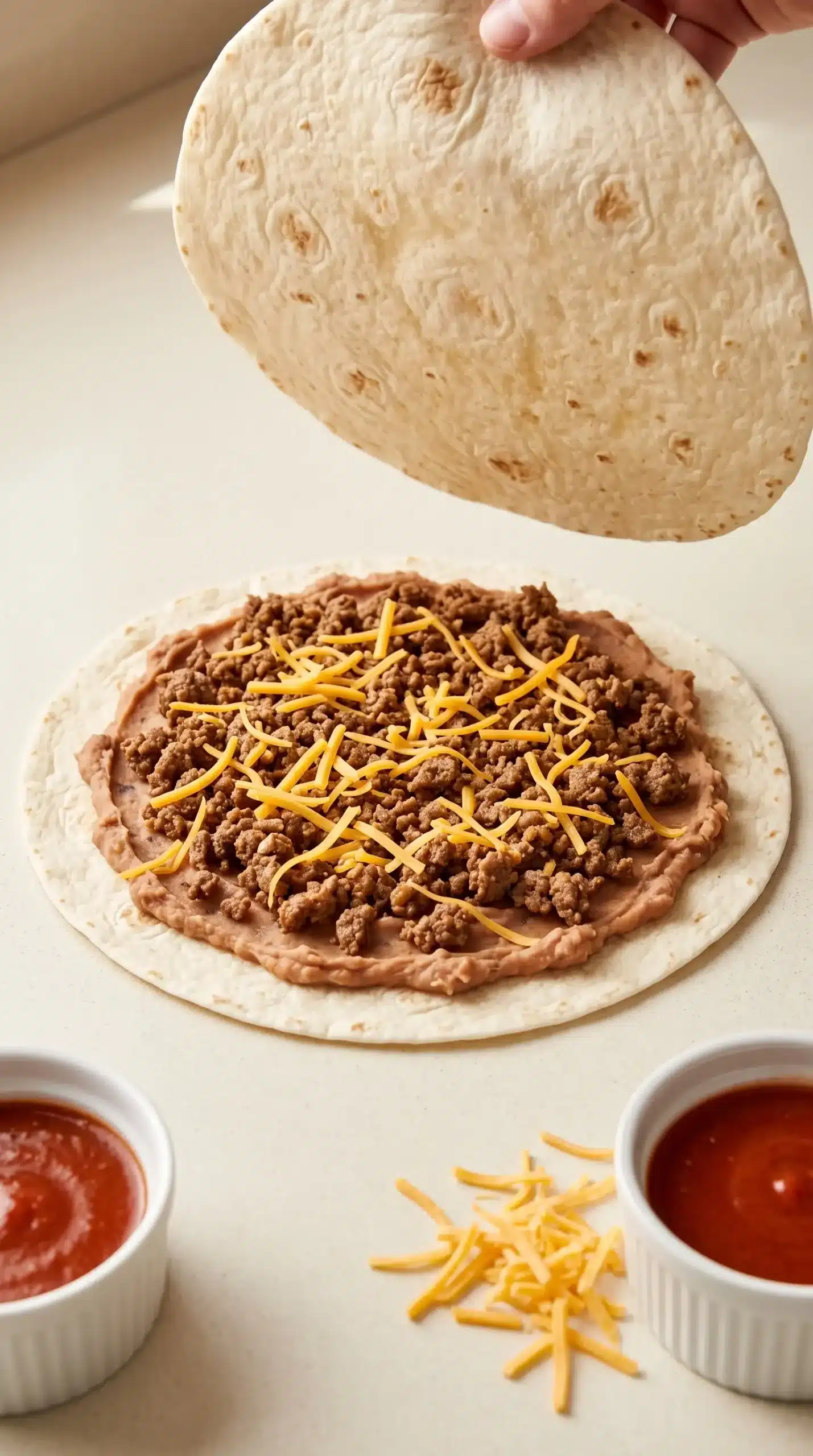
Assembly works best when the refried beans are spread over one tortilla before the seasoned beef goes on top. Cheese is added over the beef, and a second tortilla completes the sandwich-like structure.
Enchilada sauce belongs on the upper tortilla, where it can be spread across the surface before the remaining shredded cheese is distributed evenly. The sauce brings a savory chile-forward layer that complements the seasoned beef, much like the flavors found in ground beef enchiladas. Covering the top with cheese gives the cooking process a clear finishing layer that can melt over the sauce.
Repeating the same arrangement for the remaining tortillas keeps the portions consistent. Avoid piling the filling heavily in the center, since an even layer makes the pizzas easier to cook and cut or serve.
Three Cooking Methods Give Mexican Pizza Different Crispness
The oven, air fryer, and covered skillet can all cook the assembled pizzas. Each approach uses a different balance of surrounding heat, direct pan contact, and cooking time, so the choice can depend on how many pizzas are being prepared and which texture is preferred.
| Cooking method | Temperature | Cooking time | Useful result |
|---|---|---|---|
| Air fryer | 400°F | About 5 minutes | Crispy tortillas with melted cheese |
| Oven | 350°F | 8–10 minutes | Evenly cooked pizzas on a sheet pan |
| Covered skillet | Medium heat | 4–5 minutes | Crisp bottom with melted cheese |
Heat Control Protects the Crisp Tortilla
Temperature matters because the tortillas need enough heat to become crisp while the cheese melts on top. An air fryer reaches the listed cooking temperature before the pizzas go in, while an oven should likewise be preheated before the assembled pizzas are arranged on a lined sheet pan.
Skillet cooking relies more heavily on direct contact with the pan. A small amount of oil coats the surface, and the lid helps the cheese melt while the bottom tortilla develops a crisp texture.
Spacing also matters in the oven. Leaving room between the pizzas allows them to sit properly on the lined sheet pan and makes it easier to remove them once the cheese has melted and the tortillas have crisped.
Common Mexican Pizza Mistakes Come From Uneven Layers
Uneven construction can make these layered pizzas harder to cook consistently. Excess filling may shift between the tortillas, while an uneven coating of sauce or cheese can leave parts of the top less covered than others.
- Too much grease: Remove excess grease from the cooked beef before assembling the pizzas.
- Uneven filling: Spread the beans and beef into even layers so the second tortilla can sit securely.
- Patchy topping: Distribute the enchilada sauce and shredded cheese across the upper tortilla instead of concentrating them in one area.
- Under-crisped tortillas: Continue cooking until the tortillas are crisp and the cheese has melted, following the selected cooking method.
Fresh Toppings Finish the Mexican Pizza
Tomatoes, red onion, black olives, sour cream, and green onions provide the finishing contrast after cooking. Diced tomato should have the seeds removed, while the onion and green onion can be finely or evenly diced for easier bites.
Serving Temperature Shapes the Texture
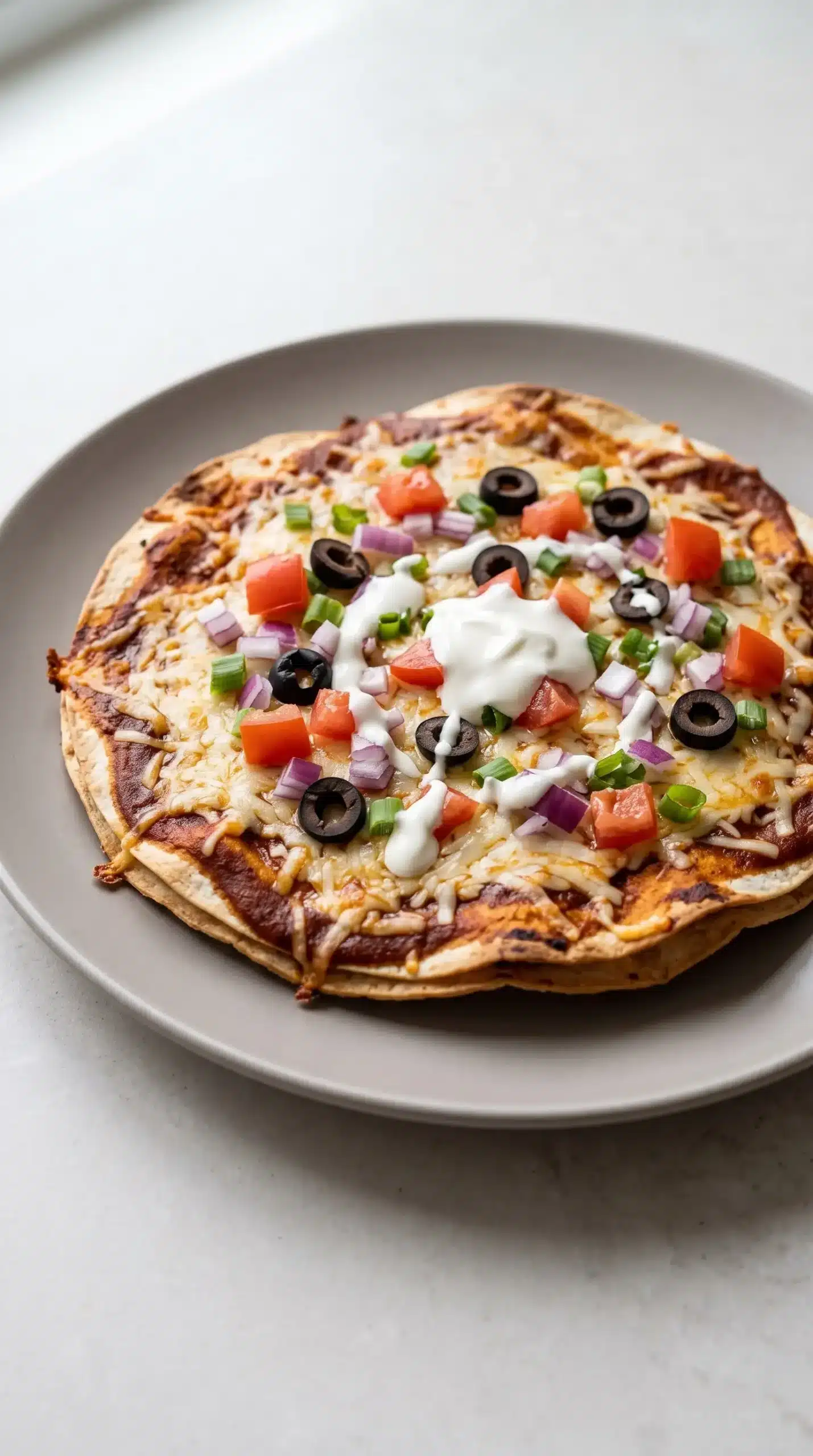
Mexican Pizza is best served hot and fresh, when the melted cheese contrasts with the crisp tortillas. Fresh garnishes can be added at serving so their textures remain distinct from the cooked layers.
Sour cream brings a creamy finish, while diced tomatoes, red onion, olives, and green onions add fresh toppings across the surface. Salsa or guacamole can accompany the pizzas when an additional flavorful side is wanted.
Jalapeños can also be added for heat, giving the finished dish a spicier direction without changing the basic layered structure. Chopped bell peppers offer another topping option when extra crunch is preferred.
Leftover Mexican Pizza Can Be Reheated for Crispness
Refrigerated leftovers can be refrigerated for 3 to 4 days in an airtight container. Keeping them sealed protects the cooked pizzas while they wait to be reheated.
The air fryer is particularly useful for reheating because it can restore crispness to the tortillas. Heat leftovers at 350°F for about 3–5 minutes, checking that they are heated through without leaving the tortilla overly soft.
An oven can also be used for reheating. The key consideration is preserving the crisp texture that distinguishes the cooked tortilla layers, so reheating methods that restore direct heat to the tortillas are preferable to simply warming them until soft.
Simple Swaps Change the Filling Without Changing the Build
The layered format is flexible enough for several substitutions. Ground beef can be replaced with chicken or turkey, while black beans or grilled vegetables can provide a vegetarian filling. Lentils or chickpeas offer another meatless direction, and low-fat cheese can be substituted when reducing the fat content is a priority.
Mexican Pizza Works Best When Crispness Leads the Cooking Decision
Crisp tortillas are the key observable result to watch for as the pizzas cook. The cheese should be melted, while the tortilla layers should have enough direct heat to develop the desired crisp texture. Whether using an air fryer, oven, or skillet, that balance matters more than simply warming the assembled layers.
Even filling, controlled sauce coverage, and properly cooked beef support that result. Once the pizzas are hot and crisp, fresh tomatoes, onion, olives, sour cream, and green onions can complete the contrast between the cooked layers and cool toppings.
Mexican Pizza Questions About Crispness and Storage
Can corn tortillas be used for Mexican Pizza?
Yes. Corn tortillas can replace flour tortillas and provide a different tortilla flavor. They are also an option for making the dish gluten-free.
How can the Mexican Pizza be made vegetarian?
Replace the ground beef with black beans or grilled vegetables. Lentils and chickpeas are additional meatless filling choices that can work within the same layered construction.
What can make Mexican Pizza spicier?
Diced jalapeños, spicy taco seasoning, or hot sauce can increase the heat. Spicy refried beans are another way to add more flavor to the filling.
Can Mexican Pizza be assembled ahead of time?
Yes. The pizzas can be assembled and refrigerated before cooking. Cook them in the oven or air fryer shortly before serving so the tortillas have a chance to become crisp.
What is the best way to reheat Mexican Pizza?
An air fryer is a strong choice when crisp tortillas are the priority. Reheat at 350°F for about 3–5 minutes to warm the leftovers while helping the tortilla regain its crisp texture.
Can the assembled pizzas be frozen before cooking?
Yes. Assemble the pizzas, wrap them tightly in plastic wrap and foil, and freeze them before cooking. They can be cooked from frozen with additional cooking time as needed.
Mexican Pizza with Refried Beans and Seasoned Ground Beef
Ingredients
Method
- Place the ground beef in a large skillet over medium heat. Cook for 5-8 minutes, breaking it into small pieces as it browns, then drain any excess grease.
- Add the taco seasoning, water, and 4 tbsp enchilada sauce to the cooked beef. Stir well and simmer for 1-2 minutes.
- Spread the refried beans over 4 tortillas. Distribute the seasoned beef evenly over the beans, then add shredded cheese to each.
- Cover each filled tortilla with one of the remaining 4 tortillas to make 4 pizzas.
- Spread 1 tbsp enchilada sauce over each top tortilla, then divide the remaining shredded cheese over the pizzas.
- Preheat the air fryer to 400°F / 205°C. Cook each pizza for about 5 minutes, removing it when the cheese has melted and the tortillas are crisp.
- Preheat the oven to 350°F / 175°C. Place the pizzas on a lined sheet pan with space between them.
- Bake for 8-10 minutes, until the cheese is melted and the tortillas are crisp.
- Lightly coat a large lidded skillet with oil and heat over medium heat. Add one pizza, cover the skillet, and cook for 4-5 minutes, until the cheese melts and the bottom tortilla is crisp.
- Finish the cooked pizzas with diced tomato, red onion, black olives, sour cream, and green onions before serving.