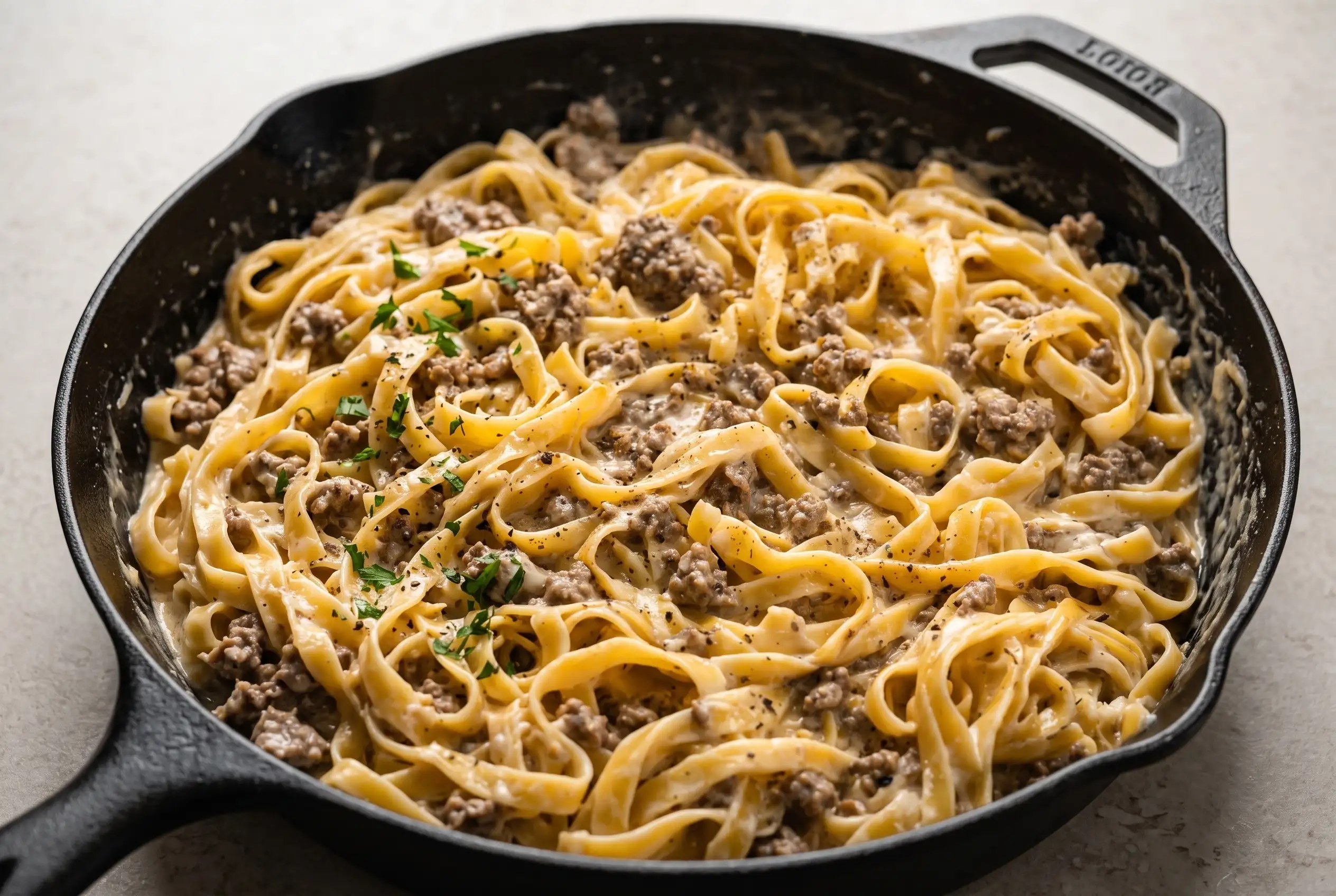
High Protein Beef Pasta with Greek Yogurt and Parmesan
High Protein Beef Pasta for Busy Weeknights
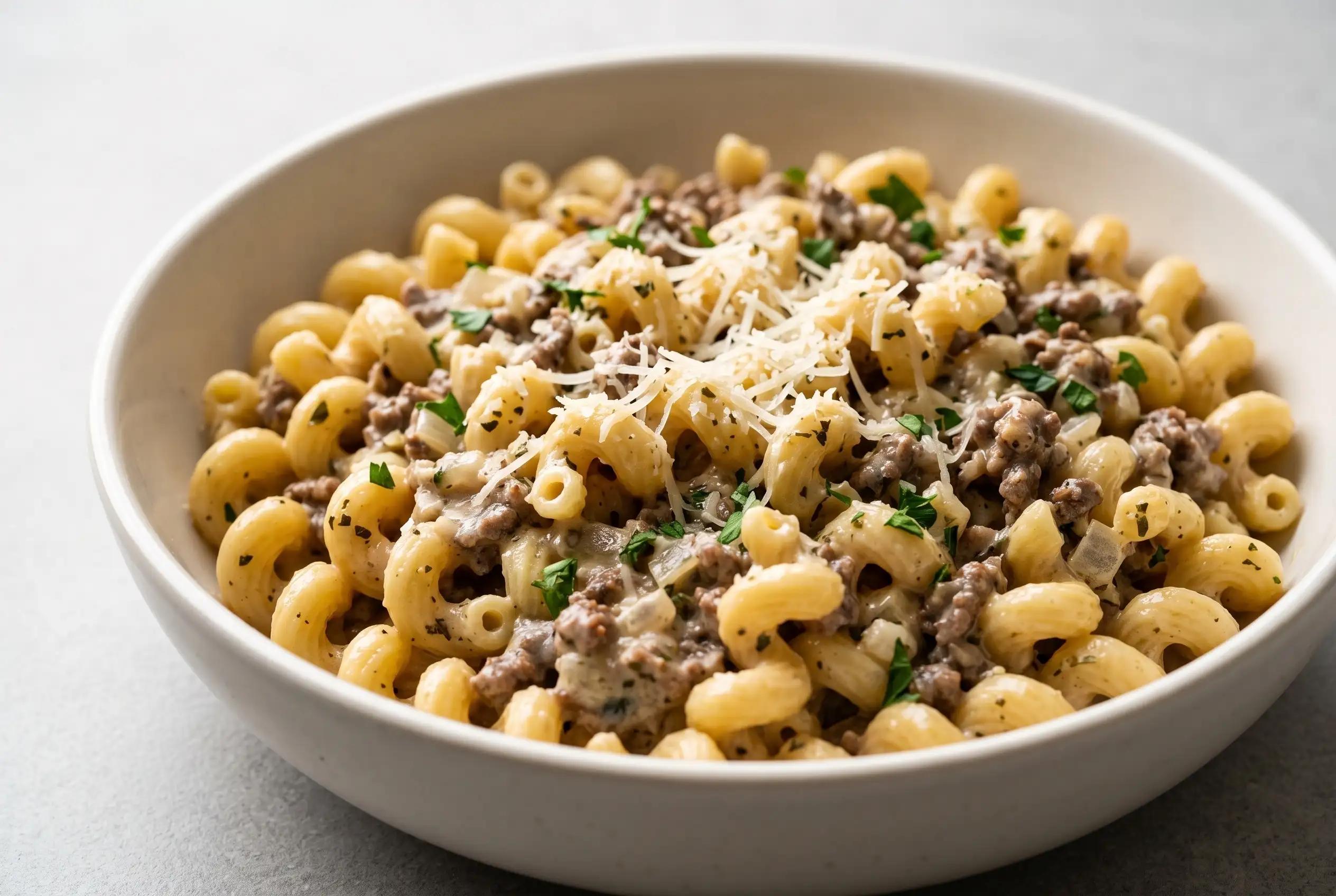
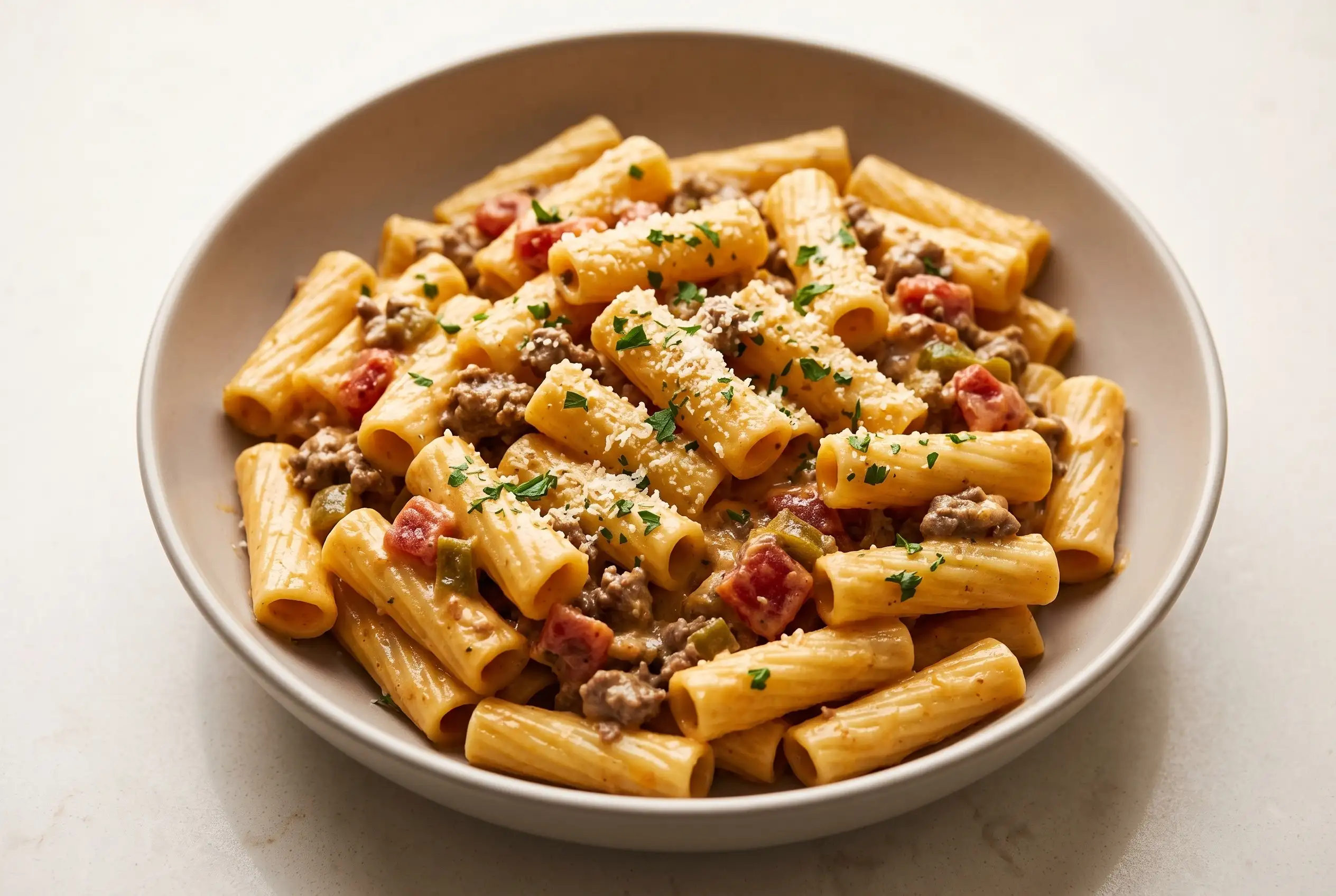
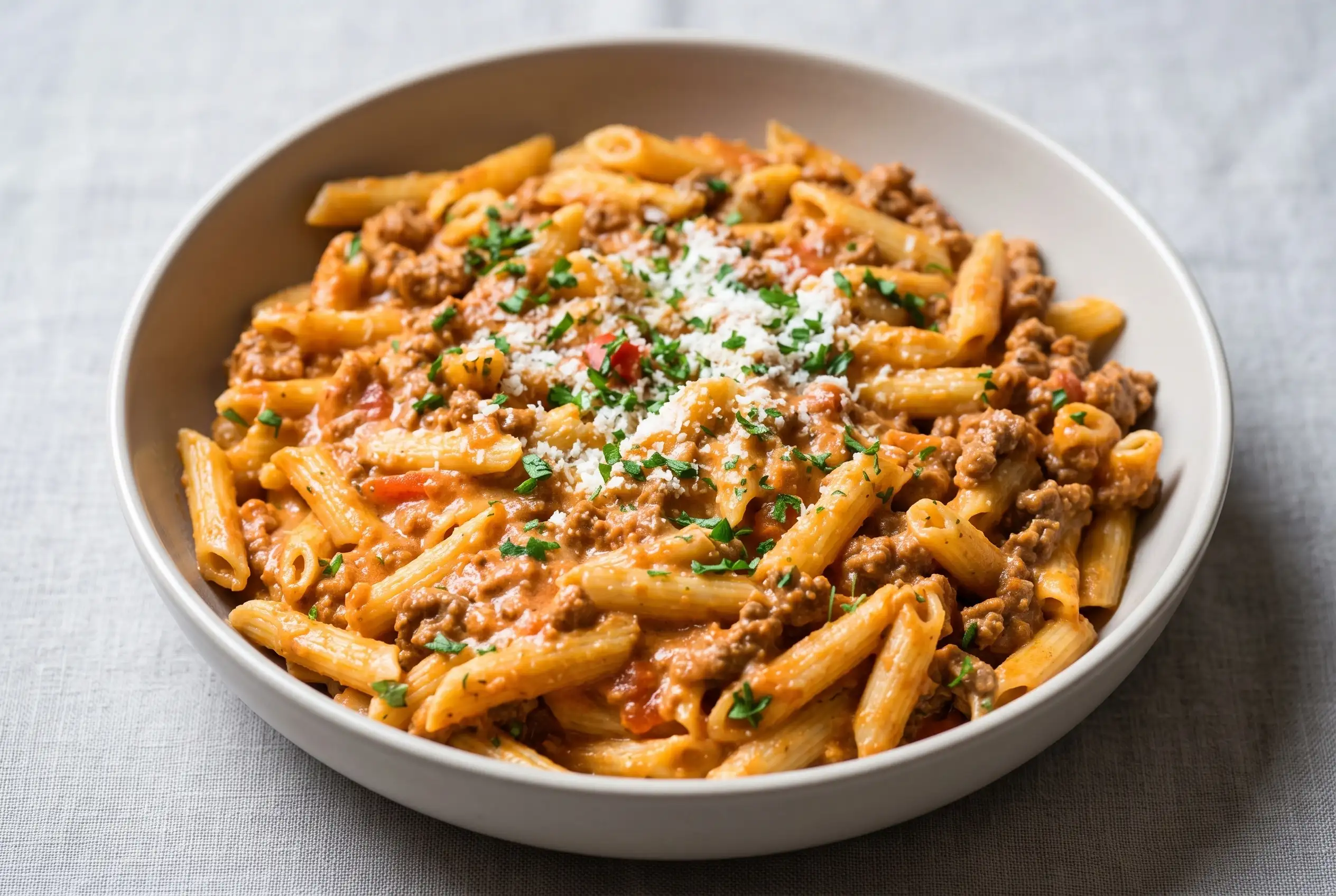
High protein beef pasta brings lean ground beef, penne, tomatoes, Greek yogurt, and Parmesan together in a creamy skillet meal that feels substantial without requiring a long cooking session. The combination creates a comforting dinner with a useful amount of protein and a sauce that coats the pasta without relying on heavy cream.
Weeknight cooking becomes especially straightforward because the pasta cooks separately while the beef mixture develops in a large skillet. Once the two parts meet, a quick toss brings everything together, making the dish easy to serve hot with fresh herbs.
Why Greek Yogurt Changes the Creamy Finish
Greek yogurt is the key ingredient that gives high protein creamy pasta its smooth, rich character while keeping the sauce different from a heavy-cream-based preparation. It also contributes protein alongside the lean ground beef, helping the finished meal feel filling.
Parmesan adds another layer of savory flavor and works naturally with the yogurt, tomatoes, Italian seasoning, and beef broth. Using plain Greek yogurt keeps the flavor profile suited to the Italian-style ingredients already in the skillet.
Gentle simmering matters once the yogurt and Parmesan are added. Keeping the mixture at a controlled simmer allows the ingredients to combine into a cohesive sauce before the cooked penne is introduced.
Greek yogurt sauces are best handled with low, slow heating because this helps prevent the yogurt from curdling and separating, especially when heating Greek-style yogurt low and slow in cooked dishes.
Choosing the Right Components for Ground Beef Protein Pasta
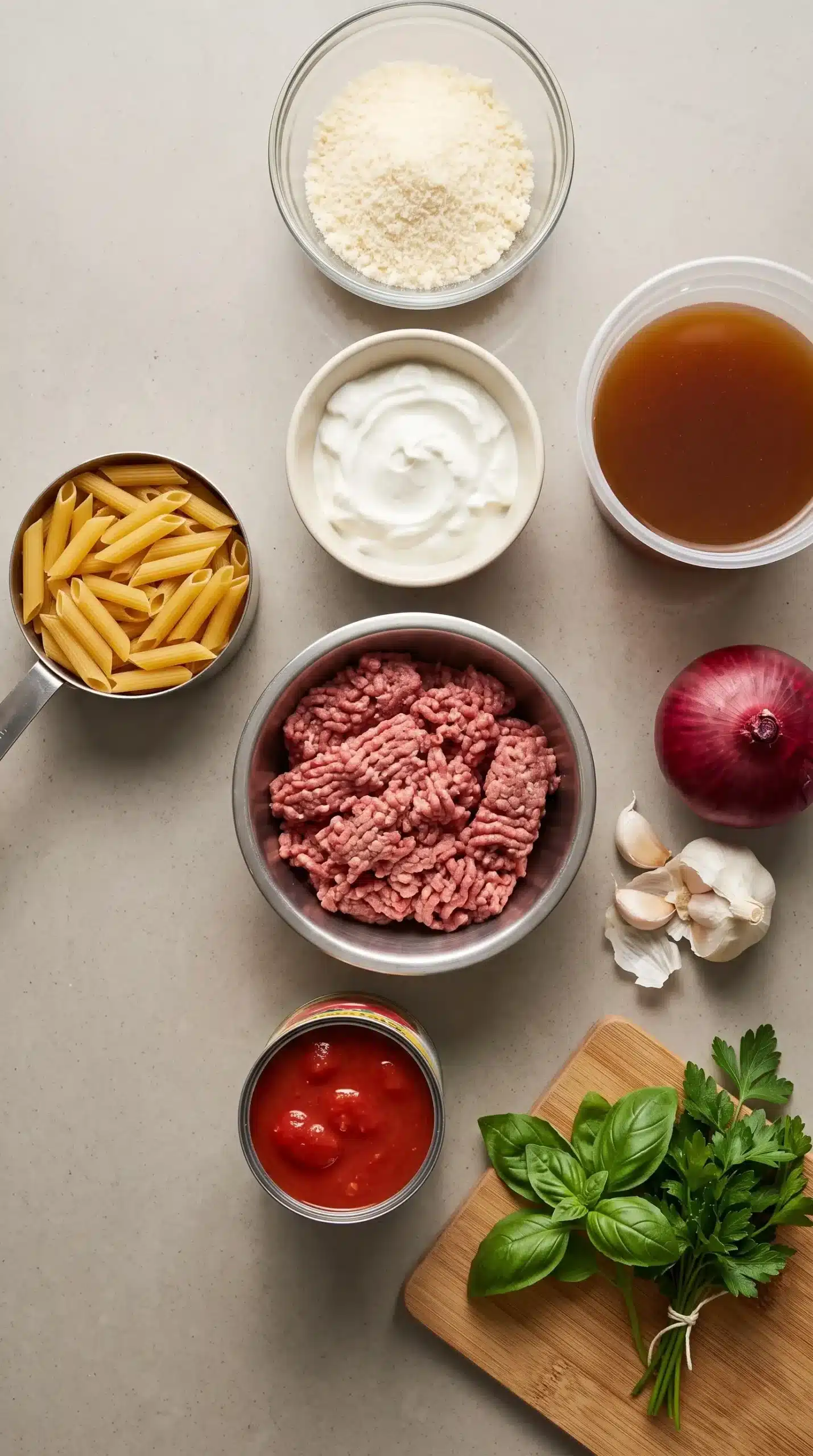
| Component | Useful choice | Why it fits the dish |
|---|---|---|
| Beef | Lean ground beef | Provides the main protein and browns well in the skillet |
| Pasta | Penne | Holds the creamy tomato mixture while remaining easy to toss |
| Creamy element | Plain Greek yogurt | Adds creaminess and additional protein |
| Cheese | Grated Parmesan | Brings savory flavor to the sauce |
| Liquid | Low-sodium beef broth | Helps create the sauce around the beef and tomatoes |
Ingredient balance is particularly useful here because the beef, dairy, tomato, and broth all contribute to the character of the sauce. Fresh basil or parsley can then provide a fresh finishing note when the pasta reaches the table.
Building a Smooth Sauce Around the Beef
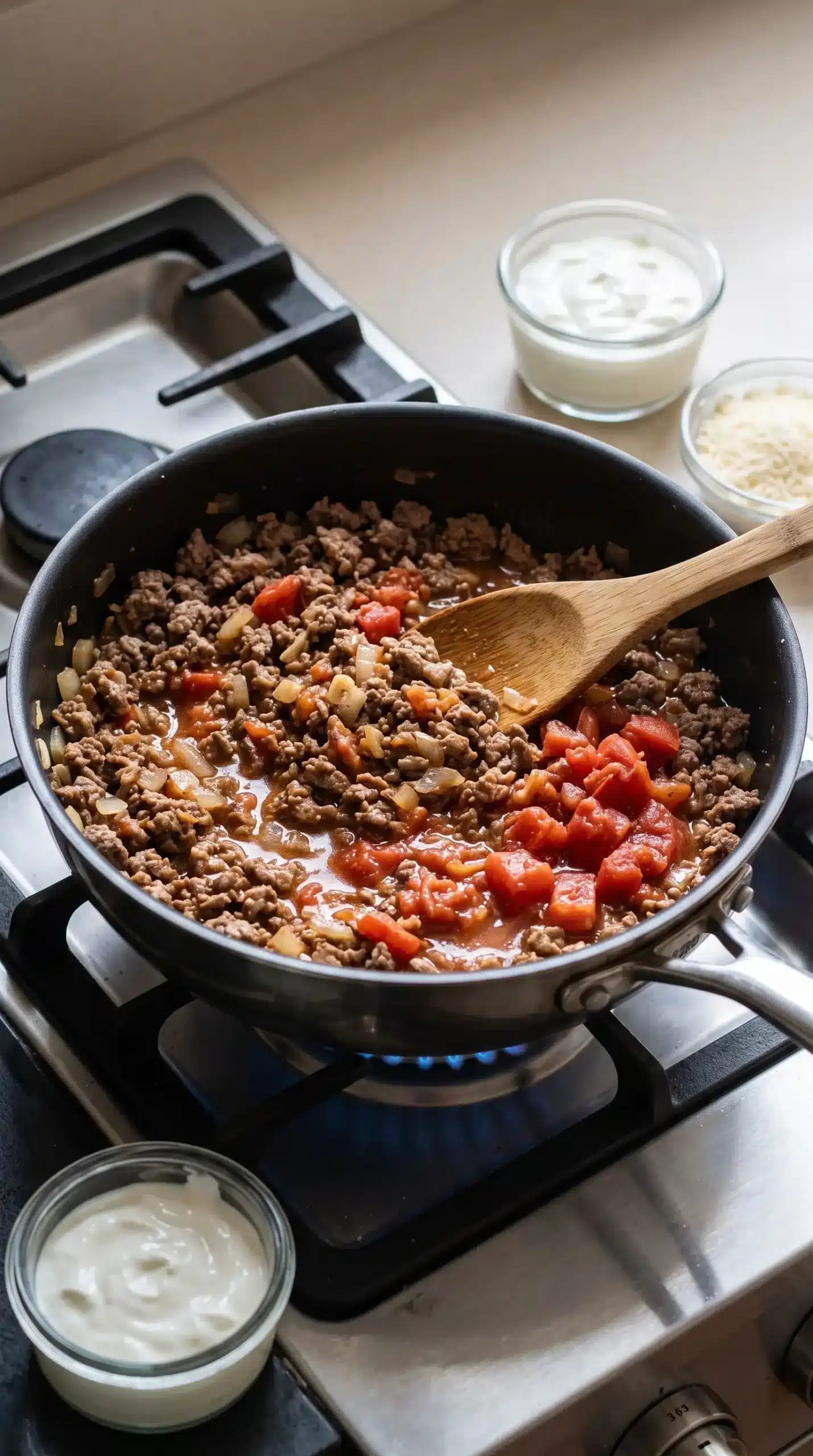
Browned ground beef forms the savory foundation of high protein beef pasta, while onion and garlic establish the aromatic base. Sautéing those aromatics in olive oil before adding the beef gives the skillet a flavorful starting point.
Tomatoes with their juices bring moisture and acidity to the beef mixture, as seen in ground beef pasta with tomato sauce. Beef broth extends the sauce and helps the ingredients come together as they simmer, while Greek yogurt and Parmesan provide the creamy element.
Seasoning should be adjusted after the main sauce ingredients are combined. Italian seasoning, salt, and pepper are the core seasonings, so tasting at this stage gives you the opportunity to keep the finished pasta balanced without overwhelming the tomato and beef flavors.
Keeping the Penne Ready for the Skillet
Cooked penne should be drained and set aside while the beef mixture is prepared. Having the pasta ready means it can go directly into the skillet once the sauce has reached the desired consistency.
Whole grain penne can be used when you want more fiber, while whole wheat or gluten-free pasta can provide alternative formats for the same overall preparation. The sauce remains centered on the beef, tomato, yogurt, broth, and Parmesan combination.
Three Cooking Controls That Matter Most
- Aromatics: Sauté the chopped onion and minced garlic until fragrant before the beef goes into the skillet.
- Beef: Cook the ground beef until browned so it is properly incorporated into the sauce.
- Simmer: Give the tomato, broth, yogurt, Parmesan, and seasoning mixture a few minutes to come together before adding the pasta.
These controls keep the preparation focused on the transitions that affect texture and flavor most. Once the penne is added, tossing thoroughly distributes the beef mixture across the pasta.
Where Extra Vegetables Fit Naturally
Spinach or bell peppers can be added when you want extra vegetables in the meal. They fit the existing savory profile without changing the basic beef-and-pasta identity.
A simple side salad or steamed vegetables can also accompany the pasta instead of changing the skillet itself. Either approach adds variety while leaving the creamy sauce and seasoned beef at the center of the meal.
Common High Protein Beef Pasta Mistakes to Avoid
Overcooking the sauce can work against the creamy texture created by Greek yogurt. A controlled simmer is preferable once the yogurt and Parmesan are incorporated, giving the ingredients time to blend without unnecessarily prolonging the cooking.
Adding the pasta before the beef mixture is ready can also make the final combination less convenient to manage. Keeping the cooked penne aside until the sauce has simmered lets you bring the two components together at the right point.
Heavy seasoning is another easy mistake because Parmesan, beef, tomatoes, and Italian seasoning already contribute distinct flavors. Adjusting salt and pepper after combining the sauce gives you better control over the finished taste.
Making the Beef Mixture Ahead Without the Pasta
The beef mixture can be prepared ahead and refrigerated for a later meal. Keeping it separate from the pasta preserves a simple reheating-and-combining process when you are ready to eat.
When serving later, cook the penne and combine it with the prepared beef mixture. This approach is particularly useful when you want to divide preparation across different parts of the day without assembling the entire dish too early.
Reheating Creamy High Protein Beef Pasta
Leftovers should cool before being transferred to an airtight container for refrigeration. The stored pasta can be reheated either in the microwave or on the stove.
A small splash of water or broth helps restore creaminess during reheating. This is useful because the pasta and sauce can become thicker after chilling, while added liquid gives the mixture some moisture as it warms.
Serving the Pasta While It Is Hot
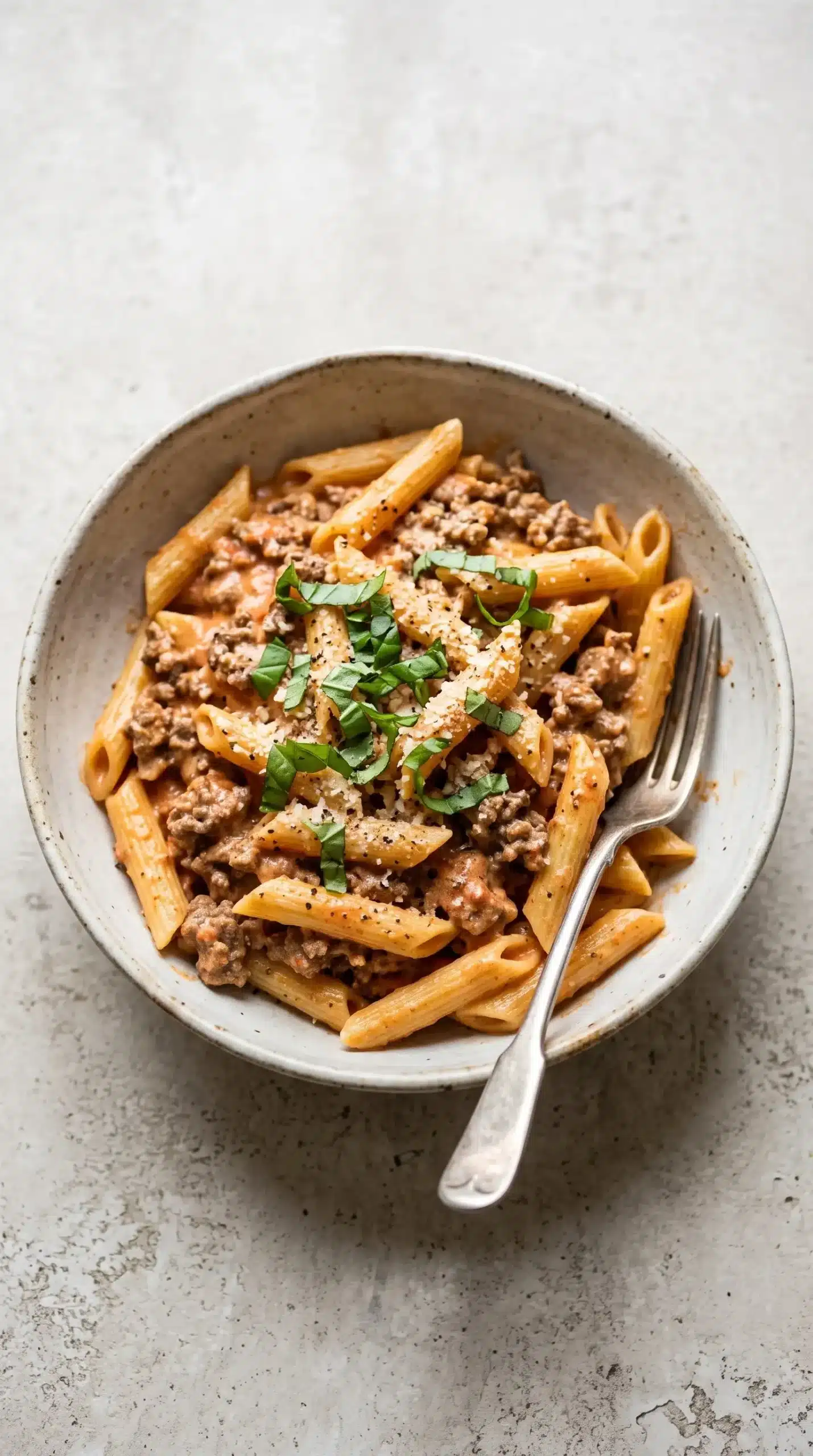
Fresh basil or parsley makes a simple garnish for high protein beef pasta and adds a fresh finish to the warm, creamy skillet mixture. Extra Parmesan can also be sprinkled over individual servings for additional savory flavor.
For a fuller meal, pair the pasta with a simple side salad or steamed vegetables. Those sides complement the substantial beef and pasta without competing with the creamy tomato sauce.
Adjusting the Flavor Without Changing the Recipe
Italian seasoning provides the main herb profile, but the amount can be adjusted according to personal taste. Salt and pepper can likewise be increased or reduced after the sauce comes together.
Red pepper flakes or diced jalapeños offer a way to add heat when cooking the beef. Either option changes the level of spiciness while preserving the core combination of beef, tomatoes, creamy yogurt, Parmesan, and pasta.
Simple Swaps for a Different Bowl
Turkey can replace the ground beef for a lighter version while keeping the same general preparation. Lentils or mushrooms can be used in place of beef when a vegetarian variation is preferred.
Whole wheat or gluten-free pasta can also replace the standard penne. These substitutions change the pasta format while allowing the tomato, broth, Greek yogurt, Parmesan, and seasoning mixture to remain central.
High Protein Beef Pasta Works Best When the Sauce Stays Balanced
The creamy texture depends on the relationship between the browned beef, tomato juices, beef broth, Greek yogurt, and Parmesan. Keeping those elements together through a brief simmer creates the cohesive mixture needed to coat the cooked penne.
Once the pasta is tossed into that mixture, high protein beef pasta becomes a complete skillet meal with a savory beef base and creamy tomato finish. Careful seasoning and gentle sauce handling make the biggest difference in preserving that balance from skillet to plate.
Questions About Creamy Beef Pasta and Storage
Can the beef mixture be refrigerated before adding the pasta?
Yes. The beef mixture can be prepared ahead and kept in the refrigerator, then combined with freshly cooked penne when you are ready to serve. This keeps the pasta preparation separate and makes the later assembly straightforward.
What can make the sauce creamy without heavy cream?
Plain Greek yogurt and grated Parmesan provide the creamy component in high protein creamy pasta. The yogurt contributes creaminess and protein, while Parmesan adds savory depth to the tomato and beef mixture.
How can I add more heat to the beef pasta?
Red pepper flakes or diced jalapeños can be added while cooking the beef. The amount can be adjusted to suit the preferred level of heat without changing the main sauce ingredients.
Can vegetables be added directly to the skillet?
Spinach or bell peppers are suitable additions when you want more vegetables in the meal. They can be incorporated into the skillet preparation while keeping the beef, pasta, and creamy tomato sauce as the central combination.
What pasta alternatives work with this sauce?
Whole grain, whole wheat, or gluten-free pasta can be used in place of the penne. The choice changes the pasta itself while the seasoned beef and creamy tomato mixture remains the defining part of the dish.
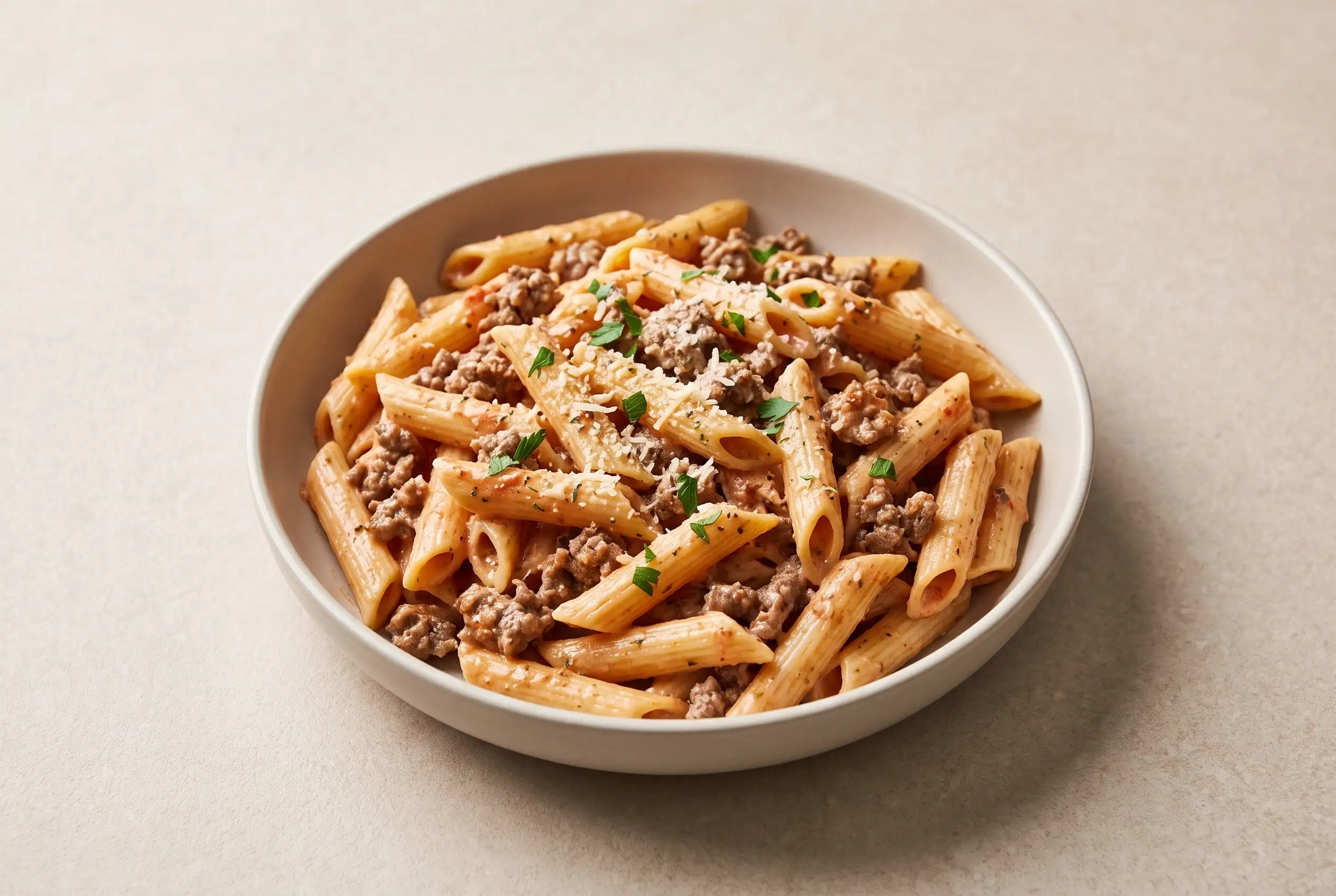
High Protein Beef Pasta with Greek Yogurt and Parmesan
Ingredients
Method
- Cook the penne according to the package directions. Drain thoroughly and set aside.
- Warm olive oil in a large skillet over medium heat. Add the chopped onion and minced garlic, and sauté until fragrant.
- Add the lean ground beef and cook until browned.
- Mix in the diced tomatoes with their juices, beef broth, Greek yogurt, Parmesan cheese, Italian seasoning, salt, and pepper. Simmer for a few minutes.
- Add the cooked penne to the skillet and toss until the pasta is evenly coated with the beef mixture.
- Serve hot and finish with fresh basil or parsley.