High Protein Beef Pasta with Greek Yogurt and Parmesan
High protein beef pasta brings lean ground beef, tender short pasta, tomatoes, Greek yogurt, and Parmesan together in a creamy skillet meal that feels hearty without requiring a complicated cooking process. The combination works especially well when a satisfying dinner needs to come together quickly.
What sets this creamy beef pasta apart is the way Greek yogurt and Parmesan create a smooth, rich finish after the tomato and beef mixture has simmered. Garlic, onion, Italian seasoning, and fresh herbs keep the flavor familiar, while the beef and Greek yogurt contribute substantial protein to each serving.
Why High Protein Beef Pasta Works for Busy Dinners
Lean ground beef gives the skillet a savory foundation while the pasta turns the sauce into a substantial meal. Tomatoes and beef broth create the flavorful base, so the finished dish does not depend on a long ingredient list or an elaborate sauce.
Greek yogurt is stirred in after the skillet leaves the heat, which gives the sauce its creamy character without requiring a separate cream sauce. Parmesan adds another layer of savory flavor and helps the yogurt fit naturally into the finished pasta.
The short pasta shape is practical, too. Penne, rigatoni, or fusilli can hold onto the tomato-beef sauce, making each serving cohesive instead of leaving most of the sauce behind in the skillet.
Greek Yogurt and Parmesan Shape the Creamy Sauce

Plain Greek yogurt is the ingredient that changes the tomato-based skillet mixture into a creamy beef pasta. Because it is added once the skillet has been removed from the heat, it can be mixed gently into the warm sauce rather than exposed to prolonged cooking.
Keeping the skillet off the heat when the yogurt goes in also helps prevent yogurt from curdling, preserving the smooth texture of the finished sauce.
Grated Parmesan brings a concentrated savory note that complements the beef, tomatoes, and Italian seasoning. Together, the yogurt and cheese provide the creamy finish while keeping the sauce connected to the original tomato and broth base.
- Greek yogurt: Stir it in after removing the skillet from heat so it blends smoothly into the warm sauce.
- Parmesan: Add the grated cheese with the yogurt so both creamy elements distribute evenly.
- Fresh herbs: Finish with basil or parsley for a fresh garnish that contrasts with the rich sauce.
Short Pasta Shapes Keep the Sauce Close
Penne is the stated pasta choice, but other short shapes such as rigatoni or fusilli also suit the sauce. Their compact forms make them easy to toss with the beef mixture and help carry the tomato-based sauce from skillet to bowl.
Tomatoes, Broth, and Seasoning Build the Savory Base
Canned tomatoes with their juices provide the main tomato component of the sauce, while low-sodium beef broth loosens the mixture and reinforces its savory character. A tomato-based ground beef pasta builds on these flavors, while Italian seasoning brings the sauce together without adding another complicated preparation.
Onion and garlic are cooked before the beef is browned, giving the skillet an aromatic starting point. Once the tomatoes and broth are added, a short simmer gives the sauce time to come together before the creamy ingredients enter the pan.
Salt and pepper should be adjusted to taste. Using low-sodium broth leaves room for seasoning the sauce according to the flavor of the beef, tomatoes, and Parmesan rather than committing the entire dish to a heavily salted base.
One-Skillet Sauce Control Makes the Pasta Creamy
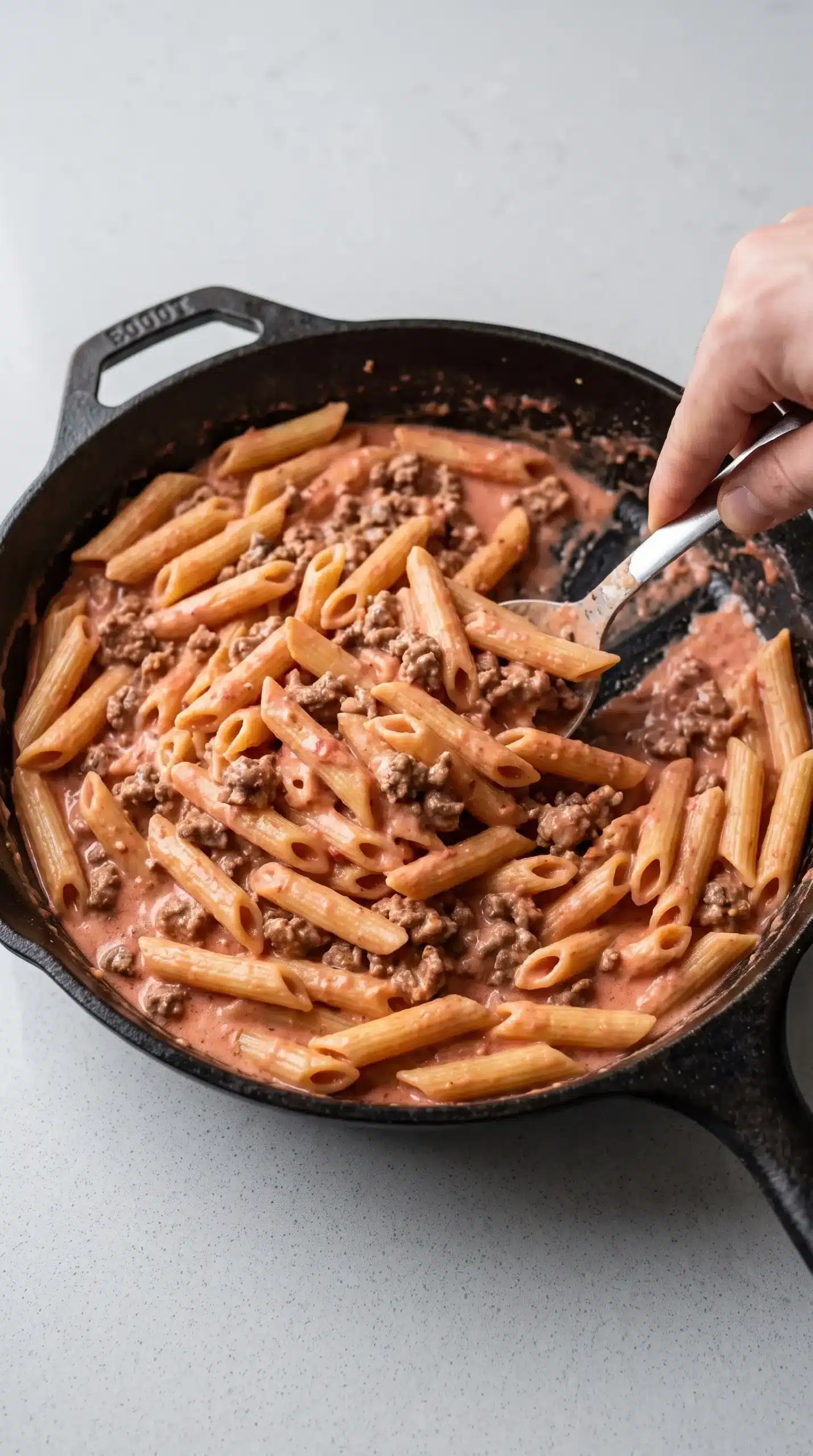
The most important temperature decision comes when the tomato-beef mixture is ready for the yogurt and Parmesan. Removing the skillet from heat before adding them helps preserve the smooth character of the creamy mixture.
Pasta should be cooked separately according to its package instructions and drained before it joins the skillet. Once combined, tossing the pasta through the sauce distributes the creamy tomato mixture across the short pasta shapes.
| Cooking point | What to watch for | Useful action |
|---|---|---|
| Onion and garlic | Onion has softened before the beef is added | Continue cooking until the onion is soft |
| Ground beef | Beef has browned in the skillet | Cook until browned before adding the tomatoes and broth |
| Sauce simmer | Tomato and broth mixture has simmered | Keep the skillet at a simmer for about 5–7 minutes |
| Creamy finish | Yogurt and Parmesan are ready to blend | Remove the skillet from heat before stirring them in |
Browned Beef Gives the Ground Beef Pasta Recipe Its Backbone
Lean ground beef is more than the protein source in the dish; it supplies the central savory flavor that ties the broth, tomatoes, herbs, and cheese together. Browning it after the onion and garlic have softened keeps the beef at the heart of the skillet sauce.
Once the beef has browned, the tomato and broth mixture can be added directly to the same skillet. That creates a continuous flavor base without requiring another pan for the sauce.
The resulting ground beef pasta recipe stays approachable because the beef does not need a separate marinade or complicated seasoning mixture. Italian seasoning, salt, and pepper provide the seasoning framework used by the original preparation.
Common High Protein Beef Pasta Mistakes to Avoid
Adding the creamy ingredients while the skillet is still over heat is the most important pitfall to avoid. Greek yogurt is specifically incorporated after the pan is removed from the heat, so following that temperature change is central to achieving the intended creamy texture.
Another problem can occur when the beef is added before the onion has softened. The supplied method places the diced onion and minced garlic in the olive oil first, then adds the ground beef once the onion is soft. Keeping that order gives each component the cooking time assigned to it.
Overlooking the pasta can also make the finished dish less cohesive. The pasta is cooked separately and drained before being tossed with the sauce, so combining it only after the creamy mixture is ready keeps the process organized.
Simple Flavor Changes That Fit the Skillet
Red pepper flakes are an easy way to increase the heat of the sauce if a spicier dinner is preferred. They can be incorporated into the sauce without changing the basic tomato, beef, yogurt, and Parmesan combination.
Fresh spinach or bell peppers can also be added for more vegetables. These options change the texture and vegetable content while keeping the skillet format intact.
Protein-Friendly Swaps for the Beef and Pasta
Ground turkey or ground chicken can replace the beef when a lighter variation is wanted. Lentils or chickpeas can be used in place of beef for a vegetarian adaptation, giving the dish a different foundation while retaining its creamy tomato-pasta character.
| Swap | When it fits | What changes |
|---|---|---|
| Ground turkey | A lighter variation | The primary meat changes while the sauce approach stays similar |
| Ground chicken | A lighter variation | The beef flavor is replaced with chicken |
| Lentils | A vegetarian option | Beef is replaced with a plant-based ingredient |
| Chickpeas | A vegetarian option | The protein source changes while the pasta and creamy sauce remain central |
| Whole-grain pasta | A different pasta choice | The pasta type changes while the sauce remains the same |
| Gluten-free pasta | A gluten-free variation | The pasta is changed to suit that dietary need |
Serving Ideas for Creamy Beef Pasta
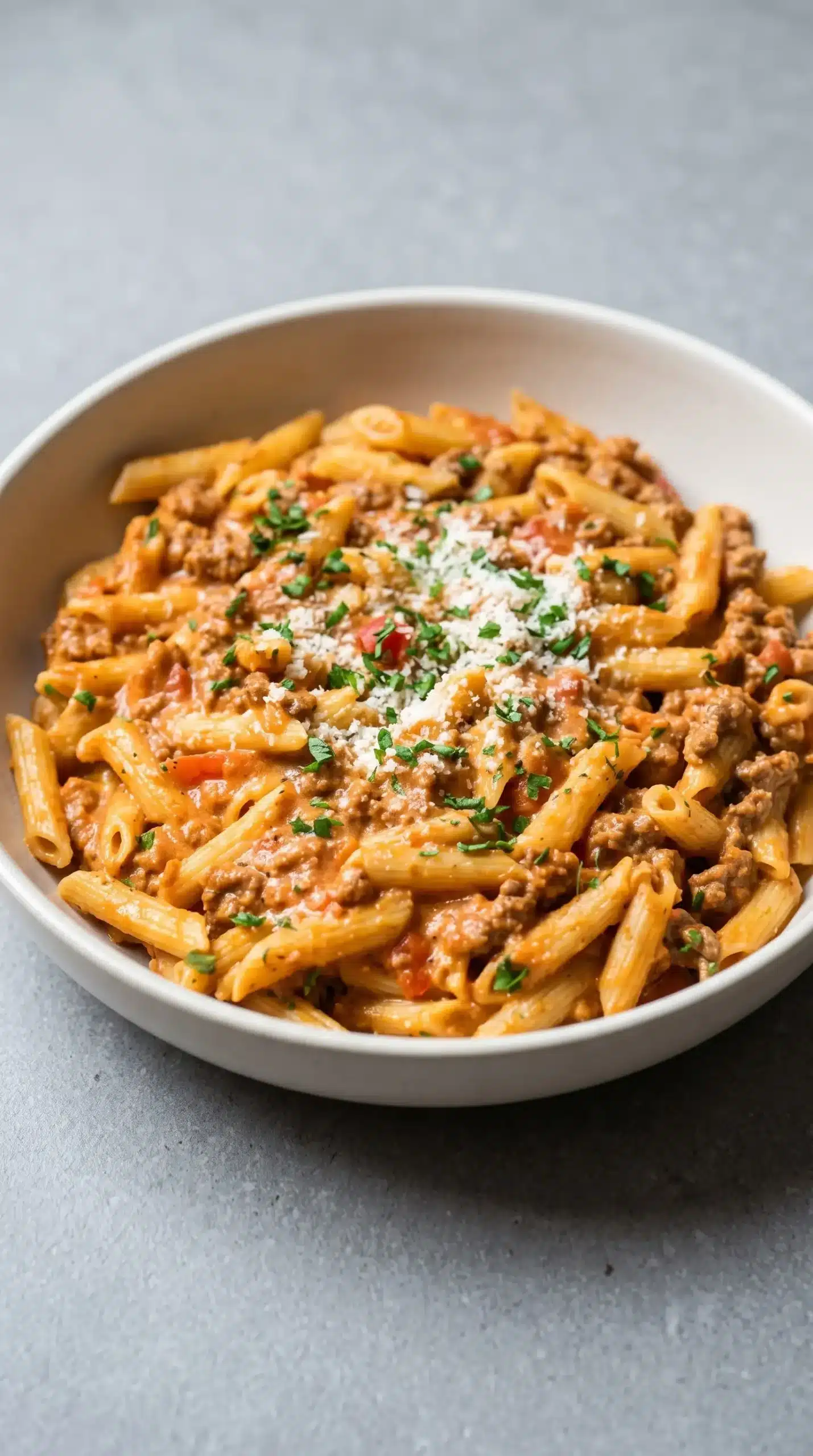
Serve the pasta warm in bowls with fresh basil or parsley scattered over the top. The herbs provide a simple finishing touch that works naturally with the tomato, Italian seasoning, beef, and Parmesan.
A fresh side salad adds a crisp vegetable component alongside the warm pasta. Garlic bread is another fitting accompaniment when a more substantial meal is desired.
Extra Parmesan can be added at the table for additional savory flavor. Keeping the topping optional lets each person adjust the finished bowl to their preference without changing the sauce itself.
Keeping Leftover Pasta Creamy When Reheating
Refrigerate leftovers in an airtight container and use them within about 3–4 days. For reheating, either the microwave or stovetop can be used, with a splash of water helping loosen the sauce as it warms.
What Makes This High Protein Creamy Pasta Satisfying
Lean ground beef supplies protein, while Greek yogurt adds both creaminess and additional protein. Tomatoes contribute vitamins and antioxidants, and the pasta provides the familiar hearty base that makes the dish feel like a complete dinner.
The balance comes from combining those elements in one sauce instead of relying entirely on a heavy creamy component. The result is a high protein creamy pasta built from familiar foods, with the tomato and broth mixture keeping the sauce connected to the beef and pasta.
When the Creamy Skillet Finish Comes Together Best
The strongest cooking judgment for High Protein Beef Pasta is knowing when to stop applying heat. The tomato and beef mixture needs its brief simmer, but the Greek yogurt and Parmesan belong in the warm skillet after the heat has been removed.
That small temperature shift is what lets the creamy element become part of the sauce without changing the basic character of the tomato and beef mixture. Once the pasta is tossed through that finished sauce, the dish is ready for its fresh herb garnish and warm serving.
High Protein Beef Pasta Questions About Storage and Swaps
Can High Protein Beef Pasta be made ahead?
Yes. The finished pasta can be prepared ahead and reheated when needed. Because the sauce contains Greek yogurt, gentle reheating is useful for keeping the creamy consistency as pleasant as possible.
Can the leftovers be frozen?
Freezing is possible, although the creamy texture may change after thawing and reheating. If texture is especially important, refrigerated storage and gentle reheating are the better approach.
What pasta shapes work besides penne?
Rigatoni and fusilli are suitable alternatives because they are short pasta shapes that can be tossed through the sauce. The important consideration is choosing a shape that combines easily with the creamy tomato and beef mixture.
How can the pasta be made spicier?
Red pepper flakes can be added to the sauce for extra heat. They provide a direct way to increase the spiciness without changing the core beef, tomato, yogurt, and Parmesan combination.
Can the beef be replaced?
Ground turkey or ground chicken can be used for a lighter variation. For a vegetarian version, lentils or chickpeas can replace the beef while the remaining pasta and creamy tomato components provide the familiar structure.
What goes well with the pasta?
A side salad or garlic bread pairs naturally with the warm pasta. Extra Parmesan and a garnish of fresh basil or parsley can also be used at serving time.
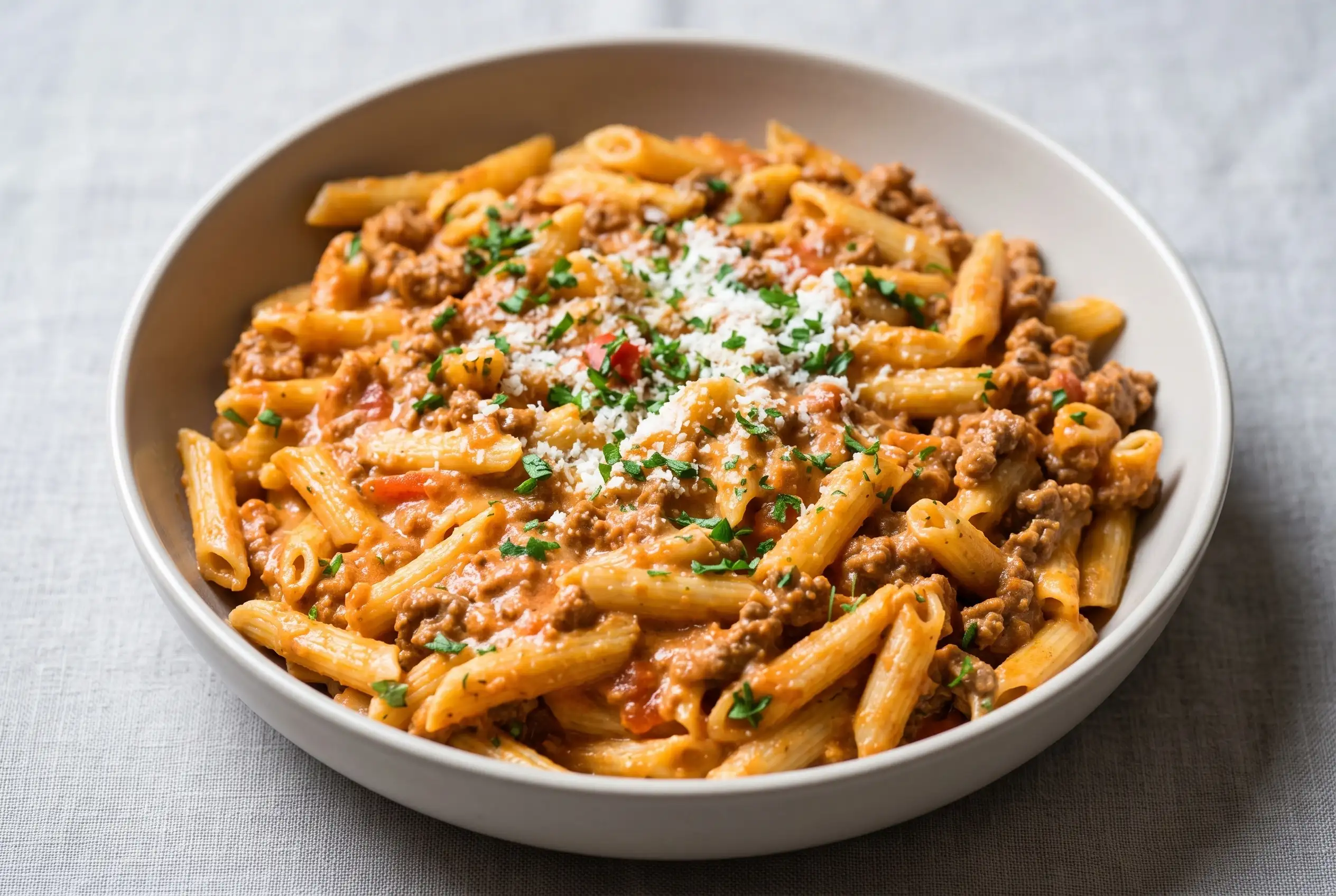
High Protein Beef Pasta with Greek Yogurt and Parmesan
Ingredients
Method
- Bring a pot of salted water to a boil. Cook the penne according to the package directions, then drain and set aside.
- Warm the olive oil in a large skillet over medium heat. Add the diced onion and minced garlic, then cook until the onion becomes soft.
- Add the lean ground beef and cook until it is browned.
- Pour in the tomatoes with their juices and the beef broth. Stir in the Italian seasoning, salt, and pepper.
- Keep the sauce at a simmer for 5–7 minutes.
- Take the skillet off the heat. Stir in the Greek yogurt and grated Parmesan until the sauce is creamy and well combined.
- Add the cooked penne and toss until the pasta is evenly covered with sauce.
- Serve warm and finish with fresh basil or parsley as a garnish.