Ground Beef Stir-Fry with Garlic Veggies and Rice
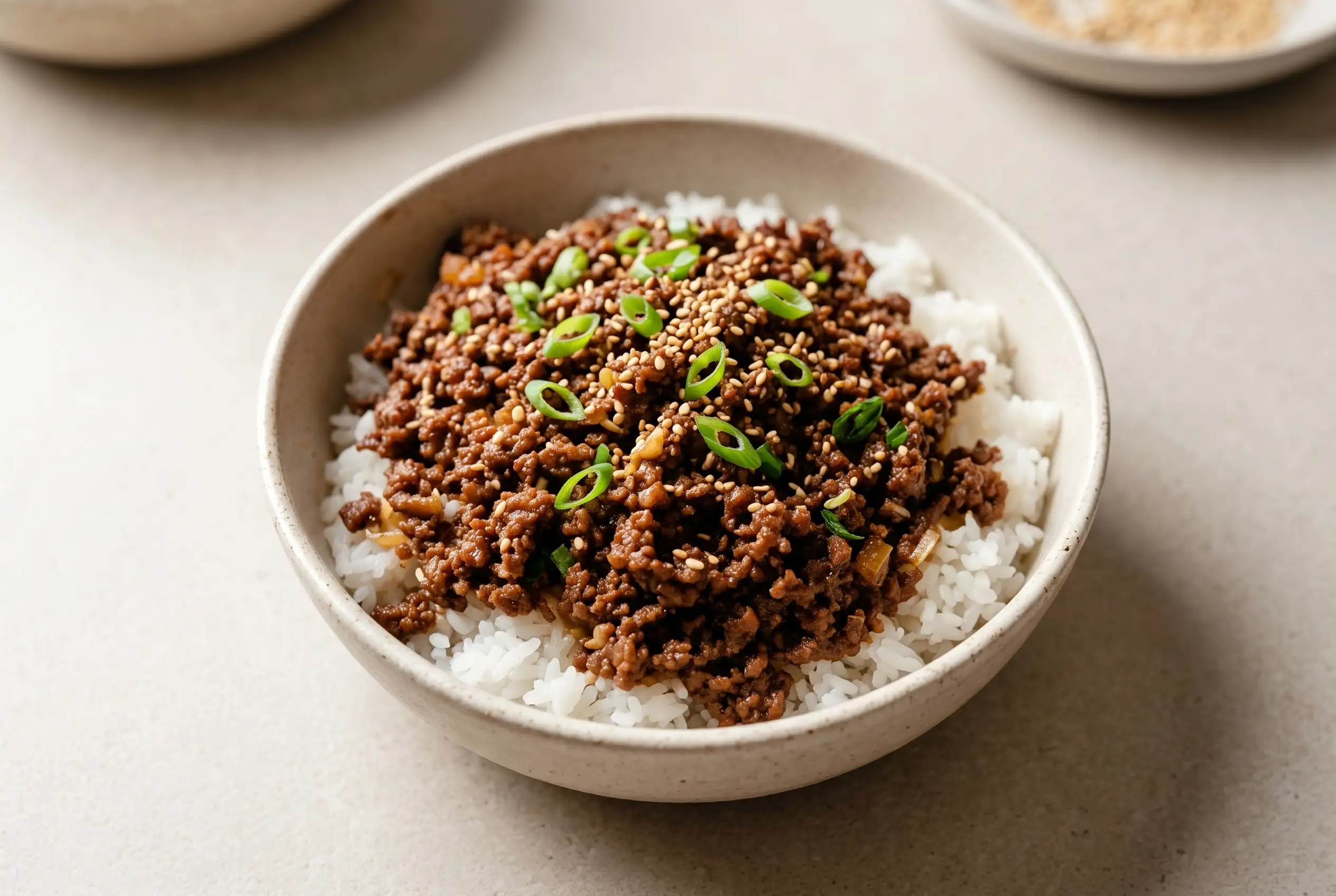
Spicy ground beef stir fry brings browned beef, crisp-tender vegetables, a savory soy-based sauce, and hot white rice together in a bowl that is especially suited to a busy dinner. Garlic, chili flakes, sesame oil, and brown sugar give the beef a balanced combination of savory, spicy, nutty, and lightly sweet flavors, while broccoli, red bell pepper, zucchini, and mushrooms add variety to every bite.
Why the beef and vegetables work so well together
A ground beef stir fry bowl has a useful contrast built into its preparation. The beef becomes deeply savory as it browns, while the vegetables are cooked separately so they can retain a tender-crisp texture. Keeping those components distinct also makes the finished bowl easy to arrange with rice underneath and the beef and vegetables placed on top.
Garlic appears in both cooking stages, but each portion serves the same flavor-building purpose in a different setting. The beef receives minced garlic alongside sesame oil, while the vegetables begin with garlic sautéed in olive oil. That split lets the aromatics flavor both sides of the bowl without requiring one crowded pan.
Hot steamed white rice provides a mild base for the seasoned beef and vegetables. Its simple flavor allows the soy sauce, chili flakes, brown sugar, and garlic to remain noticeable without adding another strongly flavored component.
Garlic, soy, and chili choices that shape the bowl
The beef seasoning depends on a small group of ingredients that should stay balanced. Soy sauce supplies the savory foundation, chili flakes bring the heat, brown sugar rounds that heat with a touch of sweetness, and sesame oil contributes its distinctive flavor. Together, they create the characteristic seasoning for the spicy ground beef stir fry.
| Beef seasoning | Primary role | Cooking point |
|---|---|---|
| Soy sauce | Savory seasoning | Stir in after the beef has browned |
| Chili flakes | Spice | Add with the soy sauce and brown sugar |
| Brown sugar | Light sweetness | Simmer with the sauce until slightly thickened |
| Sesame oil | Distinctive savory aroma | Use at the beginning with the beef garlic |
Chili flakes are adjustable, so the heat can be kept moderate or increased according to preference. A little extra can make the beef more assertive, while additional hot sauce can be used when serving if more heat is wanted at the table.
Cutting the vegetables for tender-crisp results
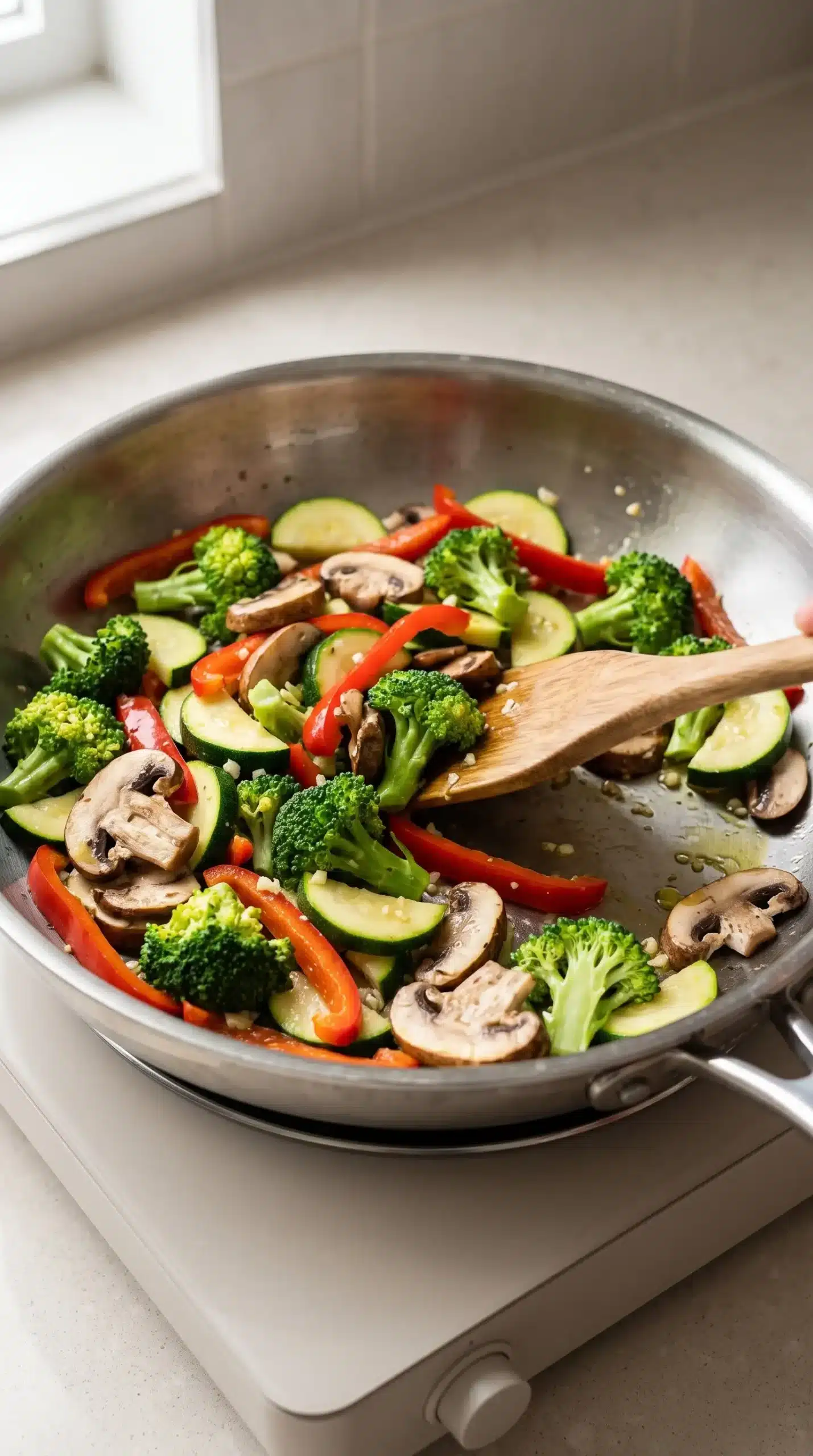
Vegetable preparation has a direct effect on how evenly the mixture cooks. Sliced mushrooms, zucchini, and red bell pepper can move quickly through the hot pan, while broccoli florets need enough exposure to the heat to become tender-crisp without losing their useful texture.
Consistent pieces make the stir-frying stage easier to control. Washing and chopping everything before heating the pan also keeps the cooking process moving once the oil and garlic are hot.
Vegetable swaps are flexible when the original combination is not available. Snap peas, carrots, and baby corn are suitable alternatives, allowing the ground beef stir fry vegetables to change while keeping the same basic bowl format.
How the two sauces should stay distinct
The beef mixture and vegetable mixture do not use the same seasoning proportions. The beef receives two tablespoons of soy sauce along with chili flakes and brown sugar, then simmers for several minutes so the mixture becomes slightly thickened. The vegetables receive one teaspoon of soy sauce near the end of their stir-frying.
That difference matters because the beef is intended to carry the stronger seasoned element of the bowl. The vegetables only need enough soy sauce to connect them to the beef without overwhelming their individual flavors.
Cooking control for a balanced spicy beef stir fry with rice
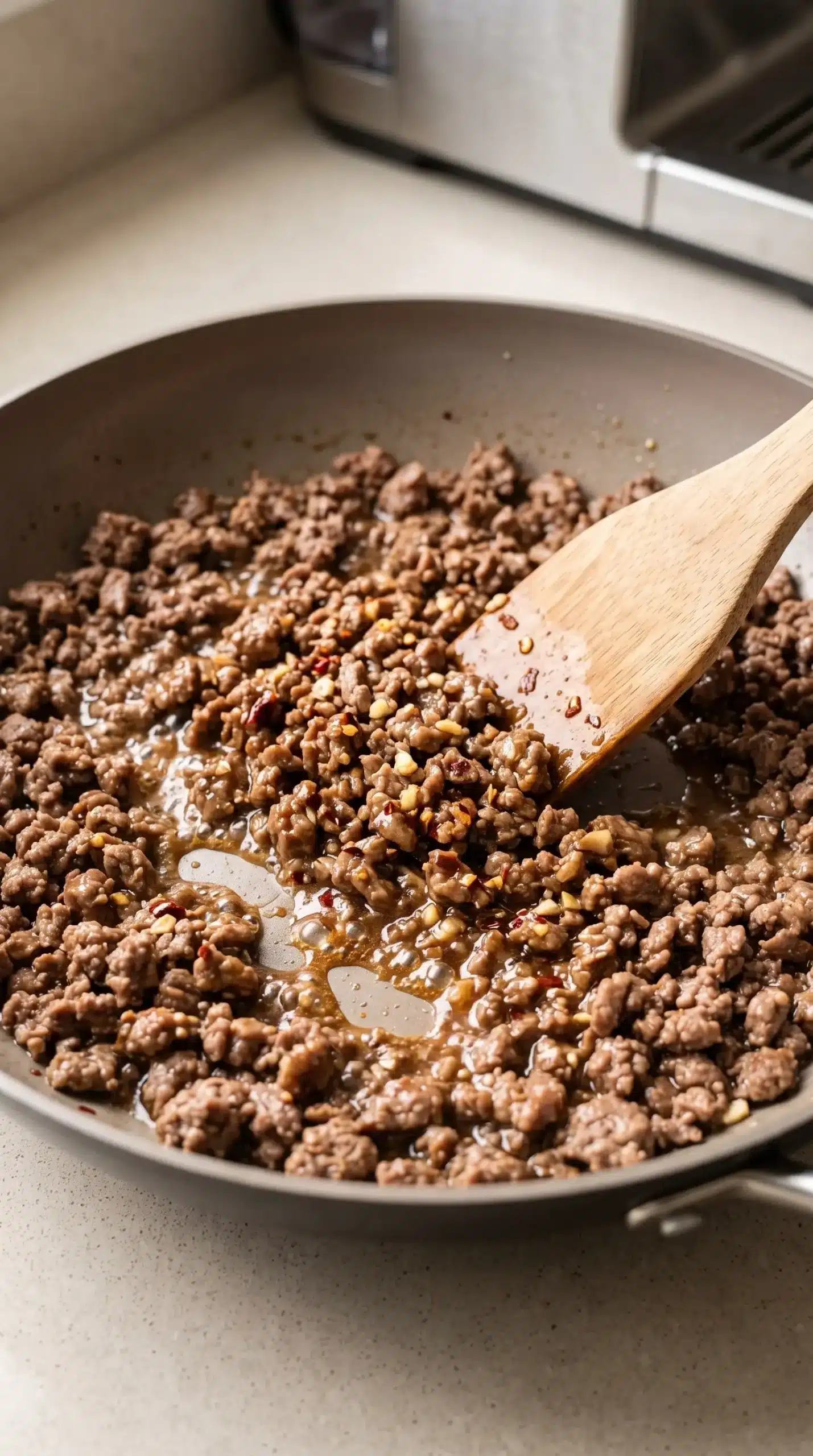
Medium-high heat is important when starting the beef because the meat needs to brown while being broken into small pieces. Adding the garlic and sesame oil first gives the garlic about 30 seconds to become fragrant before the beef enters the skillet.
After browning, check that the ground beef reaches a 160°F (71°C) internal temperature before removing it from the heat.
Once the soy sauce, chili flakes, and brown sugar are incorporated, a three- to four-minute simmer gives the mixture time to thicken slightly. Watch the consistency during this stage so the sauce remains useful for coating the beef and spooning over the finished bowl.
The vegetable pan follows a different rhythm. Garlic cooks briefly in olive oil, mushrooms receive about two minutes, and broccoli, zucchini, and red bell pepper then stir-fry for four to five minutes. The useful visual cue is tenderness with some crispness still present.
Serving hot rice underneath the cooked components keeps the bowl cohesive. Arranging the beef and vegetables on top or side by side also preserves their separate textures instead of immediately mixing everything together.
Where spicy ground beef stir fry can go wrong
Overcrowding is not necessary for this dish because the beef and vegetables are intentionally cooked in separate pans. Trying to force both components into one cooking surface would work against the supplied method and make it harder to control their different cooking stages.
Another common issue is cooking the vegetables beyond tender-crisp. Broccoli, zucchini, pepper, and mushrooms each have a short stir-frying window, so watching their texture is more useful than simply extending the cooking time.
Excess seasoning can also upset the balance. The beef already contains the larger amount of soy sauce, while the vegetables receive only a teaspoon. Keeping those quantities distinct prevents the vegetable portion from competing with the seasoned beef.
Small preparation choices that make dinner smoother
Having the vegetables washed and chopped before the first pan is heated reduces interruptions during cooking. Minced garlic and measured sauces and seasonings should likewise be ready before the beef begins, since the initial garlic stage moves quickly.
- Beef first: Brown the meat thoroughly while breaking it into small pieces before adding its seasoning mixture.
- Vegetables next: Give mushrooms their short initial cooking period before adding the remaining vegetables.
- Rice ready: Use hot steamed white rice when assembling the bowls so the base matches the temperature of the toppings.
Easy ways to adjust the vegetables and protein
Ground turkey or ground chicken can replace the beef when a different protein is preferred. The same bowl concept can also be made with plant-based meat substitutes, giving the dish another option without changing the vegetable-and-rice format.
Vegetable choices can shift with availability. Snap peas, carrots, or baby corn can stand in for some of the original vegetables, while the core cooking idea remains a seasoned protein paired with stir-fried produce and rice.
Spice adjustments that keep the flavors balanced
Chili flakes provide the primary heat in the beef mixture, and the amount can be adjusted to taste. Increasing them makes the beef noticeably hotter without requiring a change to the other seasoning quantities.
For a different approach at serving time, extra hot sauce can be added to individual bowls. That allows diners who prefer more heat to intensify their portion while leaving the base seasoning unchanged for everyone else.
Storage and reheating for leftover bowls
Leftover portions should be transferred to an airtight container and refrigerated for up to three days. Keeping the cooked components contained protects them for later meals and makes the dish convenient for planned lunches or dinners.
Reheat the leftovers either in a microwave or on the stovetop until warmed through. Portioning the beef, vegetables, and rice together also makes an easy meal-prep format when several servings need to be stored at once.
What makes a complete ground beef stir fry bowl
Rice, seasoned beef, and vegetables each have a clear role in the finished bowl. The rice supplies the mild foundation, the beef carries the concentrated soy-chili seasoning, and the vegetables contribute contrasting textures and colorful variety.
Extra sauce can be spooned over the assembled bowl to bring the components together. Fresh herbs such as cilantro or green onions can also be used as a garnish, while extra soy sauce or hot sauce is optional for diners who want additional seasoning or heat.
Spicy ground beef stir fry is best when texture stays intentional
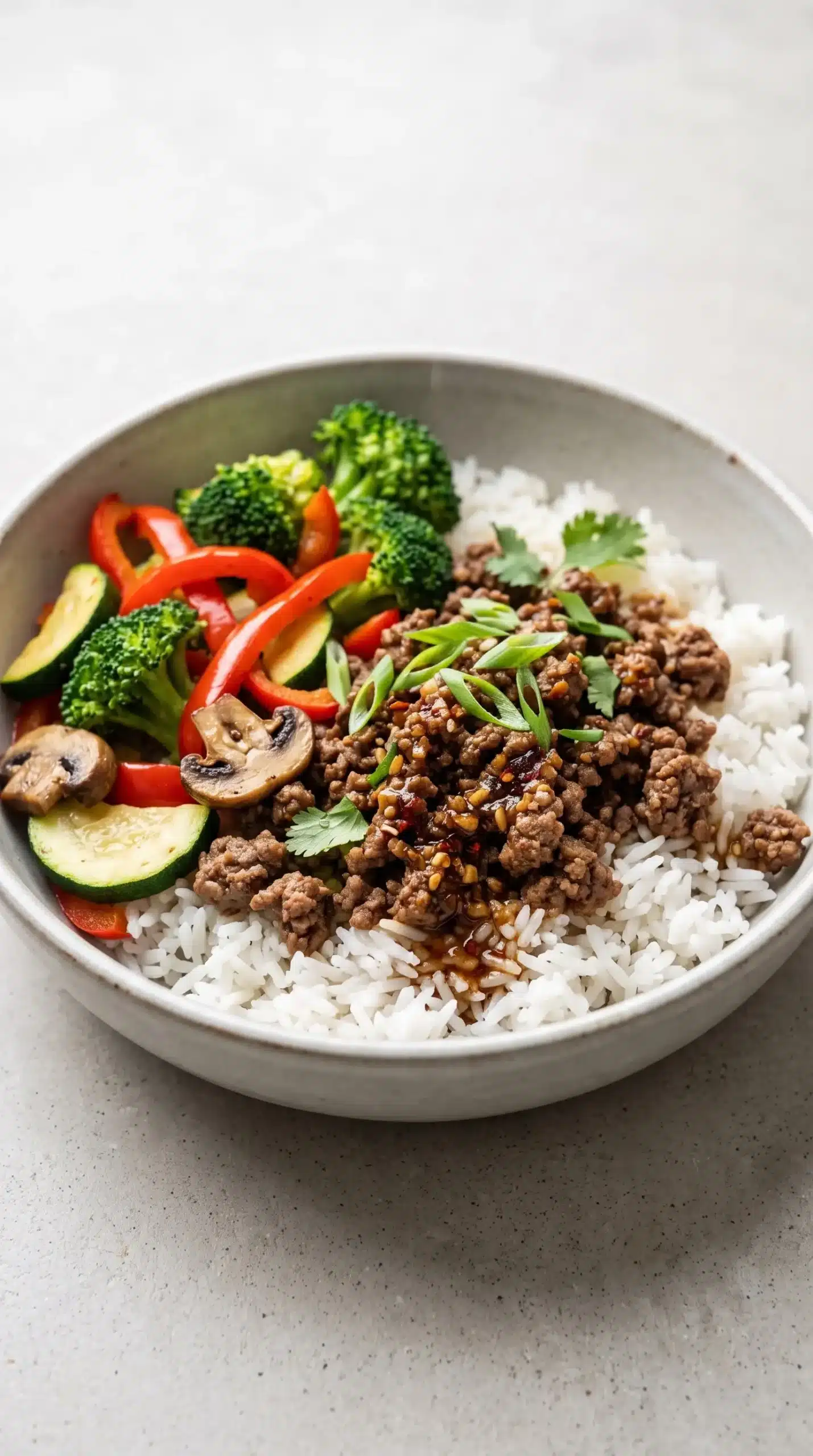
Browned beef with a slightly thickened sauce and tender-crisp vegetables gives the bowl its strongest contrast. The separate cooking stages make that texture easier to preserve, while hot white rice provides the neutral base needed to carry the more assertive flavors.
Keeping the beef seasoning concentrated and the vegetables lightly seasoned also makes each component recognizable. Once assembled, the bowl has enough sauce to connect the ingredients without losing the distinction between savory beef, crisp vegetables, and warm rice.
Spicy ground beef stir fry questions and answers
Can the beef be marinated before cooking?
Yes. For additional flavor, the ground beef can be marinated in soy sauce and chili flakes for 30 minutes before cooking. Because those ingredients are already part of the beef seasoning, the amount used for marinating should be considered when preparing the remaining mixture.
Can frozen vegetables be used for the stir-fry?
Frozen vegetables can work in place of fresh vegetables. Thaw them before cooking so they can enter the pan without bringing excess cold or moisture that could interfere with even stir-frying.
Which rice works with a ground beef stir fry bowl?
White rice is the rice specified for the bowl, but jasmine rice and brown rice are also suitable options. White and jasmine rice keep the base simple, while brown rice offers a different texture and additional fiber.
How can the bowl be made gluten-free?
Use tamari or another gluten-free soy sauce alternative in place of regular soy sauce. The substitution needs to apply to both the beef seasoning and the smaller amount used with the vegetables.
What should be added for a lower-carb version?
Quinoa or cauliflower rice can replace the white rice when a different base is preferred. The beef and vegetable portions can remain in the same bowl arrangement while the base changes.
How can extra servings be prepared ahead?
Cook the beef and vegetables, then portion them into containers with rice. Refrigerate the sealed portions and reheat them when needed, making the bowl practical for lunches or dinners prepared in advance.
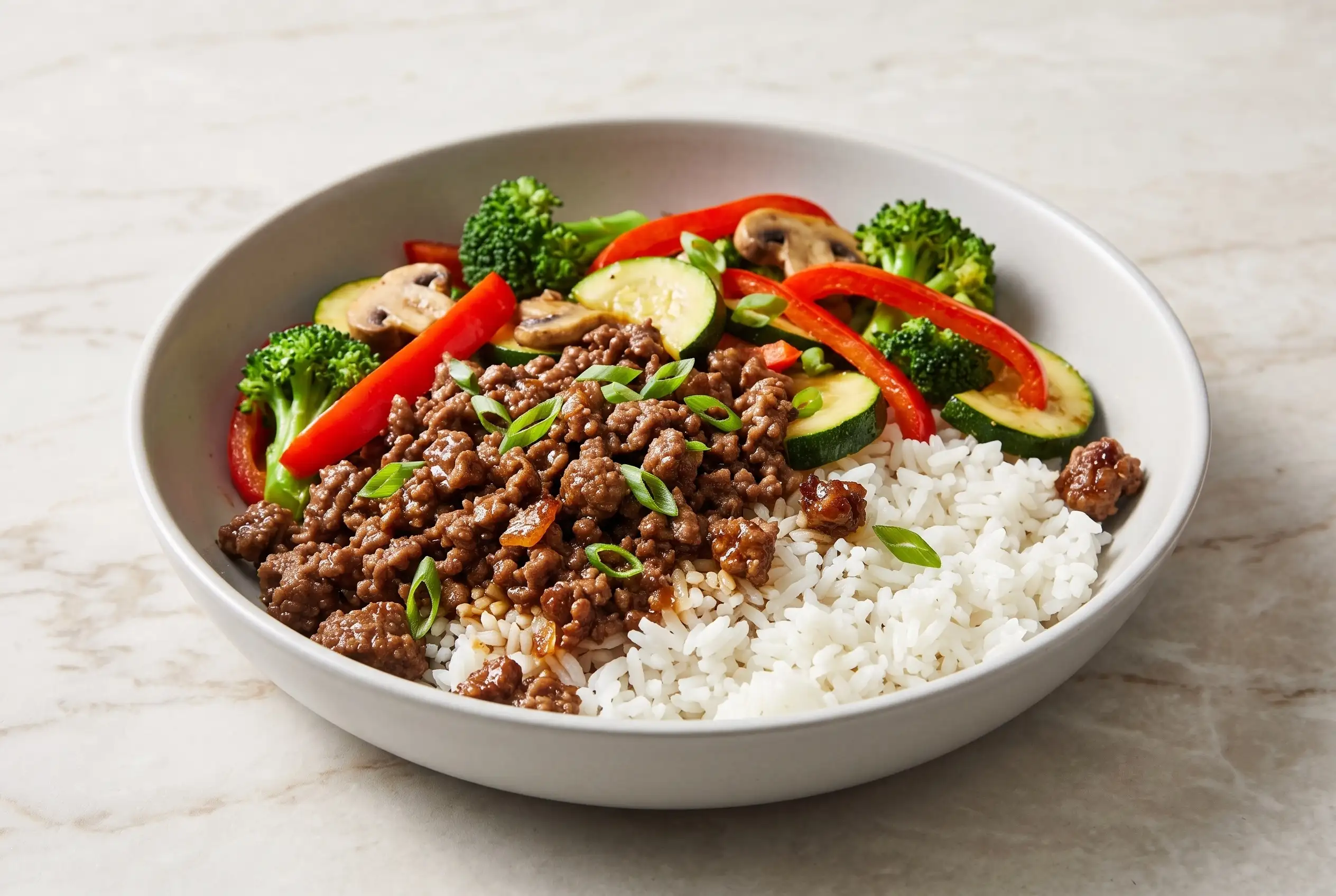
Ground Beef Stir-Fry with Garlic Veggies and Rice
Ingredients
Method
- Wash and chop the broccoli, red bell pepper, zucchini, and mushrooms. Mince both portions of garlic, then measure the soy sauce, chili flakes, sesame oil, and brown sugar.
- Warm the sesame oil in a skillet over medium-high heat. Add the garlic for the beef and cook for 30 seconds, until fragrant.
- Add the ground beef and cook until browned, breaking it into small pieces as it cooks.
- Mix in the 2 tablespoons soy sauce, chili flakes, and brown sugar. Simmer for 3–4 minutes, until the sauce thickens slightly, then remove the skillet from the heat.
- Heat the olive oil in a separate pan over medium-high heat. Add the garlic for the vegetables and sauté for 30 seconds.
- Add the mushrooms and cook for 2 minutes.
- Add the broccoli, zucchini, and red bell pepper. Stir-fry for 4–5 minutes, until the vegetables are tender-crisp. Add the 1 teaspoon soy sauce and toss to coat.
- Divide the hot steamed white rice among four bowls. Arrange the cooked beef and stir-fried vegetables on top of or alongside the rice.
- Spoon any remaining beef sauce over the bowls before serving.