Chicken Pesto Pasta Salad with Cucumber and Tomatoes
Chicken pesto pasta salad brings tender shredded chicken, pasta, basil pesto, cherry tomatoes, cucumber, and red onion together in a bright dish that works for lunch, picnics, or a casual gathering. The combination is simple to assemble, yet the contrast between creamy pesto, crisp vegetables, and hearty pasta gives each bite plenty of texture.
A bowl of pesto chicken pasta salad can be served cold or at room temperature, making it especially convenient when a meal needs to be prepared ahead. The ingredients also leave room for practical adjustments, from choosing whole grain pasta to adding extra vegetables that are already available.
Chicken Pesto Pasta Salad Starts With the Right Balance
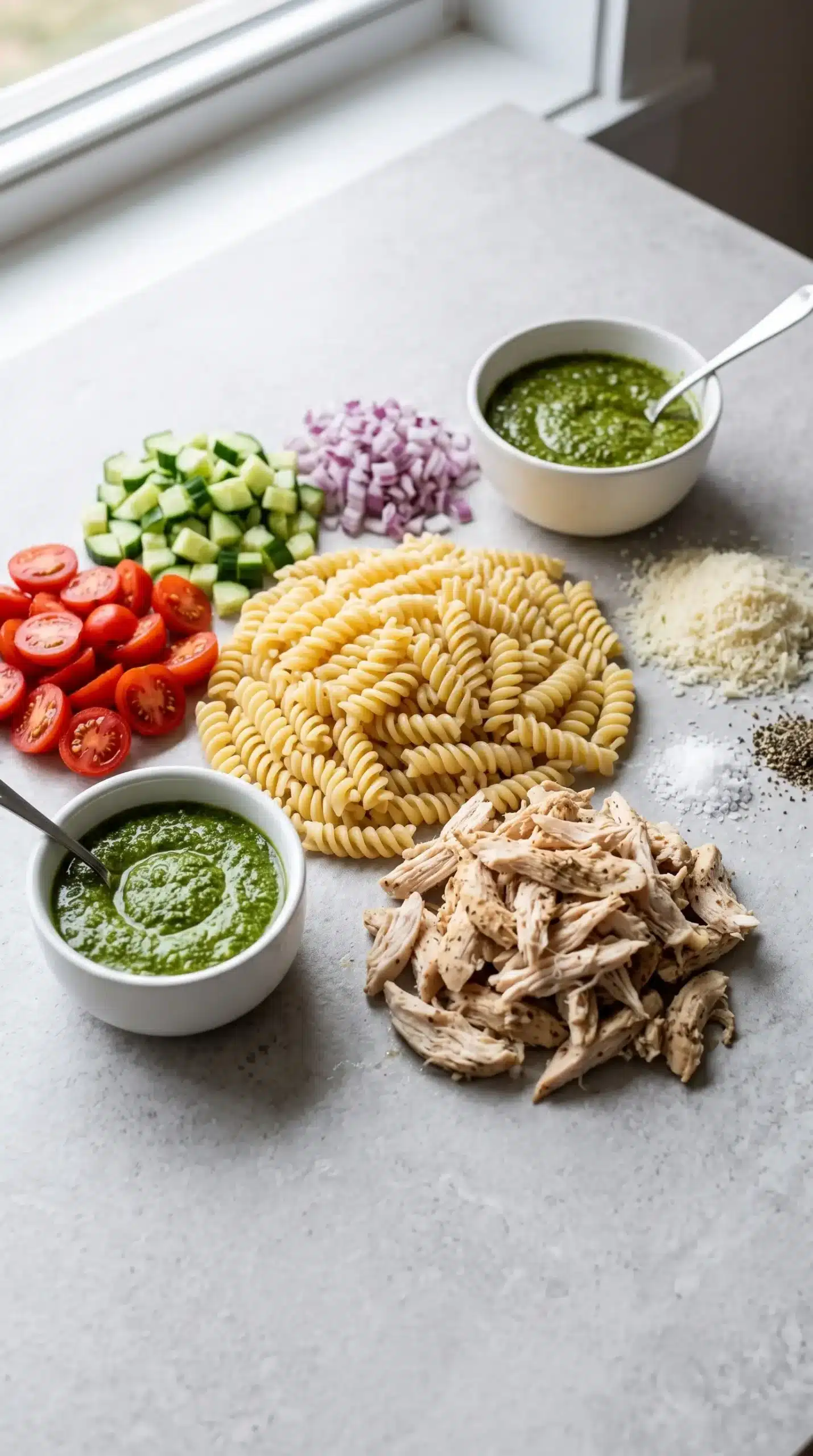
Pasta forms the substantial base, while tender shredded chicken gives the salad its main protein. Using seasoned chicken breast keeps the meat flavorful enough to complement the pesto without overpowering it. Cherry tomatoes and cucumber bring fresh texture, and diced red onion contributes a sharper accent that keeps the pesto from making the mixture feel one-note.
Basil pesto ties the ingredients together without requiring a separate dressing. Since the pesto is mixed directly into the bowl, it is useful to distribute it thoroughly so the pasta, chicken, and vegetables receive an even coating.
Salt and pepper provide the finishing seasoning, while Parmesan can be added at serving for an optional savory topping. Keeping the seasoning simple lets the basil pesto remain an identifiable part of the finished flavor.
Fresh Vegetables Keep the Pasta Salad Lively
Cherry tomatoes are halved so their fresh, juicy texture can mingle easily with the pasta and chicken. Cucumber is diced into small pieces, giving the salad a crisp contrast to the softer cooked ingredients.
Red onion is used in a smaller amount than the tomatoes or cucumber, which makes it a supporting flavor instead of the dominant one. Dicing it finely also helps distribute its flavor throughout the bowl.
Additional vegetables can be introduced when desired. Bell peppers, spinach, zucchini, or carrots are suitable choices mentioned for this salad, allowing the vegetable mix to change while keeping the basic pesto-and-pasta combination intact.
Short Pasta Makes Every Forkful Easy to Combine
Short pasta shapes such as penne, fusilli, or rotini work particularly well because their compact forms are easy to combine with shredded chicken and diced vegetables. Whole grain pasta is another option when adding more fiber is a priority.
The important consideration is how comfortably the pasta sits among the other ingredients. Large or awkward shapes would make the salad less cohesive, while short pasta keeps the chicken, vegetables, and pesto close together in each serving.
| Pasta choice | Why it fits | Best consideration |
|---|---|---|
| Penne | Short shape that mixes easily with the other ingredients | Useful for a straightforward pasta salad texture |
| Fusilli | Compact shape that works well with pesto | Good when you want the sauce distributed through the pasta |
| Rotini | Short pasta suited to mixed salads | Convenient for combining with shredded chicken and vegetables |
| Whole grain pasta | Provides an option with added fiber | Use when fiber is a priority |
Mixing Order Protects the Texture
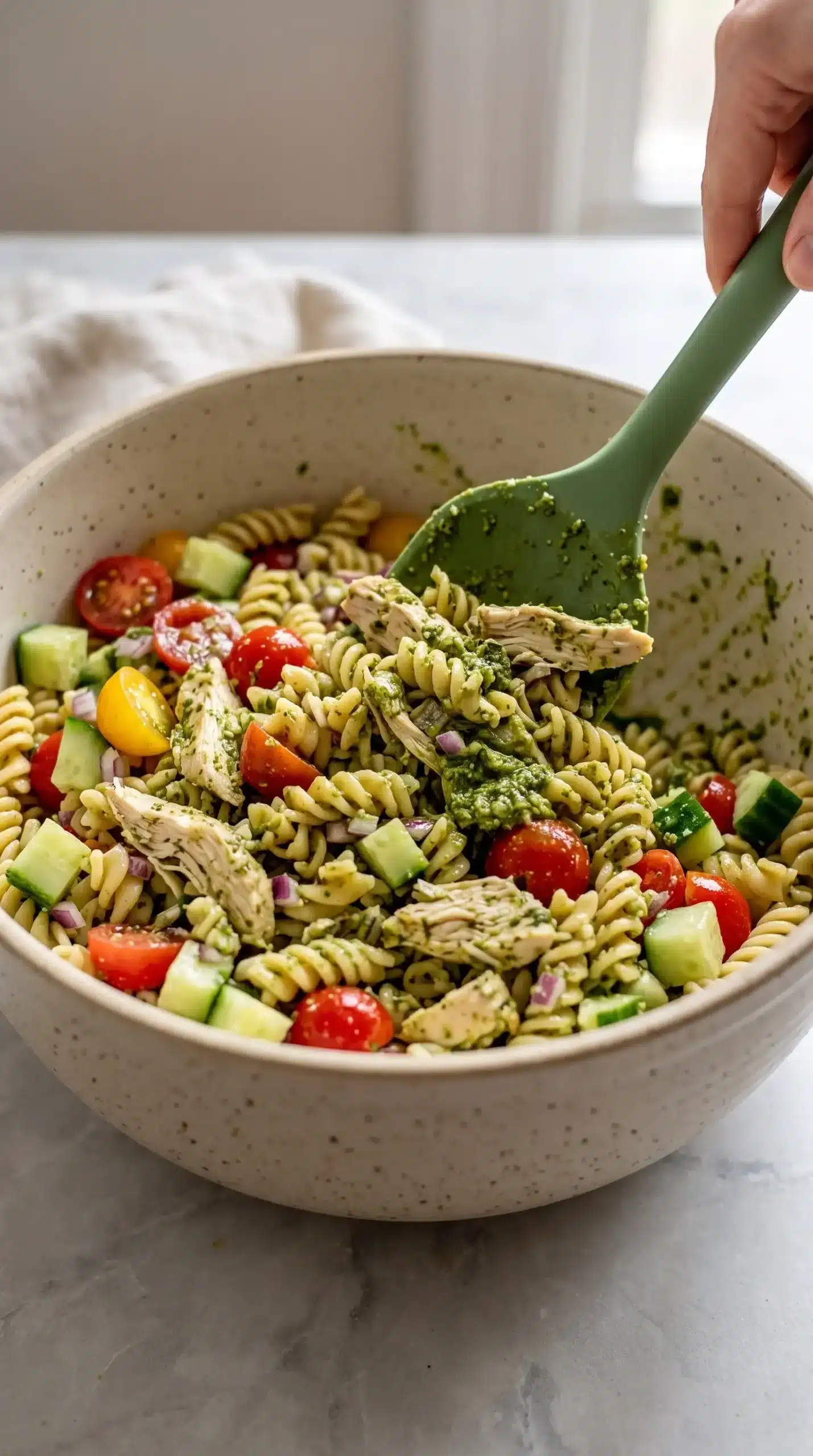
Begin with the cooked pasta, shredded chicken, cherry tomatoes, cucumber, and red onion in a large bowl. Keeping the vegetables intact during the initial combination helps maintain their individual textures.
Basil pesto should be mixed through the combined ingredients until the coating is even. A thorough toss matters here because an unevenly distributed pesto can leave some bites heavily dressed while others taste comparatively plain.
Seasoning comes after the pesto has been incorporated. Salt and pepper can then be adjusted according to the flavor of the finished mixture, with Parmesan available as an optional topping when the salad is served.
One Hour of Chilling Changes the Serving Experience
Chicken pesto pasta salad can go directly from mixing to serving, but chilling it in the refrigerator for an hour is also supported by the recipe. That option is particularly useful when preparing the dish before guests arrive or when a colder pasta salad is preferred.
Cold serving emphasizes the refreshing character of the cucumber and tomatoes, while room-temperature serving keeps the dish convenient for settings where refrigeration is not part of the immediate serving routine.
Easy Chicken Pesto Pasta Salad Adjustments
Whole grain pasta offers a simple way to change the base without changing the overall concept. The vegetable mixture is also flexible, with bell peppers, spinach, zucchini, or carrots providing alternatives to the listed produce.
Store-bought basil pesto can replace homemade pesto when convenience matters, while homemade pesto offers a fresh-from-scratch alternative when you want to prepare the sauce yourself.
Protein can also be changed for a different version. Shrimp or turkey are suggested alternatives, and the pesto itself can be varied with spinach or arugula for a different herb-and-green profile.
- For more fiber: choose whole grain pasta.
- For more vegetable variety: add options such as bell peppers, zucchini, carrots, or spinach.
- For convenience: use store-bought basil pesto.
- For a different protein: try shrimp or turkey.
Seasoning Works Best After the Pesto Is Mixed
Pesto already supplies the primary flavoring for the salad, so seasoning should be handled after the coating has been distributed. This makes it easier to judge how much salt and pepper the combined ingredients need.
Parmesan is optional and belongs at serving time. Because it is a topping instead of a required part of the mixture, it can be added according to preference without changing the basic preparation.
Common Chicken Pesto Pasta Salad Mistakes to Avoid
Uneven pesto distribution is one problem that can affect the eating experience. If the pesto is not mixed thoroughly, the salad can have concentrated pockets of sauce instead of a consistent coating. Tossing the ingredients carefully until everything is evenly covered addresses that issue.
Overshadowing the pesto with excessive red onion is another avoidable imbalance. The supplied proportions use considerably less onion than tomato or cucumber, so keeping the onion diced and appropriately portioned preserves its supporting role.
Serving without seasoning can also leave the finished bowl tasting flat. Salt and pepper are part of the stated preparation, and they should be added after the pesto has been incorporated so the completed mixture can be assessed before serving.
Room-Temperature Serving Fits Casual Meals
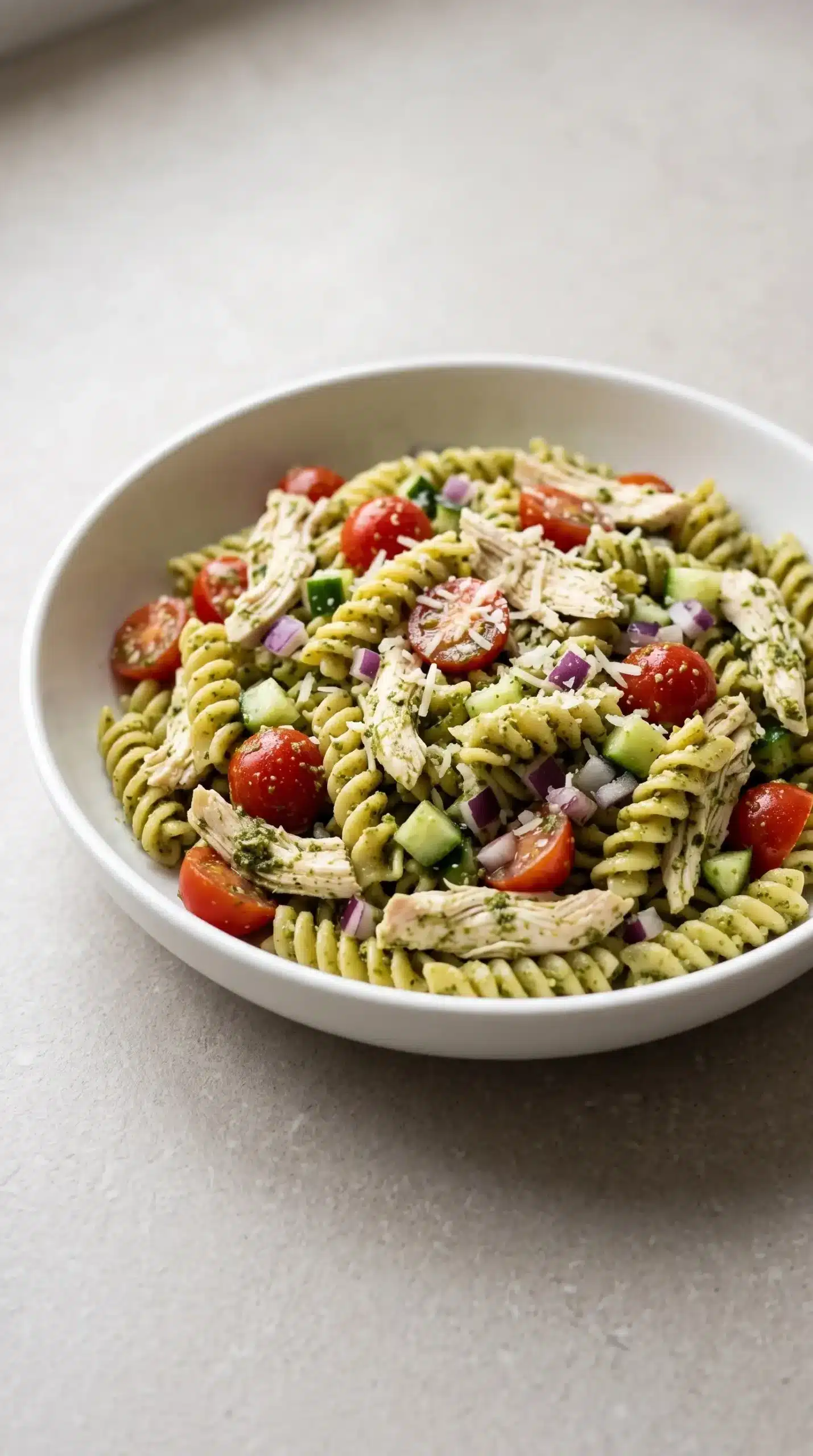
Cold or room-temperature serving makes chicken pesto pasta salad adaptable to different meal settings. It can stand on its own for a light lunch or accompany another dish when a broader spread is being served.
Garlic Bread or Greens Complete the Plate
Garlic bread provides a simple pairing for the pasta salad, while a fresh green salad keeps the meal centered on vegetables. Either option can turn the bowl into a more complete meal without changing the preparation of the pasta salad itself.
Refrigeration Keeps Leftovers Ready for Another Meal
Leftover chicken pesto pasta salad should be placed in an airtight container and refrigerated. It keeps well for up to 2 days, making the salad practical for a short meal-preparation window.
Before serving leftovers, give the mixture a good stir. Pesto may settle toward the bottom during storage, so redistributing it helps restore a more even coating throughout the salad.
Chicken Pesto Pasta Salad Makes Short-Window Meal Prep Practical
Portioned servings make the salad convenient for quick lunches during the short period in which it keeps well. Preparing the mixture in advance also allows the flavors and textures to be ready without assembling each serving separately.
For an easy chicken pesto pasta salad, the most useful preparation choice is to keep the components evenly combined and store portions promptly in the refrigerator. The short storage window means planning around the next couple of days is more suitable than treating the salad as a long-term make-ahead dish.
Chicken Pesto Pasta Salad Depends on Even Coating and Fresh Contrast
Evenly distributed basil pesto is the key connection between the pasta, chicken, tomatoes, cucumber, and red onion. Once the coating is consistent, the fresh vegetables can provide their intended contrast while the chicken and pasta give the bowl substance.
A careful stir before serving becomes especially important after refrigeration because pesto may settle. That small handling detail preserves the balanced texture and flavor that make chicken pesto pasta salad useful for both immediate meals and short-term preparation ahead.
Chicken Pesto Pasta Salad Questions About Storage and Serving
Can chicken pesto pasta salad be made ahead?
Yes. The salad can be prepared in advance and chilled for an hour before serving. Making it ahead is particularly convenient for lunches, picnics, or gatherings where you want the bowl ready before serving time.
What can replace basil pesto?
For a different flavor profile, the supplied variation suggests changing the greens used in pesto, such as spinach or arugula. Store-bought basil pesto can also be used when the goal is convenience instead of making pesto at home.
Can I make a gluten-free chicken pesto pasta salad?
Yes. Use gluten-free pasta in place of standard pasta. The rest of the listed preparation can remain the same, provided the pesto and other chosen ingredients fit the dietary requirements as well.
Why should the salad be stirred before serving leftovers?
Pesto can settle at the bottom while the salad is refrigerated. Stirring redistributes the pesto through the pasta, chicken, and vegetables so the dressing is not concentrated in one part of the container.
Can I add more vegetables to the salad?
Yes. Bell peppers, zucchini, carrots, or spinach can be added to increase the vegetable variety. These additions let you adjust the mixture while retaining the core combination of pasta, chicken, pesto, and fresh produce.
What other proteins work in pesto chicken pasta salad?
Shrimp or turkey can be used as alternatives to chicken. Either option changes the protein while preserving the pesto-based pasta salad concept and the accompanying vegetables.
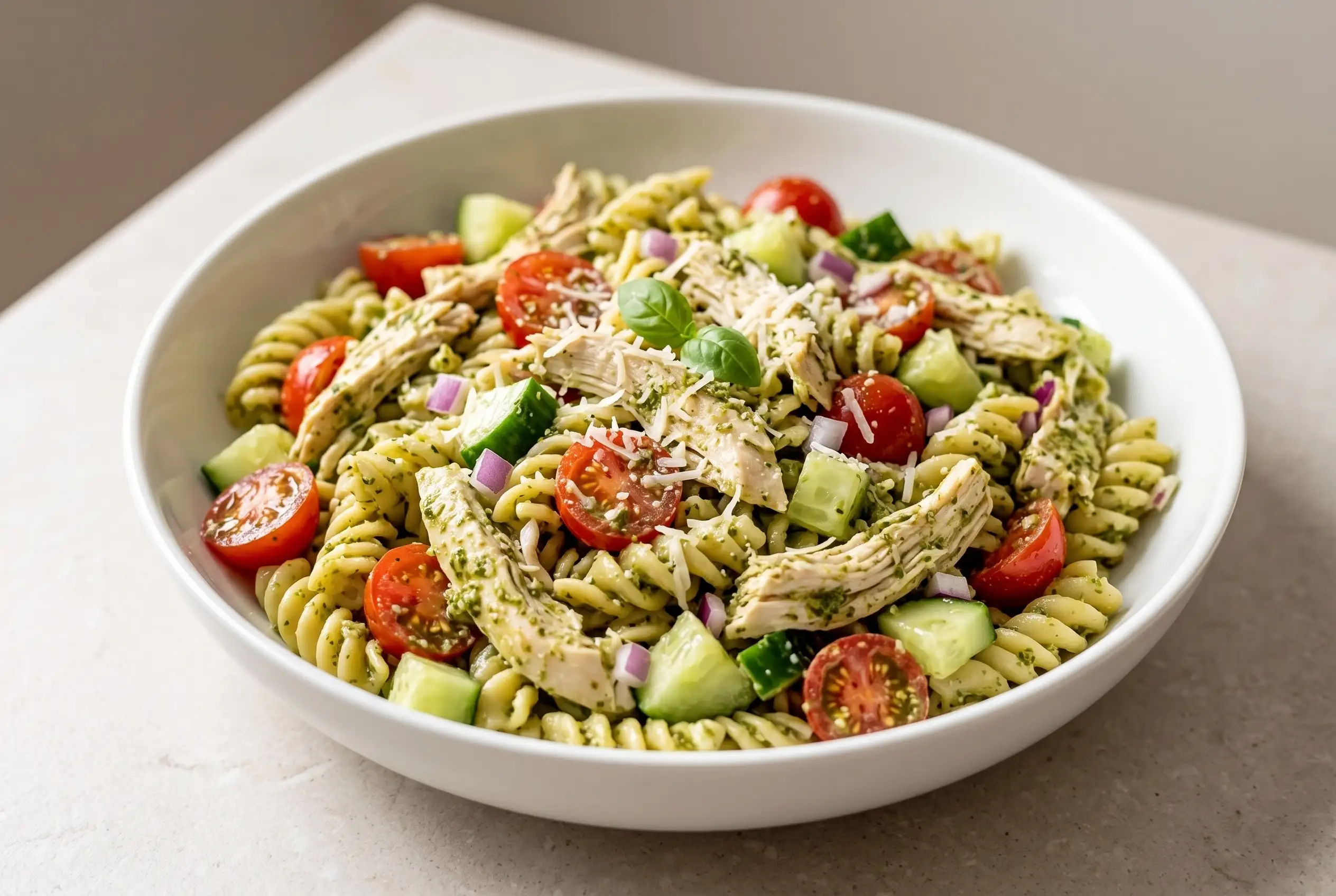
Chicken Pesto Pasta Salad with Cucumber and Tomatoes
Ingredients
Method
- Place the cooked pasta, shredded chicken, halved cherry tomatoes, diced cucumber, and diced red onion in a large bowl.
- Add the basil pesto and toss until the pasta, chicken, and vegetables are evenly coated.
- Season with salt and pepper to taste.
- Serve immediately or refrigerate the pasta salad for 1 hour before serving.
- Add Parmesan cheese on top if desired.