Red Curry Noodle Soup with Coconut Milk and Fresh Herbs
Red Curry Noodle Soup brings together red curry paste, coconut milk, vegetable broth, rice noodles, fresh herbs, and lime in one warm, creamy bowl. The combination is simple enough for a quick meal while still giving the soup a rich curry character, fresh herbal notes, and a bright citrus finish.
A Creamy Broth Gives Red Curry Noodle Soup Its Character
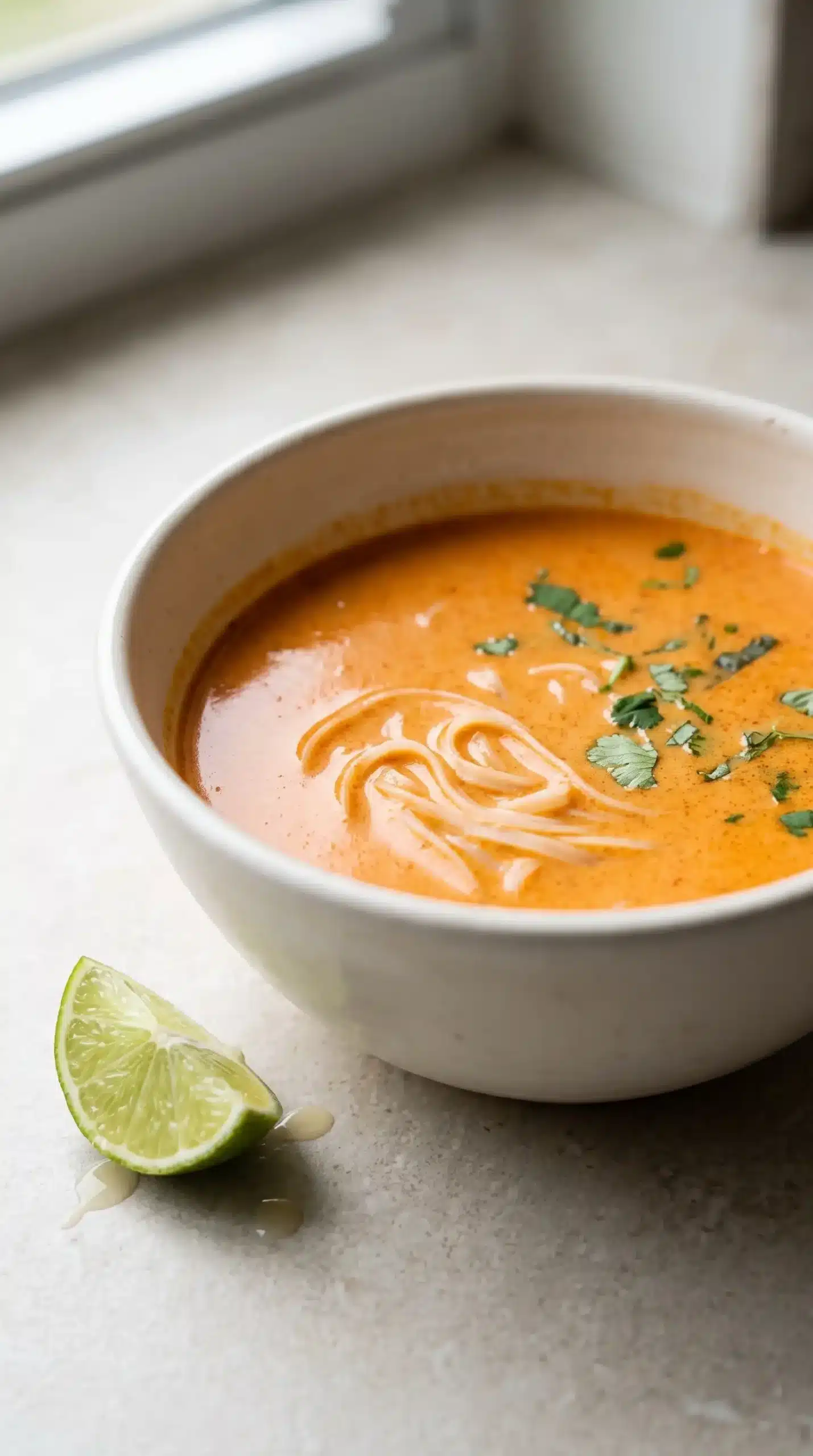
The broth is built around two contrasting elements: red curry paste and coconut milk. Curry paste provides the concentrated flavor base, while coconut milk gives the liquid a creamy texture. Vegetable broth then extends the mixture into a soup that can carry the noodles without becoming overly heavy.
Lime juice changes the character of the finished bowl by adding brightness after the noodles have cooked. Cilantro and basil contribute fresh herbal flavor, making the soup feel more layered than the short ingredient list might suggest.
Rice noodles complete the bowl with a tender, satisfying texture. Because they cook directly in the simmering broth, they become part of the soup rather than simply serving as a separate addition.
Red Curry Paste and Coconut Milk Need the Right Balance
Red curry paste is the ingredient that establishes the soup’s curry flavor, so its amount can be adjusted according to how much heat you prefer. Starting with the stated amount gives the broth its intended curry foundation, while chili flakes can provide additional heat at serving.
Coconut milk softens the sharper character of curry paste and creates the creamy quality associated with coconut red curry noodle soup. It also means the broth does not need a long cooking period to develop a rounded texture.
- Curry paste: Heat it briefly in the pot before adding liquid so its flavor becomes the foundation of the broth.
- Coconut milk: Stir it together with vegetable broth until the liquids are evenly combined.
- Lime juice: Add it after the noodles are cooked so its fresh acidity remains part of the finished flavor.
Rice Noodles Make the Soup Quick to Finish
Rice noodles are particularly useful here because they cook in the simmering soup itself. The supplied cooking time is usually about four to six minutes, although the package instructions should guide the exact cooking point.
Watching the noodles closely matters because they continue to interact with the broth as they soften. Once they reach the appropriate texture, the herbs, lime juice, and salt can be stirred in immediately.
Fresh Herbs Change the Finish of Each Bowl
Cilantro and basil are stirred in after the noodles are cooked, giving the finished soup a fresh herbal layer. Keeping them toward the end of the cooking process preserves their role as a bright finishing element instead of allowing them to disappear into the broth during a longer simmer.
How the Broth Comes Together Without a Long Simmer
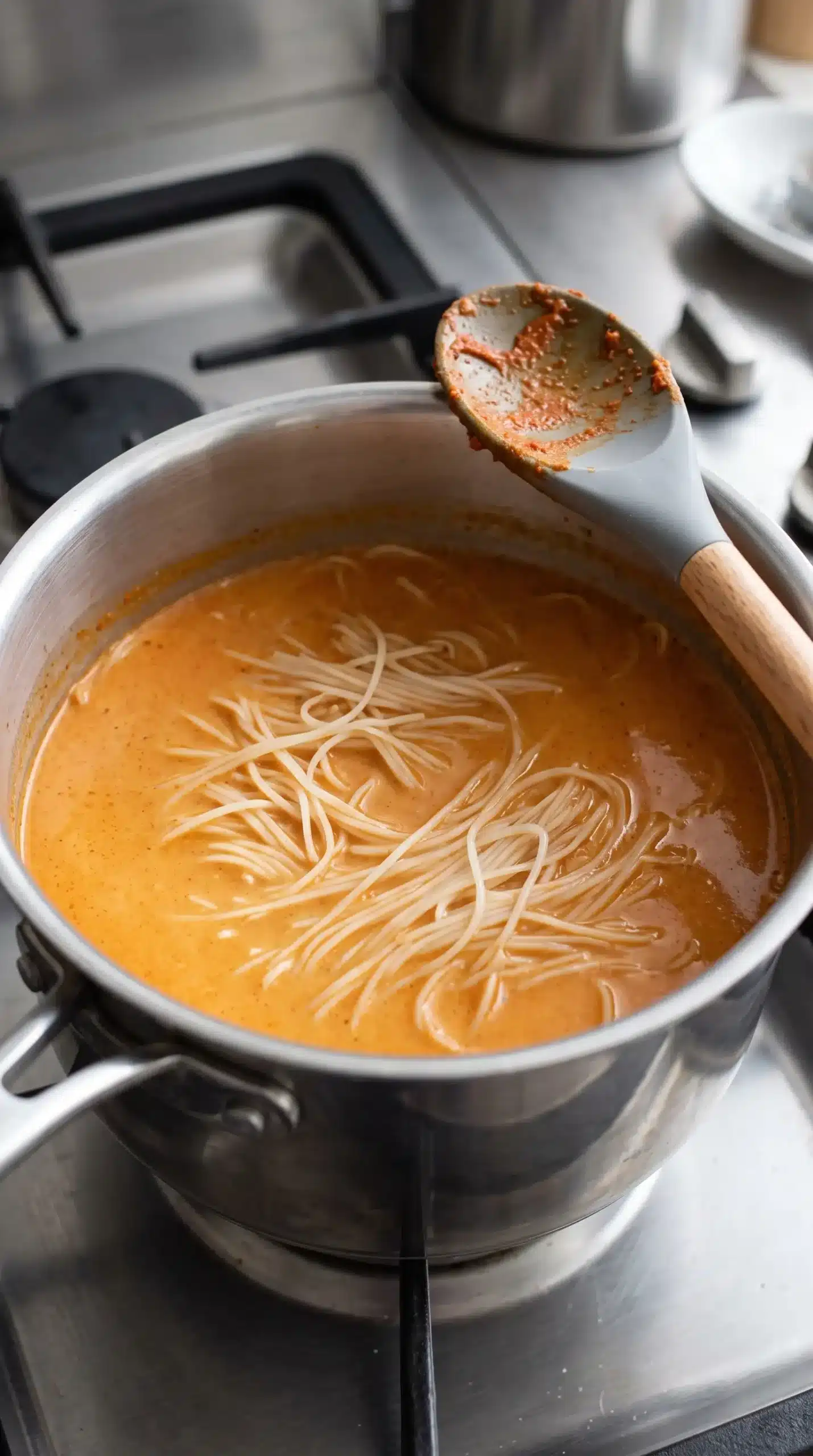
Heating the red curry paste for one to two minutes over medium heat creates the starting point for the broth. The paste is then combined with coconut milk and vegetable broth, allowing the liquid base to become smooth before the noodles enter the pot.
A simmer is enough to move the soup into its noodle-cooking stage. There is no need to describe the process as a long braise or extended soup simmer, because the supplied method is deliberately short and centers on cooking the noodles directly in the prepared broth.
Once the rice noodles are ready, the remaining finishing ingredients go in together. Cilantro, basil, lime juice, and salt are added at that point, followed by serving the soup hot.
Serving Red Curry Noodle Soup With a Fresh Finish
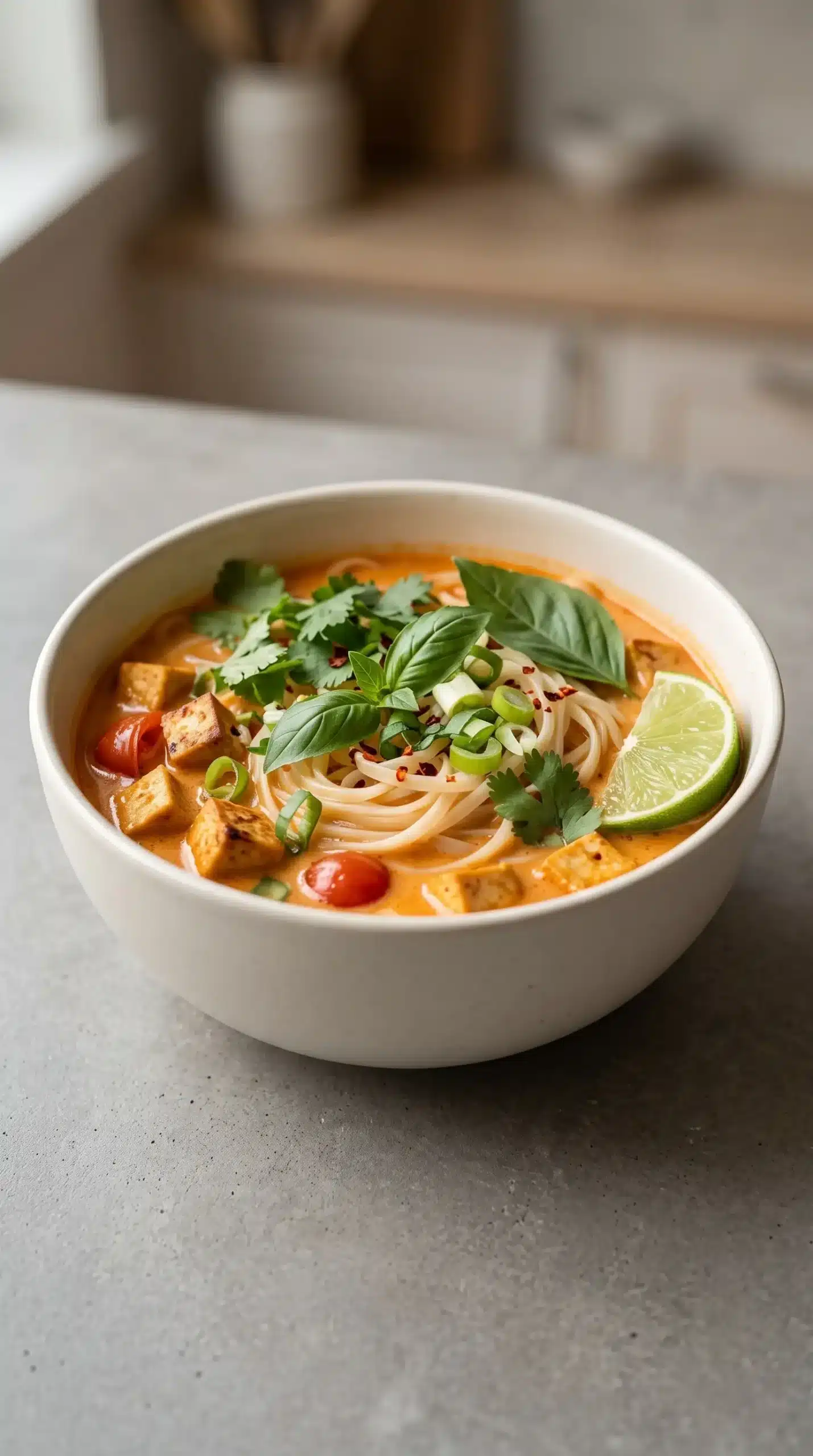
Hot bowls make the most of the creamy curry broth and tender noodles. Extra cilantro or basil can be placed over each serving when a stronger fresh-herb presence is wanted.
Chili flakes work as a finishing adjustment rather than a required part of the base soup. Anyone who enjoys more heat can sprinkle them over an individual bowl, making it possible to keep the main pot at its prepared level of spice.
Three Ways to Adjust the Bowl Without Changing Its Base
The basic combination can accommodate several additions while retaining the defining curry, coconut, noodle, herb, and lime elements.
| Adjustment | What changes | Best use |
|---|---|---|
| Extra vegetables | Adds more texture and variety | Bell peppers or broccoli |
| Tofu or cooked chicken | Makes the bowl more substantial | A heartier meal |
| Soba or udon | Changes the noodle texture | A different noodle style |
These changes work as variations because the broth remains the central flavor structure. Adding vegetables, tofu, cooked chicken, or another noodle type changes the eating experience without requiring a completely different soup concept.
When a meat-free variation needs more substance, lentils can be paired with coconut milk and red curry paste while lime keeps the broth bright, as in Thai coconut lentil soup with red curry paste and lime.
Thai Red Curry Noodle Soup Can Take a Different Noodle Direction
Soba or udon can replace the rice noodles when a different noodle style is preferred. The original rice noodle version has the advantage of fitting naturally into the stated cooking method, while alternate noodles provide a way to change the texture of the finished bowl.
Protein additions can also make the soup more substantial. Cooked chicken or shrimp can be used as variations, while tofu provides another option. These additions are separate from the core broth and can be selected according to the type of bowl desired.
For a vegan version, animal-based ingredients should be omitted. The vegetable broth, coconut milk, curry paste, noodles, herbs, and lime provide the established foundation, but the curry paste and any packaged ingredients should still be checked when following a specific dietary requirement.
Small Cooking Choices Protect the Soup’s Texture
Medium heat is appropriate while the curry paste is heated, helping keep the opening stage controlled. Once the liquids are added, bringing the mixture to a simmer provides the environment needed for the rice noodles to cook.
Package directions deserve attention because rice-noodle type and thickness can affect cooking time. The supplied method gives four to six minutes as a usual range, but the package remains the most direct guide for the particular noodles being used.
Common Red Curry Noodle Soup Mistakes to Avoid
One easy mistake is treating the curry paste as though it belongs only at the end. The supplied method heats it briefly at the beginning, establishing the flavor before the coconut milk and broth are introduced.
Another problem can occur when the noodles are left in the pot longer than needed. Rice noodles can absorb liquid as they sit, which is also why leftover soup may need a little broth or water when reheated.
Adding the herbs and lime too early would also change their role in the finished soup. They are specifically added after the noodles have cooked, so keeping them for that stage preserves the fresh finishing character described for the dish.
Reheating Leftover Red Curry Noodle Soup
Leftovers can be kept in an airtight container in the refrigerator for about three days. Keeping the soup sealed helps it remain suitable for reheating while the noodles continue to absorb some of the surrounding liquid during storage.
When reheating, use either the stove or microwave and warm the soup until hot. If the broth has become noticeably thicker because the noodles absorbed liquid, a small amount of broth or water can restore a looser soup consistency.
What Makes This Easy Red Curry Noodle Soup Practical
The cooking approach keeps the process focused on a single pot and a short sequence of decisions. Curry paste is heated first, the two liquids form the broth, and the noodles cook directly in that mixture.
Fresh herbs and lime finish the soup without requiring a separate sauce or complicated garnish. That combination makes the bowl suitable for a quick lunch or dinner while retaining several distinct flavors.
The flexibility also comes after the basic soup is established. Spice can be adjusted with curry paste or chili flakes, vegetables can be added, and tofu or cooked chicken can make the bowl more filling.
Red Curry Noodle Soup Works Best When the Broth and Noodles Stay Balanced
The creamy broth needs enough liquid to support the rice noodles, while the noodles should be cooked only until they reach the appropriate texture. Since they can continue absorbing liquid after cooking, attention to noodle doneness also affects how the soup feels in the bowl.
Red Curry Noodle Soup Questions About Spice, Storage, and Substitutions
How can the spice level be adjusted?
Adjust the amount of red curry paste according to your preferred heat level, then use chili flakes at serving if additional spice is wanted in individual bowls.
Can Red Curry Noodle Soup be prepared ahead?
Yes. Prepared soup can be stored in an airtight container in the refrigerator for about three days. When reheating, adding a little broth or water can help loosen the liquid if the noodles have absorbed some of it.
Can Red Curry Noodle Soup be frozen?
Freezing is not recommended because the rice noodles may become mushy after thawing, which can change the texture of the finished soup.
What can replace coconut milk?
Almond milk or soy milk can be used if coconut milk is not preferred. The substitution will change the flavor of the soup, so the finished bowl will not have exactly the same coconut character.
Can I use another type of noodle?
Soba or udon can be used as alternatives to rice noodles. Changing the noodle type will alter the texture while keeping the curry-coconut broth as the central element.
How can the soup become more filling?
Tofu or cooked chicken can be added when a more substantial bowl is desired. Shrimp is another suggested protein variation, while vegetables such as bell peppers or broccoli can add additional substance and texture.
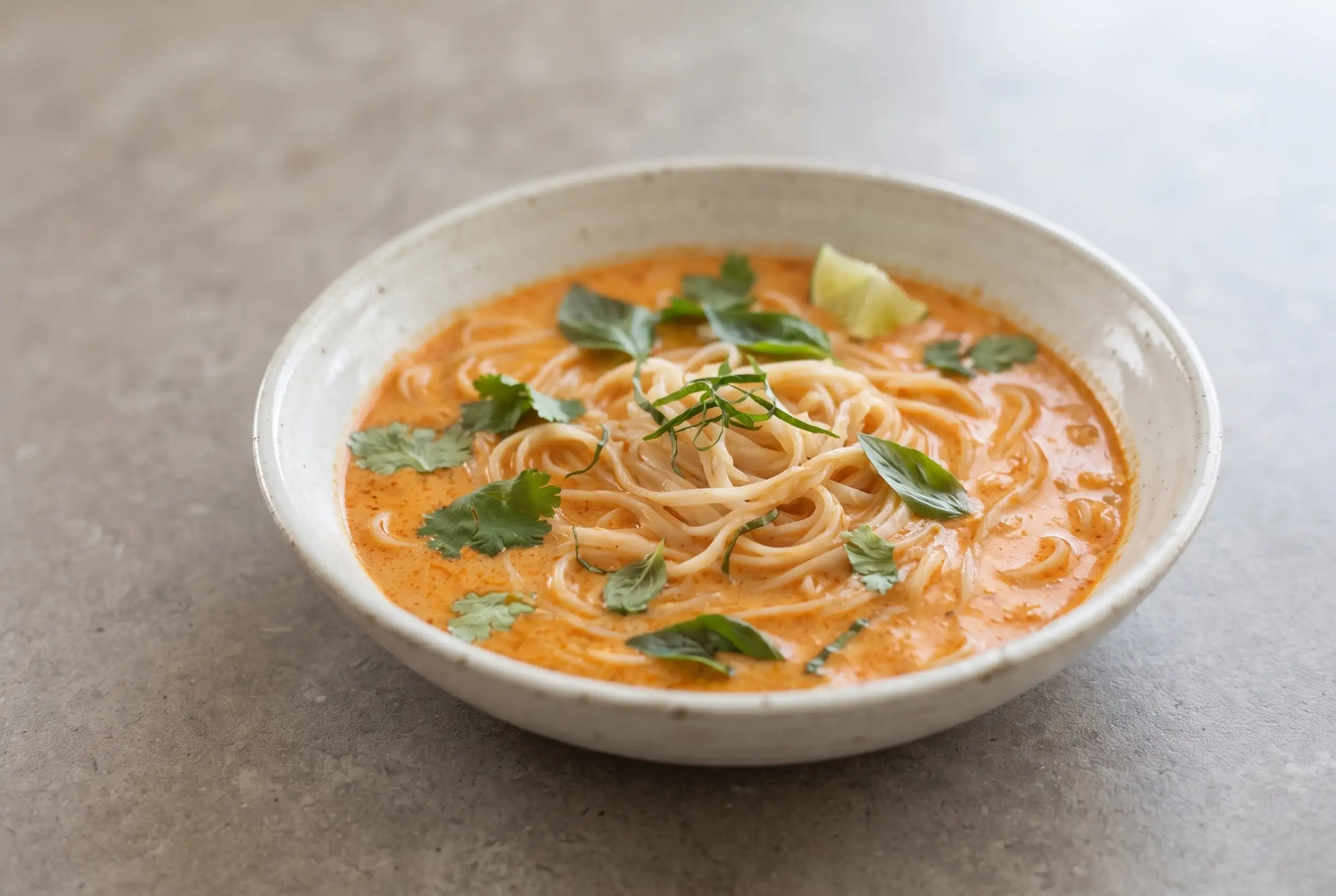
Red Curry Noodle Soup with Coconut Milk and Fresh Herbs
Ingredients
Method
- Place the red curry paste in a large pot over medium heat and cook for 1 to 2 minutes.
- Pour in the coconut milk and vegetable broth, stirring to combine thoroughly.
- Heat the mixture until it reaches a simmer.
- Add the rice noodles and cook according to the package instructions, usually 4 to 6 minutes, until tender.
- Add the cooked rice noodles, cilantro, basil, lime juice, and salt to the soup, stirring to combine.
- Serve hot, adding chili flakes on top if desired.