High Protein Beef Pasta with Creamy Tomato Sauce Recipe
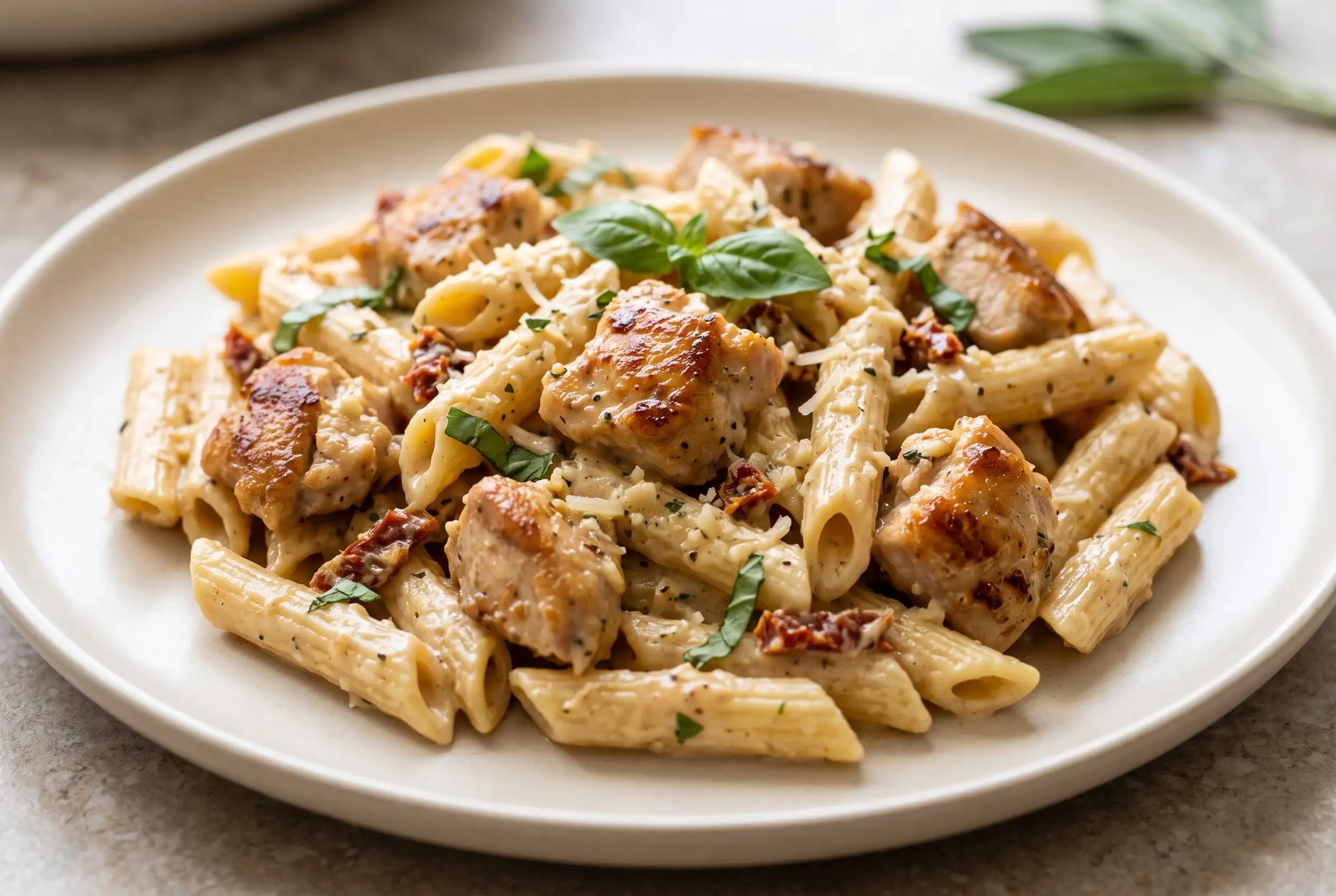
High protein beef pasta brings together browned ground beef, tomato sauce, vegetables, and a creamy finish in one skillet. The combination works especially well with chickpea or lentil pasta, while regular penne, rotini, or rigatoni can also be used. Greek yogurt, light cream, or smoothly blended cottage cheese gives the sauce a creamy texture without relying on heavy cream.
High protein beef pasta for a creamy skillet meal
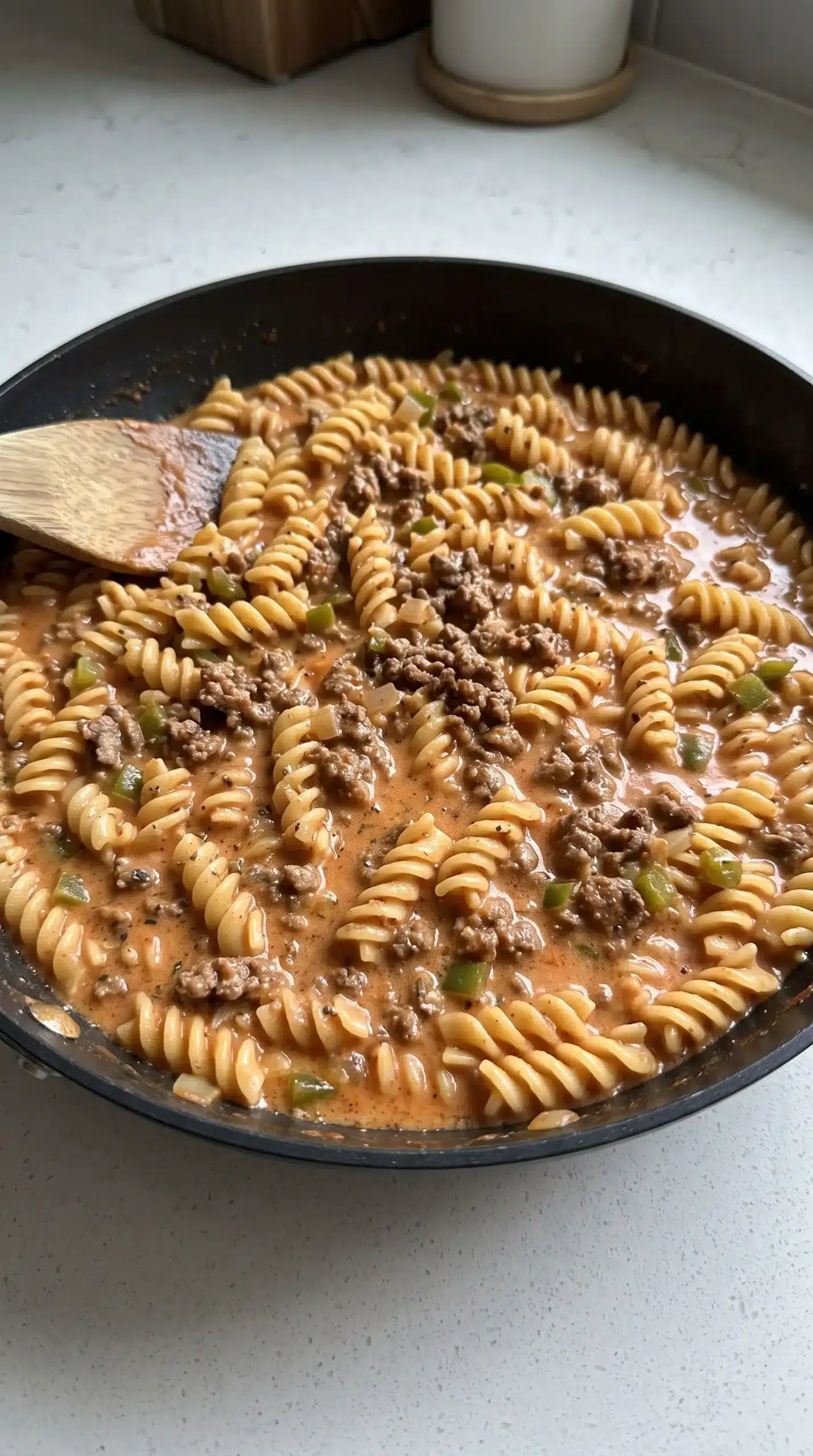
Ground beef gives the sauce its savory base, while onion and green bell pepper soften into the tomato mixture. Garlic, oregano, and paprika build the seasoning around those ingredients, so the finished sauce has more depth than tomato sauce alone.
Tomato paste plays an important supporting role because it is cooked briefly before the tomato sauce goes into the skillet. That short cooking period helps deepen its flavor and keeps the sauce from tasting flat.
Cooked pasta is tossed directly with the finished sauce, allowing the creamy mixture to coat the noodles or shapes evenly. Reserved pasta water provides another way to adjust the consistency without adding more cream.
What gives the creamy beef pasta its texture
Greek yogurt, light cream, and blended cottage cheese can each create the creamy element, but they bring slightly different qualities to the finished sauce. Greek yogurt and cottage cheese are especially useful when the focus is on keeping protein prominent.
A smooth texture matters when using cottage cheese, so blending it before adding it to the skillet helps it integrate into the tomato base. Greek yogurt can be stirred in once the heat has been lowered, keeping the creamy component separate from the earlier tomato-simmering stage.
Light cream offers a straightforward creamy finish, while the other options make it possible to keep the sauce creamy without making heavy cream the defining ingredient. Whichever option is chosen, reserved pasta water can help the sauce move smoothly around the pasta.
Pasta choice changes protein and texture
Chickpea or lentil pasta is a useful choice when increasing the protein content of high protein beef pasta, while regular pasta remains a suitable option. Penne, rotini, and rigatoni all provide shapes that can carry the tomato-based sauce.
Tomato paste needs a short cook
Cooking tomato paste for 1–2 minutes before adding tomato sauce gives its concentrated flavor time to develop; cooking tomato paste before adding liquid can deepen its savory character. Skipping that brief stage can leave the paste tasting more raw and less integrated into the sauce.
Building savory flavor without heavy cream
Onion and green bell pepper form the vegetable base, and finely dicing them helps them soften evenly in the skillet. Their softer texture allows them to blend into the sauce instead of remaining large pieces alongside the beef.
Garlic, oregano, paprika, salt, and black pepper provide the main seasoning profile. Adding seasoning as the beef cooks and the vegetables soften gives the sauce multiple points where flavor can be adjusted.
Tomato sauce supplies the smooth liquid base after the tomato paste has cooked briefly. A five-to-seven-minute simmer gives the tomato sauce and ground beef time to develop before the creamy element is added over lower heat.
Keep pasta water ready for sauce control
Reserved pasta water is useful when high protein beef pasta becomes thicker than desired after the creamy element and cooked pasta are combined. Add it gradually, stopping when the sauce loosens enough to coat the pasta without becoming watery.
Beef browning sets up the sauce
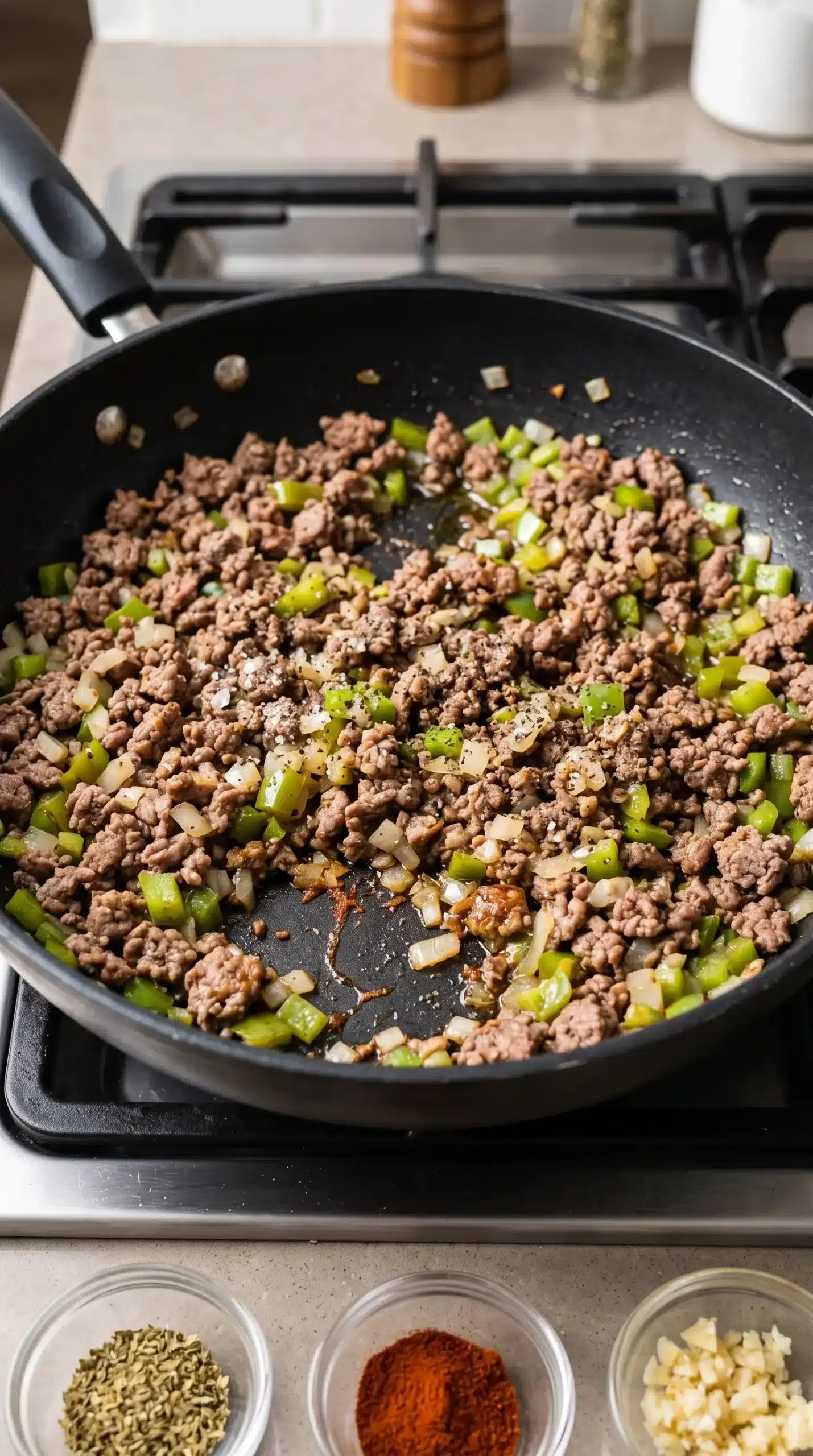
Lean ground beef is browned in olive oil over medium heat before the vegetables are added. Seasoning the beef with salt and pepper at this stage establishes a savory base that carries through the tomato sauce.
Once the beef has browned, diced onion and green bell pepper can cook in the same skillet. The vegetables should soften before garlic, oregano, and paprika are stirred in, giving the aromatics a chance to blend with the beef.
High protein beef pasta benefits from keeping these stages distinct enough to observe the texture of each component. Browning the beef, softening the vegetables, cooking the tomato paste, and simmering the tomato sauce each serve a different purpose before the creamy finish is introduced.
Avoid these high protein beef pasta mistakes
Overlooking the tomato paste stage can leave the sauce with a sharper, less developed tomato flavor. Give the paste its brief 1–2-minute cook before adding tomato sauce, then allow the mixture to simmer for the stated period.
Adding the creamy element while the skillet is still at a high cooking temperature can work against the intended texture. Lower the heat first, then stir in Greek yogurt, light cream, or smoothly blended cottage cheese.
Pouring in too much pasta water at once can thin the sauce beyond the desired consistency. Add small amounts gradually and toss the cooked pasta through the sauce before deciding whether more liquid is needed.
Creamy element choices at a glance
The creamy component can be selected according to the texture and protein emphasis you want from high protein beef pasta. Each option fits the supplied method, but the handling is slightly different.
| Creamy element | Useful characteristic | Handling note |
|---|---|---|
| Greek yogurt | Creamy and protein-focused | Stir in after lowering the heat |
| Light cream | Simple creamy finish | Blend into the sauce over lower heat |
| Blended cottage cheese | Creamy texture with added protein | Blend smooth before adding |
Vegetable add-ins that fit the tomato sauce
Spinach, zucchini, and mushrooms can be added when you want more vegetables in the finished pasta. They work with the existing tomato, beef, garlic, oregano, and paprika profile without requiring a separate sauce.
- Spinach: Add it as a simple leafy vegetable addition to the finished sauce.
- Zucchini: Use it when a mild vegetable addition suits the tomato base.
- Mushrooms: Add them for a savory vegetable component that fits the beef and tomato combination.
Simple ways to vary the finished pasta
For a cheesier version, grated Parmesan or mozzarella can be added after the creamy sauce is prepared. The cheese changes the richness and texture without requiring a different cooking method.
Red pepper flakes provide a spicy variation using the same tomato-based sauce. Add them with the existing seasonings so the heat becomes part of the sauce rather than a separate topping.
Dairy-free adaptations can use blended cashews or coconut milk in place of the dairy-based creamy options. The change keeps the basic tomato-and-beef structure intact while altering the creamy component.
Storage keeps leftovers workable
Refrigerate leftover high protein beef pasta in an airtight container for up to 4 days. Keeping the leftovers sealed helps preserve the prepared pasta and sauce for later meals.
Reheating needs moisture
Refrigerated pasta can thicken as the sauce settles, so reheating works better when a small splash of water or milk is added. The added liquid helps loosen the sauce as it warms instead of leaving the pasta dry.
A stovetop or microwave can be used for reheating, depending on what is convenient. Stirring during the process helps redistribute the sauce around the pasta and makes it easier to judge whether additional liquid is needed.
For meal-prep portions, keep the reheating adjustment modest at first. High protein creamy pasta should regain a coated, creamy consistency without becoming overly loose, so add more liquid only when the sauce still needs it.
Serving high protein beef pasta without changing its balance
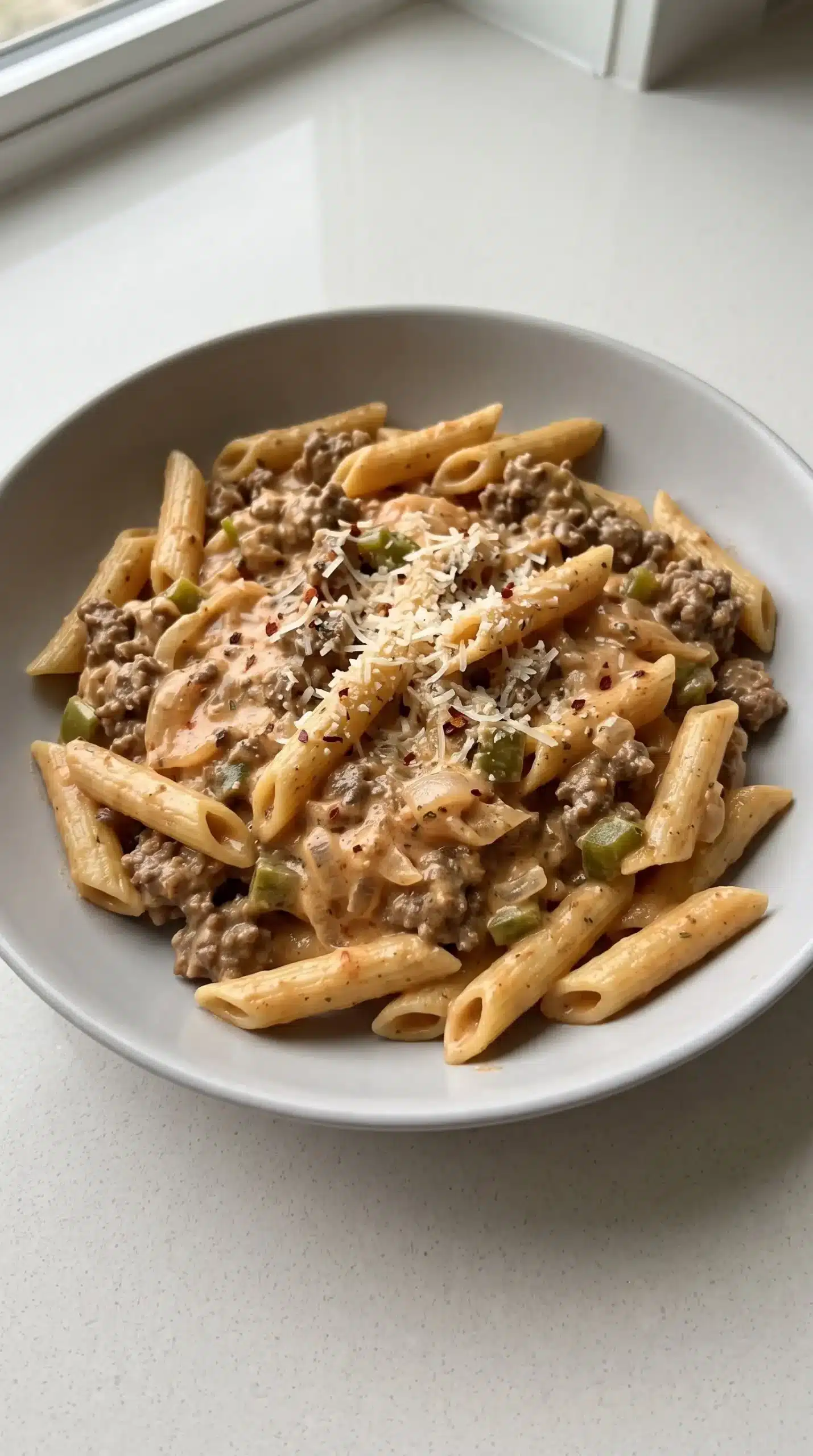
Serve the pasta once the cooked shapes are evenly coated with the creamy tomato sauce. Parmesan or mozzarella can be used for an extra-cheesy variation, while red pepper flakes provide a simple spicy finish.
High protein beef pasta works when the sauce stays loose
The key cooking judgment in high protein beef pasta is sauce consistency. Tomato paste needs enough time to develop, the tomato sauce needs its simmer, and the creamy element needs lower heat before everything is combined.
Once the pasta is tossed through the skillet, reserved pasta water gives you control over the final texture. A sauce that remains loose enough to coat the pasta will carry the beef, vegetables, tomato, and creamy element together without becoming unnecessarily heavy.
Questions about protein, creaminess, and leftovers
Which pasta works best for high protein beef pasta?
Chickpea or lentil pasta is the most direct choice when you want an additional protein boost. Penne, rotini, or rigatoni made with regular pasta can also be used successfully.
Can Greek yogurt make the sauce creamy?
Yes. Greek yogurt is one of the suggested creamy elements, and it should be stirred into the sauce after the heat has been lowered. Reserved pasta water can then help adjust the consistency.
How can cottage cheese be used without a lumpy texture?
Blend the cottage cheese until smooth before adding it to the sauce. That preparation makes it easier for the creamy component to combine with the tomato base.
What should I do if the creamy beef pasta sauce is too thick?
Add reserved pasta water gradually while tossing the cooked pasta with the sauce. Small additions let you loosen the mixture while keeping control over the final texture.
Can high protein creamy pasta be stored for later?
Yes. Refrigerate leftovers in an airtight container for up to 4 days, then reheat them with a splash of water or milk to loosen the sauce as it warms.
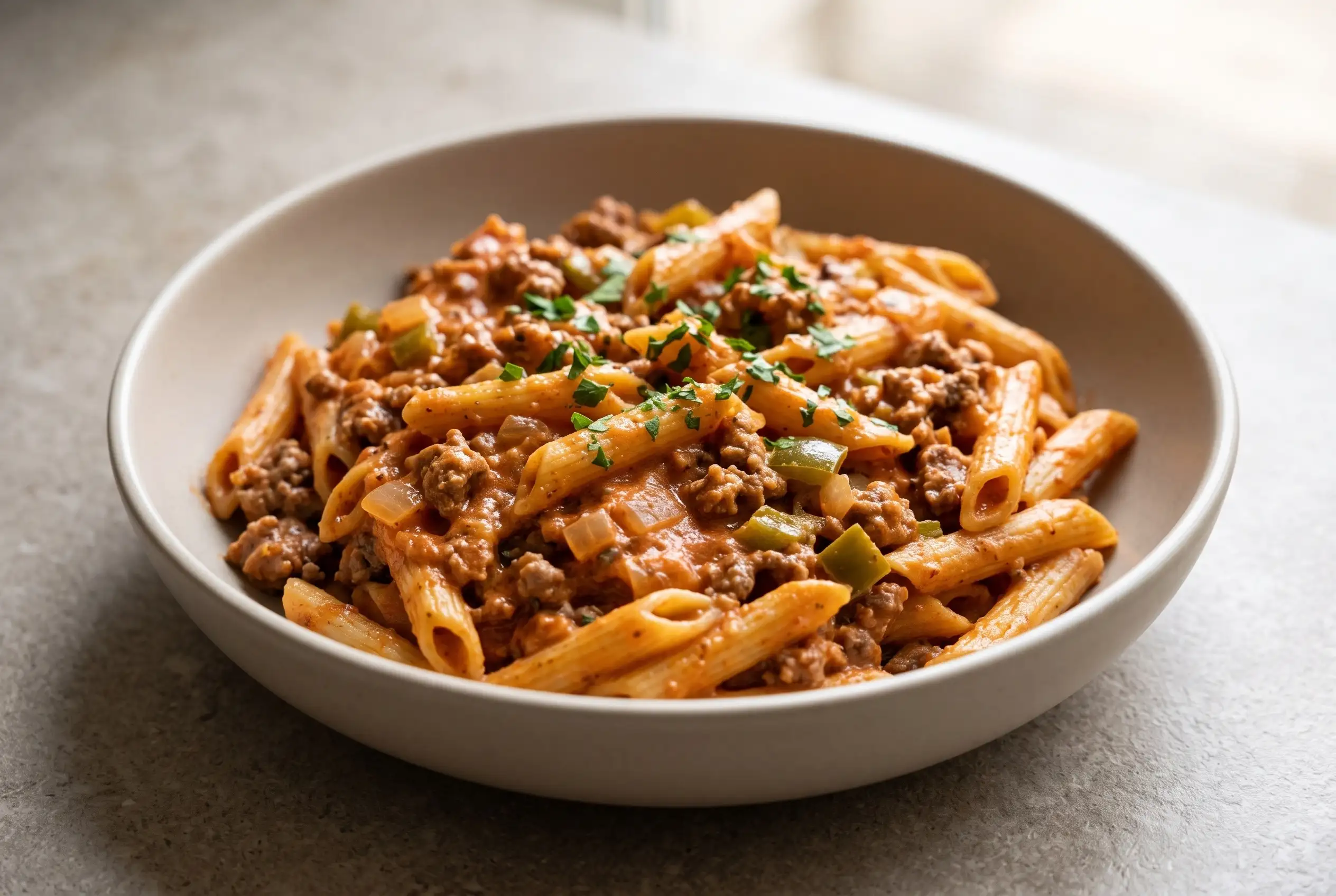
High Protein Beef Pasta with Creamy Tomato Sauce
Ingredients
Method
- Cook the chickpea or lentil pasta according to the package directions until al dente. Reserve 1/2 cup of the pasta water, then drain.
- Warm the olive oil in a large skillet over medium heat. Add the ground beef, 1/2 teaspoon salt, and 1/4 teaspoon black pepper. Cook until the beef is browned and fully cooked.
- Add the diced onion and green bell pepper. Cook until the vegetables have softened, then add the garlic, oregano, and paprika and cook briefly until fragrant.
- Mix the tomato paste into the beef and vegetables and cook for 1 to 2 minutes.
- Pour in the tomato sauce and simmer for 5 to 7 minutes.
- Lower the heat and blend in the Greek yogurt. Gradually add reserved pasta water until the sauce reaches the desired consistency.
- Add the drained pasta and toss until thoroughly coated in the creamy tomato sauce. Taste and adjust with the remaining salt and black pepper before serving.