Beef Kofta with Garlic Yogurt Sauce and Warm Spices
Beef kofta brings ground beef together with onion, garlic, parsley, and warm spices for a flavorful grilled dish that feels at home on a shared dinner table. Cumin, coriander, cinnamon, and cayenne create a balanced seasoning profile, while a cool garlic yogurt sauce gives each bite a creamy contrast.
Middle Eastern beef kofta is especially appealing when you want something flavorful without a complicated preparation. The mixture comes together in one bowl, can be shaped around skewers for grilling, and pairs easily with pita, salad, rice, or pickled vegetables. The key is keeping the mixture evenly seasoned and watching the cooking closely so the kofta stays tender.
What Makes Beef Kofta Distinctive
Beef kofta has a simple foundation, but its character comes from the combination of fresh aromatics and ground spices. Finely chopped onion and minced garlic are mixed directly into the beef, while fresh parsley brings a bright herbal note. Cumin and coriander provide the main savory spice profile, with cinnamon adding warmth and cayenne supplying a gentle kick.
Shape also matters because elongated portions cook differently from loose crumbles of ground beef. Forming the mixture around skewers creates a cohesive portion that can be turned on the grill. Keeping the pieces similar in size helps them cook more evenly from one side to the other.
Serving the kofta hot with garlic yogurt sauce gives the meal another layer of contrast. The seasoned beef has a warm, savory profile, while yogurt mixed with garlic, lemon juice, and salt offers a cool and creamy accompaniment.
The Spice Balance Behind Middle Eastern Beef Kofta
Cumin and coriander form the core of the seasoning. Their flavors are noticeable without requiring a long ingredient list, which makes them especially useful in a ground-beef mixture. Cinnamon is used in a smaller amount, so its role is to add warmth without taking over the savory spices.
Cayenne should remain a supporting flavor. The supplied amount gives the mixture some heat, while the sauce and fresh parsley help keep the overall bite balanced. If more heat is desired, additional cayenne can be used, or chopped fresh chili peppers can be incorporated into the mixture.
| Seasoning | Role in the kofta | Best handling choice |
|---|---|---|
| Cumin | Earthy, savory spice | Mix evenly through the beef |
| Coriander | Warm, aromatic seasoning | Distribute thoroughly with the other spices |
| Cinnamon | Subtle warmth | Keep its measured role in the spice blend |
| Cayenne | Heat | Adjust upward only if more spice is wanted |
Fresh Aromatics Keep the Beef Mixture Balanced
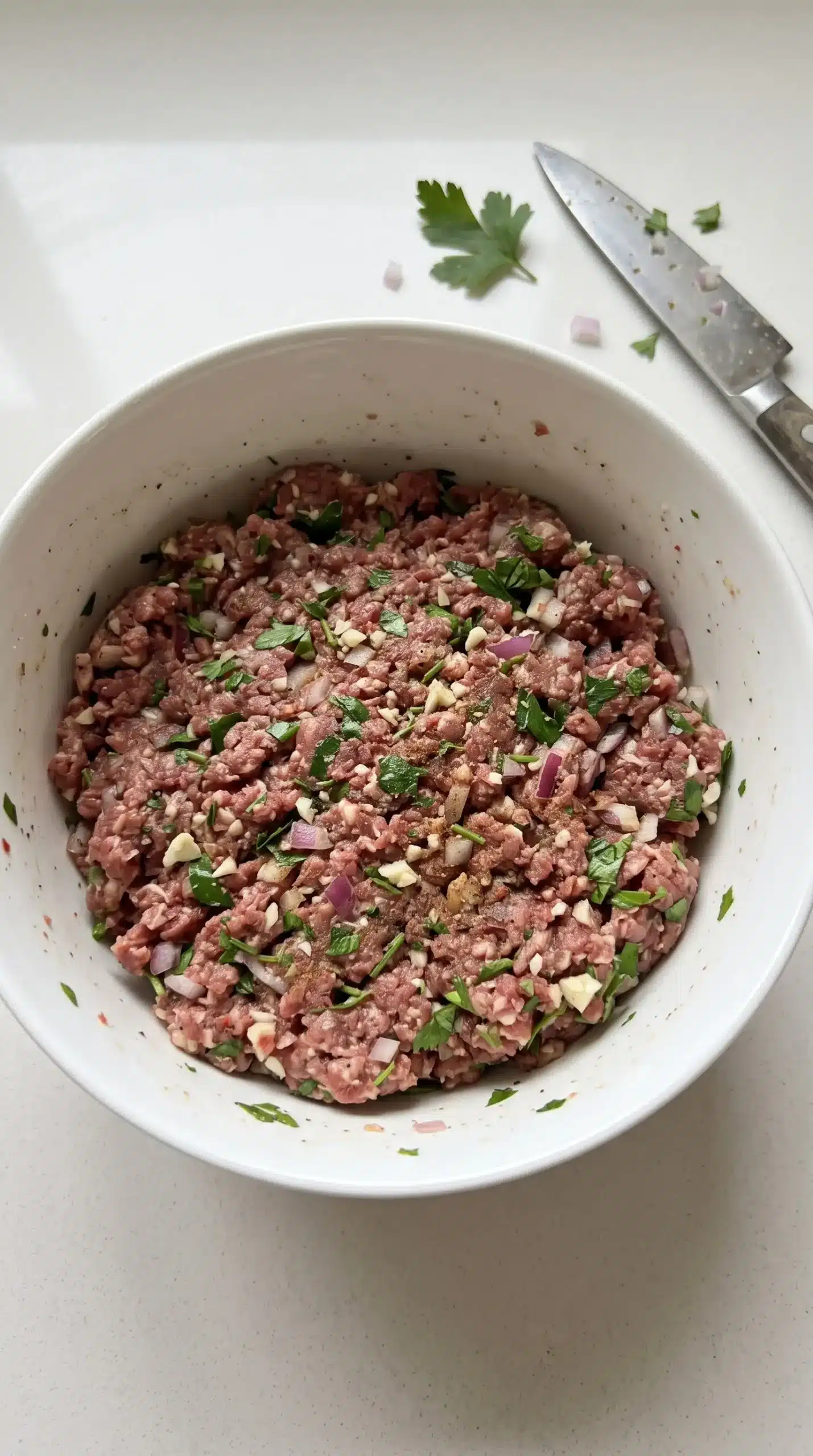
Finely chopped onion, minced garlic, and fresh parsley are more than background ingredients in an authentic beef kofta recipe. They are mixed directly into the ground beef, so their size and distribution affect how each portion tastes.
Small pieces of onion help the mixture stay cohesive while adding flavor throughout. Garlic should be minced finely enough to spread through the beef instead of collecting in isolated spots. Chopped parsley likewise needs to be dispersed well so that no single portion receives most of the herbs.
Even mixing is therefore more useful than extended handling. Once the beef, aromatics, spices, salt, and pepper are combined, stop when the mixture is evenly incorporated. That gives every shaped kofta a consistent seasoning profile without unnecessarily working the meat.
Shaping Beef Kofta for the Grill
Elongated oval shapes suit the supplied grilling method because they create portions that can be turned during cooking. When shaping around skewers, press the mixture firmly enough to hold its form while keeping the surface reasonably even.
Uneven pieces can create different cooking rates across the same batch. A very thick section takes longer to cook through, while a thin end can finish sooner. Consistent shapes make it easier to judge when each side has received enough grill time.
- Keep portions consistent: Similar shapes encourage more even cooking.
- Secure the mixture: Press the beef firmly around the skewer so the shaped kofta holds together.
- Smooth uneven areas: A more uniform surface makes turning and cooking easier.
Grilling Control That Protects Tenderness
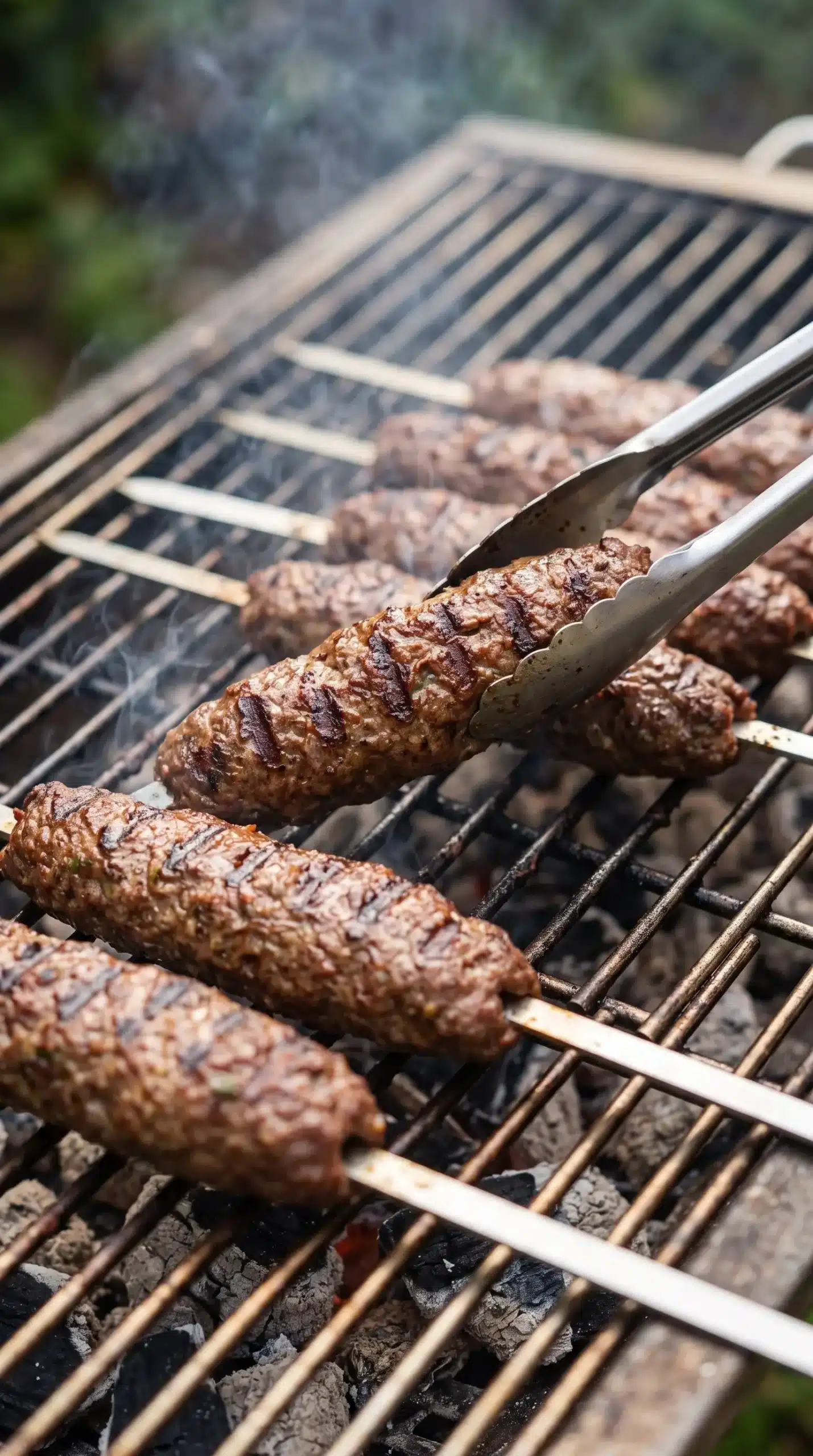
Medium-high heat gives grilled beef kofta the strong cooking environment called for in the supplied method. The important control point is not simply reaching the grill temperature, but paying attention to how the kofta responds as it cooks.
Turning after roughly 4 to 5 minutes on a side provides the basic timing framework. Watch the pieces rather than relying on time alone, because shape and grill conditions can affect how quickly they cook. The kofta should be fully cooked before serving.
| Cooking situation | What to watch | Useful response |
|---|---|---|
| Evenly shaped kofta | Consistent browning and cooking | Turn after the planned side has cooked |
| Thicker portions | Slower cooking through the center | Allow sufficient cooking before serving |
| Overcooking risk | Texture becoming firm | Avoid leaving kofta on the grill longer than needed |
Garlic Yogurt Sauce Brings a Cool Contrast
The accompanying sauce is built from yogurt, minced garlic, lemon juice, and salt. Its purpose is straightforward: provide a cool, creamy contrast to the hot, spiced beef.
Mixing the sauce while the kofta cooks makes practical use of the grilling time. Keep the ingredients together in a small bowl and stir until evenly combined. The garlic and lemon should be distributed throughout the yogurt so each serving gets the same balance.
Serving Beef Kofta Beyond the Skewer
Warm pita bread turns the kofta into an easy handheld-style meal, while rice creates a more substantial plate. Fresh salad provides a crisp accompaniment, and pickled vegetables can bring an additional sharp, tangy element to the meal.
Garlic yogurt sauce works alongside any of these options. It can be served on the side so diners can add as much as they prefer. Keeping the sauce separate also preserves the contrast between the warm grilled beef and the cool accompaniment.
Three Ways to Change the Kofta Mixture
Beef is the foundation supplied for the dish, but the mixture can be adapted when a different protein or additional vegetables are desired. Minced lamb or chicken can replace the beef for a different flavor profile.
Grated zucchini or bell peppers can also be added to the mixture. These additions change the texture and increase the vegetable component, so they should be incorporated thoroughly with the other ingredients.
Heat is another easy adjustment. More cayenne increases the spice level, while chopped fresh chili peppers offer another way to make the mixture hotter. Keep the seasoning changes controlled so the cumin, coriander, cinnamon, and fresh herbs remain recognizable.
Common Beef Kofta Mistakes to Avoid
Several problems can be traced directly to handling or cooking choices. Uneven mixing can leave some portions heavily seasoned while others taste mild. Inconsistent shaping can also produce pieces that cook at different rates.
Overcooking is another important pitfall. Leaving the kofta on the grill longer than necessary can make the texture tough, so close attention during cooking matters. Fully cooked does not mean cooked indefinitely.
Missing skewers does not require abandoning the dish. The supplied guidance allows the kofta to be cooked in a frying pan or on a baking sheet in the oven. The important point is to preserve the shaped portions and cook them fully.
What to Do When You Do Not Have Skewers
Skewers are useful for shaping and grilling, but they are not essential to preparing beef kofta. The mixture can instead be cooked in a frying pan or on a baking sheet in the oven.
When using an alternative cooking setup, retain the elongated shape if practical and keep the pieces reasonably consistent. The oven option supplied for this dish uses 400°F (200°C) for about 20 to 25 minutes, giving readers a clear alternative when grilling is unavailable.
Keeping Cooked Kofta for Later
Leftover kofta should be allowed to cool before being transferred to an airtight container and refrigerated. Cooked portions can remain fresh in the refrigerator for about 3 or 4 days.
Freezing is another option when the kofta will not be eaten within that period. Cooked kofta can be frozen for up to 3 months. Thaw frozen portions in the refrigerator before reheating.
Why the Accompaniments Matter on the Plate
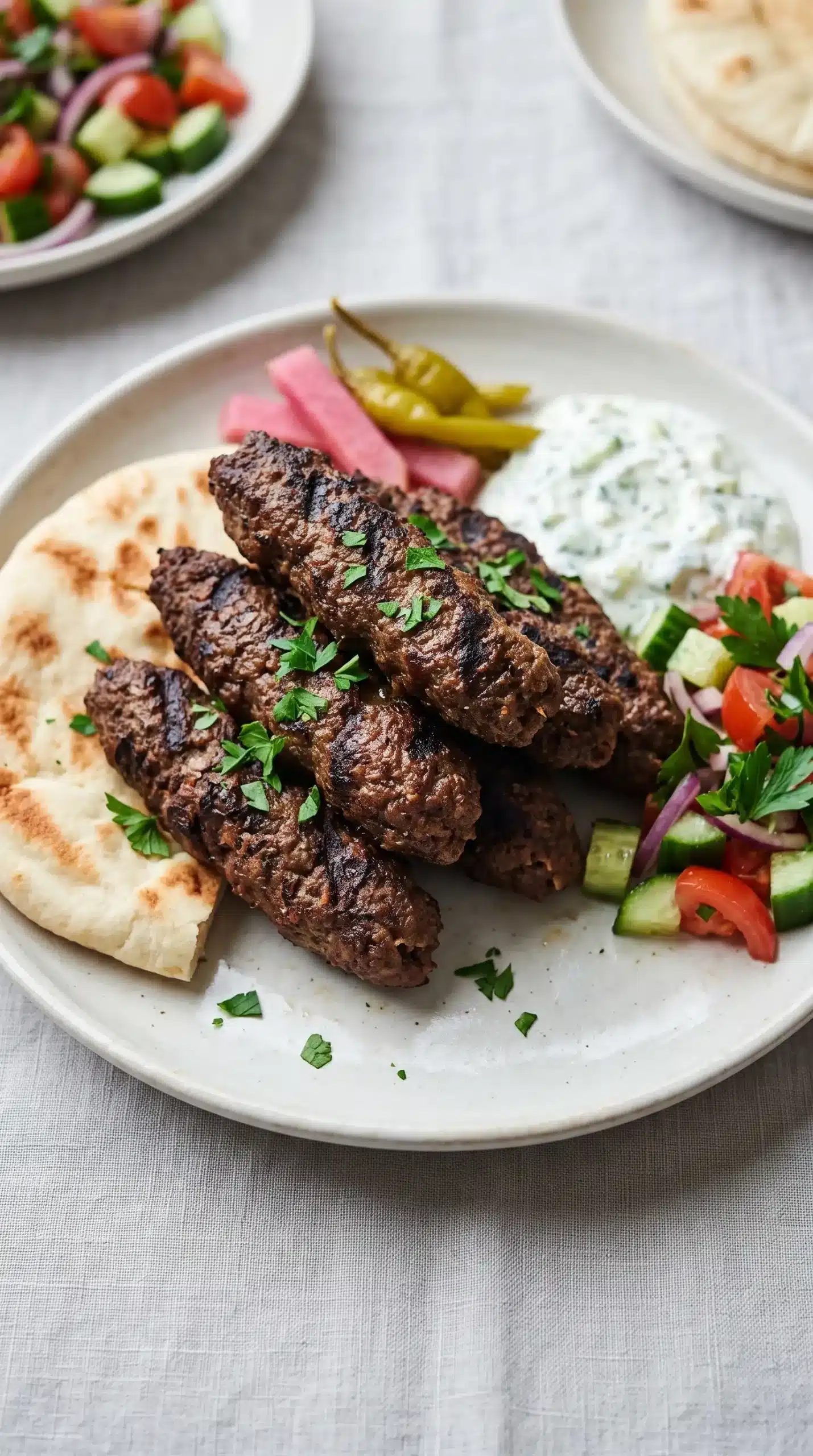
A complete serving can balance the seasoned beef with contrasting textures and flavors. Pita or rice supplies a substantial base, salad adds freshness, and pickled vegetables introduce a sharper note.
The garlic yogurt sauce is particularly useful because its cool, creamy character offsets the warm spices in the kofta. The combination allows the beef to remain the centerpiece without making the plate feel one-dimensional.
Beef Kofta Is Best When Cooking Stays Controlled
Beef kofta depends on a few simple decisions: distribute the aromatics and spices evenly, shape the portions consistently, and watch the grill closely. Keeping those fundamentals in mind makes it easier to build a meal around beef recipes without adding unnecessary complexity to the preparation.
Warm grilled kofta served with garlic yogurt sauce shows why the balance works. The seasoned beef supplies the main flavor, while parsley, pita, salad, rice, or pickled vegetables can shape the rest of the meal around it.
Beef Kofta Questions About Baking Heat, Sauce, and Spice
Can beef kofta be baked instead of grilled?
Yes. The supplied alternative method uses a baking sheet at 400°F (200°C) for about 20 to 25 minutes. Keep the shaped portions reasonably consistent and make sure they are fully cooked before serving.
What can replace yogurt in the garlic sauce?
For a dairy-free sauce, coconut yogurt can be used. Another option is tahini combined with water and lemon juice. Salt can be included in either alternative to keep the sauce aligned with the supplied flavor profile.
How can the kofta be made hotter?
Increase the cayenne pepper for more heat, or add chopped fresh chili peppers to the beef mixture. Adjust gradually so the additional heat does not overwhelm the cumin, coriander, cinnamon, garlic, parsley, and onion.
What should be served with Middle Eastern beef kofta?
Warm pita bread, fresh salad, or rice are all suitable choices. Pickled vegetables can also be added for extra flavor, while garlic yogurt sauce supplies a cool and creamy accompaniment.
How long can cooked kofta stay frozen?
Cooked kofta can be frozen for up to 3 months. When ready to use, thaw it in the refrigerator before reheating.
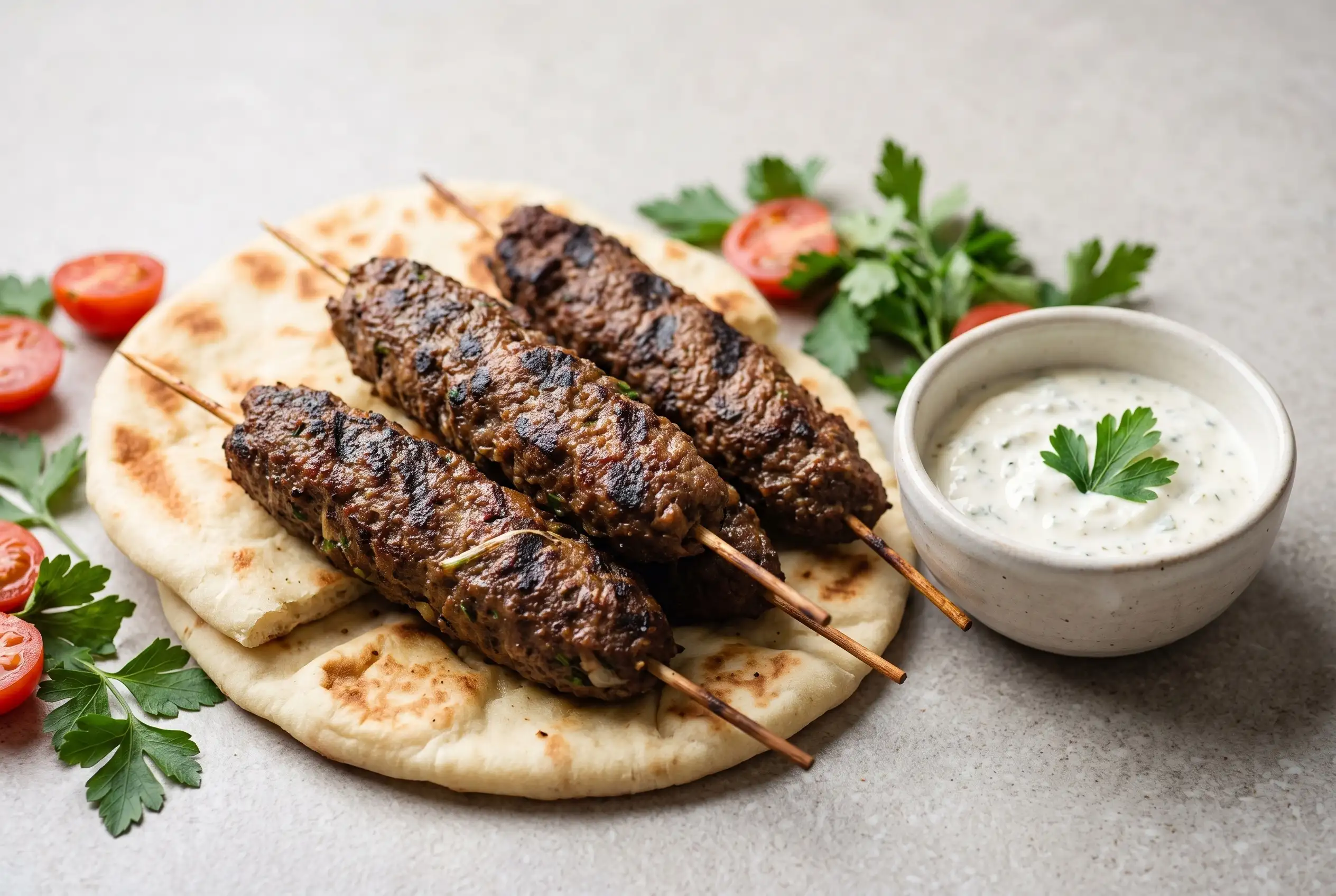
Beef Kofta with Garlic Yogurt Sauce and Warm Spices
Ingredients
Method
- Place the ground beef, onion, half of the garlic, parsley, cumin, coriander, cinnamon, cayenne pepper, salt, and black pepper in a large bowl. Mix thoroughly until the ingredients are evenly distributed.
- Form the seasoned beef into elongated oval-shaped kofta around the skewers.
- Heat the grill to medium-high.
- Cook the kofta on the grill for 4–5 minutes per side, turning as needed, until fully cooked and the center reaches 160°F / 71°C.
- Stir the yogurt, remaining garlic, lemon juice, and a pinch of salt together in a small bowl until combined.
- Serve the hot beef kofta with the garlic yogurt sauce on the side.