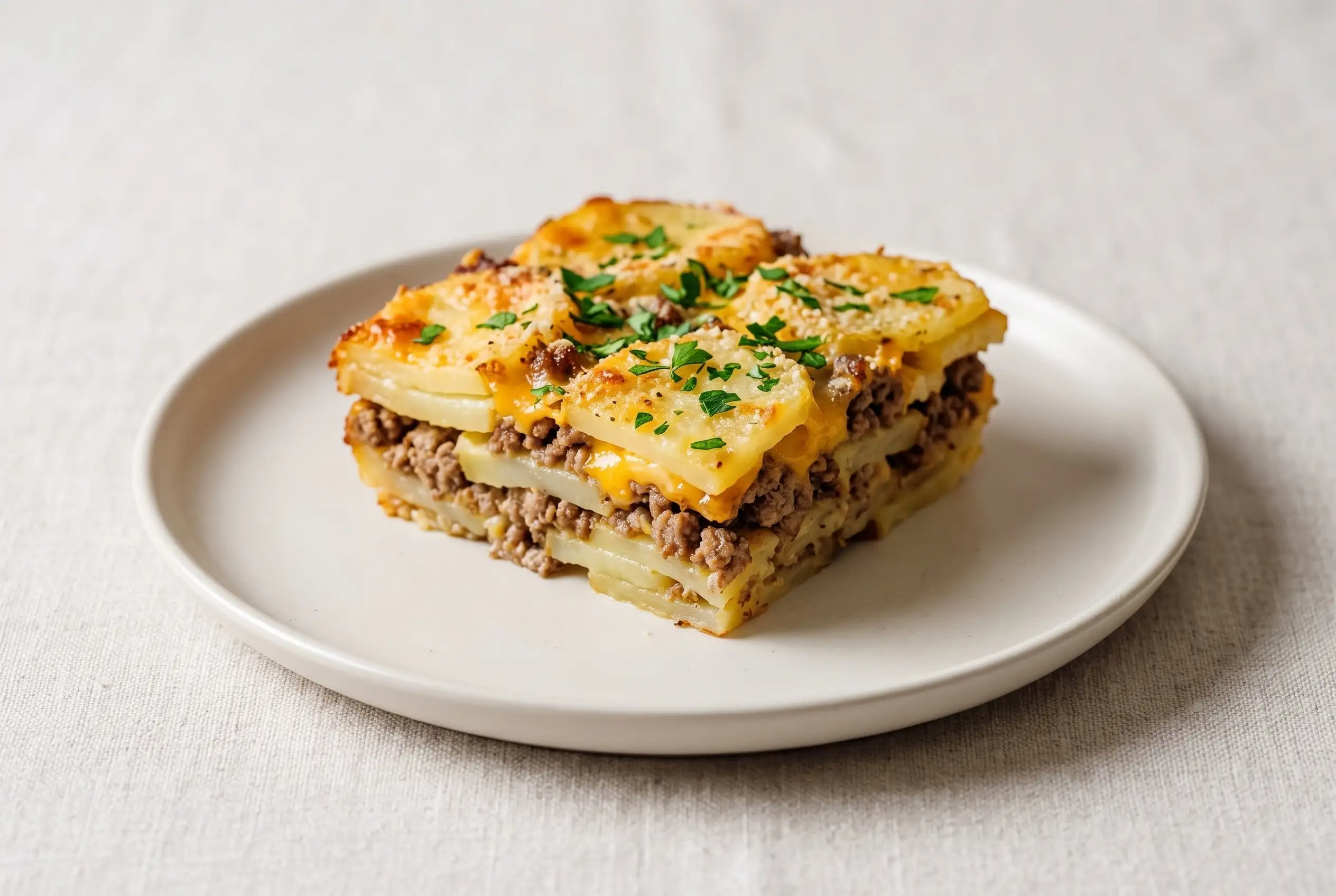
Hobo Casserole Ground Beef with Cheddar and Parmesan
Hobo casserole brings together seasoned ground beef, thinly sliced potatoes, cheddar, and Parmesan in one cozy baked dinner. The combination is hearty without requiring a complicated collection of ingredients, making it especially useful when a filling family meal needs to come together on a busy evening.
Ground beef forms the savory base, while potatoes create the substantial layer above it. Onion, garlic, Italian seasoning, and paprika build flavor throughout the dish, and the two cheeses create a bubbly, golden finish. A small amount of beef broth or water helps the potatoes stay moist during baking, with optional milk adding extra creaminess.
What Makes the Hobo Casserole Ingredients Work Together
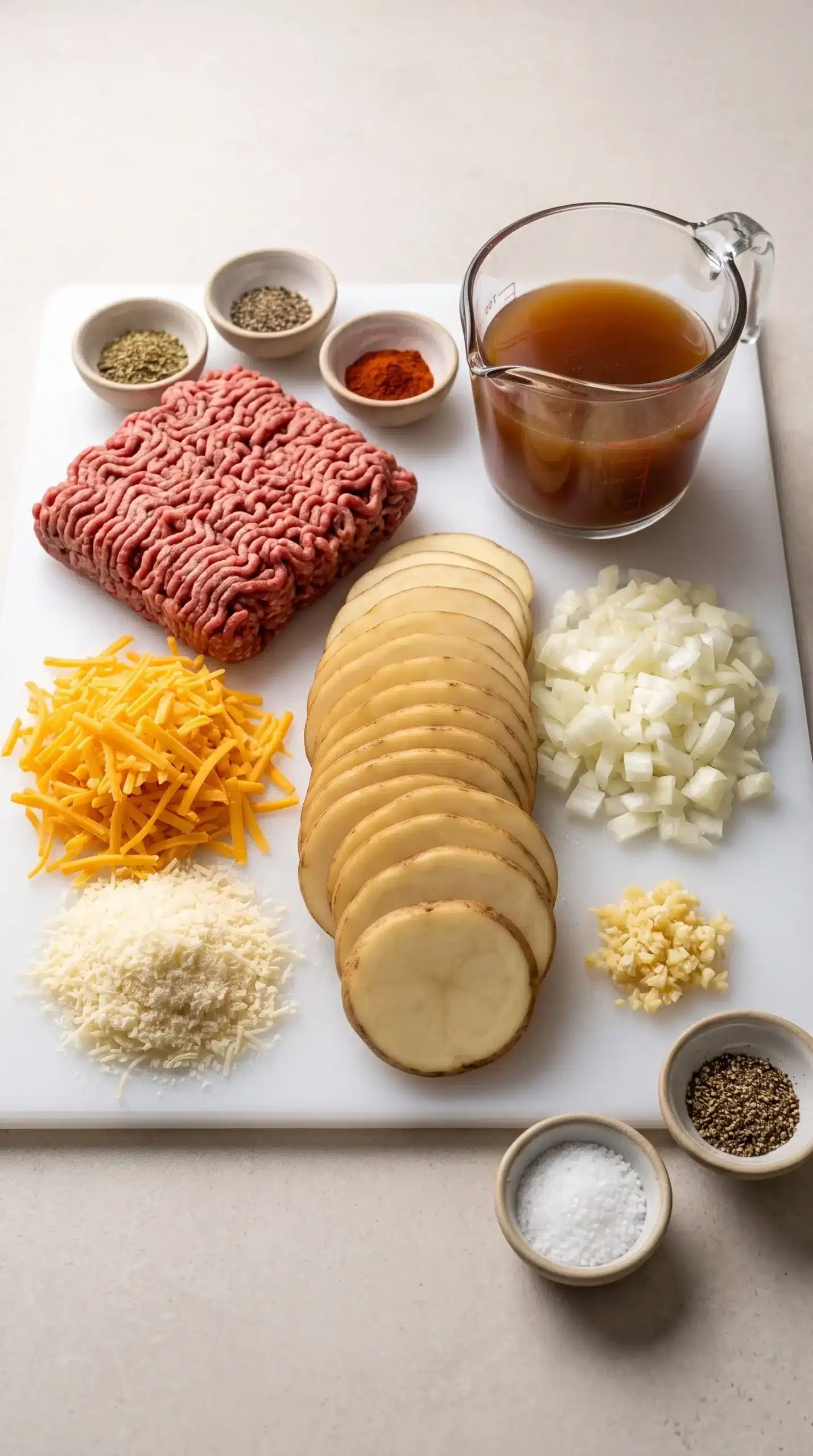
The potatoes are central to the texture because they are sliced thinly before baking. Their relatively even thickness matters more here than adding extra seasoning or toppings. Thin slices can cook through while the casserole finishes, while unevenly cut pieces may leave some portions tender and others firm.
Ground beef supplies the savory foundation, and browning it before the casserole goes into the oven gives the meat a cooked, seasoned character from the start. Chopped onion and minced garlic join the beef after browning so they can soften before everything is assembled.
The flavor benefit of that step comes from browning through the Maillard reaction, a heat-driven process that creates new flavor compounds in foods containing proteins and sugars. This is why the browned beef adds more than color to the casserole’s savory base.
Cheddar and Parmesan have different jobs in the finished dish. Shredded cheddar creates the familiar melted, cheesy layer, while grated Parmesan contributes another savory cheese note and helps the top become more deeply browned as it finishes uncovered.
| Component | Role in the casserole | Useful cook-facing choice |
|---|---|---|
| Thinly sliced potatoes | Hearty baked layer | Keep slices reasonably uniform |
| Ground beef | Savory base | Brown thoroughly before assembly |
| Cheddar cheese | Melty topping | Spread it evenly over the beef |
| Parmesan cheese | Savory finishing cheese | Distribute it across the top |
Thin Potato Slices Give Hobo Casserole Its Best Texture
Potatoes determine much of the casserole’s eating experience, so slicing deserves attention. The supplied preparation calls for thin slices, which allows the potato layer to cook in the covered portion of the bake while absorbing moisture from the surrounding casserole.
A consistent cut is useful because pieces of noticeably different thicknesses do not soften at the same rate. Arrange the slices so they form a fairly even layer rather than leaving a few very thick pieces concentrated in one area.
Browning the Beef Sets Up a More Flavorful Base
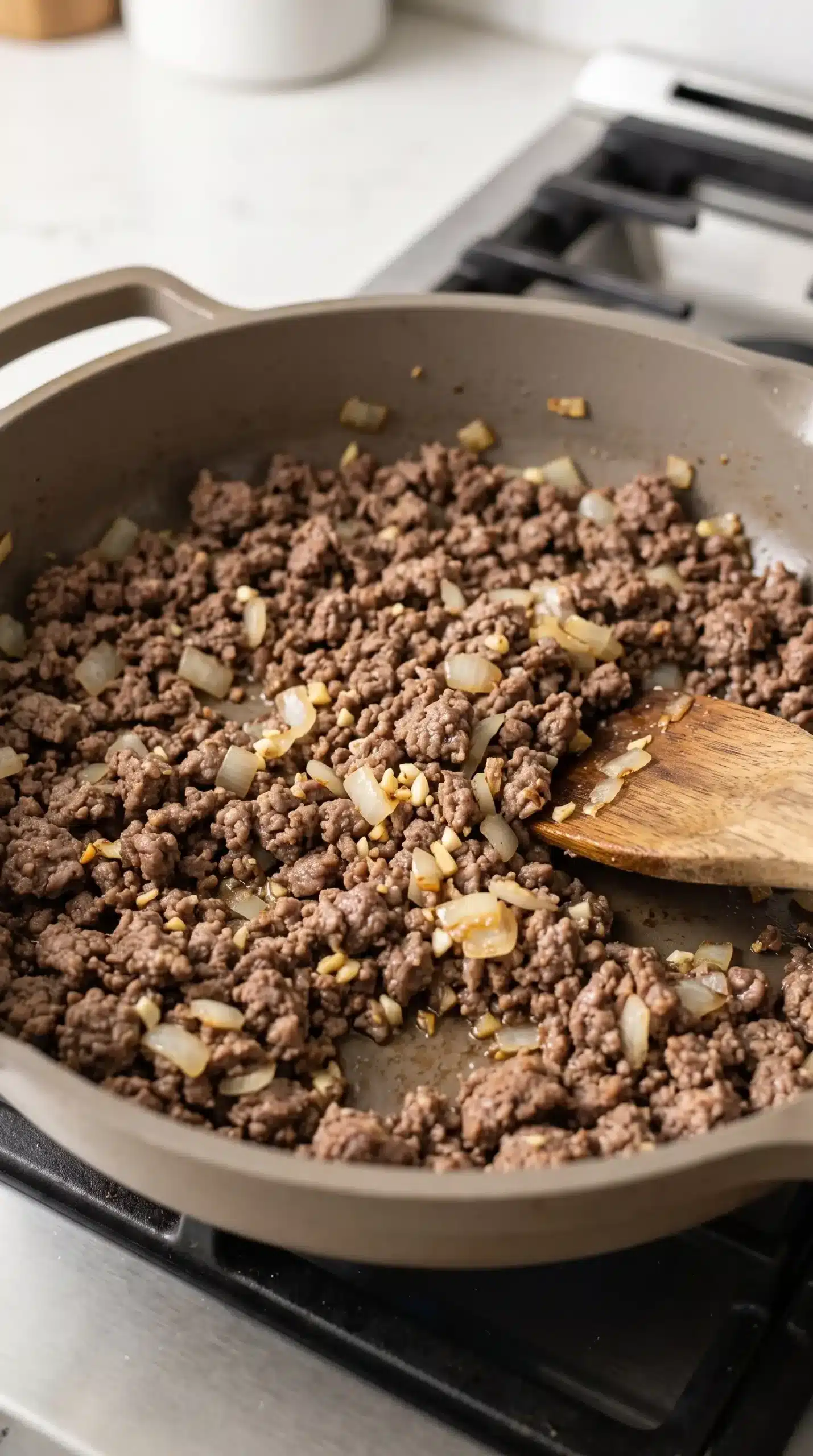
Ground beef should be cooked in the skillet until browned and cooked through before it reaches the baking dish. Breaking it apart as it cooks helps create an even base instead of leaving large pieces that are difficult to distribute beneath the potatoes.
Excess fat can be drained if needed after browning. The cooked beef then provides a stable foundation for the softened onion and garlic, which are cooked together briefly before assembly.
Layering Keeps the Ground Beef Potato Casserole Cohesive
The arrangement of the casserole is simple but purposeful. The beef mixture belongs on the bottom, with the sliced potatoes above it. Seasoning the potatoes as they are arranged helps distribute the Italian seasoning, paprika, salt, and pepper through the layer that needs the most direct seasoning.
Cheese goes over the beef and potatoes, creating a topping that melts during the covered bake and develops more color after the foil is removed. Keeping the ingredients in distinct layers also makes each serving easier to portion.
For a cheesy hobo casserole, even coverage matters more than piling the cheese into one central mound. A relatively uniform layer gives different portions access to melted cheddar and Parmesan instead of leaving some servings with most of the topping.
Moisture Controls How the Potatoes Finish
Beef broth or water is poured around the edges of the casserole rather than simply treating it as another topping. That liquid supplies moisture during baking while the dish is covered, helping the potato layer cook without becoming excessively dry.
Optional milk can be drizzled over the casserole when a creamier result is wanted. Because milk is not required for the basic preparation, it works best as an intentional variation instead of something that needs to be added automatically.
Covering the baking dish for the first portion of cooking is another important moisture-control decision. Once the foil comes off, the uncovered bake allows the cheese to become bubbly and golden while the potatoes continue toward tenderness.
Common Hobo Casserole Mistakes to Avoid
- Uneven potatoes: Very thick slices can remain firm when thinner pieces are already tender. Keep the slices reasonably consistent.
- Skipping the beef browning: The ground beef is cooked before assembly, so do not treat the oven portion as the stage where raw beef is supposed to cook.
- Forgetting the liquid: Beef broth or water around the edges provides needed moisture during the covered bake.
- Removing the cover too early: The covered stage protects the casserole while the potatoes cook; uncovering is reserved for the browning phase.
- Overloading one area with cheese: Spread cheddar and Parmesan across the casserole so the topping is more evenly distributed.
A Golden Cheese Finish Signals the Casserole Is Ready
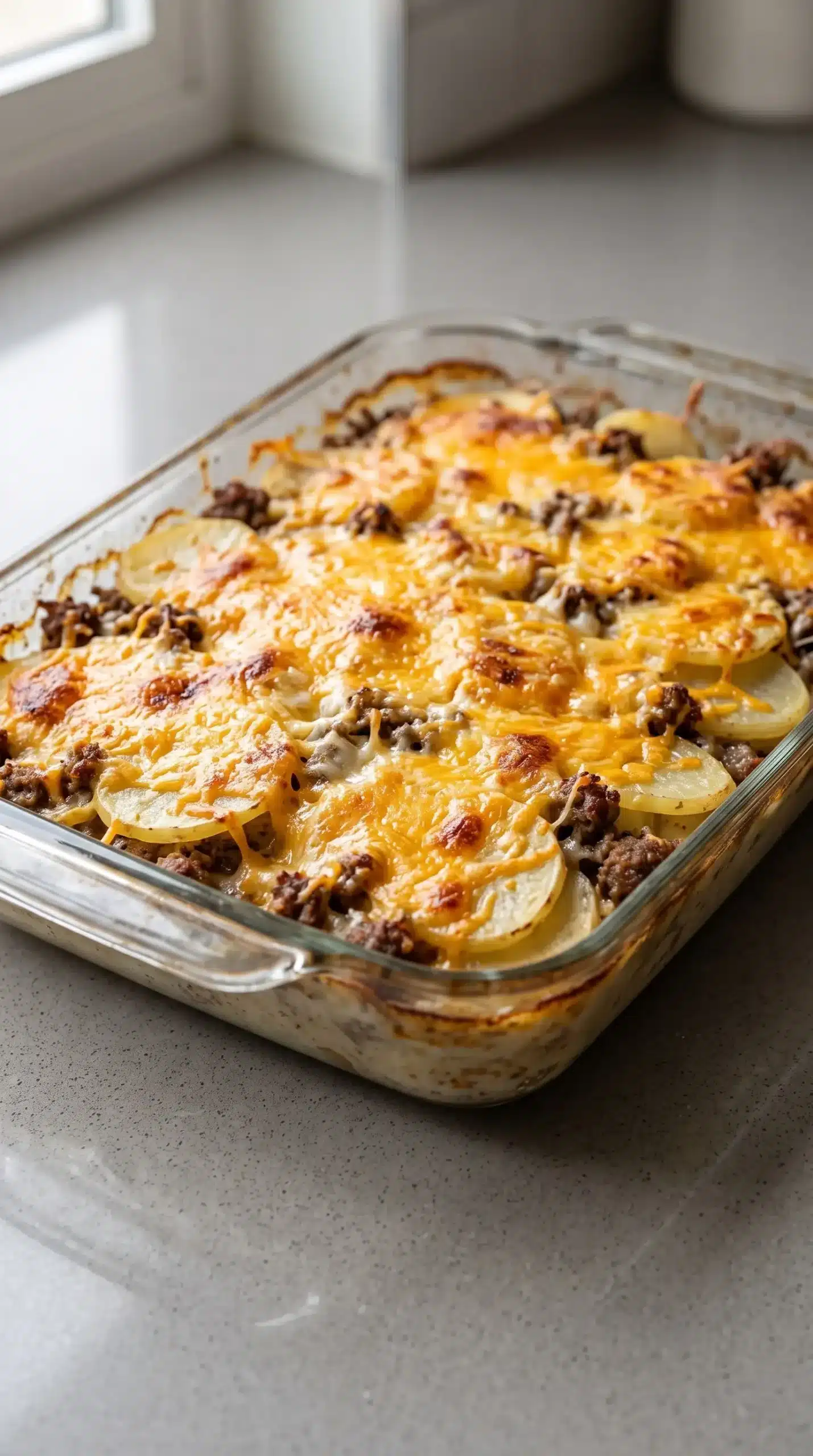
The uncovered portion of baking is where the appearance changes noticeably. Once the foil is removed, the cheese can bubble and develop a golden surface while the potatoes continue cooking.
Potato tenderness is the more important visual and textural check. A deeply colored top does not make up for firm potatoes underneath, so use tenderness as the deciding observation when judging whether the casserole is ready to serve.
Simple Sides Balance the Richness of Hobo Casserole
A simple salad is an easy partner for the rich combination of beef, potatoes, and cheese. Steamed vegetables also work well when you want another vegetable component alongside the casserole.
Hot sauce or ketchup can be served on the side for diners who want a different finishing flavor. Keeping those additions separate lets each person adjust the flavor of their portion without changing the entire baking dish.
Leftover Hobo Casserole Needs Careful Cooling and Storage
Once leftovers have cooled completely, cover the casserole tightly with plastic wrap or aluminum foil before refrigerating. The supplied storage guidance allows refrigerated leftovers to be kept for up to 3 days.
Freezing is also an option, with a storage period of up to 2 months. Reheating can be done in the oven or microwave until the portion is fully warmed.
Make Hobo Casserole Fit Different Dinner Preferences
The beef can be replaced with ground turkey or ground chicken when a different meat is preferred. Plant-based meat alternatives are another option, while lentils or black beans can be used for a vegetarian direction.
Regular potatoes are not the only choice for the potato layer. Sweet potatoes can provide a different flavor and bring a different nutritional profile to the casserole.
Vegetables such as carrots or bell peppers can also be included for added variety. Different cheeses can change the flavor of the topping, and diced jalapeños or a pinch of cayenne pepper can increase the heat.
Small Changes Can Shift the Hobo Casserole Finish
A few adjustments change the character of the finished dish without requiring a completely different preparation. Milk moves the texture toward creaminess, while a crunchy top can be encouraged by briefly broiling the baked casserole after it has finished cooking.
Fresh parsley is an optional garnish that adds a simple finishing touch. Since the casserole already contains several savory elements, garnishes and condiments are best treated as finishing choices rather than essential parts of the base preparation.
The Beef, Potato, and Cheese Balance Defines the Meal
Protein comes primarily from the ground beef, carbohydrates come substantially from the potatoes, and cheese contributes calcium. Adding vegetables and serving the casserole with a salad can broaden the meal with additional vitamins and minerals, while a ground beef and potato skillet keeps those hearty ingredients together in a stovetop dinner.
The balance also explains why the casserole feels substantial: the beef provides the savory center, potatoes supply the hearty baked layer, and cheese ties the two together. Keeping the potato layer properly cooked is therefore central to both texture and overall satisfaction.
Prepare the Hobo Casserole Around Its Moisture and Texture
Thin potatoes, a properly browned beef base, and enough moisture during the covered bake are the key controls that keep the casserole on track. Each one affects a different part of the result, so fixing a problem with extra cheese or seasoning cannot compensate for potatoes that have not cooked through.
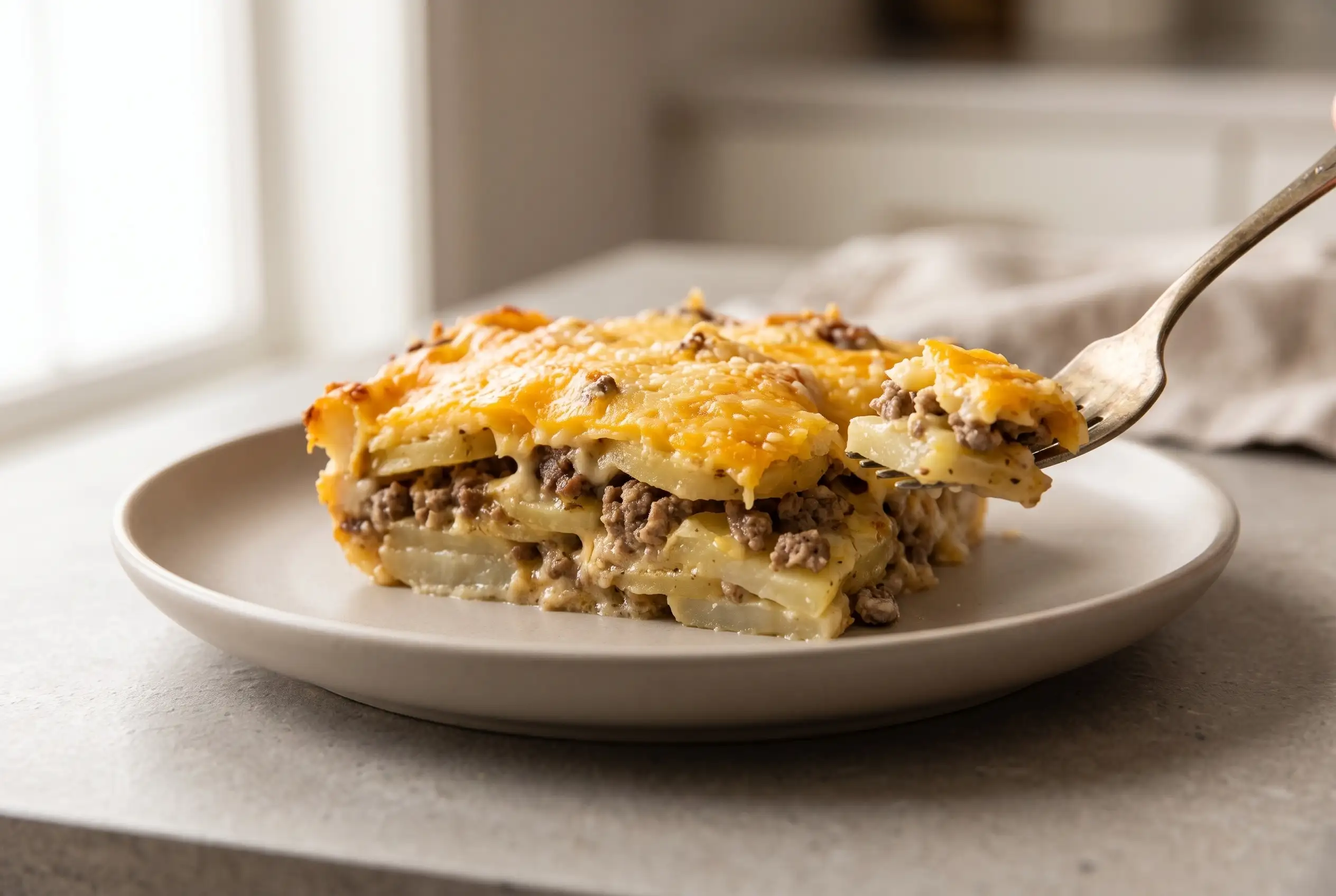
Once the potatoes are tender and the cheese has reached a bubbly, golden finish, the dish has reached the point where its contrasting layers work together: seasoned beef underneath, tender potatoes through the middle, and a rich cheese topping above.
Hobo Casserole Questions About Storage and Substitutions
Can I assemble hobo casserole ahead of baking?
Yes. The casserole can be prepared in advance and kept in the refrigerator until you are ready to bake it. Keeping the assembled dish refrigerated until baking makes advance preparation practical for a busy dinner.
Can I use a different meat in hobo casserole with ground beef?
Ground turkey or ground chicken can replace the beef, and plant-based meat alternatives can also be used. These substitutions change the base flavor while preserving the general beef-and-potato casserole concept.
What can I use instead of regular potatoes?
Sweet potatoes can replace the regular potatoes for a different flavor and added nutrients. Keep the slices thin and reasonably consistent so the potato layer remains suited to the baking approach.
How can I make the casserole creamier?
Milk is an optional addition specifically provided for extra creaminess. Drizzle it over the assembled casserole before the covered baking stage so it becomes part of the moist cooking environment.
How do I make the cheese topping more crunchy?
After baking, the casserole can be broiled for a few minutes to encourage a crunchier top. Watch the surface closely during broiling because the purpose is to deepen the finish after the casserole has already baked.
Can I freeze leftover hobo casserole?
Yes. Completely cooled leftovers can be covered tightly and frozen for up to 2 months. When you are ready to eat them, reheat the casserole in the oven or microwave until fully warmed.
Hobo Casserole Ground Beef with Cheddar and Parmesan
Ingredients
Method
- Heat the oven to 375°F / 190°C. Coat a 9×13-inch baking dish with cooking spray or olive oil.
- Warm the olive oil in a large skillet over medium heat. Add the ground beef and cook for 5–7 minutes, breaking it into smaller pieces as it cooks. Drain excess fat if necessary.
- Stir the onion and garlic into the browned beef. Cook for 3–4 minutes, until the onion becomes soft and translucent.
- Transfer the beef mixture to the prepared baking dish and spread it into an even layer. Cover the beef with the thinly sliced potatoes, then season them with salt, pepper, dried Italian seasoning, and paprika.
- Distribute the cheddar and Parmesan evenly over the potatoes and beef. Pour the beef broth or water around the edges of the dish, then drizzle the optional milk over the top.
- Cover the dish tightly with aluminum foil and bake at 375°F / 190°C for 30 minutes.
- Remove the foil and bake for another 15–20 minutes, until the potatoes are tender and the cheese is bubbly and golden.
- Sprinkle with fresh parsley if desired and serve the casserole hot.