Cheese Garlic Rolls with Roasted Garlic and Mozzarella
Buttery Cheese Garlic Rolls bring roasted garlic, melted mozzarella, and a soft enriched dough together in a warm, savory bake. The garlic is roasted until buttery soft, then blended with butter, parsley, and garlic-infused oil to create a spreadable filling. Once rolled with mozzarella and baked, the result is tender inside with a flavorful golden surface.
Homemade cheese garlic rolls work especially well when you want something that can sit beside a bowl of roasted garlic tomato soup, a plate of pasta, or a small dish of marinara for dipping. The dough gets its richness from butter and egg yolks, while the combination of all-purpose and bread flour gives the rolls enough structure to hold the filling.
Roasted Garlic Sets the Flavor of Cheese Garlic Rolls
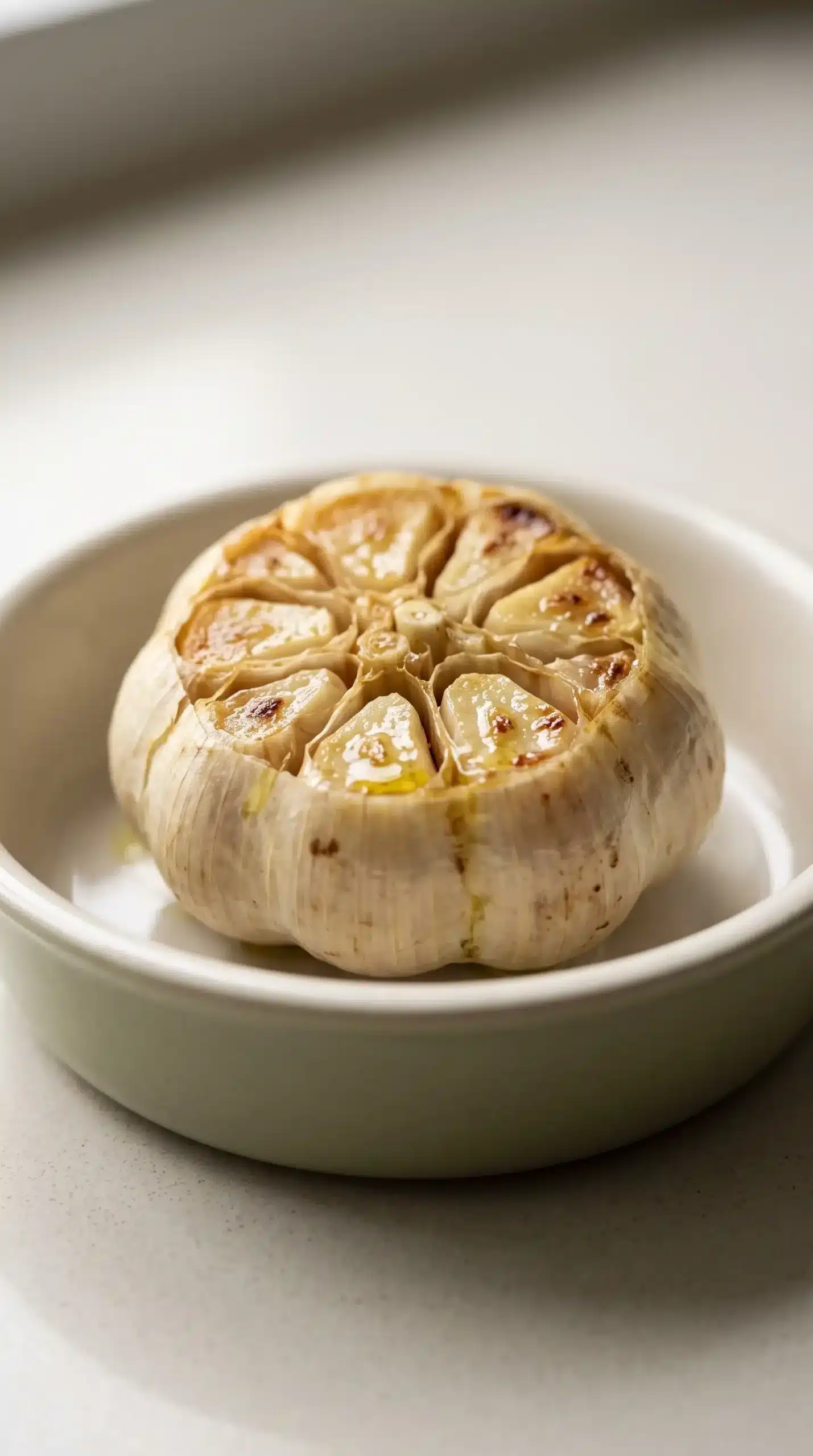
Roasting the whole garlic head is one of the most important flavor-building decisions in these rolls. Cutting off the top exposes the cloves, allowing olive oil and heat to work through the head as it cooks. At 160°C (320°F), the garlic gradually becomes soft enough to mix into butter.
Soft roasted garlic is particularly useful here because it can be incorporated into the butter without leaving firm pieces throughout the filling. The olive oil used during roasting also becomes part of the garlic butter, carrying some of that roasted flavor into the spread.
Parsley brings a fresh herbal note to the rich mixture. Keeping some chopped parsley for the baked rolls gives the finished cheese garlic rolls a fresh-looking finish as well as a little contrast to the buttery filling.
Flour and Dairy Shape the Roll Dough
All-purpose flour and bread flour are used together in the dough, giving the mixture a balance between tenderness and structure. The optional milk powder can also be included with the dry ingredients when available.
Warm milk helps create the yeast mixture, while honey provides sweetness alongside the sugar added to the dough. Butter and egg yolks enrich the dough, producing a softer character that suits a roll filled with garlic butter and mozzarella.
Mozzarella is added after the garlic butter has been spread over the rolled dough. Its placement matters because the cheese becomes enclosed inside the log before the portions are cut, keeping the filling distributed through the spiral of each roll.
Garlic Butter Cheese Rolls Need a Spreadable Filling
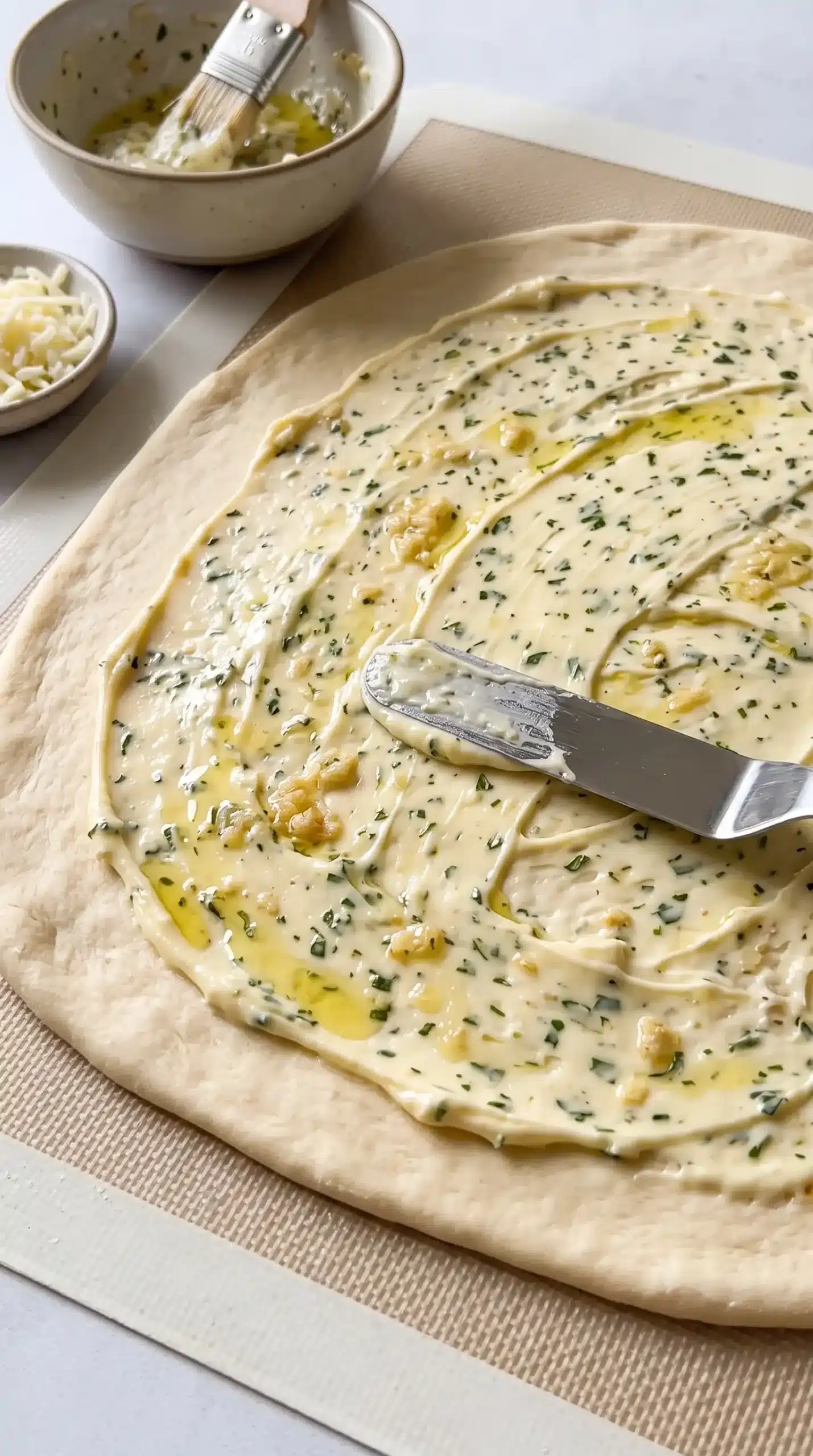
Once the roasted garlic is soft, combine it with softened butter, chopped parsley, and two tablespoons of the garlic oil. The mixture should be easy to spread across the dough without tearing its surface.
Using softened butter is helpful at this stage because cold, firm butter can drag against the dough. A smooth garlic butter layer makes it easier to cover the rolled dough evenly before the mozzarella is scattered over it.
Yeast and Kneading Determine Dough Readiness
The yeast mixture should become frothy after sitting with warm milk and honey for about 10 minutes. That visible change gives you a useful indication that the yeast has activated before it is combined with the flour mixture.
After mixing, the dough is kneaded with a dough hook on medium speed for 15 to 20 minutes. Look for a dough that has become soft and smooth instead of relying only on the clock. The extended kneading develops the dough sufficiently for rolling and shaping.
During the first rise, keep the covered bowl somewhere warm, around 29°C (85°F). The dough should double in size before you move on to rolling. A noticeable increase in volume is the practical sign that matters most when deciding whether the dough is ready.
Rolling Thickness Controls the Filling Balance
Roll the dough to about 1/4 cm, or 1/8 inch, before applying the garlic butter. A broad, thin sheet gives the filling room to spread across the surface and allows the mozzarella to become part of the rolled spiral.
Tight rolling is important once the cheese has been added. Begin forming the dough into a log and keep the roll compact as you work. A firm log makes it easier to divide the dough into six portions with recognizable layers.
| Stage | What to look for | Why it matters |
|---|---|---|
| Yeast mixture | Frothy and bubbly | Shows the yeast has activated |
| First proof | Dough has doubled | Indicates the dough is ready to roll |
| Second proof | Rolls look puffy | Prepares the shaped rolls for baking |
Six Portions Keep the Cheese Garlic Rolls Consistent
Cutting the filled log into six equal portions keeps the batch consistent from one roll to the next. A knife can make the cuts directly, while dental floss provides another way to divide the soft log without pressing down on it.
Arrange the portions on a baking sheet, cover them, and give them another 30 minutes to proof. The rolls should look puffy before they go into the oven, showing that the shaped dough has had time to rise again.
Watch These Buttery Cheese Garlic Rolls for Baking Cues
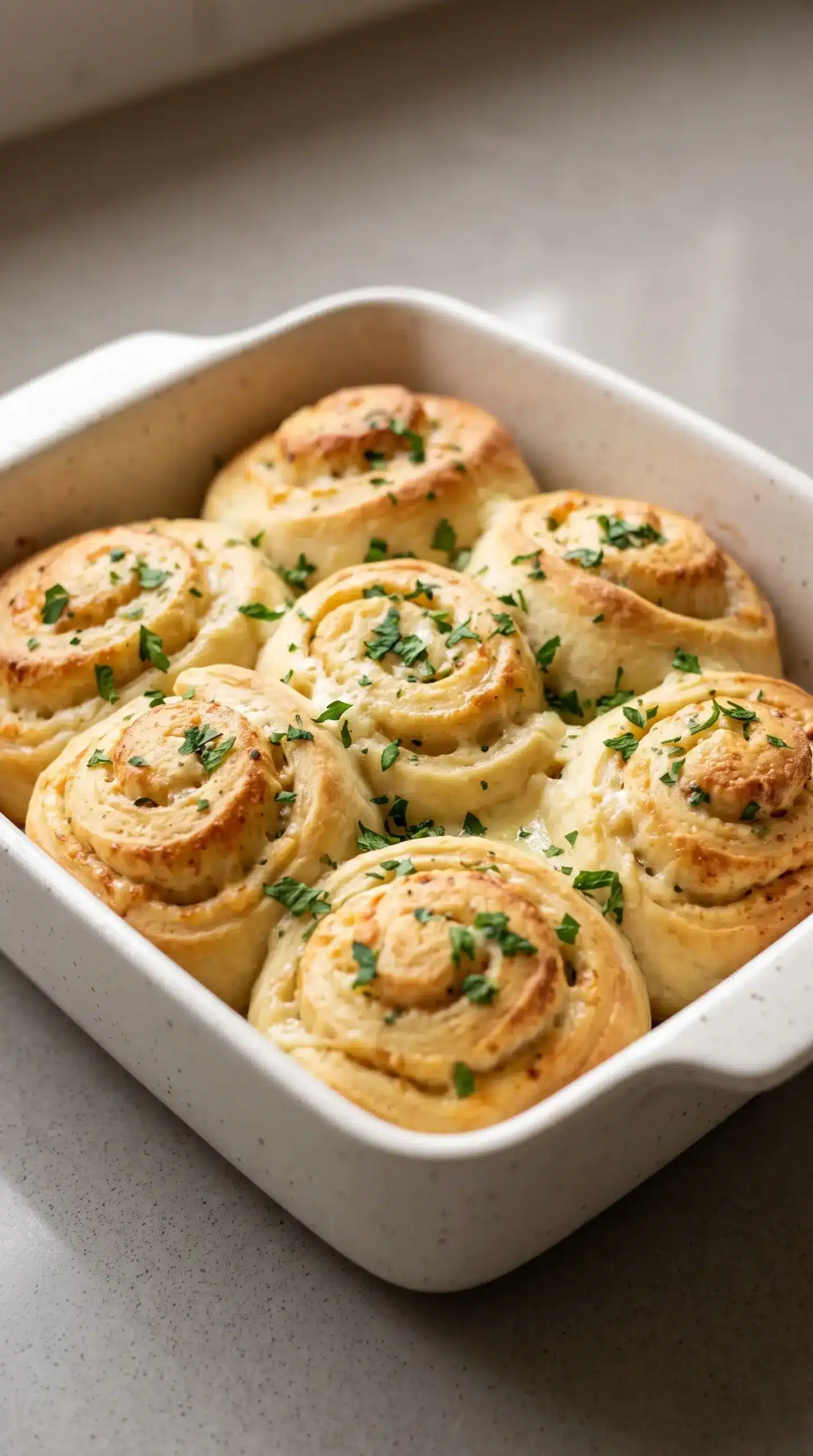
Preheat the oven to 175°C (350°F) before the rolls are ready to bake. Brushing the tops with egg wash gives the surface a finished appearance as the rolls cook.
Plan to bake for 20 to 25 minutes, checking at the 20-minute point. For a more objective doneness check, soft rolls are generally fully baked at an internal temperature of 190°F, while the golden surface remains a useful visual cue.
Freshly baked rolls can be brushed with the leftover garlic butter while still warm. Chopped parsley scattered over the top completes the garlic-forward finish and adds a fresh element after baking.
Common Mistakes With Homemade Cheese Garlic Rolls
Several problems can be traced directly to the visual cues in the preparation. Keeping an eye on those cues makes the process more reliable.
- Inactive yeast: If the milk, yeast, and honey mixture does not become frothy after about 10 minutes, do not treat it as ready. The recipe specifically relies on that frothy appearance before the mixture enters the dough.
- Under-proofed dough: Moving ahead before the dough doubles can interfere with the intended texture. Give the covered dough enough time in the warm environment to reach the stated visual cue.
- Cold garlic butter: Firm butter is harder to distribute over the thin dough. Use softened butter so the roasted garlic mixture can be spread without dragging across the surface.
- Uneven portions: Irregular cuts produce rolls of different sizes. Divide the filled log into six equal pieces so the portions bake more consistently.
- Skipping the second rise: The shaped rolls need another 30 minutes of proofing before baking. Covering them during this stage helps prevent the dough from being left exposed while it becomes puffy.
Marinara Makes a Simple Dip for Garlic Rolls
Warm cheese garlic rolls are suitable as an appetizer, side dish, or snack. Their combination of roasted garlic, butter, and mozzarella makes them particularly easy to serve alongside familiar Italian-style dishes.
Marinara sauce gives the rolls a natural dipping option. The sauce adds a tomato-based contrast to the rich garlic butter while allowing each roll to remain useful as a handheld side.
Three Ways to Change the Filling
The mozzarella filling can be adjusted when you want a different flavor while keeping the basic rolled format intact. Cheddar can replace the mozzarella for a sharper cheese character.
Sun-dried tomatoes can also be incorporated into the filling, adding another savory element. Spinach offers a different direction and can be used when you want to introduce a vegetable component to the center.
Herbs provide another simple adjustment to the garlic butter. Thyme or oregano can be added alongside the parsley, changing the herbal character without requiring a different dough.
Storage Keeps the Baked Rolls Ready to Reheat
Leftover rolls can be placed in an airtight container and refrigerated for up to 3 days. Keeping them covered limits their exposure while they wait to be reheated.
For reheating, wrap the rolls in aluminum foil and warm them in the oven for a few minutes until heated through. The foil helps keep the rolls enclosed during the short reheating process.
Make-Ahead Options Fit the Dough and Freezer
The dough can be prepared in advance and refrigerated until you are ready to continue. Before rolling, allow the dough to come to room temperature so it is easier to handle and spread with the garlic butter.
Unbaked rolls can also be frozen for later baking. When you are ready to use them, allow the rolls to rise before baking so the shaped dough has an opportunity to become puffy.
For longer storage, the finished rolls can be kept in the freezer for up to a month. Whether refrigerated or frozen, the useful reheating approach is to warm the rolls gently in the oven rather than serving them cold.
Health Notes for Buttery Cheese Garlic Rolls
The flour-based dough supplies carbohydrates, while mozzarella and egg yolks contribute protein and other nutrients. Garlic contains antioxidant compounds, and parsley contributes additional nutrients while bringing a fresh herbal flavor.
Because butter, cheese, and enriched dough are central to the preparation, the rolls are best understood as a rich side or snack. Pairing them with soup, pasta, or another meal component lets their savory flavor complement the rest of the plate.
Soft Layers Depend on Timing and Texture
Roasted garlic, a smooth garlic butter, and a properly risen dough establish the character of these cheese garlic rolls before they ever reach the oven. The most useful cues are practical ones: frothy yeast, doubled dough, a soft and smooth kneaded mixture, and puffy shaped rolls.
Once those conditions are in place, the mozzarella-filled log can be divided and baked with much greater consistency. Brushing the warm rolls with garlic butter after baking reinforces the roasted garlic flavor while parsley gives the finished surface a fresh touch.
Questions About Cheese Garlic Rolls and Proofing
How can I tell when the first dough rise is complete?
The dough is ready when it has doubled in size in the covered bowl. The recipe specifies a warm environment around 29°C (85°F), but the increase in volume is the most useful observation when deciding whether to continue.
What should I do if the garlic butter is difficult to spread?
Make sure the butter used for the garlic mixture is softened before combining it with the roasted garlic, parsley, and garlic oil. A softer mixture will spread across the thinly rolled dough more easily without pulling at the dough.
Can I use whole wheat flour in these rolls?
Whole wheat flour can replace the all-purpose flour, although the rolls may become denser and the liquid may need adjustment. The original dough uses both all-purpose and bread flour, so changing the flour combination can affect how the dough handles.
What can replace honey in the yeast mixture?
Sugar, agave syrup, or maple syrup can be used instead of honey. The substitute should still be incorporated into the warm milk and yeast mixture during the proofing stage.
Can I make a vegan version of the garlic rolls?
A vegan alternative can use a vegan butter substitute in place of the butter and omit the egg wash. The original dough also contains egg yolks, so those would need to be replaced or omitted as part of adapting the dough.
How long can the baked rolls be kept?
Refrigerated leftovers are best used within 3 days, while frozen rolls can be kept for up to a month. Reheating refrigerated rolls wrapped in aluminum foil and warming them in the oven brings them back to serving temperature.
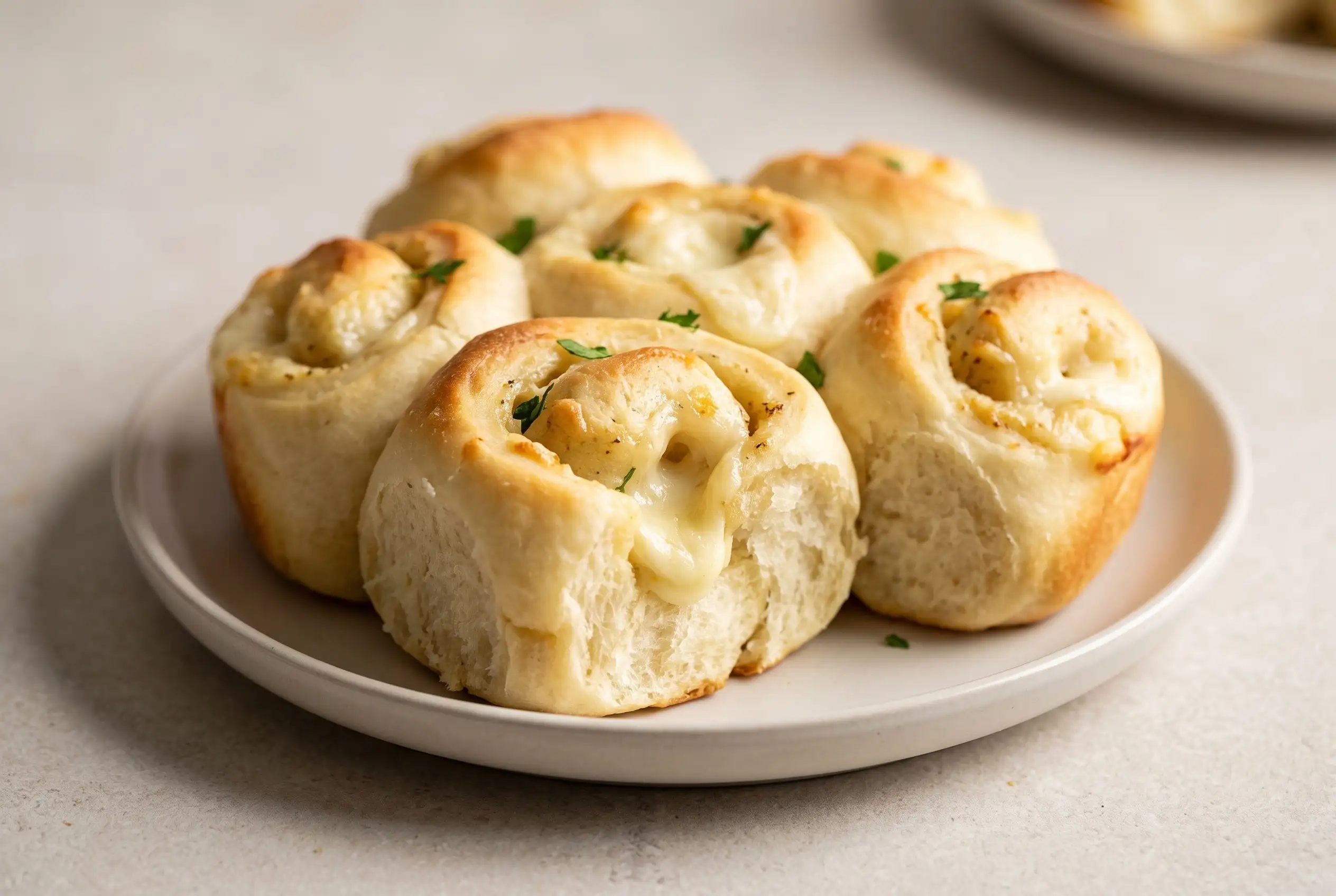
Cheese Garlic Rolls with Roasted Garlic and Mozzarella
Ingredients
Method
- Set the trimmed garlic head in a ramekin. Drizzle with olive oil, season with salt, cover with aluminum foil, and roast at 320°F / 160°C for 2 hours, until the garlic is very soft.
- Squeeze the roasted garlic cloves into the softened butter. Stir in the chopped parsley and 2 tablespoons of the garlic oil until combined into a garlic butter.
- Stir the warm milk, active dry yeast, and honey together in a bowl. Leave the mixture for about 10 minutes, until frothy.
- Add the all-purpose flour, bread flour, sugar, optional milk powder, softened dough butter, salt, egg yolks, and yeast mixture to a mixing bowl.
- Knead with a dough hook on medium speed for 15–20 minutes, until the dough is soft and smooth.
- Cover the dough and leave it in a warm place at about 85°F / 29°C for 1 hour 30 minutes, or until doubled in size.
- Roll the dough to about 1/8 inch / 1/4 cm thick, then spread the prepared garlic butter evenly across it.
- Distribute the mozzarella over the garlic butter and tightly roll the dough into a log.
- Cut the filled log into 6 equal portions with a knife or dental floss.
- Place the rolls on a baking sheet, cover, and let them proof for about 30 minutes, until puffy.
- Preheat the oven to 350°F / 175°C. Brush the rolls with the beaten egg and bake for 20–25 minutes, checking after 20 minutes.
- Brush the baked rolls with the remaining garlic butter and scatter chopped parsley over the top before serving.