Creamy Roasted Garlic Tomato Soup with Roasted Tomatoes
Creamy tomato soup takes on deeper flavor when ripe tomatoes are roasted alongside garlic before they meet vegetable broth, tomato paste, smoked paprika, and heavy cream. The roasting step gives the tomatoes a lightly caramelized character, while the garlic becomes mellow and rich enough to carry through every spoonful.
That combination makes creamy roasted garlic tomato soup especially appealing for a cozy lunch or dinner. The texture can be blended completely smooth, or the soup can retain some of the roasted tomato pieces for a little more texture. A crisp grilled cheese sandwich fits naturally alongside the warm bowl, turning a simple tomato soup into a satisfying comfort meal.
Roasted Tomatoes Set the Flavor Direction
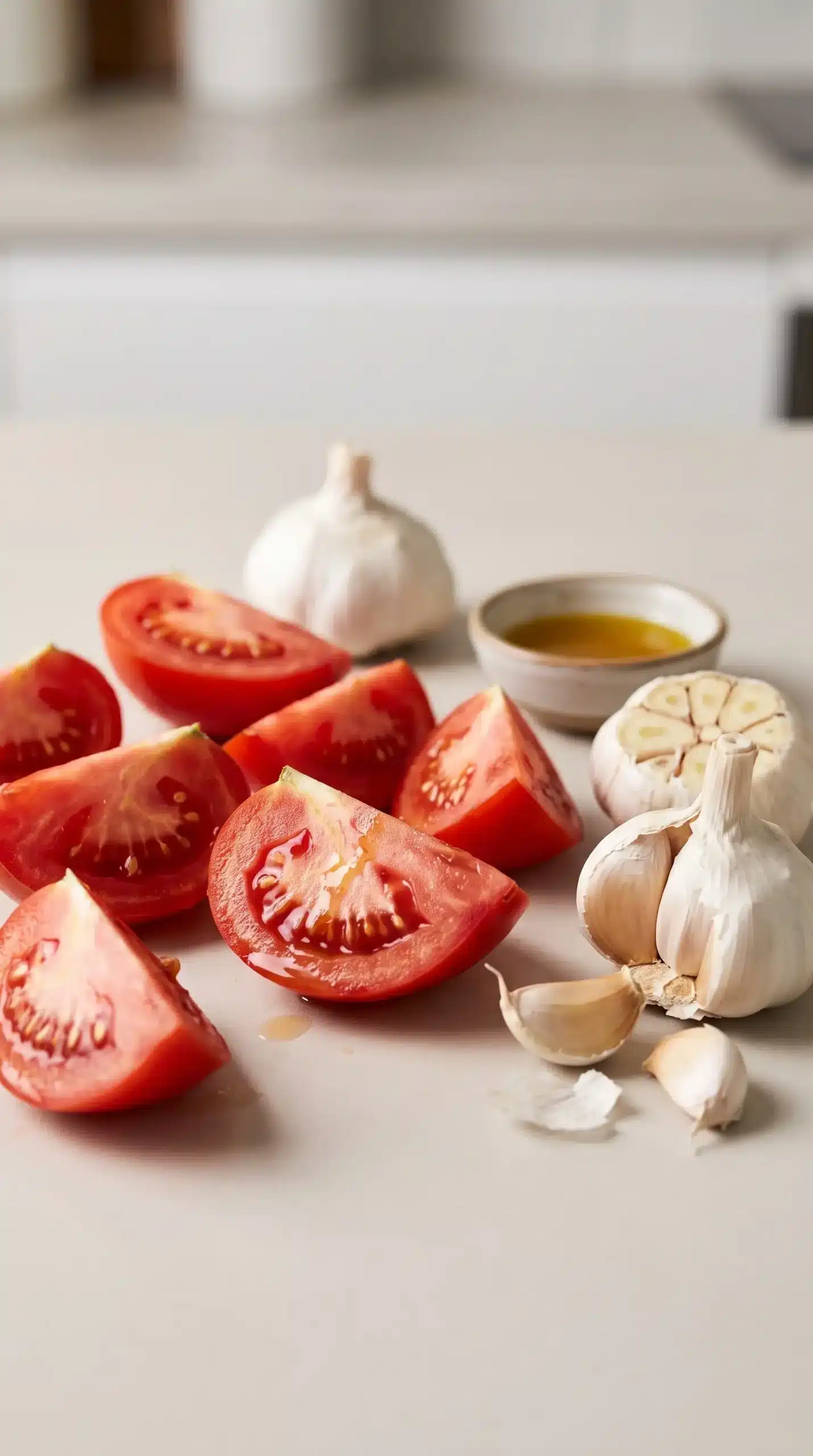
Ripe tomatoes are the foundation of the soup, so their condition matters from the beginning. Very ripe tomatoes bring the sweetness and full tomato character that make the finished creamy tomato soup taste rounded and rich.
Cutting the tomatoes into wedges exposes more surface area to the oven. During roasting, their juices concentrate while the edges become tender and slightly caramelized. That concentrated flavor gives the soup more depth once the roasted tomatoes are combined with broth and cream.
Garlic deserves equal attention because two bulbs are used alongside the tomatoes. Roasting it softens its sharper character and creates the mellow flavor associated with a roasted garlic soup recipe. Keeping the garlic with the tomatoes during roasting also means both components develop their flavor together before being blended into the soup.
Why Cream Changes the Tomato Soup Finish
Heavy cream gives the soup a noticeably richer mouthfeel and softens the acidity and intensity of the tomato base. Added after the roasted tomatoes, garlic, vegetable broth, tomato paste, and smoked paprika have come together, it helps create the creamy finish that defines this bowl.
The amount of cream also affects how the soup feels when served. A thoroughly blended mixture becomes smooth and substantial, while the roasted tomato flavor remains prominent underneath the richness. Coconut milk can be used when a dairy-free variation is desired, keeping the soup creamy while changing its character.
Roasted Garlic Tomato Soup Needs Controlled Roasting
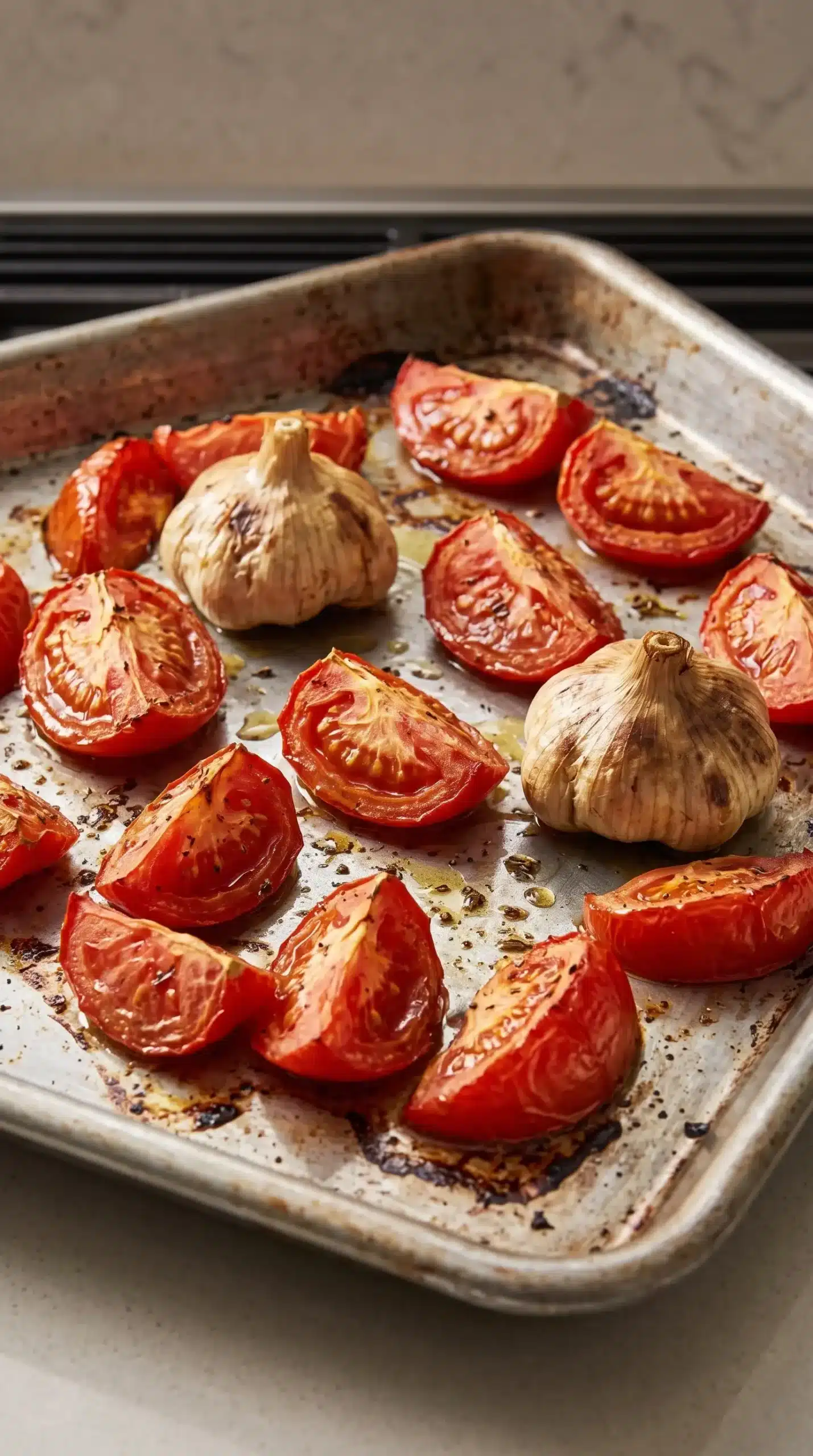
The oven stage is where much of the flavor development happens, so the tomatoes should be watched for the visual cues given by the recipe. At 400°F (200°C), the tomatoes and garlic roast until the tomatoes are tender and slightly caramelized, which takes about 25 to 30 minutes.
| Roasting cue | What it means | What to do |
|---|---|---|
| Tomatoes are still firm | The vegetables need more oven time | Continue roasting until tender |
| Tomatoes are tender with lightly caramelized edges | The desired roasting stage has been reached | Move them into the soup base |
| Garlic is roasted and softened | Its sharper raw character has mellowed | Add it with the roasted tomatoes |
Roasting also creates an opportunity to reserve some tomatoes for serving. A few roasted pieces placed over the finished soup provide a direct reminder of the ingredient that gives the bowl its character.
The Tomato Paste Builds a Fuller Base
Tomato paste provides concentrated tomato flavor in a small amount and works particularly well with the roasted tomatoes. Stirring it into the pot with the broth, smoked paprika, and cream helps reinforce the tomato foundation without requiring a complicated collection of seasonings.
Smoked paprika adds another layer to the creamy roasted tomato soup, giving the finished bowl a subtle smoky note. The all-purpose seasoning blend and sea salt establish the savory base, while additional salt can be added after blending if the flavor needs adjustment.
Vegetable broth supplies the liquid needed to bring the roasted ingredients together. Because the broth is combined with already-roasted tomatoes and garlic, it becomes part of a concentrated, flavorful base instead of carrying the soup by itself.
Blending Determines the Texture of Creamy Tomato Soup
An immersion blender makes it possible to puree the soup directly in the pot after the ingredients have simmered together. Blending longer creates a smoother consistency, while stopping sooner leaves more texture from the tomatoes and other cooked ingredients.
The texture decision is especially noticeable in a creamy tomato soup because the cream provides richness while blending determines how completely that richness is integrated. A fully smooth bowl feels cohesive, whereas a less thoroughly blended version keeps small pieces of the roasted vegetables in the finished soup.
Four Simple Choices That Shape the Bowl
- Tomato ripeness: Choose very ripe tomatoes to emphasize their natural sweetness and roasted flavor.
- Garlic intensity: Roasting the garlic produces a softer, mellower character than using it raw.
- Blend level: Puree longer for a smooth soup or stop earlier when more texture is preferred.
- Serving finish: Reserved roasted tomatoes, fresh basil, parsley, or grilled cheese can change the presentation and eating experience.
Common Creamy Roasted Garlic Tomato Soup Mistakes to Avoid
Using tomatoes before they are properly ripe can leave the soup without the sweetness that helps balance the richness of the cream. Very ripe tomatoes provide a stronger foundation and are especially useful because roasting concentrates their flavor.
Stopping the oven stage too early is another problem. The tomatoes need to become tender and slightly caramelized before they are transferred to the pot. If they remain firm, the roasted character will not be as developed.
For more even browning, avoid crowding the roasting pan; leaving space between the tomatoes helps prevent trapped steam and gives their edges a better chance to brown.
Overlooking the seasoning adjustment can also affect the finished bowl. Salt, the all-purpose seasoning blend, and smoked paprika are added before blending, but the soup should still be tasted afterward. The blended mixture is the point at which the overall seasoning can be assessed and adjusted.
Smoked Paprika Gives the Creamy Base Its Contrast
Smoked paprika is used in a relatively small amount, but its role is distinct from the all-purpose seasoning blend. The blend supports the savory foundation, while smoked paprika introduces a smoky note that contrasts with the sweetness of roasted tomatoes and the richness of heavy cream.
That contrast helps keep creamy tomato soup from tasting one-dimensional. The tomato remains the central flavor, while garlic, smoke, seasoning, and cream create supporting layers around it.
Serving Details That Complement the Soup
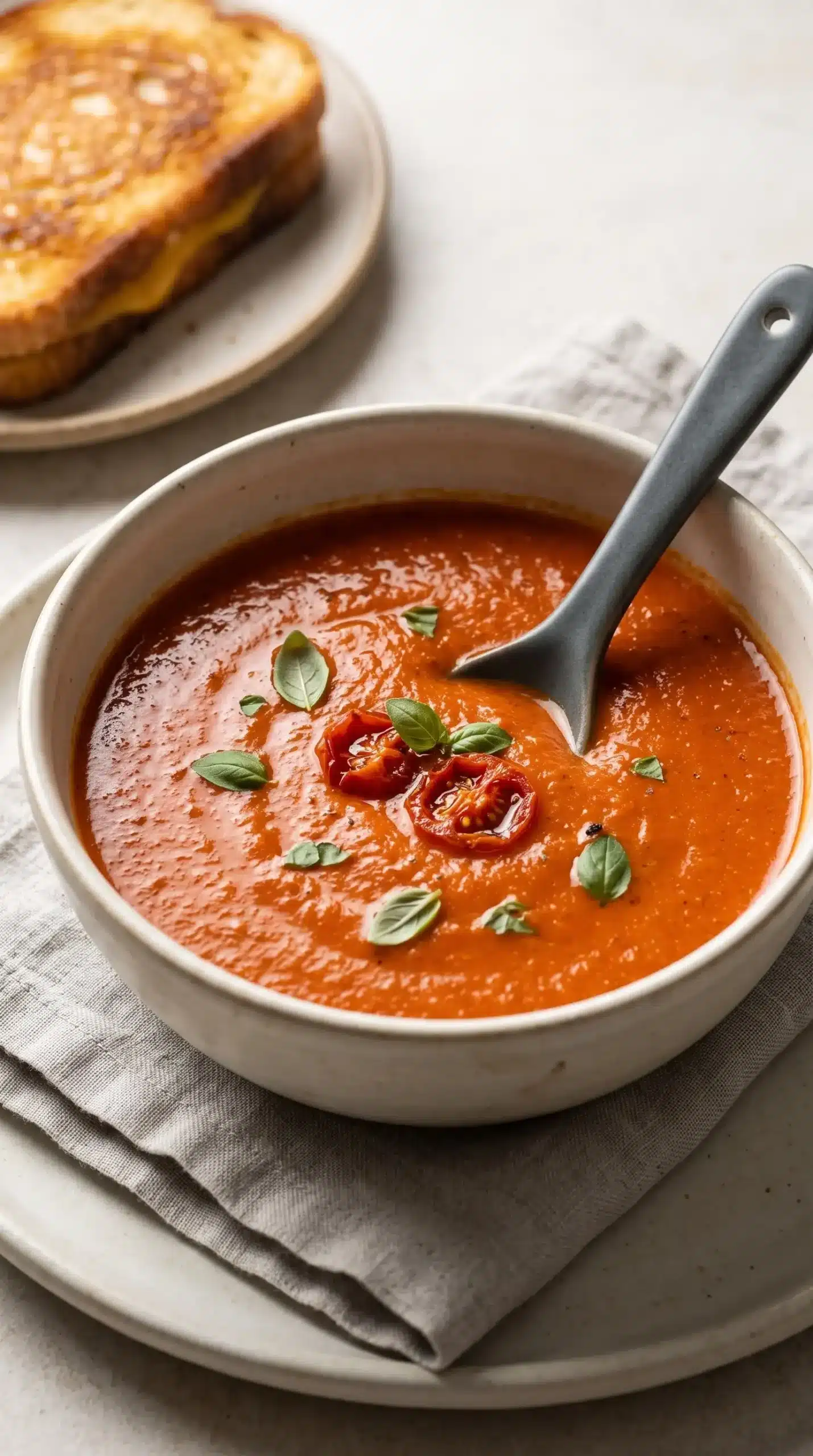
Serve the soup hot in bowls so the creamy texture and roasted flavors are experienced together. Reserved roasted tomatoes can be placed on top when a more visibly tomato-forward finish is desired.
Fresh basil or parsley can also be used as a finishing touch. Their fresh character provides a simple contrast to the warm, rich soup without changing the underlying preparation.
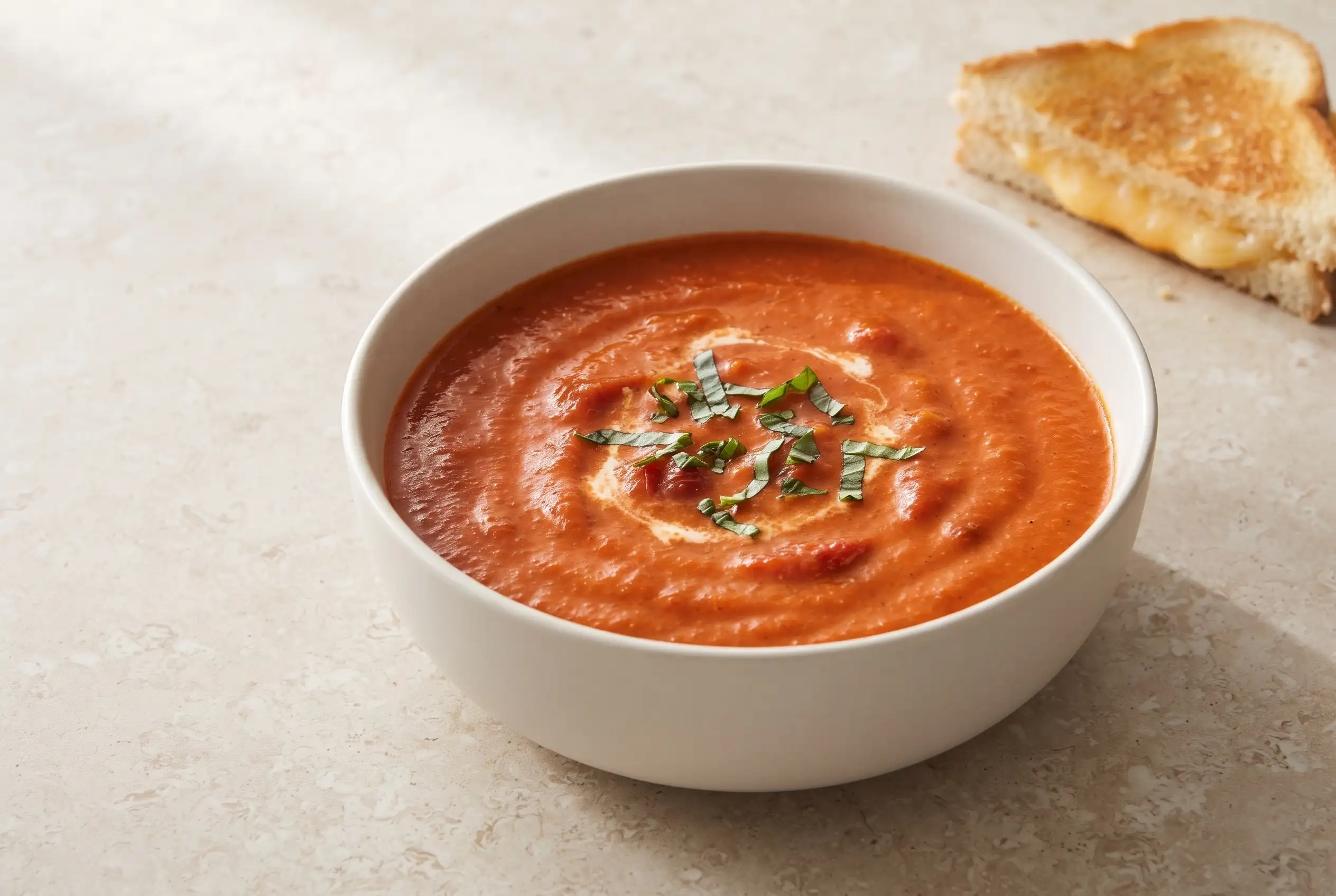
A crispy grilled cheese sandwich is an especially natural pairing. The combination creates the familiar contrast of creamy soup and crisp, cheesy bread, making roasted garlic tomato soup suitable for a comforting lunch or a simple dinner.
Storage Keeps Leftover Soup Ready to Reheat
Allow leftover soup to cool completely before transferring it to an airtight container. Refrigerated leftovers can be kept for up to 4 days, giving the soup a practical place in a make-ahead lunch or dinner routine.
Freezing is also possible when longer storage is needed. Leave some room in the container because the soup expands as it freezes. This small amount of space helps accommodate that expansion without overfilling the container.
Simple Variations for a Different Bowl
Coconut milk can replace the heavy cream when a dairy-free version is wanted. The change keeps a creamy texture while introducing a different flavor profile, and vegetable broth already fits the preparation.
Additional vegetables can also be incorporated. Carrots or bell peppers are suitable options for changing the vegetable character of the soup, while fresh basil or oregano can provide another herbaceous layer.
For extra heat, red pepper flakes or hot sauce can be added. The tomato, garlic, and cream base gives those spicy additions a rich backdrop, so only a small amount may be needed to change the character of the bowl.
How the Roasting and Simmering Work Together
The preparation has two distinct flavor-building stages. Roasting concentrates the tomatoes and mellows the garlic, while the stovetop stage brings those roasted ingredients together with onion, broth, tomato paste, smoked paprika, and cream.
Simmering the combined mixture for 10 minutes gives the ingredients time to come together before blending. The immersion blender then transforms the cooked mixture into the characteristic creamy consistency.
One Roasted Garlic Soup Recipe, Several Texture Choices
A smooth finish is useful when the priority is a unified, creamy bowl. Blending the soup thoroughly integrates the roasted tomato and garlic mixture with the broth and cream, producing an even texture throughout.
Less blending creates a more rustic result. Small pieces of the roasted vegetables can remain visible, making each spoonful slightly more varied while preserving the same core flavor combination.
Roasting Makes Creamy Tomato Soup More Flavorful
Roasted tomatoes and softened garlic give creamy tomato soup its most important layer of flavor, while the cream determines the richness and blending determines the texture. Paying attention to the roasting cues and tasting after blending provides the most useful control over the finished bowl, while fresh basil can add a bright finish as seen in roasted tomato basil soup.
Once those elements are balanced, the soup can stay simple: a hot bowl, a few reserved roasted tomato pieces or fresh herbs, and a crisp grilled cheese sandwich are enough to complete the meal.
Questions About Creamy Tomato Soup and Storage
Can canned tomatoes replace the fresh tomatoes?
Yes. Canned tomatoes can be used when fresh tomatoes are unavailable, although the seasoning should be checked carefully because canned tomatoes may contain more salt. The supplied preparation is built around roasting fresh tomatoes, so canned tomatoes will produce a somewhat different flavor and will not follow the same roasting stage.
How can the soup be made dairy-free?
Replace the heavy cream with coconut milk and continue using vegetable broth. Coconut milk keeps the soup creamy while making it suitable for a dairy-free variation, although it will give the finished bowl a different flavor from the cream-based version.
How do I make roasted garlic tomato soup spicier?
Red pepper flakes or a dash of hot sauce can be added to increase the heat. Add the spicy ingredient gradually so the tomato, roasted garlic, and smoked paprika flavors remain noticeable alongside the added heat.
Can the soup be frozen?
Yes. Cool the soup completely, transfer it to a suitable container, and leave some space at the top because the soup expands during freezing. This makes freezing practical when the leftovers will not be eaten within the refrigerated storage period.
What can I serve with creamy roasted tomato soup?
A crispy grilled cheese sandwich is the classic pairing described for this soup. Fresh basil or parsley can also be added to the bowl, and reserved roasted tomatoes provide an additional garnish that reinforces the roasted tomato flavor.
Creamy Roasted Garlic Tomato Soup with Roasted Tomatoes
Ingredients
Method
- Heat the oven to 400°F / 200°C.
- Place the tomato wedges and peeled garlic bulbs on a baking sheet.
- Coat the tomatoes and garlic with the olive oil, then season with sea salt and the all-purpose seasoning blend.
- Roast the tomatoes and garlic for 25 to 30 minutes, until the tomatoes are tender and lightly caramelized.
- Place the diced onion in a pot over medium heat and cook until softened.
- Add the roasted tomatoes and garlic to the pot. Pour in the vegetable broth and stir to combine.
- Mix in the tomato paste, smoked paprika, and heavy cream, then simmer for 10 minutes.
- Use an immersion blender to puree the soup until smooth. Taste and adjust the seasoning as needed.
- Serve the hot soup with reserved roasted tomatoes on top, if desired, and a grilled cheese sandwich on the side.