Creamy Beef Pasta with Parmesan and Garlic Bowtie Pasta
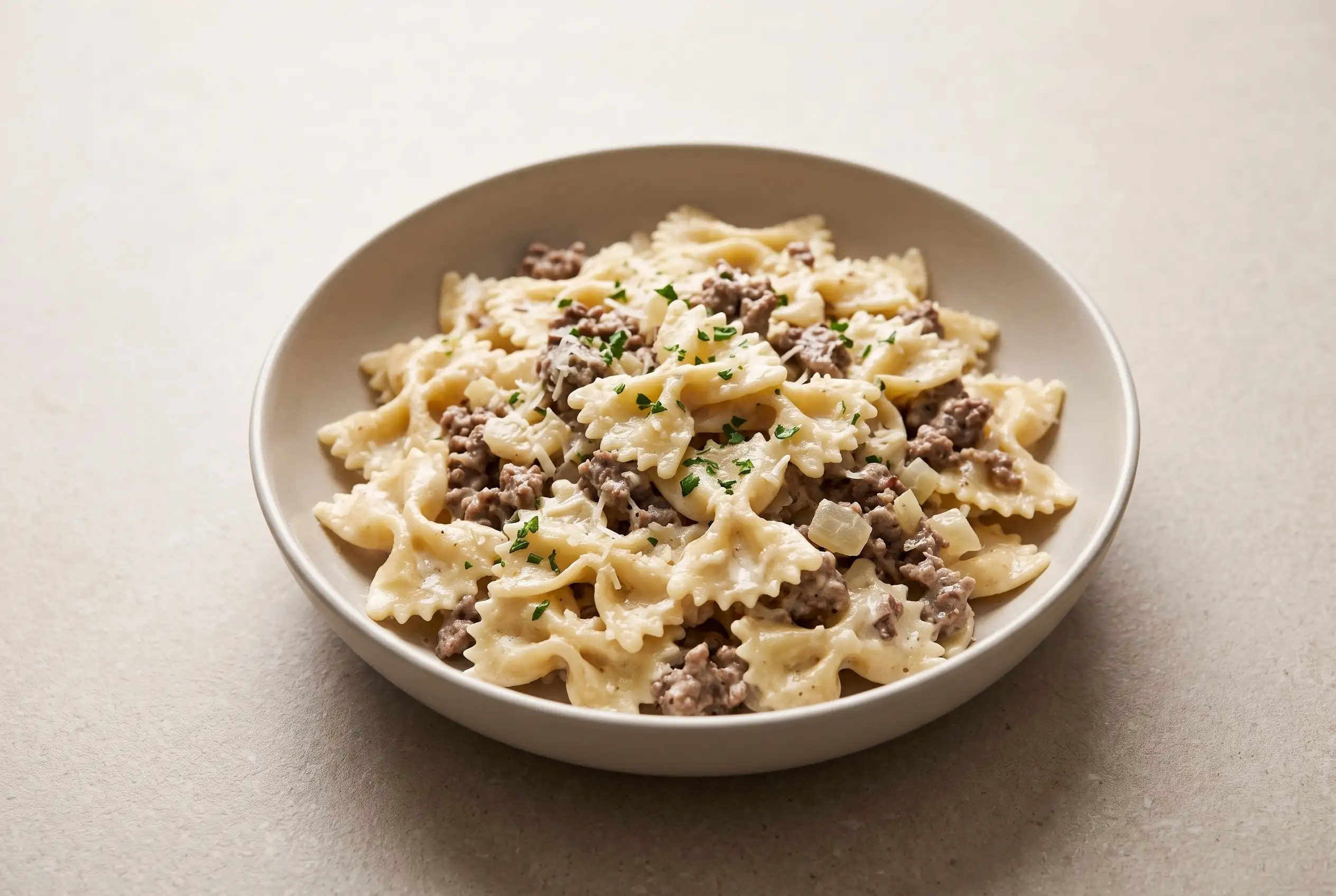
Creamy beef pasta brings together the cozy appeal of tender bowtie pasta, savory ground beef, garlic, and a smooth Parmesan sauce in one satisfying skillet meal. Creamy Parmesan Garlic Beef Bowtie Pasta has enough richness to feel comforting while still relying on familiar ingredients and straightforward cooking.
The farfalle shape is especially well suited to the sauce because its folds and curves catch the creamy mixture. Ground beef adds a hearty element, while Worcestershire sauce, Italian seasoning, smoked paprika, and garlic build layers of savory flavor without requiring a complicated ingredient list.
Bowtie Pasta Makes Every Bite Count
Farfalle gives creamy beef pasta a useful texture advantage. The wider centers and folded edges hold onto the Parmesan garlic sauce, so the noodles stay well coated as you eat. Cooking the pasta until al dente also gives the finished dish enough structure to stand up to the creamy sauce.
Fresh Parmesan Matters in the Sauce
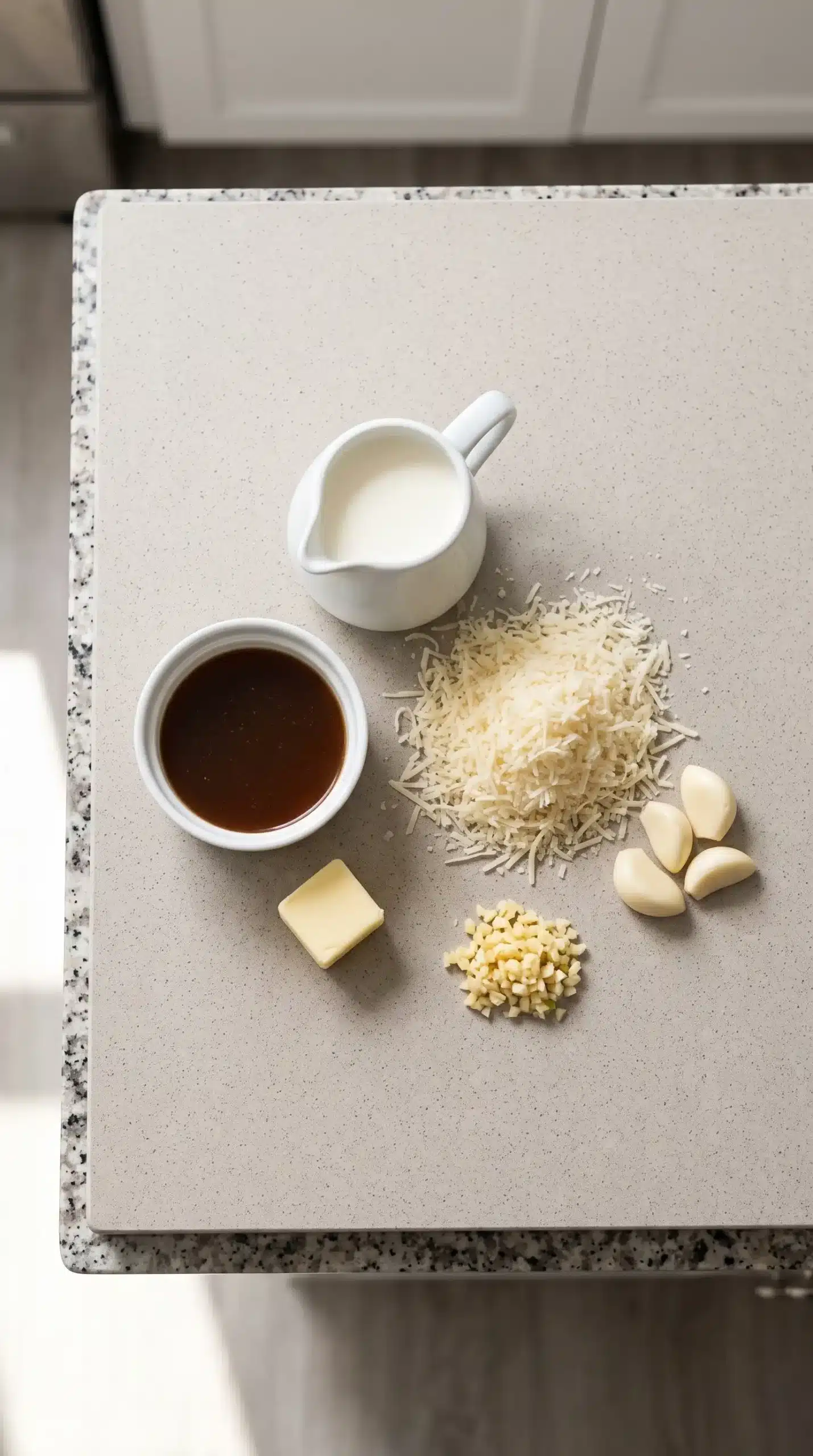
Freshly grated Parmesan is one of the most important choices for the sauce. It melts more smoothly than pre-shredded cheese, which helps create the creamy consistency that defines the dish.
Half-and-half provides the main creamy base, while whole milk can be used for a lighter result. Heavy cream is another option when a richer sauce is preferred. Whichever dairy option you choose, keeping the heat lower when the dairy and Parmesan enter the skillet helps you control the texture.
Beef broth also has an important role before the creamy ingredients are added. It loosens the browned bits left in the skillet and gives the sauce a savory foundation. Reserved pasta water can later provide additional adjustment if the finished sauce becomes too thick.
Garlic and Seasoning Shape the Beef
Garlic, onion, Worcestershire sauce, Italian seasoning, and smoked paprika give the ground beef its character. The onion softens in the skillet, while the garlic becomes fragrant before the seasonings are allowed to bloom briefly.
- Worcestershire sauce: Adds a savory accent alongside the browned beef.
- Italian seasoning: Brings the familiar herb profile into the creamy sauce.
- Smoked paprika: Contributes a smoky note that works with the beef and Parmesan.
- Red pepper flakes: Provide optional heat without changing the basic sauce.
Because these flavors are introduced while the beef mixture is still in the skillet, they become part of the sauce instead of sitting separately on the finished pasta.
Build the Sauce Around the Skillet
One useful feature of creamy Parmesan garlic beef pasta is that the sauce develops in the same skillet used for the beef. Browning creates flavorful bits on the cooking surface, and the beef broth helps loosen them when it is added.
After the broth simmers briefly, butter contributes richness before the dairy and Parmesan are incorporated. Scraping the bottom of the pan during this stage helps bring those browned bits into the sauce.
The pasta does not need a separate sauce vessel. Once the Parmesan has melted and the mixture is smooth, the cooked farfalle can be tossed directly into the skillet. That keeps the noodles closely connected to the beef and sauce.
Control the Creamy Pasta Texture
Texture depends on managing two points: the pasta itself and the consistency of the sauce. Cook the bowtie pasta until al dente, then reserve about half a cup of its cooking water before draining. That starchy liquid gives you a practical way to loosen the sauce later.
| Texture issue | Useful adjustment | What to look for |
|---|---|---|
| Sauce is too thick | Add a splash of reserved pasta water | The sauce should coat the pasta without feeling stiff |
| Sauce is creamy and smooth | Toss in the cooked farfalle | The noodles should become evenly coated |
| Sauce needs more seasoning | Adjust salt and black pepper | Seasoning should complement the beef and Parmesan |
| More heat is wanted | Add red pepper flakes | A gentle spicy note should sit alongside the creamy sauce |
Browned Beef Gives the Pasta Its Foundation
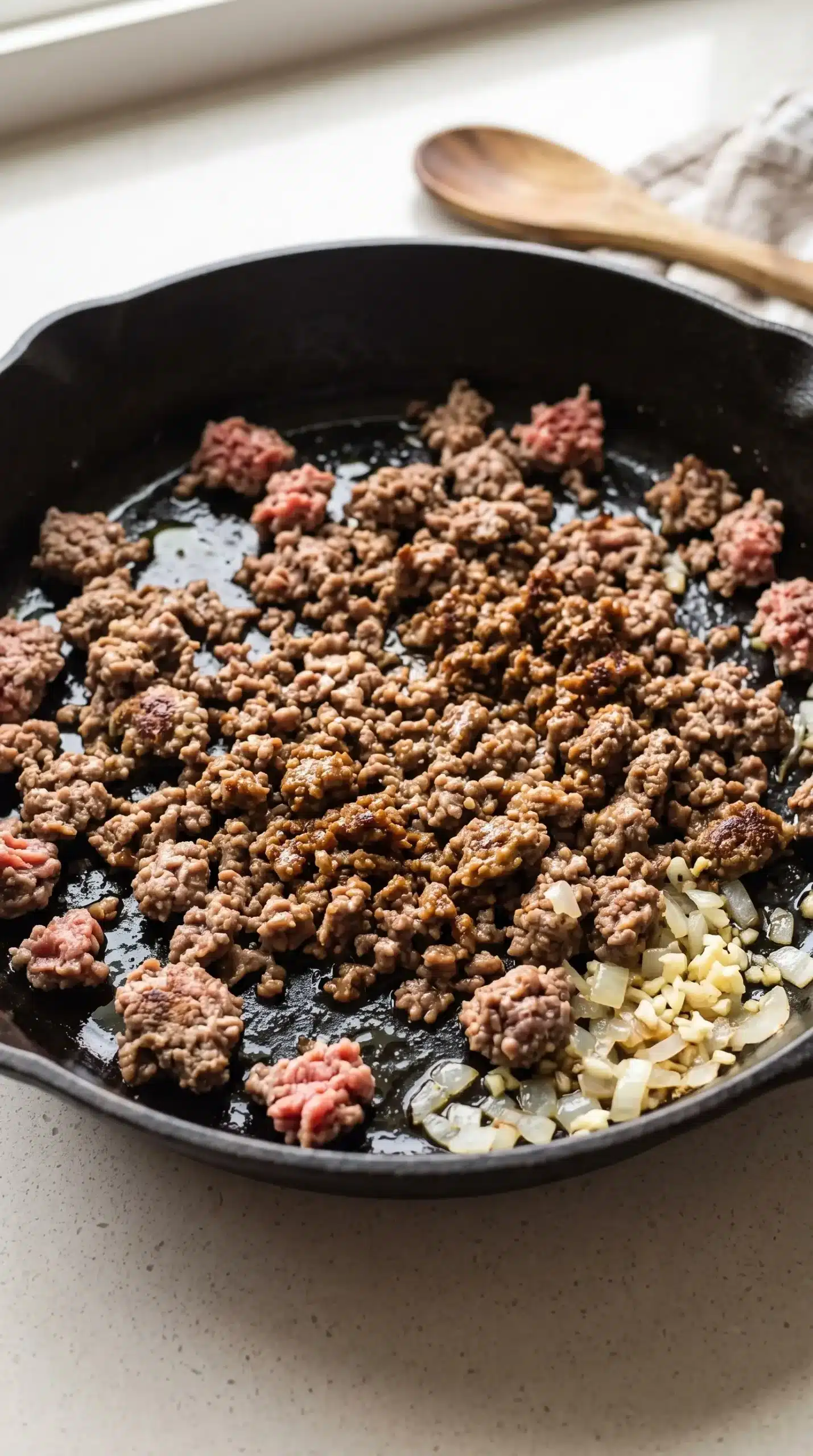
Ground beef should be cooked in the olive oil over medium-high heat and broken apart as it browns. The browned meat becomes the savory foundation of the dish, so taking enough time to cook it thoroughly before moving on gives the skillet a strong starting point.
The browned surface of the beef also develops flavor through the Maillard reaction, which occurs when proteins and sugars react at sufficiently high temperatures. This is one reason to give the beef enough skillet contact to brown well rather than simply cooking it through.
If excess grease remains after browning, drain it before continuing. Removing that excess keeps the sauce from becoming unnecessarily greasy while leaving the cooked beef in the skillet.
Once the beef is ready, the chopped onion and minced garlic go into the same pan. Their short cooking period softens the onion and makes the garlic fragrant, preparing the mixture for the Worcestershire sauce and seasonings.
Let Parmesan Finish the Creamy Beef Pasta
The dairy and cheese are added after the broth has had a brief simmer. Lowering the heat at this point gives you better control as the half-and-half and Parmesan come together.
Stir continuously enough to help the cheese melt into the liquid. Freshly grated Parmesan is particularly useful here because its texture supports a smoother sauce. Once the sauce looks creamy and cohesive, seasoning can be adjusted before the pasta is folded in.
Three Signs the Sauce Is Ready for Farfalle
You do not need complicated tests to judge the sauce. A few visual and textural cues tell you when it is ready to meet the pasta.
- Smooth appearance: The Parmesan should be melted into the creamy base without obvious unmelted pieces.
- Coating consistency: The sauce should be thick enough to cling to the pasta but loose enough to toss easily.
- Balanced seasoning: Salt, black pepper, and optional red pepper flakes should support the beef, garlic, and Parmesan.
Avoid These Creamy Beef Pasta Mistakes
Using pre-shredded Parmesan can make the sauce less smooth because it does not melt as readily as freshly grated cheese. Choosing fresh Parmesan is a simple way to improve the sauce’s consistency.
Another problem can come from letting the creamy mixture become too thick before the pasta is added. Reserved pasta water provides an easy correction. Add a splash and toss until the sauce reaches a consistency that coats the farfalle comfortably.
Skipping the browned bits in the skillet also misses a useful source of flavor. When the beef broth enters the pan, scrape the cooking surface so those bits become part of the sauce.
Make the Finished Pasta More Flexible
Creamy beef pasta is easy to adapt when you want to use what is available. Ground turkey or ground chicken can replace the ground beef, while sautéed mushrooms provide a meatless alternative with plenty of savory depth.
Ground beef pairs naturally with garlic and butter, so a weeknight menu can move toward creamy garlic butter pasta with ground beef when you want the beef to remain the main protein.
Vegetables can also be worked into the dish. Spinach, peas, or sautéed bell peppers are specifically suited to the recipe when you want to add produce without changing its basic creamy character.
| Change | Suitable option | Effect on the dish |
|---|---|---|
| Protein | Ground turkey or chicken | Creates a poultry-based variation |
| Meatless option | Sautéed mushrooms | Keeps a savory, substantial character |
| Vegetable addition | Spinach, peas, or sautéed bell peppers | Adds vegetables to the creamy pasta |
| Pasta choice | Whole wheat or gluten-free bowtie pasta | Offers an alternative pasta base |
Choose Sides That Keep Dinner Balanced
The richness of parmesan garlic beef pasta makes simple sides a natural match. A crisp green salad can provide contrast, while warm garlic bread gives you another way to enjoy the creamy sauce.
Roasted vegetables are another suitable pairing when you want a vegetable-focused side. The pasta is also filling enough to serve by itself, particularly when you want to keep the meal uncomplicated.
Keep Leftovers Creamy When Reheating
After the pasta has cooled completely, transfer it to an airtight container and refrigerate it for up to three days. Keeping the leftovers sealed helps preserve the dish while it is stored.
Reheat gently on the stove or in the microwave. A splash of milk or broth can help loosen the sauce as it warms and restore some of its creamy consistency.
Cream-based sauces can change texture when frozen, so refrigeration is the better storage approach for maintaining the intended character of the dish.
Why Creamy Parmesan Garlic Beef Pasta Works
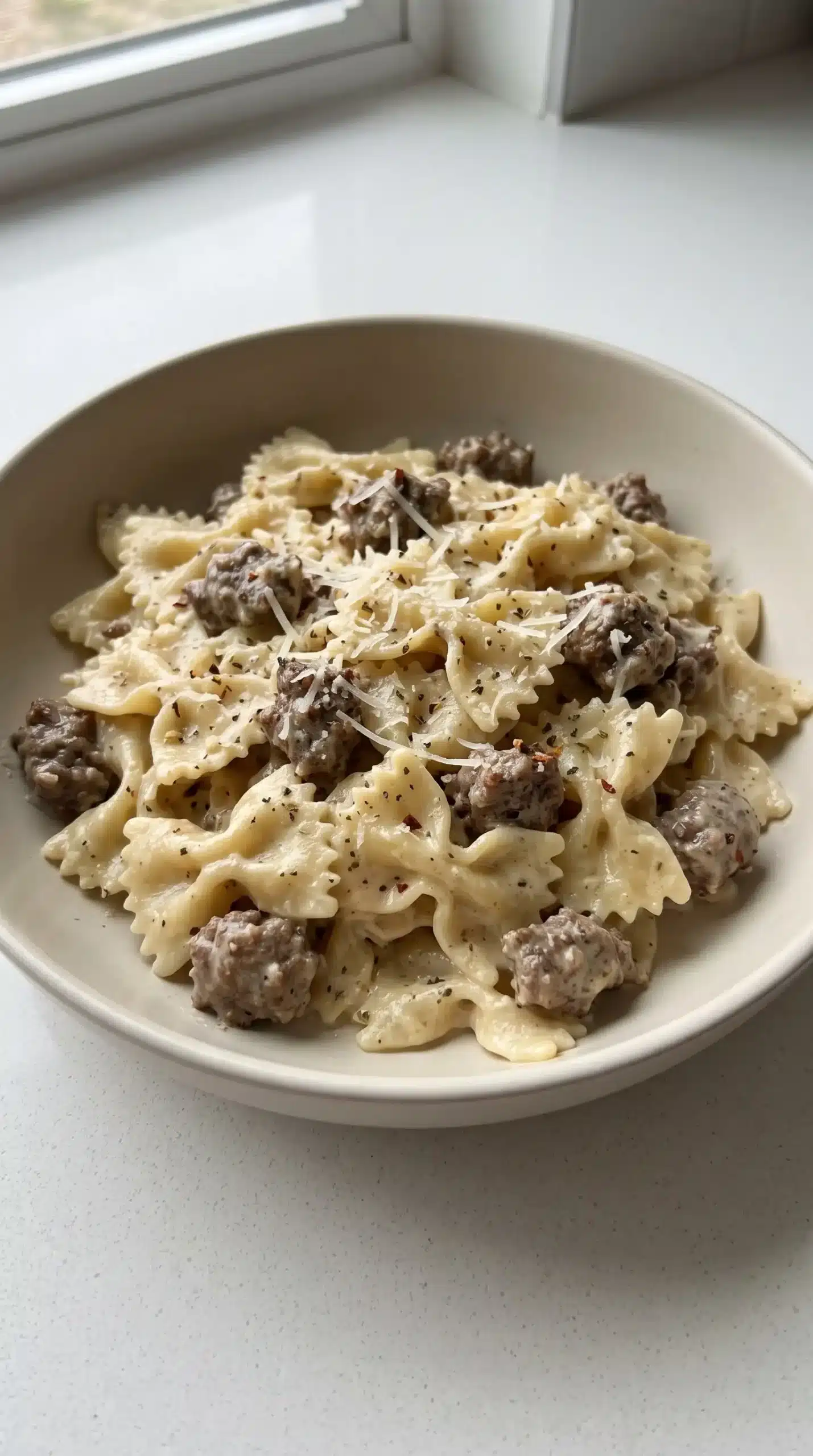
Garlic, Parmesan, beef, and farfalle each contribute to a dish where texture and flavor meet in the same skillet. The browned beef supplies a savory base, the seasoned broth develops that base into a sauce, and the dairy and Parmesan turn it creamy.
The most useful cooking judgment comes at the point where the sauce meets the pasta. If the sauce needs loosening, reserved pasta water gives you control without requiring another ingredient. That small adjustment helps the farfalle stay coated and keeps the finished creamy beef pasta from becoming overly thick.
Creamy Beef Pasta Questions About Texture and Storage
Can I use whole milk instead of half-and-half?
Yes. Whole milk is listed as an alternative to half-and-half and gives the sauce a lighter option. Heavy cream can be used when you prefer a richer sauce.
Why should I grate the Parmesan myself?
Freshly grated Parmesan melts more smoothly than pre-shredded cheese, making it a better choice when you want the sauce to become cohesive and creamy.
How can I loosen creamy beef pasta if it gets too thick?
Use some of the reserved pasta water. Add a small splash while tossing the pasta in the skillet until the sauce reaches the consistency you want.
Can I prepare the sauce before serving?
You can prepare the sauce ahead, but cooking the pasta just before serving gives you the best texture. Combine the freshly cooked pasta with the prepared sauce when you are ready to eat.
Can I freeze Parmesan garlic beef pasta?
Freezing is not the preferred storage method because cream-based sauces can change texture after freezing. Refrigerating the leftovers and reheating them gently is a better approach.
What other pasta shapes can replace bowties?
Penne, rotini, and shells can all be used. Farfalle remains especially useful because its shape catches the creamy sauce well.
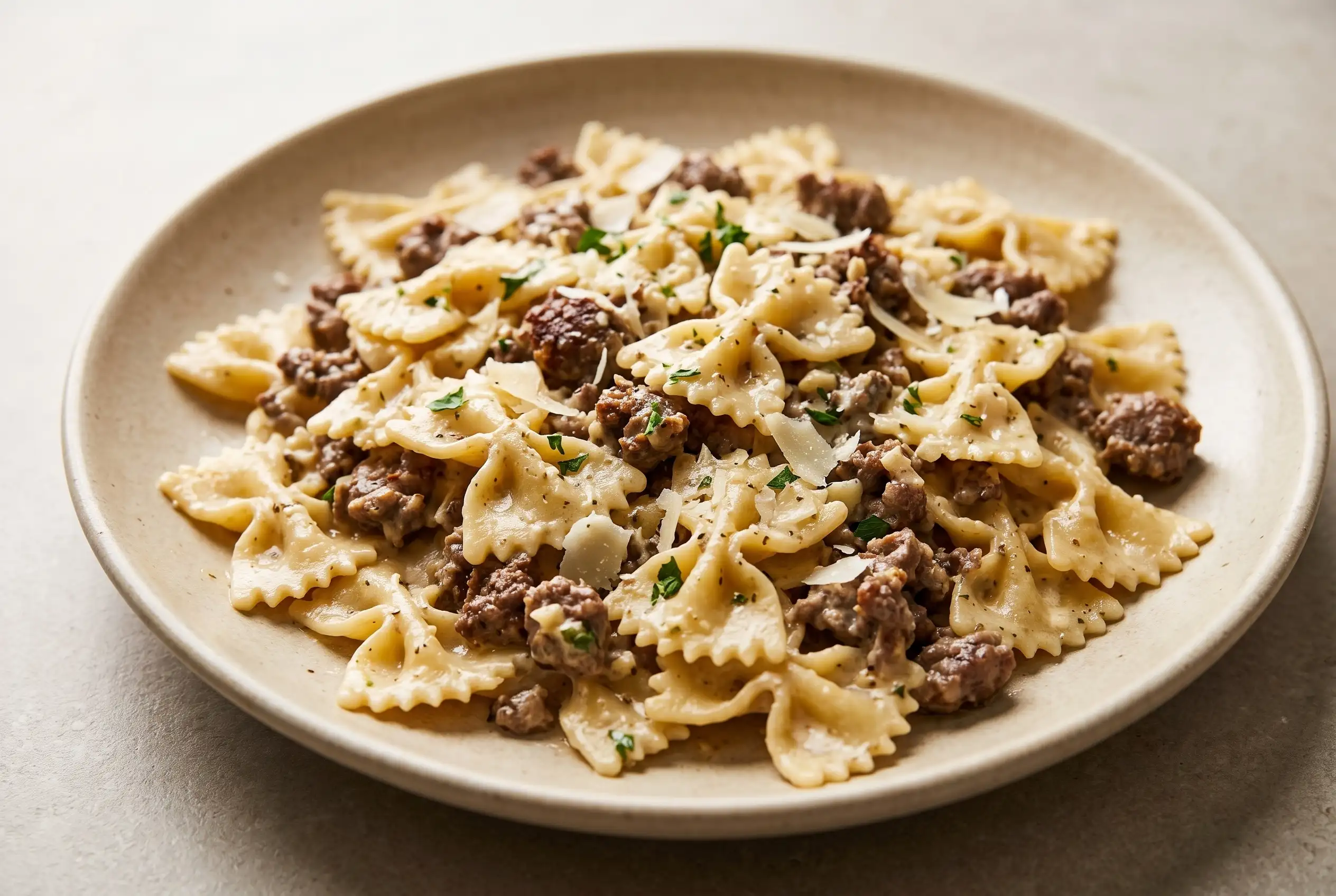
Creamy Beef Pasta with Parmesan and Garlic Bowtie Pasta
Ingredients
Method
- Bring a large pot of salted water to a boil. Cook the bowtie pasta until al dente, reserving ½ cup of the pasta water before draining. Set the drained pasta aside.
- Warm the olive oil in a large skillet over medium-high heat. Add the ground beef and cook until browned, breaking it into smaller pieces as it cooks. Drain excess grease if necessary.
- Add the chopped onion and minced garlic to the skillet. Cook for a few minutes, until the onion has softened and the garlic is fragrant.
- Mix in the Worcestershire sauce, Italian seasoning, and smoked paprika. Cook the seasoned beef mixture for about 1 minute.
- Add the butter and allow it to melt, then pour in the beef broth. Scrape the browned bits from the skillet surface and let the mixture simmer briefly.
- Lower the heat and stir in the half-and-half and freshly grated Parmesan. Keep stirring until the cheese has melted and the sauce becomes smooth and creamy.
- Season the sauce with salt and black pepper. Add the red pepper flakes if using.
- Add the cooked bowtie pasta to the skillet and gently toss until thoroughly coated with the beef and Parmesan sauce. If the sauce is too thick, stir in small amounts of the reserved pasta water as needed.
- Finish with freshly chopped parsley and serve hot.