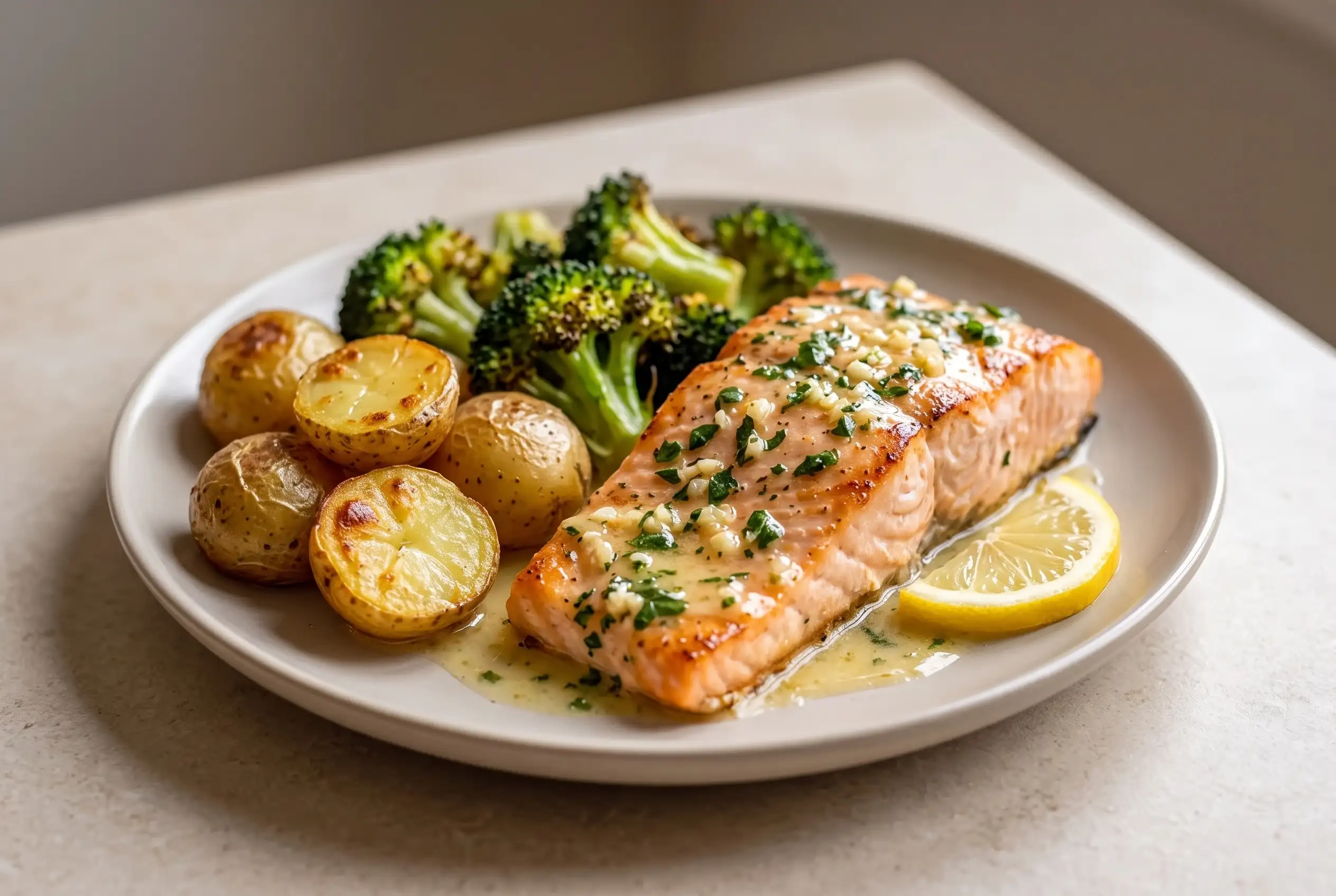
Baked Salmon with Lemon Butter Sauce and Roasted Potatoes
Baked salmon with lemon butter sauce brings together tender fish, bright lemon, savory garlic, and rich butter in a simple oven meal. The salmon is paired with crisp roasted baby potatoes and broccoli, giving the plate a satisfying mix of textures and colors without requiring a complicated preparation.
What makes baked salmon especially appealing here is the way the lemon butter sauce is added before the fish goes into the oven. As the salmon cooks, the sauce keeps the flavor focused on the fresh, buttery combination while the vegetables roast alongside it. The result is an easy dinner that feels suitable for both an ordinary evening and a more special meal.
Why Lemon Butter Fits Baked Salmon
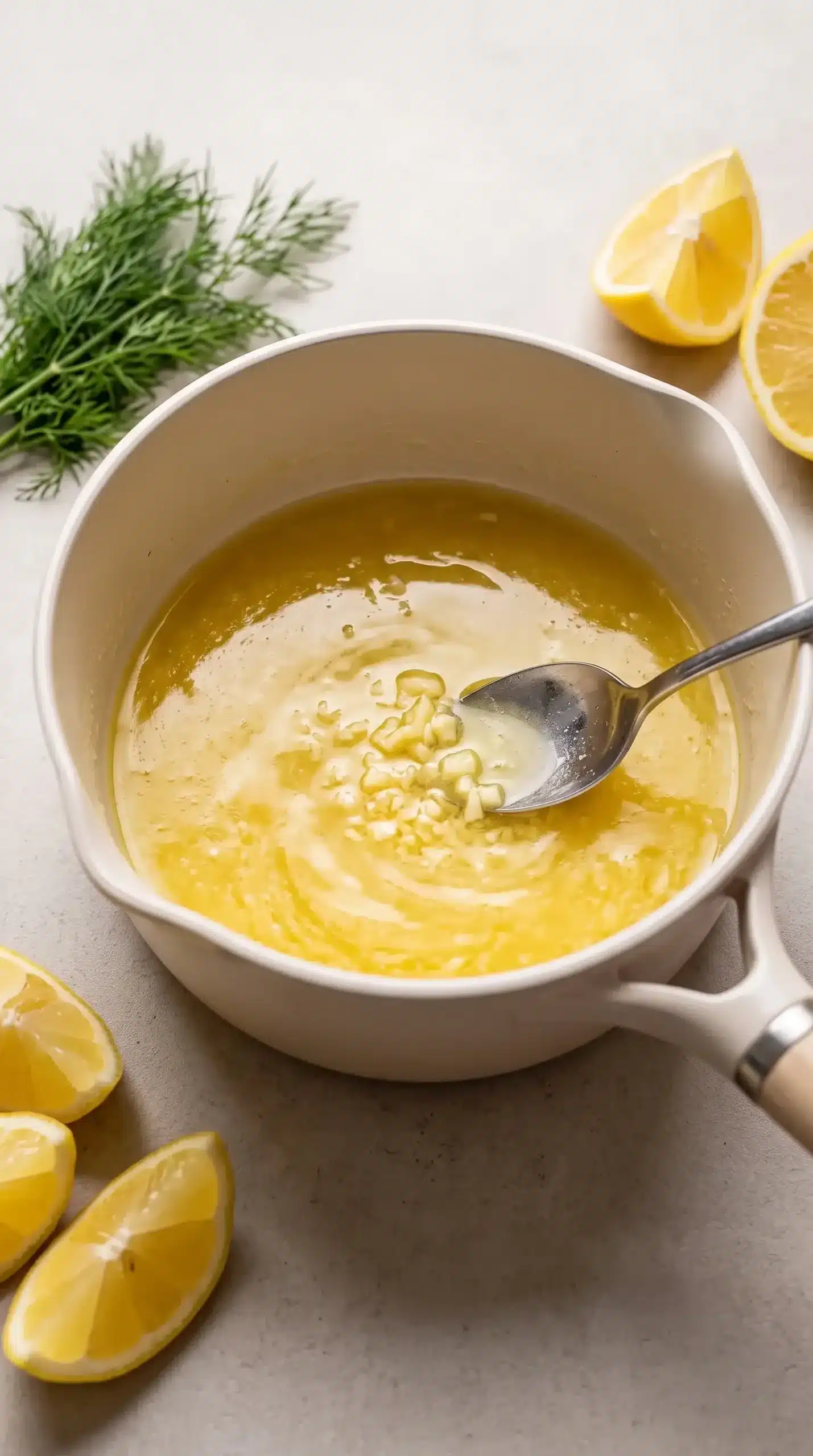
Lemon juice brings acidity that cuts through the richness of butter, while minced garlic gives the sauce a savory edge. Together, those flavors complement salmon without covering up its natural character. The sauce is simple enough to prepare in a small saucepan, yet it gives the finished fish a more pronounced flavor than seasoning alone.
Roasted potatoes also contribute an important contrast. Their crisp edges and soft centers give the meal substance, while broccoli adds a fresh vegetable element. Every part can reach the table from the same oven session, which keeps the preparation practical.
Choosing the Right Salmon for the Oven
Four salmon fillets are used for the meal, with each piece seasoned with salt and pepper before the lemon butter sauce is added. Individual fillets make it straightforward to portion the meal and check the fish as it cooks.
Fresh or fully thawed frozen salmon can work for the preparation. If frozen fillets are being used, thaw them completely before cooking so the fish can bake evenly. Thickness can affect how quickly a fillet cooks, so the most useful visual cue is a piece that flakes easily with a fork.
The Sauce Details That Matter Most
Four tablespoons of butter form the base of the sauce, while two tablespoons of lemon juice provide the bright flavor. One teaspoon of minced garlic rounds out the mixture with a savory note. The quantities are deliberately simple, making the sauce easy to prepare while the potatoes are already roasting.
Melting the butter over medium heat gives the sauce a smooth starting point. Once the lemon juice and garlic are added, mixing them well helps distribute those flavors throughout the butter. The sauce then goes directly over the seasoned salmon in the baking dish.
Fresh dill or parsley can be added when extra herb flavor is wanted. These herbs work with the lemon profile without changing the basic character of the dish. Extra lemon wedges can also be offered at serving time for anyone who prefers a brighter finish.
Getting the Potatoes Crisp Before Serving
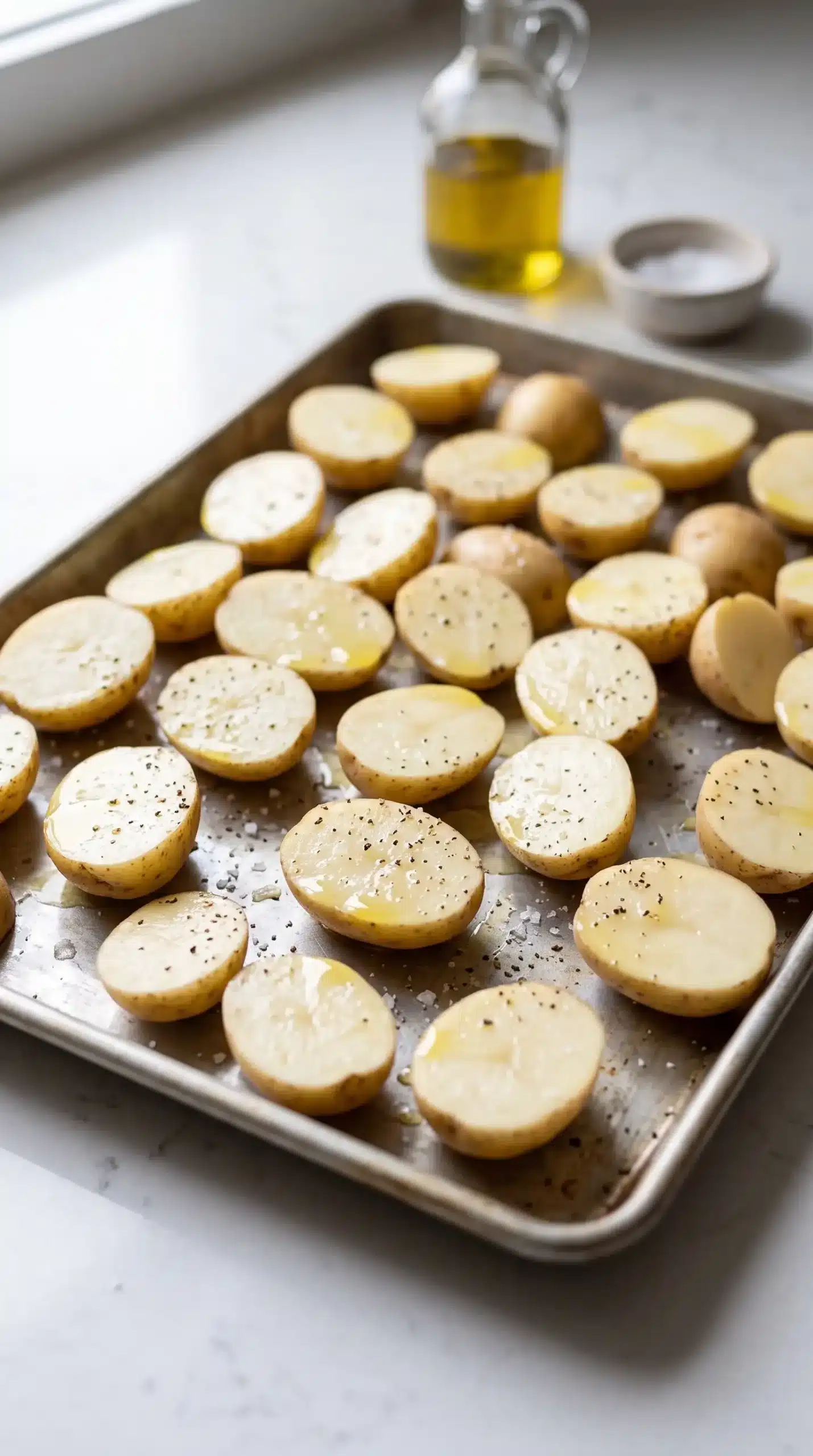
Halved baby potatoes are coated with olive oil and seasoned with salt and pepper before roasting. Giving them their head start in the oven is important because they need more time than the salmon. Their initial roasting period creates the opportunity for crisp edges before the fish and broccoli are ready.
| Vegetable | Preparation | Oven timing |
|---|---|---|
| Baby potatoes | Halved, coated with olive oil, seasoned | Start roasting first |
| Broccoli florets | Added to the baking sheet | Last 10–15 minutes |
| Salmon fillets | Seasoned and topped with lemon butter | About 12–15 minutes |
Coordinating Salmon and Broccoli in One Oven
Once the potatoes have been roasting for about 20–25 minutes, broccoli joins them for the last 10–15 minutes. This timing keeps the vegetables moving toward the same serving window instead of requiring separate cooking sessions.
Meanwhile, the prepared salmon goes into its baking dish and cooks in the same 400°F (200°C) oven. The fish generally needs about 12–15 minutes, so its cooking period overlaps naturally with the broccoli’s roasting time.
How to Judge When Baked Salmon Is Done
Fork flaking provides the clearest practical sign that the salmon is cooked. A fillet should separate easily when tested with a fork instead of remaining resistant or raw-looking in the center. For a precise doneness check, use a 145°F (63°C) internal temperature for fully cooked salmon.
Because fillets can differ in thickness, relying on appearance alone can be less useful than checking the fish directly. Start paying attention toward the end of the suggested cooking window, particularly when the fillets are relatively thin.
Three Mistakes That Can Weaken Baked Salmon
- Starting everything together: Potatoes need their head start, so putting salmon and potatoes into the oven simultaneously can leave the potatoes behind.
- Overlooking the broccoli timing: Broccoli belongs on the baking sheet during the last 10–15 minutes, allowing it to cook alongside the finishing potatoes.
- Skipping the doneness check: Salmon should flake easily with a fork, with 145°F (63°C) serving as the stated internal-temperature reference.
Simple Swaps for the Vegetable Sides
Broccoli is not the only vegetable option for the plate. Asparagus or green beans can replace it when a different green vegetable is preferred. Zucchini and bell peppers are also suitable choices for changing the vegetable combination.
For a lower-carbohydrate plate, the potatoes can be left out and replaced with a larger portion of broccoli or a side salad. Quinoa, rice, or a fresh green salad can also accompany the salmon when a different side arrangement is desired.
Making the Lemon Butter Salmon Your Own
Changing the sauce gives the same salmon preparation a different flavor direction. Teriyaki can replace the lemon butter sauce for a sweeter, savory profile, while a spicy chili garlic sauce can bring more heat.
Herbs provide another small adjustment without requiring a different cooking approach. Dill or parsley can be incorporated into the lemon butter sauce, or fresh herbs can be used as a garnish when the fish reaches the table.
Different fish can follow the general baking method, although cooking times may need adjustment for trout, cod, or halibut. For a vegetable-forward meal, Mediterranean baked fish pairs oven-baked fish with vegetables for a fresh, complete dinner. The useful point is to judge the fish by its doneness rather than treating the salmon timing as universal.
Serving a Balanced Plate of Oven Baked Salmon
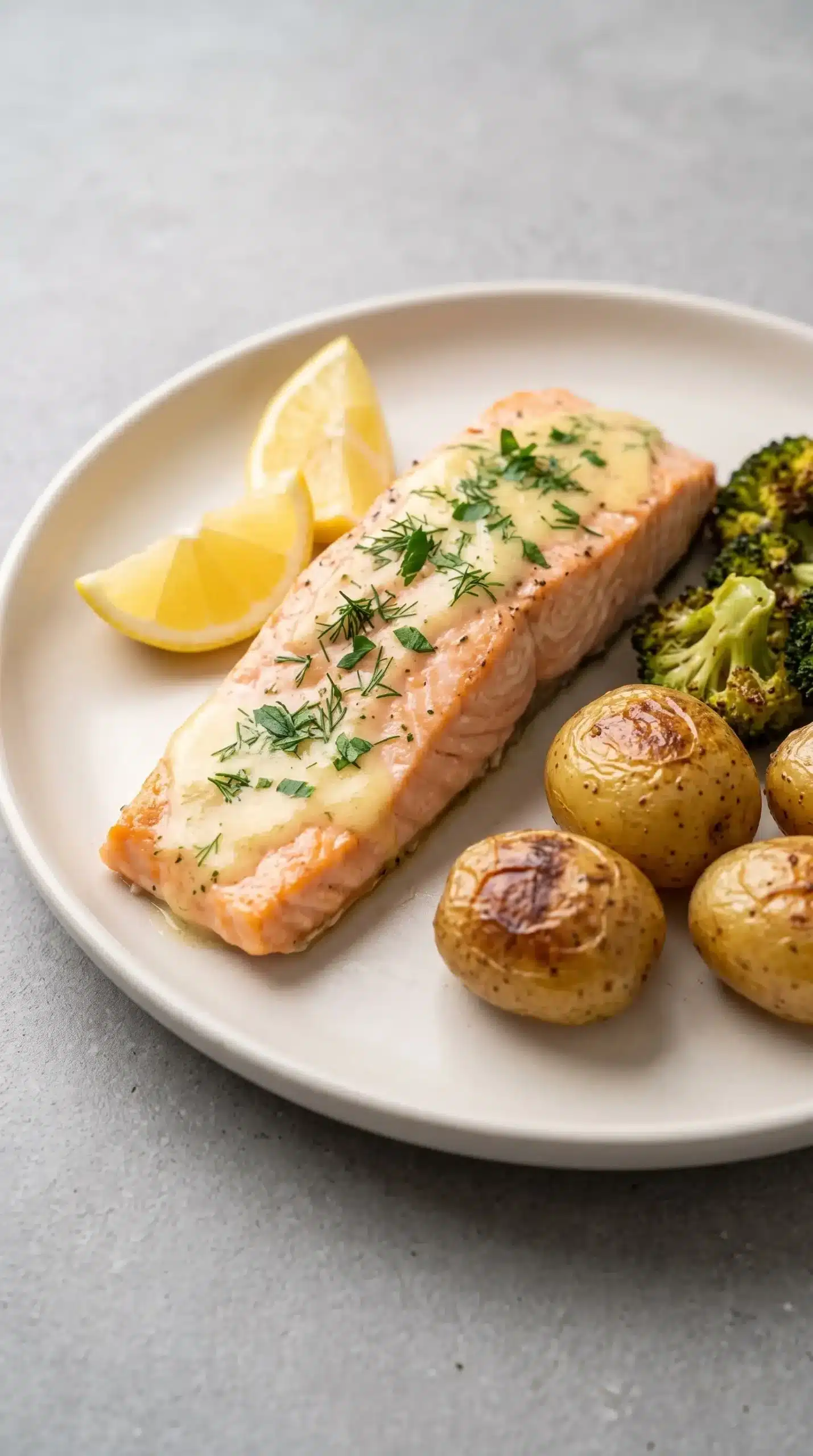
Arrange each salmon fillet with the roasted potatoes and broccoli so the plate includes the crisp, creamy, and fresh elements together. Lemon wedges add an optional burst of acidity, while fresh herbs can provide a simple finishing touch.
The lemon butter salmon is particularly suited to serving directly after cooking, when the fish is warm and the roasted vegetables retain their best texture. Keeping the accompaniments close to the salmon also lets the buttery lemon flavor carry naturally across the plate.
Storing Leftover Salmon and Vegetables
Allow leftover salmon, potatoes, and broccoli to cool completely before placing them in an airtight container. Refrigerate the cooked food for up to 3 days.
Reheating can be done in the oven or microwave until the leftovers are warmed through. Keeping the components together makes storage convenient, while separating portions can make it easier to reheat only what will be eaten.
Planning Ahead Without Cooking Too Early
Although baked salmon is best served fresh, some preparation can be completed ahead of time. The vegetables and lemon butter sauce can be prepared in advance and stored separately, leaving the cooking stage closer to mealtime.
Preparing the sauce early is especially useful because it means the butter, lemon juice, and garlic are ready when the salmon is seasoned. The vegetables can likewise be organized before the oven is turned on, reducing the amount of active work during cooking.
What Makes This Salmon Dinner Work
Baked salmon succeeds when the fish, sauce, and vegetables reach the table with their distinct qualities intact. The lemon butter provides richness and brightness, the salmon remains tender enough to flake, and the roasted vegetables supply contrasting textures.
Good timing ties those elements together. Starting the potatoes first, adding broccoli later, and baking the salmon for its shorter cooking window allows the components to finish together without forcing one ingredient to wait excessively for another.
Keeping Baked Salmon Flavorful Without Extra Complexity
The strongest cooking judgment is to keep the preparation focused: season the salmon, distribute the lemon butter sauce, and watch the fish for the point where it flakes easily. The potatoes and broccoli already provide enough contrast to make the plate complete without requiring a complicated garnish or additional sauce.
Baked Salmon Questions About Doneness and Storage
Can frozen salmon be used for this preparation?
Yes. Frozen salmon fillets can be used as long as they are fully thawed before cooking. Once thawed, season them and use the lemon butter sauce as directed.
What can replace the butter in the lemon sauce?
Olive oil or coconut oil can replace the butter when a different fat is preferred. The substitution changes the character of the sauce, but it can still be combined with lemon juice and minced garlic.
How can I tell when the salmon is fully cooked?
Check whether the salmon flakes easily with a fork. The stated internal-temperature reference is 145°F (63°C), which provides a more precise way to check doneness.
Can the vegetables be changed?
Yes. Asparagus or green beans can replace broccoli, while zucchini or bell peppers offer other vegetable options. Potatoes can also be omitted when a lower-carbohydrate serving is preferred.
What should I serve with lemon butter salmon?
Roasted potatoes and broccoli create the complete combination described here, while quinoa, rice, or a fresh green salad can be used when you want different accompaniments.
Can another fish be cooked this way?
Trout, cod, and halibut can use the same general preparation. Their cooking times may need adjustment because different fish and fillet sizes do not necessarily cook at the same rate.
Baked Salmon with Lemon Butter Sauce and Roasted Potatoes
Ingredients
Method
- Preheat the oven to 400°F / 204°C.
- Arrange the halved baby potatoes on a baking sheet. Drizzle with olive oil, then season with salt and black pepper.
- Place the salmon fillets in a baking dish and season both sides with salt and black pepper.
- Roast the potatoes for 20-25 minutes, until crisp.
- While the potatoes cook, melt the butter in a small saucepan over medium heat. Stir in the lemon juice and minced garlic.
- Pour the lemon butter sauce over the seasoned salmon fillets.
- During the final 10-15 minutes of potato roasting, place the broccoli florets on the same baking sheet.
- Bake the salmon for 12-15 minutes, until it flakes easily and reaches an internal temperature of 145°F / 63°C.
- Allow the salmon to rest briefly, then serve with the roasted potatoes and broccoli.