Spinach and Ricotta Stuffed Shells with Marinara Sauce
Spinach and Ricotta Stuffed Shells bring together tender jumbo pasta shells, creamy ricotta, melted mozzarella, Parmesan, spinach, garlic, and marinara sauce in a comforting baked dish. The filling is rich and savory, while the spinach adds a fresh vegetable element to every portion. Finished with fresh basil, these stuffed shells make a welcoming family meal for a weeknight dinner or a special gathering.
Spinach and Ricotta Stuffed Shells Turn Simple Ingredients Into Comfort Food
Jumbo pasta shells provide the sturdy shape needed to hold a generous spoonful of spinach and cheese filling. Once arranged over marinara sauce, the shells bake until the cheese is melted and bubbly and the edges develop a lightly golden finish.
Creamy ricotta works alongside mozzarella and Parmesan to create a filling with several layers of cheesy flavor. Cooked spinach and garlic keep the mixture savory and balanced, while marinara brings tomato flavor and moisture throughout the baking dish.
Fresh basil at the end gives the finished dish a bright herbal note. A little extra cheese over the shells also creates an appealing baked topping that complements the soft pasta and creamy center.
Ricotta, Spinach, and Three Cheeses Shape the Filling
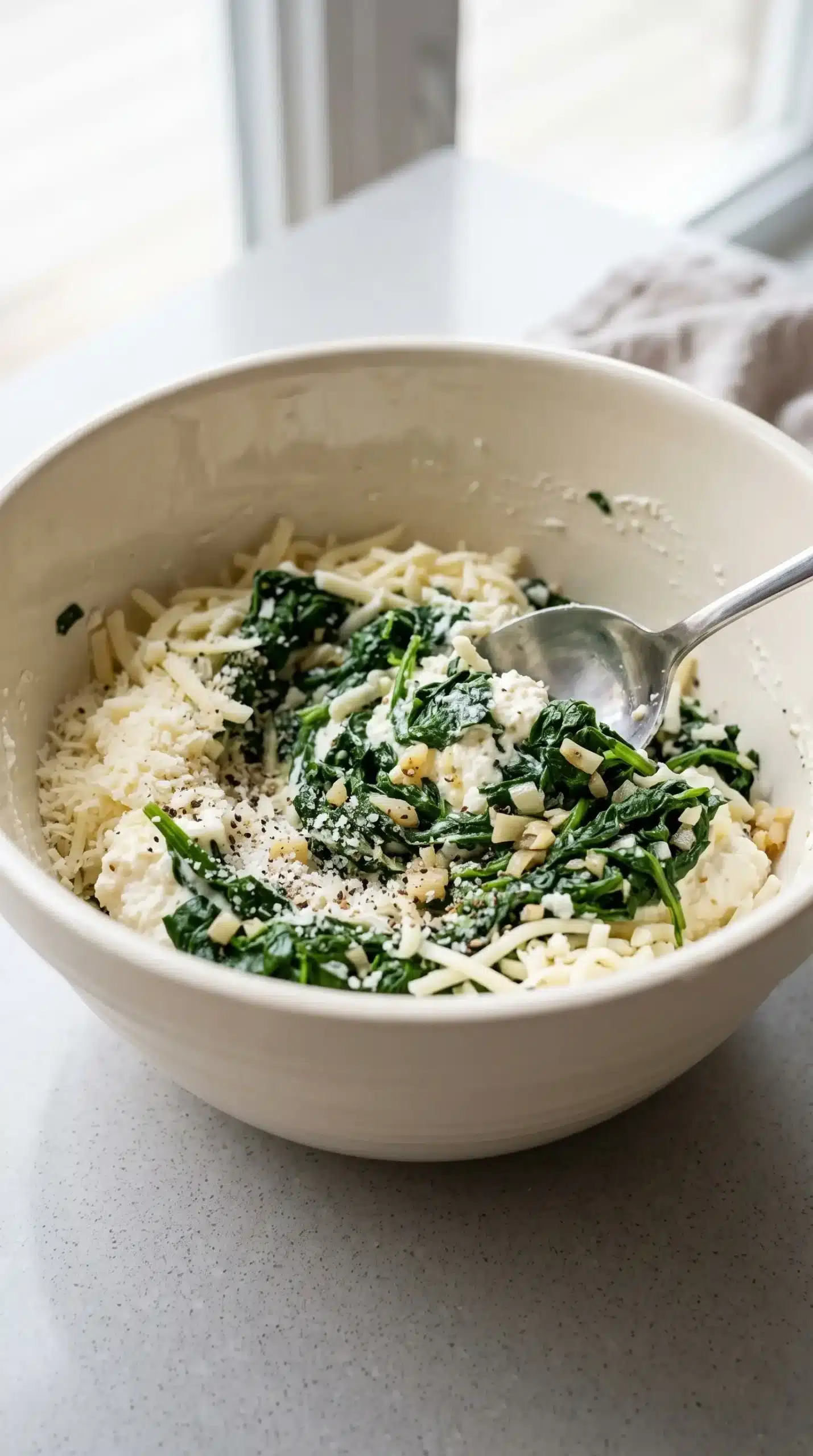
The filling depends on the relationship between ricotta, mozzarella, Parmesan, and cooked spinach. Ricotta supplies the creamy base, mozzarella contributes a soft, melty quality, and Parmesan brings a more pronounced cheese flavor. Keeping these components evenly mixed helps each shell receive a consistent combination.
Spinach needs to be cooked until wilted before it goes into the cheese mixture. Garlic is sautéed in olive oil first, allowing its flavor to become fragrant before the spinach is added. That short cooking stage gives the vegetable mixture a savory foundation without complicating the preparation.
Salt and pepper season the filling, while marinara sauce surrounds the shells during baking. Store-bought marinara is suitable when convenience matters, so there is no need to prepare a separate sauce to complete the dish.
Shell Size Determines How Easily the Pasta Can Be Filled
Jumbo pasta shells are particularly useful here because their large shape creates space for the ricotta and spinach mixture. Cook them according to the package instructions until al dente, then drain them before assembling the dish.
For this recipe, al dente means pasta that is tender but still slightly firm at the center, giving the shells enough structure for filling and baking.
Al dente shells are easier to handle than pasta that has become very soft. They need enough structure to be opened and filled, then remain intact while they bake with the sauce and cheese.
After draining, keep the shells ready for filling without overworking them. A shell that stays intact can hold its filling and remain neatly arranged in the baking dish.
| Component | Role in the finished shells | Key handling point |
|---|---|---|
| Jumbo pasta shells | Hold the spinach and cheese filling | Cook until al dente |
| Spinach and garlic | Build the savory vegetable base | Cook the spinach until wilted |
| Ricotta, mozzarella, and Parmesan | Create the creamy, cheesy filling | Mix with the cooked spinach |
| Marinara sauce | Provides moisture and tomato flavor | Spread underneath and over the shells |
| Fresh basil | Finishes the baked dish | Add after baking |
Marinara Placement Keeps the Stuffed Shells Moist
A layer of marinara on the bottom of the baking dish creates a saucy base for the filled shells. Keeping enough sauce around the pasta is especially useful in a layered pasta dinner, where sauce helps keep baked pasta moist and cohesive. The arrangement should allow the shells to sit directly on that sauce, while additional marinara goes over the top before baking.
Covering the assembled dish with foil for the first part of baking helps the shells heat through alongside the sauce and filling. Removing the foil afterward exposes the cheese topping so it can become bubbly and lightly golden.
That two-stage approach matters for the texture of Spinach and Ricotta Stuffed Shells. The sauce and covered baking stage support a tender, cohesive dish, while the uncovered portion gives the surface a more finished baked appearance.
Five Assembly Choices Make Filling Less Fussy
- Use intact shells: Choose shells that remain whole after cooking so the filling stays contained.
- Mix thoroughly: Combine spinach, ricotta, mozzarella, Parmesan, salt, and pepper so the filling is evenly seasoned.
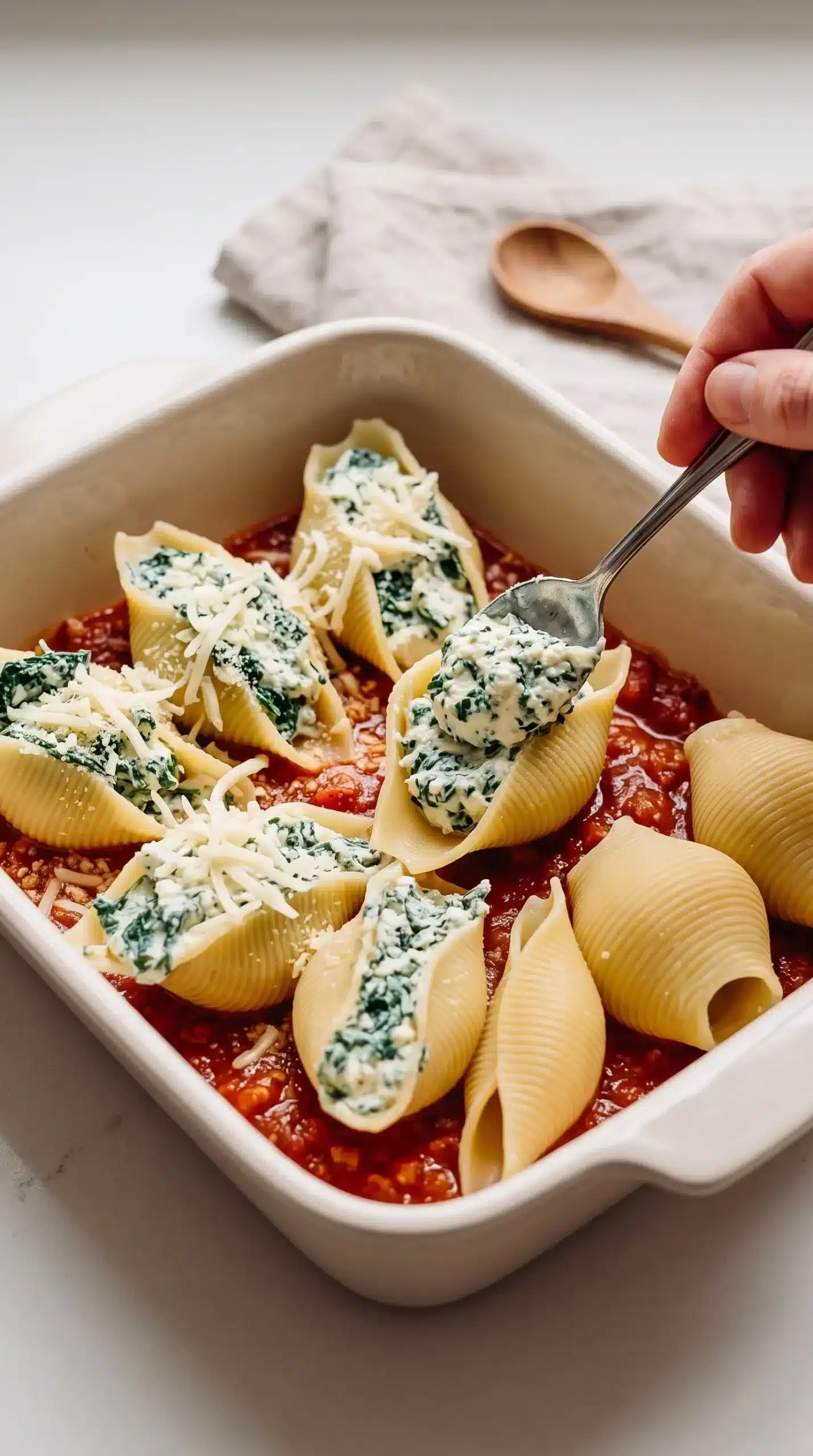
- Fill carefully: Spoon the cheese mixture into each shell without forcing the pasta open too far.
- Arrange over sauce: Set filled shells on the marinara layer so the pasta is supported from underneath.
- Finish with cheese: Add additional mozzarella and Parmesan before covering the dish for baking.
Spinach Preparation Sets Up a Better Cheese Mixture
Garlic is first sautéed in olive oil over medium heat until fragrant. Spinach then goes into the skillet and cooks until wilted. This sequence combines the aromatic garlic with the spinach before the vegetables meet the dairy ingredients.
Once cooked, the spinach becomes part of the ricotta mixture along with mozzarella and Parmesan. Stirring everything together distributes the vegetable throughout the filling instead of leaving large pockets of spinach in individual shells.
Frozen spinach can also be used as a time-saving option. When choosing the shortcut, the important point is that the spinach belongs in the cooked filling alongside the cheeses, seasoning, and garlic.
Spinach and Ricotta Stuffed Shells Benefit From Gentle Handling
Cooked pasta shells can be delicate, particularly after they have reached an al dente texture. Handle them carefully while draining and filling so they retain the shape needed to hold the stuffing.
The cheese mixture should be worked into the shells without pressing hard enough to split the pasta. A damaged shell can still contain some filling, but intact shells make the assembled dish easier to arrange neatly.
Keeping the filling inside the pasta also allows the marinara and melted cheese to remain on the outside while the ricotta mixture stays at the center. That separation gives each bite a combination of saucy pasta, creamy filling, and baked cheese.
What to Avoid When Baking Spinach and Ricotta Stuffed Shells
Overcooking the pasta before assembly is one issue to avoid because the shells need enough structure to be stuffed and arranged. Following the package cooking instructions and stopping at al dente keeps them suitable for the baking stage.
Another problem can come from skipping the sauce beneath the shells. Marinara is placed in the baking dish before the pasta goes in, then more sauce is added over the shells. Following that arrangement keeps the pasta integrated with the saucy bake.
Leaving the foil on for the entire baking period also changes the finish. The supplied baking method removes the foil for the last portion so the mozzarella and Parmesan can become bubbly and golden.
Cheese Substitutions Can Change the Character of the Filling
Ricotta is central to the creamy texture, but cottage cheese or cream cheese can be used when a substitute is needed. Each option changes the character of the filling, so the finished shells will not have exactly the same texture as the ricotta version.
Feta or goat cheese can also be incorporated when you want a different flavor direction. These alternatives provide a way to vary the cheese mixture while keeping spinach and pasta at the center of the dish.
For a richer protein addition, cooked ground beef or sausage can be mixed into the stuffing. The meat should already be cooked before it is added to the filling, since the shell-baking stage is intended to heat and finish the assembled dish.
Vegetable Additions Keep the Stuffing Flexible
Bell peppers, zucchini, or mushrooms can be mixed into the stuffing for a vegetable variation. These additions work within the same basic concept of a pasta shell filled with a savory mixture and baked with marinara and cheese.
Whole wheat pasta shells are another option when you want to change the pasta itself. They can replace standard shells while preserving the filled-shell format.
A Spicy Spin Adds Heat Without Changing the Assembly
Crushed red pepper flakes can be added to the cheese mixture when a little heat is wanted. The flakes can be mixed directly with the spinach, ricotta, mozzarella, Parmesan, salt, and pepper before the shells are filled.
Because the spicy element goes into the stuffing, the basic assembly remains unchanged. Marinara still forms the base and topping, while mozzarella and Parmesan finish the surface before baking.
Serving Spinach and Ricotta Stuffed Shells With Simple Sides
Warm stuffed shells are especially suited to straightforward accompaniments that do not compete with the creamy filling and marinara. A simple side salad adds a fresh contrast to the baked pasta.
Garlic bread is another natural pairing, particularly when you want something alongside the marinara sauce. Fresh basil sprinkled over the finished shells adds a fresh finishing touch and makes the dish ready to serve.
Extra cheese can also be added at serving if desired. Keeping the sides uncomplicated lets the spinach, ricotta, mozzarella, Parmesan, and marinara remain the defining flavors of the meal.
Storage and Reheating Keep Leftovers Useful
Refrigerated leftovers can be placed in an airtight container and kept for up to 3 days. Store the shells with their sauce so the pasta remains accompanied by the marinara when it is reheated.
Freezing is another option for longer storage. Stuffed shells can be frozen and later reheated in the oven, making the baked pasta useful beyond the day it is assembled.
Spinach and Ricotta Stuffed Shells Work Well as a Make-Ahead Dish
The shells can be assembled and refrigerated before baking when you want to prepare the dish ahead of time. This separates the filling and assembly work from the later baking stage.
Chilled assembled shells need a few extra minutes in the oven compared with shells that go into the oven immediately. Watch for the same observable finish: melted, bubbly cheese with slightly golden edges.
Spinach and Ricotta Stuffed Shells Come Together Around a Saucy, Bubbly Finish
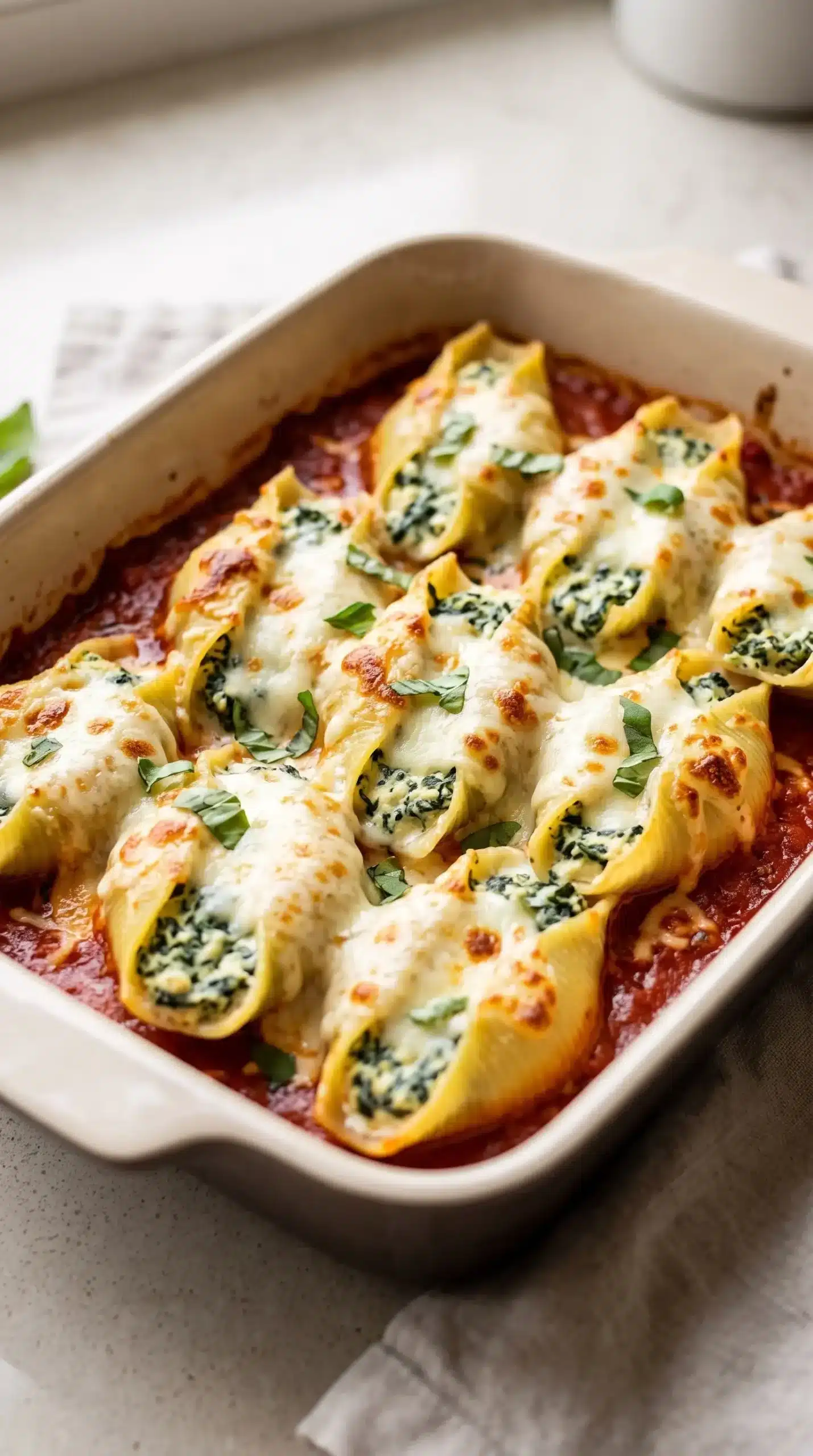
Filled shells should emerge from the oven with melted cheese, bubbling marinara, and lightly golden edges. Those visible cues are more useful than relying on a rigid appearance alone because they show that the cheese topping and sauced pasta have reached the intended baked finish.
Fresh basil completes the dish after baking, while the marinara, creamy filling, and cheese topping remain warm and cohesive. Careful pasta handling, properly cooked spinach, and the covered-then-uncovered baking approach all support that finished texture.
Spinach and Ricotta Stuffed Shells Questions About Freezing and Substitutions
Can the stuffed shells be prepared ahead of baking?
Yes. Assemble the shells with the marinara and cheese, then refrigerate them until you are ready to bake. Since the assembled pasta will be chilled, allow a few extra minutes in the oven so it can heat through.
What is a good substitute for ricotta?
Cottage cheese or cream cheese can replace ricotta when needed. Either substitution changes the filling somewhat, but both can be used within the same stuffed-shell preparation.
Can Spinach and Ricotta Stuffed Shells be frozen?
Yes. The assembled shells can be frozen for longer storage. They can then be reheated in the oven when you are ready to serve them, making freezing a practical option for preparing the dish in advance.
How can the filling be made spicier?
Crushed red pepper flakes can be stirred into the spinach and cheese mixture before the shells are filled. This adds heat directly to the stuffing without requiring changes to the marinara or baking arrangement.
How do you know when the shells have finished baking?
Look for melted, bubbly cheese and edges that have become slightly golden. Those signs indicate that the assembled shells have reached the intended baked finish.
Can other vegetables be added to the stuffing?
Yes. Bell peppers, zucchini, or mushrooms can be mixed into the stuffing for a vegetable variation. Whole wheat pasta shells can also be used when you want to change the pasta while keeping the same filled-shell concept.
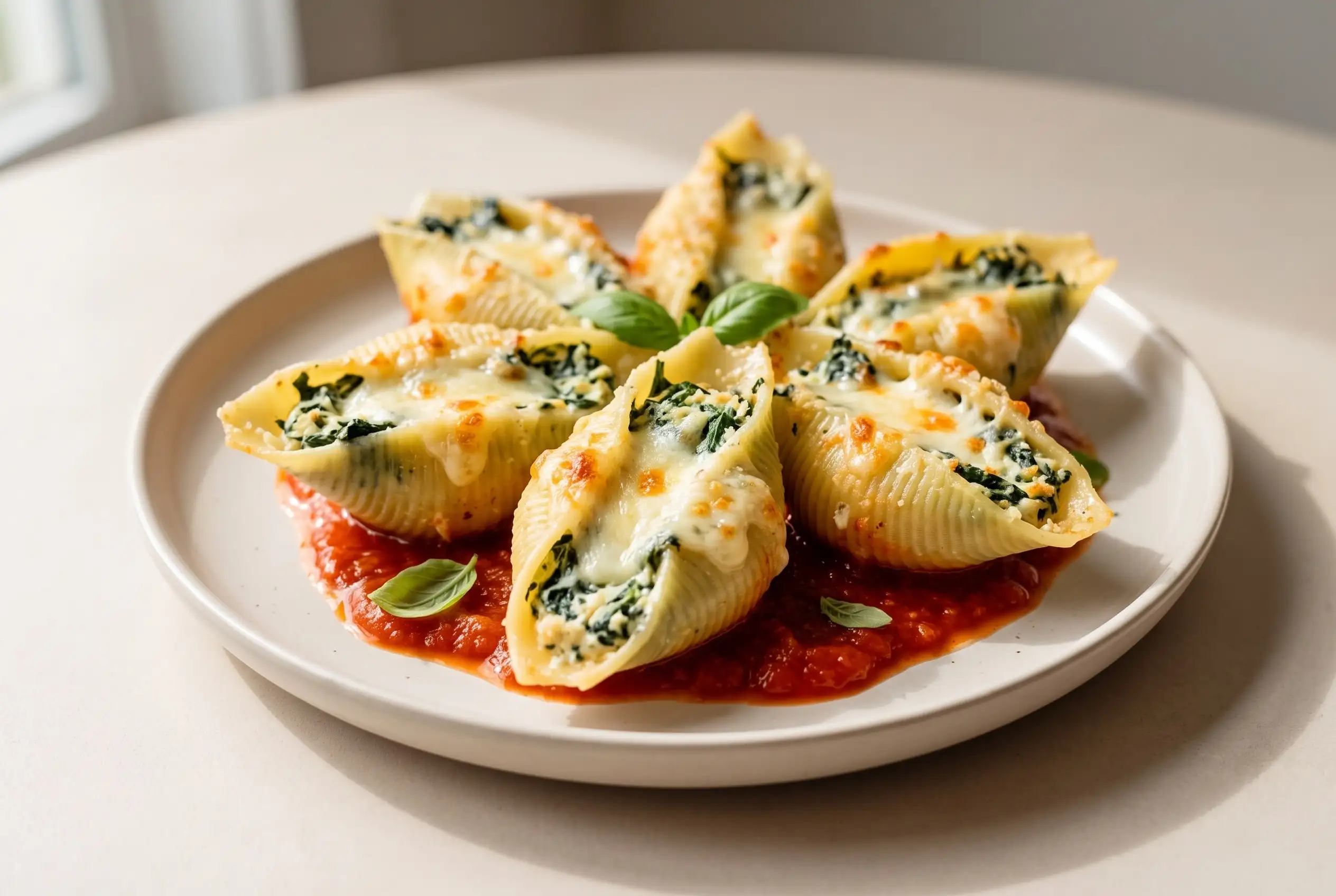
Spinach and Ricotta Stuffed Shells with Marinara Sauce
Ingredients
Method
- Cook the jumbo pasta shells according to the package directions until al dente. Drain and set them aside until cool enough to handle.
- Warm the olive oil in a skillet over medium heat. Add the minced garlic and cook until fragrant.
- Add the spinach and cook until wilted. Remove the skillet from the heat and let the mixture cool slightly.
- In a bowl, stir together the ricotta, cooked spinach and garlic, 1 cup mozzarella, 1/4 cup Parmesan, salt, and black pepper until evenly combined.
- Spread enough marinara sauce across the bottom of a baking dish to cover it.
- Fill each cooked pasta shell with the spinach and cheese mixture, taking care not to split the shells.
- Arrange the filled shells over the marinara sauce, then spoon the remaining marinara sauce over the top.
- Scatter the remaining 1/2 cup mozzarella and 1/4 cup Parmesan over the assembled shells.
- Cover the baking dish with foil and bake at 375°F / 190°C until the shells are heated through and the cheese has melted.
- Remove the foil and continue baking until the cheese is bubbly and the edges are lightly golden.
- Remove the stuffed shells from the oven and finish with fresh basil before serving.