Roasted Tomato Basil Soup with San Marzano Tomatoes
Roasted tomato basil soup brings together tender roasted Roma tomatoes, crushed San Marzano tomatoes, fresh basil, garlic, thyme, and cream for a deeply comforting bowl. Roasting the fresh tomatoes first gives them a rich, caramelized character, while the basil keeps the finished soup bright and fragrant.
Cold-weather meals become especially inviting when a warm soup can be paired with something crisp and savory. Creamy roasted tomato basil soup fits that role beautifully, with a smooth texture from blending and a simple garnish of crunchy bread, olive oil, garlic, and fresh basil.
Roasting Builds the Tomato Flavor
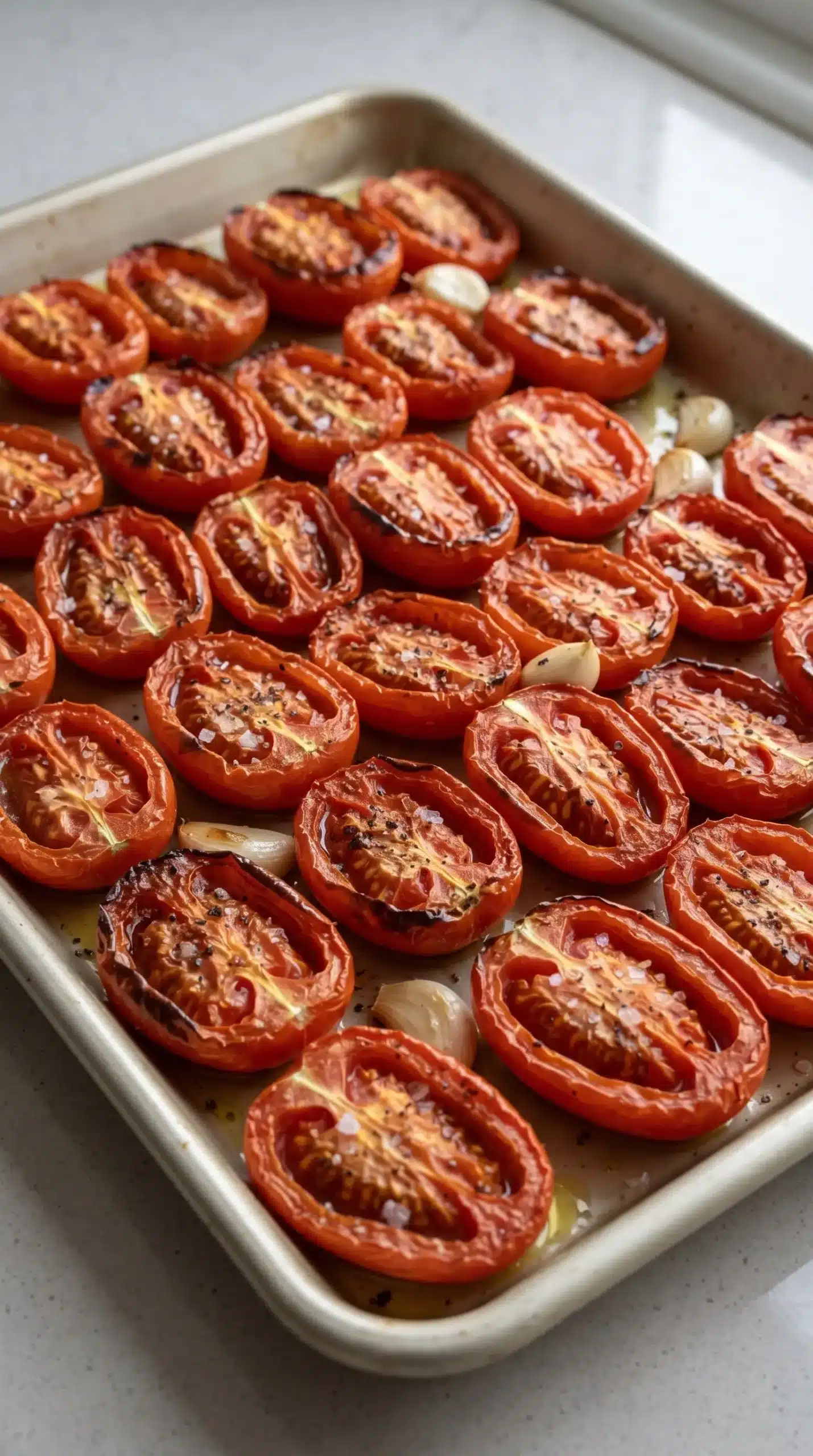
Roma tomatoes are the key fresh ingredient to handle with care. Slicing them lengthwise creates broad surfaces for roasting, allowing the tomatoes to soften and develop caramelized edges. Ripe Roma tomatoes are the best choice when available because their flavor carries through the finished soup.
About two tablespoons of the olive oil are used for the tomatoes before they go into a 400°F oven. Salt and pepper season the tomatoes at this stage, so the roasting process develops flavor before they join the pot.
Once the tomatoes are soft and caramelized after about 25 minutes, they are ready to become part of the soup base. For a deeper savory note, roasted garlic can complement the tomatoes, as shown in this roasted garlic tomato soup with smoked paprika.
Fresh Basil and San Marzano Tomatoes Shape the Base
| Ingredient focus | How it is used | Practical reason |
|---|---|---|
| Roma tomatoes | Roasted before simmering | Develop a rich, caramelized tomato flavor |
| Crushed San Marzano tomatoes | Added to the pot | Build the main tomato base |
| Fresh basil | Added with the cream before blending | Provides fresh aroma and basil flavor |
| Heavy cream | Stirred in before blending | Creates the creamy character of the soup |
The combination of roasted fresh tomatoes and crushed San Marzano tomatoes gives the soup two complementary tomato elements. One has gone through the oven, while the other becomes part of the simmered base.
Authentic San Marzano tomatoes are recognized by their elongated shape and firm, fleshy pulp, with relatively few seeds, which helps distinguish the protected tomato from other varieties.
Fresh basil is roughly chopped before it goes into the pot. Adding it near the end of cooking helps preserve its fresh presence as the soup is blended smooth.
Garlic, Onion, and Thyme Need Gentle Cooking
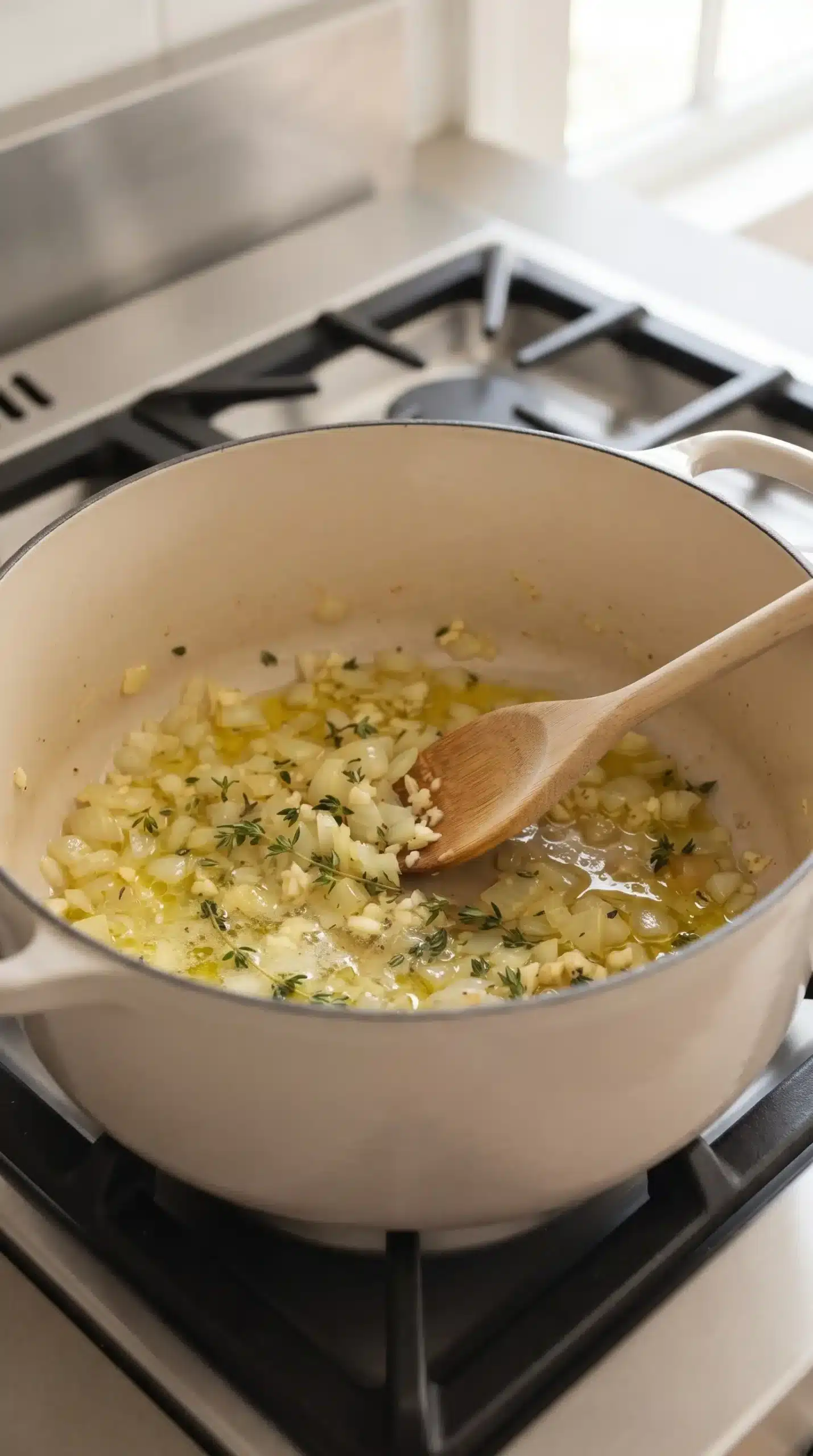
Butter and the remaining olive oil form the starting fat in the large pot. Diced yellow onion should become soft over medium heat, which takes around five minutes. Keeping the heat at a moderate level gives the onion time to soften before the garlic and thyme enter the mixture.
Minced garlic and chopped fresh thyme follow the onion and cook for another two minutes with constant stirring. That short cooking period matters because these ingredients are meant to become fragrant before the tomatoes and stock are added.
A balanced aromatic base makes the later tomato flavors easier to integrate. Salt and black pepper are already part of the preparation, while the sugar can be adjusted later if the finished soup needs a different level of sweetness.
Balancing Sweetness Keeps the Tomato Flavor Rounded
Sugar has a specific role in the soup: it allows the sweetness to be adjusted. Since roasted tomatoes and canned tomatoes form the foundation, the amount can be changed according to the flavor of the tomatoes and the desired balance.
- Start with the listed amount: Add one tablespoon of sugar as the tomato mixture simmers.
- Taste after blending: Check the finished soup before making any further seasoning decisions.
- Adjust carefully: Add more or less sugar when needed to change the sweetness without losing the tomato character.
The seasoning check belongs near the end because the roasted tomatoes, crushed tomatoes, stock, cream, and basil have all contributed their flavors by then. A final taste gives you the clearest sense of whether the soup needs adjustment.
Smoothness Depends on the Blending Stage
After the tomato mixture has simmered for 15 minutes, heavy cream and fresh basil are added. The soup can then be blended directly in the pot with an immersion blender or transferred to a blender in batches.
Blending time changes the texture. A longer blend produces a creamier, smoother result, which is especially useful when the aim is a silky roasted tomato soup with fresh basil rather than a soup with noticeable pieces.
When using a separate blender, working in batches keeps the process manageable. Once the soup reaches the desired texture, taste it and make any needed seasoning adjustment before serving it hot.
Bread Cubes Add a Crunchy Contrast
Small pieces of bread are cut into cubes and used as a topping. They bring a crisp texture to a soup whose body is smooth and creamy, making the garnish more than a decorative addition.
Olive oil, minced garlic, and chopped fresh basil can accompany the bread cubes at serving time. The combination adds another layer of texture and reinforces flavors already present in the soup.
Serving Roasted Tomato Basil Soup at Its Best
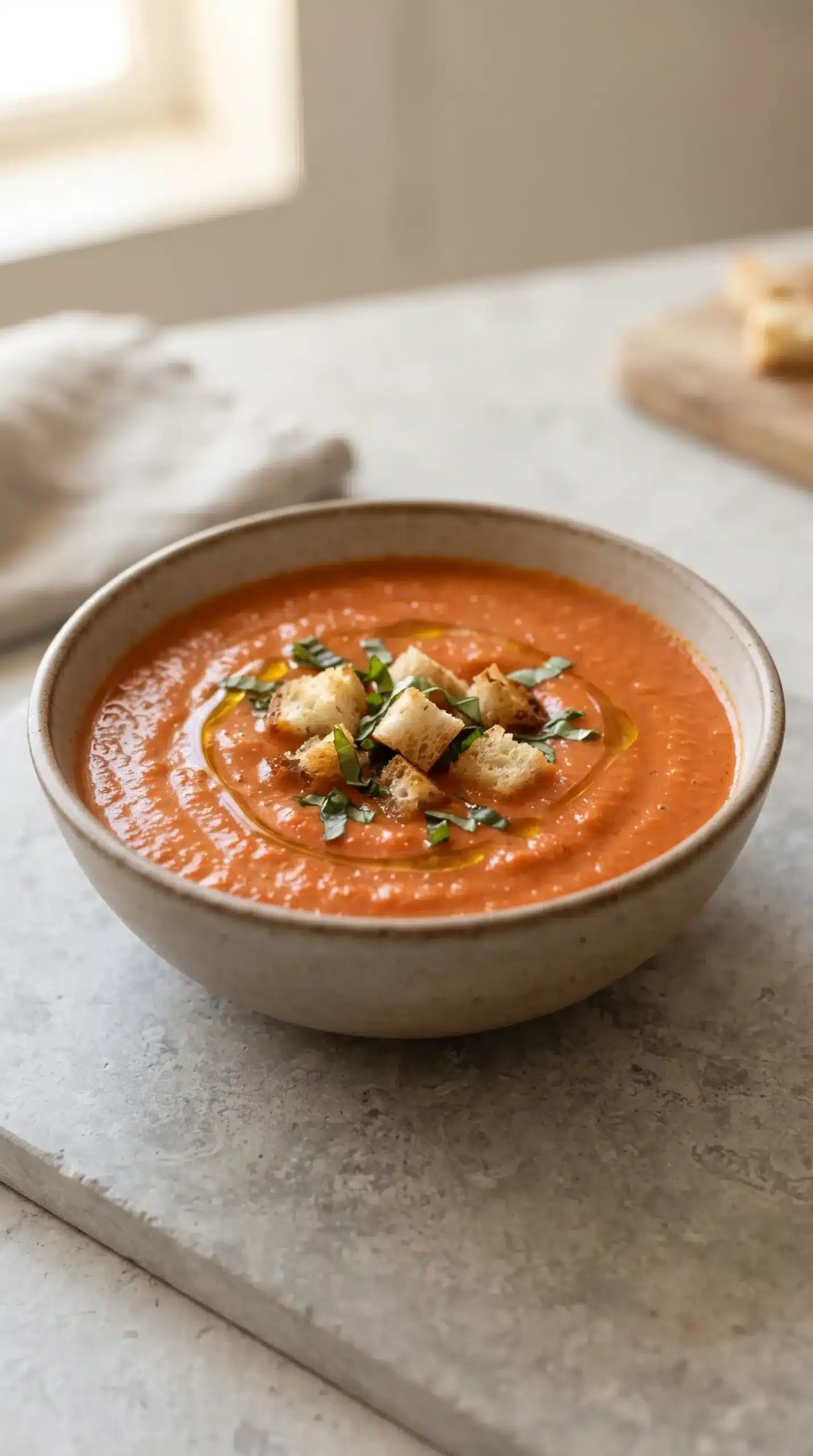
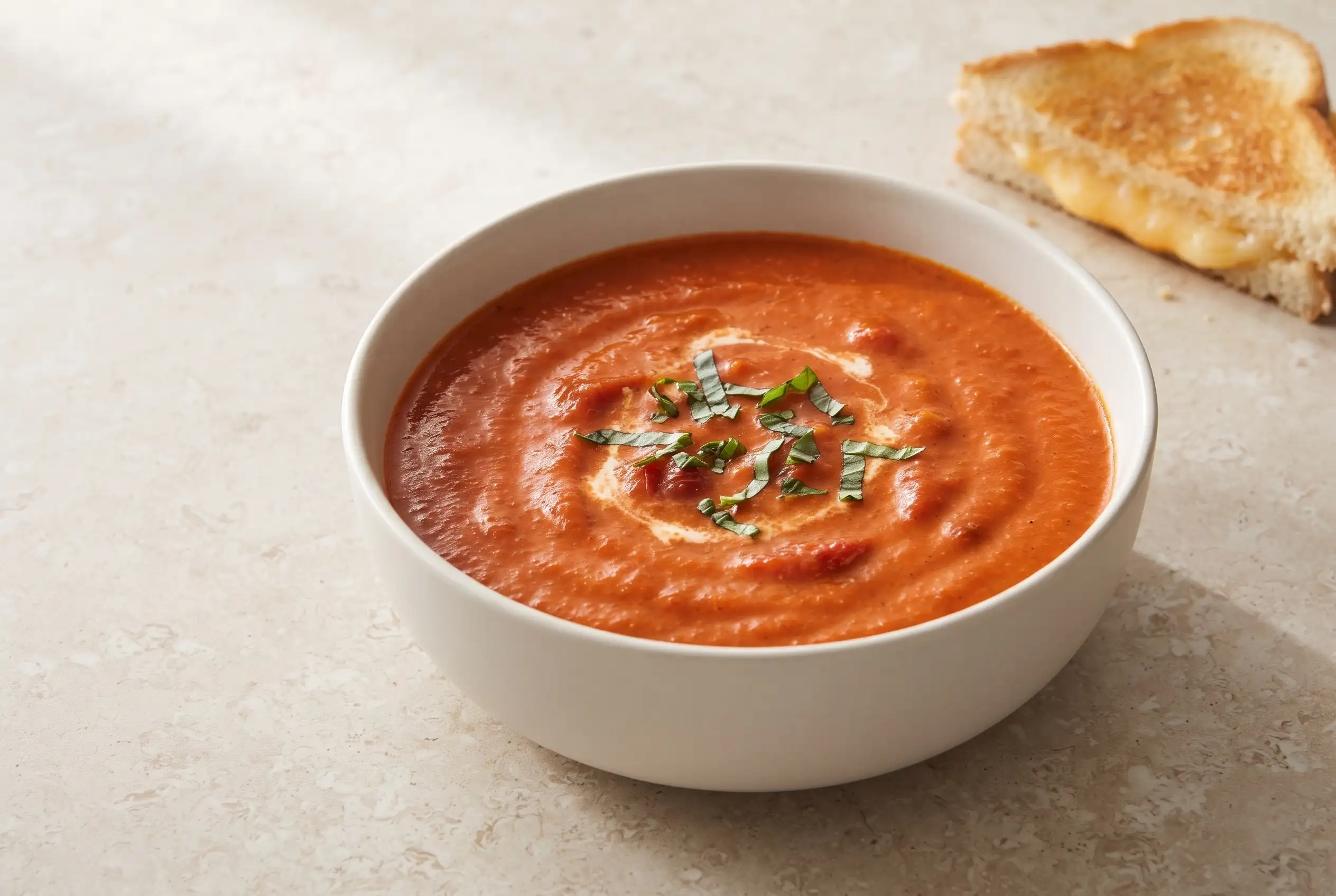
Hot bowls provide the right setting for roasted tomato basil soup, especially when the weather calls for something warm and comforting. Add the crunchy bread pieces, a drizzle of olive oil, and chopped fresh basil just before serving.
Grilled cheese sandwiches make a natural pairing because the creamy soup can be enjoyed alongside a crisp, savory sandwich. A side salad offers another option when you want something fresh alongside the warm bowl.
Keep the garnish close to serving time so the bread retains its contrast with the smooth soup. Extra basil can be scattered over each portion for a fresh finish.
Common Roasted Tomato Basil Soup Mistakes to Avoid
Under-roasting the Roma tomatoes can leave the soup without the rich roasted character that distinguishes it. Look for tomatoes that are soft and caramelized after their oven time rather than removing them before that texture develops.
Overcooking the garlic is another avoidable problem. Garlic only needs about two minutes with the thyme after the onion has softened, and constant stirring helps keep the aromatic mixture under control.
Skipping the final taste can also make the finished bowl less balanced. Sweetness and seasoning are adjustable, so tasting after blending gives you an opportunity to fine-tune the result before serving.
Storage Keeps the Soup Ready for Later
Allow the soup to cool before transferring it to an airtight container. Refrigerated portions can be kept for 3 to 4 days, making the soup suitable for preparing ahead and reheating when needed.
Freezing is also an option for longer storage. The soup can be frozen for up to 3 months, then thawed in the refrigerator before reheating.
A Lighter Creamy Tomato Soup Variation
Heavy cream gives the soup its rich, creamy character, but half-and-half can be used for a lighter version. The substitution keeps the recipe centered on the same roasted tomato and basil combination while reducing the richness supplied by the cream.
Carrots or bell peppers can also be added when a vegetable variation is desired. These additions change the vegetable profile while keeping the roasted tomato foundation at the center.
Roasted Tomato Basil Soup Comes Together Through Contrast
Roasted tomatoes provide the deep, caramelized foundation, while fresh basil contributes a fragrant finish and the blended texture brings the components together. The most important cooking judgment is to let the tomatoes roast until soft and caramelized, then blend the soup thoroughly enough to reach the smoothness you prefer.
Crunchy bread, olive oil, garlic, and extra basil complete the bowl with contrasting texture and fresh flavor. With that balance in place, roasted tomato basil soup can move easily from a chilly-day lunch to a comforting dinner alongside grilled cheese or a simple salad.
Roasted Tomato Basil Soup Questions About Texture and Storage
Can fresh tomatoes replace the canned tomatoes?
Fresh tomatoes can replace the canned tomatoes, although the cooking time may need adjustment. The supplied preparation uses both roasted Roma tomatoes and crushed San Marzano tomatoes, so changing the canned portion can alter how the soup cooks and tastes.
How can the soup become creamier?
Blend the soup for longer to create a smoother, creamier texture. An immersion blender can be used directly in the pot, while a standard blender works in batches.
Can the soup be made vegetarian?
Yes. Use vegetable stock in place of the chicken stock to make a vegetarian version while keeping the tomato, basil, garlic, onion, thyme, and cream components intact.
Can roasted tomato basil soup be prepared ahead?
It can be made ahead and stored in the refrigerator, then reheated when you are ready to serve it. Cooling the soup before transferring it to an airtight container helps prepare it properly for refrigerated storage.
What should be served with the soup?
Grilled cheese sandwiches and a side salad are both suitable pairings. Crunchy bread cubes can also be placed directly on the soup, along with olive oil and chopped fresh basil.
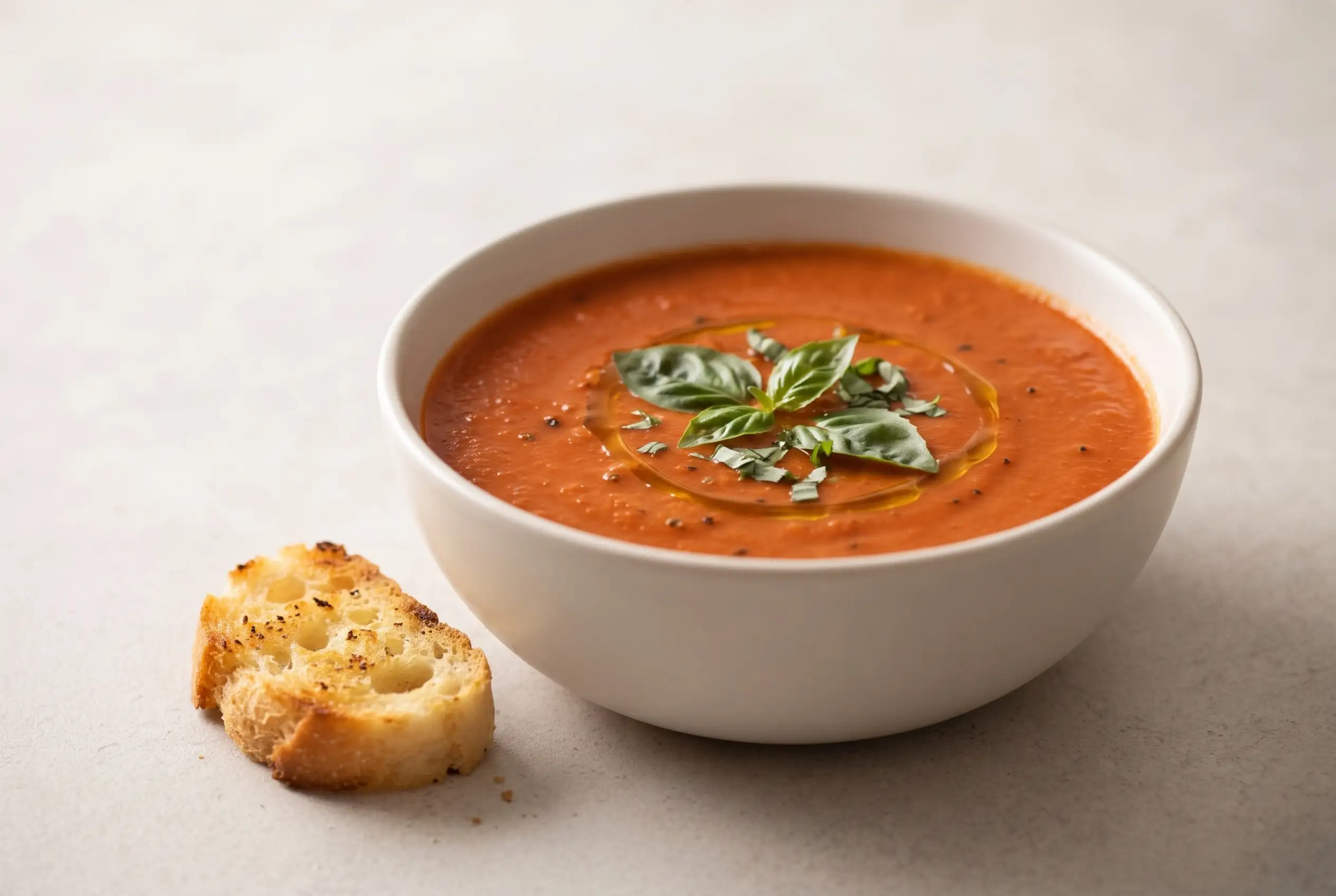
Roasted Tomato Basil Soup with San Marzano Tomatoes
Ingredients
Method
- Preheat the oven to 400°F / 200°C.
- Arrange the sliced Roma tomatoes on a baking sheet. Drizzle with 2 tbsp olive oil and season with the kosher salt and black pepper.
- Roast for about 25 minutes, until the tomatoes are soft and caramelized.
- In a large pot, melt the butter with the remaining 1 tbsp olive oil over medium heat.
- Add the diced onion and cook for about 5 minutes, stirring occasionally, until softened.
- Stir in the minced garlic and chopped thyme, then cook for 2 minutes while stirring constantly.
- Add the crushed San Marzano tomatoes, roasted tomatoes, sugar, and chicken stock. Bring the mixture to a boil, then lower the heat and simmer for 15 minutes.
- Add the heavy cream and roughly chopped fresh basil.
- Blend the soup with an immersion blender until smooth, or work in batches with a blender until smooth.
- Taste and adjust the seasoning if needed.
- Serve the soup hot with bread cubes, a drizzle of olive oil, minced garlic, and chopped fresh basil.