Veggie Pot Pie Soup with Potatoes, Carrots and Broccoli
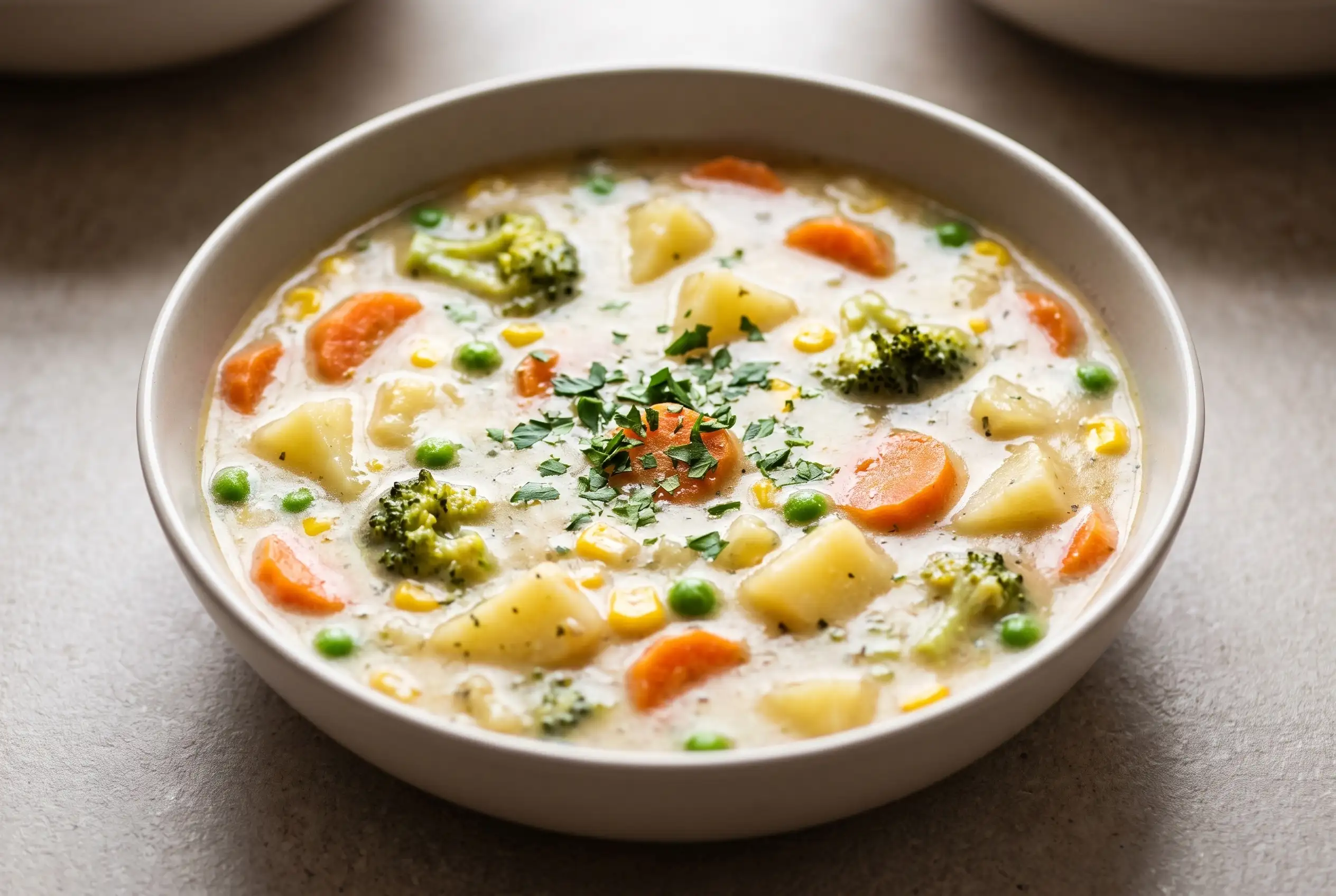
Veggie Pot Pie Soup brings the cozy flavor of a classic pot pie to the table in a creamy, crust-free bowl. Tender potatoes, carrots, broccoli, peas, and corn simmer with onion, garlic, herbs, and vegetable broth before milk and optional cream create a rich finish. The result is an easy veggie pot pie soup that feels hearty enough for dinner while keeping the focus on colorful vegetables.
Why Veggie Pot Pie Soup Works Without a Crust
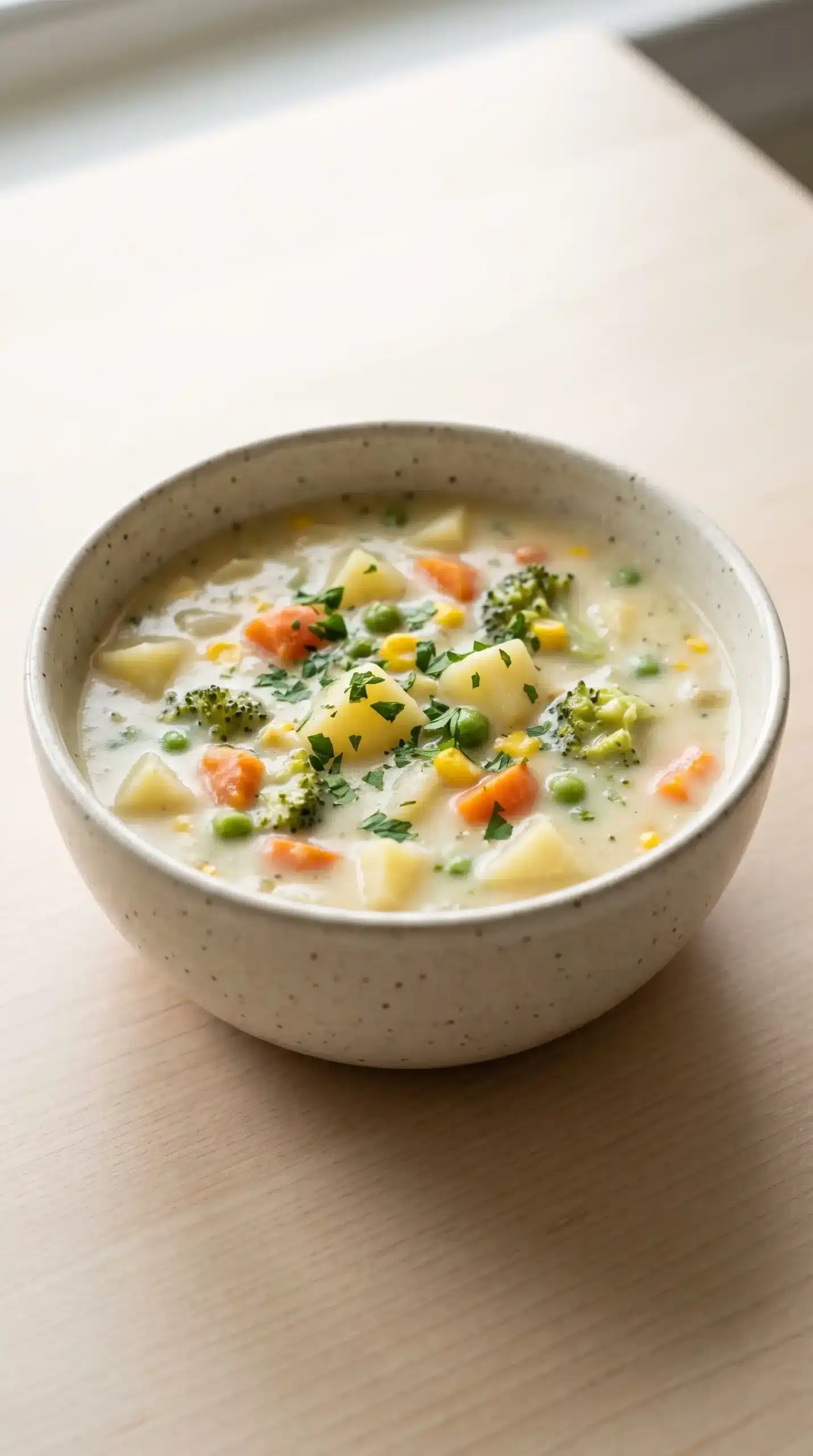
A pot pie is loved for its warm filling and creamy texture as much as for its pastry. Veggie Pot Pie Soup keeps those comforting qualities while serving everything together in a spoonable form. The potatoes and mixed vegetables give each bowl substance, while the broth and dairy create a smooth base that ties the ingredients together.
Leaving out the crust also makes the meal more straightforward to serve. There is no separate pastry component to prepare, and the soup can go directly from the pot to the bowl. Fresh parsley on top adds a simple finishing touch and keeps the presentation bright.
Cold-weather dinners benefit from food that feels substantial without requiring a complicated process. The combination of vegetables, broth, milk, herbs, and a little flour gives veggie pot pie soup its familiar comfort-food character in a single pot.
The Vegetable Mix That Gives Each Bowl Its Character
Carrots and potatoes form the early vegetable base, while broccoli, peas, and corn join later so the full mixture develops without treating every vegetable identically. Dicing the carrots and potatoes helps them cook together during the first simmer, while the later additions need only a short period to become just tender. Peas and corn can be used from frozen, making the vegetable pot pie soup practical when fresh produce is limited.
Flour and Dairy Create the Pot Pie Texture
All-purpose flour has an important structural role in the soup. Sprinkling it over the sautéed vegetables before adding the broth coats the vegetables and prepares the mixture for thickening. That step helps transform vegetable broth into a fuller base instead of leaving the finished soup thin and watery.
Adding the broth gradually matters because flour can form lumps when it meets liquid too quickly. A slow whisk keeps the mixture smooth as the broth is incorporated. Once the soup has simmered with the vegetables, milk or half-and-half brings creaminess without requiring heavy cream.
Heavy cream is optional, so the dairy choice can be adjusted according to the texture you want. Whole milk or half-and-half can provide the creamy foundation, while the optional cream makes the finished bowl richer. For a lighter approach, skipping the heavy cream still leaves a creamy veggie pot pie soup.
Herbs Keep the Creamy Base Balanced
Dried thyme and rosemary give the soup its savory herbal character without adding a long list of seasonings. Because both are added during the simmering stage, their flavors have time to blend into the broth. Salt and pepper should be adjusted to taste after the creamy ingredients are incorporated.
Fresh parsley serves a different purpose at the table. Sprinkled over the hot soup, it provides a fresh-looking finish that contrasts with the creamy vegetable base. Keeping it for garnish preserves that distinction instead of cooking it into the soup.
Cooking Control Matters Most at Three Points
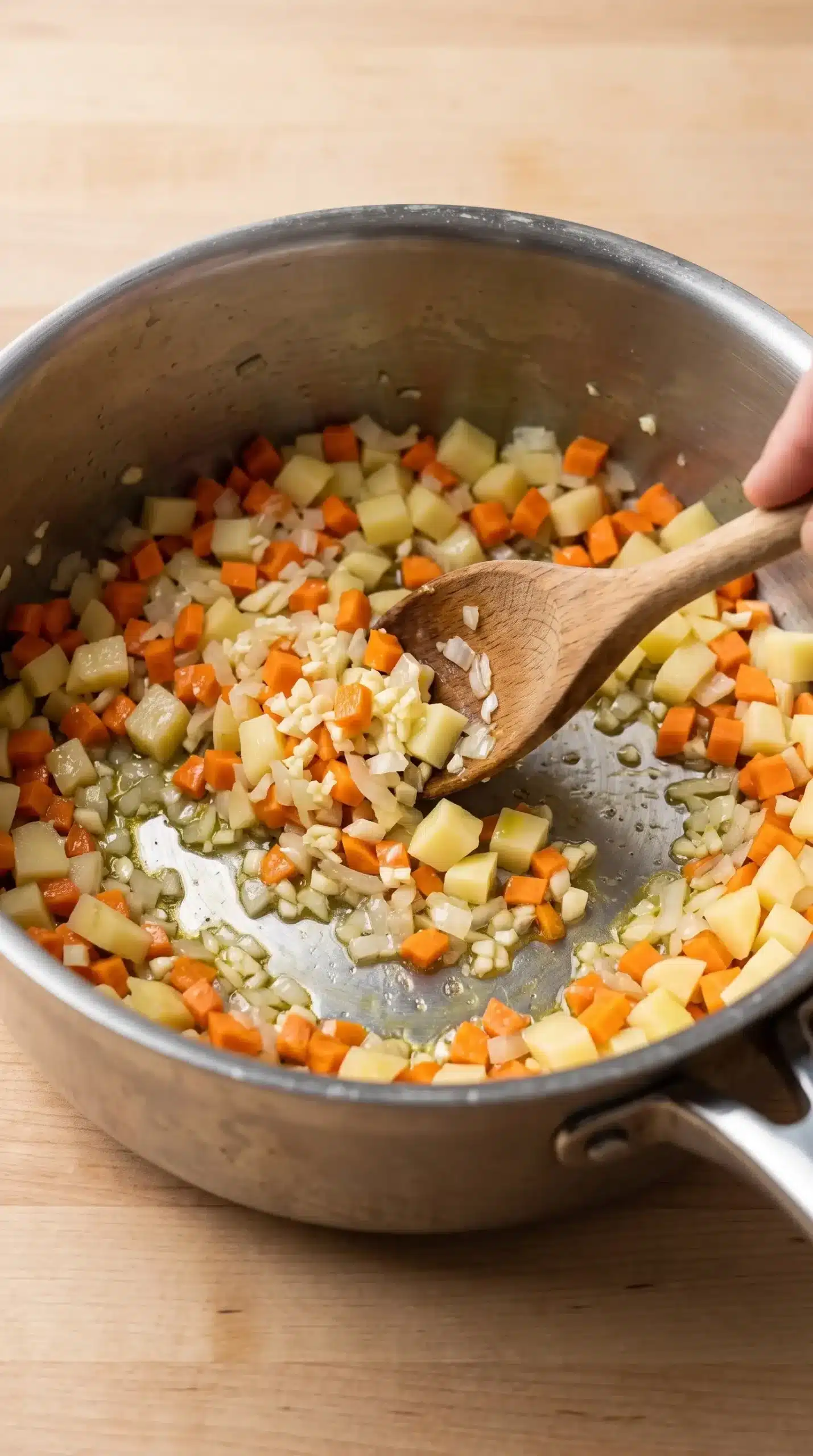
The first important control point is the vegetable sauté. Onion and garlic should become fragrant in the butter or olive oil, while the carrots and potatoes receive about five minutes of sautéing. If you choose to brown the onion and garlic lightly, the soup can take on extra flavor before the broth is introduced.
Timing becomes especially useful when the vegetables enter the pot at different stages. Carrots and potatoes simmer with the broth and seasonings until the potatoes are tender. Broccoli, peas, and corn then need only another five to seven minutes, which keeps the later vegetables from being simmered unnecessarily long.
Gentle attention is also needed when the milk and optional cream go in. Stir until the soup becomes creamy and thickened, then taste for seasoning. Keeping an eye on consistency at this point makes it easier to stop once the desired texture has developed instead of continuing to reduce the soup without purpose.
Common Veggie Pot Pie Soup Mistakes to Avoid
Several problems can be prevented simply by paying attention to the order of operations. The flour, broth, vegetable timing, and dairy all have specific jobs, so changing their handling can affect the finished texture.
- Flour lumps: Sprinkle the flour over the sautéed vegetables and stir to coat them before slowly whisking in the broth.
- Overcooked later vegetables: Add broccoli, peas, and corn after the potatoes have become tender, then simmer only until those vegetables are just tender.
- Flat flavor: Give the onion and garlic enough time to become fragrant, and adjust the salt and pepper after the soup becomes creamy.
- Unexpected thickness: If leftovers become too thick in the refrigerator, loosen them with a little broth or water during reheating.
One especially useful observation is the condition of the potatoes. Their tenderness signals that the first vegetable stage is ready for the broccoli, peas, and corn. Using that visual and textural cue is more reliable than simply treating every vegetable as though it needs the same cooking time.
Another safeguard is to whisk the broth in gradually. A smooth base begins before the soup reaches its simmer, so taking a little care during this transition prevents a texture problem that would otherwise carry through the finished bowl.
Choose the Dairy Based on the Creaminess You Want
| Dairy choice | Role in the soup | Best fit |
|---|---|---|
| Whole milk | Creates a creamy base | A straightforward creamy finish |
| Half-and-half | Creates a creamy base | A richer alternative to whole milk |
| Heavy cream | Adds additional richness | Optional extra creaminess |
Milk or half-and-half can stand on its own as the creamy element. Heavy cream is optional, so there is no need to use it when you prefer a less rich version. Plant-based milk can also be used for a vegan variation when the dairy ingredients are omitted.
Serve Veggie Pot Pie Soup With Simple Companions
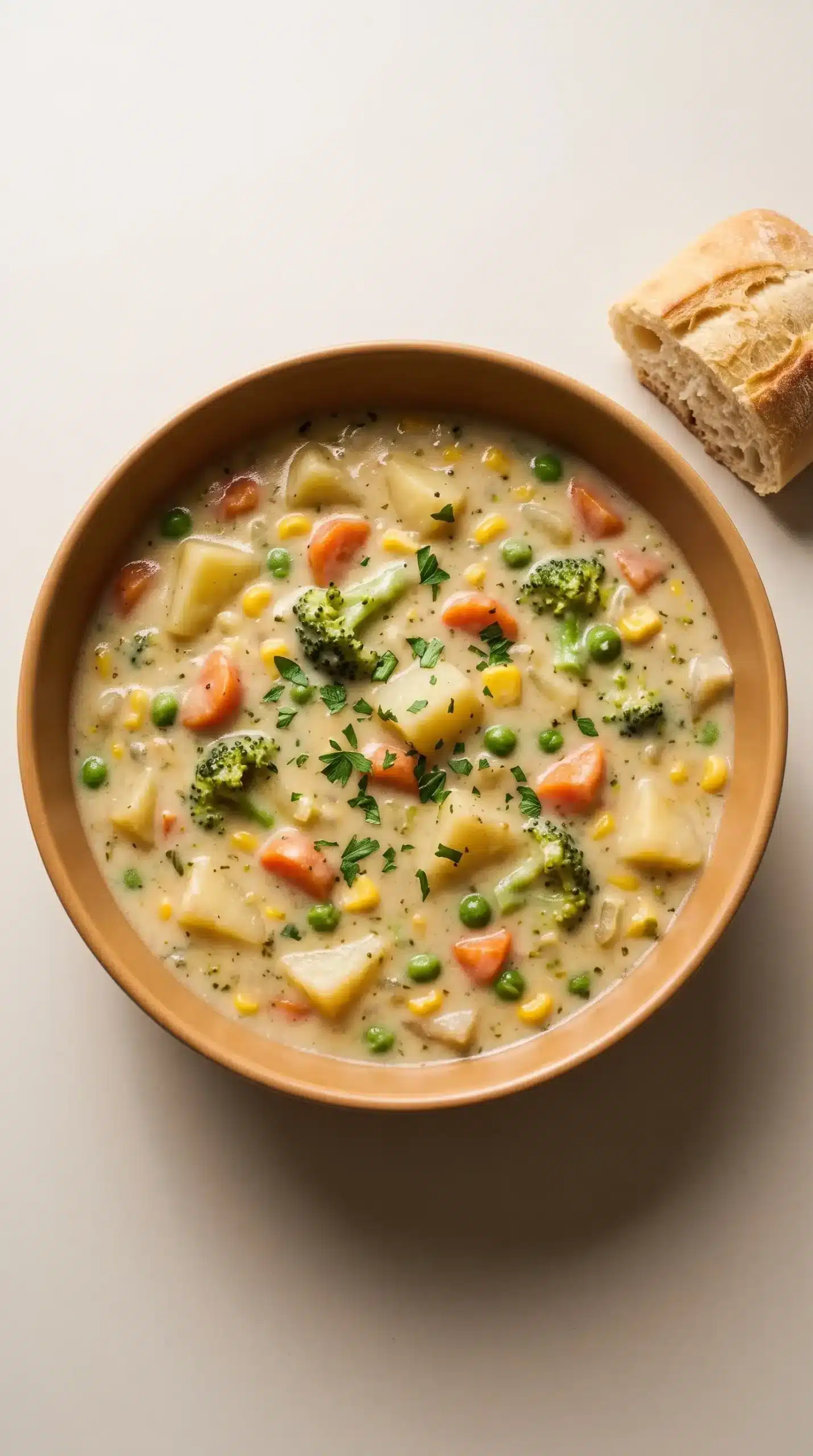
Hot bowls of veggie pot pie soup are especially suited to straightforward accompaniments. Bread or crackers give the meal something crisp or chewy alongside the creamy vegetables without requiring another elaborate dish.
A little cheese can be added at serving time when extra flavor is wanted. Fresh parsley remains a useful garnish, bringing a bright finish to the bowl and reinforcing the homemade presentation.
Because the soup already contains potatoes and a broad mix of vegetables, the best accompaniment can remain uncomplicated. Serve it hot and let the creamy broth, tender vegetables, herbs, and garnish remain the main focus.
Store the Soup With Its Texture in Mind
Leftover veggie pot pie soup can be kept in an airtight container in the refrigerator for up to 3 days, consistent with the soups and stews for 3 to 4 days storage window. Reheat it in a pot or in the microwave, and pay attention to the consistency because the soup may become thicker while chilled. A small amount of broth or water can restore a looser texture during reheating.
Turn the Bowl Vegan Without Losing Its Comfort
A vegan version is possible by replacing the whole milk or half-and-half with plant-based milk and leaving out the heavy cream. The vegetable broth, vegetables, flour, herbs, and seasonings can remain part of the same general preparation, allowing the dish to retain its creamy soup character without the dairy.
Lentils or beans can be added when extra protein and heartiness are desired. For a substantial vegetable-forward variation, cooked white beans pair naturally with potatoes and creamy broth, as shown in white bean soup with cannellini beans and potatoes. Add the beans after the vegetables are tender so they warm through without becoming overly soft.
Use Available Vegetables Without Losing the Soup’s Identity
The vegetable combination can be adapted when certain produce is unavailable. Peppers, zucchini, and green beans are suitable alternatives, while the core idea remains a creamy vegetable soup with a pot-pie-inspired flavor profile. Frozen peas and corn also make it easier to keep those ingredients available without depending entirely on fresh produce.
What Each Bowl Offers Nutritionally
The vegetable-heavy combination brings a range of vitamins and minerals from ingredients such as carrots, broccoli, and potatoes. Peas and corn broaden the vegetable mix further, while the creamy base supplies additional substance for a filling meal.
Skipping the optional heavy cream reduces the amount of fat in the preparation. The choice of butter or olive oil also gives flexibility at the beginning of cooking, while whole milk contributes protein to the finished soup.
Per the supplied recipe information, a serving is about 350 calories with 10 grams of protein and 15 grams of fat. Those figures provide a useful reference for the prepared dish while the ingredient choices still allow the soup to be adjusted for a vegan or less-rich version.
Make the Vegetable Base Your Own
Flexibility is one of the most useful qualities of veggie pot pie soup. The supplied vegetable choices establish a colorful foundation, but substitutions can help use what is already available in the kitchen. The same creamy broth, thyme, and rosemary keep the pot pie character recognizable even when the vegetable mix changes.
For heat, red pepper flakes or a dash of hot sauce can be added according to taste. That option changes the seasoning profile without requiring a different cooking method, so the soup can move from mild and cozy to pleasantly spicy with a small adjustment.
Let Tender Vegetables Guide the Finished Bowl
Tender potatoes, just-cooked later vegetables, and a smoothly thickened broth are the clearest signs that veggie pot pie soup has reached the right balance. The cooking sequence matters because each vegetable enters according to how long it needs, while the gradual addition of broth protects the creamy base from becoming lumpy. Keeping those two controls in view gives the bowl its most useful combination of texture and comfort.
Once the milk and optional cream have blended into the soup, seasoning can be adjusted and parsley added just before serving. The finished dish does not need a crust to deliver the warm, savory character associated with pot pie; the vegetables and creamy broth carry that role directly to the bowl.
Veggie Pot Pie Soup Questions About Texture and Storage
Can Veggie Pot Pie Soup be frozen?
Yes. The soup can be stored in a freezer-safe container for up to 3 months and reheated on the stove when you are ready to serve it. After reheating, check the consistency and add a little broth or water if it has become too thick.
How can the soup be made thicker?
The supplied method uses all-purpose flour to help thicken the broth, and the guidance allows for adding more flour or simmering longer when a thicker soup is desired. Any adjustment should still preserve a smooth mixture by incorporating flour carefully.
What can replace vegetables that are unavailable?
Peppers, zucchini, and green beans can replace vegetables you do not have. The soup is intentionally flexible, so substitutions can be based on what is available while maintaining the creamy vegetable foundation.
Can the soup be made spicy?
Red pepper flakes or a dash of hot sauce can provide heat. Add either according to your preferred level of spiciness, tasting as you adjust the seasoning.
What should be done if the leftovers are too thick?
Add a little broth or water while reheating in a pot or microwave. Stir as the liquid incorporates until the soup returns to a comfortable serving consistency.
Veggie Pot Pie Soup with Potatoes, Carrots and Broccoli
Ingredients
Method
- Melt the butter or warm the olive oil in a large pot over medium heat. Add the onion and garlic, then cook until fragrant.
- Add the carrots and potatoes and sauté for about 5 minutes.
- Sprinkle the flour over the carrots and potatoes and stir until the vegetables are evenly coated.
- Gradually whisk the vegetable broth into the pot, stirring continuously to keep the mixture smooth.
- Stir in the dried thyme, dried rosemary, salt, and pepper. Bring the soup to a simmer and cook for 15 minutes, or until the potatoes are tender.
- Add the broccoli, peas, and corn. Continue simmering for another 5 to 7 minutes, until the vegetables are just tender.
- Pour in the whole milk or half-and-half and optional heavy cream. Cook until the soup is creamy and thickened, then adjust the salt and pepper.
- Ladle the soup into bowls, garnish with fresh parsley, and serve hot.