Cheddar Potato Soup with Garlic and Fresh Herbs Recipe
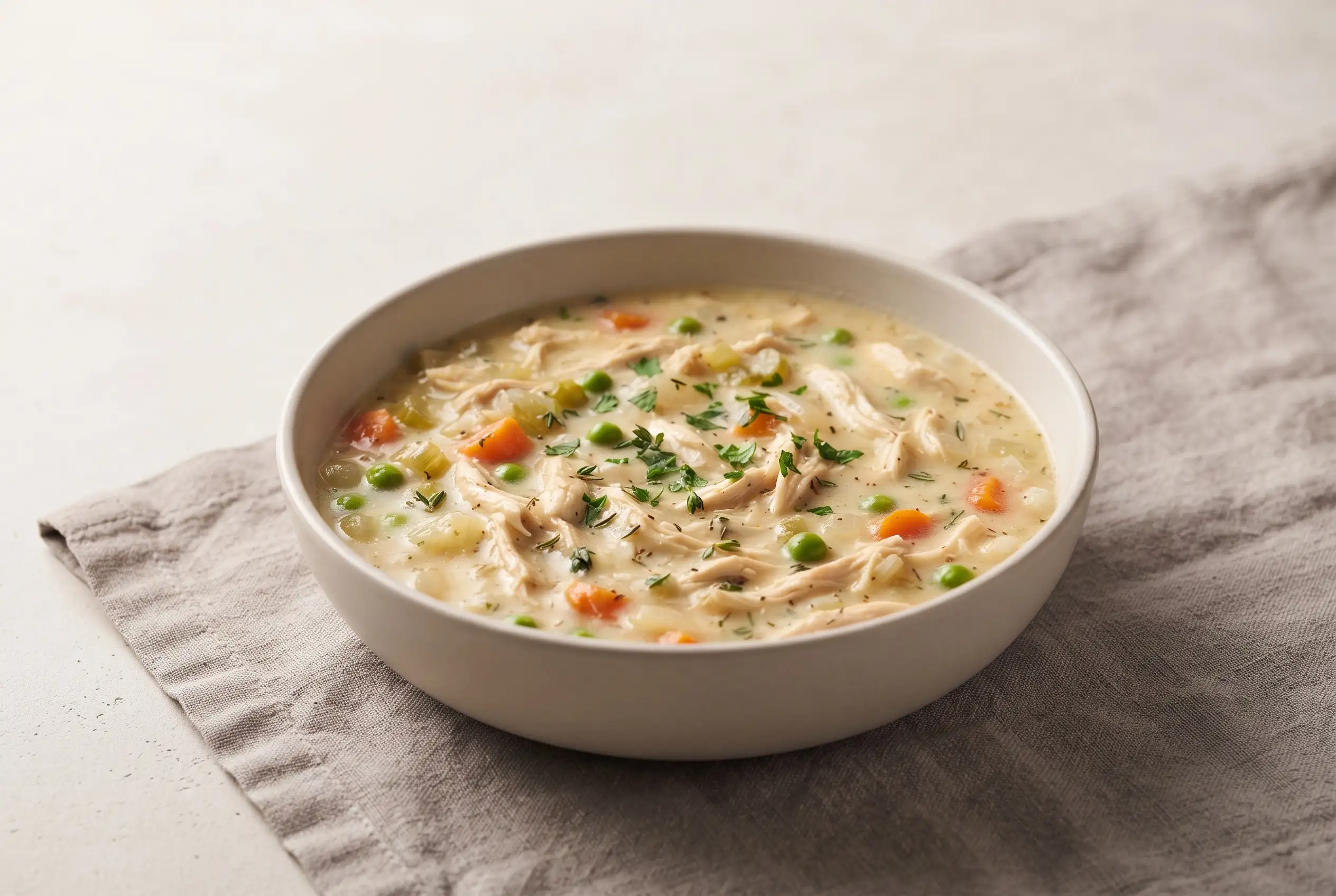
cheddar potato soup brings Yukon Gold potatoes, sharp cheddar, garlic, fresh herbs, and a creamy broth together in a warm, practical meal. The potatoes are partly blended for a smooth base while some pieces remain for texture, and the cheese is stirred in after the heat is lowered so it can melt gently. Garlic, parsley, chives, and thyme give the soup a savory herbal character without requiring a long ingredient list.
Why cheddar potato soup works so well with Yukon Golds
Yukon Gold potatoes are especially useful here because they cook into a tender texture that works well with both the chunky and blended portions of the soup. Cutting them into uniform half-inch cubes helps them cook at a similar rate, which matters when part of the pot will later be blended.
The soup gains body from two different sources. All-purpose flour thickens the broth early in the cooking process, while blending about half of the cooked potatoes creates additional creaminess without requiring every potato piece to disappear. That combination leaves the finished bowl substantial while retaining pieces of potato.
Sharp cheddar provides a clear cheese flavor that stands alongside the garlic and herbs. Freshly shredded cheese is specified because it melts more effectively than pre-shredded cheese, making it easier to incorporate the cheddar smoothly into the warm soup.
Potato preparation sets the texture before cooking begins
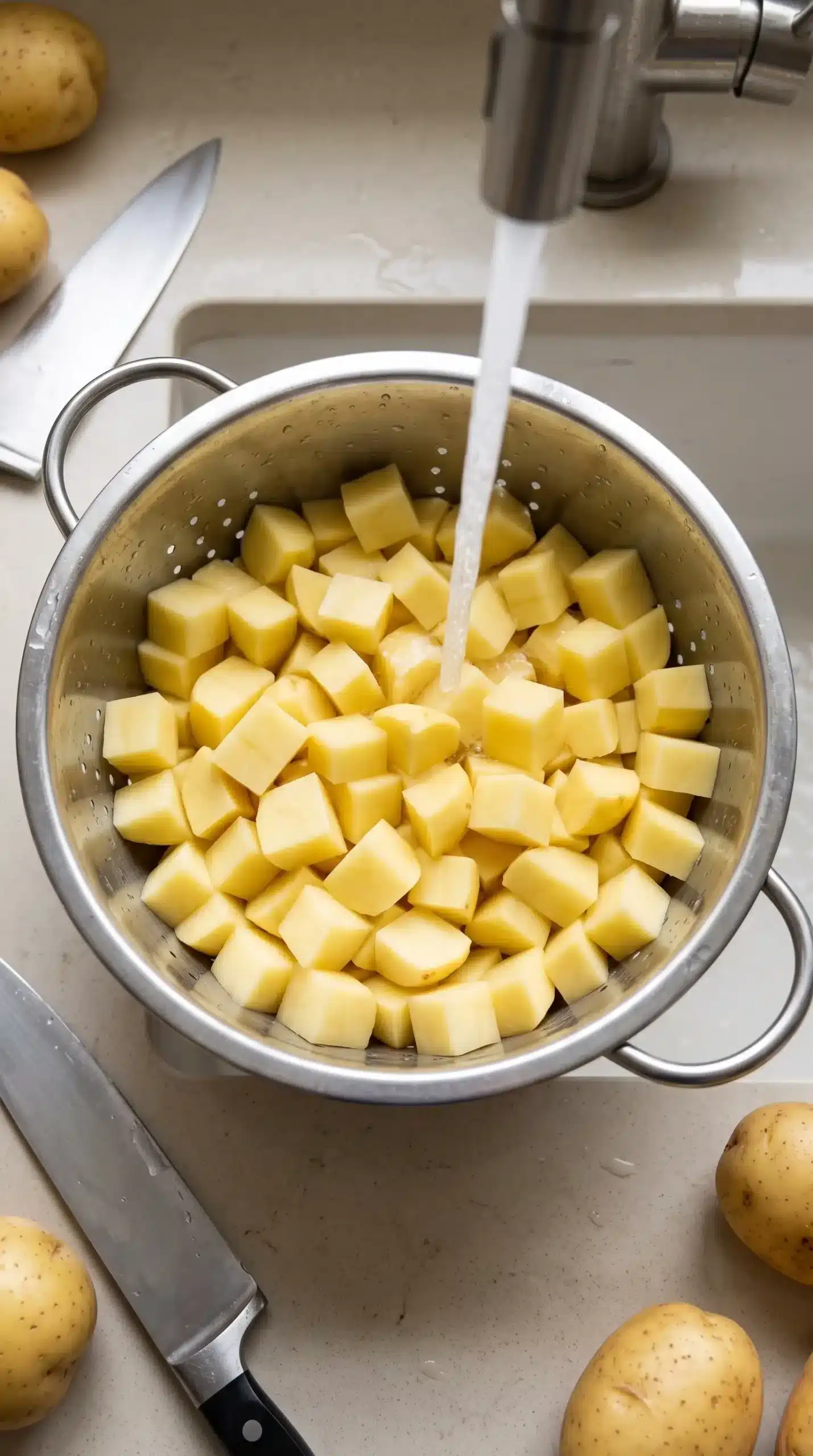
Peel the Yukon Gold potatoes and cut them into consistent half-inch cubes. Rinsing the cut potatoes under cold water removes excess starch before they enter the pot. Keeping the pieces similar in size also helps prevent a mixture of undercooked and overly soft potatoes.
Garlic and herbs shape the savory character
Five to six minced garlic cloves give the soup its pronounced garlic element, while parsley, chives, and thyme provide a fresh herbal layer. The garlic is cooked briefly with the softened onion, which releases its aroma without giving it enough time to burn.
How cheddar potato soup gets its creamy balance
Whole milk supplies the main creamy liquid after the potatoes have cooked, while half-and-half can be used in its place when a richer result is wanted. Heavy cream is optional and adds another level of richness, so the amount of cream can be adjusted according to how substantial you want the broth to feel.
The table below shows how the supplied dairy choices change the character of the finished soup without changing the basic cooking approach.
| Dairy choice | How it is used | Effect on the soup |
|---|---|---|
| Whole milk | Use as the main dairy liquid | Provides a creamy base with a balanced richness |
| Half-and-half | Use in place of whole milk | Makes the dairy portion richer |
| Heavy cream | Add the optional half cup alongside the dairy | Creates the richest and creamiest version |
Keeping the dairy addition at low heat is important once it enters the pot because hot milk can curdle more quickly when conditions cause its proteins to clump. The soup should be heated through without boiling, giving the milk and optional cream time to warm while preserving the intended creamy consistency.
The roux controls how the broth carries the potatoes
After the onion has softened and the garlic has become fragrant, flour is stirred into the pot and cooked briefly. This creates the thickening base before the broth is added. Whisking the liquid in gradually helps incorporate the flour into the broth and reduces the chance of leaving dry pockets behind.
Blending only part of the pot preserves useful texture
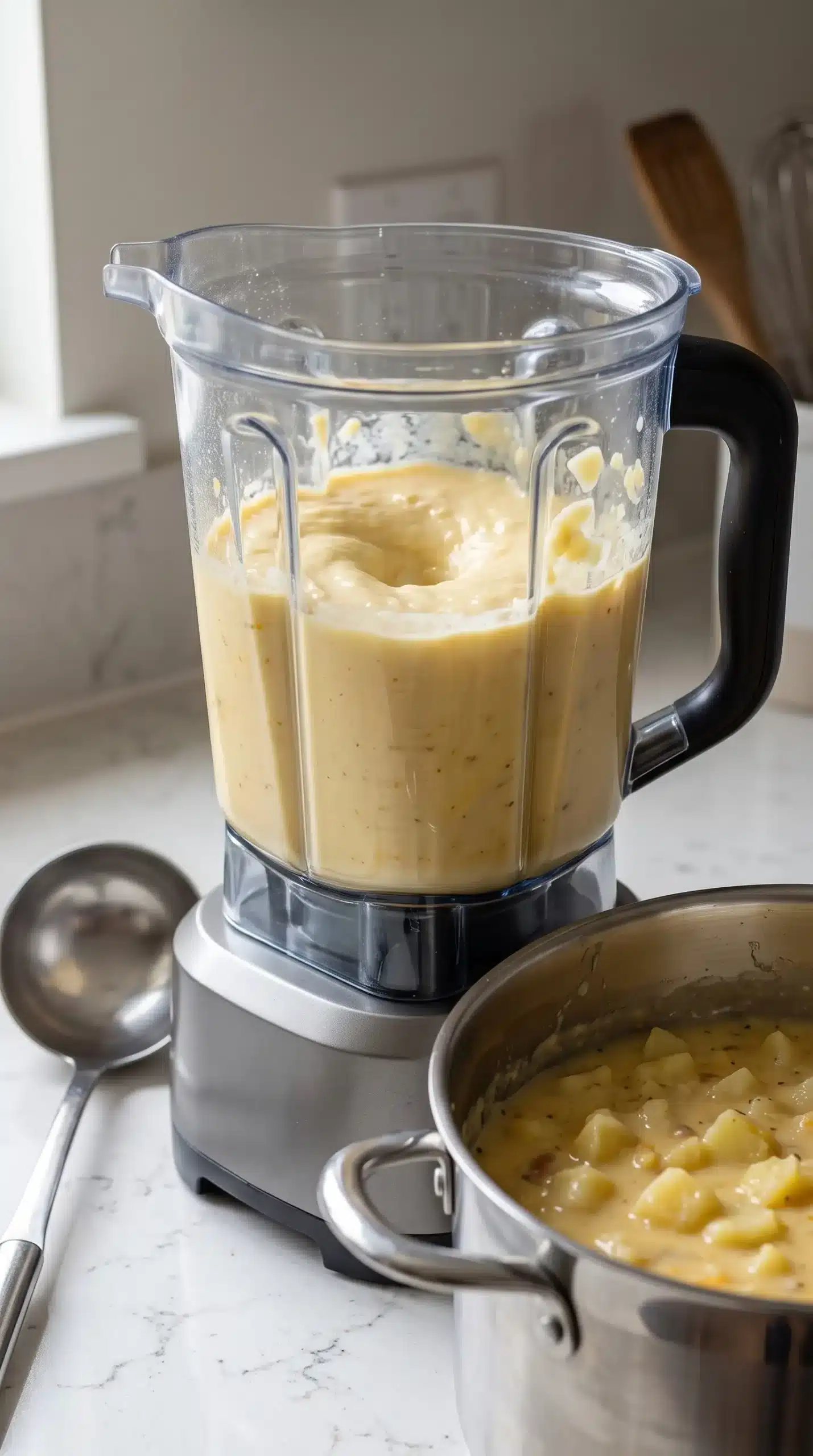
About half of the cooked soup is blended until smooth before being returned to the pot. That partial blending is an important texture decision: the blended portion thickens the liquid, while the remaining potato pieces keep the bowl from becoming completely uniform.
A blender should be handled carefully with hot soup. Ladle only the portion needed for blending, process it until smooth, and return it to the pot before continuing with the dairy and herbs. If a thicker consistency is preferred, more of the soup can be blended, as long as some texture is retained if desired.
Because the potatoes are already tender at this stage, prolonged cooking after blending is unnecessary. The remaining cooking focus is warming the dairy, incorporating the herbs, and melting the cheese smoothly.
Cheddar melts best after the heat comes down
Once the milk, optional cream, and herbs have been heated through, remove the pot from the heat before adding the freshly shredded sharp cheddar. Adding the cheese gradually while stirring gives each portion time to melt into the warm liquid.
Common cheddar potato soup mistakes to avoid
Burning the garlic, boiling the dairy, or adding the cheese while the pot is still aggressively hot can work against the intended texture. Garlic only needs one to two minutes after the onion, while the milk and cream should be heated without boiling. Shredding the cheddar fresh also helps it melt more readily. If the soup seems too thin, blending a larger portion of the potatoes is the supported adjustment; if it needs more seasoning, taste before adding additional salt or pepper.
Seasoning decisions keep the cheese and herbs balanced
Salt and freshly ground black pepper form the basic seasoning, with cayenne pepper or smoked paprika available when a little warmth is wanted. Since sharp cheddar already contributes a strong savory presence, tasting after the cheese has melted gives a better basis for the final seasoning adjustment.
Fresh parsley, chives, and thyme are added after the dairy goes in and before the cheese is incorporated. That timing keeps the herbs present in the creamy base instead of cooking them through the entire process.
Garnishes turn each bowl into a different serving style
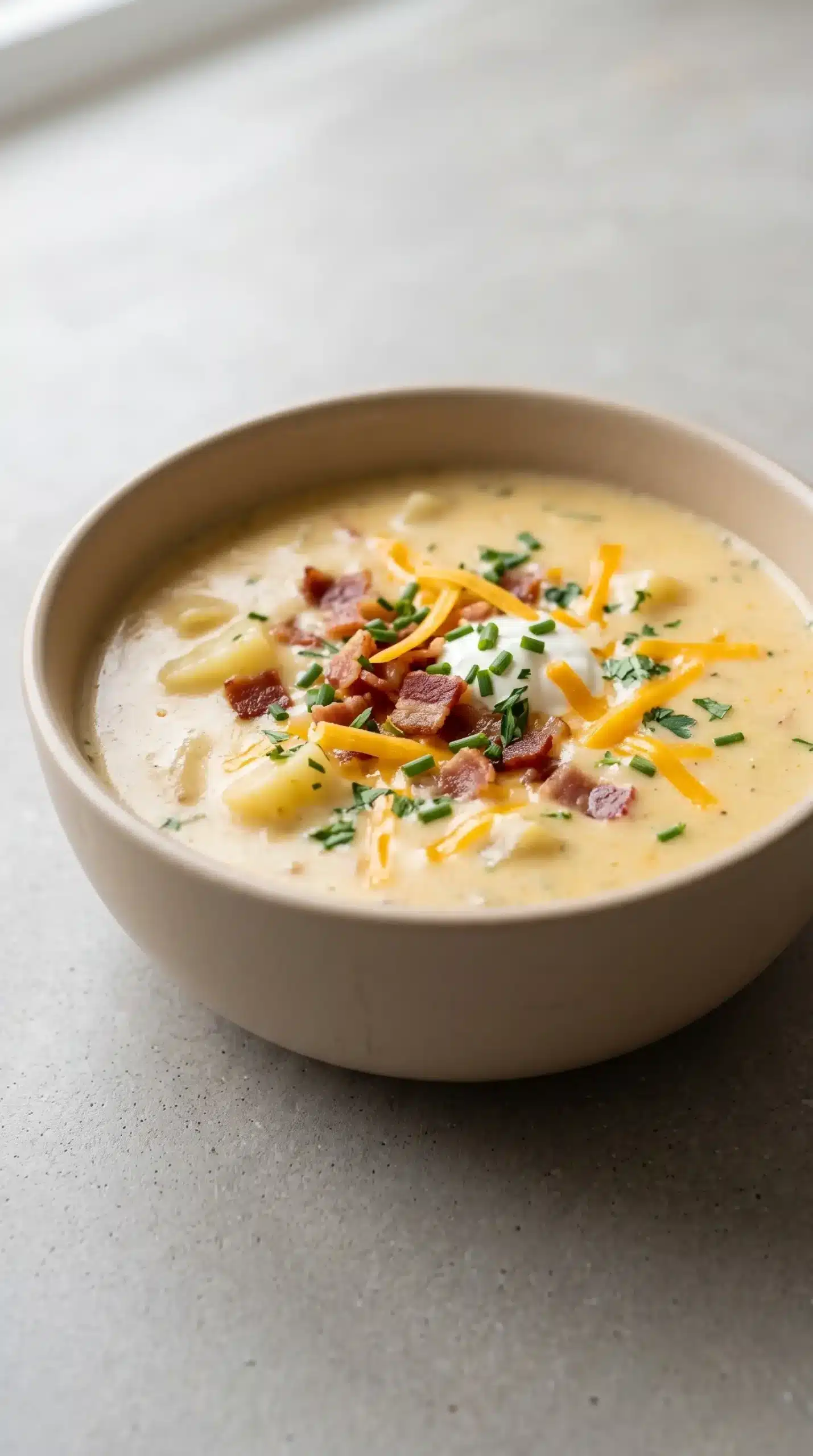
Cooked crumbled bacon adds a savory topping, while extra shredded cheddar reinforces the cheese already present in the soup. Sour cream or Greek yogurt can provide a cool contrast, and additional chives or parsley keep the presentation tied to the herbs in the base. For a more loaded baked-potato-style bowl, layer bacon, sour cream, and extra cheddar over each serving, keeping the loaded baked potato soup with bacon and sour cream combination in mind when choosing the finishing toppings.
Croutons add a contrasting texture directly in the bowl. A crusty piece of bread can also be served alongside the soup, while a side salad provides a lighter accompaniment.
Garlic herb potato soup can change without losing its core texture
Carrots or celery can be added when you want additional vegetables in the soup. The base still centers on potatoes, cheddar, garlic, and herbs, so these additions work as supporting vegetables rather than replacing the defining ingredients.
For a vegetarian preparation, vegetable broth can replace the chicken broth, and bacon can simply be omitted. The remaining cooking process stays centered on the potato, dairy, cheddar, and herb combination.
Serving temperature matters for creamy cheddar potato soup
Serve the soup hot after the cheddar has melted completely and the seasoning has been adjusted. A warm bowl keeps the creamy texture at its intended serving consistency and makes the optional toppings easy to distribute across the surface.
Storage and reheating call for gentle handling
Allow leftover soup to cool after cooking, then transfer it to an airtight container. Refrigerated leftovers can be kept for up to three days, while the soup can be frozen for up to two to three months.
Reheating can be done on the stovetop or in the microwave until the soup is warm. Gentle reheating is especially useful for a dairy-based soup because the texture is built around milk, optional cream, blended potatoes, and melted cheddar.
When serving leftovers, toppings can be added fresh instead of being stored in the soup. Bacon, extra cheddar, sour cream or Greek yogurt, herbs, and croutons are all optional finishing elements, so keeping them separate preserves their individual textures.
Cheddar potato soup depends on controlled heat and partial blending
Tender potatoes, a briefly cooked flour base, partial blending, gentle dairy heating, and off-heat cheddar melting all contribute to the intended texture. Keeping those controls in place gives the soup a creamy body without eliminating every potato piece.
The most important judgment comes near the end: keep the dairy from boiling and let the shredded cheddar melt gradually after the pot leaves the heat. That approach keeps the garlic herb potato soup creamy while allowing the sharp cheddar and tender potato pieces to remain distinct.
Cheddar potato soup questions about texture storage and substitutions
Can cheddar potato soup be made ahead?
Yes. The soup can be prepared a day ahead and refrigerated, then reheated before serving. Keeping the optional garnishes separate until serving helps preserve their intended texture.
Can I use vegetable broth instead of chicken broth?
Yes. Vegetable broth is specifically suitable when making a vegetarian version. Bacon can also be left off the finished bowls.
What can make the soup thicker?
Blend more of the cooked soup to increase its thickness. The recipe already uses partial blending, so increasing the blended portion changes the consistency without requiring an additional thickener.
Can I use a different cheese?
Gouda or Monterey Jack can be used when you want a different cheese flavor. Freshly shredding the selected cheese remains useful for melting.
How can I add more heat?
Red pepper flakes or a little hot sauce can be added during seasoning. Cayenne pepper or smoked paprika are also listed options for adding a small amount of warmth.
Can the soup be frozen?
Yes. Store cooled leftovers in an airtight container and freeze them for up to two to three months. Reheat on the stove or in the microwave until warm.
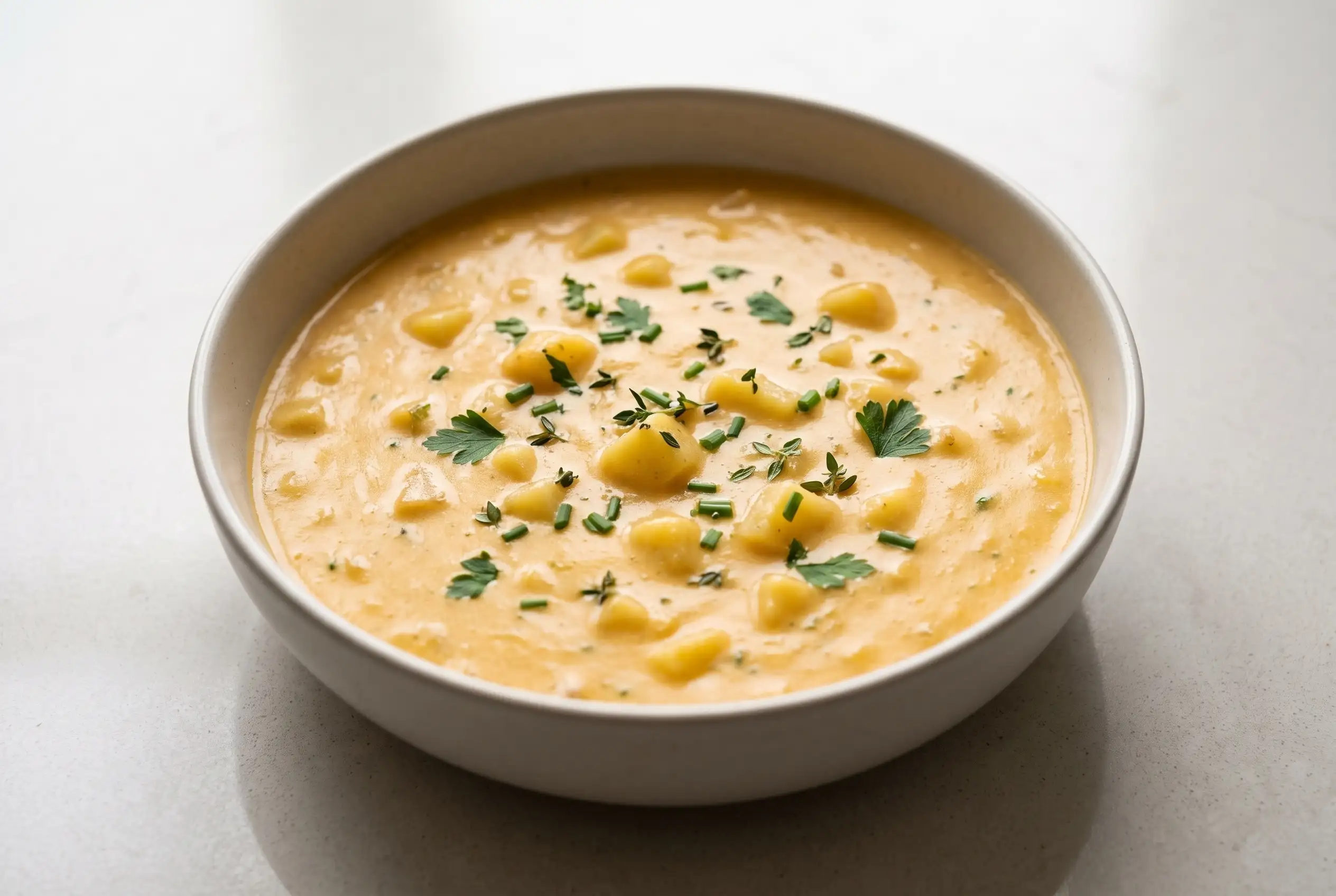
Cheddar Garlic Herb Potato Soup
Ingredients
Method
- Peel the potatoes and cut them into 1/2-inch cubes. Rinse the cubes under cold water, then drain well.
- Warm a large pot or Dutch oven over medium heat. Add the butter, or use the olive oil and butter combination.
- Add the onion and cook for 5-7 minutes, stirring occasionally, until softened and translucent.
- Stir in the garlic and cook for 1-2 minutes, keeping it moving so it does not burn.
- Sprinkle the flour over the onion mixture and stir continuously for 1-2 minutes to cook the flour.
- Slowly whisk in the chicken or vegetable broth, scraping the bottom of the pot as the liquid is added. Bring the broth to a simmer.
- Add the drained potato cubes and stir to distribute them. Cover the pot and simmer for 15-20 minutes, stirring occasionally, until the potatoes are tender.
- Carefully transfer about half of the soup to a blender and process until smooth. Return the blended portion to the pot.
- Lower the heat and stir in the whole milk and heavy cream, if using. Add the parsley, chives, and thyme, then heat for about 5 minutes without allowing the soup to boil.
- Take the pot off the heat and gradually mix in the shredded cheddar until fully melted.
- Season with salt, black pepper, and optional cayenne pepper or smoked paprika to taste.
- Serve the soup hot with any desired optional toppings, including bacon, extra cheddar, sour cream or Greek yogurt, fresh herbs, or croutons.