One Pot Beef Pasta with Garlic Butter and Parmesan
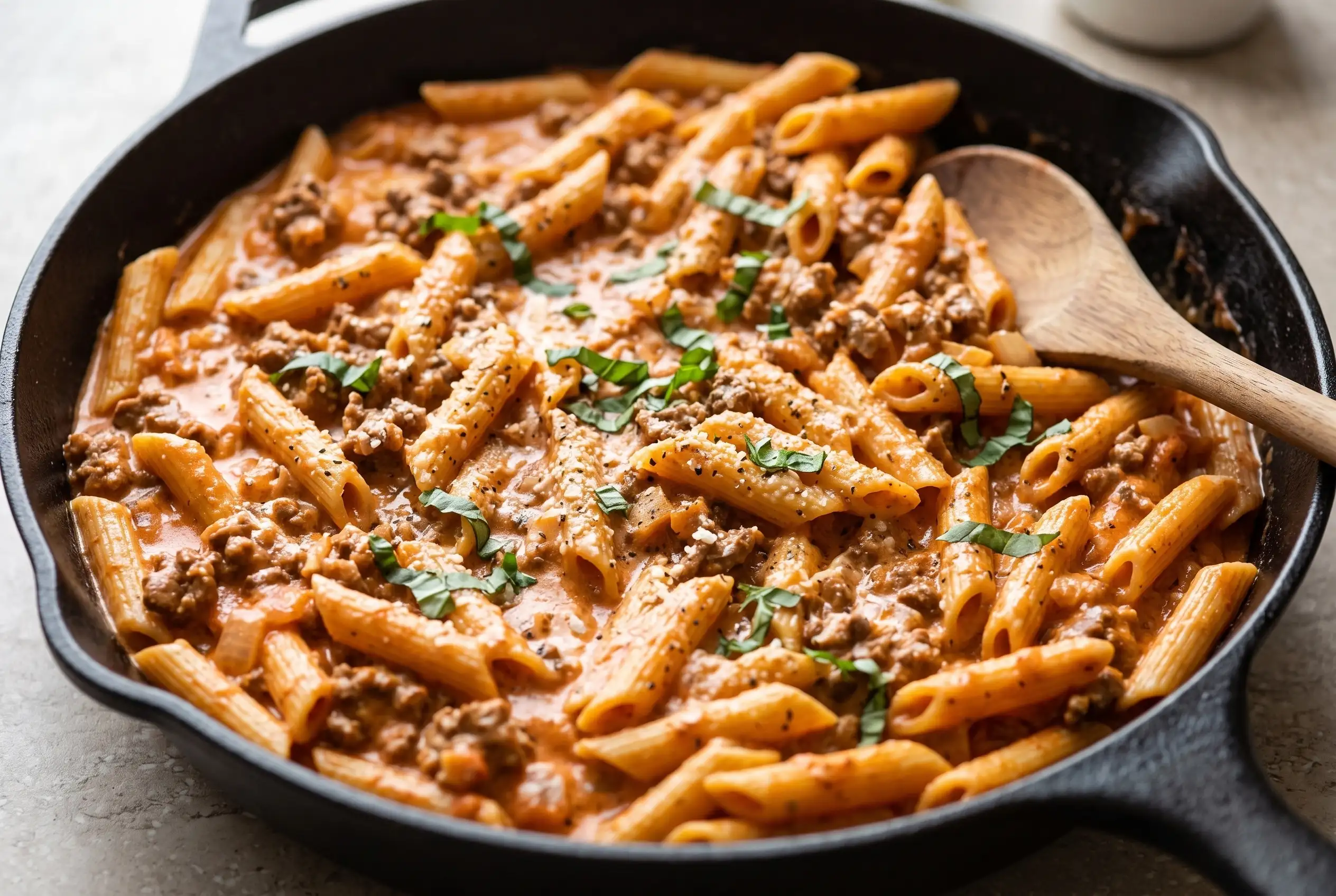
One pot beef pasta brings together browned ground beef, tender pasta, garlic, onion, Parmesan, and a rich cream sauce in a single skillet. The combination is especially satisfying when you want a hearty dinner without filling the kitchen with cookware. Butter, garlic, and Italian seasoning create a savory base, while beef broth and heavy cream give the pasta enough liquid to cook directly in the sauce.
Creamy beef pasta also works well for busy evenings because the cooking process is compact and straightforward. The pasta absorbs the seasoned liquid as it simmers, and Parmesan melts into the sauce near the end. The result is a comforting skillet meal with tender pasta, browned beef, and a creamy finish that can be served hot with garlic bread or a simple green salad.
Why One-Pot Beef Pasta Works So Well
Cooking the pasta in the skillet lets its cooking liquid mingle with the beef, garlic, onion, broth, and cream. That keeps the flavor concentrated in one pan and gives the sauce a chance to cling to the pasta as everything cooks together.
Ground beef supplies the hearty foundation, while butter helps establish the garlic-forward character suggested by the dish’s name. Parmesan adds another savory layer and thickens the finished sauce once it melts.
The single-pot approach also simplifies cleanup. Instead of cooking pasta separately and preparing another sauce pan, the dry pasta goes into the skillet after the creamy liquid has been established. Occasional stirring helps keep the pasta covered as it cooks.
Garlic Butter and Parmesan Shape the Sauce
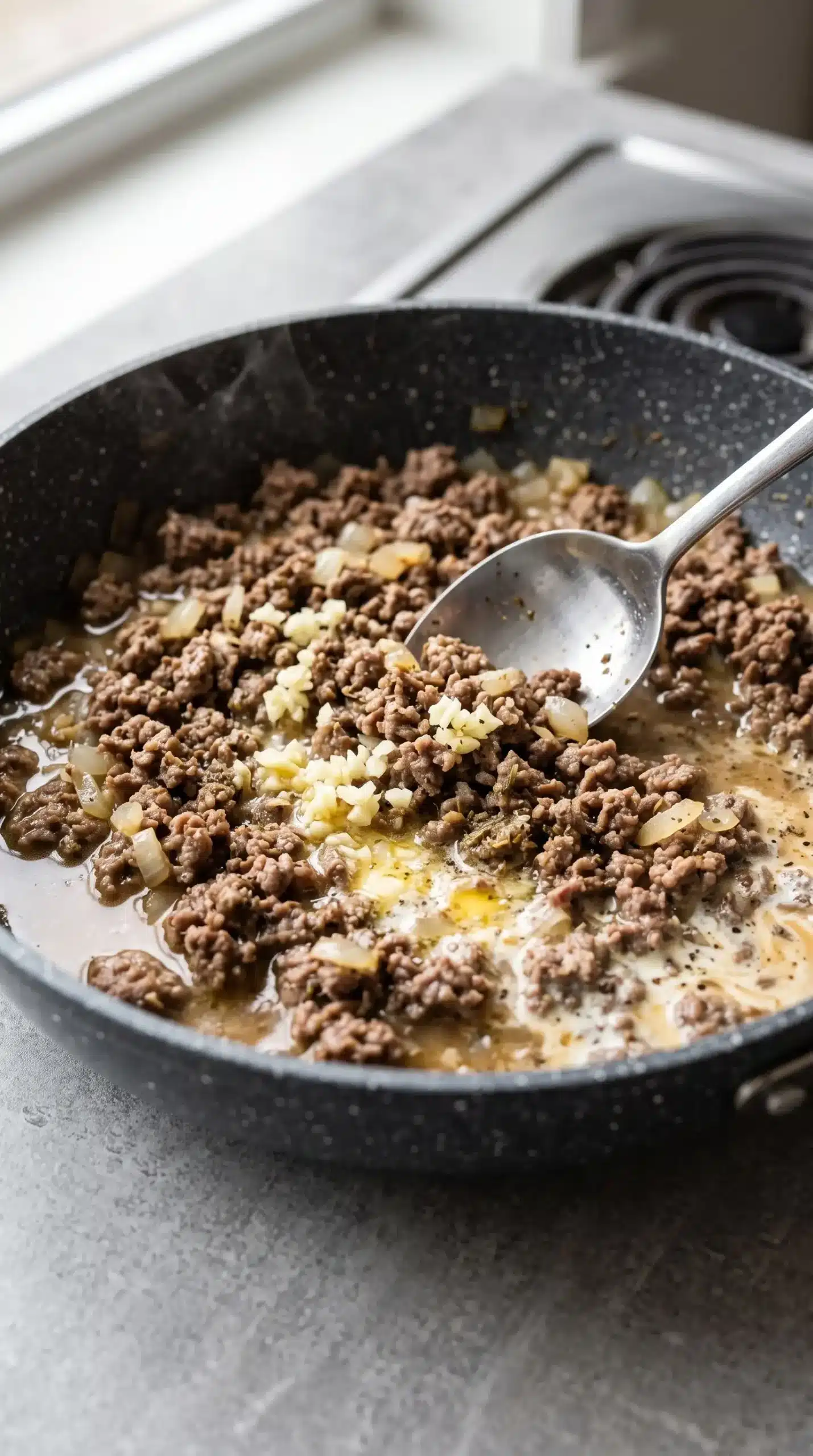
Butter and minced garlic are important to the flavor profile because they form the aromatic base before the cream enters the skillet. Cooking the garlic briefly after the onion has softened allows its aroma to develop without making it the only dominant flavor.
Heavy cream provides the rich body of the sauce, while grated Parmesan brings a salty, savory character and helps create the creamy consistency when it melts. Beef broth adds a complementary savory liquid before the cream is incorporated.
Italian seasoning, salt, and black pepper keep the seasoning simple. Red pepper flakes can be added at the end when a little heat is wanted, while fresh parsley provides a fresh finishing touch.
Choosing Pasta That Cooks Evenly in the Skillet
| Pasta choice | How it fits the dish | Key consideration |
|---|---|---|
| Penne | Short, sturdy shape for the creamy skillet sauce | Keep the pieces covered with sauce while simmering |
| Spaghetti | Long pasta that works with the same creamy beef mixture | Stir occasionally so the strands remain coated |
| Whole wheat pasta | A variation for a different pasta choice | Use it in place of the pasta type called for in the dish |
| Gluten-free pasta | An alternative pasta option | Choose a variety suitable for your dietary needs |
Penne and spaghetti are both supplied as options, so the choice can depend on the texture and shape you prefer. Penne gives the sauce short pieces to cling to, while spaghetti creates a more familiar long-pasta presentation. A smaller pasta shape such as ground beef orzo can require closer attention to the liquid level because compact pasta shapes absorb sauce differently.
Keep the Beef Brown and the Aromatics Balanced
Start by melting the butter over medium heat, then add the ground beef. Breaking the meat into crumbles as it cooks helps distribute it throughout the pasta instead of leaving large pieces in the finished skillet.
Proper browning does more than change the color of the beef: the Maillard reaction can produce savory-roasty flavors that deepen the finished pasta.
Once the beef has browned, chopped onion goes into the same pan. Allowing the onion to soften before adding the garlic creates a useful progression: the beef develops its browned flavor first, the onion softens next, and the garlic follows for a shorter cooking period.
After the garlic becomes fragrant, the Italian seasoning, salt, and black pepper can be mixed through the beef mixture. Scraping the bottom of the skillet after adding beef broth also helps loosen flavorful browned bits and incorporate them into the liquid.
- Beef texture: Break the ground beef into crumbles during cooking for more even distribution.
- Onion timing: Let the chopped onion soften before introducing the minced garlic.
- Garlic timing: Keep its cooking period brief so the garlic remains an aromatic part of the sauce.
- Pan scraping: Use the beef broth to loosen the flavorful material on the skillet bottom.
Let the Creamy Liquid Cook the Pasta
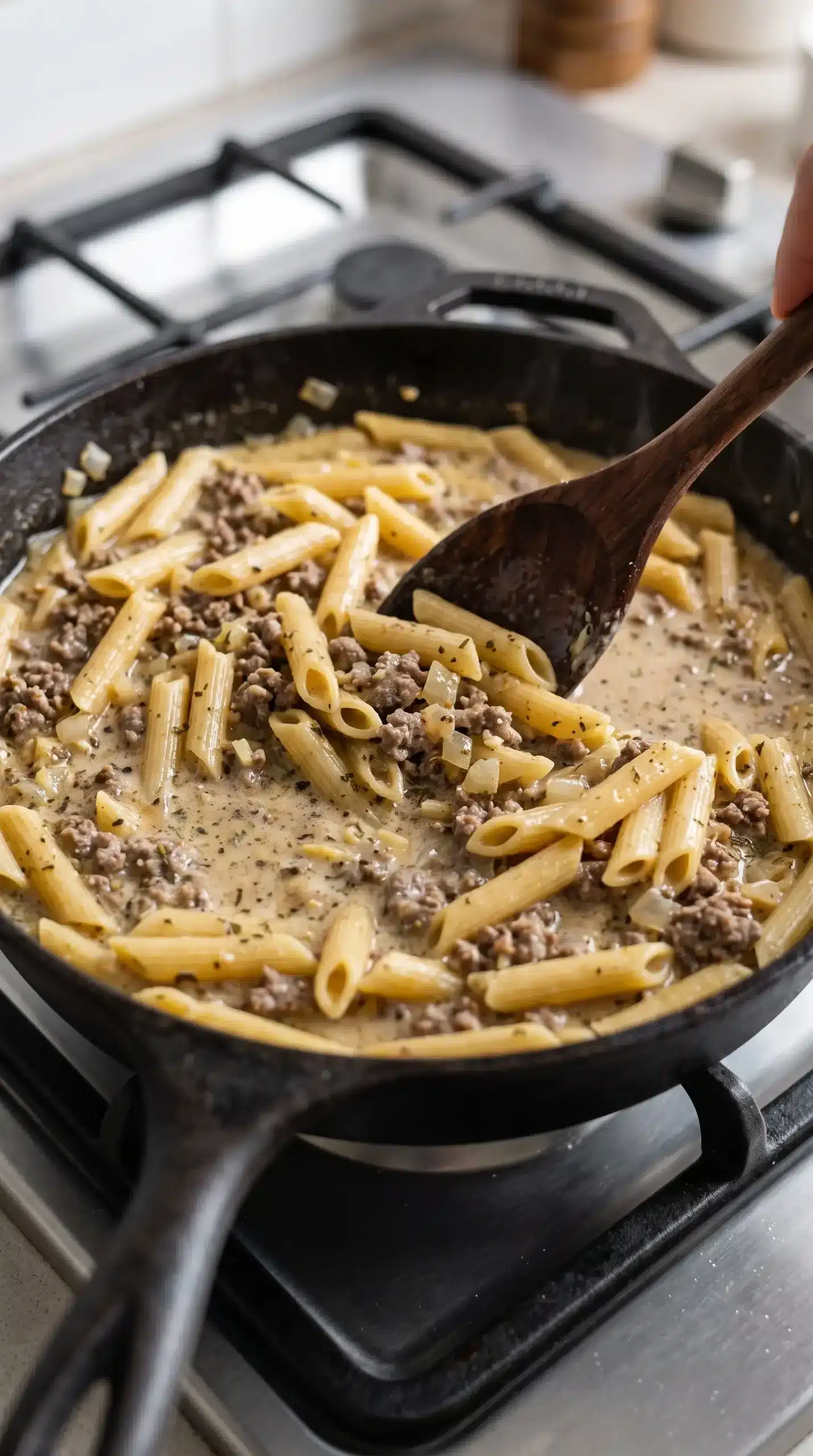
After the beef and aromatics are seasoned, beef broth and heavy cream become the cooking environment for the dry pasta. The pasta should be stirred into the skillet so the pieces or strands are covered by the sauce before the pan is covered.
A gentle simmer is important during this stage. The supplied method calls for occasional stirring while the pasta cooks for 10–12 minutes. Stirring redistributes the pasta through the liquid and helps the sauce remain in contact with it as it softens.
Watch the texture instead of treating the clock as the only indicator. Pasta should be cooked through, while the surrounding sauce should have thickened enough to coat it. If the skillet is stirred and the pasta is still firm, it needs more cooking time; if the pasta is tender and the sauce has thickened, it is ready for Parmesan.
Parmesan Finishes the One Pot Creamy Beef Pasta
Grated Parmesan belongs near the end because it is used to finish the creamy texture rather than serve as part of the initial cooking liquid. Once the pasta is cooked and the sauce has thickened, stirring in the cheese allows it to melt throughout the skillet.
The cheese also brings additional savory depth to the beef and garlic combination. Stir until it has melted into the sauce, keeping the mixture cohesive so the Parmesan is distributed across the pasta.
Fresh chopped parsley can be scattered over the hot pasta immediately before serving. Red pepper flakes are optional, giving individual servings a way to add spice without changing the character of the whole skillet.
Common Creamy Beef Pasta Mistakes to Avoid
Adding the pasta before the creamy liquid is ready can make it harder to keep every piece properly coated. The supplied method establishes the broth and cream first, then adds the dry pasta so it cooks while surrounded by sauce.
Overlooking occasional stirring can also interfere with even cooking. Pasta needs contact with the liquid, so check the skillet during the covered simmer and stir as directed.
Adding Parmesan before the pasta has finished cooking changes the order of the finishing stage. Let the pasta reach the cooked, sauce-thickened point first, then stir in the grated cheese so it can melt into the finished sauce.
Simple Add-Ins for More Variety
Spinach and bell peppers are supported additions when you want vegetables in the skillet. They can change the character of the meal without requiring a separate vegetable side, while the underlying beef, garlic, cream, and pasta combination remains recognizable.
Ground turkey or ground chicken can replace the beef when you prefer a different meat. The substitution changes the main savory base but keeps the overall skillet concept intact.
For a vegetarian adaptation, plant-based ground meat can stand in for the ground beef, and a non-dairy cream can replace the heavy cream. A vegan version also calls for a plant-based meat option and coconut cream or another dairy-free alternative in place of the dairy components.
Seasoning Changes That Suit the Same Skillet
| Seasoning choice | How to use it | Effect on the dish |
|---|---|---|
| Italian seasoning | Use as the supplied core seasoning | Keeps the flavor aligned with the original profile |
| Basil | Use as an alternate seasoning direction | Creates a different herb-focused flavor |
| Oregano | Try in place of the usual seasoning emphasis | Gives the pasta a different herbal character |
| Red pepper flakes | Sprinkle over the finished pasta as desired | Adds heat without requiring a change to the sauce |
Italian seasoning is the straightforward choice for the supplied flavor profile, but basil or oregano can shift the character when you want variety. Red pepper flakes work differently because they provide heat rather than replacing the herb seasoning.
Serve the Pasta Hot With Simple Sides
Serve the skillet pasta hot so the creamy sauce remains at its best. Extra Parmesan can be sprinkled over individual portions for a stronger cheese finish.
Garlic bread makes a natural companion to the creamy beef pasta, especially for soaking up sauce left on the plate. A simple green salad offers a lighter side and adds a fresh contrast to the rich skillet.
Store Leftover Beef Pasta Carefully
Leftovers should be transferred to an airtight container and refrigerated. The supplied storage guidance gives the pasta about three days in the refrigerator, making it useful for another meal after the initial serving.
When reheating, use either the microwave or stovetop and warm the pasta until it is hot. Gentle reheating helps bring the creamy mixture back together without changing the dish into an entirely different preparation.
What the Finished Skillet Should Look Like
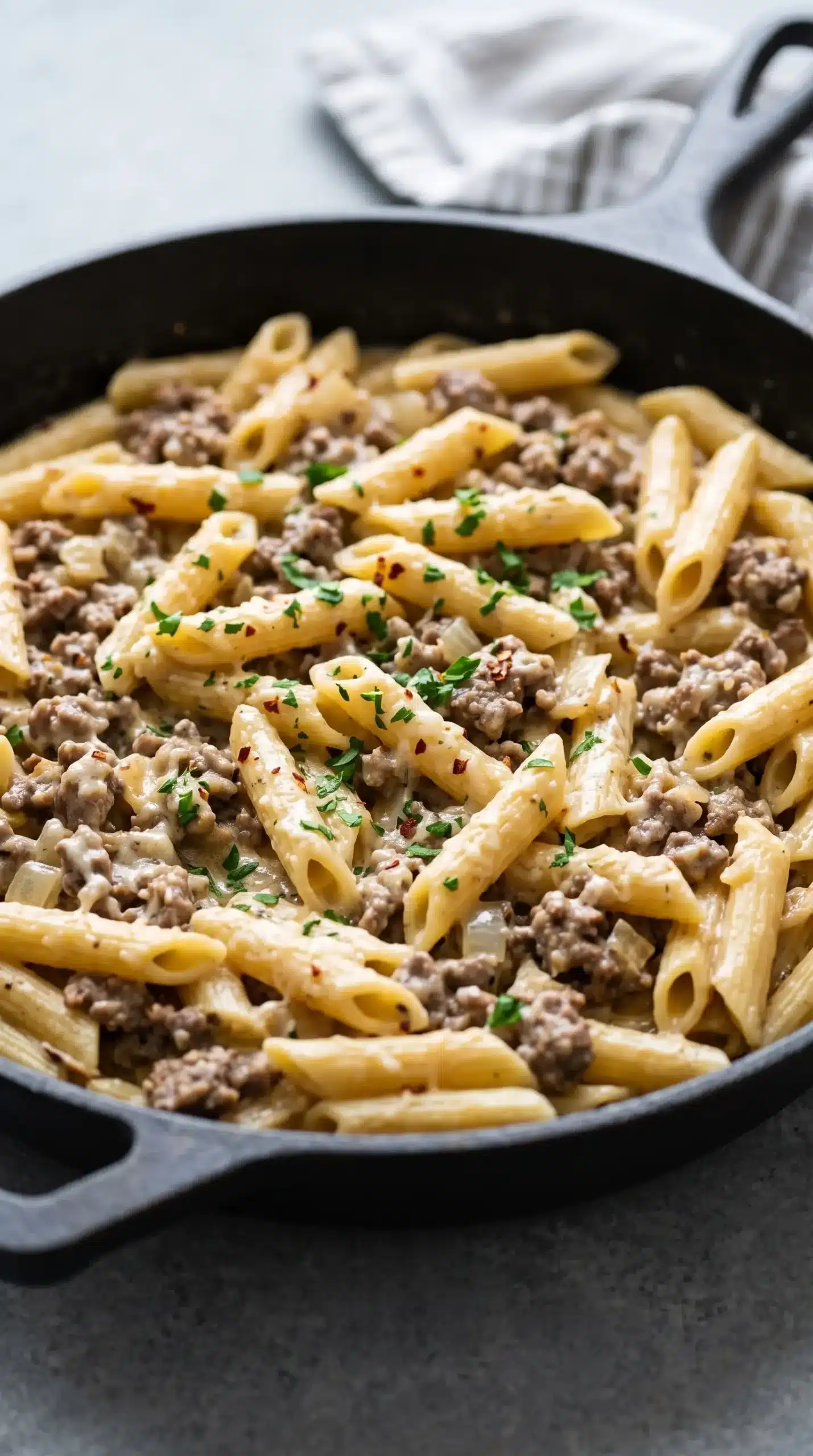
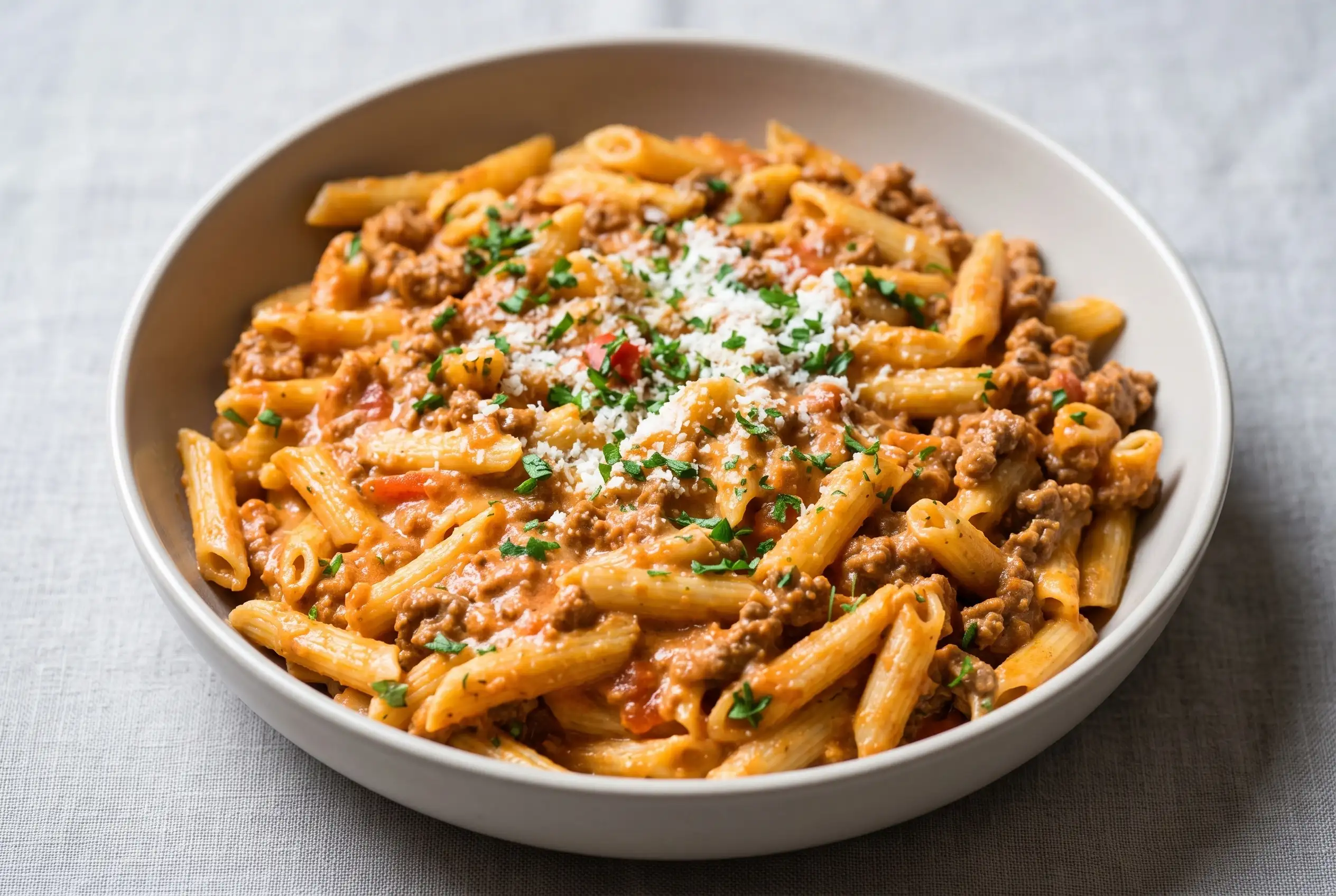
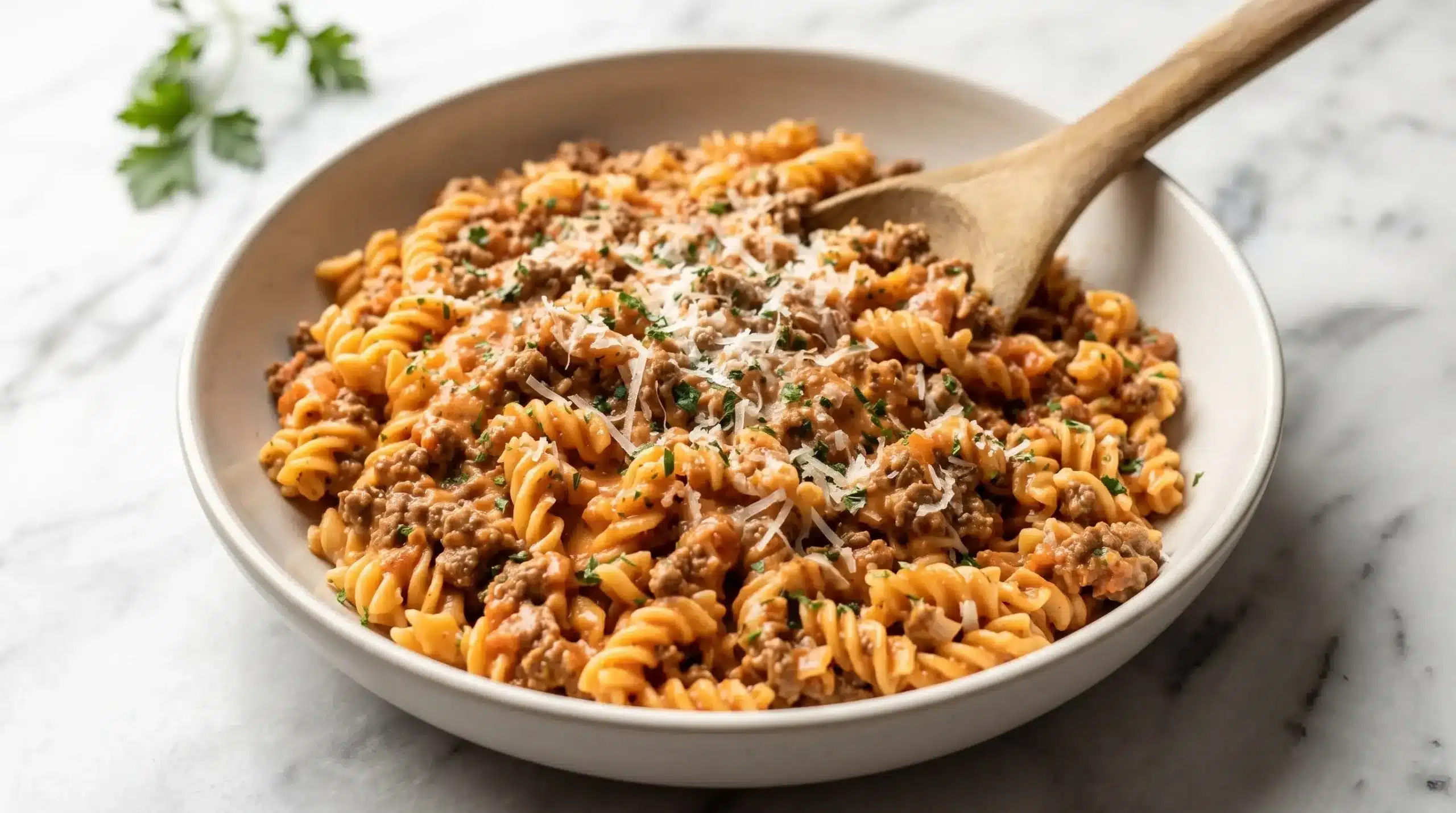
Properly cooked one pot beef pasta should have tender pasta surrounded by a creamy sauce that has thickened during the skillet simmer. The ground beef should remain distributed through the pasta, while the onion and garlic should be incorporated into the seasoned sauce.
Parmesan should disappear into the sauce as it melts, leaving a cohesive creamy finish instead of separate shreds sitting on top. Fresh parsley and optional red pepper flakes provide the visible finishing touches.
Small Choices That Make the Skillet More Reliable
Keep the heat controlled once the heavy cream is added so the mixture can simmer gently while the pasta cooks. Stirring occasionally is especially useful because the pasta is cooking directly in the sauce.
Use grated Parmesan at the finishing stage and stir it through thoroughly. That simple timing choice helps preserve the intended creamy consistency and distributes the cheese throughout the skillet.
Serving immediately after finishing also makes sense for the intended texture. Garlic bread or a simple salad can be prepared alongside the skillet without adding another complicated cooking process.
Garlic Butter Beef Pasta Comes Together Around Sauce Control
The creamy sauce determines how successfully the pasta, beef, garlic, and Parmesan come together. Establishing the seasoned liquid before the dry pasta enters the skillet, maintaining a gentle simmer, and stirring occasionally keeps the cooking process focused on even coverage and tenderness.
Once the pasta is cooked and the sauce has thickened, Parmesan completes the texture while parsley and optional red pepper flakes finish the dish. Those few decisions turn a straightforward skillet of ingredients into a cohesive garlic butter beef pasta meal.
Questions About Creamy One-Pot Beef Pasta
Can penne and spaghetti be used interchangeably?
Both are provided as pasta choices for the dish, so either can be used. Penne offers a short shape, while spaghetti gives the meal long strands; whichever you choose, make sure the pasta is covered by the sauce during the skillet simmer.
How can vegetables be added?
Spinach or bell peppers are specifically suggested additions. They can be incorporated when you want more vegetables in the meal while keeping the central combination of beef, pasta, garlic, onion, and creamy sauce.
What can replace the ground beef?
Ground turkey or ground chicken can be used in place of the beef for a different version of the skillet meal. Plant-based ground meat is another supported substitution when preparing a vegetarian adaptation.
Can the pasta be prepared ahead?
Yes. The cooked pasta can be refrigerated and reheated when needed. Keeping it in an airtight container helps with storage, and it can be warmed on the stovetop or in the microwave.
How long can frozen leftovers be kept?
Properly stored leftovers can be frozen for about 2–3 months. Use a freezer-safe container so the pasta is protected during storage, then thaw and reheat it before serving.
How can the dish be made vegetarian?
Use plant-based ground meat in place of the beef and choose a non-dairy cream instead of heavy cream. Coconut cream or another dairy-free alternative is suggested for replacing the cream while maintaining the creamy style of the dish.
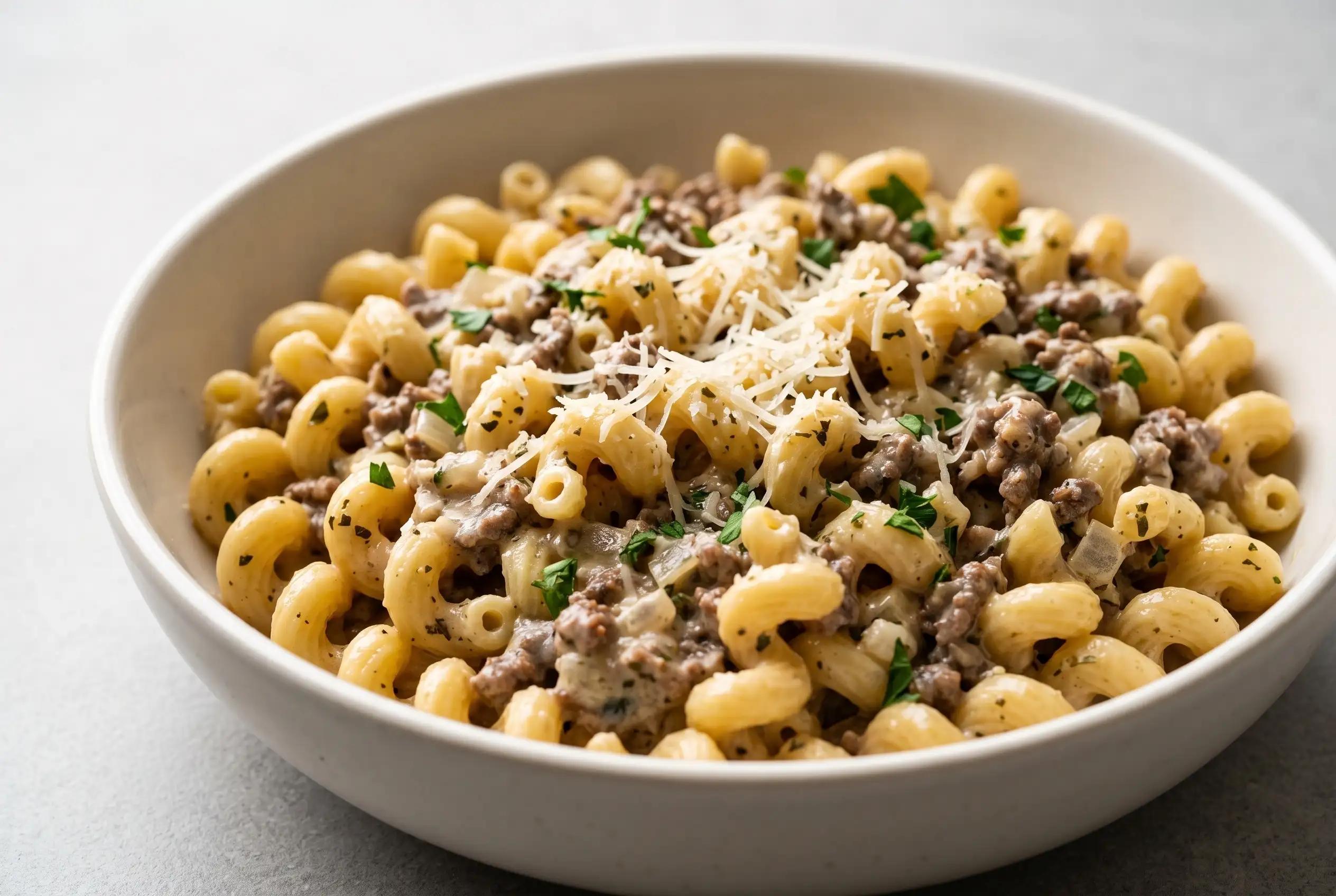
One Pot Beef Pasta with Garlic Butter and Parmesan
Ingredients
Method
- Melt the butter in a skillet over medium heat.
- Add the ground beef and cook for 5–7 minutes, breaking it into crumbles as it cooks, until browned and fully cooked.
- Stir in the chopped onion and cook for 3–4 minutes, until softened.
- Add the minced garlic and cook for 1–2 minutes.
- Sprinkle in the Italian seasoning, salt, and black pepper, then stir until the seasonings are evenly distributed.
- Pour in the beef broth and use a spoon to loosen the browned bits from the bottom of the skillet.
- Mix in the heavy cream and bring the sauce to a gentle simmer.
- Add the dry pasta and stir so it is coated in the sauce. Cover and simmer for 10–12 minutes, stirring occasionally, until the pasta is cooked and the sauce has thickened.
- Stir the grated Parmesan into the pasta until melted and fully incorporated.
- Finish with fresh chopped parsley and optional red pepper flakes. Serve hot.