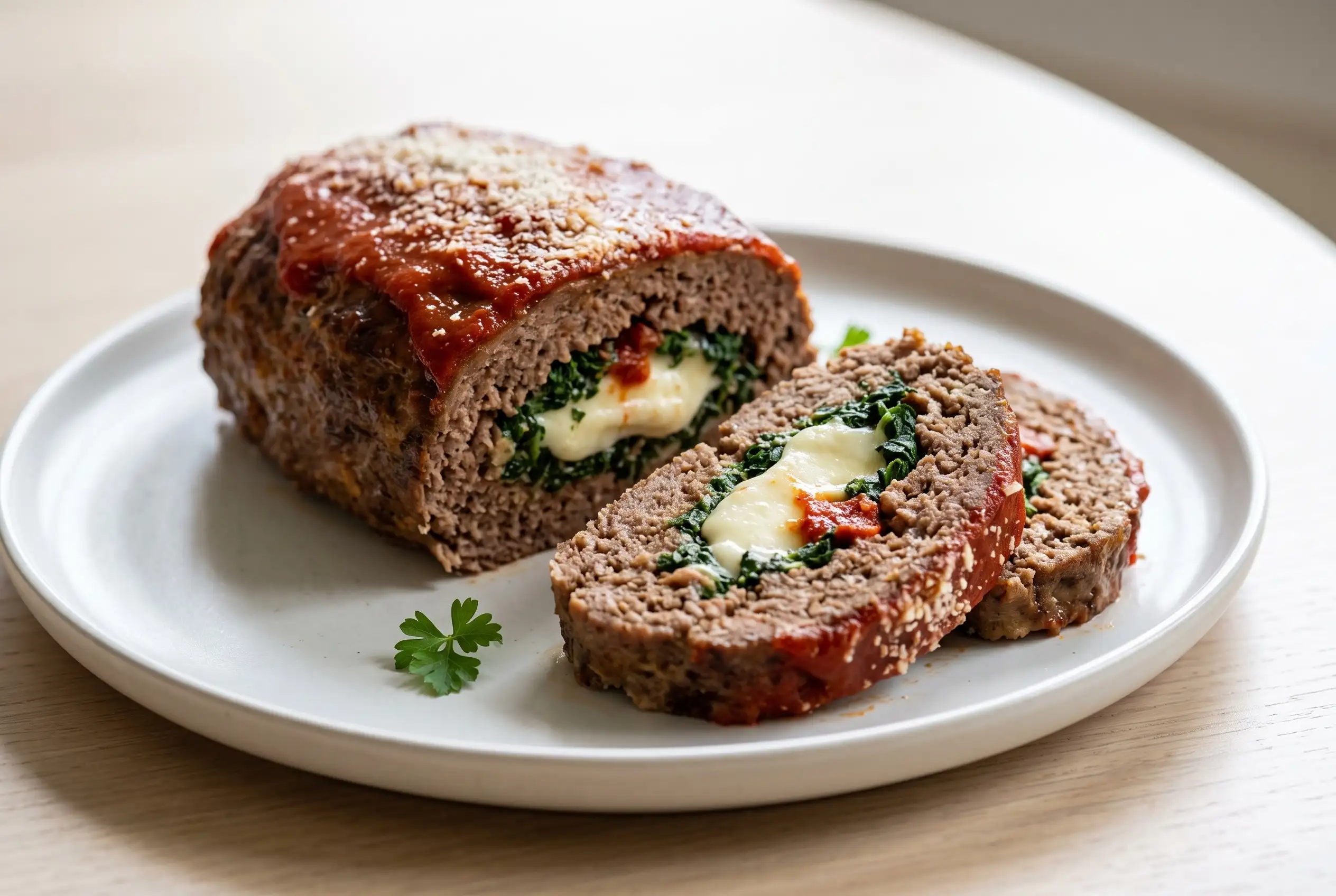
Ground Beef Orzo Recipe with Parmesan and Tomato Paste
Ground beef orzo brings together browned lean beef, tender orzo, onion, garlic, tomato paste, warm spices, broth, and Parmesan in one skillet. The small pasta cooks directly with the savory beef mixture, creating a hearty meal with a creamy finish once the cheese melts through.
Busy evenings are where an easy ground beef orzo recipe earns its place. There is no need to manage a separate pot of pasta, and the combination of beef and orzo makes the finished dish substantial enough to serve as the centerpiece of dinner.
Why Ground Beef Orzo Works So Well in One Pot
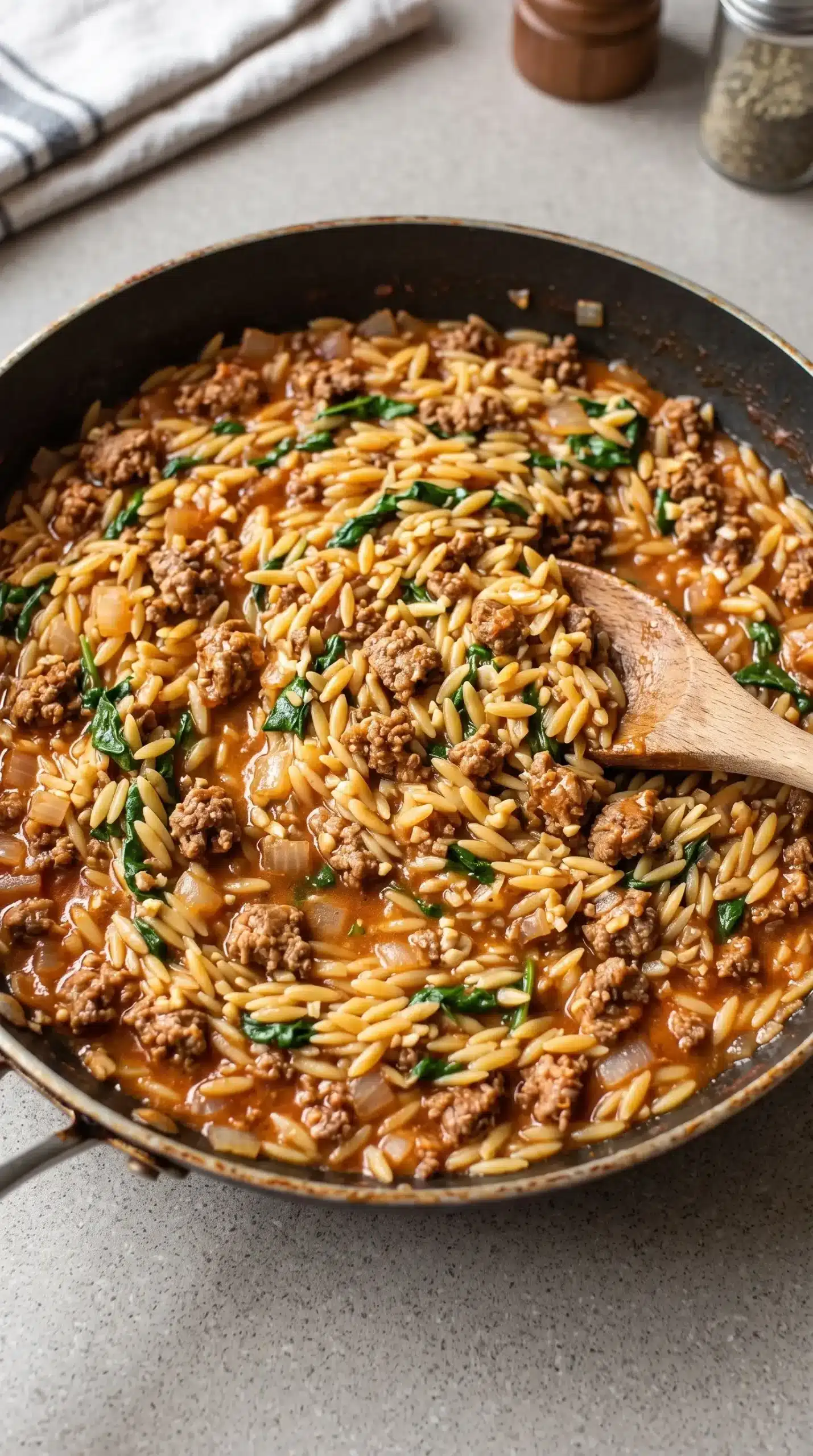
The strength of one pot ground beef orzo comes from how the ingredients build on one another. Onion and garlic soften first, giving the skillet a flavorful foundation before the beef is browned. Tomato paste, paprika, and Italian seasoning then deepen that savory base.
Broth provides the liquid needed for the orzo to cook, allowing the pasta to become tender in the same skillet as the beef. Cooking everything together also keeps the dish cohesive instead of separating the pasta from its sauce.
Parmesan changes the texture at the end. Stirring freshly grated cheese into the hot mixture after removing the skillet from the heat creates a creamy consistency and brings a salty, savory finish to the tomato-seasoned beef and pasta.
The Ingredient Choices That Shape the Finished Orzo
Lean ground beef is particularly useful here because the dish already develops richness from Parmesan. Browning the beef well gives the skillet its main savory character, while draining excess grease when necessary keeps the mixture from becoming overly heavy.
Orzo is small enough to cook directly in broth, making it a natural fit for this skillet approach. Rinsing it before adding it to the pan is part of the supplied method, and the pasta should be tender by the end of its covered simmer.
Tomato paste deserves attention because only a small amount is used, yet it is cooked briefly with the spices before the broth goes in. Because tomato paste is highly concentrated, rich tomato flavor can develop without adding much liquid, making this short cooking stage useful before the broth is added.
Build the Flavor Before the Broth Goes In
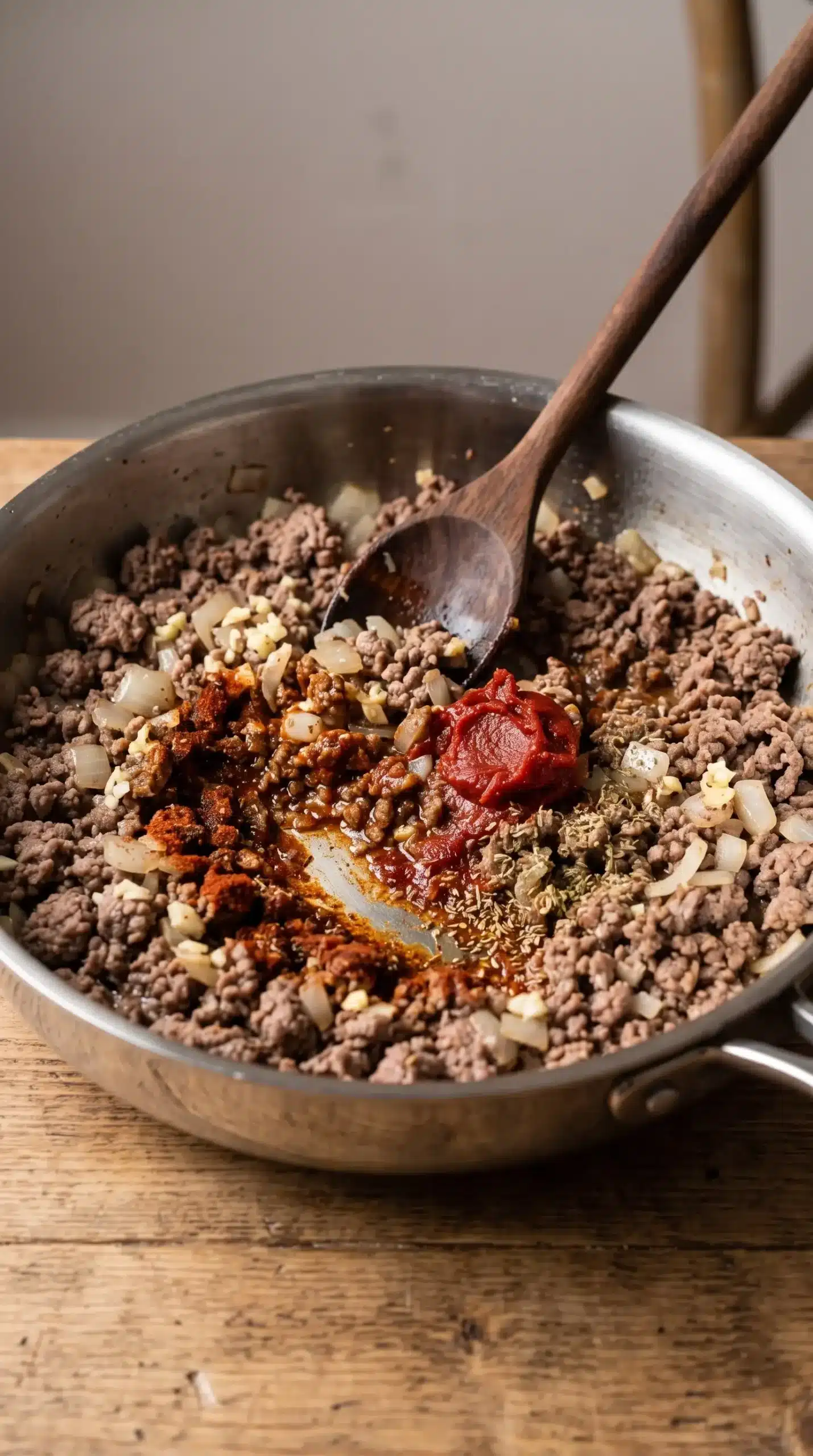
Start with the onion and garlic over medium heat and give them enough time to soften. The supplied method calls for about 3 to 4 minutes, which creates a useful pause before the beef enters the skillet.
Once the beef is added, breaking it apart as it cooks helps it brown throughout. About 5 to 7 minutes is given for this stage, but the important visual cue is browned beef rather than a particular number of minutes alone.
After browning, the tomato paste, paprika, and Italian seasoning need their own brief cooking stage. About 2 minutes lets the seasonings become aromatic before the broth and orzo are introduced, while a tomato-forward dish such as ground beef pasta with tomato sauce shows how beef and tomato can form the central flavor of a pasta meal.
Keep the Orzo Tender Without Losing the Skillet Texture
Broth is added after the beef mixture has been seasoned, followed by rinsed orzo. Bringing the liquid to a boil establishes the heat needed to begin cooking the pasta.
Reducing the heat to low once boiling begins is important because the orzo then cooks gently while covered. The supplied cooking window is about 10 to 12 minutes, with a stir halfway through to help the pasta cook evenly.
Halfway stirring is especially useful in a one-pot pasta dish because the orzo is cooking directly in the surrounding liquid. Checking the pan at that point also gives you an opportunity to notice how the pasta is progressing toward tenderness.
What to Watch for While Ground Beef Orzo Simmer
Covered simmering is the main control point after the broth enters the skillet. The mixture should stay at a gentle simmer over low heat while the orzo cooks, rather than continuing at the initial boiling intensity.
Texture matters more than simply waiting for the clock to finish. The supplied method identifies tender orzo as the endpoint, so checking the pasta during the cooking process gives you a better indication of readiness than relying on time alone.
A stir halfway through the simmer keeps the cooking mixture moving. Once the orzo is tender, removing the skillet from the heat creates the right moment for the Parmesan to be incorporated.
Parmesan Gives the Beef and Orzo Its Creamy Finish
Freshly grated Parmesan is stirred in only after the skillet comes off the heat. That timing separates the cheese-finishing stage from the active simmer and makes it easier to work the cheese into the hot pasta mixture.
As the grated Parmesan melts, it changes the consistency of the orzo and gives the skillet meal a creamy character. The cheese also reinforces the savory flavors already established by the beef, tomato paste, garlic, paprika, and Italian seasoning.
Extra Parmesan can be added when serving if a stronger cheesy finish is wanted. Keeping some cheese aside for the table also lets each person adjust the topping to taste without changing the cooked mixture.
Ground Beef Orzo Mistakes That Can Change the Result
- Skipping the browning stage: The beef should be cooked until browned before the tomato paste and seasonings are added. Undercooked browning can leave the flavor base less developed.
- Keeping the heat too high: Once the broth and orzo reach a boil, reduce the heat to low and cover the skillet so the pasta can simmer gently.
- Forgetting the halfway stir: The orzo cooks directly in the broth, so stirring during the simmer is part of the supplied method and helps the pasta cook through the mixture.
- Adding Parmesan too early: Remove the skillet from the heat before stirring in the grated cheese. The finishing stage is intended to melt the Parmesan into the hot orzo.
Small Additions That Suit the Ground Beef Orzo Base
Spinach or bell peppers can be added when extra vegetables are desired. They fit the existing savory profile without requiring a complete change to the beef, tomato, garlic, and herb foundation.
Carrots or zucchini are also identified as suitable additions. Their role is to bring more vegetables into the dish while keeping the basic skillet concept intact.
Seasoning can be adjusted according to taste. More paprika or Italian seasoning can make the flavor profile bolder, while salt and pepper remain flexible finishing seasonings.
Simple Swaps for Different Ground Beef Orzo Preferences
Ground turkey or ground chicken can replace the beef when a lighter variation is preferred. The substitution keeps the overall concept of a ground-meat-and-orzo skillet while changing the main protein.
| Swap | What changes | When it fits |
|---|---|---|
| Ground turkey | The main ground meat | When a lighter alternative to beef is wanted |
| Ground chicken | The main ground meat | When chicken is preferred in place of beef |
| Whole grain pasta | The pasta choice | When a whole-grain pasta option is needed |
| Gluten-free pasta | The pasta choice | When gluten-free pasta is needed |
Ways to Bring More Vegetables Into the Skillet
Bell peppers and spinach are the most directly suggested additions for increasing the vegetable content. They can be worked into the skillet without changing the central combination of seasoned ground meat, pasta, broth, and Parmesan.
Carrots and zucchini provide additional options when those vegetables are more appealing. Since the supplied variation guidance does not specify exact quantities or cooking times for added vegetables, their inclusion should be handled according to their own readiness while keeping the core skillet preparation intact.
Adding vegetables can also make the finished bowl feel more varied without requiring a separate side dish. The important point is to preserve the orzo’s ability to cook in the broth and reach a tender texture.
Serving Ground Beef Orzo Straight From the Skillet
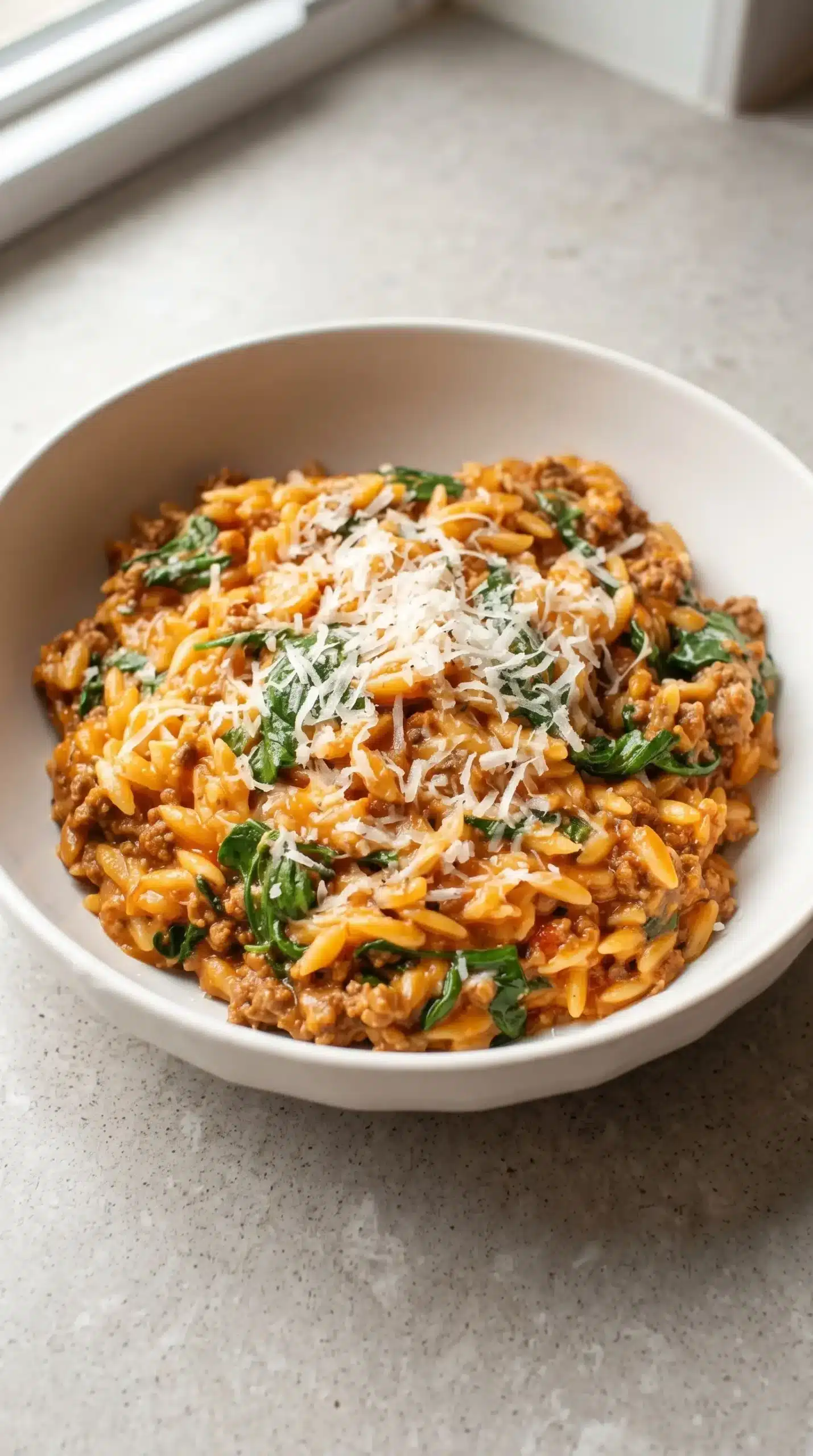
Warm servings can go directly from the skillet to the table, with extra Parmesan scattered over the top. The creamy orzo, browned beef, and seasoned tomato base make the skillet itself part of the appeal of the meal.
A side salad offers a fresh accompaniment, while crusty bread provides another simple pairing. Neither is required for the main dish, so the choice can depend on how substantial you want the meal to feel.
Storage and Reheating for Leftover Orzo
Let leftover orzo cool completely before transferring it to an airtight container. Refrigerated portions can be kept for about 3 to 4 days, making the skillet useful beyond the first serving.
Freezing is also an option when the leftovers will not be eaten within the refrigerator window. A freezer-safe container can hold the dish for up to 2 months.
| Storage option | Container | Stated storage period | Reheating approach |
|---|---|---|---|
| Refrigerator | Airtight container | About 3–4 days | Microwave or stove |
| Freezer | Freezer-safe container | Up to 2 months | Microwave or stove |
| Serving day | Skillet | Serve warm | Not applicable |
Cook-Friendly Details Worth Remembering
Lean beef keeps the skillet from carrying unnecessary excess grease, with draining available if needed after browning.
Low heat matters once the broth reaches a boil because the orzo needs to simmer covered until tender.
Fresh Parmesan belongs at the finishing stage, when the skillet has been removed from the heat and the cheese can melt into the hot orzo.
Ground Beef Orzo Comes Together Through Controlled Cooking
Browned beef, softened aromatics, tomato paste, spices, broth, and orzo each have a defined role, but the cooking controls connect them into one cohesive skillet meal. Browning develops the beef base, gentle covered simmering brings the orzo to tenderness, and off-heat Parmesan creates the creamy finish.
The most important judgment is to watch the orzo and the skillet as they cook together. A halfway stir, a reduction to low heat after boiling, and the correct timing for the Parmesan help preserve the texture that makes ground beef orzo work as a satisfying one-pot dinner.
Ground Beef Orzo Questions About Storage and Cooking
Can ground beef orzo be made ahead?
Yes. The dish can be prepared a day ahead and stored in the refrigerator. Reheat it before serving, using either the microwave or stovetop approach supplied for leftovers.
Can I use something besides Parmesan?
A hard cheese such as Pecorino Romano can be used in place of Parmesan. A dairy-free alternative is another option when Parmesan is unsuitable.
Can more vegetables be added?
Yes. Spinach, bell peppers, carrots, and zucchini are all identified as suitable additions. The amount and cooking point can be adjusted around the vegetables’ readiness while retaining the core beef-and-orzo preparation.
Why does the orzo need to be stirred halfway through cooking?
The orzo cooks directly in the broth inside the skillet, so the halfway stir is part of the cooking method. It helps keep the pasta moving through the liquid as it cooks toward tenderness.
Can the beef be replaced?
Ground turkey or ground chicken can replace the beef for a different version. These swaps preserve the basic ground-meat and orzo format while changing the protein.
What should I serve with ground beef orzo?
A side salad or crusty bread pairs naturally with the warm skillet meal. Extra Parmesan can also be served on top for additional flavor.
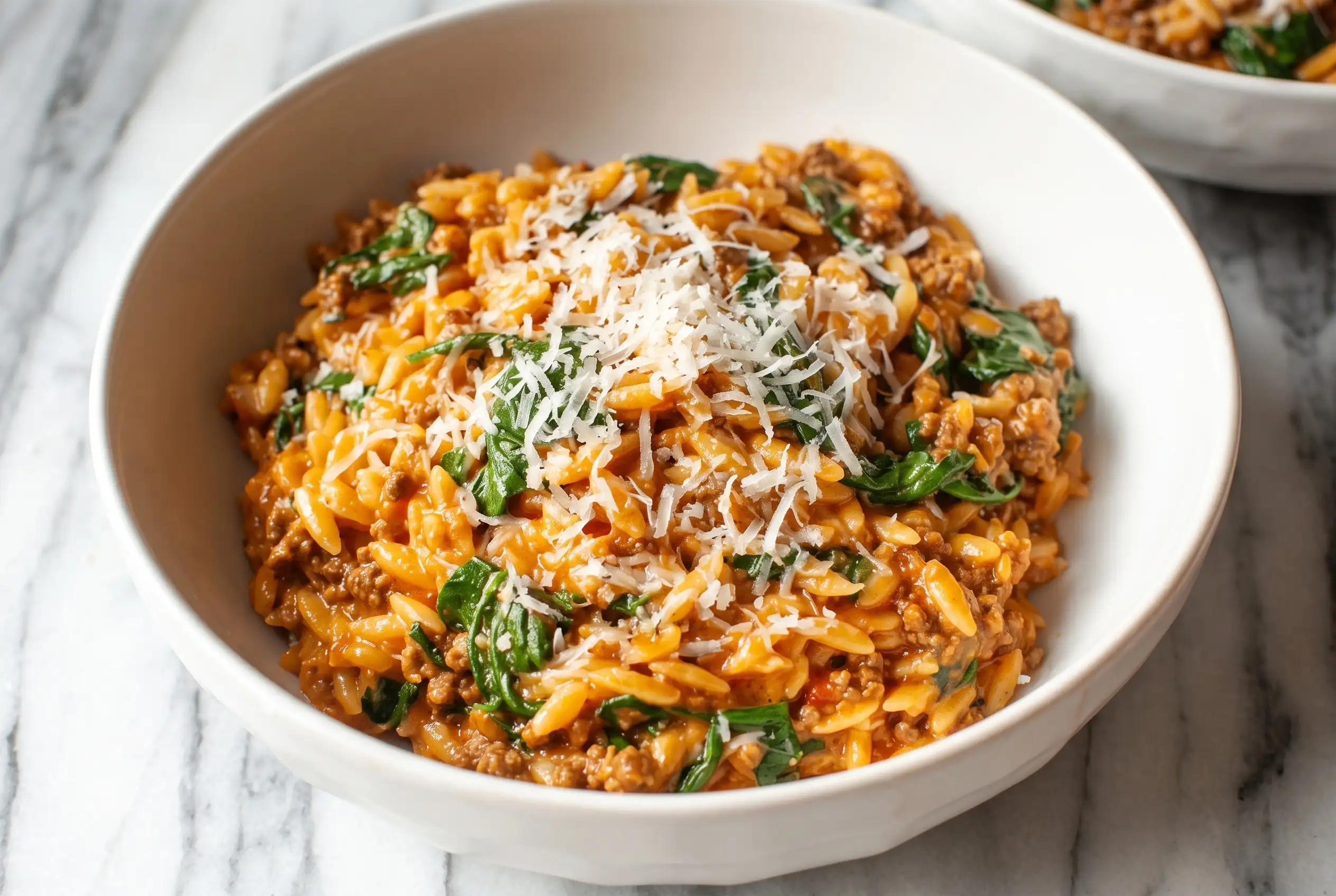
Ground Beef Orzo Recipe with Parmesan and Tomato Paste
Ingredients
Method
- Warm olive oil in a large skillet over medium heat. Add the diced onion and minced garlic, then cook for 3–4 minutes until softened.
- Add the lean ground beef and cook for 5–7 minutes, breaking it into small pieces as it browns. Drain excess grease if needed.
- Mix the tomato paste, paprika, and Italian seasoning into the browned beef. Cook for 2 minutes.
- Add the beef or vegetable broth and orzo to the skillet. Bring the mixture to a boil.
- Lower the heat, cover the skillet, and simmer for 10–12 minutes, or until the orzo is tender. Stir once halfway through the cooking time.
- Take the skillet off the heat. Stir in the freshly grated Parmesan until it melts into the mixture and becomes creamy.
- Serve the ground beef orzo warm, adding more Parmesan if desired.