Creamy Roasted Veggie Soup with Coconut Milk and Broth
Creamy Roasted Veggie Soup turns tomatoes, zucchini, carrots, bell pepper, onion, and garlic into a smooth, comforting bowl finished with coconut milk. Roasting the vegetables first gives the soup a deeper flavor and soft texture, while vegetable broth brings everything together before the creamy finish.
Roasted Vegetables Set the Flavor Base
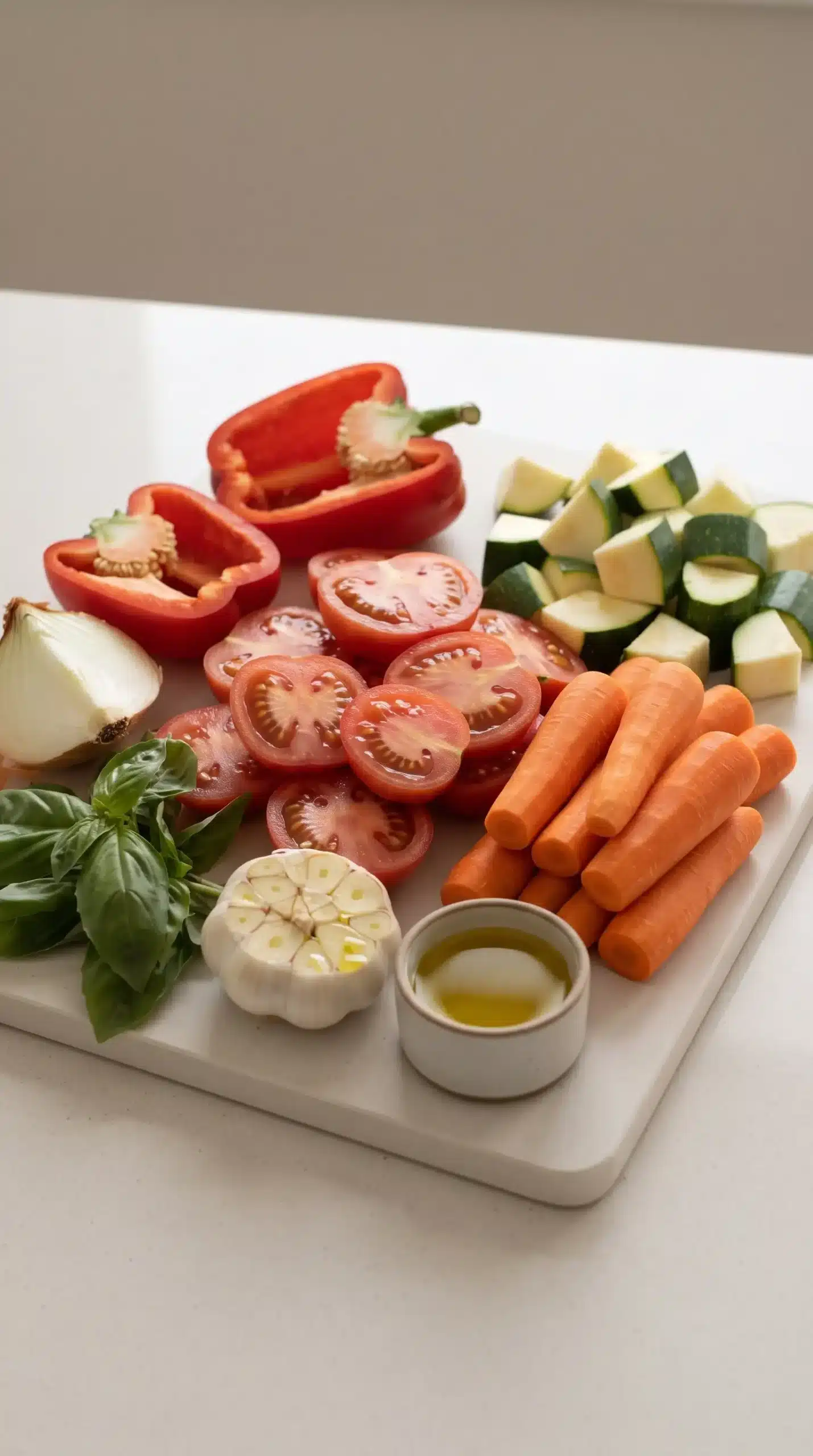
The vegetables do most of the flavor work in creamy roasted veggie soup, so their condition before blending matters. Tomatoes, zucchini, carrots, bell pepper, onion, and garlic are roasted together until soft and caramelized. That cooking stage concentrates their flavors and gives the finished soup a more developed roasted character.
Cutting the vegetables into manageable pieces helps them roast evenly. The tomatoes can be halved, the zucchini can be cut horizontally and vertically, the carrots can be divided into shorter pieces, and the onion can be separated into roughly four chunks. The garlic bulb only needs its top trimmed before roasting.
A light drizzle of olive oil is enough to coat the vegetables for baking. Once they have softened and developed caramelized edges, they are ready to become the base of the soup. The roasted garlic can then be incorporated with the other vegetables for a mellow, savory flavor.
Coconut Milk Gives the Soup Its Creamy Finish
Coconut milk is added after the roasted vegetables have been blended with vegetable broth. This timing keeps the creamy element distinct from the roasting stage and gives the soup its characteristic rich texture.
The coconut milk also works naturally with the roasted vegetables, creating a smooth roasted vegetable soup with coconut milk without requiring dairy. Stirring it in after the soup has simmered keeps the finishing step simple.
Choose Vegetables That Roast Well Together
The combination of tomatoes, zucchini, carrots, bell pepper, onion, and garlic creates a balanced vegetable base. Their different textures are not a problem because the vegetables are ultimately blended into a smooth soup.
| Vegetable | Preparation | Roasting purpose |
|---|---|---|
| Tomatoes | Halved | Provide a juicy roasted base |
| Zucchini | Cut into smaller sections | Softens easily for blending |
| Carrots | Cut into 2–3 inch pieces | Add a naturally sweet roasted element |
| Bell pepper | Halved or kept whole | Develops a roasted vegetable flavor |
| Onion | Roughly cut into four pieces | Adds depth after roasting |
| Garlic | Top removed from whole bulb | Roasts alongside the vegetables for blending |
Roasting Time Determines the Finished Texture
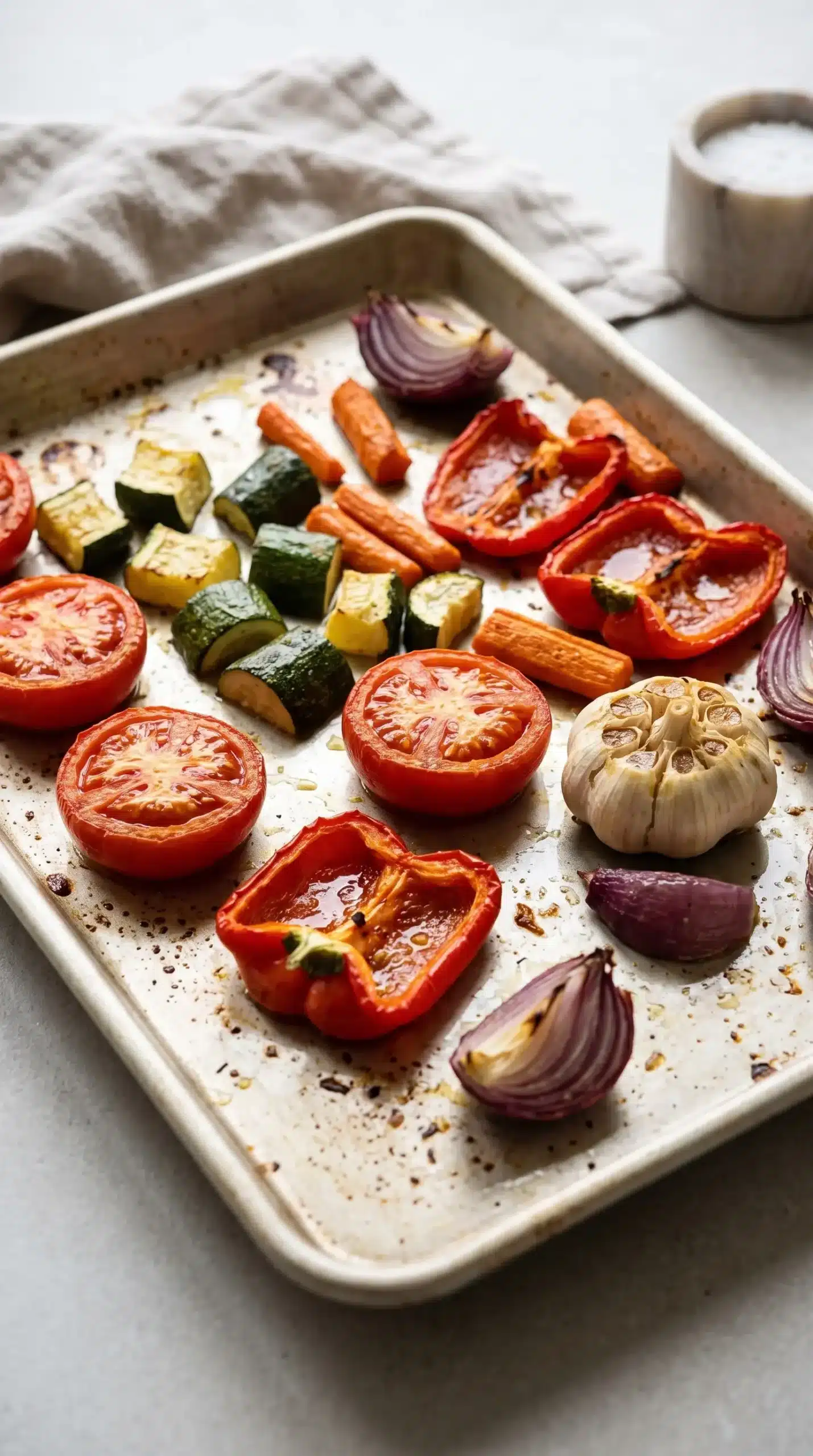
Oven temperature and vegetable texture are the main controls during roasting. The vegetables are baked at 425°F until they become soft and caramelized. That combination of tenderness and browning makes them easier to blend into a creamy soup.
Watch for Softness and Caramelization
Visual cues are more useful here than trying to judge the vegetables by a single color. The pieces should be noticeably soft, with caramelized areas showing that roasting has progressed enough to build flavor.
Extra roasting can be used when a more pronounced roasted character is desired. The supplied method also notes that vegetables can be roasted a little longer until charred for additional flavor, so the degree of browning can be adjusted to suit the desired finish.
Blending Creates the Smooth Body
Once the vegetables are roasted, vegetable broth becomes the liquid that carries them into soup form. Blending the vegetables with the broth until smooth creates the creamy body before coconut milk is incorporated.
A standard blender can handle the blending step, while an immersion blender offers another approach when the soup is being blended in a pot. Either method is intended to produce a smooth mixture before the soup is returned to heat.
Three Flavor Adjustments Fit the Roasted Base
The finished bowl can stay simple or receive a small flavor adjustment at the end. Black pepper and fresh basil are suggested as toppings, while additional herbs or spices can be chosen according to taste.
- For freshness: Finish the bowls with fresh basil, or use herbs such as thyme or parsley.
- For heat: Add red pepper flakes or jalapeños during blending.
- For deeper roasting: Let the vegetables develop more char before blending.
Roasted Garlic Changes the Soup’s Character
The whole garlic bulb is roasted with its top cut off and a little olive oil added. Because the garlic is softened before blending, roasted garlic can become part of the soup’s smooth texture instead of remaining as a separate chopped ingredient.
Keeping the bulb with the vegetables also means the garlic follows the same basic roasting process. Once everything is tender, the roasted garlic can be blended with the broth and vegetables, helping the flavors merge throughout the bowl.
Common Creamy Roasted Veggie Soup Mistakes to Avoid
Most problems with creamy roasted veggie soup can be traced to the roasting, blending, or finishing stages. Paying attention to the condition of the vegetables before moving on makes the process more predictable.
Under-roasted vegetables may not have the softness and caramelization needed for the intended flavor and texture. Give them enough oven time to become soft and visibly caramelized before transferring them to the blender.
Another issue is adding the coconut milk too early. The supplied method calls for the blended soup to simmer briefly first, followed by turning off the heat and stirring in the coconut milk. Keeping that order preserves a straightforward finishing process.
Serving Choices Keep the Bowl Balanced
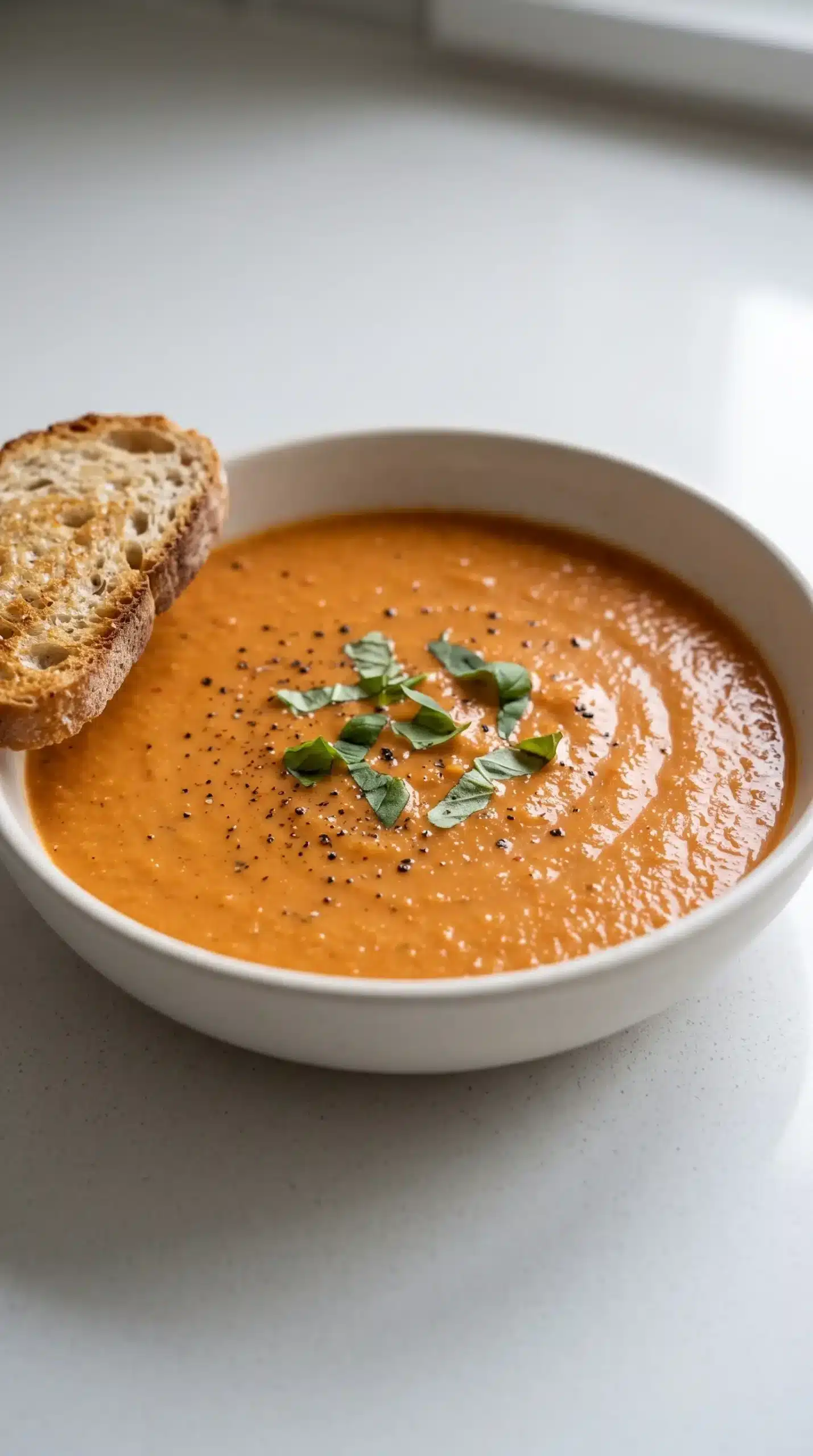
A bowl of creamy roasted veggie soup can stand on its own as a light meal or snack. Crunchy bread adds a contrasting texture, while a fresh salad can provide a crisp accompaniment.
The soup also works as a starter for a larger meal. Fresh herbs, black pepper, or additional spices can be used at serving time when a little more flavor or freshness is wanted.
Simple Storage Preserves the Soup for Later
Allow creamy roasted veggie soup to cool before transferring it to an airtight container. Refrigerated leftovers can be kept for about 3–4 days, making the soup practical for preparing ahead.
Freezing is another option for longer storage. The soup can be frozen for up to 3 months and should be thawed before reheating. Because the soup is blended and creamy, reheating after thawing provides an easy way to enjoy a prepared batch later.
For better freezer storage, use airtight freezer packaging designed to resist moisture and leave enough headspace for the soup to expand as it freezes.
Vegetable Variations Keep the Same Roasting Idea Flexible
The vegetable base can be changed according to what is available. Sweet potatoes, broccoli, or spinach are suggested additions, giving the soup a flexible direction while keeping roasted vegetables at its center.
Frozen vegetables can also be used, with the supplied guidance recommending that they be thawed somewhat before roasting. Herbs and spices provide another way to change the character without changing the basic creamy format.
Why the Roasting-to-Blending Sequence Matters
Roasting first gives the vegetables their cooked, caramelized character, while blending afterward turns that mixture into the smooth foundation of a vegan roasted vegetable soup. The vegetable broth supplies the liquid needed for blending without changing the basic vegetable focus.
After blending, a short simmer brings the soup together before the heat is turned off. Coconut milk then completes the texture. This sequence separates the high-heat roasting stage from the creamy finishing stage, giving each part of the process a clear purpose.
Roasted Vegetables Make the Creamy Finish Work
Soft, caramelized vegetables provide the essential foundation for creamy roasted veggie soup, while vegetable broth transforms them into a smooth base and coconut milk supplies the rich finishing texture. The most important cooking judgment is to let the vegetables become properly soft and caramelized before blending.
That roasted foundation is what allows the soup to remain flavorful even with a simple finishing step. Fresh basil, black pepper, herbs, or a little heat can then be added according to taste without obscuring the roasted vegetable character.
Creamy Roasted Veggie Soup Questions About Storage and Cooking
Can creamy roasted veggie soup be made ahead?
Yes. The soup can be prepared in advance and reheated later. For short-term storage, cool it before placing it in an airtight container in the refrigerator, where it can keep for about 3–4 days.
Can the soup be frozen?
Yes, freezing is an option for up to 3 months. Thaw the soup before reheating so it is ready to warm evenly.
What can replace fresh roasted vegetables when needed?
Frozen vegetables can be used instead. Thaw them somewhat before roasting so they can go through the roasting stage before being blended with the broth.
How can creamy roasted veggie soup be made spicier?
Red pepper flakes or jalapeños can be added during the blending stage. This allows the heat to become part of the smooth soup instead of sitting only on the surface.
Which herbs work with the roasted vegetable flavors?
Fresh basil can be sprinkled over the finished bowls, while thyme or parsley can be used when a different fresh herbal note is preferred.

Creamy Roasted Veggie Soup with Coconut Milk and Broth
Ingredients
Method
- Heat the oven to 425°F / 220°C.
- Arrange the tomatoes, zucchini, carrots, bell pepper, onion, and prepared garlic bulb on a baking sheet.
- Coat the vegetables and garlic lightly with olive oil.
- Roast the vegetables for 35–40 minutes, until they are soft and caramelized.
- Place the roasted vegetables and garlic in a blender. Add the vegetable broth and blend until smooth.
- Transfer the blended soup to a pot and simmer for a few minutes.
- Remove the pot from the heat, add the coconut milk, and stir until fully combined and creamy.
- Ladle the soup into bowls and serve.